Passive
and
active
Voice
English class Mrs. Smith.
Learning objectives
Understand the concept and importance of the use of both
voices.
Students will be able to identify the uses of passive and active
voice and the importance of each depending on the context.
Distinguish between passive and active voice in
sentences.
Students will be able to look at texts and distinguish
between the two.
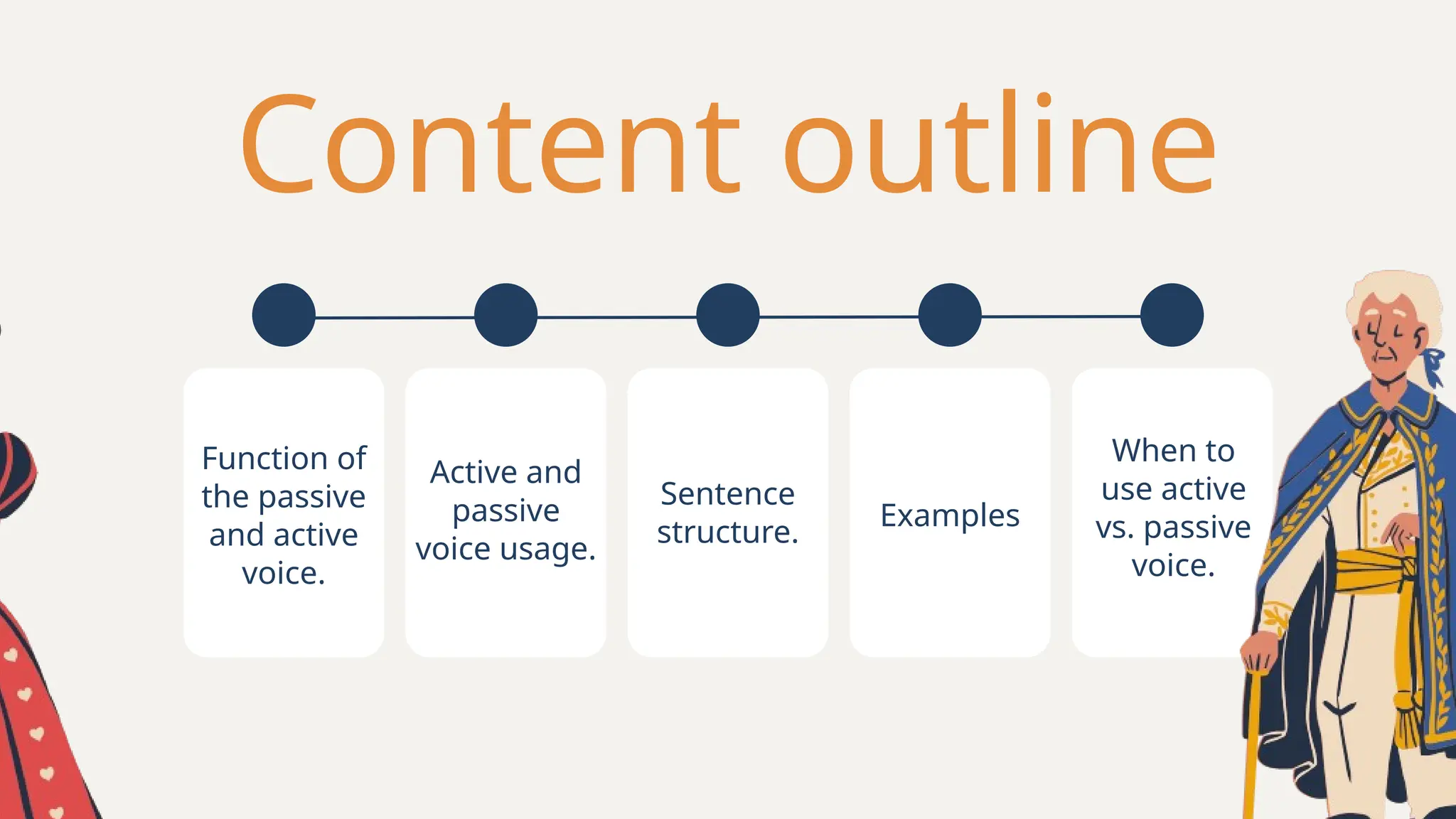
Content outline
Function of
the passive
and active
voice.
Active and
passive
voice usage.
Sentence
structure.
Examples
When to
use active
vs. passive
voice.
Functions
In the active voice, the subject is performing an action:
The cat chases the bell.
Notice how the subject, cat, is performing the action, chase, on
the target of the action, bell. This is a simple, direct example of
the active voice.
Active voice
Functions
In the passive voice, the action’s target, ball, is positioned
first as the focus of the sentence. The sentence gets flipped,
and the subject is now being acted upon by the verb. In other
words, the subject is passive:
The bell is being chased by the
cat.
Passive voice
Usage
Passive voice
A car was broken into on Elm Street last night.
Cash was stolen from the register.
These use the passive voice to keep the reader's focus
on what has happenedor is happening.
The passive voice is used to show interest in the person
or object that experiences an action rather than the
person or object that performs the action. Think about
how news reports about crime and incidents are usually
written and delivered:
Usage
Active voice
Shira likes birdwatching.
She loves movies.
The active voice has a direct tone. Use it when you want
the reader to focus on the subject of your sentence and
the action it is doing rather than on the action’s target.
The active voice gets straight to the point and tells us
who did what. In this voice, the sentence’s subject
performs the action. Here are two examples of sentences
in the active voice:
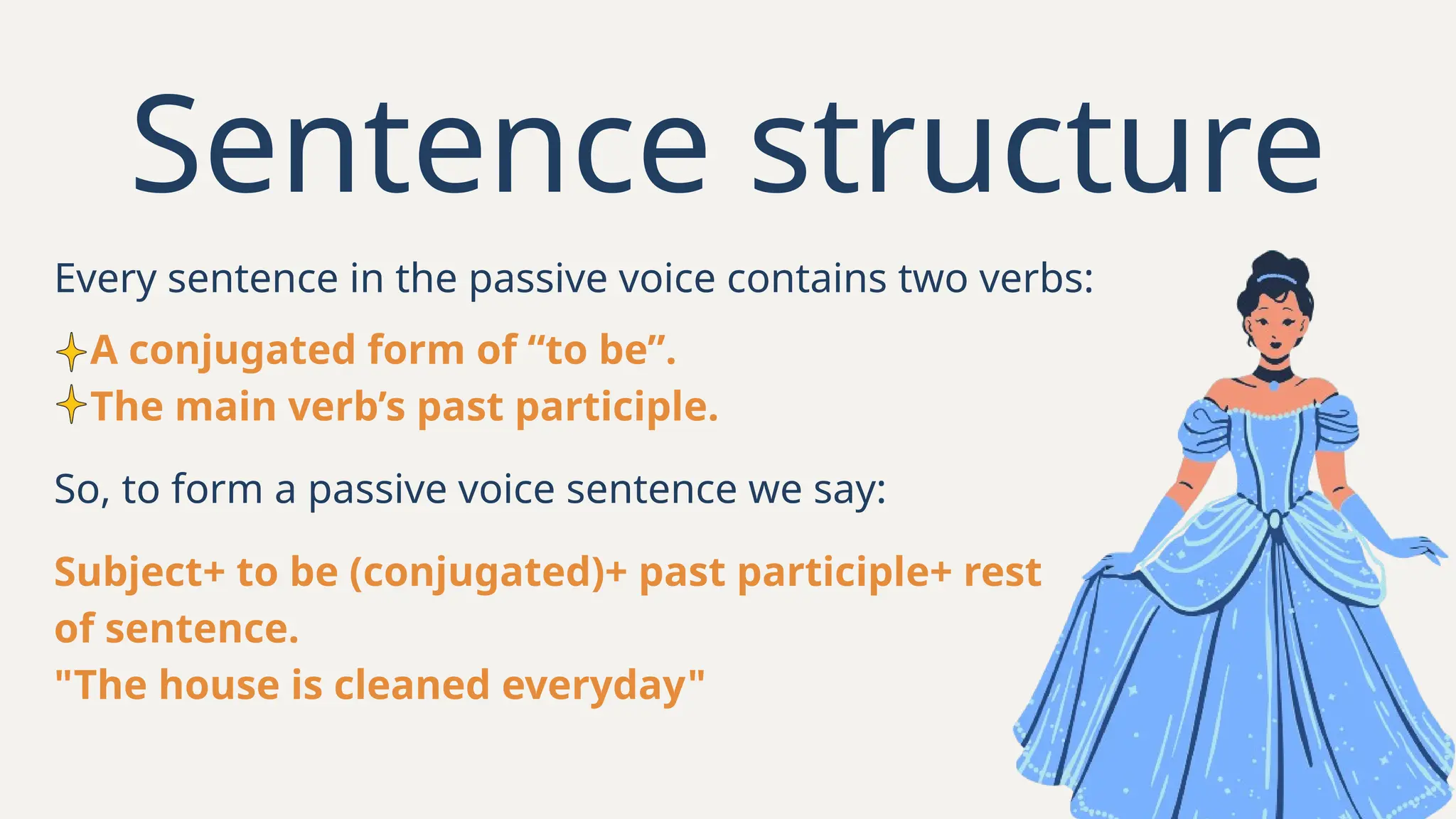
A conjugated form of “to be”.
The main verb’s past participle.
Sentence structure
Every sentence in the passive voice contains two verbs:
Subject+ to be (conjugated)+ past participle+ rest
of sentence.
"The house is cleaned everyday"
So, to form a passive voice sentence we say:
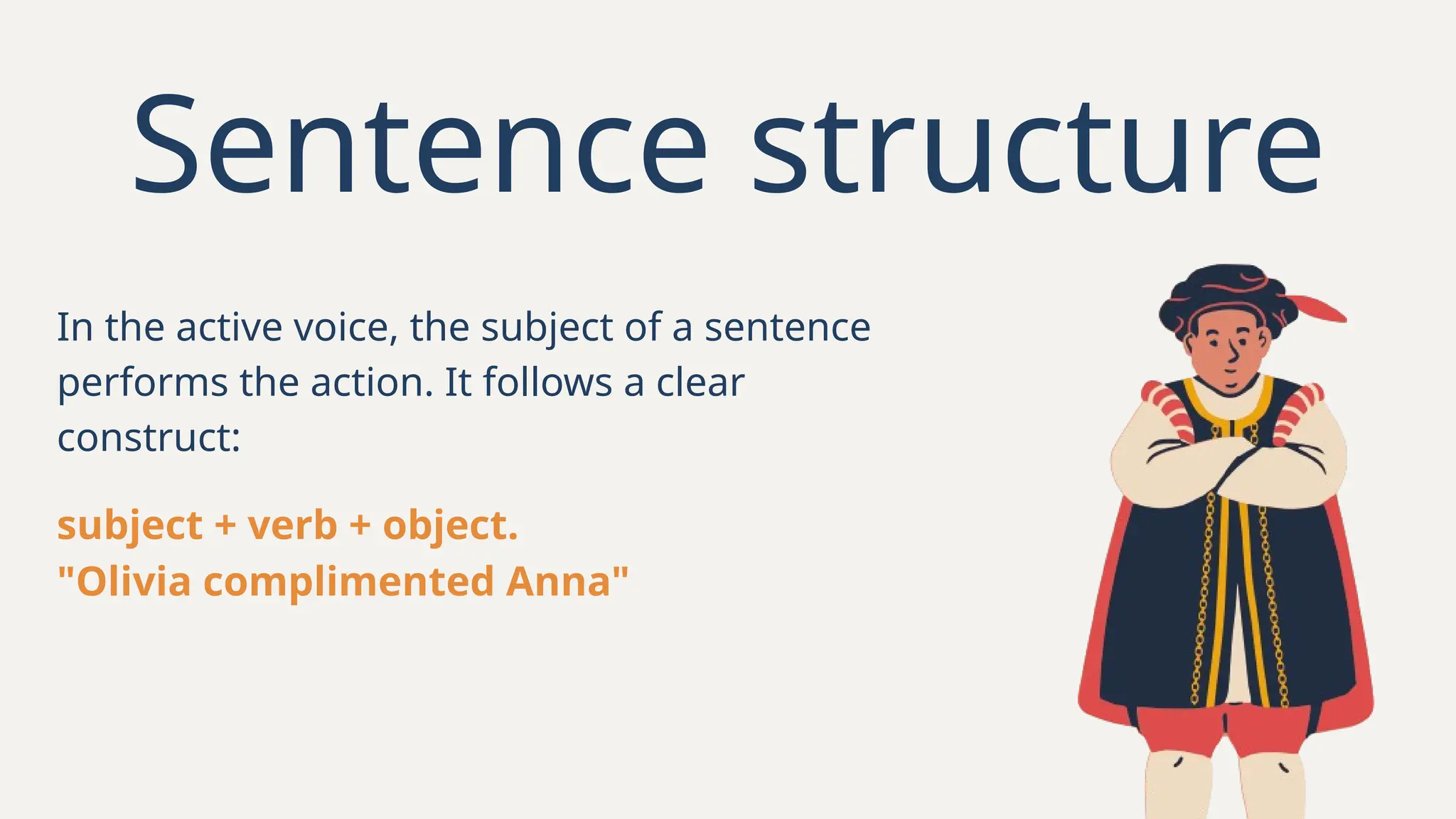
In the active voice, the subject of a sentence
performs the action. It follows a clear
construct:
Sentence structure
subject + verb + object.
"Olivia complimented Anna"
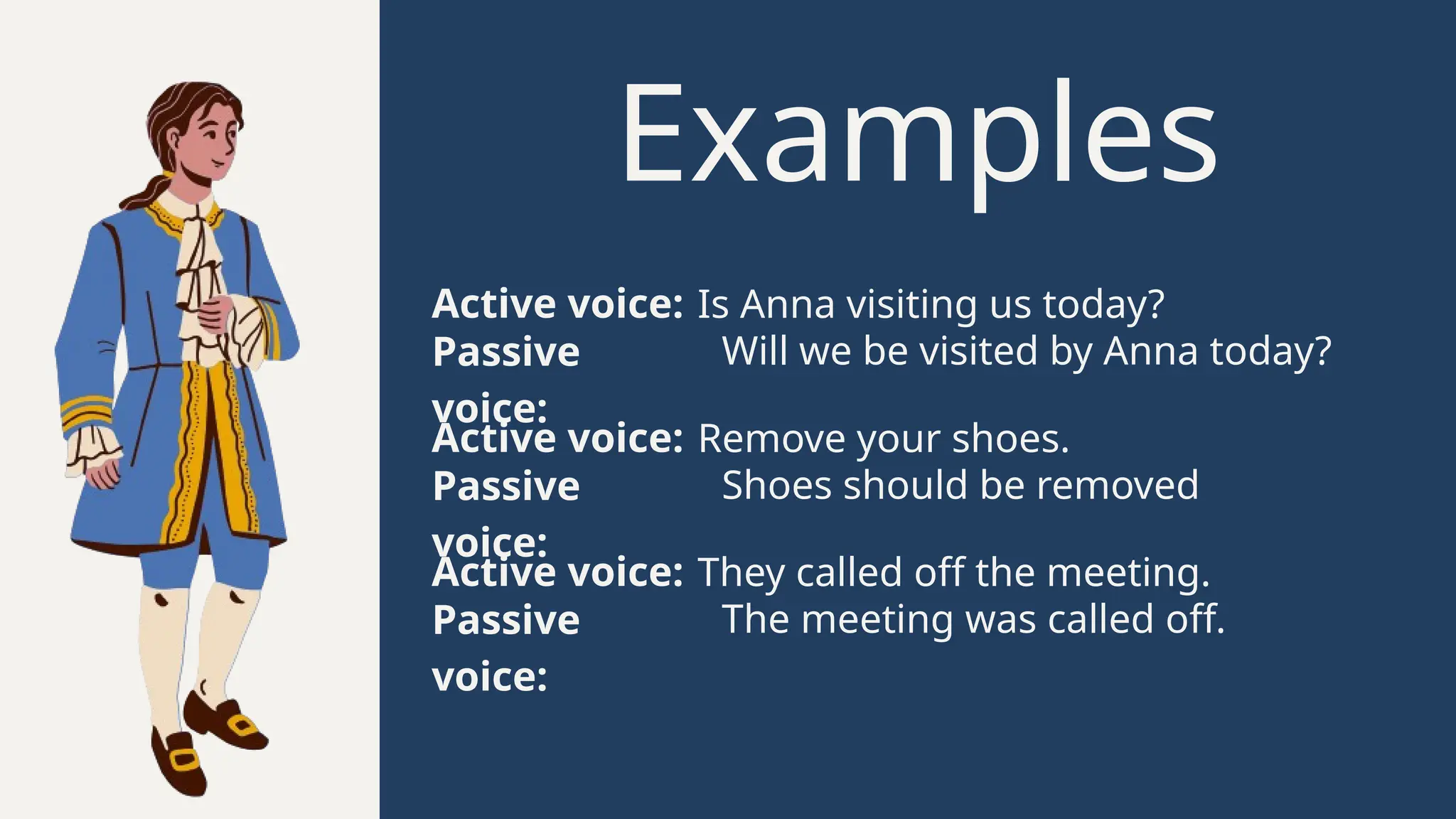
Examples
Active voice: Is Anna visiting us today?
Passive
voice:
Will we be visited by Anna today?
Active voice: Remove your shoes.
Passive
voice:
Shoes should be removed
Active voice: They called off the meeting.
Passive
voice:
The meeting was called off.
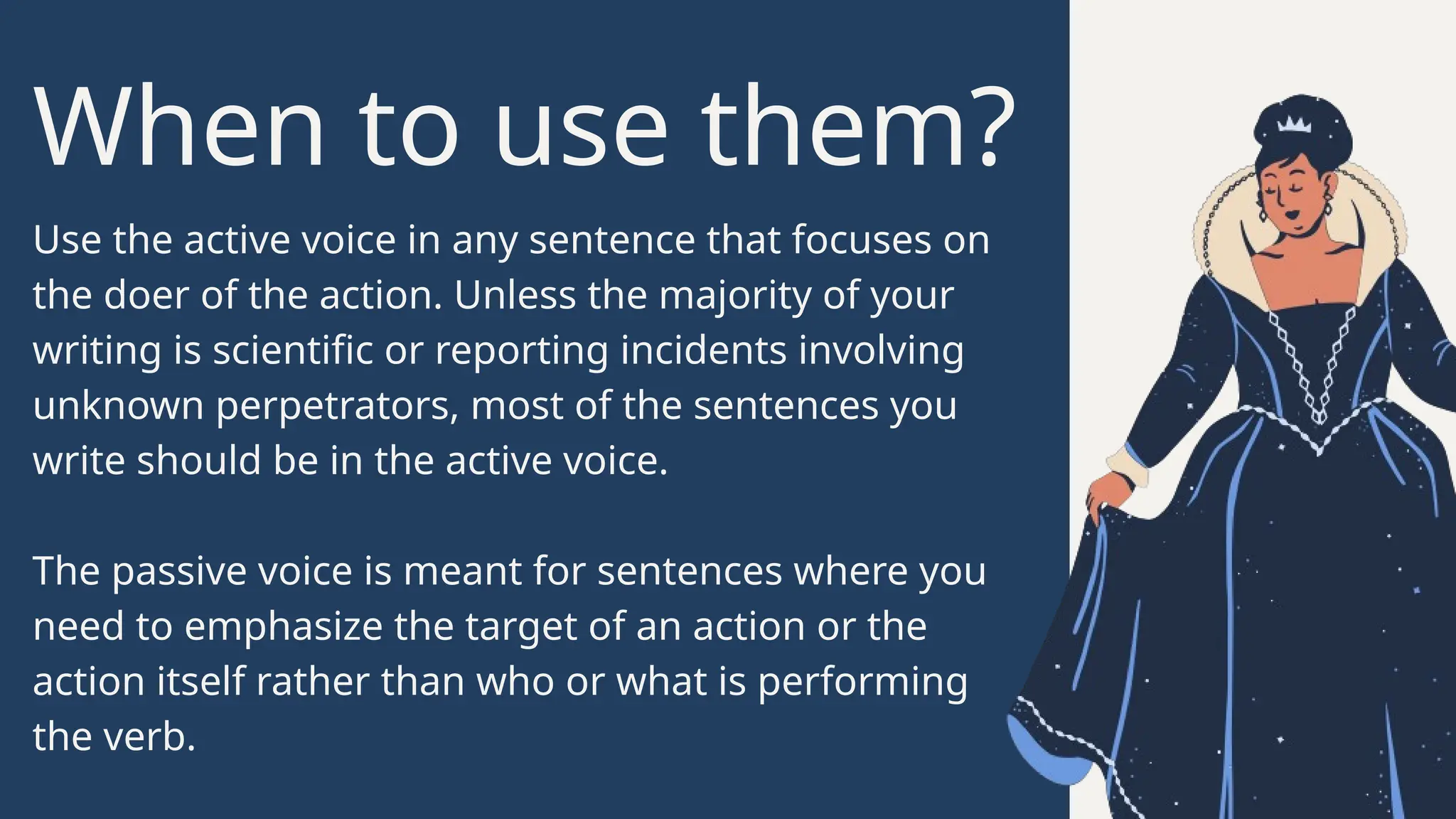
When to use them?
Use the active voice in any sentence that focuses on
the doer of the action. Unless the majority of your
writing is scientific or reporting incidents involving
unknown perpetrators, most of the sentences you
write should be in the active voice.
The passive voice is meant for sentences where you
need to emphasize the target of an action or the
action itself rather than who or what is performing
the verb.
What would you write?
Teacher resources
set:nAEmM-QFyDQ

active and passive voice powerpoint presentation

  • 1.
  • 2.
    Learning objectives Understand theconcept and importance of the use of both voices. Students will be able to identify the uses of passive and active voice and the importance of each depending on the context. Distinguish between passive and active voice in sentences. Students will be able to look at texts and distinguish between the two.
  • 3.
    Content outline Function of thepassive and active voice. Active and passive voice usage. Sentence structure. Examples When to use active vs. passive voice.
  • 4.
    Functions In the activevoice, the subject is performing an action: The cat chases the bell. Notice how the subject, cat, is performing the action, chase, on the target of the action, bell. This is a simple, direct example of the active voice. Active voice
  • 5.
    Functions In the passivevoice, the action’s target, ball, is positioned first as the focus of the sentence. The sentence gets flipped, and the subject is now being acted upon by the verb. In other words, the subject is passive: The bell is being chased by the cat. Passive voice
  • 6.
    Usage Passive voice A carwas broken into on Elm Street last night. Cash was stolen from the register. These use the passive voice to keep the reader's focus on what has happenedor is happening. The passive voice is used to show interest in the person or object that experiences an action rather than the person or object that performs the action. Think about how news reports about crime and incidents are usually written and delivered:
  • 7.
    Usage Active voice Shira likesbirdwatching. She loves movies. The active voice has a direct tone. Use it when you want the reader to focus on the subject of your sentence and the action it is doing rather than on the action’s target. The active voice gets straight to the point and tells us who did what. In this voice, the sentence’s subject performs the action. Here are two examples of sentences in the active voice:
  • 8.
    A conjugated formof “to be”. The main verb’s past participle. Sentence structure Every sentence in the passive voice contains two verbs: Subject+ to be (conjugated)+ past participle+ rest of sentence. "The house is cleaned everyday" So, to form a passive voice sentence we say:
  • 9.
    In the activevoice, the subject of a sentence performs the action. It follows a clear construct: Sentence structure subject + verb + object. "Olivia complimented Anna"
  • 10.
    Examples Active voice: IsAnna visiting us today? Passive voice: Will we be visited by Anna today? Active voice: Remove your shoes. Passive voice: Shoes should be removed Active voice: They called off the meeting. Passive voice: The meeting was called off.
  • 11.
    When to usethem? Use the active voice in any sentence that focuses on the doer of the action. Unless the majority of your writing is scientific or reporting incidents involving unknown perpetrators, most of the sentences you write should be in the active voice. The passive voice is meant for sentences where you need to emphasize the target of an action or the action itself rather than who or what is performing the verb.
  • 12.
  • 13.