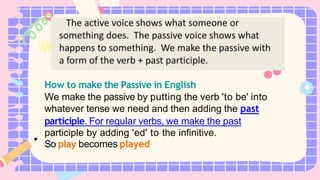
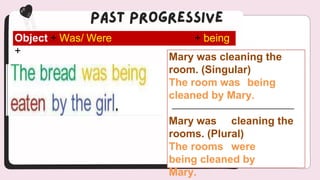
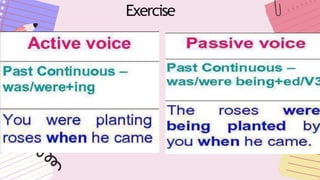
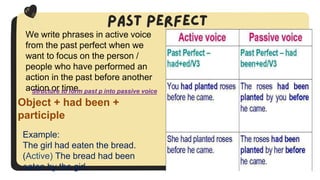
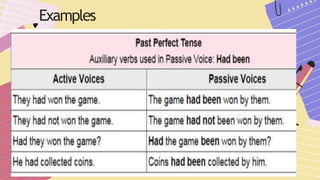
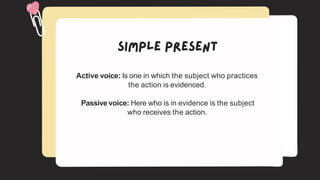
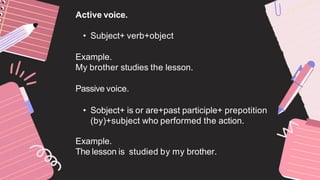
- The passive voice focuses on the object that receives the action of the sentence rather than the subject performing the action. It is formed by using some form of "to be" plus the past participle of the main verb.
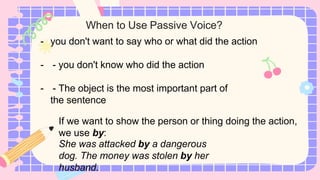
- There are several uses of the passive voice including when the agent/doer is unknown, unimportant, or obvious from context. The passive voice can also be used to emphasize the recipient of the action.
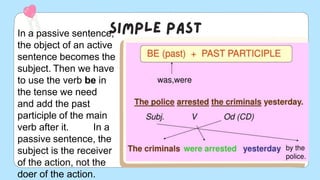
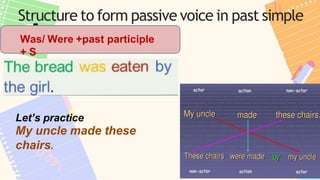
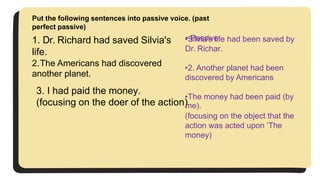
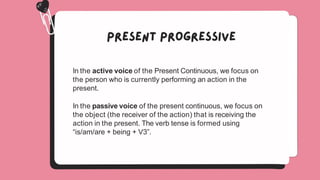
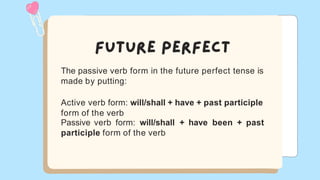
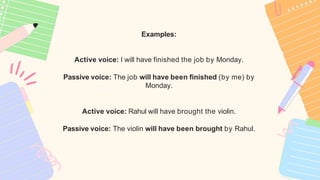
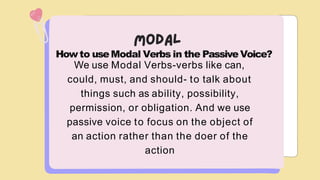
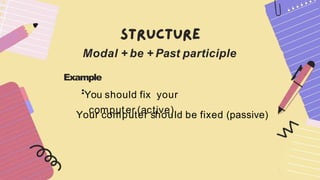
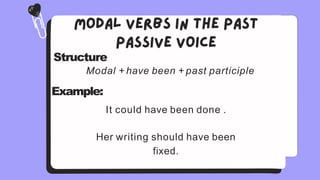
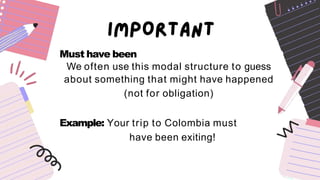
- The document provides examples and explanations of how to form the passive voice for various English tenses including simple past, present continuous, present perfect, future, and future perfect. Modal verbs can also be used in the passive voice by placing the modal before "be" and