CENTRIOLES
PRESENTED BY:- CHANDANI KUMARI.
YOGESH VISHWAKARMA.
INTRODUCTION
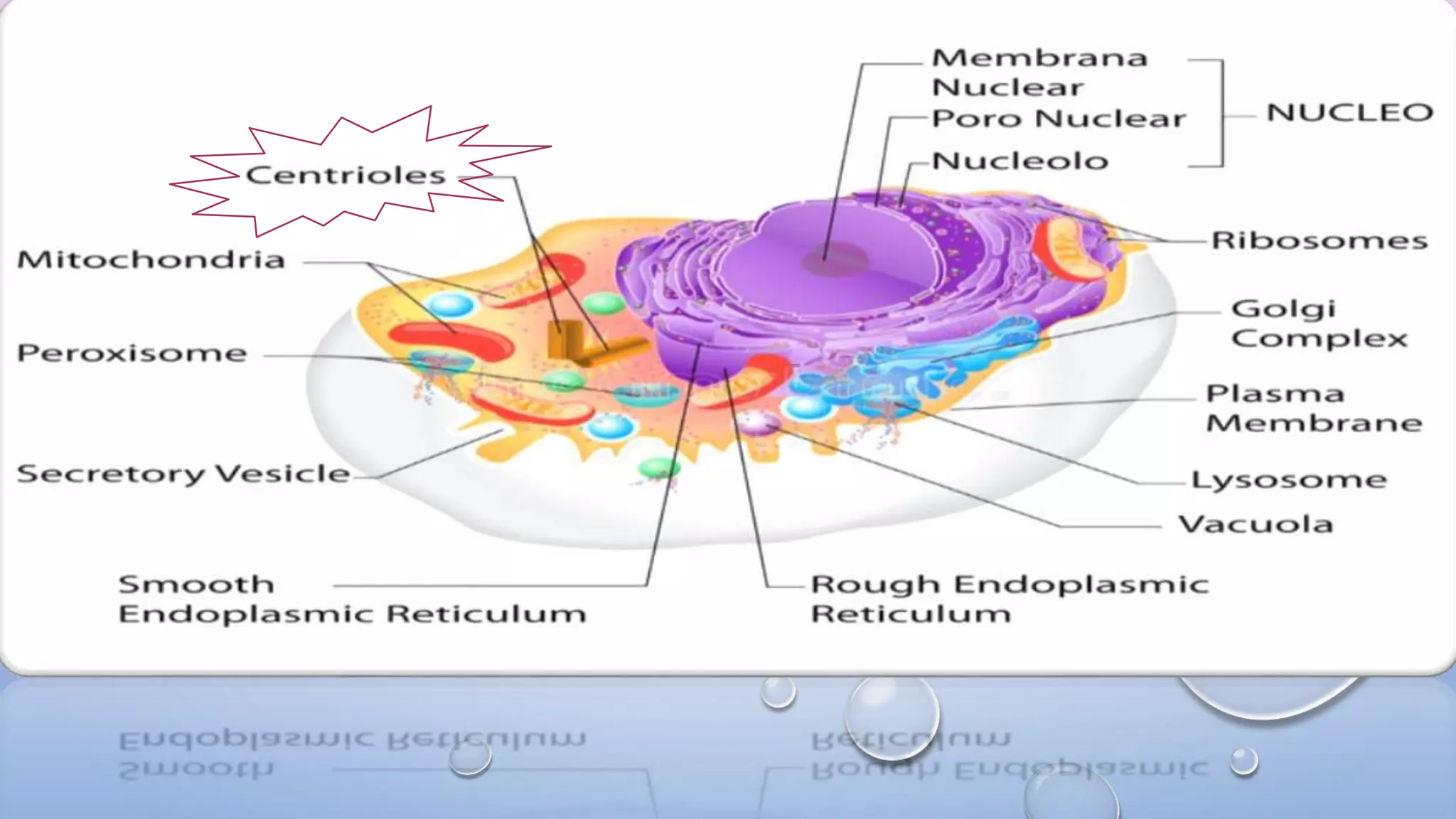
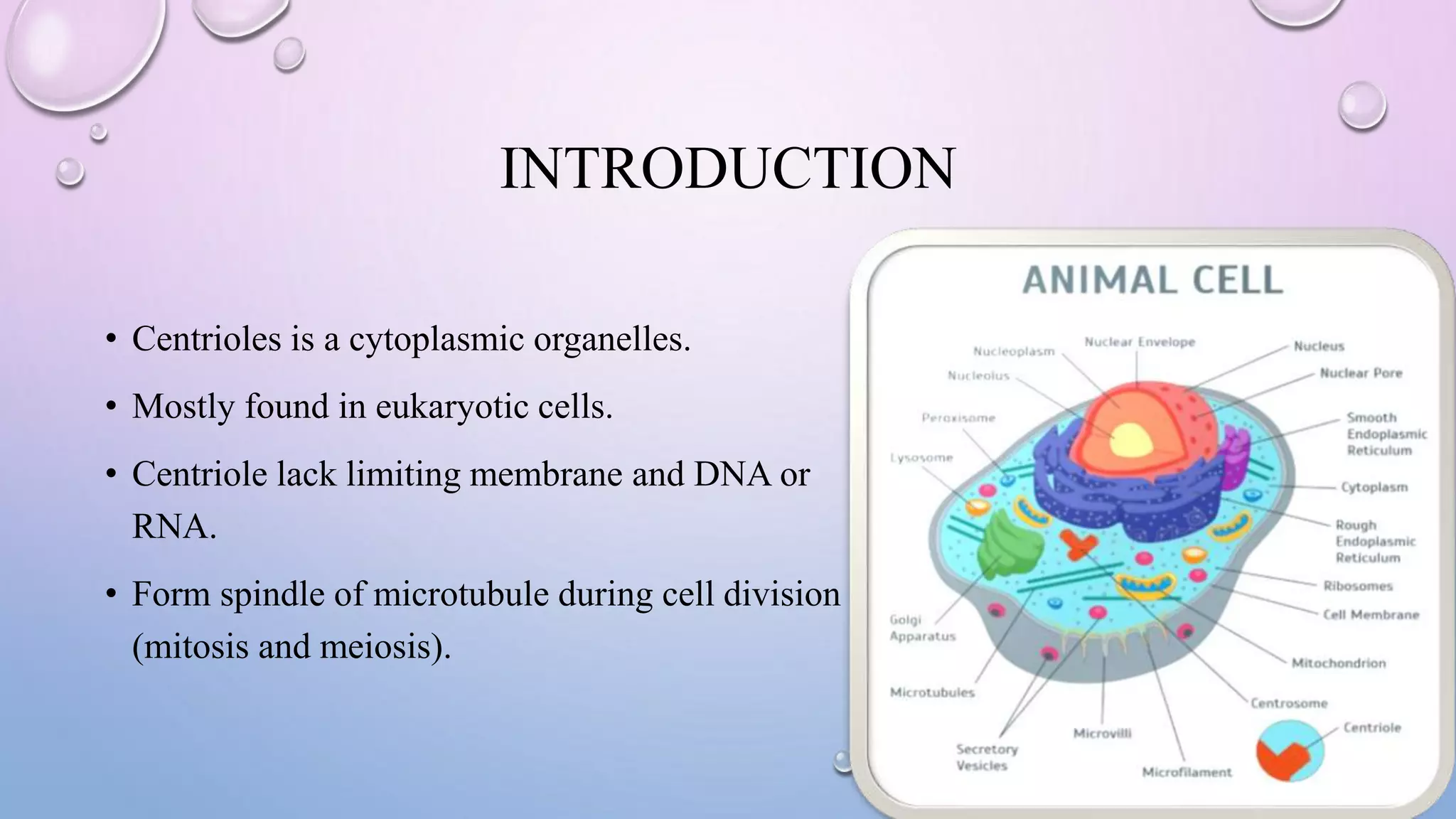
• Centrioles is a cytoplasmic organelles.
• Mostly found in eukaryotic cells.
• Centriole lack limiting membrane and DNA or
RNA.
• Form spindle of microtubule during cell division
(mitosis and meiosis).
INTRODUCTION CONT’D
• Centrioles form basal bodies which give rise to
axonemes of cilia and flagella.
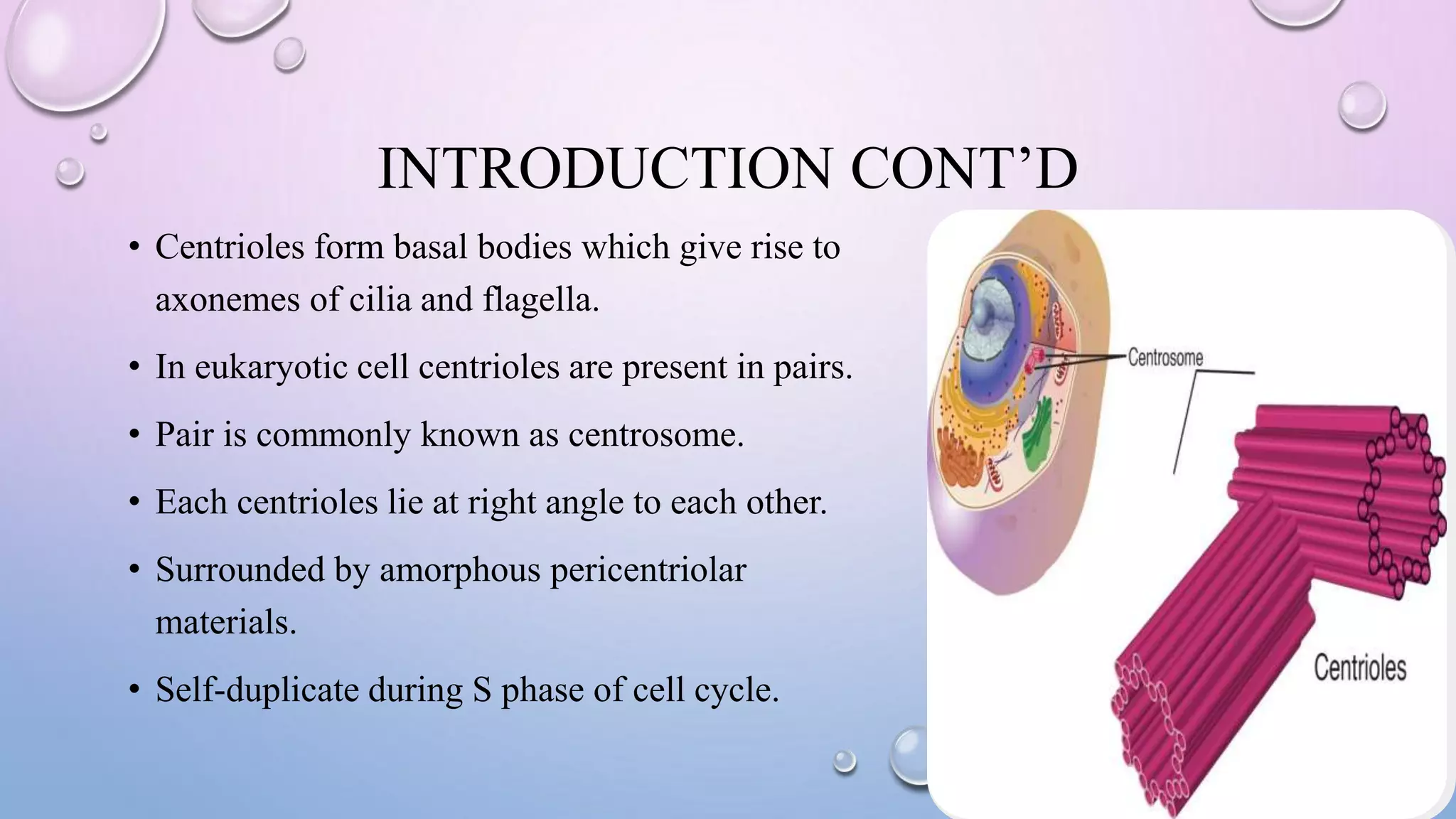
• In eukaryotic cell centrioles are present in pairs.
• Pair is commonly known as centrosome.
• Each centrioles lie at right angle to each other.
• Surrounded by amorphous pericentriolar
materials.
• Self-duplicate during S phase of cell cycle.
STRUCTURE
• The length of the centriole is about 3,000 to 5,000 Ã
and diameter is about 1,500 to 1,800 Ã.
• Centrioles is made up of lipid and protein, also
contain carbohydrate.
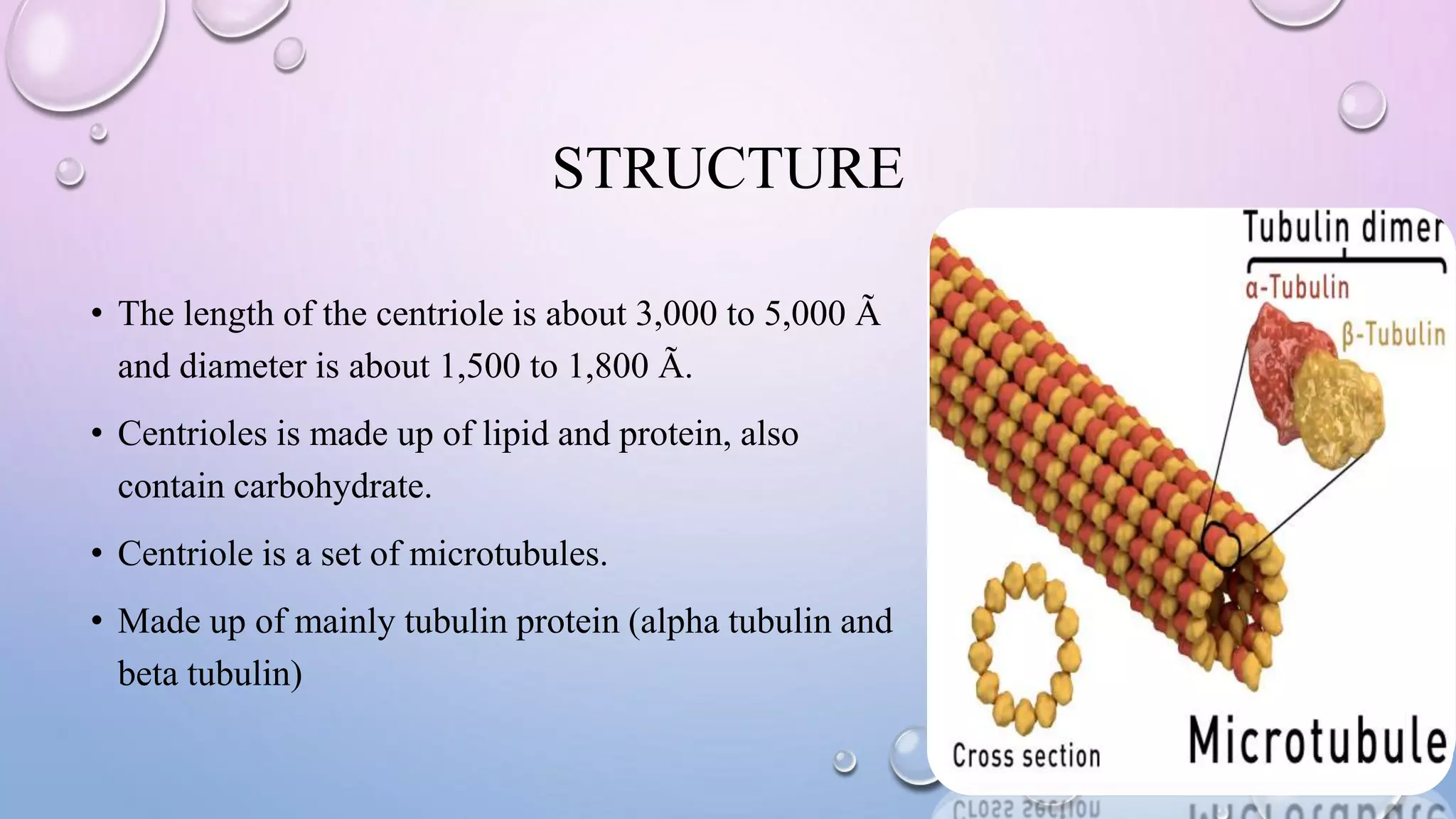
• Centriole is a set of microtubules.
• Made up of mainly tubulin protein (alpha tubulin and
beta tubulin)
STRUCTURE CONT’D
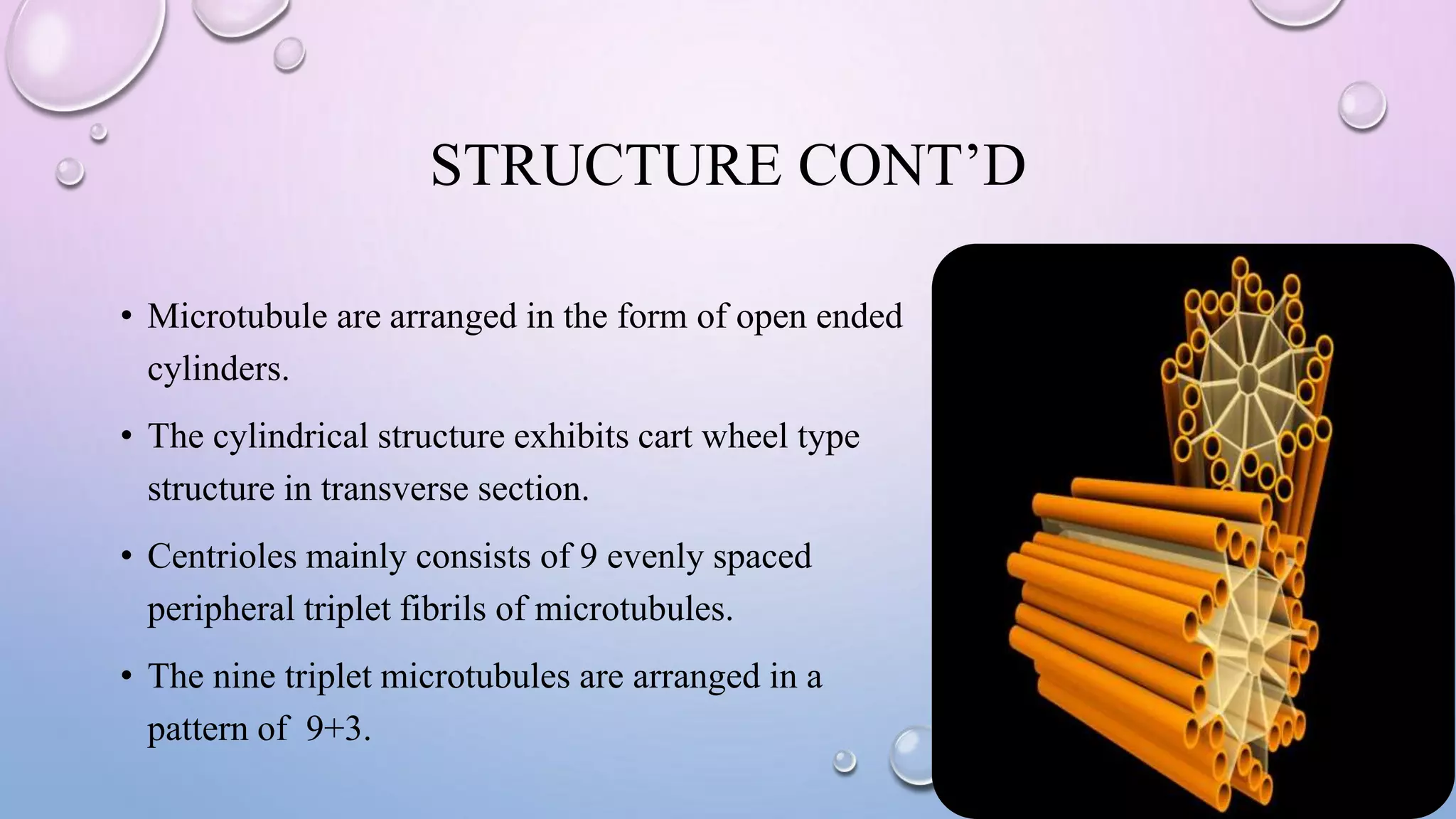
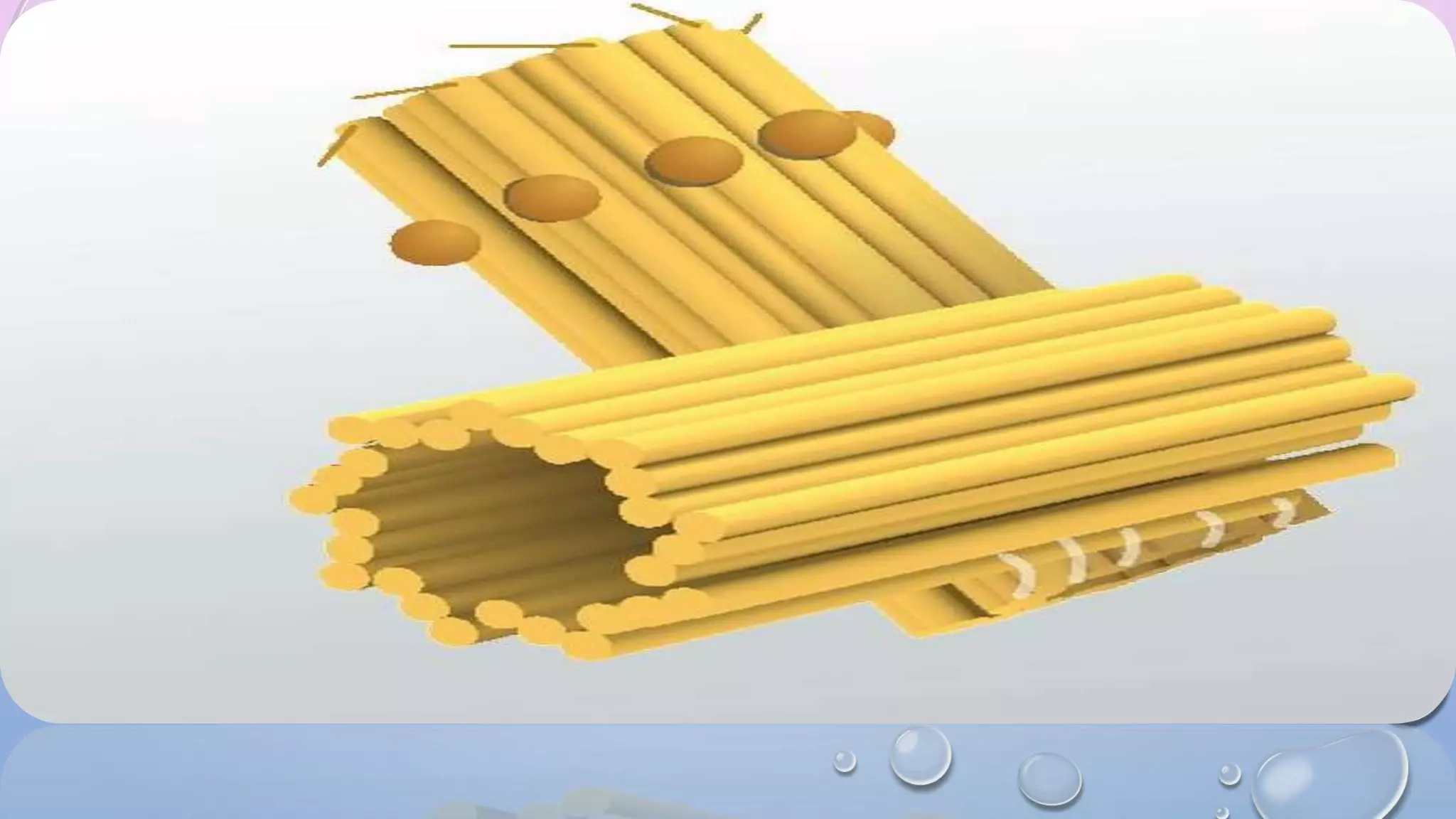
• Microtubule are arranged in the form of open ended
cylinders.
• The cylindrical structure exhibits cart wheel type
structure in transverse section.
• Centrioles mainly consists of 9 evenly spaced
peripheral triplet fibrils of microtubules.
• The nine triplet microtubules are arranged in a
pattern of 9+3.
STRUCTURE CONT’D
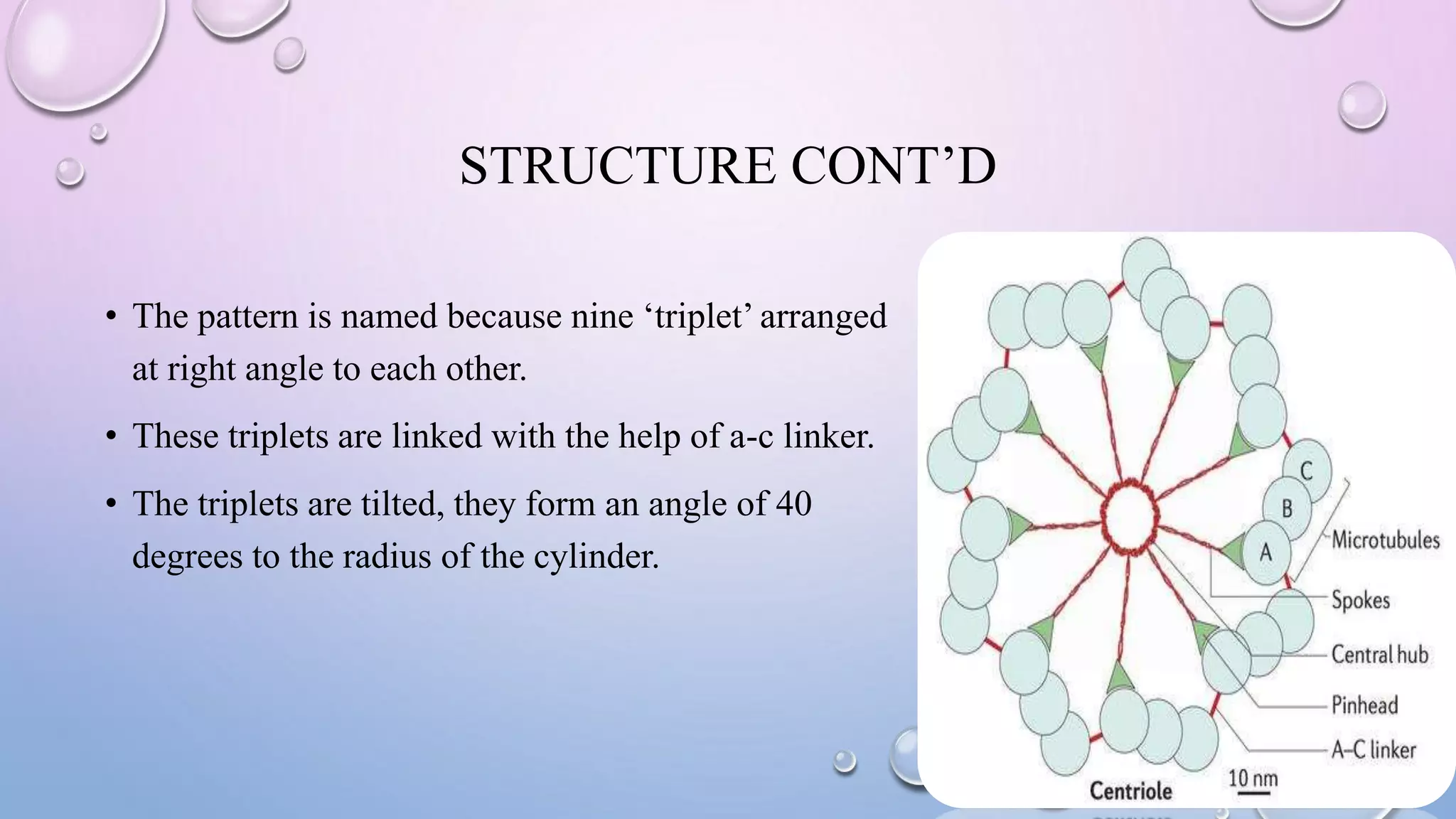
• The pattern is named because nine ‘triplet’ arranged
at right angle to each other.
• These triplets are linked with the help of a-c linker.
• The triplets are tilted, they form an angle of 40
degrees to the radius of the cylinder.
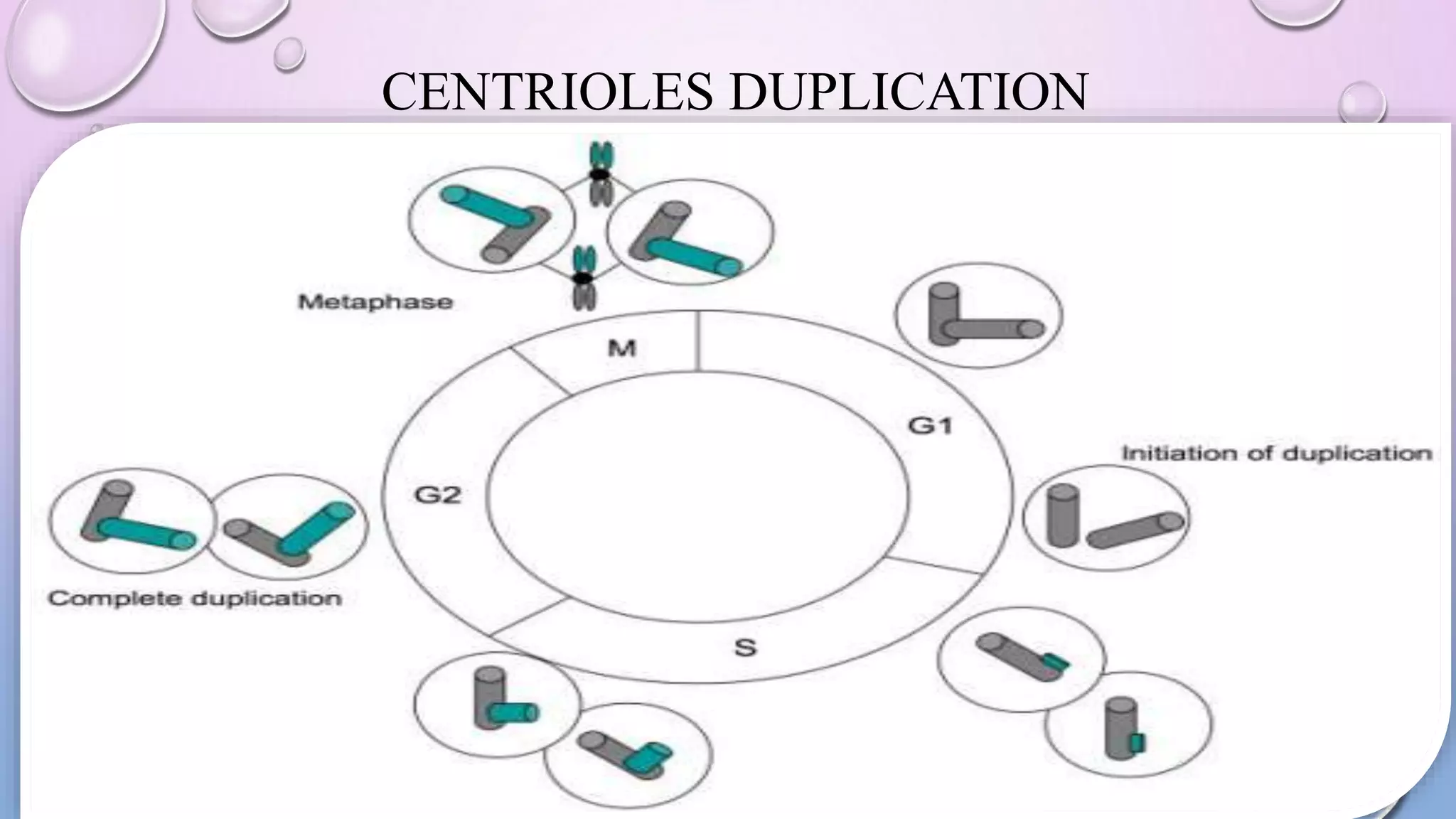
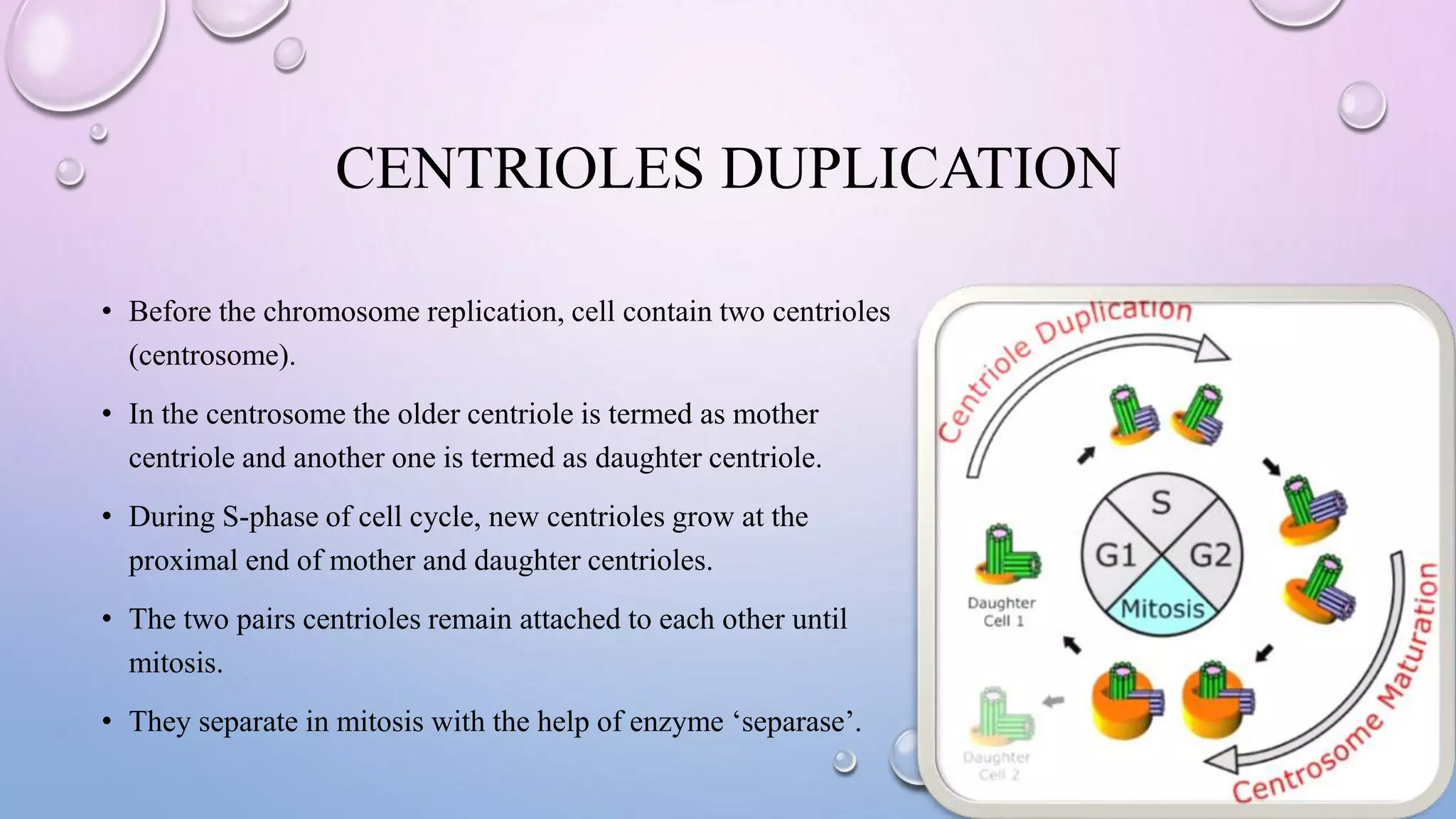
CENTRIOLES DUPLICATION
• Before the chromosome replication, cell contain two centrioles
(centrosome).
• In the centrosome the older centriole is termed as mother
centriole and another one is termed as daughter centriole.
• During S-phase of cell cycle, new centrioles grow at the
proximal end of mother and daughter centrioles.
• The two pairs centrioles remain attached to each other until
mitosis.
• They separate in mitosis with the help of enzyme ‘separase’.
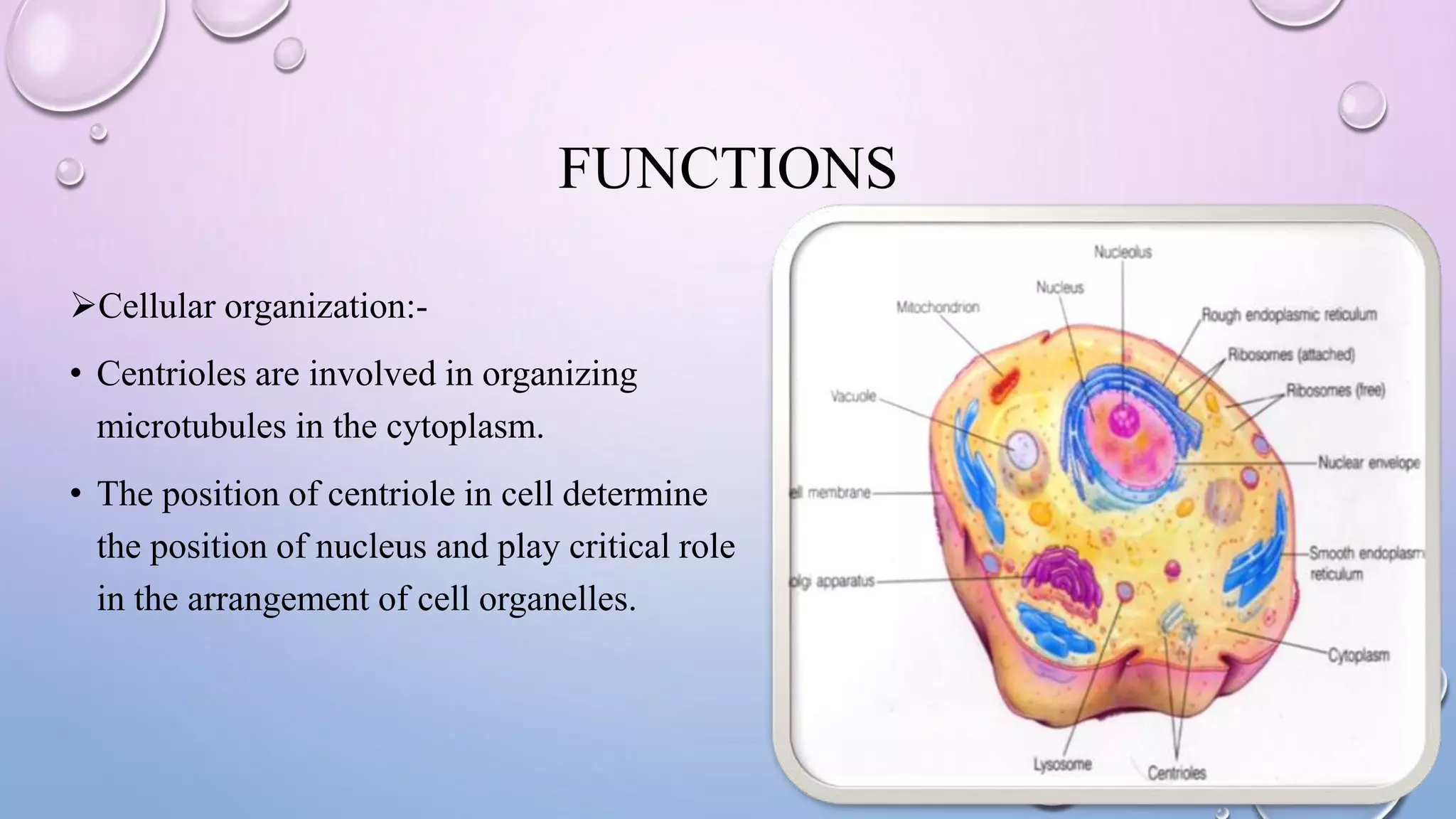
FUNCTIONS
Cellular organization:-
• Centrioles are involved in organizing
microtubules in the cytoplasm.
• The position of centriole in cell determine
the position of nucleus and play critical role
in the arrangement of cell organelles.
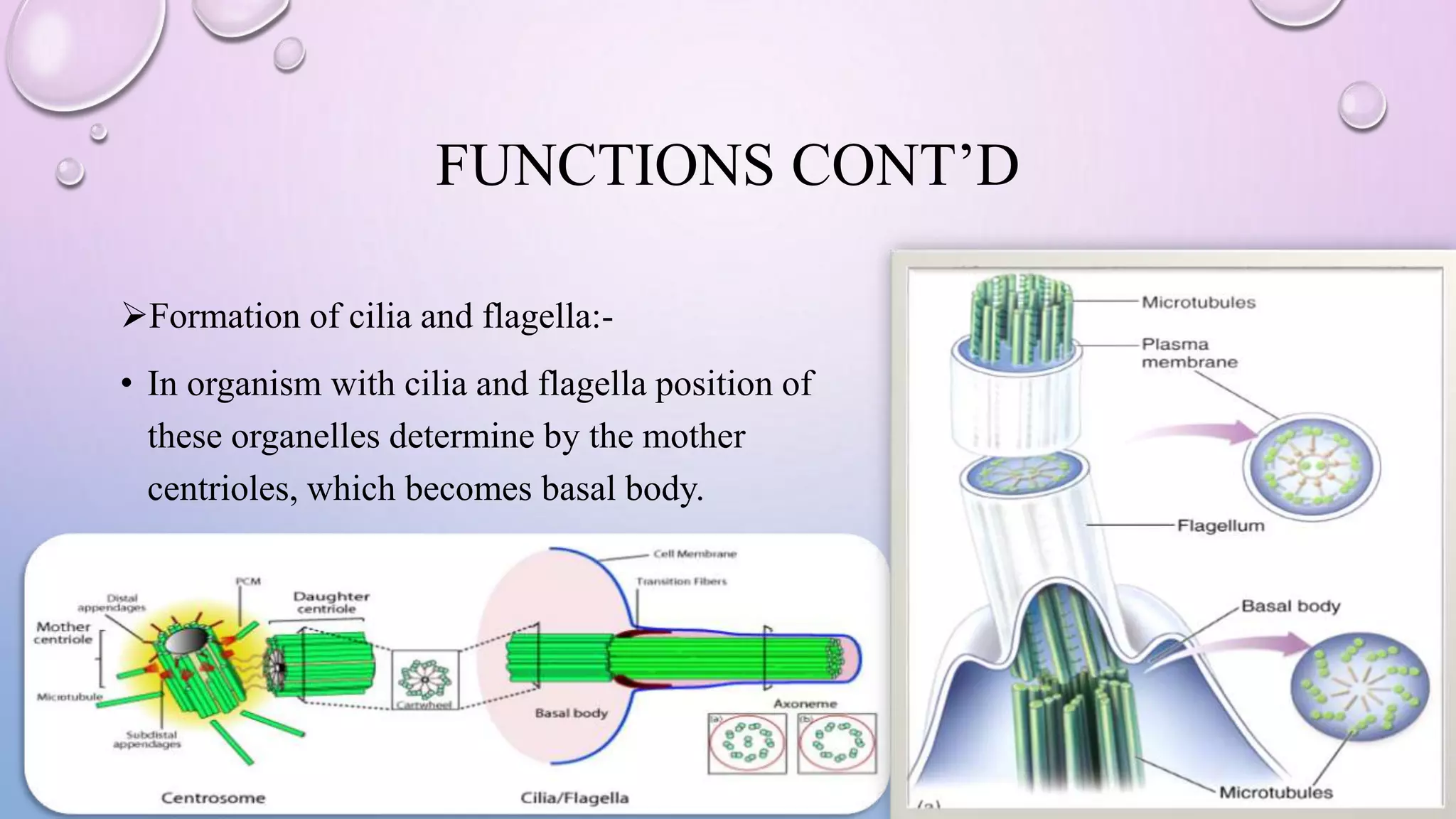
FUNCTIONS CONT’D
Formation of cilia and flagella:-
• In organism with cilia and flagella position of
these organelles determine by the mother
centrioles, which becomes basal body.
FUNCTIONS CONT’D
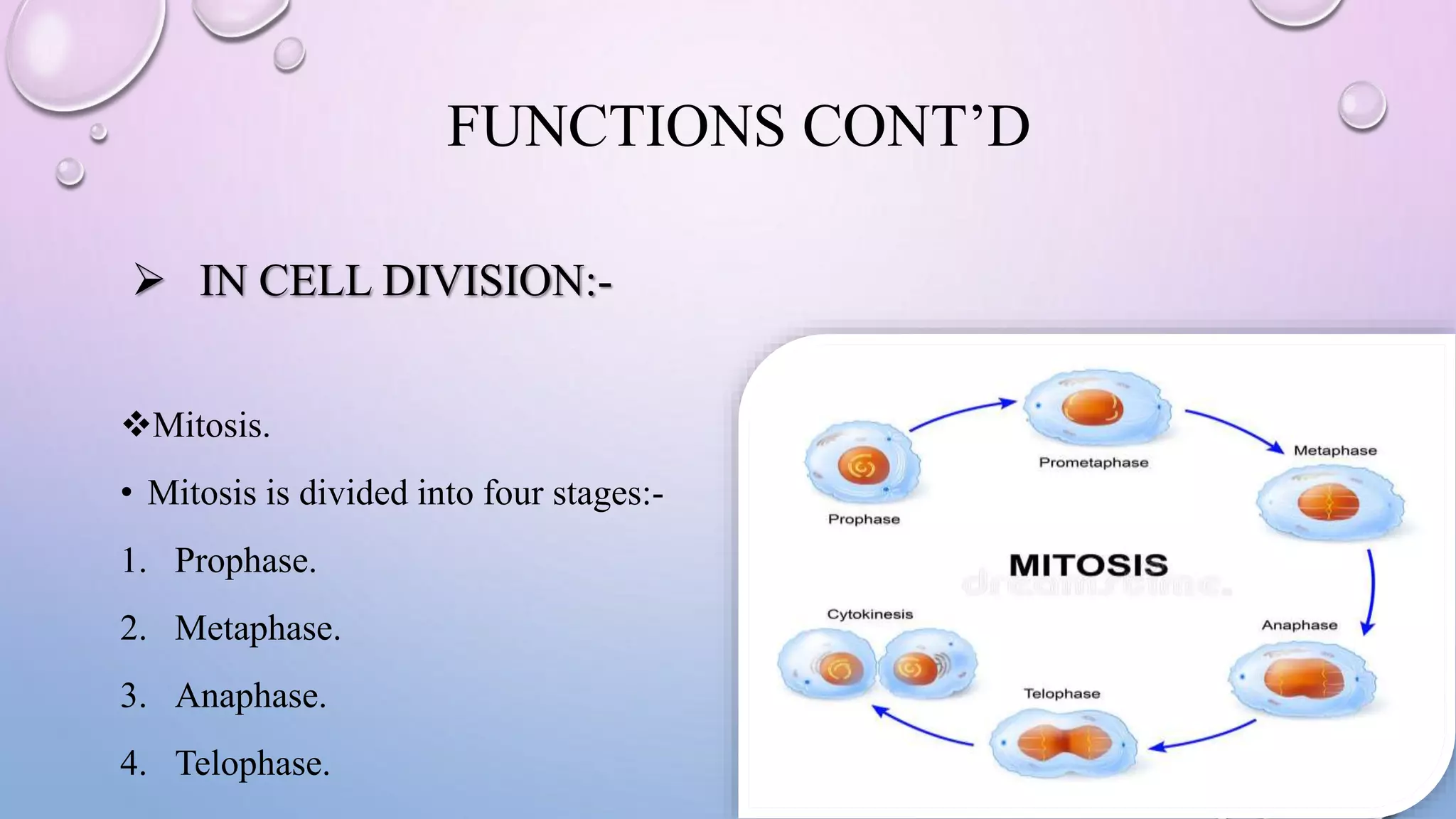
Mitosis.
• Mitosis is divided into four stages:-
1. Prophase.
2. Metaphase.
3. Anaphase.
4. Telophase.
 IN CELL DIVISION:-
Prophase
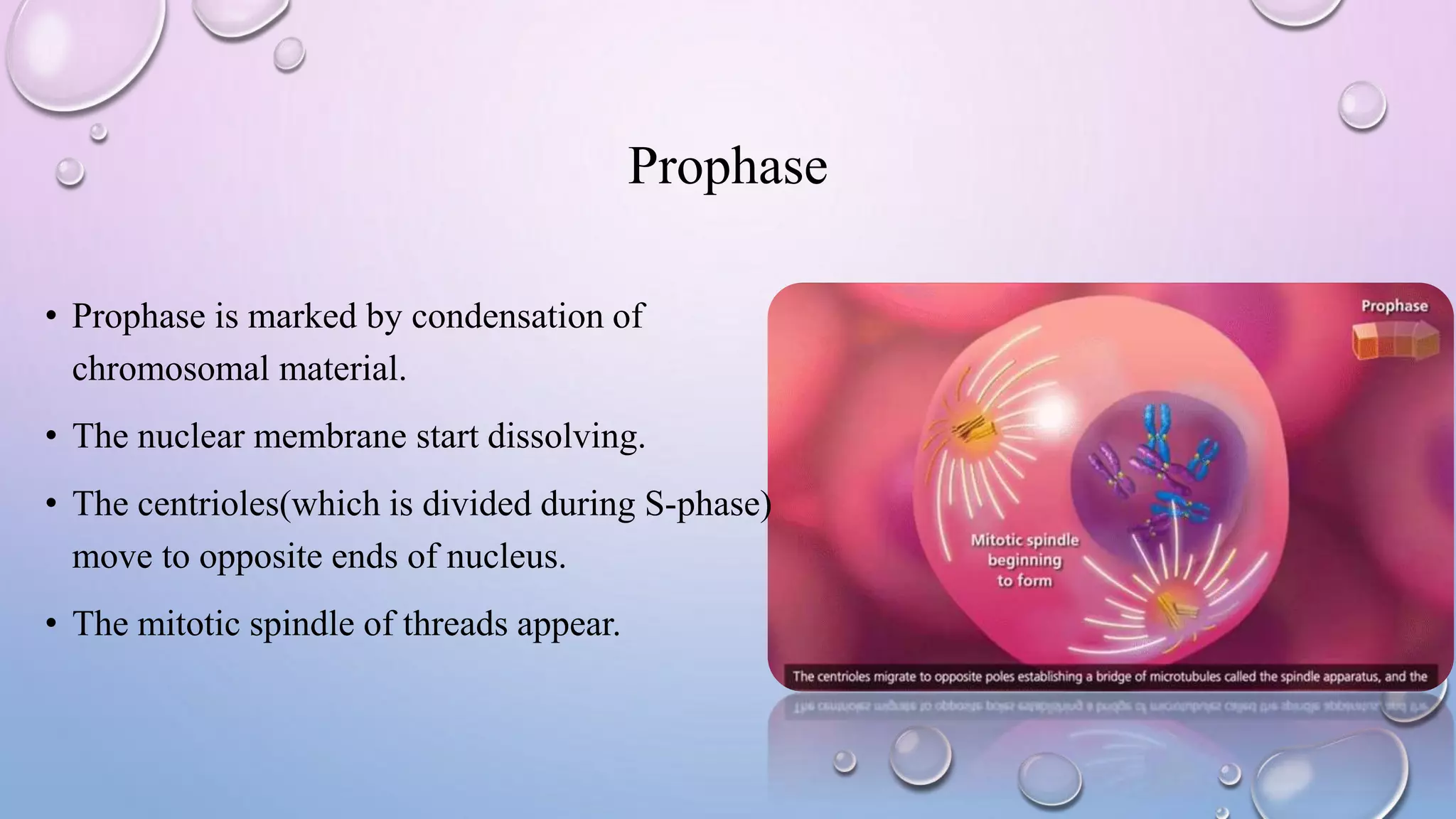
• Prophase is marked by condensation of
chromosomal material.
• The nuclear membrane start dissolving.
• The centrioles(which is divided during S-phase)
move to opposite ends of nucleus.
• The mitotic spindle of threads appear.
Metaphase
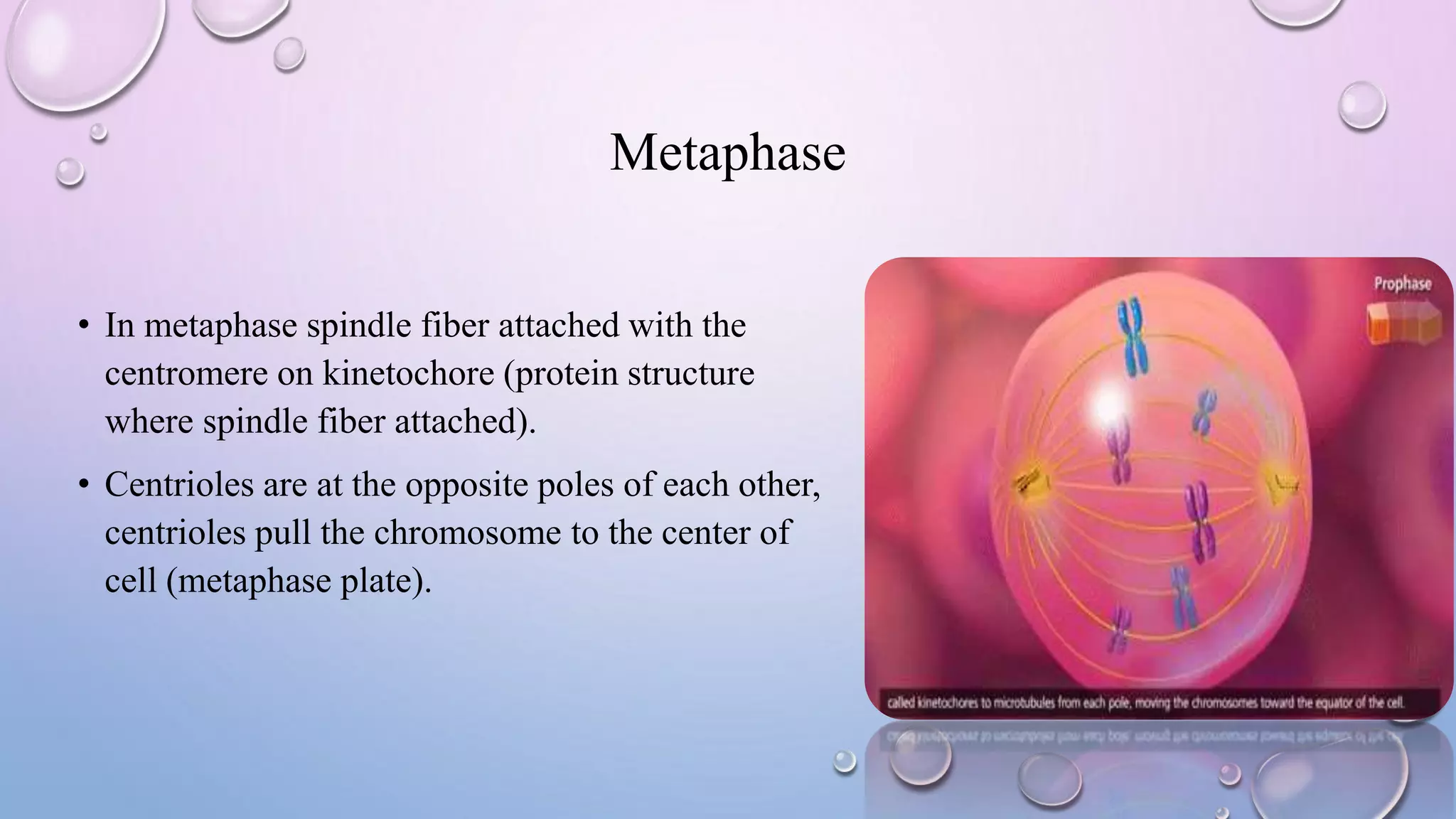
• In metaphase spindle fiber attached with the
centromere on kinetochore (protein structure
where spindle fiber attached).
• Centrioles are at the opposite poles of each other,
centrioles pull the chromosome to the center of
cell (metaphase plate).
Anaphase
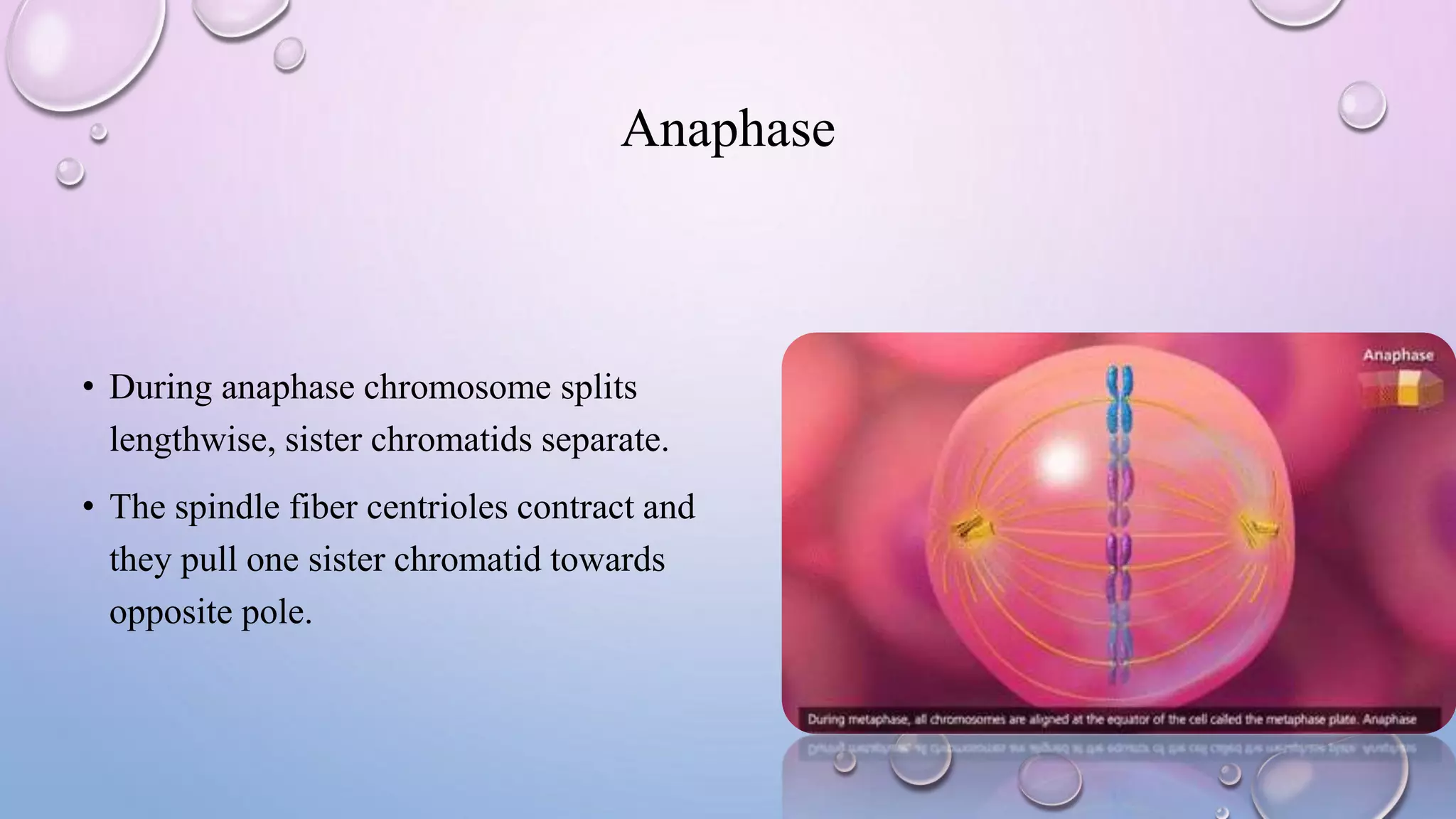
• During anaphase chromosome splits
lengthwise, sister chromatids separate.
• The spindle fiber centrioles contract and
they pull one sister chromatid towards
opposite pole.
Telophase (reverse prophase)
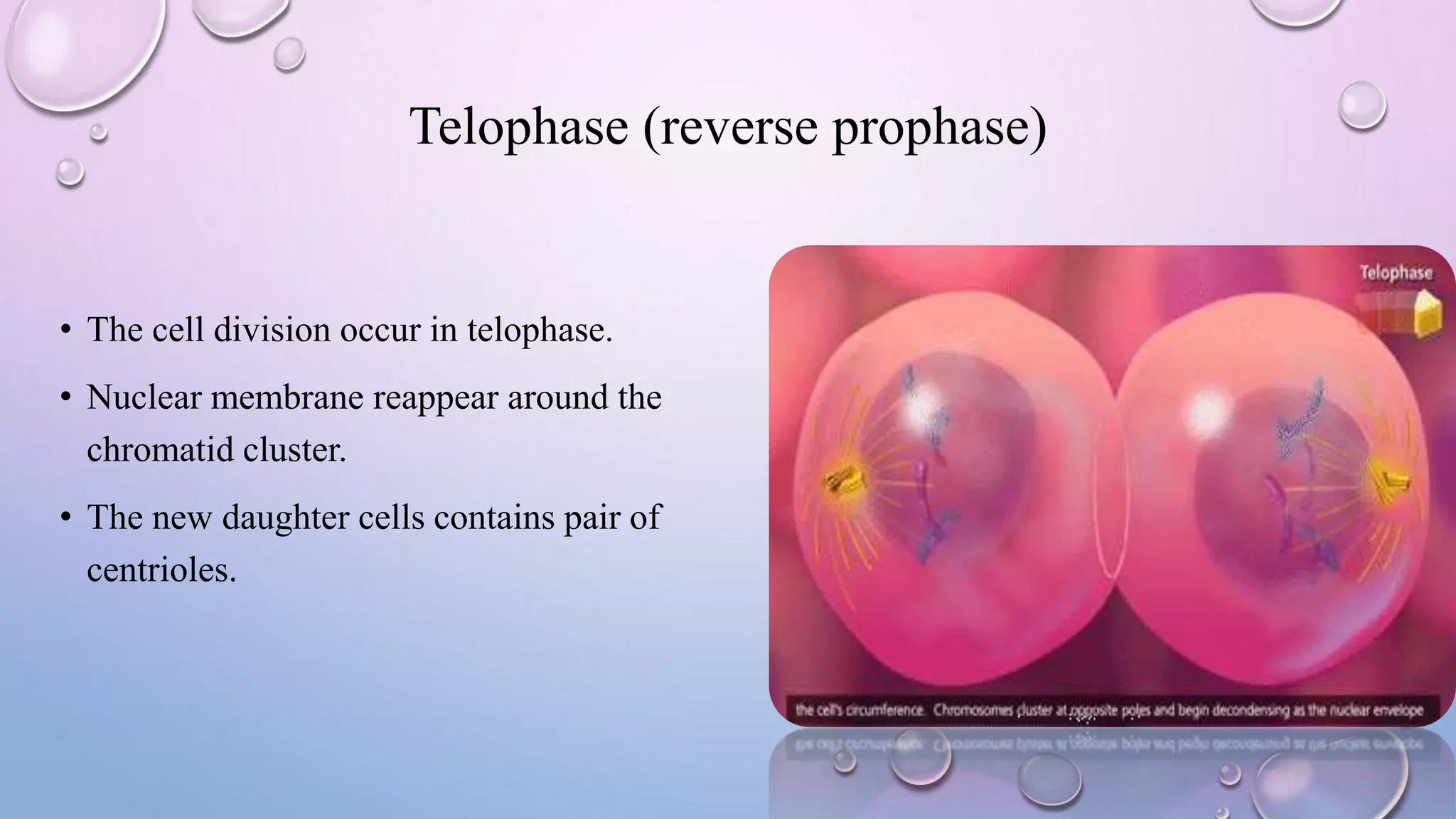
• The cell division occur in telophase.
• Nuclear membrane reappear around the
chromatid cluster.
• The new daughter cells contains pair of
centrioles.
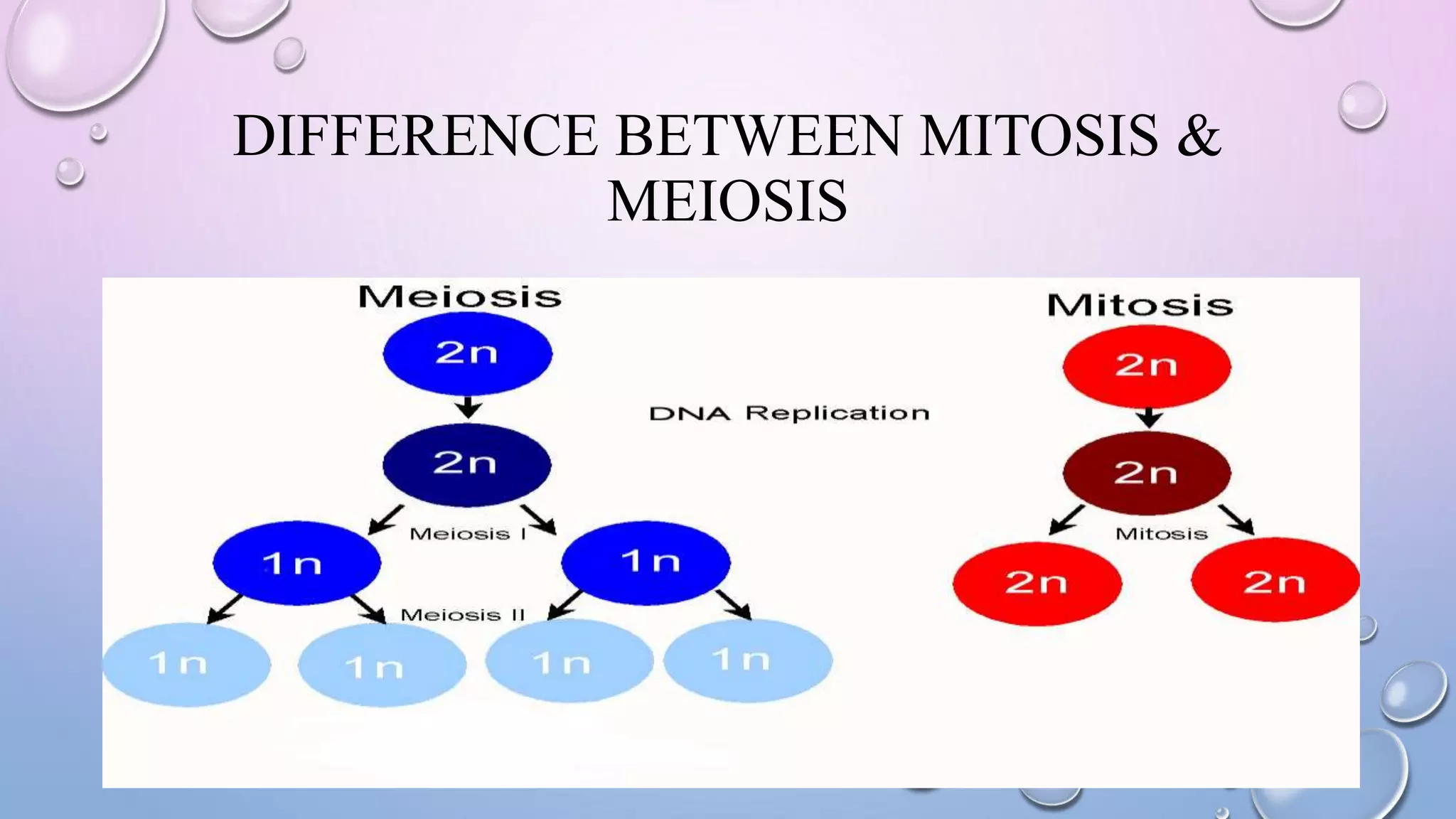
DIFFERENCE BETWEEN MITOSIS &
MEIOSIS
MITOSIS:-
• Takes place in somatic cell of body.
• The two chromatid do not exchange segments.
• Spindle fiber of centriole disappear completely
in telophase.
• Nucleoli reappear in telophase.
MEIOSIS:-
• Only in germ cell.
• The chromatids of homologous chromosome
exchange segment during crossing over.
• Spindle fiber of centriole do not disappear
completely in telophase 1.
• Nucleoli do not reappear in telophase 1.
QUESTIONS..
1). What is centrosome?
Ans:- The pair of centriole is known as centrosome.
2). Centriole duplicate during which phase of cell cycle?
Ans:- S-phase of cell cycle.
3). Centriole is mainly made up of which type of protein?
Ans:- Tubulin Protein.
4). Main functions of centrioles?
Ans:- > Cellular organization.
> Formation of cilia and flagella.
>Help in cell division.
5). What is kinetochore?
Ans:- Protein structure where spindle fiber attached.
That’s all folks!
Thank You

Centrioles (introduction, function, duplication )

  • 1.
    CENTRIOLES PRESENTED BY:- CHANDANIKUMARI. YOGESH VISHWAKARMA.
  • 3.
    INTRODUCTION • Centrioles isa cytoplasmic organelles. • Mostly found in eukaryotic cells. • Centriole lack limiting membrane and DNA or RNA. • Form spindle of microtubule during cell division (mitosis and meiosis).
  • 4.
    INTRODUCTION CONT’D • Centriolesform basal bodies which give rise to axonemes of cilia and flagella. • In eukaryotic cell centrioles are present in pairs. • Pair is commonly known as centrosome. • Each centrioles lie at right angle to each other. • Surrounded by amorphous pericentriolar materials. • Self-duplicate during S phase of cell cycle.
  • 5.
    STRUCTURE • The lengthof the centriole is about 3,000 to 5,000 Ã and diameter is about 1,500 to 1,800 Ã. • Centrioles is made up of lipid and protein, also contain carbohydrate. • Centriole is a set of microtubules. • Made up of mainly tubulin protein (alpha tubulin and beta tubulin)
  • 6.
    STRUCTURE CONT’D • Microtubuleare arranged in the form of open ended cylinders. • The cylindrical structure exhibits cart wheel type structure in transverse section. • Centrioles mainly consists of 9 evenly spaced peripheral triplet fibrils of microtubules. • The nine triplet microtubules are arranged in a pattern of 9+3.
  • 7.
    STRUCTURE CONT’D • Thepattern is named because nine ‘triplet’ arranged at right angle to each other. • These triplets are linked with the help of a-c linker. • The triplets are tilted, they form an angle of 40 degrees to the radius of the cylinder.
  • 9.
  • 10.
    CENTRIOLES DUPLICATION • Beforethe chromosome replication, cell contain two centrioles (centrosome). • In the centrosome the older centriole is termed as mother centriole and another one is termed as daughter centriole. • During S-phase of cell cycle, new centrioles grow at the proximal end of mother and daughter centrioles. • The two pairs centrioles remain attached to each other until mitosis. • They separate in mitosis with the help of enzyme ‘separase’.
  • 11.
    FUNCTIONS Cellular organization:- • Centriolesare involved in organizing microtubules in the cytoplasm. • The position of centriole in cell determine the position of nucleus and play critical role in the arrangement of cell organelles.
  • 12.
    FUNCTIONS CONT’D Formation ofcilia and flagella:- • In organism with cilia and flagella position of these organelles determine by the mother centrioles, which becomes basal body.
  • 13.
    FUNCTIONS CONT’D Mitosis. • Mitosisis divided into four stages:- 1. Prophase. 2. Metaphase. 3. Anaphase. 4. Telophase.  IN CELL DIVISION:-
  • 14.
    Prophase • Prophase ismarked by condensation of chromosomal material. • The nuclear membrane start dissolving. • The centrioles(which is divided during S-phase) move to opposite ends of nucleus. • The mitotic spindle of threads appear.
  • 15.
    Metaphase • In metaphasespindle fiber attached with the centromere on kinetochore (protein structure where spindle fiber attached). • Centrioles are at the opposite poles of each other, centrioles pull the chromosome to the center of cell (metaphase plate).
  • 16.
    Anaphase • During anaphasechromosome splits lengthwise, sister chromatids separate. • The spindle fiber centrioles contract and they pull one sister chromatid towards opposite pole.
  • 17.
    Telophase (reverse prophase) •The cell division occur in telophase. • Nuclear membrane reappear around the chromatid cluster. • The new daughter cells contains pair of centrioles.
  • 18.
  • 19.
    MITOSIS:- • Takes placein somatic cell of body. • The two chromatid do not exchange segments. • Spindle fiber of centriole disappear completely in telophase. • Nucleoli reappear in telophase. MEIOSIS:- • Only in germ cell. • The chromatids of homologous chromosome exchange segment during crossing over. • Spindle fiber of centriole do not disappear completely in telophase 1. • Nucleoli do not reappear in telophase 1.
  • 20.
    QUESTIONS.. 1). What iscentrosome? Ans:- The pair of centriole is known as centrosome. 2). Centriole duplicate during which phase of cell cycle? Ans:- S-phase of cell cycle. 3). Centriole is mainly made up of which type of protein? Ans:- Tubulin Protein. 4). Main functions of centrioles? Ans:- > Cellular organization. > Formation of cilia and flagella. >Help in cell division. 5). What is kinetochore? Ans:- Protein structure where spindle fiber attached.
  • 21.