Signal transduction and hormone
receptor complex
signal
• A signal is a message that can influence the
location of proteins in the cell and can affect
general processes such as protein synthesis,
cell growth and replication, perhaps through
effects on gene expression.
• Intracellular signaling describes the
mechanism by which one cell sends the
messages to change the function of another
cell.
Some signals that cell respond
• Antigens
• Growth factors
• Hormones
• Light
• Mechanical touch
• Neurotransmitter
• Nutrients
• odorents
ligand
• A ligand is any molecule that binds a receptor
protein.
• Agonist
• Ligand that on binding activates signal
transduction.
• Antagonist
• It prevents signal transduction
receptors
• Receptors may be protein in nature.
• Receptors interact with effector protein.
• There are two major classes of receptors
• Intracellular receptor
• Cell surface receptors
receptors
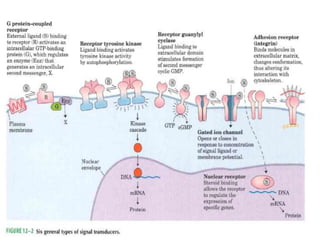
• G-Protein coupled receptor
• Receptor tyrosine kinase
• Receptor guanylyl cyclase
• Gated ion channel
• Adhesion receptor
• Nuclear receptor
receptors
• Several classes of peptide hormone are defined.
• Insulin receptor is a heterotetramer composed of
two copies of two different subunits.alpha2 and
beta 2.
• They are linked by disulphide bridges.
• Alpha subunit binds insulin.
• Membrane spanning beta subunit traduce the
signal through the tyrosine kinase domain located
in the cytoplasmic portion of this polypeptide.
• Receptor for insulin like growth factor and
epidermal growth factor are generally similar
in structure to the insulin receptor.
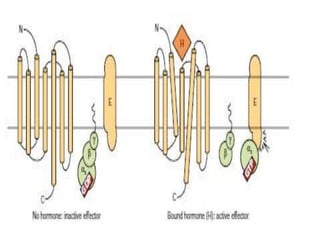
Hepta-helical receptor
• Poly peptide hormone and catecholamine
receptors ,which transduce the signal by
altering the rate of production cAMP through
G-protein are characterized by the presence of
seven domains that span the plasma
membrane.
• Protein kinase activation and generation of
cAMP is a down stream action of this class of
hormone.
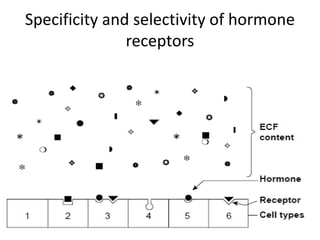
Specificity and selectivity of hormone
receptors
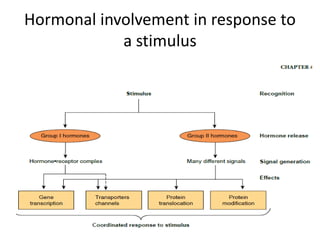
Hormonal involvement in response to
a stimulus
Steps in signal transduction
• Binding of extracellular agonist.
• Change in intrinsic energy.
• Receptors counteract with effector protein.
Signal generation
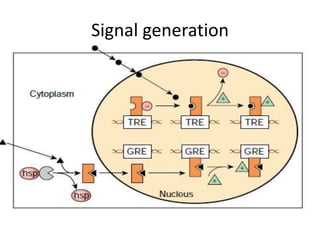
• The lipophilic group 1 hormones diffuse
through the plasma membrane of all cells but
only encounter their specific high affinity
receptor in target cells. These receptors can
be located in the cytoplasm or in the nucleus
of the target cell. The hormone receptor
complex undergoes an activation reaction.
Receptor activation occurs by two
mechanisms.
• Glucocorticoid diffuses across the plasma
membrane and encounter their cognate
receptor in the cytoplasm of target cell.
• Ligand receptor binding results in
conformational change in the receptor leading
to dissociation of heat shock proteins90.
• The activated receptor moves into the nucleus
and binds with high affinity to a specific DNA
sequence called hormone response element.
• Certain hormones such as thyroid hormone
and retinoid diffuse from the extracellular
fluid across the plasma membrane and go
directly into the nucleus.
Signal generation
Group 2 hormone
• Many hormone are water soluble, have no
transport protein and initiate a response by
binding to a receptor located in the plasma
membrane.
• The mechanism is best described in terms of
intracellular signal.
• These signals include cAMP etc.
G-protein coupled receptor
• Many group II hormones bind to receptor that
couple to effector through a GTP binding
protein.
• Receptors have seven hydrophobic domains.
• Receptors of this class which signal through
guanine nucleotide bound intermediates are
known as G-PROTEIN COUPLED RECEPTOR.

Signal transduction and hormone receptor complex

  • 1.
    Signal transduction andhormone receptor complex
  • 2.
    signal • A signalis a message that can influence the location of proteins in the cell and can affect general processes such as protein synthesis, cell growth and replication, perhaps through effects on gene expression. • Intracellular signaling describes the mechanism by which one cell sends the messages to change the function of another cell.
  • 4.
    Some signals thatcell respond • Antigens • Growth factors • Hormones • Light • Mechanical touch • Neurotransmitter • Nutrients • odorents
  • 5.
    ligand • A ligandis any molecule that binds a receptor protein. • Agonist • Ligand that on binding activates signal transduction. • Antagonist • It prevents signal transduction
  • 6.
    receptors • Receptors maybe protein in nature. • Receptors interact with effector protein. • There are two major classes of receptors • Intracellular receptor • Cell surface receptors
  • 7.
    receptors • G-Protein coupledreceptor • Receptor tyrosine kinase • Receptor guanylyl cyclase • Gated ion channel • Adhesion receptor • Nuclear receptor
  • 9.
    receptors • Several classesof peptide hormone are defined. • Insulin receptor is a heterotetramer composed of two copies of two different subunits.alpha2 and beta 2. • They are linked by disulphide bridges. • Alpha subunit binds insulin. • Membrane spanning beta subunit traduce the signal through the tyrosine kinase domain located in the cytoplasmic portion of this polypeptide.
  • 10.
    • Receptor forinsulin like growth factor and epidermal growth factor are generally similar in structure to the insulin receptor.
  • 11.
    Hepta-helical receptor • Polypeptide hormone and catecholamine receptors ,which transduce the signal by altering the rate of production cAMP through G-protein are characterized by the presence of seven domains that span the plasma membrane. • Protein kinase activation and generation of cAMP is a down stream action of this class of hormone.
  • 13.
    Specificity and selectivityof hormone receptors
  • 14.
    Hormonal involvement inresponse to a stimulus
  • 15.
    Steps in signaltransduction • Binding of extracellular agonist. • Change in intrinsic energy. • Receptors counteract with effector protein.
  • 16.
    Signal generation • Thelipophilic group 1 hormones diffuse through the plasma membrane of all cells but only encounter their specific high affinity receptor in target cells. These receptors can be located in the cytoplasm or in the nucleus of the target cell. The hormone receptor complex undergoes an activation reaction. Receptor activation occurs by two mechanisms.
  • 17.
    • Glucocorticoid diffusesacross the plasma membrane and encounter their cognate receptor in the cytoplasm of target cell. • Ligand receptor binding results in conformational change in the receptor leading to dissociation of heat shock proteins90. • The activated receptor moves into the nucleus and binds with high affinity to a specific DNA sequence called hormone response element.
  • 18.
    • Certain hormonessuch as thyroid hormone and retinoid diffuse from the extracellular fluid across the plasma membrane and go directly into the nucleus.
  • 19.
  • 21.
    Group 2 hormone •Many hormone are water soluble, have no transport protein and initiate a response by binding to a receptor located in the plasma membrane. • The mechanism is best described in terms of intracellular signal. • These signals include cAMP etc.
  • 22.
    G-protein coupled receptor •Many group II hormones bind to receptor that couple to effector through a GTP binding protein. • Receptors have seven hydrophobic domains. • Receptors of this class which signal through guanine nucleotide bound intermediates are known as G-PROTEIN COUPLED RECEPTOR.