


RESEARCH PROCESS
Dr. Heta Patel(PT)
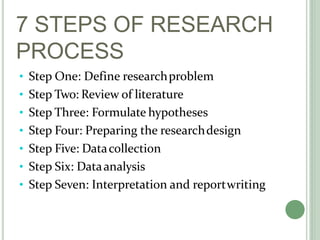
7 STEPS OF RESEARCH
PROCESS
• Step One: Define researchproblem
• Step Two: Review of literature
• Step Three: Formulate hypotheses
• Step Four: Preparing the researchdesign
• Step Five: Datacollection
• Step Six: Dataanalysis
• Step Seven: Interpretation and reportwriting
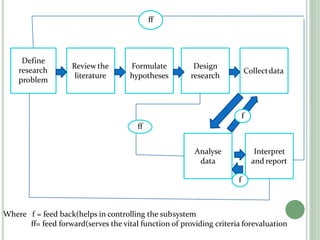
Define
research
problem
Reviewthe
literature
Formulate
hypotheses
Design
research
Collectdata
Analyse
data
Interpret
and report
ff
f
f
ff
Where f = feed back(helps in controlling the subsystem
ff= feed forward(serves the vital function of providing criteria forevaluation
DEFINING RESEARCH
PROBLEM
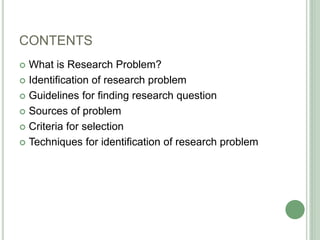
CONTENTS
 What is Research Problem?
 Identification of research problem
 Guidelines for finding research question
 Sources of problem
 Criteria for selection
 Techniques for identification of research problem
RESEARCH PROBLEM
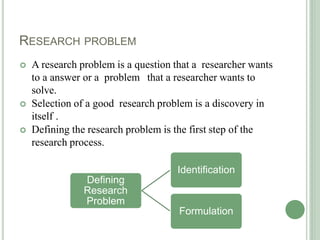
 A research problem is a question that a researcher wants
to a answer or a problem that a researcher wants to
solve.
 Selection of a good research problem is a discovery in
itself .
 Defining the research problem is the first step of the
research process.
Defining
Research
Problem
Identification
Formulation
DEFINITION OF RESEARCH PROBLEM
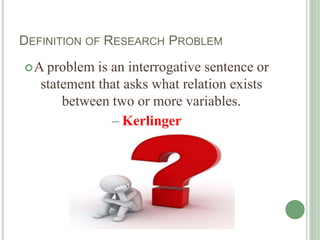
A problem is an interrogative sentence or
statement that asks what relation exists
between two or more variables.
– Kerlinger
IDENTIFICATION OF RESEARCH
PROBLEM
Fundamental Issue inResearch
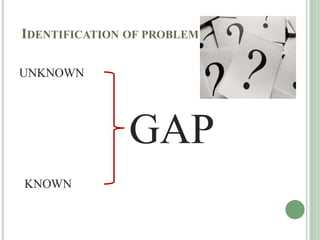
IDENTIFICATION OF PROBLEM
KNOWN
UNKNOWN
GAP
 Identification of a research problem is the first and most
important step in research process.
 A, broad area is selected and then broad topic delimited
or narrowed down to a specific one sentence statement
of the problem.
 Its very difficult and challenging and needs lots of time.
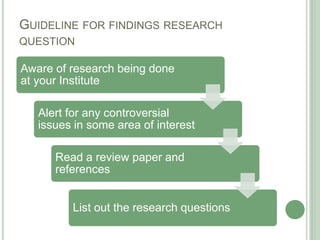
GUIDELINE FOR FINDINGS RESEARCH
QUESTION
Aware of research being done
at your Institute
Alert for any controversial
issues in some area of interest
Read a review paper and
references
List out the research questions
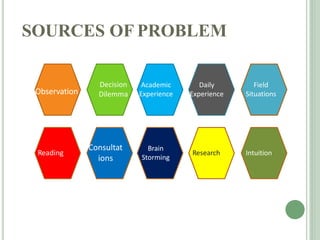
SOURCES OF PROBLEM
Decision
Dilemma
Academic
Experience
Daily
Experience
Field
Situations
Consultat
ions
Brain
Storming
Research Intuition
Observation
Reading
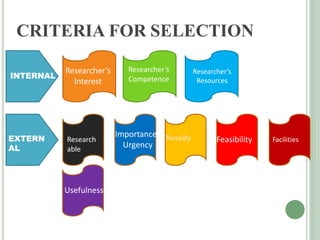
CRITERIA FOR SELECTION
Researcher’s
Competence
Researcher’s
Resources
Importance
Urgency
Novelty Feasibility Facilities
Researcher’s
Interest
Research
able
INTERNAL
EXTERN
AL
Usefulness
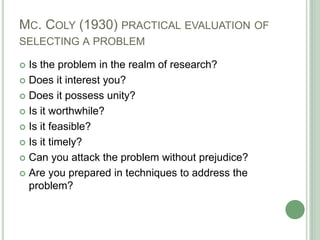
MC. COLY (1930) PRACTICAL EVALUATION OF
SELECTING A PROBLEM
 Is the problem in the realm of research?
 Does it interest you?
 Does it possess unity?
 Is it worthwhile?
 Is it feasible?
 Is it timely?
 Can you attack the problem without prejudice?
 Are you prepared in techniques to address the
problem?
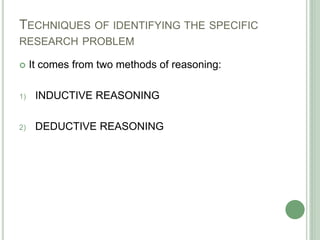
TECHNIQUES OF IDENTIFYING THE SPECIFIC
RESEARCH PROBLEM
 It comes from two methods of reasoning:
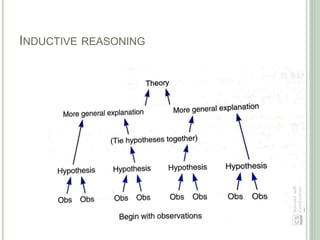
1) INDUCTIVE REASONING
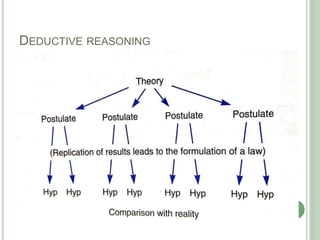
2) DEDUCTIVE REASONING
INDUCTIVE REASONING
DEDUCTIVE REASONING
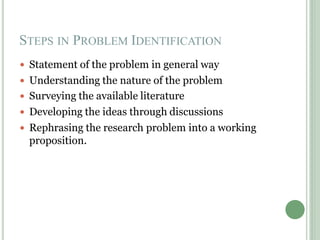
STEPS IN PROBLEM IDENTIFICATION
 Statement of the problem in general way
 Understanding the nature of the problem
 Surveying the available literature
 Developing the ideas through discussions
 Rephrasing the research problem into a working
proposition.
STATEMENT OF THE PROBLEM IN GENERAL WAY
 Define the problem in general way
 Ex: Does clinician’s interested in application of
evidence based practice ?
 Narrow it down by rethinking over the problem.
(Consider feasibility of problem)
 Ex: Does evidence based practice develop the interest of
clinician?
  How to define in general way?
Note: Study the related subject thoroughly Do preliminary survey or
pilot survey
UNDERSTANDING THE NATURE OF THE
PROBLEM
Best way to understand the problem is through
discussion.
Discussion with the people who has good knowledge
about that problem.
SURVEYING THE AVAILABLE LITERATURE
 Survey all the research which are already undertaken in
related problem.
 It helps to :
 Narrow down the problem
 To identify research gaps
 Gives new ideas in related area
 Helps for research design
DEVELOPING THE IDEAS THROUGH DISCUSSIONS
 Discussion always produces useful information.
 Various new ideas can be developed through such an
exercise.
 Researcher must discuss his/her problem with his/ her
colleagues and others who have enough experience in
the same area or in working on similar problems. This is
known as experience survey.
 Benefits : confined the specific problem, general
approach to problem thorough techniques, possible
solutions
REPHRASING THE RESEARCH PROBLEM INTO A
WORKING PROPOSITION
 Rephrase the research problem in to operational term.
 Initial research question: Why is knee pain more
common in rural population in India?
 After, the problem has understood, available literature
has taken place and discussion over the problem has
taken place, the question has rephrased.
 Rephrased Research question: What factors were
responsible for the knee pain in elderly rural population
comparing with the urban population of India?
Take home message
Research process
Research process

Research process

  • 1.
  • 2.
    7 STEPS OFRESEARCH PROCESS • Step One: Define researchproblem • Step Two: Review of literature • Step Three: Formulate hypotheses • Step Four: Preparing the researchdesign • Step Five: Datacollection • Step Six: Dataanalysis • Step Seven: Interpretation and reportwriting
  • 3.
    Define research problem Reviewthe literature Formulate hypotheses Design research Collectdata Analyse data Interpret and report ff f f ff Where f= feed back(helps in controlling the subsystem ff= feed forward(serves the vital function of providing criteria forevaluation
  • 4.
  • 5.
    CONTENTS  What isResearch Problem?  Identification of research problem  Guidelines for finding research question  Sources of problem  Criteria for selection  Techniques for identification of research problem
  • 6.
    RESEARCH PROBLEM  Aresearch problem is a question that a researcher wants to a answer or a problem that a researcher wants to solve.  Selection of a good research problem is a discovery in itself .  Defining the research problem is the first step of the research process. Defining Research Problem Identification Formulation
  • 7.
    DEFINITION OF RESEARCHPROBLEM A problem is an interrogative sentence or statement that asks what relation exists between two or more variables. – Kerlinger
  • 8.
  • 9.
  • 10.
     Identification ofa research problem is the first and most important step in research process.  A, broad area is selected and then broad topic delimited or narrowed down to a specific one sentence statement of the problem.  Its very difficult and challenging and needs lots of time.
  • 11.
    GUIDELINE FOR FINDINGSRESEARCH QUESTION Aware of research being done at your Institute Alert for any controversial issues in some area of interest Read a review paper and references List out the research questions
  • 12.
  • 13.
    CRITERIA FOR SELECTION Researcher’s Competence Researcher’s Resources Importance Urgency NoveltyFeasibility Facilities Researcher’s Interest Research able INTERNAL EXTERN AL Usefulness
  • 14.
    MC. COLY (1930)PRACTICAL EVALUATION OF SELECTING A PROBLEM  Is the problem in the realm of research?  Does it interest you?  Does it possess unity?  Is it worthwhile?  Is it feasible?  Is it timely?  Can you attack the problem without prejudice?  Are you prepared in techniques to address the problem?
  • 15.
    TECHNIQUES OF IDENTIFYINGTHE SPECIFIC RESEARCH PROBLEM  It comes from two methods of reasoning: 1) INDUCTIVE REASONING 2) DEDUCTIVE REASONING
  • 16.
  • 17.
  • 18.
    STEPS IN PROBLEMIDENTIFICATION  Statement of the problem in general way  Understanding the nature of the problem  Surveying the available literature  Developing the ideas through discussions  Rephrasing the research problem into a working proposition.
  • 19.
    STATEMENT OF THEPROBLEM IN GENERAL WAY  Define the problem in general way  Ex: Does clinician’s interested in application of evidence based practice ?  Narrow it down by rethinking over the problem. (Consider feasibility of problem)  Ex: Does evidence based practice develop the interest of clinician?   How to define in general way? Note: Study the related subject thoroughly Do preliminary survey or pilot survey
  • 20.
    UNDERSTANDING THE NATUREOF THE PROBLEM Best way to understand the problem is through discussion. Discussion with the people who has good knowledge about that problem.
  • 21.
    SURVEYING THE AVAILABLELITERATURE  Survey all the research which are already undertaken in related problem.  It helps to :  Narrow down the problem  To identify research gaps  Gives new ideas in related area  Helps for research design
  • 22.
    DEVELOPING THE IDEASTHROUGH DISCUSSIONS  Discussion always produces useful information.  Various new ideas can be developed through such an exercise.  Researcher must discuss his/her problem with his/ her colleagues and others who have enough experience in the same area or in working on similar problems. This is known as experience survey.  Benefits : confined the specific problem, general approach to problem thorough techniques, possible solutions
  • 23.
    REPHRASING THE RESEARCHPROBLEM INTO A WORKING PROPOSITION  Rephrase the research problem in to operational term.  Initial research question: Why is knee pain more common in rural population in India?  After, the problem has understood, available literature has taken place and discussion over the problem has taken place, the question has rephrased.  Rephrased Research question: What factors were responsible for the knee pain in elderly rural population comparing with the urban population of India?
  • 25.