MECHANISM OF OEDEMA
 Oedema is caused by mechanisms that interfere
with normal fluid balance of plasma, interstitial
fluid and lymph flow.

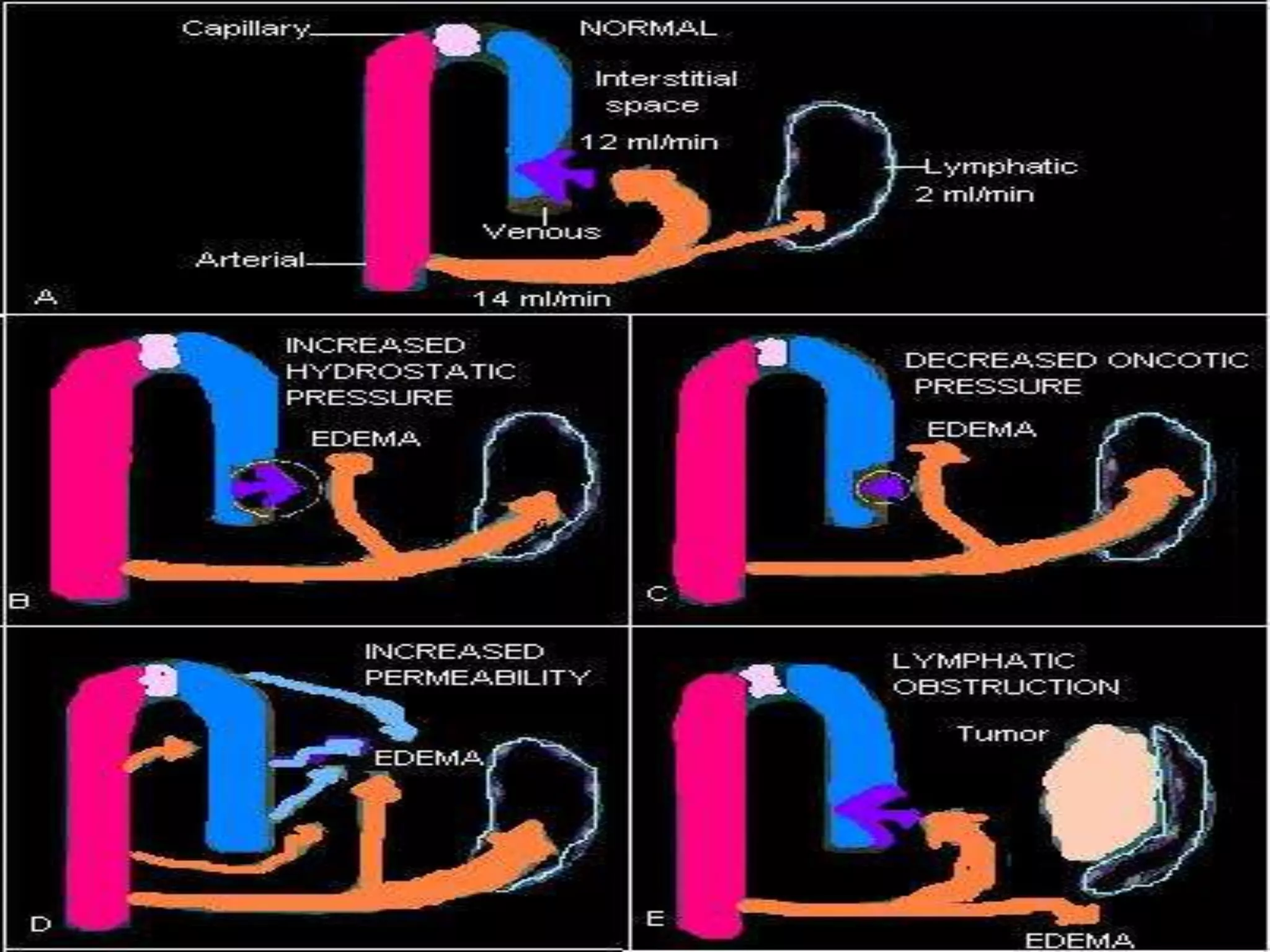
Movement of fluid- controlled by opposing
effects of vascular hydrostatic pressure and colloid
osmotic pressure.

Exit of fluid from arteriolar end is balanced by
inflow at venular end of microcirculation.

Small residual amount of excess interstitial fluid is
drained by lymphatics.
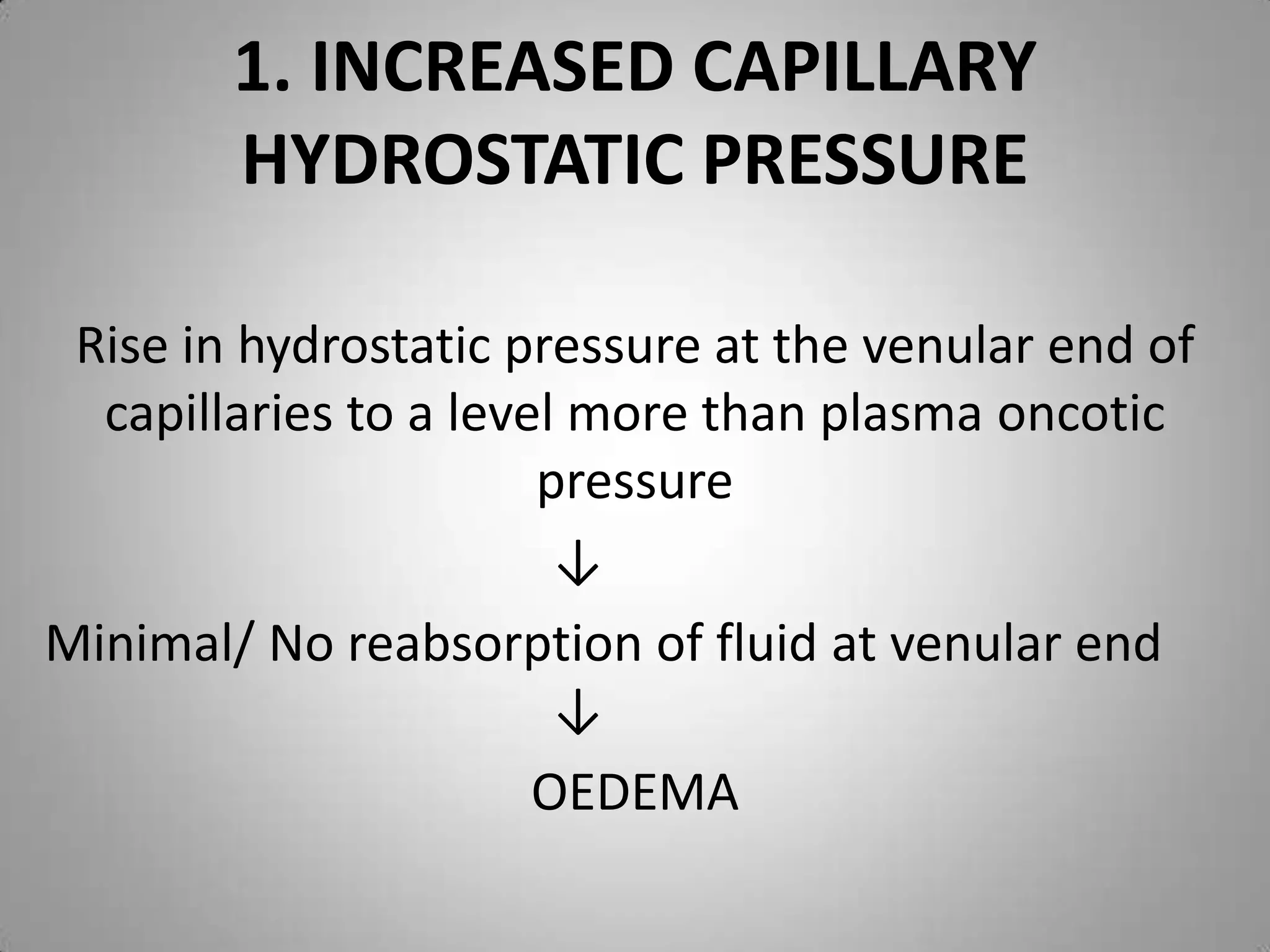
1. INCREASED CAPILLARY
        HYDROSTATIC PRESSURE

 Rise in hydrostatic pressure at the venular end of
  capillaries to a level more than plasma oncotic
                       pressure
                        ↓
Minimal/ No reabsorption of fluid at venular end
                        ↓
                       OEDEMA
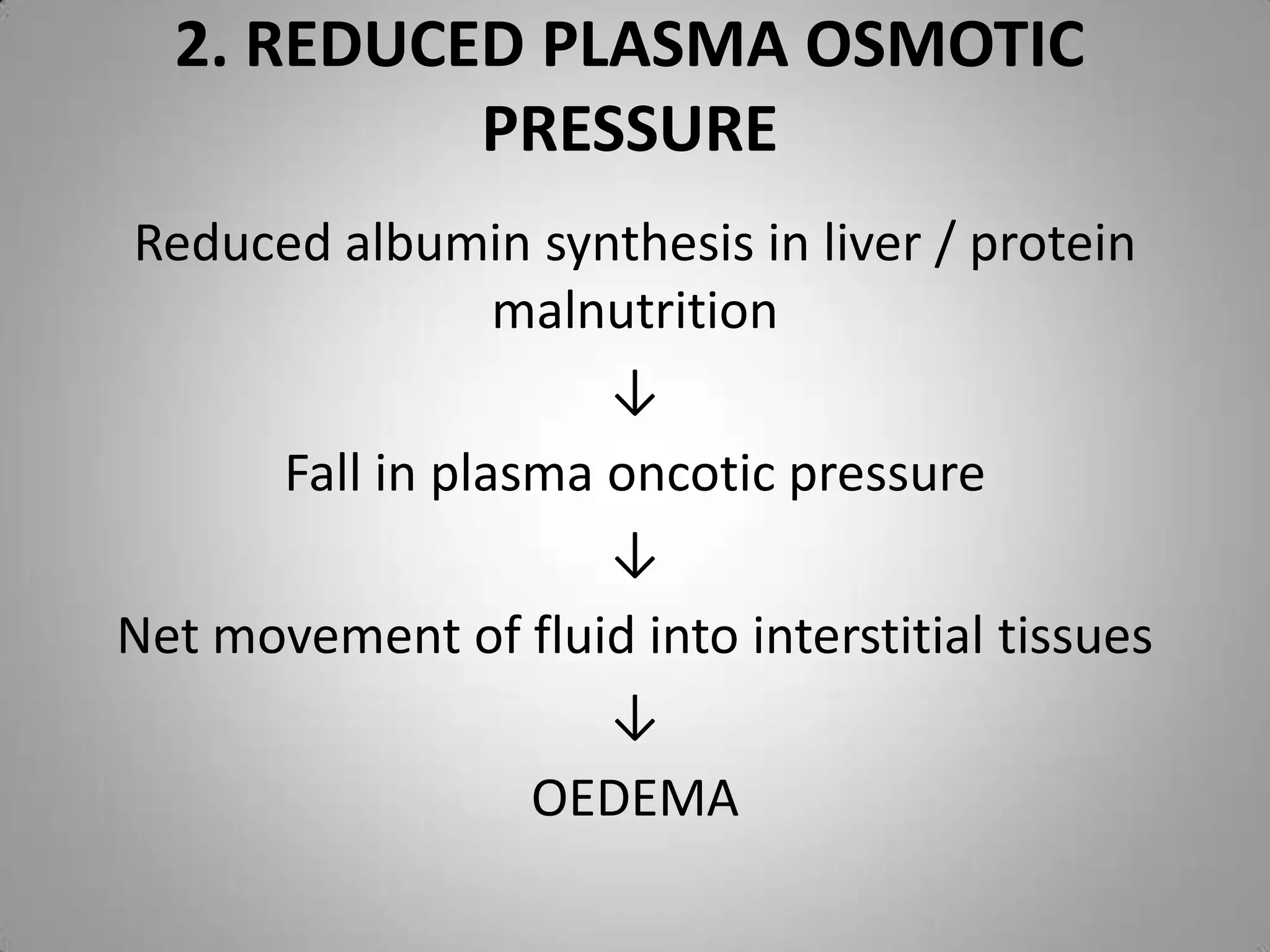
2. REDUCED PLASMA OSMOTIC
           PRESSURE
Reduced albumin synthesis in liver / protein
                 malnutrition
                     ↓
      Fall in plasma oncotic pressure
                     ↓
Net movement of fluid into interstitial tissues
                     ↓
                  OEDEMA
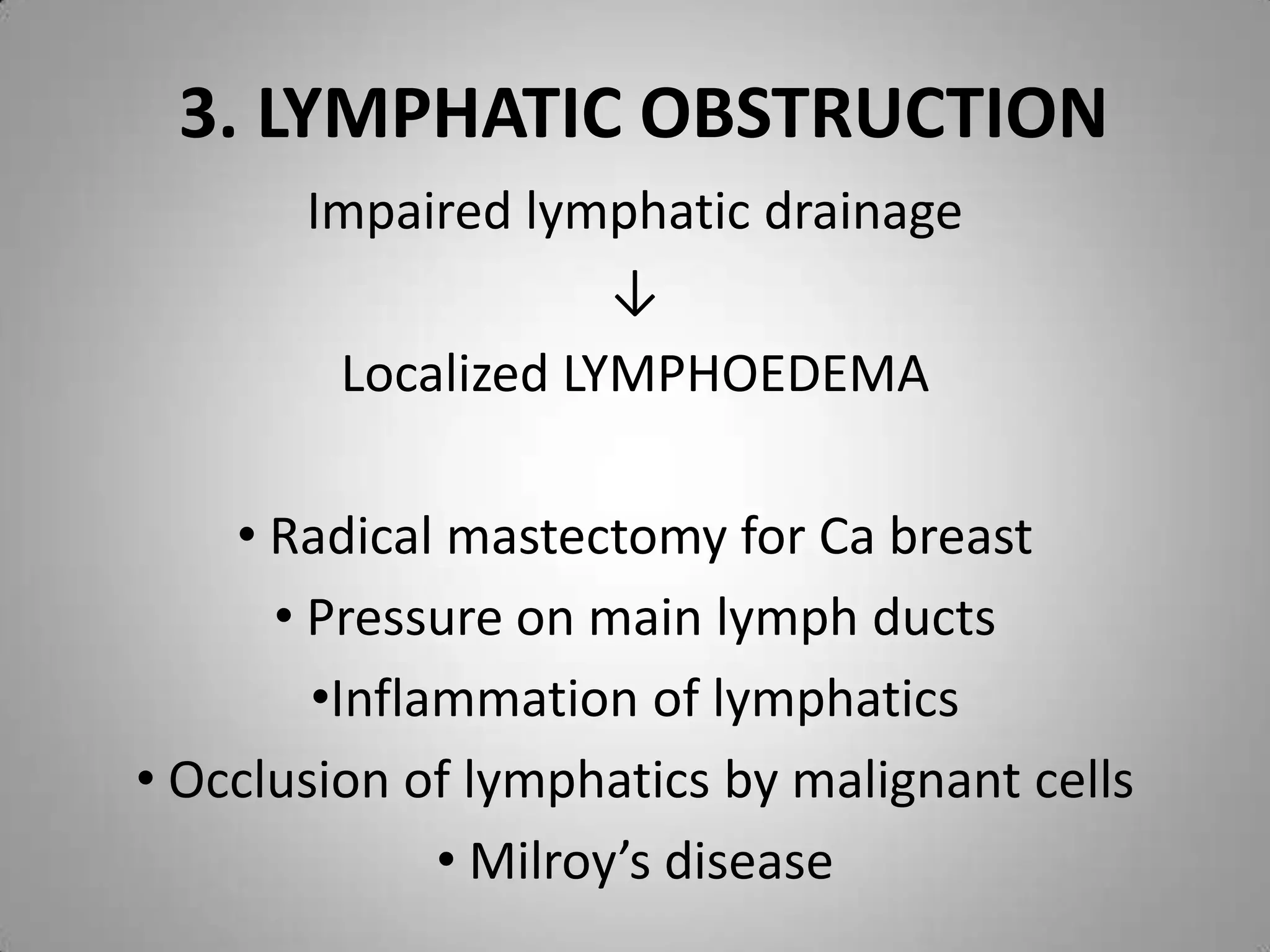
3. LYMPHATIC OBSTRUCTION
       Impaired lymphatic drainage
                    ↓
        Localized LYMPHOEDEMA

    • Radical mastectomy for Ca breast
      • Pressure on main lymph ducts
        •Inflammation of lymphatics
• Occlusion of lymphatics by malignant cells
              • Milroy’s disease
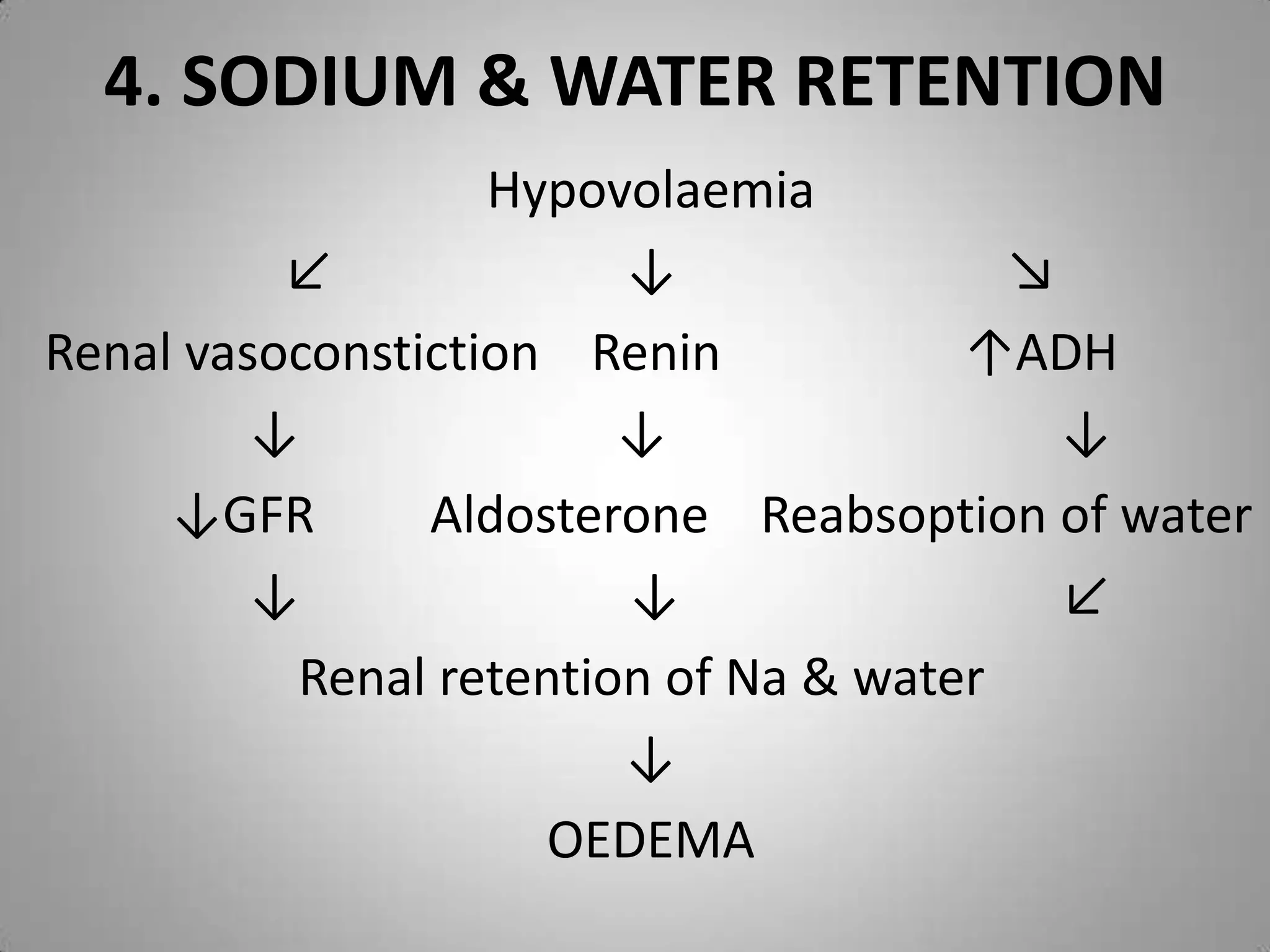
4. SODIUM & WATER RETENTION
                   Hypovolaemia
          ↙             ↓               ↘
Renal vasoconstiction Renin           ↑ADH
         ↓              ↓                 ↓
     ↓GFR       Aldosterone Reabsoption of water
         ↓              ↓                 ↙
          Renal retention of Na & water
                        ↓
                     OEDEMA
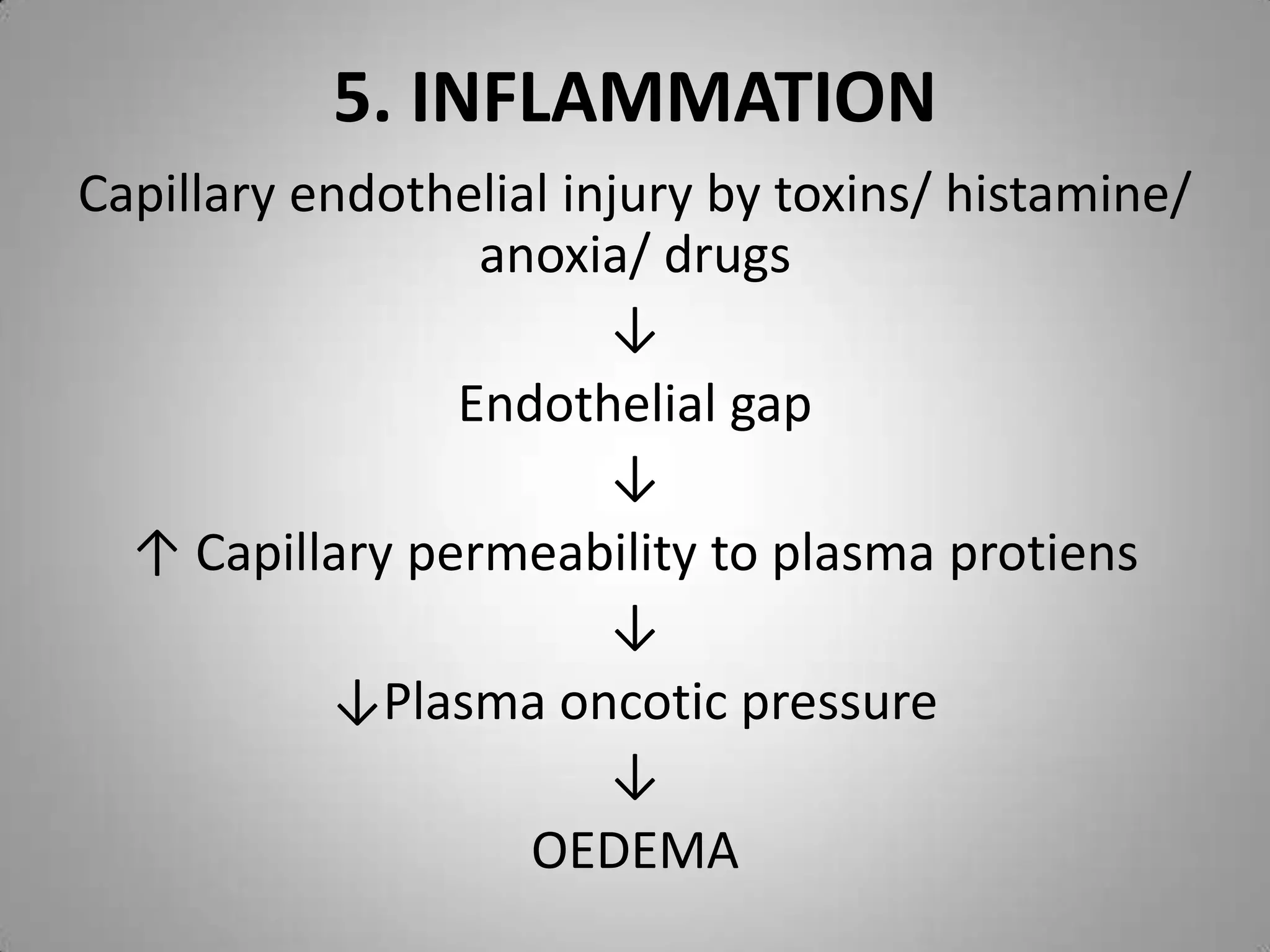
5. INFLAMMATION
Capillary endothelial injury by toxins/ histamine/
                 anoxia/ drugs
                        ↓
                Endothelial gap
                        ↓
  ↑ Capillary permeability to plasma protiens
                        ↓
           ↓Plasma oncotic pressure
                        ↓
                    OEDEMA
THANK YOU……

Mechanism of edema

  • 1.
  • 2.
     Oedema iscaused by mechanisms that interfere with normal fluid balance of plasma, interstitial fluid and lymph flow. Movement of fluid- controlled by opposing effects of vascular hydrostatic pressure and colloid osmotic pressure. Exit of fluid from arteriolar end is balanced by inflow at venular end of microcirculation. Small residual amount of excess interstitial fluid is drained by lymphatics.
  • 3.
    1. INCREASED CAPILLARY HYDROSTATIC PRESSURE Rise in hydrostatic pressure at the venular end of capillaries to a level more than plasma oncotic pressure ↓ Minimal/ No reabsorption of fluid at venular end ↓ OEDEMA
  • 4.
    2. REDUCED PLASMAOSMOTIC PRESSURE Reduced albumin synthesis in liver / protein malnutrition ↓ Fall in plasma oncotic pressure ↓ Net movement of fluid into interstitial tissues ↓ OEDEMA
  • 5.
    3. LYMPHATIC OBSTRUCTION Impaired lymphatic drainage ↓ Localized LYMPHOEDEMA • Radical mastectomy for Ca breast • Pressure on main lymph ducts •Inflammation of lymphatics • Occlusion of lymphatics by malignant cells • Milroy’s disease
  • 6.
    4. SODIUM &WATER RETENTION Hypovolaemia ↙ ↓ ↘ Renal vasoconstiction Renin ↑ADH ↓ ↓ ↓ ↓GFR Aldosterone Reabsoption of water ↓ ↓ ↙ Renal retention of Na & water ↓ OEDEMA
  • 7.
    5. INFLAMMATION Capillary endothelialinjury by toxins/ histamine/ anoxia/ drugs ↓ Endothelial gap ↓ ↑ Capillary permeability to plasma protiens ↓ ↓Plasma oncotic pressure ↓ OEDEMA
  • 9.

Editor's Notes