A.Arputha Selvaraj
1
2
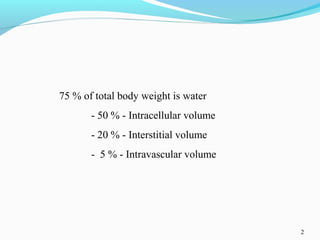
75 % of total body weight is water
- 50 % - Intracellular volume
- 20 % - Interstitial volume
- 5 % - Intravascular volume
3
EDEMA
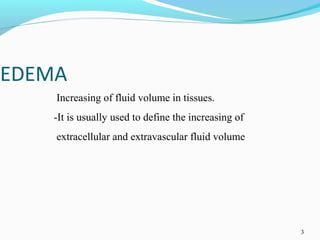
Increasing of fluid volume in tissues.
-It is usually used to define the increasing of
extracellular and extravascular fluid volume
4
EDEMA – Local (Pulmonary, cerebral, pharyngeal
- Disseminated (Increasing of interstitial
fluid volume)
5
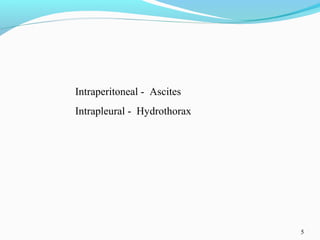
Intraperitoneal - Ascites
Intrapleural - Hydrothorax
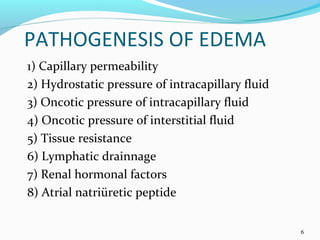
PATHOGENESIS OF EDEMA
1) Capillary permeability
2) Hydrostatic pressure of intracapillary fluid
3) Oncotic pressure of intracapillary fluid
4) Oncotic pressure of interstitial fluid
5) Tissue resistance
6) Lymphatic drainnage
7) Renal hormonal factors
8) Atrial natriüretic peptide
6
7
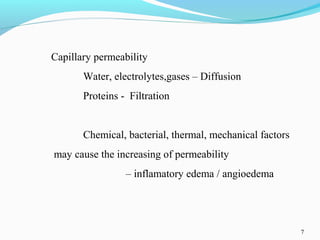
Capillary permeability
Water, electrolytes,gases – Diffusion
Proteins - Filtration
Chemical, bacterial, thermal, mechanical factors
may cause the increasing of permeability
– inflamatory edema / angioedema
8
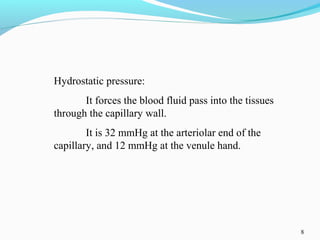
Hydrostatic pressure:
It forces the blood fluid pass into the tissues
through the capillary wall.
It is 32 mmHg at the arteriolar end of the
capillary, and 12 mmHg at the venule hand.
9
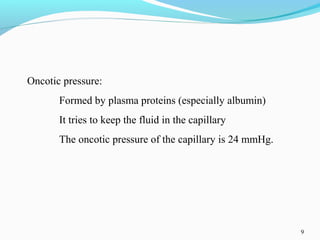
Oncotic pressure:
Formed by plasma proteins (especially albumin)
It tries to keep the fluid in the capillary
The oncotic pressure of the capillary is 24 mmHg.
10
Plasma protin content > İnterstitial protein content →
Plasma oncotic pressure > ınterstitial oncotic pressre
Effective oncotic pressure = Plasma oncotic pressure –
Interstitium oncotic pressure
Effective oncotic pressure decreases:
- As the decreasing of plasma oncotic pressure
( cirrhosis, malnutrition, nephrotic syndrome, protein
loosing ent.)
- As the increasing of interstitium oncotic pressure
(Increasing of permeability – inflamatory / allergy)
11
Arteriolar end: Hydrostatic pressure > Oncotic pressure
⇒ Fluid passes into interstitium
Venule end: Oncotic pressure > Hydrostatic pressure
⇒ Fluid returns capillary bed
* The increase of pressure at the venule end ⇒Fluid
cannot return capillary and stay at the interstitium
12
Oncotic pressure of the interstitium:
The amount of protein is nearly 0.3 % g / dl
and it is not so important
13
Lymph drainege:
Some of the fluid in the interstitium and a few
amount of protein diffused into interstitium is carried
by lymph vessels. Obstruction of the vessels causes
edema.
14
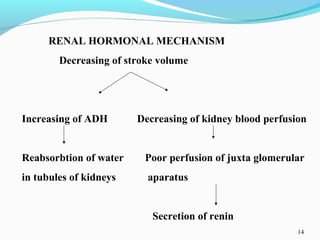
RENAL HORMONAL MECHANISM
Decreasing of stroke volume
Increasing of ADH Decreasing of kidney blood perfusion
Reabsorbtion of water Poor perfusion of juxta glomerular
in tubules of kidneys aparatus
Secretion of renin
15
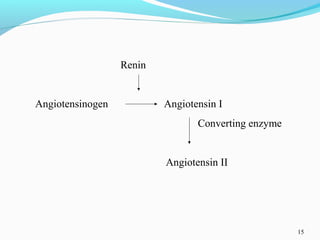
Renin
Angiotensinogen Angiotensin I
Converting enzyme
Angiotensin II
16
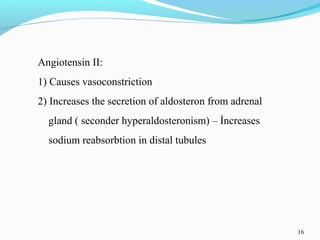
Angiotensin II:
1) Causes vasoconstriction
2) Increases the secretion of aldosteron from adrenal
gland ( seconder hyperaldosteronism) – İncreases
sodium reabsorbtion in distal tubules
17
-Secreted by the secretory granules in the atrium
-Secretion is stimulated by atrial enlargement ( plasma volume
increases)
-Increases diuresis and sodium output.
-Causes vasodilatation
-Inhibits renin and angiotensin release
18
EDEMA
-Dısseminated edema
-Local edema
Disseminated Edema
Edema due to cardiac failure
Nephritic edema
Nephrotic edema
Edema caused by liver failure
Nutritional edema (inadequate intake)
Protein loss through gastrointestinal system
Edema due to endocrine pathologies
Edema during pregnancy
19
Local edema
- Traumatic
- Inflammatory edema
- Obstriction of venous circulation
- Thrombophlebitis
- Compression of veins
-Lymphatic edema
-Angioneurotic edema
20
21
- Blood volume per minute decreases ⇒ Water is
conserved by renal and hormonal mechanisms
- Hydrostatic pressure increases
22
Mild and hard edema is seen in acute glomerulonephritis
Glomerular filtration decreases, but tubular reabsorbtion is
not disturbed. (glomerulotubular inbalance)
Capillaritis (generalized capillary disorder)
23
-It is very soft and in anasarca type
-Low oncotic pressure due to protein loss
-Secondary hyperaldosteronism
Cirrhotic Edema
It is usually seen with ascites
Albumin synthesis in liver decreases
Some blood proteins are excreted in feces due to
portal hypertension
Aldosteron breakdown in liver decreases ;
secretion by adrenal gland increases (secondary
hyperaldosteronism)
24
Nutritional edema
Kwashiworker
Malabsobtion Syndromes
Gastrectomy
 Cancer
25
Edema due to endocrine
pathologies
Mixedema
Premenstrual edema
Pregnancy
26
Iatrogenic Edema
Mineralocorticoid
Corticosteroid
Androgen
ADH
27
28
Due tu increased permeability
- Microorganisms
- Connective tissue disorders
Venous Edema
Thrombophlebitis: Local inflamations cause
thrombus ⇒ venous obstriction
-Large and hard edema
- Erythema, hotness,pain
Compression of veins
-Ganglion, tumor,ascites
Edema related to varices
High hydrostatic pressure in veins
29
Lymphatic Edema
Due to obstruction of lymph vessels,plasma proteins
cannot be taken from the interstitium
30
31
Vessels insubcutaneous tissue enlarge due to local
histamine discharge and extravasation from
capillaries occurs
-Food allergy -Drug allergy
-Infections -Emotional
Thank You
32

Edema

  • 1.
  • 2.
    2 75 % oftotal body weight is water - 50 % - Intracellular volume - 20 % - Interstitial volume - 5 % - Intravascular volume
  • 3.
    3 EDEMA Increasing of fluidvolume in tissues. -It is usually used to define the increasing of extracellular and extravascular fluid volume
  • 4.
    4 EDEMA – Local(Pulmonary, cerebral, pharyngeal - Disseminated (Increasing of interstitial fluid volume)
  • 5.
  • 6.
    PATHOGENESIS OF EDEMA 1)Capillary permeability 2) Hydrostatic pressure of intracapillary fluid 3) Oncotic pressure of intracapillary fluid 4) Oncotic pressure of interstitial fluid 5) Tissue resistance 6) Lymphatic drainnage 7) Renal hormonal factors 8) Atrial natriüretic peptide 6
  • 7.
    7 Capillary permeability Water, electrolytes,gases– Diffusion Proteins - Filtration Chemical, bacterial, thermal, mechanical factors may cause the increasing of permeability – inflamatory edema / angioedema
  • 8.
    8 Hydrostatic pressure: It forcesthe blood fluid pass into the tissues through the capillary wall. It is 32 mmHg at the arteriolar end of the capillary, and 12 mmHg at the venule hand.
  • 9.
    9 Oncotic pressure: Formed byplasma proteins (especially albumin) It tries to keep the fluid in the capillary The oncotic pressure of the capillary is 24 mmHg.
  • 10.
    10 Plasma protin content> İnterstitial protein content → Plasma oncotic pressure > ınterstitial oncotic pressre Effective oncotic pressure = Plasma oncotic pressure – Interstitium oncotic pressure Effective oncotic pressure decreases: - As the decreasing of plasma oncotic pressure ( cirrhosis, malnutrition, nephrotic syndrome, protein loosing ent.) - As the increasing of interstitium oncotic pressure (Increasing of permeability – inflamatory / allergy)
  • 11.
    11 Arteriolar end: Hydrostaticpressure > Oncotic pressure ⇒ Fluid passes into interstitium Venule end: Oncotic pressure > Hydrostatic pressure ⇒ Fluid returns capillary bed * The increase of pressure at the venule end ⇒Fluid cannot return capillary and stay at the interstitium
  • 12.
    12 Oncotic pressure ofthe interstitium: The amount of protein is nearly 0.3 % g / dl and it is not so important
  • 13.
    13 Lymph drainege: Some ofthe fluid in the interstitium and a few amount of protein diffused into interstitium is carried by lymph vessels. Obstruction of the vessels causes edema.
  • 14.
    14 RENAL HORMONAL MECHANISM Decreasingof stroke volume Increasing of ADH Decreasing of kidney blood perfusion Reabsorbtion of water Poor perfusion of juxta glomerular in tubules of kidneys aparatus Secretion of renin
  • 15.
  • 16.
    16 Angiotensin II: 1) Causesvasoconstriction 2) Increases the secretion of aldosteron from adrenal gland ( seconder hyperaldosteronism) – İncreases sodium reabsorbtion in distal tubules
  • 17.
    17 -Secreted by thesecretory granules in the atrium -Secretion is stimulated by atrial enlargement ( plasma volume increases) -Increases diuresis and sodium output. -Causes vasodilatation -Inhibits renin and angiotensin release
  • 18.
  • 19.
    Disseminated Edema Edema dueto cardiac failure Nephritic edema Nephrotic edema Edema caused by liver failure Nutritional edema (inadequate intake) Protein loss through gastrointestinal system Edema due to endocrine pathologies Edema during pregnancy 19
  • 20.
    Local edema - Traumatic -Inflammatory edema - Obstriction of venous circulation - Thrombophlebitis - Compression of veins -Lymphatic edema -Angioneurotic edema 20
  • 21.
    21 - Blood volumeper minute decreases ⇒ Water is conserved by renal and hormonal mechanisms - Hydrostatic pressure increases
  • 22.
    22 Mild and hardedema is seen in acute glomerulonephritis Glomerular filtration decreases, but tubular reabsorbtion is not disturbed. (glomerulotubular inbalance) Capillaritis (generalized capillary disorder)
  • 23.
    23 -It is verysoft and in anasarca type -Low oncotic pressure due to protein loss -Secondary hyperaldosteronism
  • 24.
    Cirrhotic Edema It isusually seen with ascites Albumin synthesis in liver decreases Some blood proteins are excreted in feces due to portal hypertension Aldosteron breakdown in liver decreases ; secretion by adrenal gland increases (secondary hyperaldosteronism) 24
  • 25.
  • 26.
    Edema due toendocrine pathologies Mixedema Premenstrual edema Pregnancy 26
  • 27.
  • 28.
    28 Due tu increasedpermeability - Microorganisms - Connective tissue disorders
  • 29.
    Venous Edema Thrombophlebitis: Localinflamations cause thrombus ⇒ venous obstriction -Large and hard edema - Erythema, hotness,pain Compression of veins -Ganglion, tumor,ascites Edema related to varices High hydrostatic pressure in veins 29
  • 30.
    Lymphatic Edema Due toobstruction of lymph vessels,plasma proteins cannot be taken from the interstitium 30
  • 31.
    31 Vessels insubcutaneous tissueenlarge due to local histamine discharge and extravasation from capillaries occurs -Food allergy -Drug allergy -Infections -Emotional
  • 32.