Downloaded 905 times



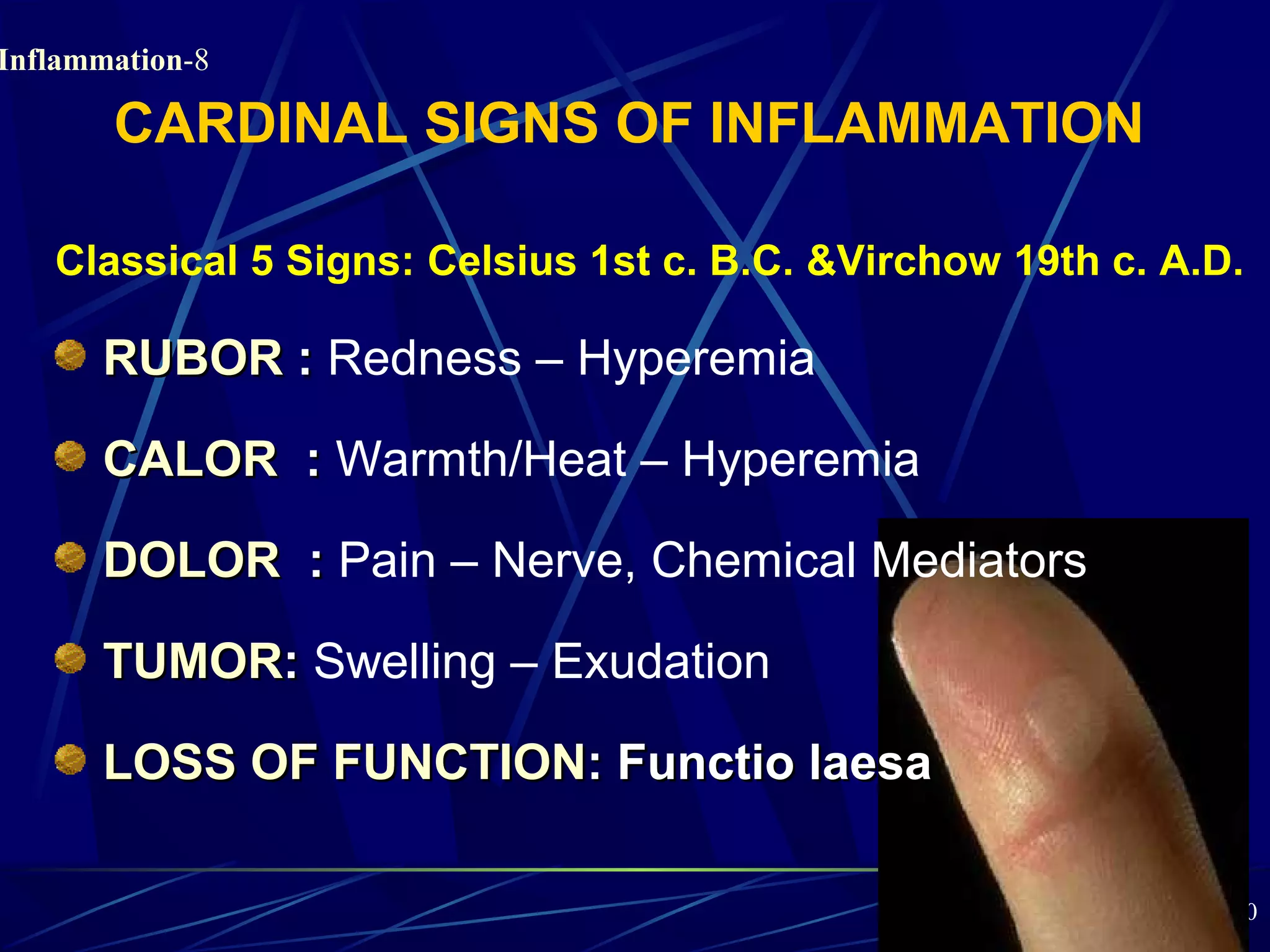
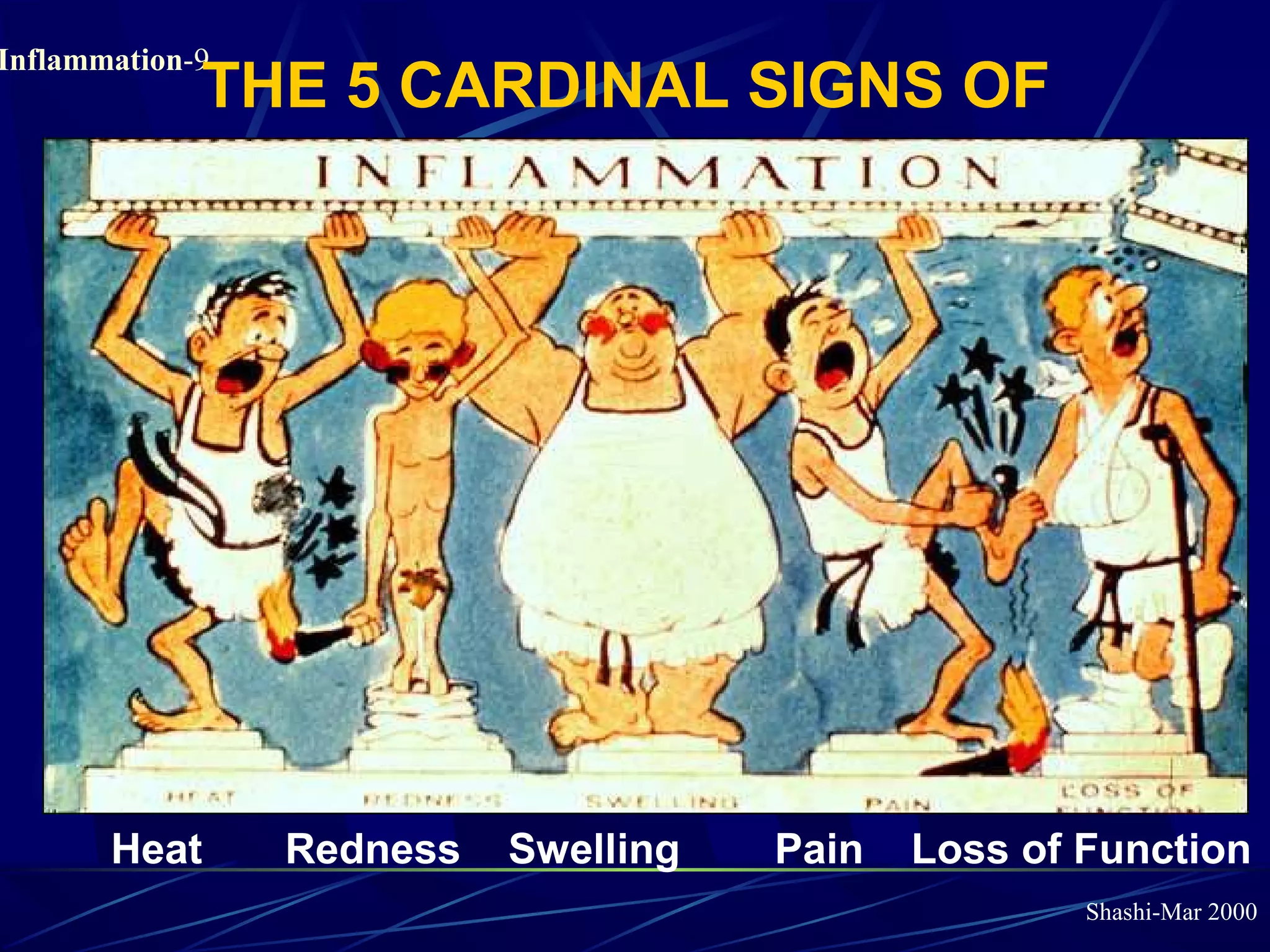

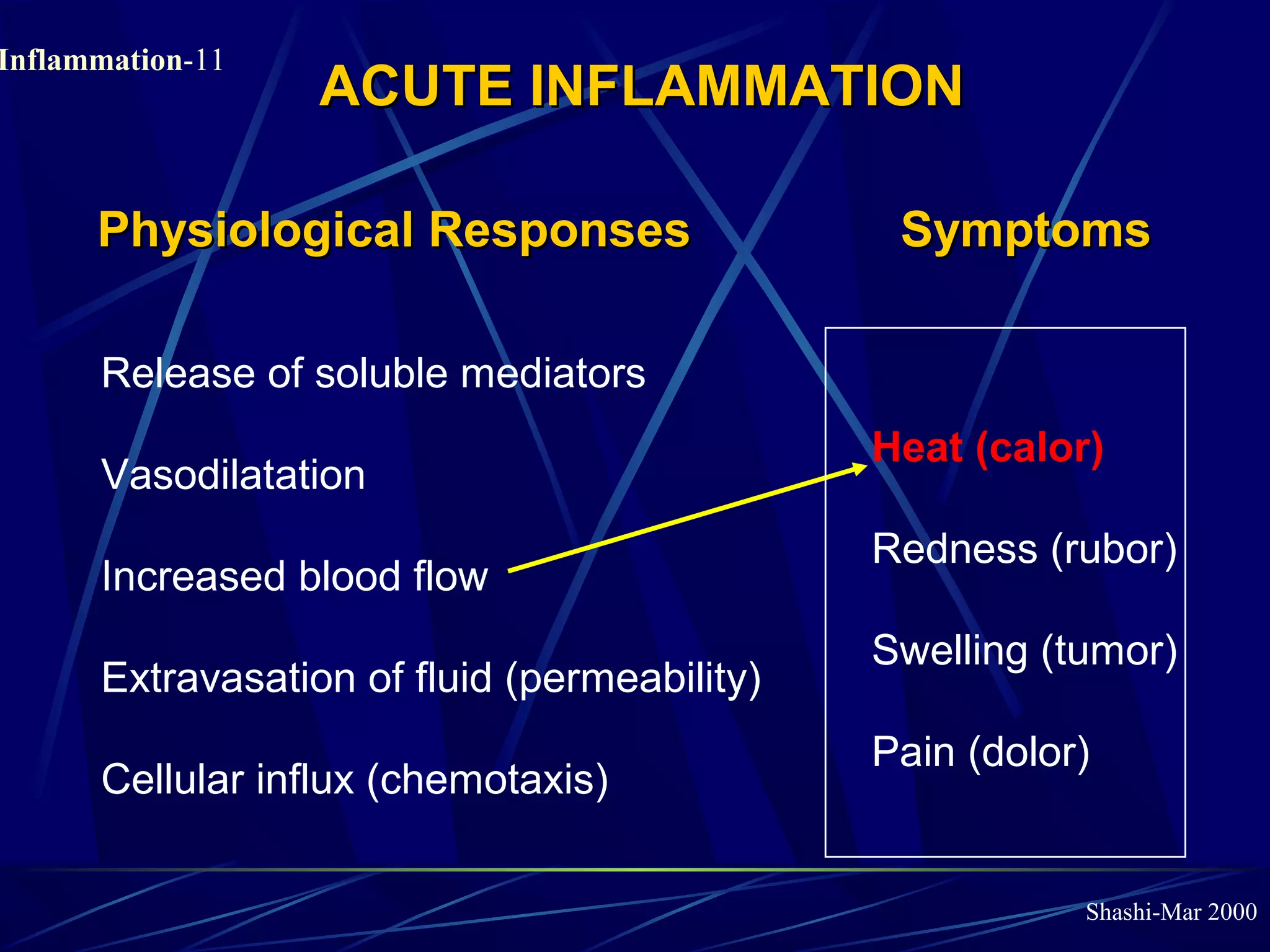
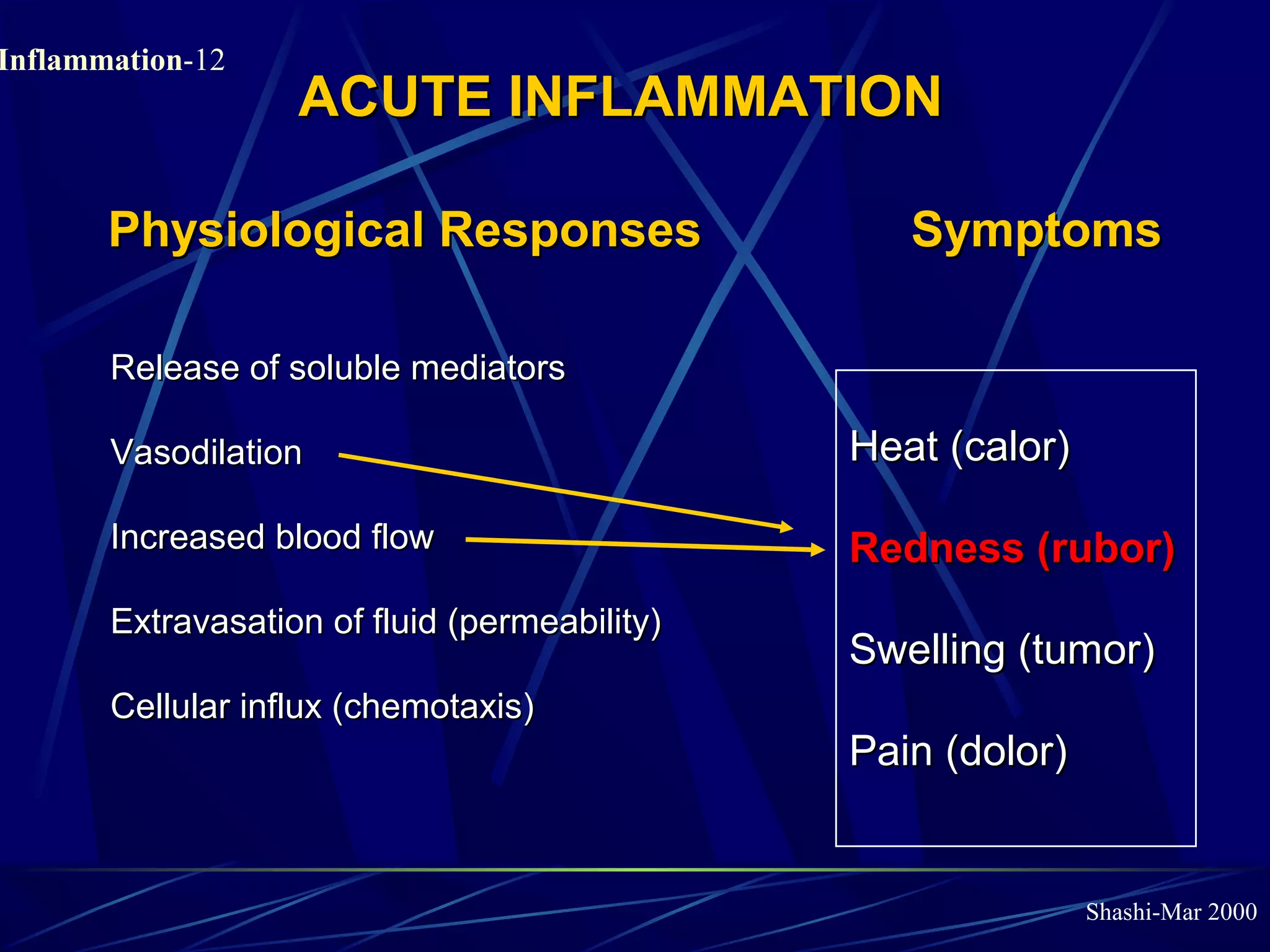
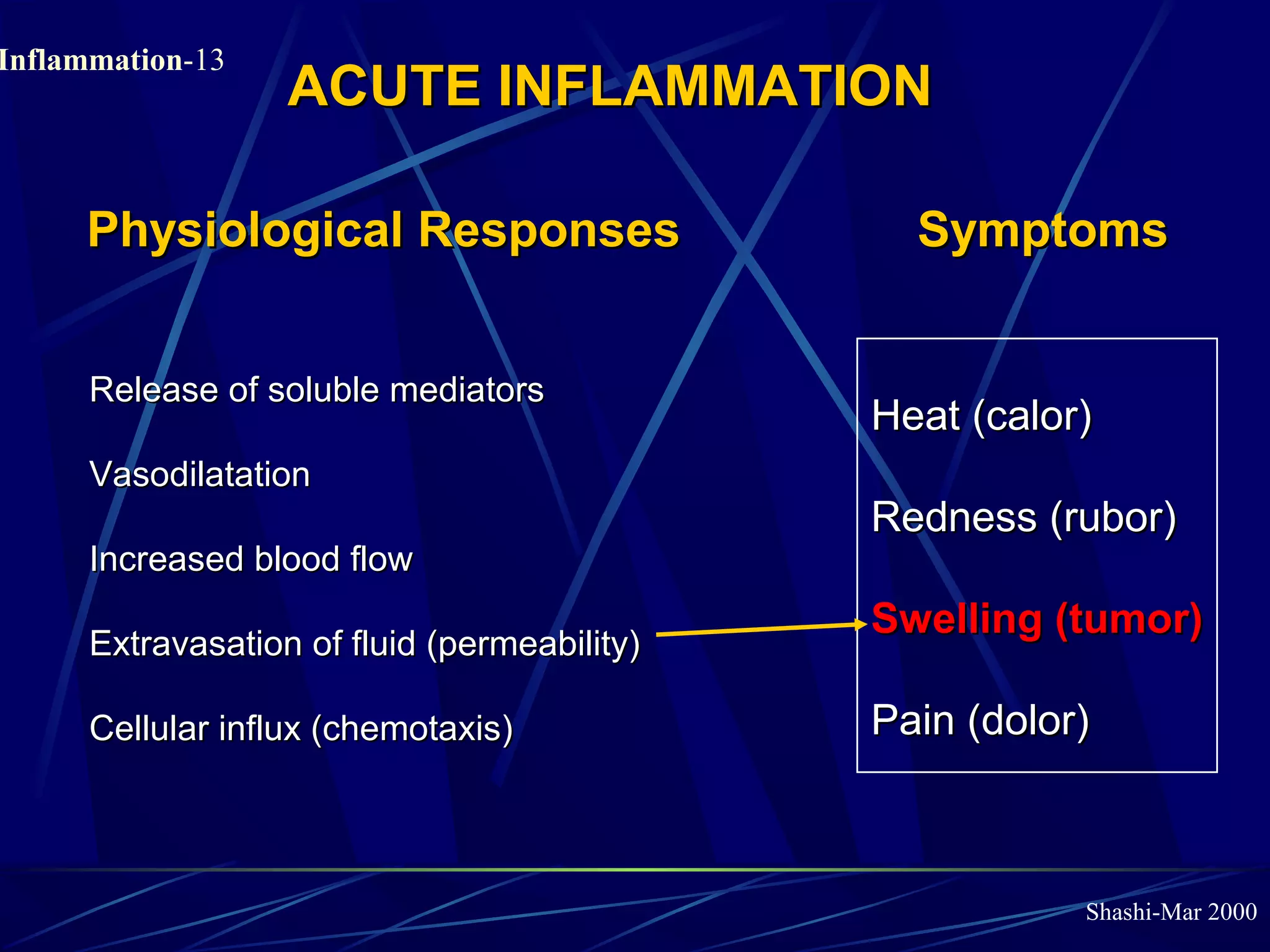

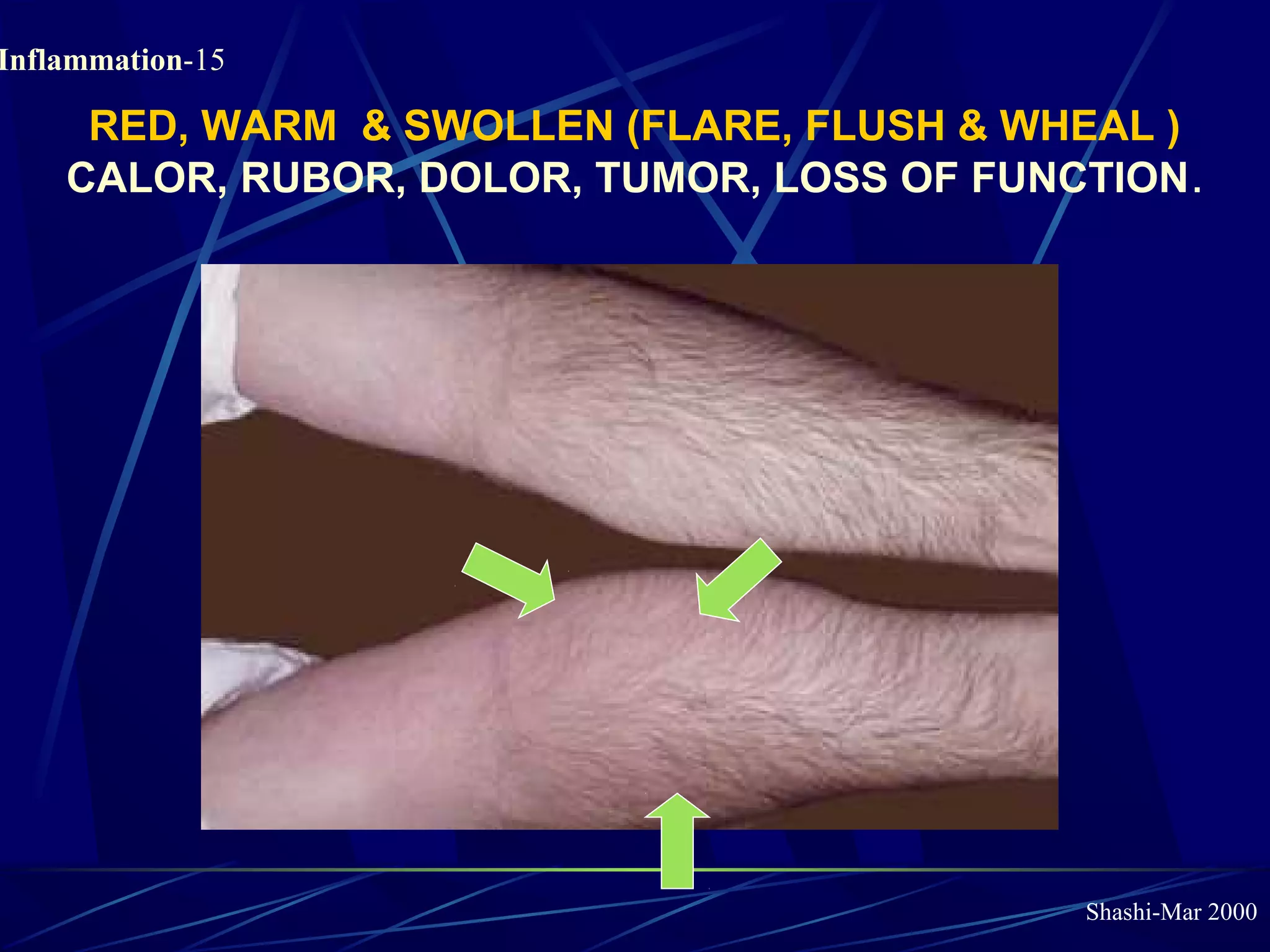



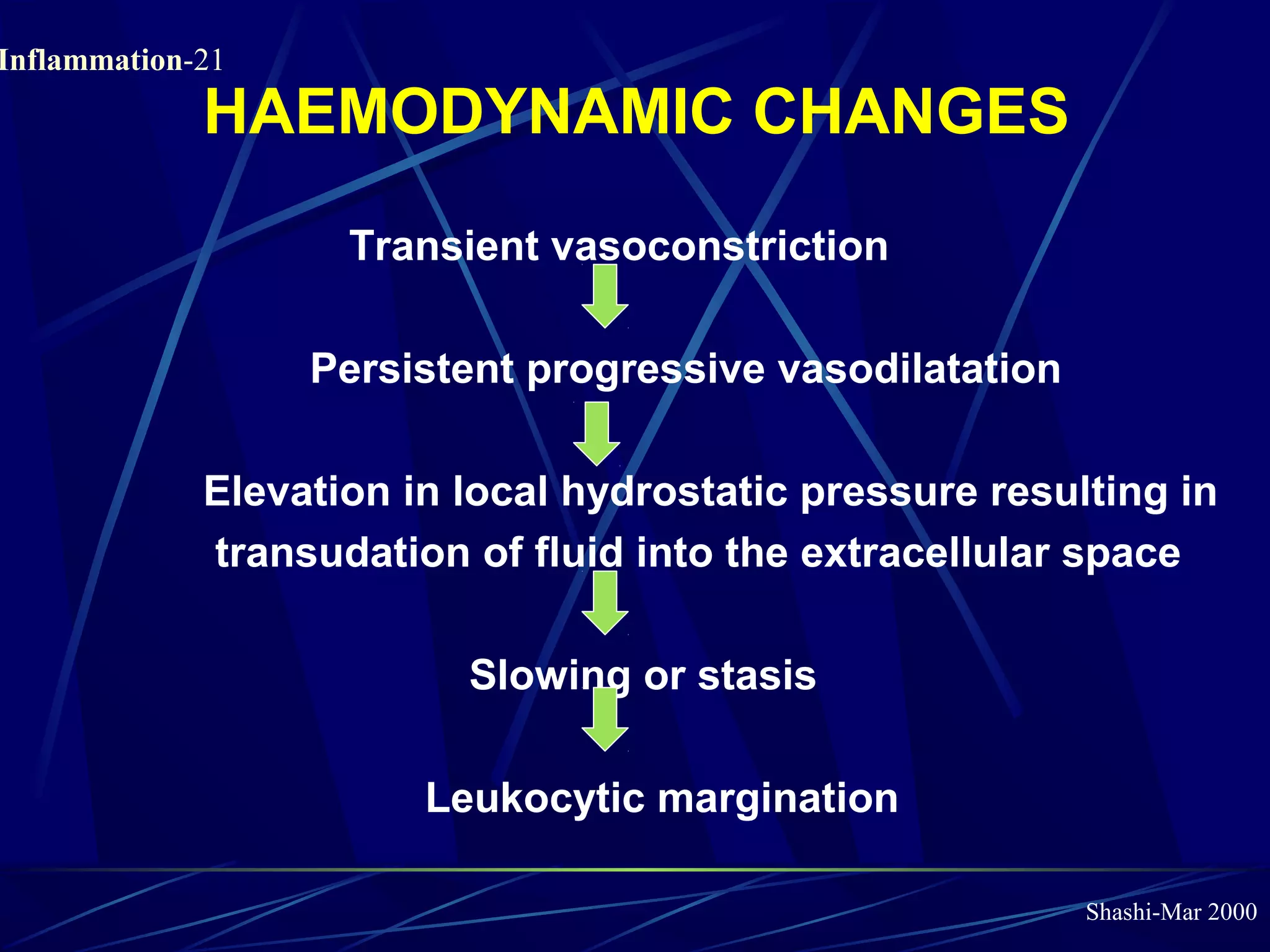
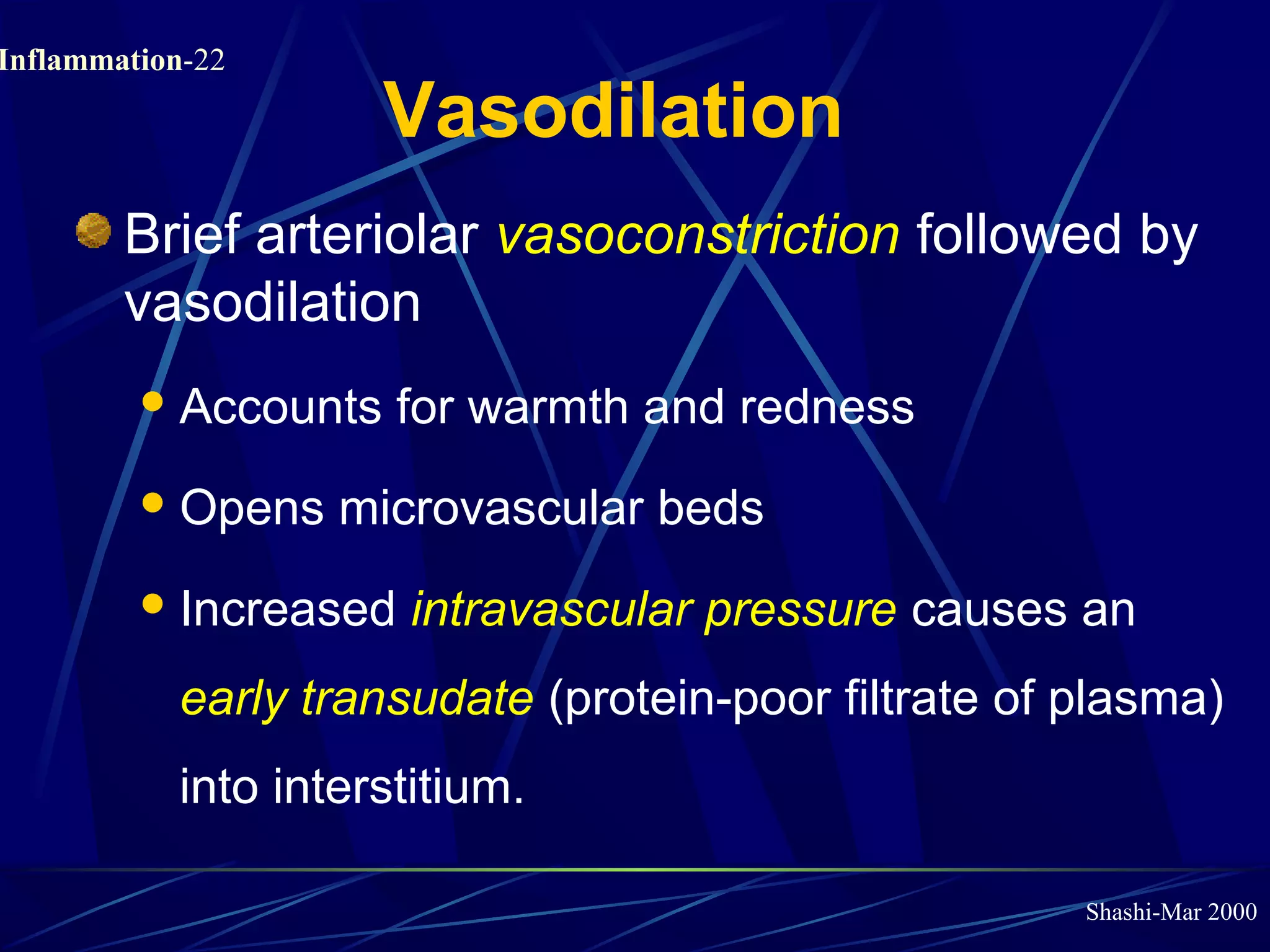

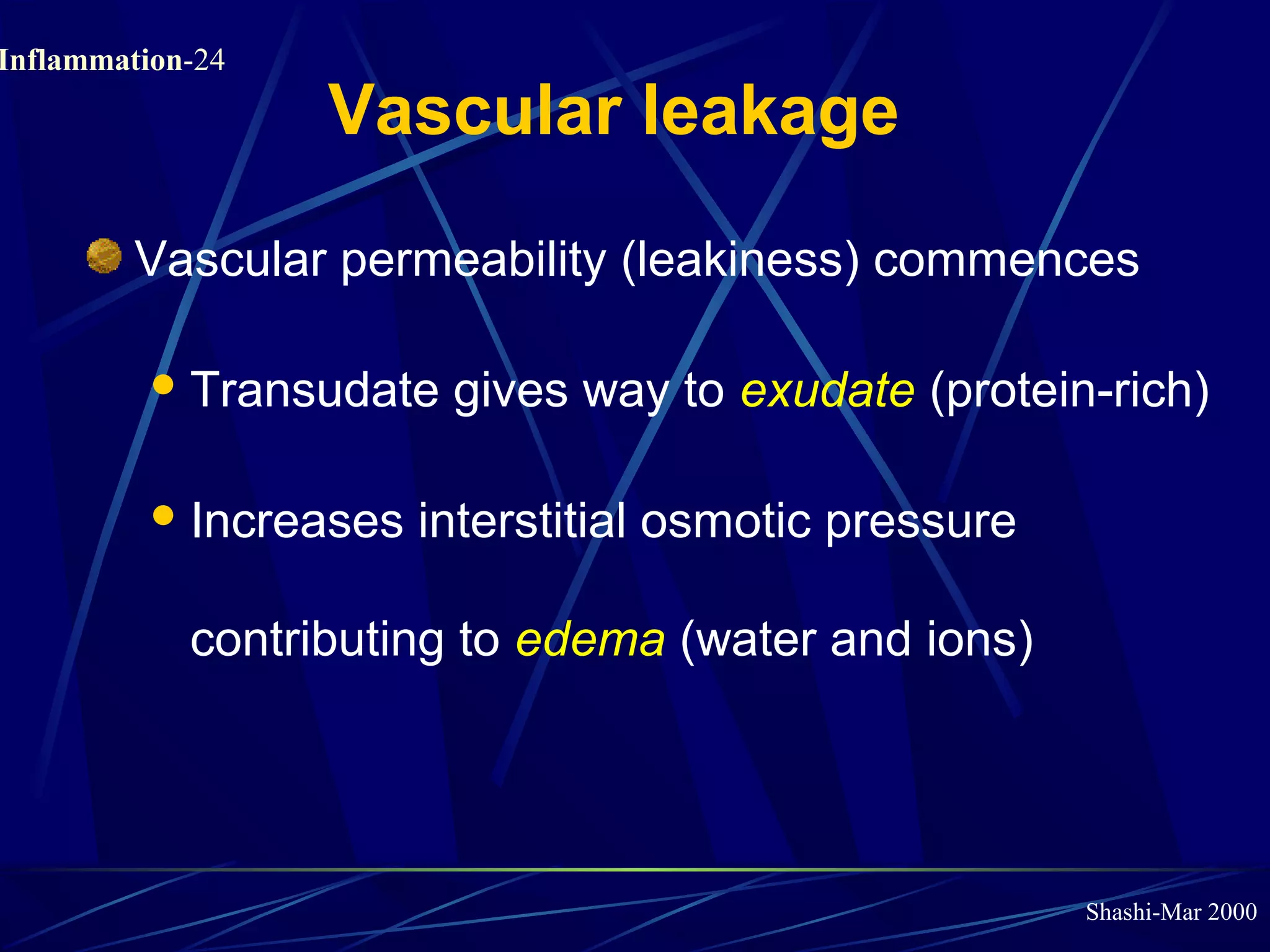


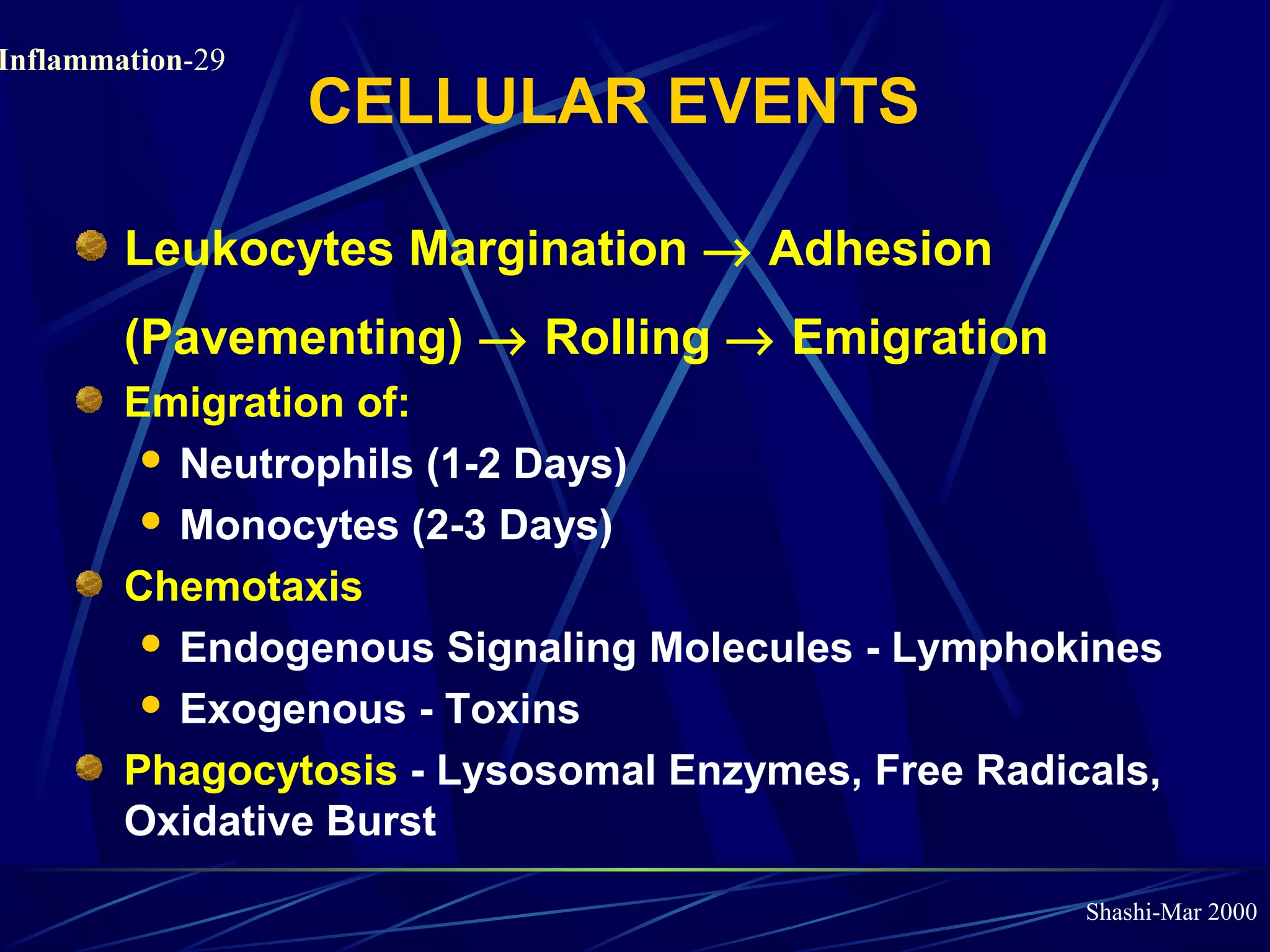


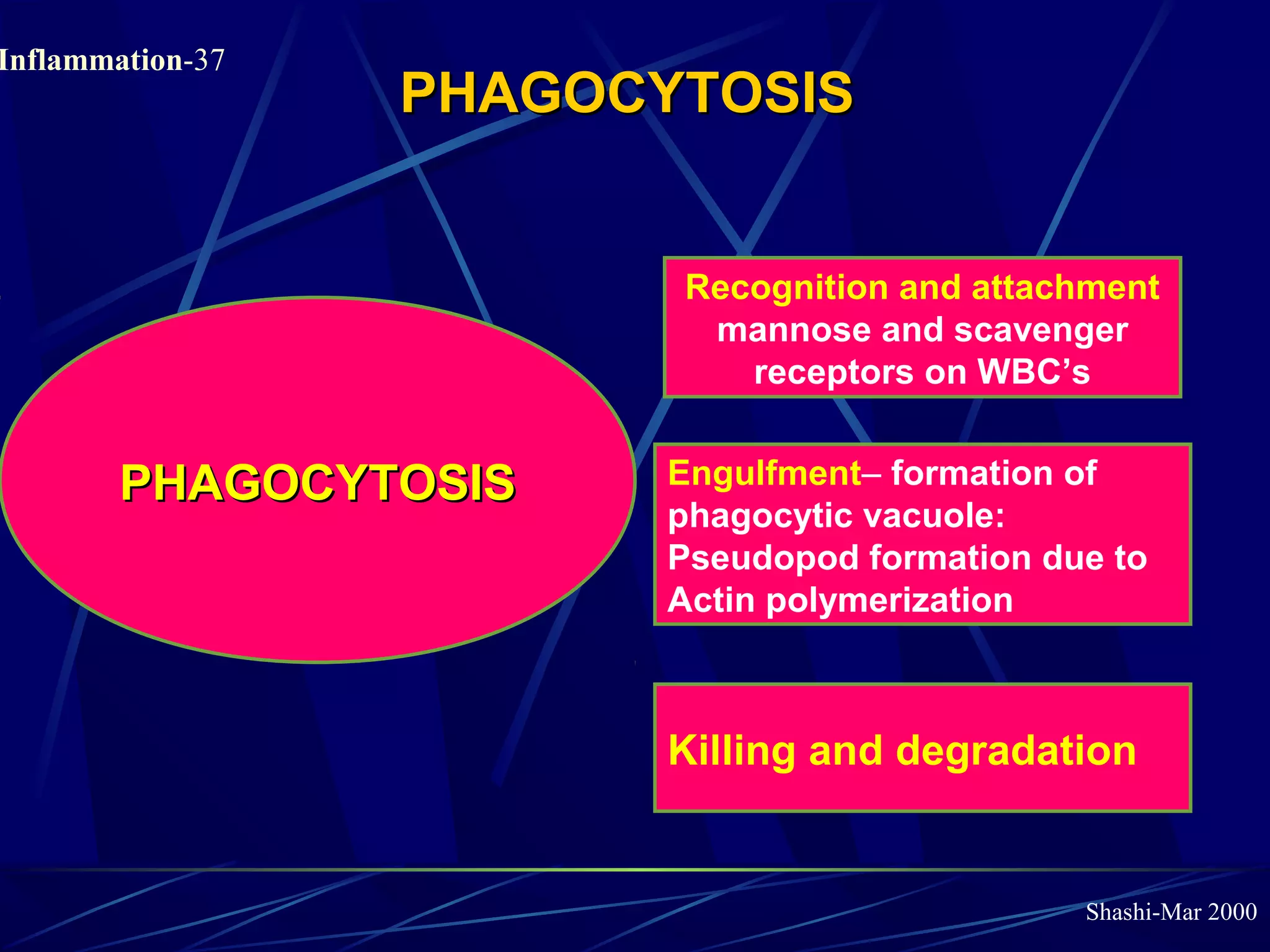


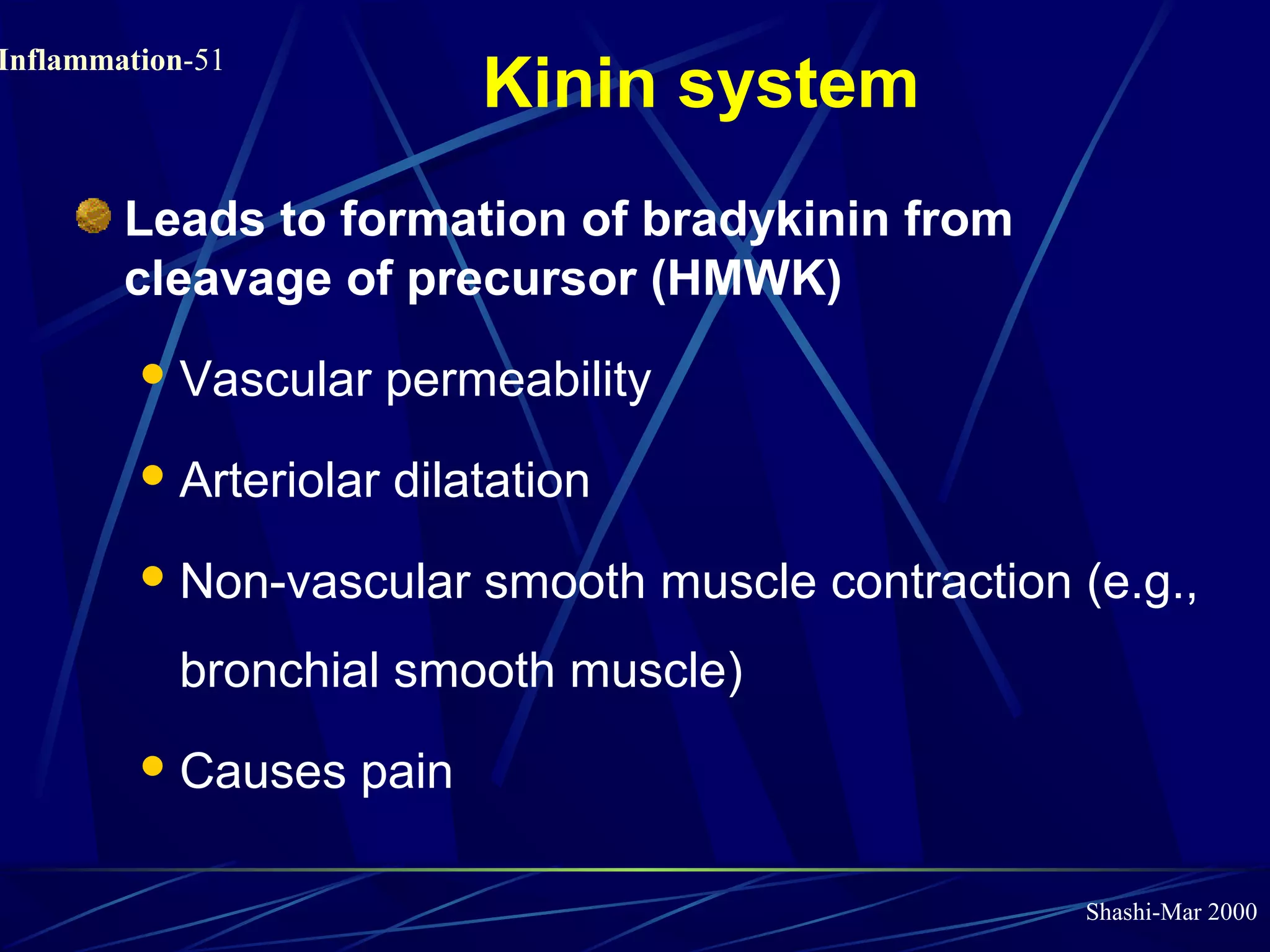




This document discusses acute inflammation and its mechanisms. It begins by defining acute inflammation as a rapid, short-lived response to injury that consists of vascular changes, leukocyte migration, and systemic reactions. The key features are vascular responses that lead to fluid and cell accumulation in tissues. It then describes the cardinal signs of inflammation - redness, heat, swelling, pain, and loss of function. The mechanisms of acute inflammation involve the release of chemical mediators, vasodilation, increased blood flow, vascular permeability, cellular influx, and phagocytosis.


