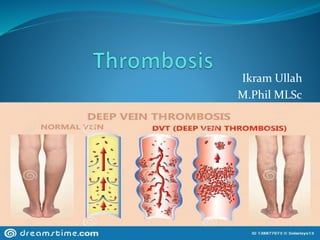
Ikram Ullah
M.Phil MLSc
Thrombosis
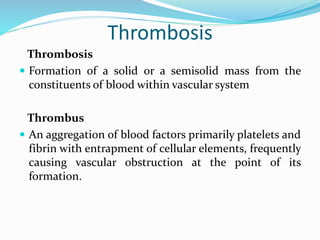
Thrombosis
 Formation of a solid or a semisolid mass from the
constituents of blood within vascular system
Thrombus
 An aggregation of blood factors primarily platelets and
fibrin with entrapment of cellular elements, frequently
causing vascular obstruction at the point of its
formation.
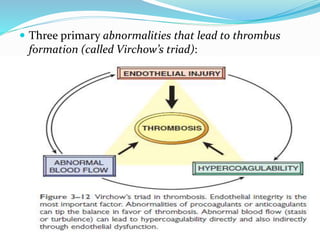
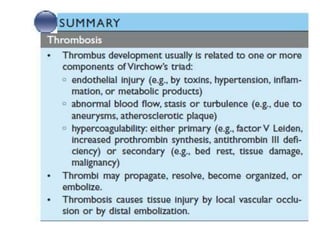
 Three primary abnormalities that lead to thrombus
formation (called Virchow’s triad):
Endothelial Injury
 Endothelial injury is an important cause of thrombosis,
particularly in the heart and the arteries
 Formation of thrombi in the cardiac chambers after myocardial
infarction
 Over ulcerated plaques in atherosclerotic arteries, or at sites of
traumatic or inflammatory vascular injury
 Dysfunctional endothelium elaborates greater amounts of
procoagulant factors and synthesizes lesser amounts of
anticoagulant molecules.
 Hypertension, turbulent blood flow, bacterial products,
radiation injury.
Abnormal Blood Flow
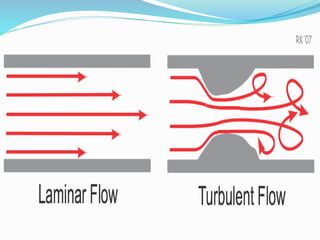
 Turbulence contributes to arterial and cardiac thrombosis
by causing endothelial injury or dysfunction, as well as by
forming local pockets of stasis.
 Stasis is a major factor in the development of venous
thrombi
 Stasis and turbulent blood flow both promote endothelial
cell activation and enhanced procoagulant activity
 Stasis allows platelets and leukocytes to come into contact
with the endothelium when the flow is sluggish
 Stasis also slows the washout of activated clotting factors
and impedes the inflow of clotting factor inhibitors
 Turbulent and static blood flow contribute to thrombosis
in a number of clinical settings
 Abnormal aortic and arterial dilations called aneurysms
create local stasis and consequently a fertile site for
thrombosis
 Ulcerated atherosclerotic plaques
 Mitral valve stenosis results in left atrial dilation
 Hyperviscosity syndromes increase resistance to flow
 Deformed red cells in sickle cell anemia cause vascular
occlusions
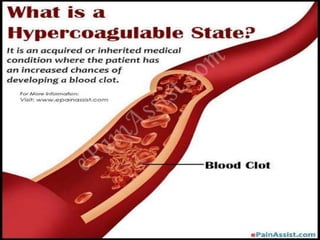
Hypercoagulability
 It is loosely defined as any alteration of the coagulation
pathways that predisposes affected persons to thrombosis
 Hypercoagulability contributes infrequently to arterial or
intracardiac thrombosis but is an important underlying
risk factor for venous thrombosis
 Primary (inherited) hypercoagulability most often is caused
by mutations in the factor V and prothrombin genes
 Secondary (acquired) hypercoagulability is seen in many
settings
 Cardiac failure, stasis or vascular injury, oral contraceptive
use and the hyperestrogenic state of pregnancy
 Arterial or cardiac thrombi typically arise at sites of
endothelial injury or turbulence
 Venous thrombi characteristically occur at sites of
stasis
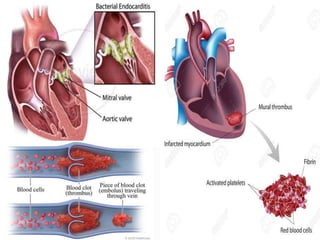
 Thrombi occurring in heart chambers or in the aortic
lumen are designated mural thrombi
 Arterial thrombi are typically relatively rich in
platelets, as the processes underlying their
development lead to platelet activation
 Venous thrombi (phlebothrombosis) frequently
propagate some distance toward the heart, forming a
long cast within the vessel lumen that is prone to give
rise to emboli
 Thrombi on heart valves are called vegetations
 Bacterial or fungal blood-borne infections can cause
valve damage, leading to the development of large
thrombotic masses
 Sterile vegetations also can develop on noninfected
valves in hypercoagulable states
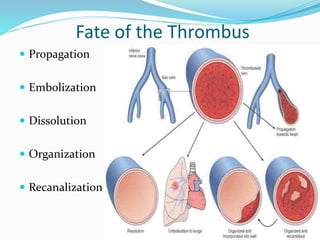
Fate of the Thrombus
 Propagation
 Embolization
 Dissolution
 Organization
 Recanalization
 Thrombi are significant because they cause obstruction of
arteries and veins and may give rise to emboli.
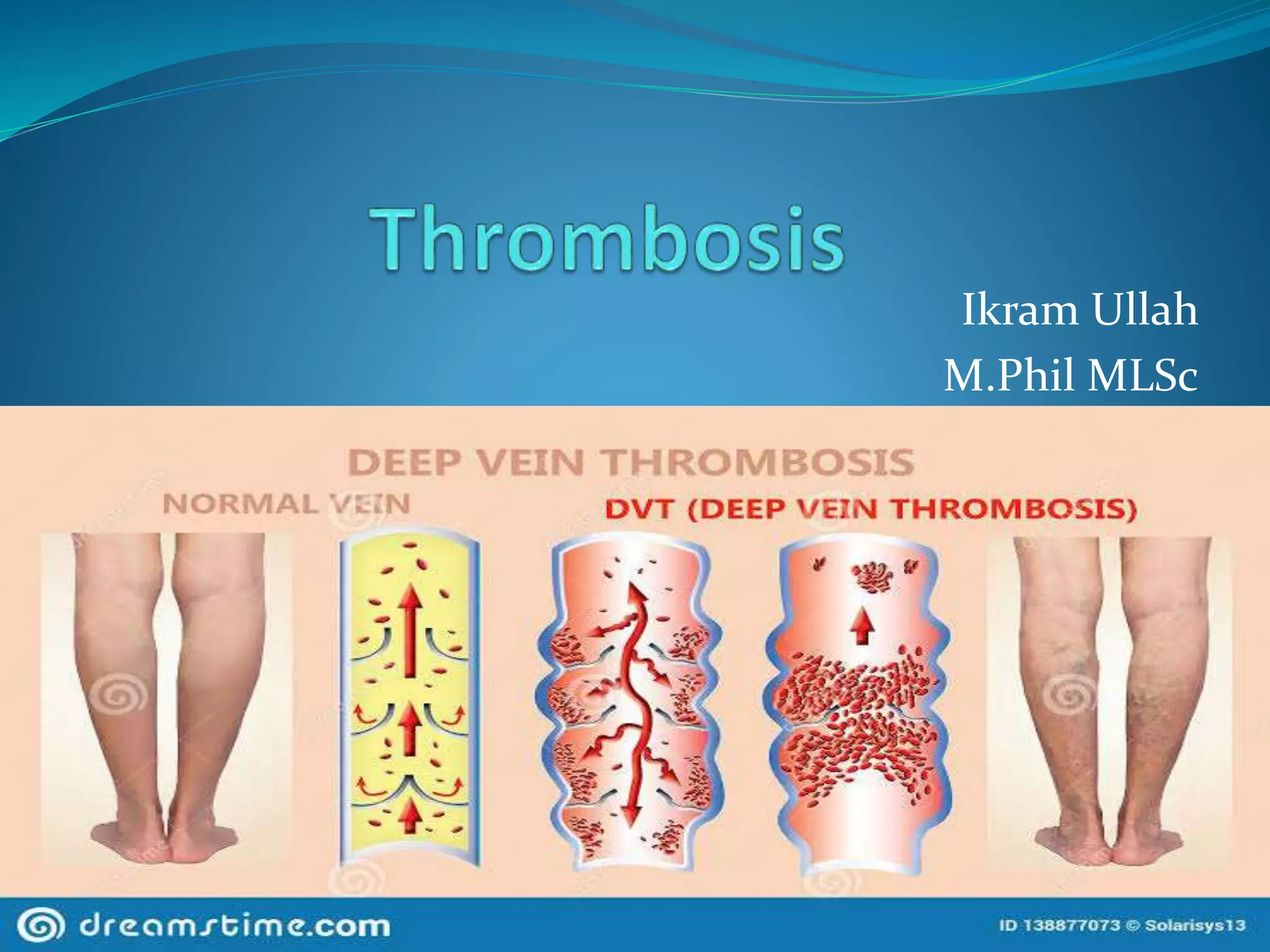
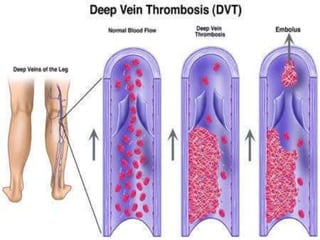
 Venous Thrombosis (Phlebothrombosis)
 Most venous thrombi occur in either the superficial or the
deep veins of the leg.
 Lower-extremity DVTs are associated with stasis and
hypercoagulable states
 Common predisposing factors include congestive heart
failure, bed rest and immobilization
 Trauma, surgery, and burns not only immobilize a patient
but are also associated with vascular injury, procoagulant
release, increased hepatic synthesis of coagulation factors,
and reduced t-PA production
Disseminated Intravascular Coagulation
 Disseminated intravascular coagulation (DIC) is the
sudden or insidious onset of widespread thrombosis within
the microcirculation
 It may be seen in disorders ranging from obstetric
complications to advanced malignancy
 The thrombi are generally microscopic in size, yet so
numerous as to often cause circulatory insufficiency,
particularly in the brain, lungs, heart, and kidneys
 The widespread microvascular thrombosis consumes
platelets and coagulation proteins (consumption
coagulopathy), and at the same time, fibrinolytic
mechanisms are activated

Thrombosis

  • 1.
  • 2.
    Thrombosis Thrombosis  Formation ofa solid or a semisolid mass from the constituents of blood within vascular system Thrombus  An aggregation of blood factors primarily platelets and fibrin with entrapment of cellular elements, frequently causing vascular obstruction at the point of its formation.
  • 3.
     Three primaryabnormalities that lead to thrombus formation (called Virchow’s triad):
  • 4.
    Endothelial Injury  Endothelialinjury is an important cause of thrombosis, particularly in the heart and the arteries  Formation of thrombi in the cardiac chambers after myocardial infarction  Over ulcerated plaques in atherosclerotic arteries, or at sites of traumatic or inflammatory vascular injury  Dysfunctional endothelium elaborates greater amounts of procoagulant factors and synthesizes lesser amounts of anticoagulant molecules.  Hypertension, turbulent blood flow, bacterial products, radiation injury.
  • 5.
    Abnormal Blood Flow Turbulence contributes to arterial and cardiac thrombosis by causing endothelial injury or dysfunction, as well as by forming local pockets of stasis.  Stasis is a major factor in the development of venous thrombi  Stasis and turbulent blood flow both promote endothelial cell activation and enhanced procoagulant activity  Stasis allows platelets and leukocytes to come into contact with the endothelium when the flow is sluggish  Stasis also slows the washout of activated clotting factors and impedes the inflow of clotting factor inhibitors
  • 7.
     Turbulent andstatic blood flow contribute to thrombosis in a number of clinical settings  Abnormal aortic and arterial dilations called aneurysms create local stasis and consequently a fertile site for thrombosis  Ulcerated atherosclerotic plaques  Mitral valve stenosis results in left atrial dilation  Hyperviscosity syndromes increase resistance to flow  Deformed red cells in sickle cell anemia cause vascular occlusions
  • 8.
    Hypercoagulability  It isloosely defined as any alteration of the coagulation pathways that predisposes affected persons to thrombosis  Hypercoagulability contributes infrequently to arterial or intracardiac thrombosis but is an important underlying risk factor for venous thrombosis  Primary (inherited) hypercoagulability most often is caused by mutations in the factor V and prothrombin genes  Secondary (acquired) hypercoagulability is seen in many settings  Cardiac failure, stasis or vascular injury, oral contraceptive use and the hyperestrogenic state of pregnancy
  • 10.
     Arterial orcardiac thrombi typically arise at sites of endothelial injury or turbulence  Venous thrombi characteristically occur at sites of stasis  Thrombi occurring in heart chambers or in the aortic lumen are designated mural thrombi  Arterial thrombi are typically relatively rich in platelets, as the processes underlying their development lead to platelet activation
  • 12.
     Venous thrombi(phlebothrombosis) frequently propagate some distance toward the heart, forming a long cast within the vessel lumen that is prone to give rise to emboli  Thrombi on heart valves are called vegetations  Bacterial or fungal blood-borne infections can cause valve damage, leading to the development of large thrombotic masses  Sterile vegetations also can develop on noninfected valves in hypercoagulable states
  • 13.
    Fate of theThrombus  Propagation  Embolization  Dissolution  Organization  Recanalization
  • 14.
     Thrombi aresignificant because they cause obstruction of arteries and veins and may give rise to emboli.  Venous Thrombosis (Phlebothrombosis)  Most venous thrombi occur in either the superficial or the deep veins of the leg.  Lower-extremity DVTs are associated with stasis and hypercoagulable states  Common predisposing factors include congestive heart failure, bed rest and immobilization  Trauma, surgery, and burns not only immobilize a patient but are also associated with vascular injury, procoagulant release, increased hepatic synthesis of coagulation factors, and reduced t-PA production
  • 17.
    Disseminated Intravascular Coagulation Disseminated intravascular coagulation (DIC) is the sudden or insidious onset of widespread thrombosis within the microcirculation  It may be seen in disorders ranging from obstetric complications to advanced malignancy  The thrombi are generally microscopic in size, yet so numerous as to often cause circulatory insufficiency, particularly in the brain, lungs, heart, and kidneys  The widespread microvascular thrombosis consumes platelets and coagulation proteins (consumption coagulopathy), and at the same time, fibrinolytic mechanisms are activated