Welcome to today’s presentation,
“Edema”
Course Title: Clinical Pathology
Course Code: PHAR-4209
Presented by
Mamunur Rashid Kutubi
Student ID: 171003
4th Year 2nd Semester
Dept. of Pharmacy
JUST
 The Greek word Oedema means
swelling
 Edema is an abnormal accumulation
of fluid in the interstitial, located
beneath the skin and in the cavities
of the body.
 Hydrothorax or pleural effusion
 Pericardial effusion
 Synovial effusion
 Ascites
Definition
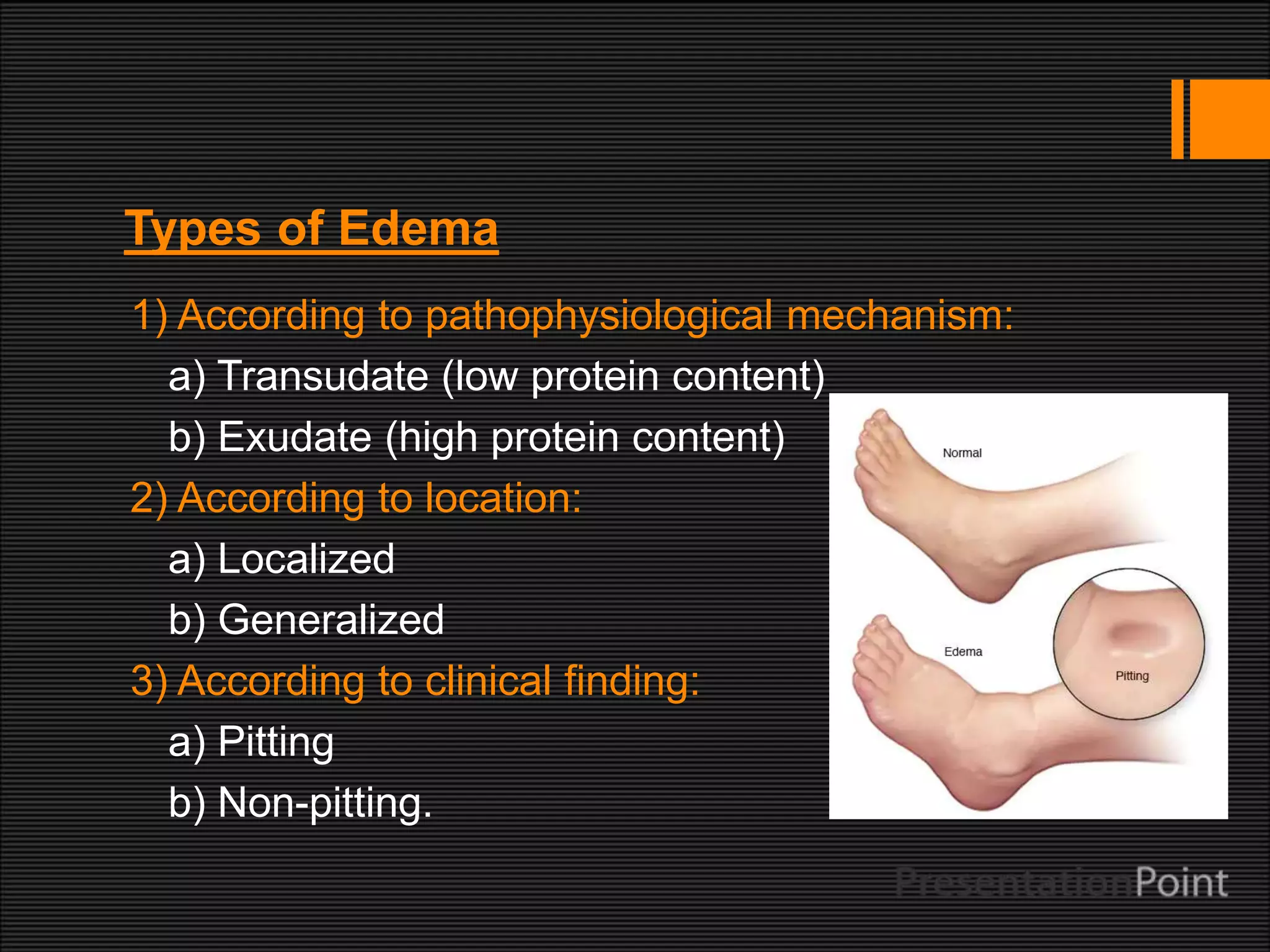
Normal Edema
Edema
1) According to pathophysiological mechanism:
a) Transudate (low protein content)
b) Exudate (high protein content)
2) According to location:
a) Localized
b) Generalized
3) According to clinical finding:
a) Pitting
b) Non-pitting.
Types of Edema
Etiology of Edema
 Increased hydrostatic pressure.
 Reduce plasma oncotic pressure.
 Increased capillary permeability.
 Lymphatic obstruction.
 Sodium and water retention
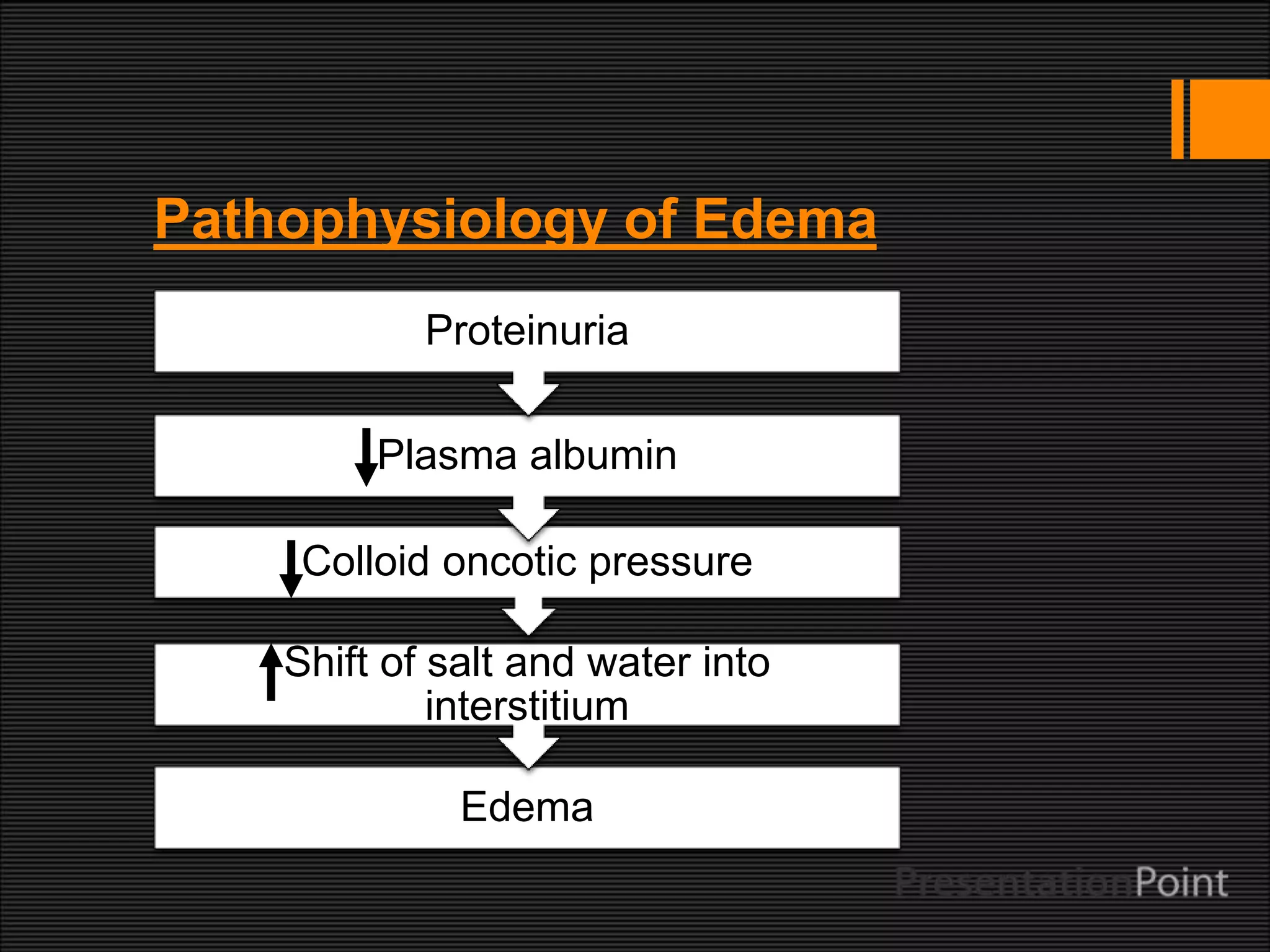
Pathophysiology of Edema
Edema
Shift of salt and water into
interstitium
Colloid oncotic pressure
Plasma albumin
Proteinuria
Symptoms
 Swelling or puffiness of the tissue
directly under your skin, especially
in your legs or arms.
 Stretched or shiny skin.
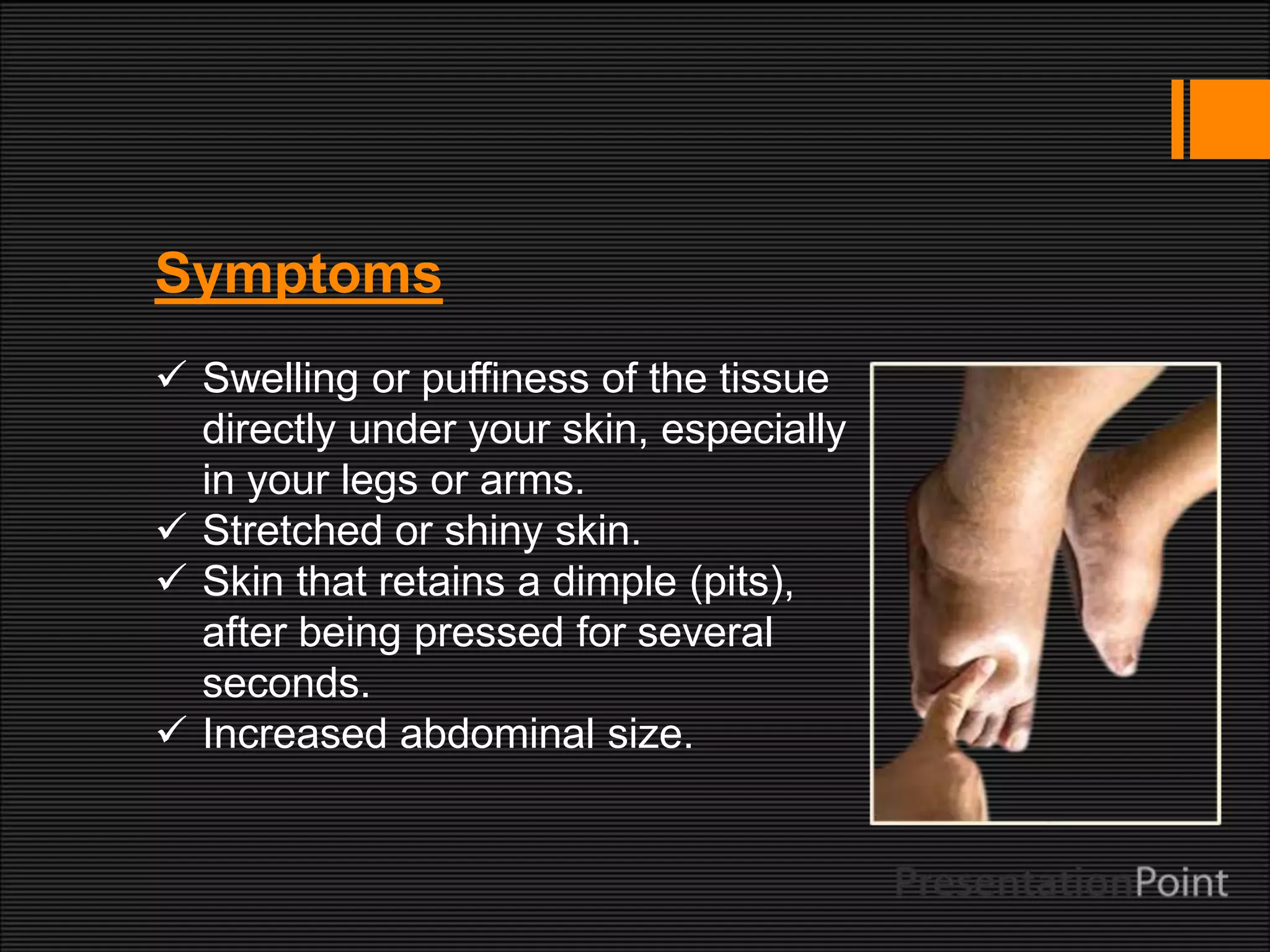
 Skin that retains a dimple (pits),
after being pressed for several
seconds.
 Increased abdominal size.
Leg swelling(edema).
Abdominal swelling(ascites).
Pleural effusion.
Congestion & swelling of liver.
Acute heart attack
Cardiogenic shock.
Arrhythmias.
Electrolyte disturbances.
Mesenteric insufficiency.
Protein enteropathy.
Respiratory arrest and death.
Complications
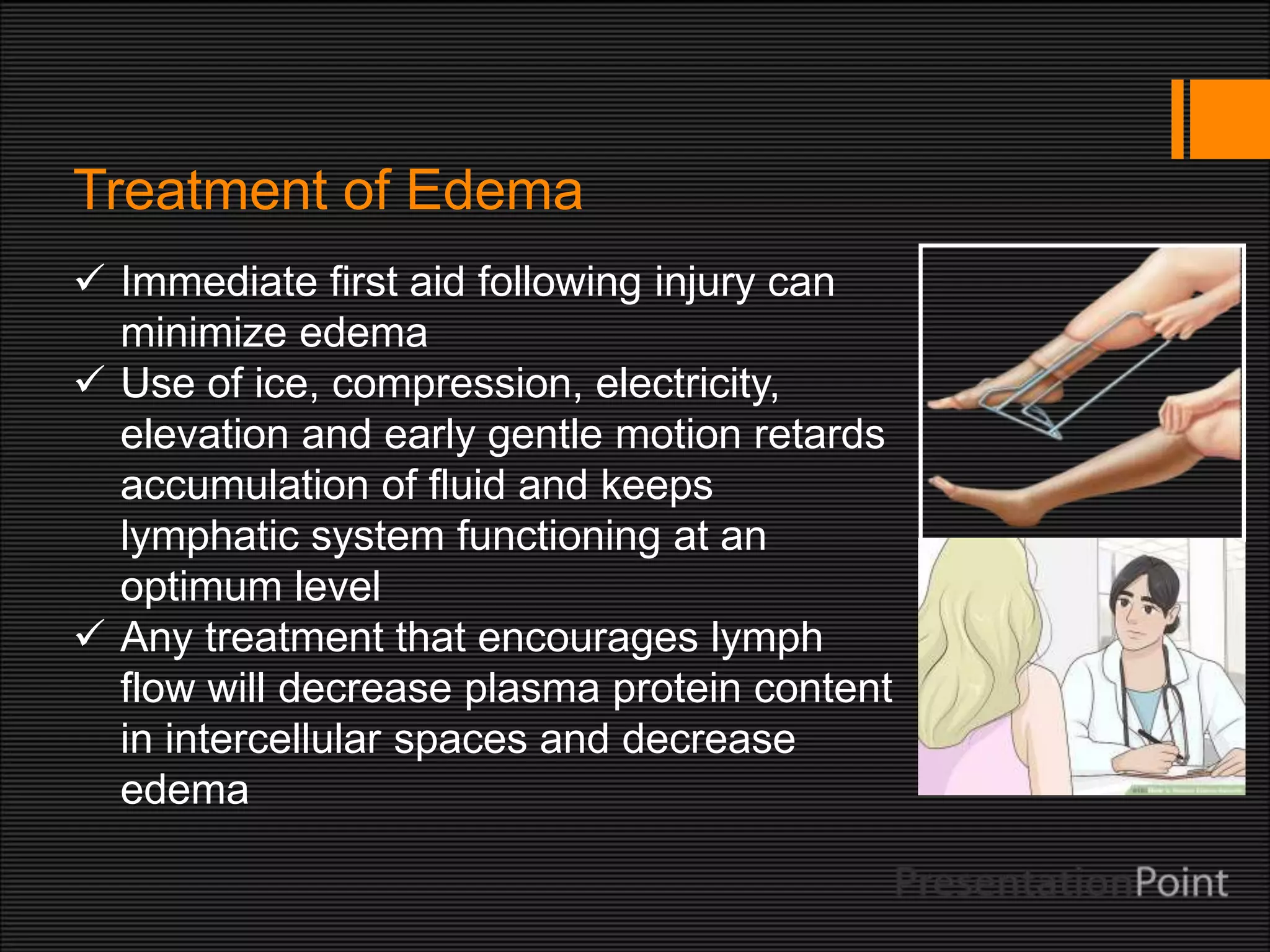
Treatment of Edema
 Immediate first aid following injury can
minimize edema
 Use of ice, compression, electricity,
elevation and early gentle motion retards
accumulation of fluid and keeps
lymphatic system functioning at an
optimum level
 Any treatment that encourages lymph
flow will decrease plasma protein content
in intercellular spaces and decrease
edema
1. Minimizing fluid buildup.
a)Movement
b)Elevation
c)Massage
d)Compression
e)Protection
f)Reduce salt intake
2. Managing Pain.
3. Adjusting Diet and Lifestyle.
4. When to Seek Medical Care.
Lifestyle and home remedies
Thank you

Edema..ppt

  • 1.
    Welcome to today’spresentation, “Edema” Course Title: Clinical Pathology Course Code: PHAR-4209 Presented by Mamunur Rashid Kutubi Student ID: 171003 4th Year 2nd Semester Dept. of Pharmacy JUST
  • 2.
     The Greekword Oedema means swelling  Edema is an abnormal accumulation of fluid in the interstitial, located beneath the skin and in the cavities of the body.  Hydrothorax or pleural effusion  Pericardial effusion  Synovial effusion  Ascites Definition Normal Edema Edema
  • 3.
    1) According topathophysiological mechanism: a) Transudate (low protein content) b) Exudate (high protein content) 2) According to location: a) Localized b) Generalized 3) According to clinical finding: a) Pitting b) Non-pitting. Types of Edema
  • 4.
    Etiology of Edema Increased hydrostatic pressure.  Reduce plasma oncotic pressure.  Increased capillary permeability.  Lymphatic obstruction.  Sodium and water retention
  • 5.
    Pathophysiology of Edema Edema Shiftof salt and water into interstitium Colloid oncotic pressure Plasma albumin Proteinuria
  • 6.
    Symptoms  Swelling orpuffiness of the tissue directly under your skin, especially in your legs or arms.  Stretched or shiny skin.  Skin that retains a dimple (pits), after being pressed for several seconds.  Increased abdominal size.
  • 7.
    Leg swelling(edema). Abdominal swelling(ascites). Pleuraleffusion. Congestion & swelling of liver. Acute heart attack Cardiogenic shock. Arrhythmias. Electrolyte disturbances. Mesenteric insufficiency. Protein enteropathy. Respiratory arrest and death. Complications
  • 8.
    Treatment of Edema Immediate first aid following injury can minimize edema  Use of ice, compression, electricity, elevation and early gentle motion retards accumulation of fluid and keeps lymphatic system functioning at an optimum level  Any treatment that encourages lymph flow will decrease plasma protein content in intercellular spaces and decrease edema
  • 9.
    1. Minimizing fluidbuildup. a)Movement b)Elevation c)Massage d)Compression e)Protection f)Reduce salt intake 2. Managing Pain. 3. Adjusting Diet and Lifestyle. 4. When to Seek Medical Care. Lifestyle and home remedies
  • 10.