Reversible Cell Injury
By Harshit Jadav
Cell Injury
• Ischemia and hypoxia are the most common forms of cell
injury
• Ischemia is insufficient blood flow to provide adequate
oxygenation.
• This, in turn, leads to tissue hypoxia (reduced oxygen)
• Ischemia always results in hypoxia; however, hypoxia can
occur without ischemia
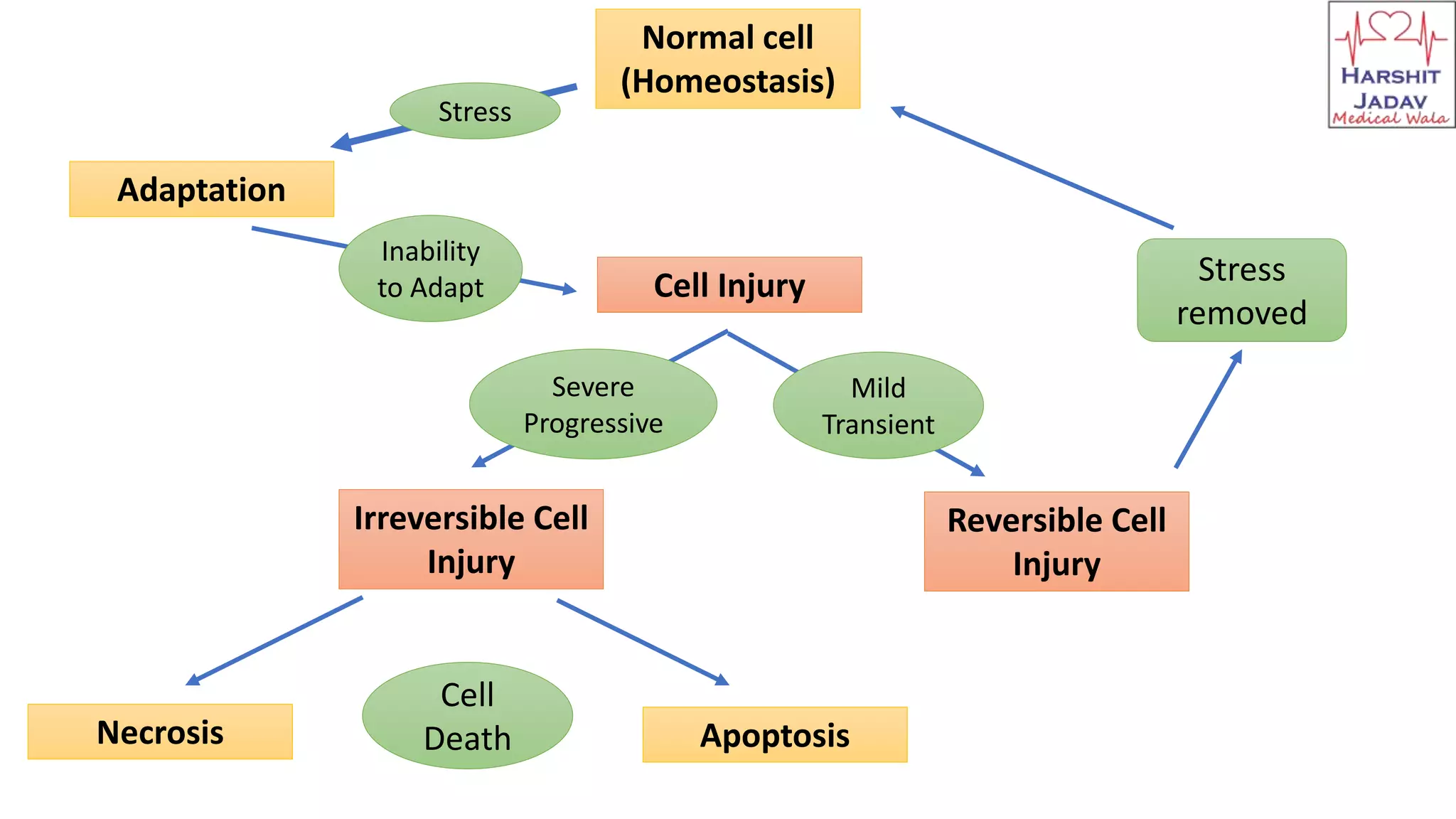
Normal cell
(Homeostasis)
Adaptation
Cell Injury
Irreversible Cell
Injury
Reversible Cell
Injury
Necrosis Apoptosis
Stress
removed
Stress
Inability
to Adapt
Severe
Progressive
Mild
Transient
Cell
Death
Reversible Cell Injury
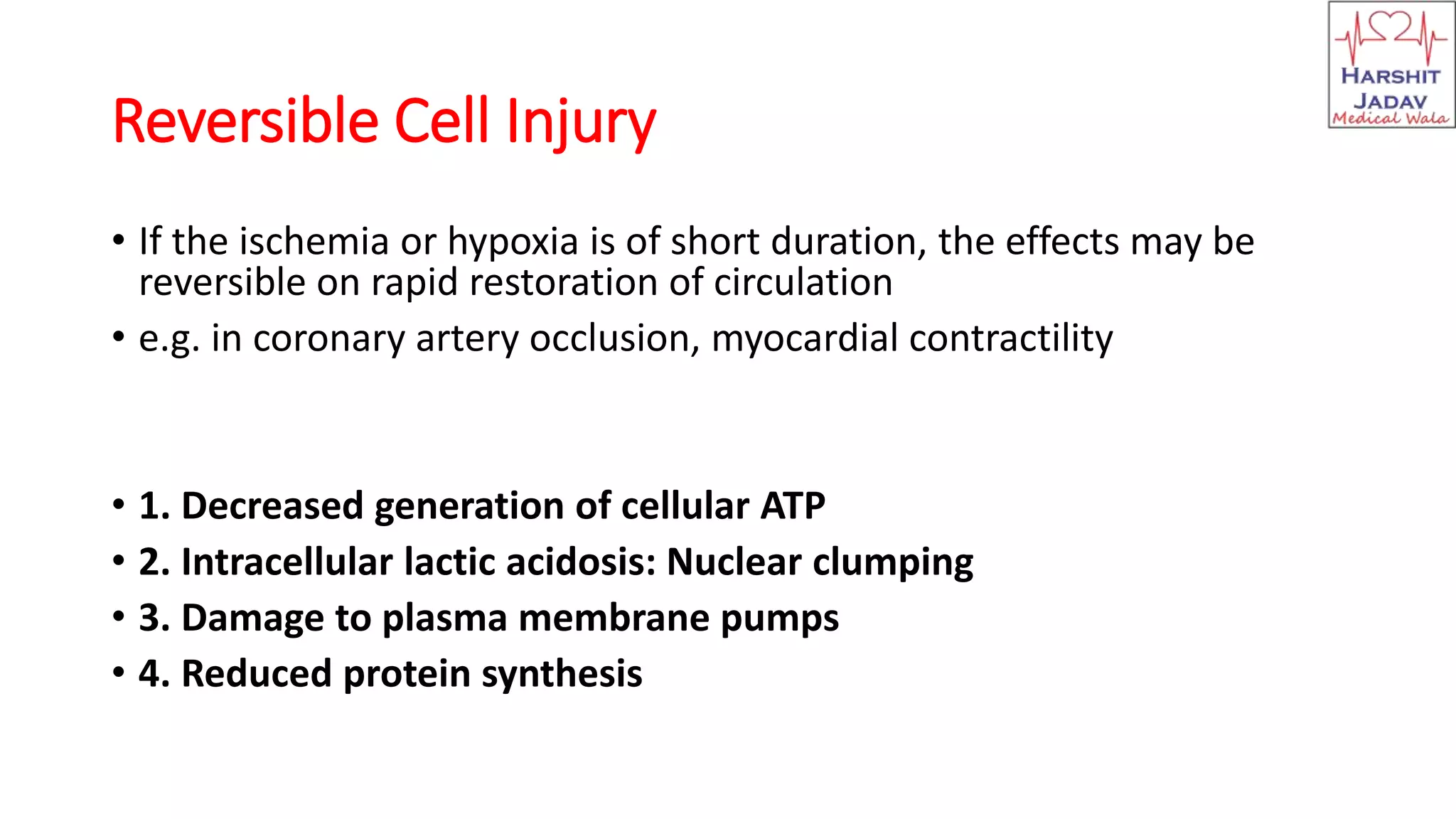
• If the ischemia or hypoxia is of short duration, the effects may be
reversible on rapid restoration of circulation
• e.g. in coronary artery occlusion, myocardial contractility
• 1. Decreased generation of cellular ATP
• 2. Intracellular lactic acidosis: Nuclear clumping
• 3. Damage to plasma membrane pumps
• 4. Reduced protein synthesis
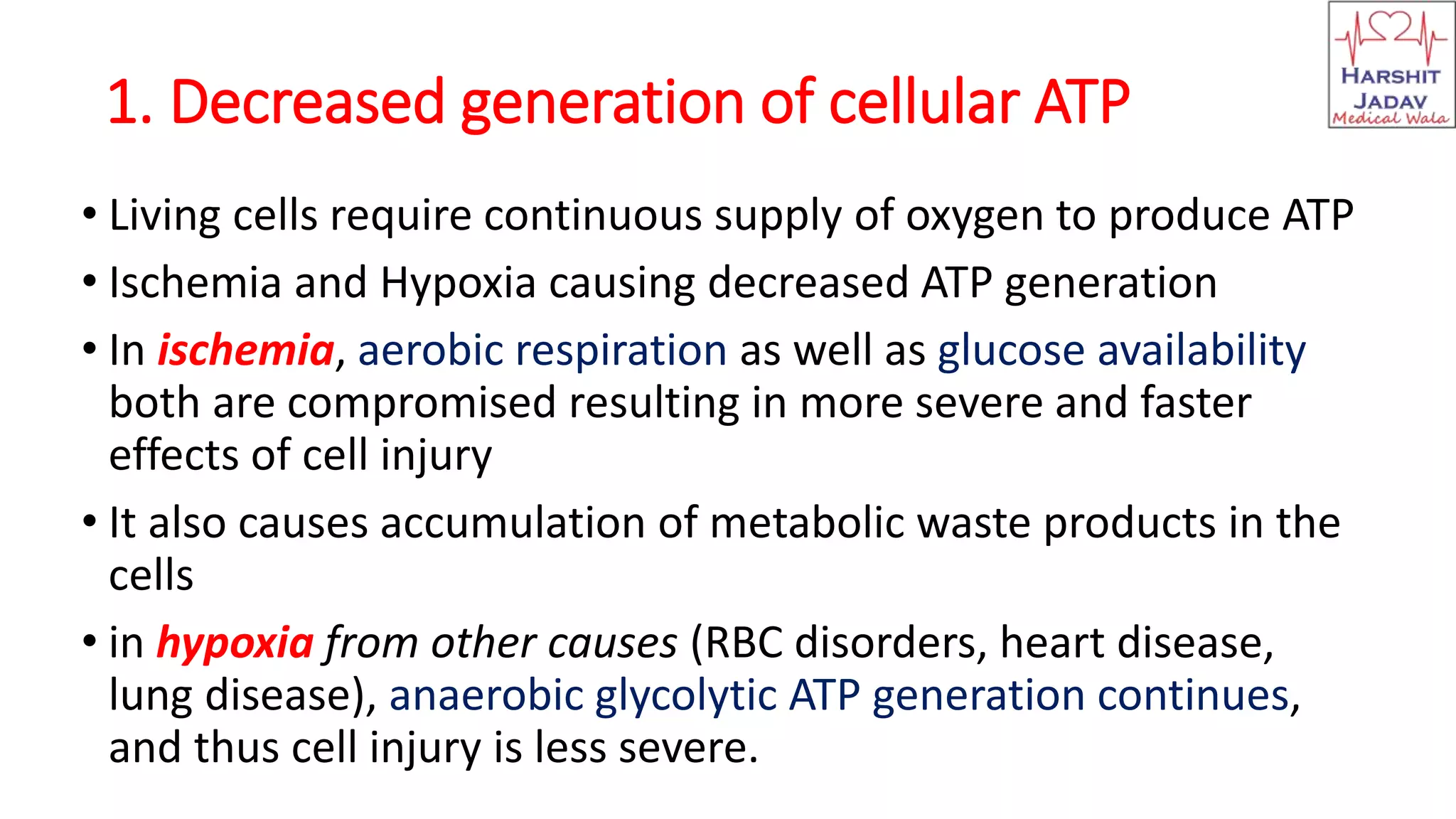
1. Decreased generation of cellular ATP
• Living cells require continuous supply of oxygen to produce ATP
• Ischemia and Hypoxia causing decreased ATP generation
• In ischemia, aerobic respiration as well as glucose availability
both are compromised resulting in more severe and faster
effects of cell injury
• It also causes accumulation of metabolic waste products in the
cells
• in hypoxia from other causes (RBC disorders, heart disease,
lung disease), anaerobic glycolytic ATP generation continues,
and thus cell injury is less severe.
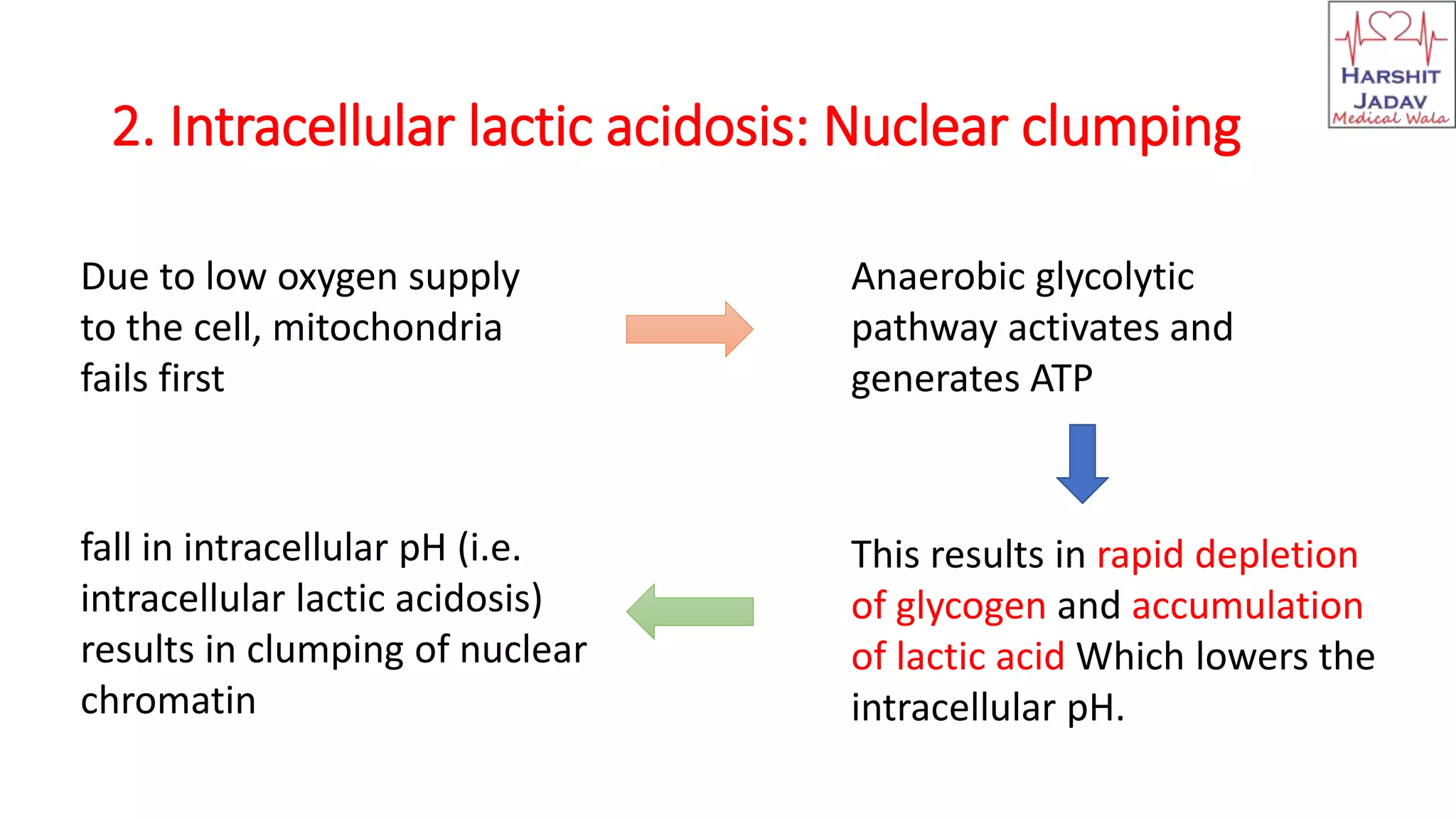
2. Intracellular lactic acidosis: Nuclear clumping
Due to low oxygen supply
to the cell, mitochondria
fails first
Anaerobic glycolytic
pathway activates and
generates ATP
This results in rapid depletion
of glycogen and accumulation
of lactic acid Which lowers the
intracellular pH.
fall in intracellular pH (i.e.
intracellular lactic acidosis)
results in clumping of nuclear
chromatin
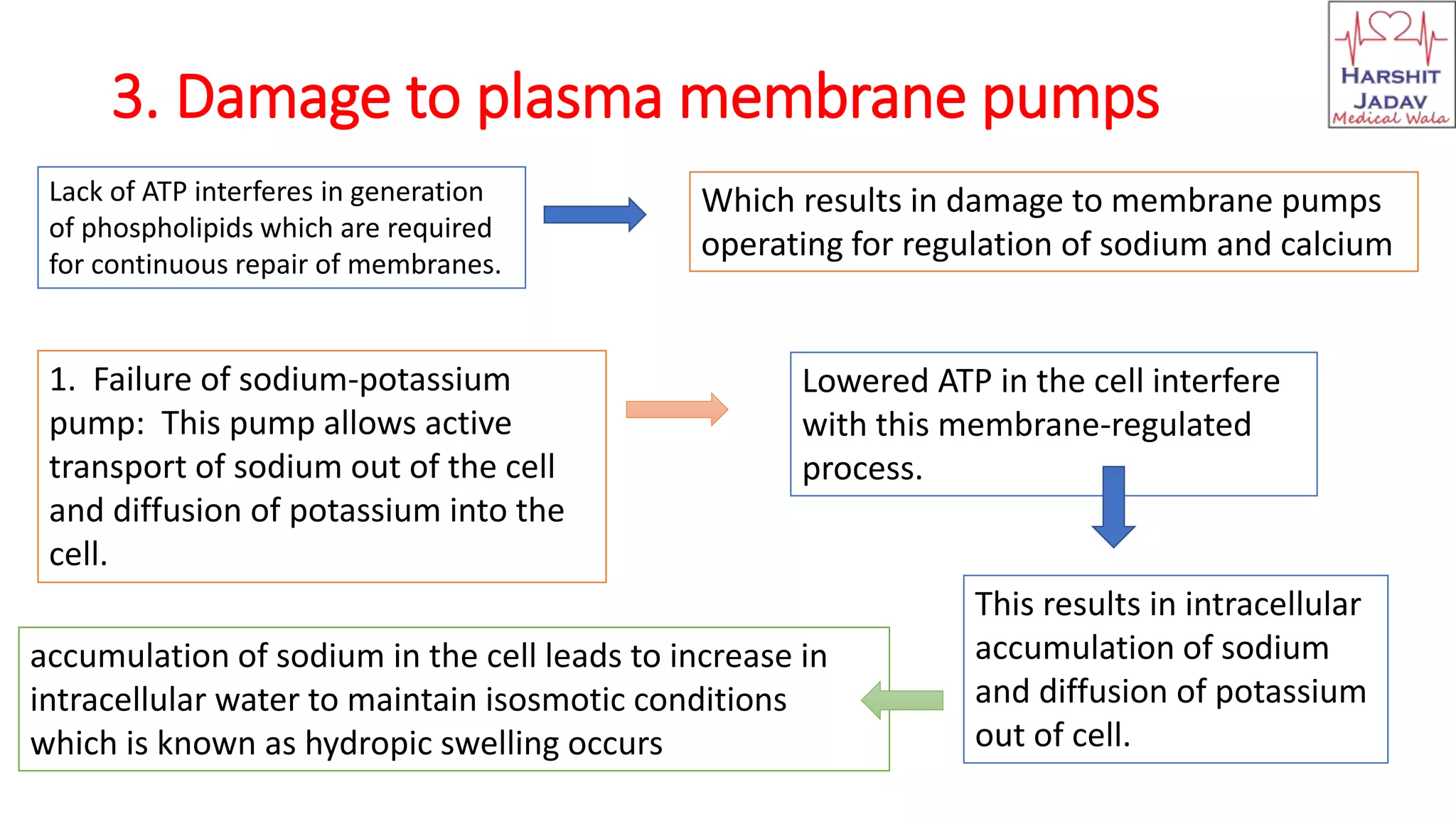
3. Damage to plasma membrane pumps
Lack of ATP interferes in generation
of phospholipids which are required
for continuous repair of membranes.
Which results in damage to membrane pumps
operating for regulation of sodium and calcium
1. Failure of sodium-potassium
pump: This pump allows active
transport of sodium out of the cell
and diffusion of potassium into the
cell.
Lowered ATP in the cell interfere
with this membrane-regulated
process.
This results in intracellular
accumulation of sodium
and diffusion of potassium
out of cell.
accumulation of sodium in the cell leads to increase in
intracellular water to maintain isosmotic conditions
which is known as hydropic swelling occurs
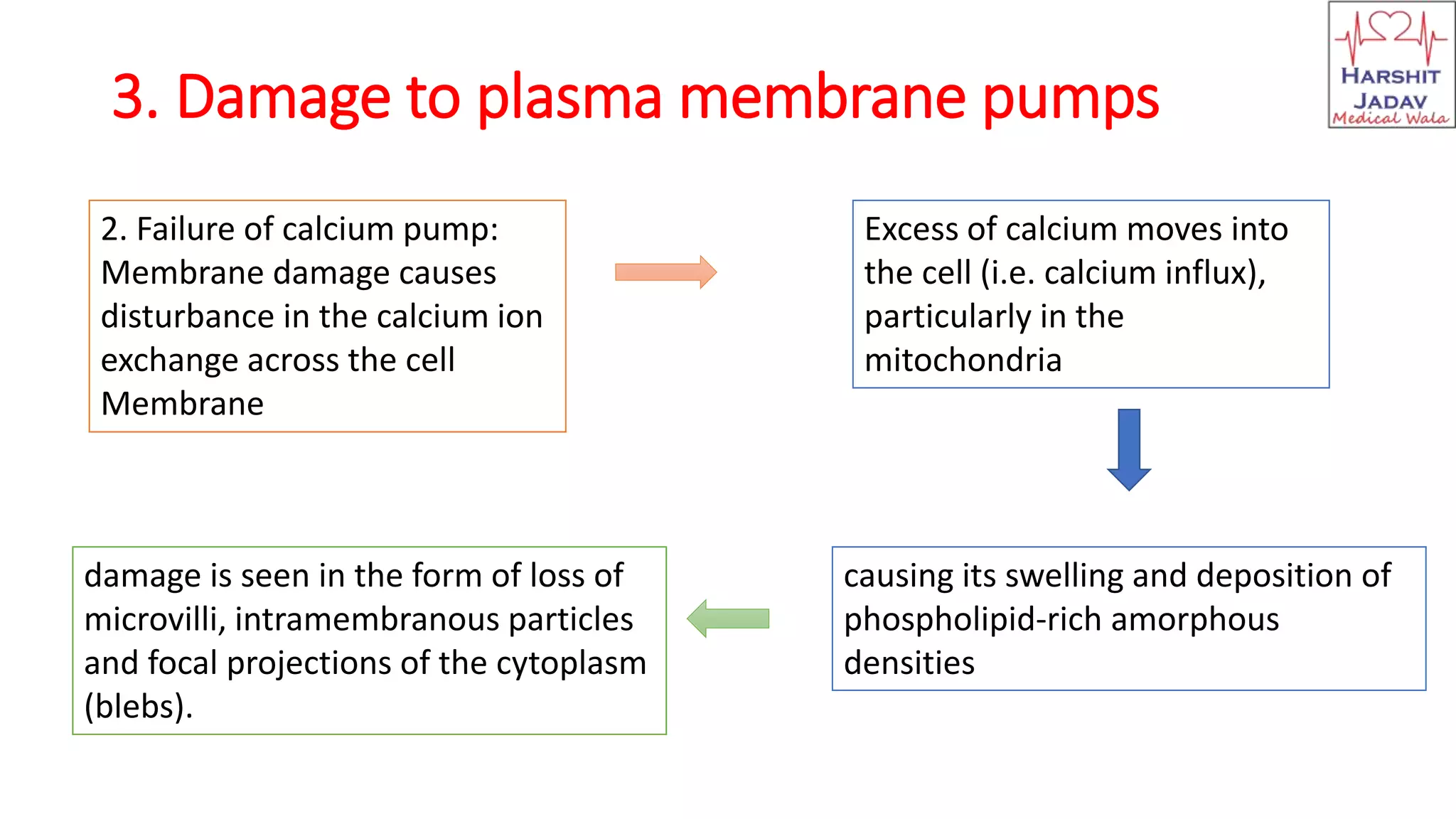
2. Failure of calcium pump:
Membrane damage causes
disturbance in the calcium ion
exchange across the cell
Membrane
Excess of calcium moves into
the cell (i.e. calcium influx),
particularly in the
mitochondria
causing its swelling and deposition of
phospholipid-rich amorphous
densities
damage is seen in the form of loss of
microvilli, intramembranous particles
and focal projections of the cytoplasm
(blebs).
3. Damage to plasma membrane pumps
4. Reduced protein synthesis
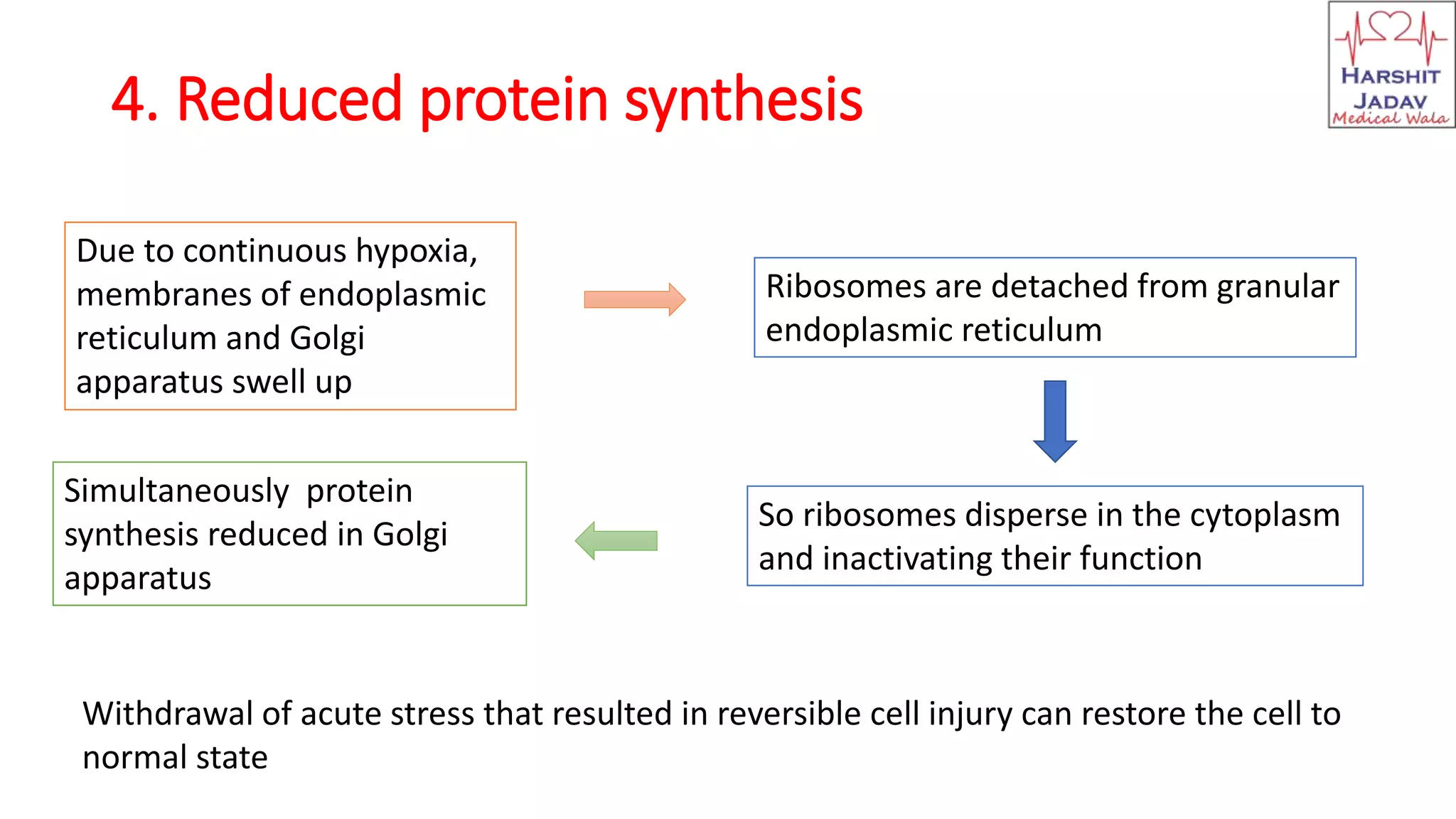
Due to continuous hypoxia,
membranes of endoplasmic
reticulum and Golgi
apparatus swell up
Ribosomes are detached from granular
endoplasmic reticulum
So ribosomes disperse in the cytoplasm
and inactivating their function
Simultaneously protein
synthesis reduced in Golgi
apparatus
Withdrawal of acute stress that resulted in reversible cell injury can restore the cell to
normal state
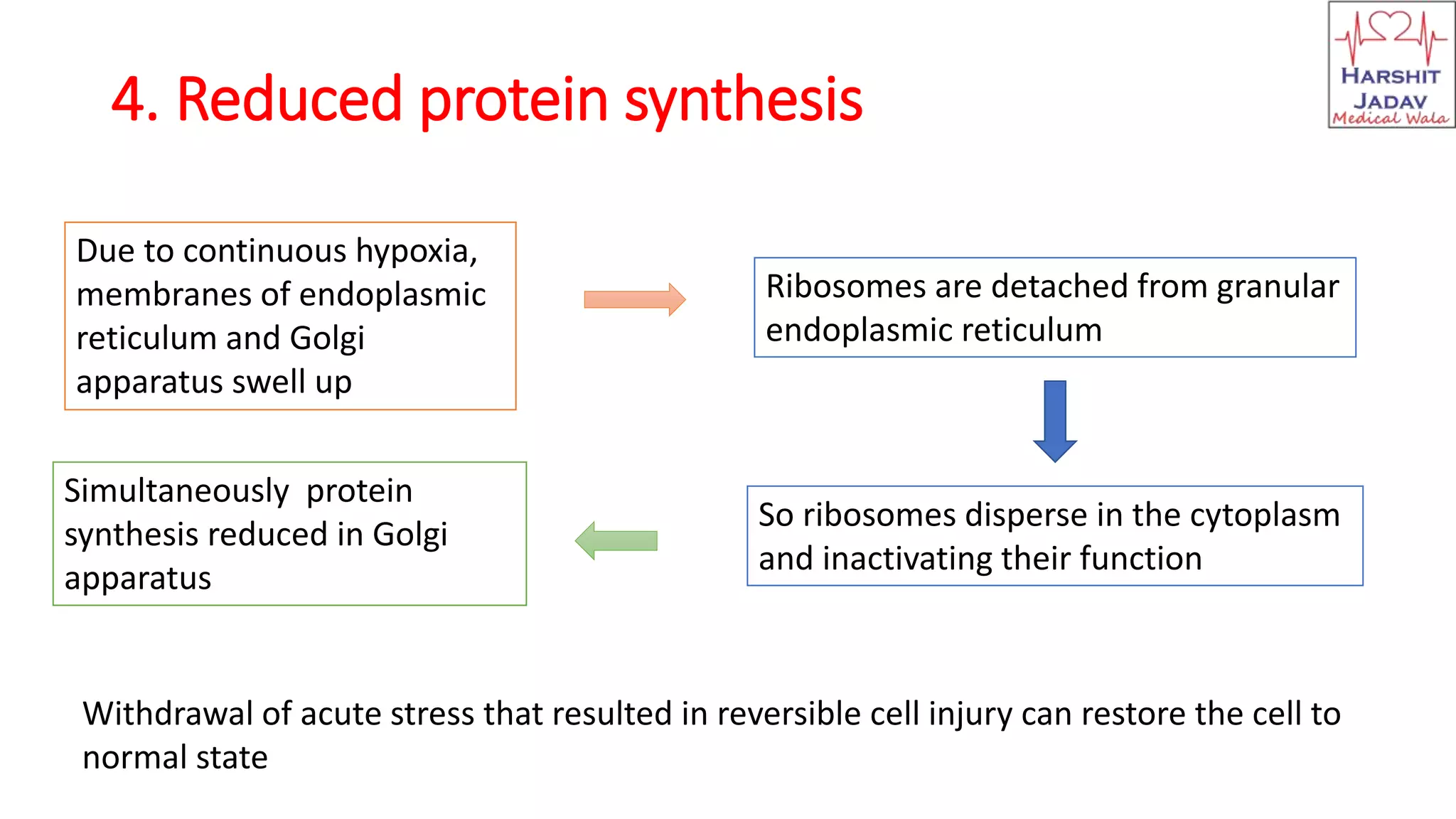
4. Reduced protein synthesis
Due to continuous hypoxia,
membranes of endoplasmic
reticulum and Golgi
apparatus swell up
Ribosomes are detached from granular
endoplasmic reticulum
So ribosomes disperse in the cytoplasm
and inactivating their function
Simultaneously protein
synthesis reduced in Golgi
apparatus
Withdrawal of acute stress that resulted in reversible cell injury can restore the cell to
normal state
4. Reduced protein synthesis
Due to continuous hypoxia,
membranes of endoplasmic
reticulum and Golgi
apparatus swell up
Ribosomes are detached from granular
endoplasmic reticulum
So ribosomes disperse in the cytoplasm
and inactivating their function
Simultaneously protein
synthesis reduced in Golgi
apparatus
Withdrawal of acute stress that resulted in reversible cell injury can restore the cell to
normal state
Today’s Question
• What is the difference between Disease, Disorder and Syndrome?
• Give examples with justification.
• Please give answers in Comment section. (not in WhatsApp/Instagram)
• See you than…
• Enjoy …
• Like, share and Subscribe…

Reversible cell injury I Pathology

  • 1.
  • 2.
    Cell Injury • Ischemiaand hypoxia are the most common forms of cell injury • Ischemia is insufficient blood flow to provide adequate oxygenation. • This, in turn, leads to tissue hypoxia (reduced oxygen) • Ischemia always results in hypoxia; however, hypoxia can occur without ischemia
  • 3.
    Normal cell (Homeostasis) Adaptation Cell Injury IrreversibleCell Injury Reversible Cell Injury Necrosis Apoptosis Stress removed Stress Inability to Adapt Severe Progressive Mild Transient Cell Death
  • 4.
    Reversible Cell Injury •If the ischemia or hypoxia is of short duration, the effects may be reversible on rapid restoration of circulation • e.g. in coronary artery occlusion, myocardial contractility • 1. Decreased generation of cellular ATP • 2. Intracellular lactic acidosis: Nuclear clumping • 3. Damage to plasma membrane pumps • 4. Reduced protein synthesis
  • 5.
    1. Decreased generationof cellular ATP • Living cells require continuous supply of oxygen to produce ATP • Ischemia and Hypoxia causing decreased ATP generation • In ischemia, aerobic respiration as well as glucose availability both are compromised resulting in more severe and faster effects of cell injury • It also causes accumulation of metabolic waste products in the cells • in hypoxia from other causes (RBC disorders, heart disease, lung disease), anaerobic glycolytic ATP generation continues, and thus cell injury is less severe.
  • 6.
    2. Intracellular lacticacidosis: Nuclear clumping Due to low oxygen supply to the cell, mitochondria fails first Anaerobic glycolytic pathway activates and generates ATP This results in rapid depletion of glycogen and accumulation of lactic acid Which lowers the intracellular pH. fall in intracellular pH (i.e. intracellular lactic acidosis) results in clumping of nuclear chromatin
  • 7.
    3. Damage toplasma membrane pumps Lack of ATP interferes in generation of phospholipids which are required for continuous repair of membranes. Which results in damage to membrane pumps operating for regulation of sodium and calcium 1. Failure of sodium-potassium pump: This pump allows active transport of sodium out of the cell and diffusion of potassium into the cell. Lowered ATP in the cell interfere with this membrane-regulated process. This results in intracellular accumulation of sodium and diffusion of potassium out of cell. accumulation of sodium in the cell leads to increase in intracellular water to maintain isosmotic conditions which is known as hydropic swelling occurs
  • 8.
    2. Failure ofcalcium pump: Membrane damage causes disturbance in the calcium ion exchange across the cell Membrane Excess of calcium moves into the cell (i.e. calcium influx), particularly in the mitochondria causing its swelling and deposition of phospholipid-rich amorphous densities damage is seen in the form of loss of microvilli, intramembranous particles and focal projections of the cytoplasm (blebs). 3. Damage to plasma membrane pumps
  • 9.
    4. Reduced proteinsynthesis Due to continuous hypoxia, membranes of endoplasmic reticulum and Golgi apparatus swell up Ribosomes are detached from granular endoplasmic reticulum So ribosomes disperse in the cytoplasm and inactivating their function Simultaneously protein synthesis reduced in Golgi apparatus Withdrawal of acute stress that resulted in reversible cell injury can restore the cell to normal state
  • 10.
    4. Reduced proteinsynthesis Due to continuous hypoxia, membranes of endoplasmic reticulum and Golgi apparatus swell up Ribosomes are detached from granular endoplasmic reticulum So ribosomes disperse in the cytoplasm and inactivating their function Simultaneously protein synthesis reduced in Golgi apparatus Withdrawal of acute stress that resulted in reversible cell injury can restore the cell to normal state
  • 11.
    4. Reduced proteinsynthesis Due to continuous hypoxia, membranes of endoplasmic reticulum and Golgi apparatus swell up Ribosomes are detached from granular endoplasmic reticulum So ribosomes disperse in the cytoplasm and inactivating their function Simultaneously protein synthesis reduced in Golgi apparatus Withdrawal of acute stress that resulted in reversible cell injury can restore the cell to normal state
  • 12.
    Today’s Question • Whatis the difference between Disease, Disorder and Syndrome? • Give examples with justification. • Please give answers in Comment section. (not in WhatsApp/Instagram) • See you than… • Enjoy … • Like, share and Subscribe…