Downloaded 3,059 times



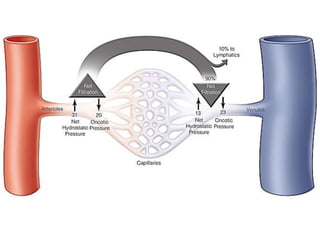
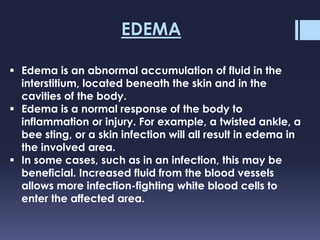

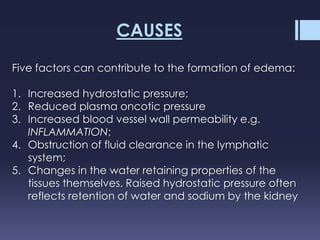
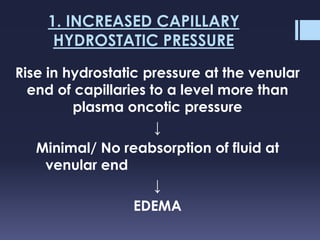


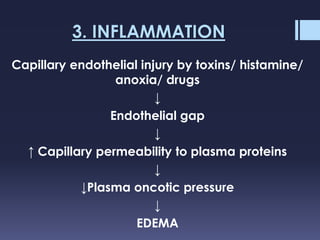

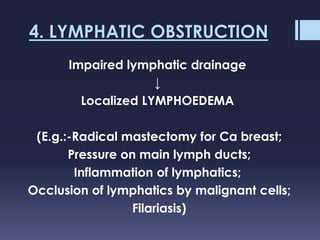

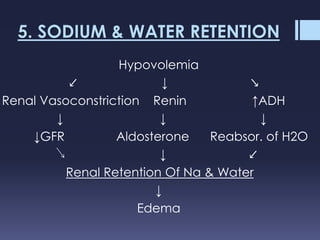


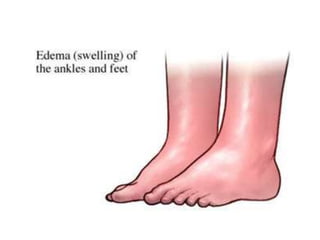
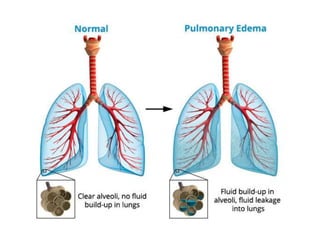



The document discusses fluid circulation and edema, detailing normal fluid movement within the body governed by hydrostatic and osmotic pressures, as well as the factors contributing to edema formation such as increased hydrostatic pressure and lymphatic obstruction. It classifies edema into generalized and localized types, with descriptions of common conditions causing each type, including congestive heart failure and local trauma. Additionally, it outlines different types of edema including peripheral, pulmonary, and cerebral edema, along with their causes and implications.


