EDEMA
Ikram Ullah
M.Phil MLSc
FLUID DISTRIBUTION
 60% of lean body weight is water
 2/3 is intracellular
 1/3 is extracellular (mostly interstitial)
 5% of total body water is in blood plasma
EDEMA
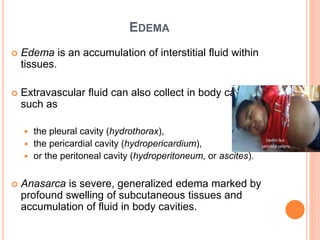
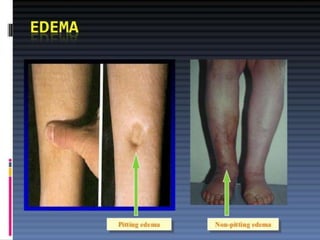
 Edema is an accumulation of interstitial fluid within
tissues.
 Extravascular fluid can also collect in body cavities
such as
 the pleural cavity (hydrothorax),
 the pericardial cavity (hydropericardium),
 or the peritoneal cavity (hydroperitoneum, or ascites).
 Anasarca is severe, generalized edema marked by
profound swelling of subcutaneous tissues and
accumulation of fluid in body cavities.
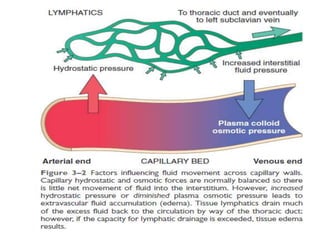
 Fluid movement between the vascular and
interstitial spaces is governed mainly by two
opposing forces
 The vascular hydrostatic pressure and the colloid
osmotic pressure
 The outflow of fluid produced by hydrostatic
pressure at the arteriolar end is neatly balanced by
inflow due to the slightly elevated osmotic pressure
at the venular end
 Hence there is only a small net outflow of fluid into
the interstitial space, which is drained by lymphatic
vessels.
 Either increased hydrostatic pressure or diminished
colloid osmotic pressure causes increased movement of
water into the interstitium
 This in turn increases the tissue hydrostatic pressure,
and eventually a new equilibrium is achieved.
 Excess edema fluid is removed by lymphatic drainage
and returned to the bloodstream by way of the thoracic
duct
TRANSUDATE VS. EXUDATE
 The edema fluid that accumulates owing to increased
hydrostatic pressure or reduced intravascular colloid
typically is a protein-poor transudate
 By contrast, because of increased vascular permeability,
inflammatory edema fluid is a protein-rich exudate
CAUSES OF EDEMA
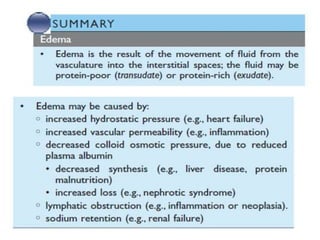
Increased Hydrostatic Pressure:
 Increased hydrostatic pressure leads to accumulation of fluid
in extravascular space (transudate)
 Local increases in intravascular pressure can result from
impaired venous return
 For example, a deep venous thrombosis in the lower
extremity can cause edema restricted to the distal portion of
the affected leg.
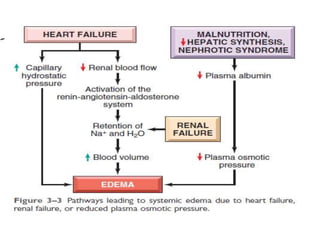
 Generalized increases in venous pressure, with resultant
systemic edema, occur most commonly in congestive heart
failure
REDUCED PLASMA OSMOTIC PRESSURE
 Condition which albumin is either lost from the circulation
or synthesized in inadequate amounts
 In nephrotic syndrome, damaged glomerular capillaries
become leaky, leading to the loss of plasma proteins
 Results the development of generalized edema
 Reduced albumin synthesis occurs in the setting of
severe liver disease (e.g., cirrhosis) and protein
malnutrition
LYMPHATIC OBSTRUCTION
 Impaired lymphatic drainage and consequent
lymphedema
 Usually result from a localized obstruction caused
by an inflammatory or neoplastic condition.
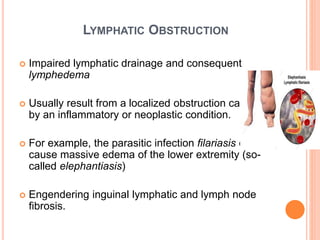
 For example, the parasitic infection filariasis can
cause massive edema of the lower extremity (so-
called elephantiasis)
 Engendering inguinal lymphatic and lymph node
fibrosis.
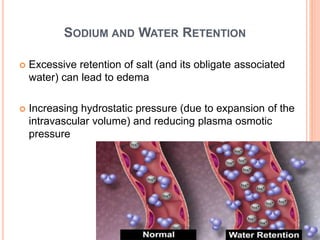
SODIUM AND WATER RETENTION
 Excessive retention of salt (and its obligate associated
water) can lead to edema
 Increasing hydrostatic pressure (due to expansion of the
intravascular volume) and reducing plasma osmotic
pressure
o Sodium is retained by the kidney in two conditions.
o Glomerular filtration rate is reduced in acute
glomerulonephritis and renal failure resulting in sodium
and water retention.
o Increased renin angiotensin aldosterone secretion
which causes sodium reabsorption in distal convoluted
tubules accompanied by water reabsorption
(generalized edema)
INCREASED VASCULAR PERMEABILITY
o Edema can also result from increased vascular
permeability due to inflammation
o Exudate is the protein rich fluid that is accumulated due to
increased vascular permeability
o Result in increased osmotic pressure in interstitial or
extravascular space due to free passage of plasma protein
Edema

Edema

  • 1.
  • 3.
    FLUID DISTRIBUTION  60%of lean body weight is water  2/3 is intracellular  1/3 is extracellular (mostly interstitial)  5% of total body water is in blood plasma
  • 4.
    EDEMA  Edema isan accumulation of interstitial fluid within tissues.  Extravascular fluid can also collect in body cavities such as  the pleural cavity (hydrothorax),  the pericardial cavity (hydropericardium),  or the peritoneal cavity (hydroperitoneum, or ascites).  Anasarca is severe, generalized edema marked by profound swelling of subcutaneous tissues and accumulation of fluid in body cavities.
  • 5.
     Fluid movementbetween the vascular and interstitial spaces is governed mainly by two opposing forces  The vascular hydrostatic pressure and the colloid osmotic pressure  The outflow of fluid produced by hydrostatic pressure at the arteriolar end is neatly balanced by inflow due to the slightly elevated osmotic pressure at the venular end  Hence there is only a small net outflow of fluid into the interstitial space, which is drained by lymphatic vessels.
  • 6.
     Either increasedhydrostatic pressure or diminished colloid osmotic pressure causes increased movement of water into the interstitium  This in turn increases the tissue hydrostatic pressure, and eventually a new equilibrium is achieved.  Excess edema fluid is removed by lymphatic drainage and returned to the bloodstream by way of the thoracic duct
  • 8.
    TRANSUDATE VS. EXUDATE The edema fluid that accumulates owing to increased hydrostatic pressure or reduced intravascular colloid typically is a protein-poor transudate  By contrast, because of increased vascular permeability, inflammatory edema fluid is a protein-rich exudate
  • 10.
    CAUSES OF EDEMA IncreasedHydrostatic Pressure:  Increased hydrostatic pressure leads to accumulation of fluid in extravascular space (transudate)  Local increases in intravascular pressure can result from impaired venous return  For example, a deep venous thrombosis in the lower extremity can cause edema restricted to the distal portion of the affected leg.  Generalized increases in venous pressure, with resultant systemic edema, occur most commonly in congestive heart failure
  • 12.
    REDUCED PLASMA OSMOTICPRESSURE  Condition which albumin is either lost from the circulation or synthesized in inadequate amounts  In nephrotic syndrome, damaged glomerular capillaries become leaky, leading to the loss of plasma proteins  Results the development of generalized edema  Reduced albumin synthesis occurs in the setting of severe liver disease (e.g., cirrhosis) and protein malnutrition
  • 13.
    LYMPHATIC OBSTRUCTION  Impairedlymphatic drainage and consequent lymphedema  Usually result from a localized obstruction caused by an inflammatory or neoplastic condition.  For example, the parasitic infection filariasis can cause massive edema of the lower extremity (so- called elephantiasis)  Engendering inguinal lymphatic and lymph node fibrosis.
  • 14.
    SODIUM AND WATERRETENTION  Excessive retention of salt (and its obligate associated water) can lead to edema  Increasing hydrostatic pressure (due to expansion of the intravascular volume) and reducing plasma osmotic pressure
  • 15.
    o Sodium isretained by the kidney in two conditions. o Glomerular filtration rate is reduced in acute glomerulonephritis and renal failure resulting in sodium and water retention. o Increased renin angiotensin aldosterone secretion which causes sodium reabsorption in distal convoluted tubules accompanied by water reabsorption (generalized edema)
  • 16.
    INCREASED VASCULAR PERMEABILITY oEdema can also result from increased vascular permeability due to inflammation o Exudate is the protein rich fluid that is accumulated due to increased vascular permeability o Result in increased osmotic pressure in interstitial or extravascular space due to free passage of plasma protein