CHRONIC INFLAMMATION
DEFINITION
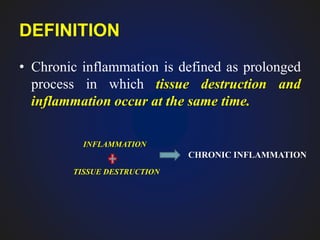
• Chronic inflammation is defined as prolonged
process in which tissue destruction and
inflammation occur at the same time.
INFLAMMATION
TISSUE DESTRUCTION
CHRONIC INFLAMMATION
CAUSES:
• May occur by one of the following 3 ways:
1. Chronic inflammation following acute
inflammation.
2. Recurrent attacks of acute inflammation.
3. Chronic inflammation starting de novo.
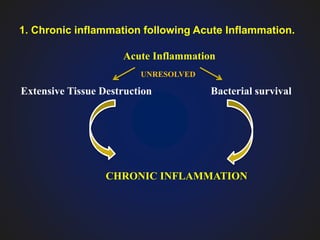
1. Chronic inflammation following Acute Inflammation.
Extensive Tissue Destruction Bacterial survival
Acute Inflammation
UNRESOLVED
CHRONIC INFLAMMATION
Eg: Osteomyelitis
• Acute Osteomyelitis ---- > Chronic Osteomyelitis
2. Recurrent attacks of Acute Inflammation:
Repeated bouts/Attacks of Acute Inflammation
Chronicity of the process
CHRONIC INFLAMMATION
E.g: Recurrent Urinary Tract Infection leading to
Chronic Pyelonephritis
Recurrent Urinary Tract Infection/Pyelonephritis Chronic Pyelonephritis
3. Chronic inflammation starting de novo.
ORGANISMS OF LOW PATHOGENICITY
Eg: Mycobacterium tuberculosis
CHRONIC INFLAMMATION STARTING DE NOVO
GENERAL FEATURES OF CHRONIC INFLAMMATION
• Following general features characterise any chronic
inflammation:
CHRONIC
INFLAMMATION
1.MONONUCLEAR
INFILTRATION.
2.TISSUE
DESTRUCTION
OR
NECROSIS
3. PROLIFERATIVE
CHANGES
TYPES OF CHRONIC INFLAMMATION:
Chronic inflammation is subdivided into 2 types:
1. Chronic Non-Specific Inflammation
2. Chronic Granulomatous Inflammation
1. Chronic Non-Specific Inflammation
• When the irritant substance produces a non-
specific chronic inflammatory reaction with
formation of granulation tissue and healing by
fibrosis, it is called chronic non-specific
inflammation.
E.g. Chronic Osteomyelitis, Chronic Ulcer,
Lung Abscess
2. Chronic Granulomatous Inflammation
• In this, the injurious agent causes a
characteristic histologic tissue response by
formation of granulomas e.g. tuberculosis,
leprosy, syphilis, actinomycosis, sarcoidosis
etc.
GRANULOMATOUS INFLAMMATION
Definition:
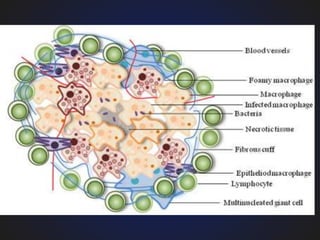
• Granuloma is defined as a circumscribed, tiny
lesion, about 1 mm in diameter, composed
predominantly of collection of modified
macrophages called epithelioid cells, and
rimmed at the periphery by lymphoid cells.
PATHOGENESIS OF GRANULOMA:
Persistence of the poorly digestible antigen e.g.
Mycobacterium tuberculosis, M. leprae.
TYPE IV GRANULOMATOUS HYPERSENSITIVITY REACTION
Formation of Granuloma
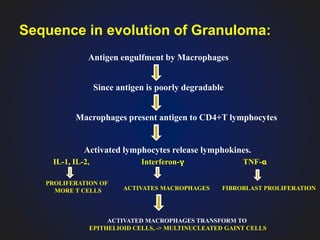
Sequence in evolution of Granuloma:
Antigen engulfment by Macrophages
Since antigen is poorly degradable
Macrophages present antigen to CD4+T lymphocytes
Activated lymphocytes release lymphokines.
IL-1, IL-2, Interferon-γ TNF-α
PROLIFERATION OF
MORE T CELLS ACTIVATES MACROPHAGES FIBROBLAST PROLIFERATION
ACTIVATED MACROPHAGES TRANSFORM TO
EPITHELIOID CELLS, -> MULTINUCLEATED GAINT CELLS
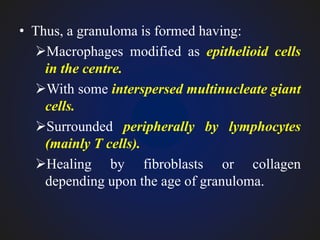
• Thus, a granuloma is formed having:
Macrophages modified as epithelioid cells
in the centre.
With some interspersed multinucleate giant
cells.
Surrounded peripherally by lymphocytes
(mainly T cells).
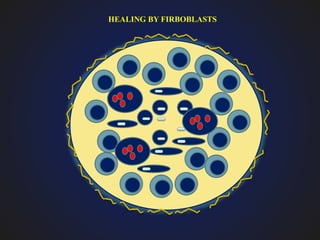
Healing by fibroblasts or collagen
depending upon the age of granuloma.
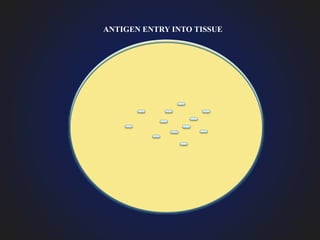
ANTIGEN ENTRY INTO TISSUE
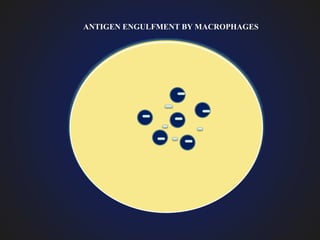
ANTIGEN ENGULFMENT BY MACROPHAGES
MACROPHAGES PRESENT ANTIGEN TO CD4+T LYMPHOCYTES
LYMPHOKINES
ACTIVATED LYMPHOCYTES RELEASE LYMPHOKINES
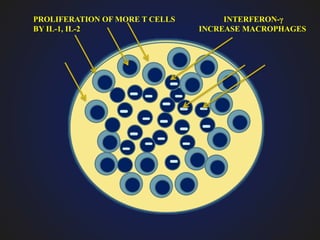
PROLIFERATION OF MORE T CELLS
BY IL-1, IL-2
INTERFERON-γ
INCREASE MACROPHAGES
ACTIVATED MACROPHAGES TRANSFORM TO
EPITHELIOID CELLS
EPITHELIOID CELLS FUSE TO FORM
MULTINUCLEATED GAINT CELLS
HEALING BY FIRBOBLASTS
Chronic inflammation

Chronic inflammation

  • 1.
  • 2.
    DEFINITION • Chronic inflammationis defined as prolonged process in which tissue destruction and inflammation occur at the same time. INFLAMMATION TISSUE DESTRUCTION CHRONIC INFLAMMATION
  • 3.
    CAUSES: • May occurby one of the following 3 ways: 1. Chronic inflammation following acute inflammation. 2. Recurrent attacks of acute inflammation. 3. Chronic inflammation starting de novo.
  • 4.
    1. Chronic inflammationfollowing Acute Inflammation. Extensive Tissue Destruction Bacterial survival Acute Inflammation UNRESOLVED CHRONIC INFLAMMATION
  • 5.
    Eg: Osteomyelitis • AcuteOsteomyelitis ---- > Chronic Osteomyelitis
  • 6.
    2. Recurrent attacksof Acute Inflammation: Repeated bouts/Attacks of Acute Inflammation Chronicity of the process CHRONIC INFLAMMATION
  • 7.
    E.g: Recurrent UrinaryTract Infection leading to Chronic Pyelonephritis Recurrent Urinary Tract Infection/Pyelonephritis Chronic Pyelonephritis
  • 8.
    3. Chronic inflammationstarting de novo. ORGANISMS OF LOW PATHOGENICITY Eg: Mycobacterium tuberculosis CHRONIC INFLAMMATION STARTING DE NOVO
  • 9.
    GENERAL FEATURES OFCHRONIC INFLAMMATION • Following general features characterise any chronic inflammation: CHRONIC INFLAMMATION 1.MONONUCLEAR INFILTRATION. 2.TISSUE DESTRUCTION OR NECROSIS 3. PROLIFERATIVE CHANGES
  • 10.
    TYPES OF CHRONICINFLAMMATION: Chronic inflammation is subdivided into 2 types: 1. Chronic Non-Specific Inflammation 2. Chronic Granulomatous Inflammation
  • 11.
    1. Chronic Non-SpecificInflammation • When the irritant substance produces a non- specific chronic inflammatory reaction with formation of granulation tissue and healing by fibrosis, it is called chronic non-specific inflammation. E.g. Chronic Osteomyelitis, Chronic Ulcer, Lung Abscess
  • 12.
    2. Chronic GranulomatousInflammation • In this, the injurious agent causes a characteristic histologic tissue response by formation of granulomas e.g. tuberculosis, leprosy, syphilis, actinomycosis, sarcoidosis etc.
  • 13.
    GRANULOMATOUS INFLAMMATION Definition: • Granulomais defined as a circumscribed, tiny lesion, about 1 mm in diameter, composed predominantly of collection of modified macrophages called epithelioid cells, and rimmed at the periphery by lymphoid cells.
  • 15.
    PATHOGENESIS OF GRANULOMA: Persistenceof the poorly digestible antigen e.g. Mycobacterium tuberculosis, M. leprae. TYPE IV GRANULOMATOUS HYPERSENSITIVITY REACTION Formation of Granuloma
  • 16.
    Sequence in evolutionof Granuloma: Antigen engulfment by Macrophages Since antigen is poorly degradable Macrophages present antigen to CD4+T lymphocytes Activated lymphocytes release lymphokines. IL-1, IL-2, Interferon-γ TNF-α PROLIFERATION OF MORE T CELLS ACTIVATES MACROPHAGES FIBROBLAST PROLIFERATION ACTIVATED MACROPHAGES TRANSFORM TO EPITHELIOID CELLS, -> MULTINUCLEATED GAINT CELLS
  • 17.
    • Thus, agranuloma is formed having: Macrophages modified as epithelioid cells in the centre. With some interspersed multinucleate giant cells. Surrounded peripherally by lymphocytes (mainly T cells). Healing by fibroblasts or collagen depending upon the age of granuloma.
  • 18.
  • 19.
  • 20.
    MACROPHAGES PRESENT ANTIGENTO CD4+T LYMPHOCYTES
  • 21.
  • 22.
    PROLIFERATION OF MORET CELLS BY IL-1, IL-2 INTERFERON-γ INCREASE MACROPHAGES
  • 23.
    ACTIVATED MACROPHAGES TRANSFORMTO EPITHELIOID CELLS
  • 24.
    EPITHELIOID CELLS FUSETO FORM MULTINUCLEATED GAINT CELLS
  • 25.