

Welcome To Our Presentation
Mechanism of Capacitor
PRESENTED BY :
MD.SUMON SARDER 161-15-953
Group name:-
Our group members..
Capacitors
 A basic capacitor has two parallel plates separated
by an insulating material
 A capacitor stores an electrical charge between the
two plates
 The unit of capacitance is Farads (F)
 Capacitance values are normally smaller, such as µF,
nF or pF
Capacitors
 Basic capacitor construction
Dielectric
material
Plate 1
Plate 2
The dielectric
material is an
insulator therefore
no current flows
through the
capacitor
Capacitors
Storing a charge between
the plates
 Electrons on the left
plate are attracted
toward the positive
terminal of the voltage
source
 This leaves an excess of
positively charged holes
 The electrons are
pushed toward the right
plate
 Excess electrons leave a
negative charge
+ -
+
_
+ _
Capacitors
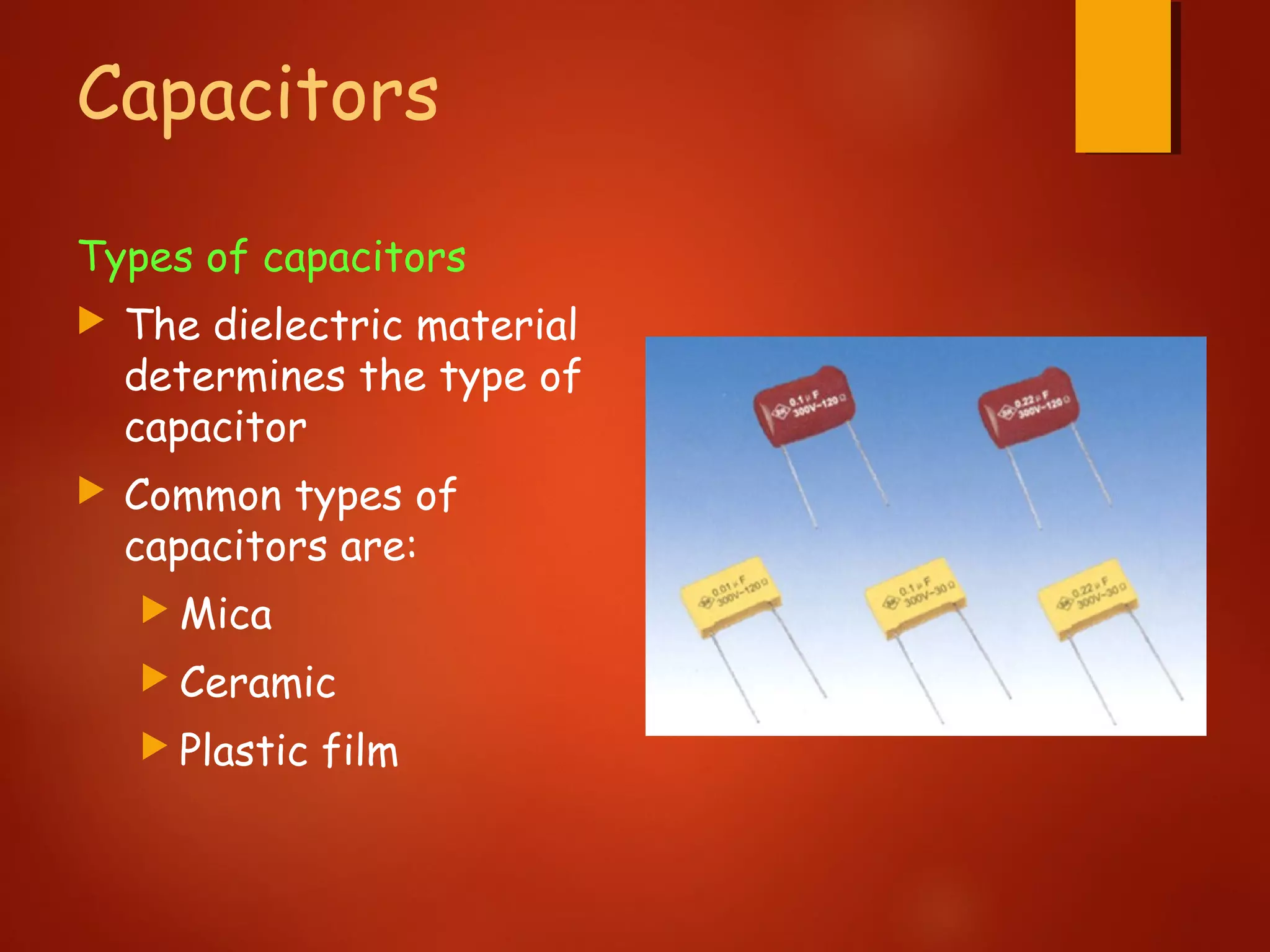
Types of capacitors
 The dielectric material
determines the type of
capacitor
 Common types of
capacitors are:
 Mica
 Ceramic
 Plastic film
Capacitors
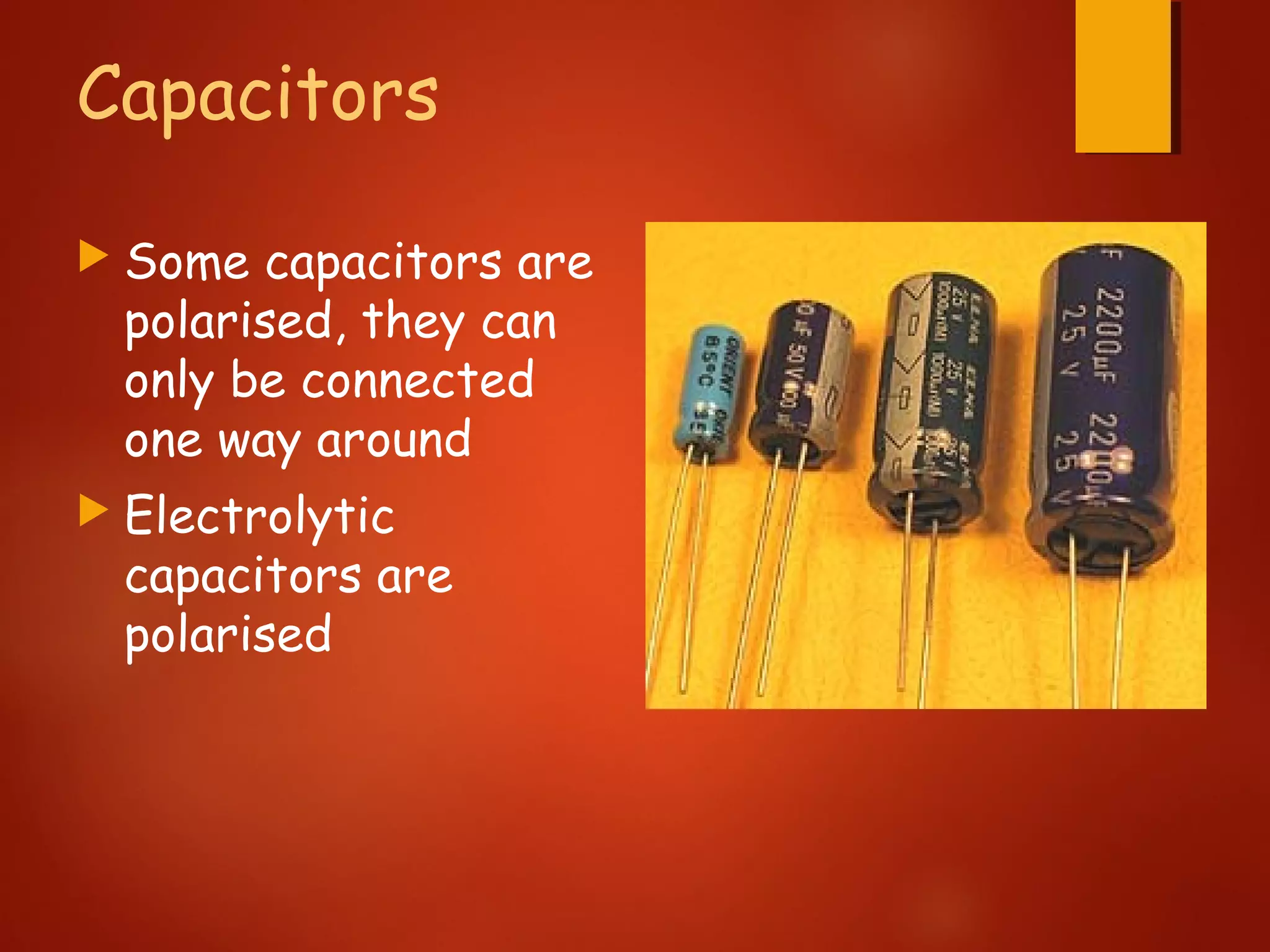
 Some capacitors are
polarised, they can
only be connected
one way around
 Electrolytic
capacitors are
polarised
Capacitors
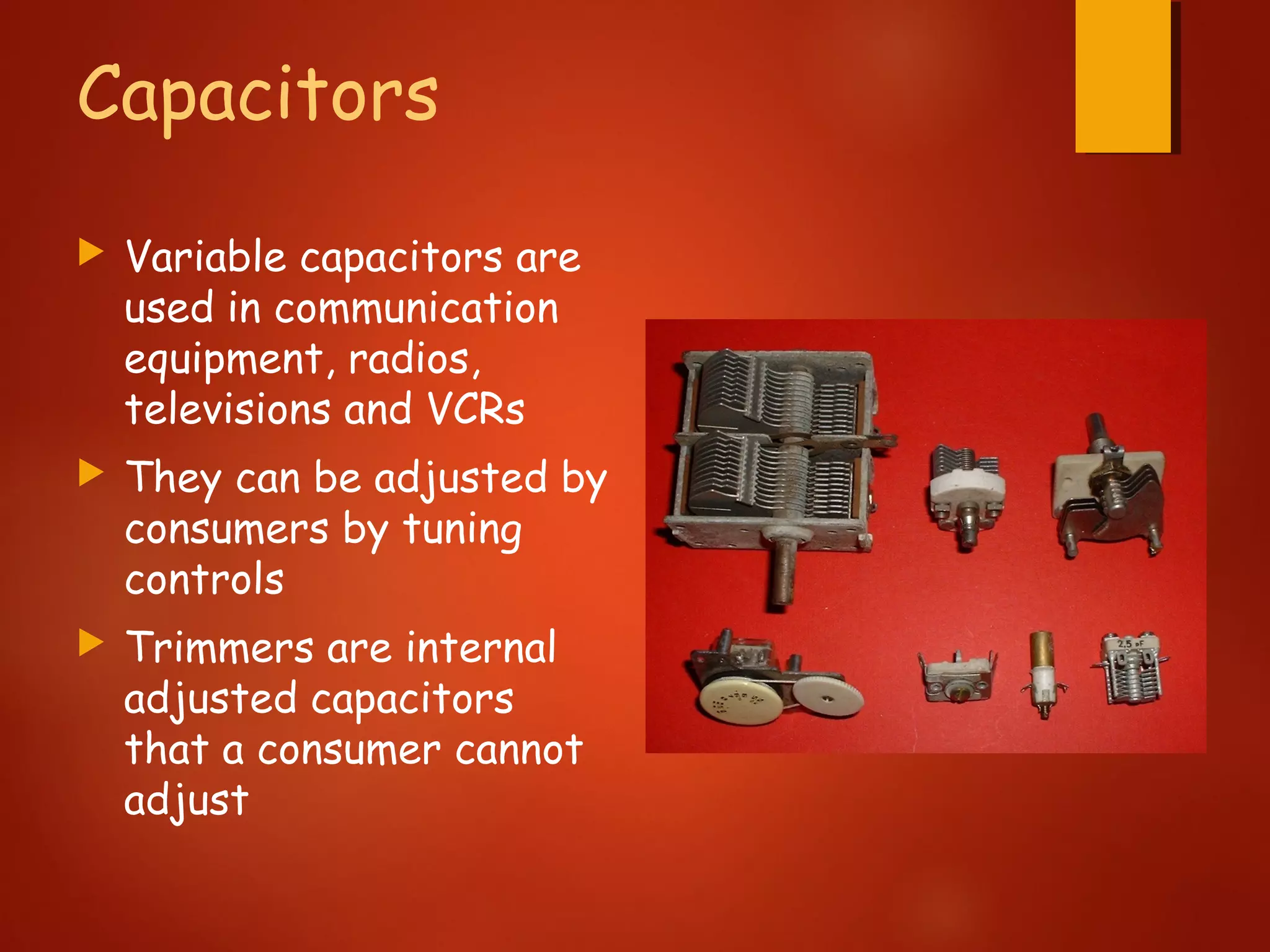
 Variable capacitors are
used in communication
equipment, radios,
televisions and VCRs
 They can be adjusted by
consumers by tuning
controls
 Trimmers are internal
adjusted capacitors
that a consumer cannot
adjust
Capacitors
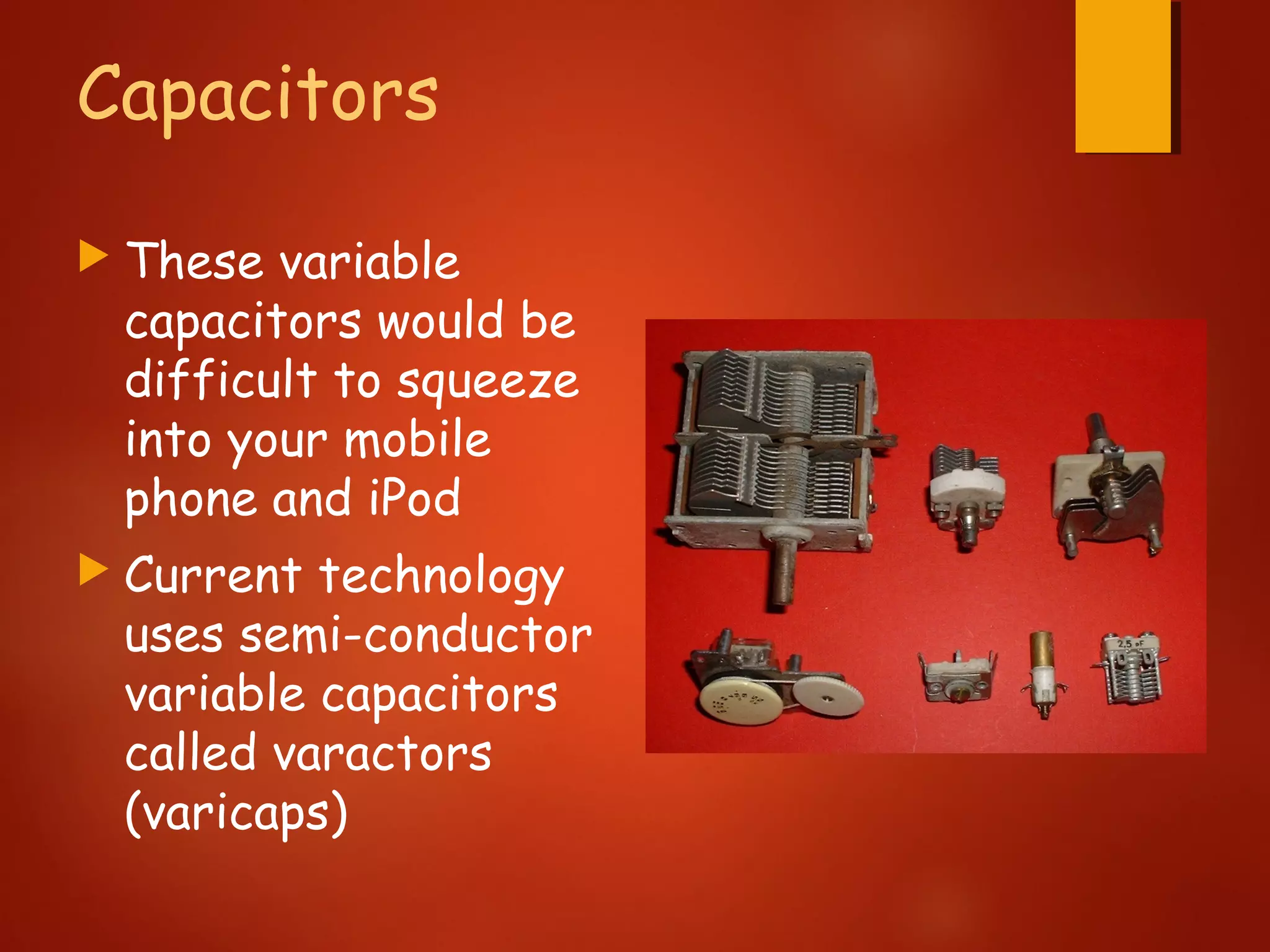
 These variable
capacitors would be
difficult to squeeze
into your mobile
phone and iPod
 Current technology
uses semi-conductor
variable capacitors
called varactors
(varicaps)
Capacitors
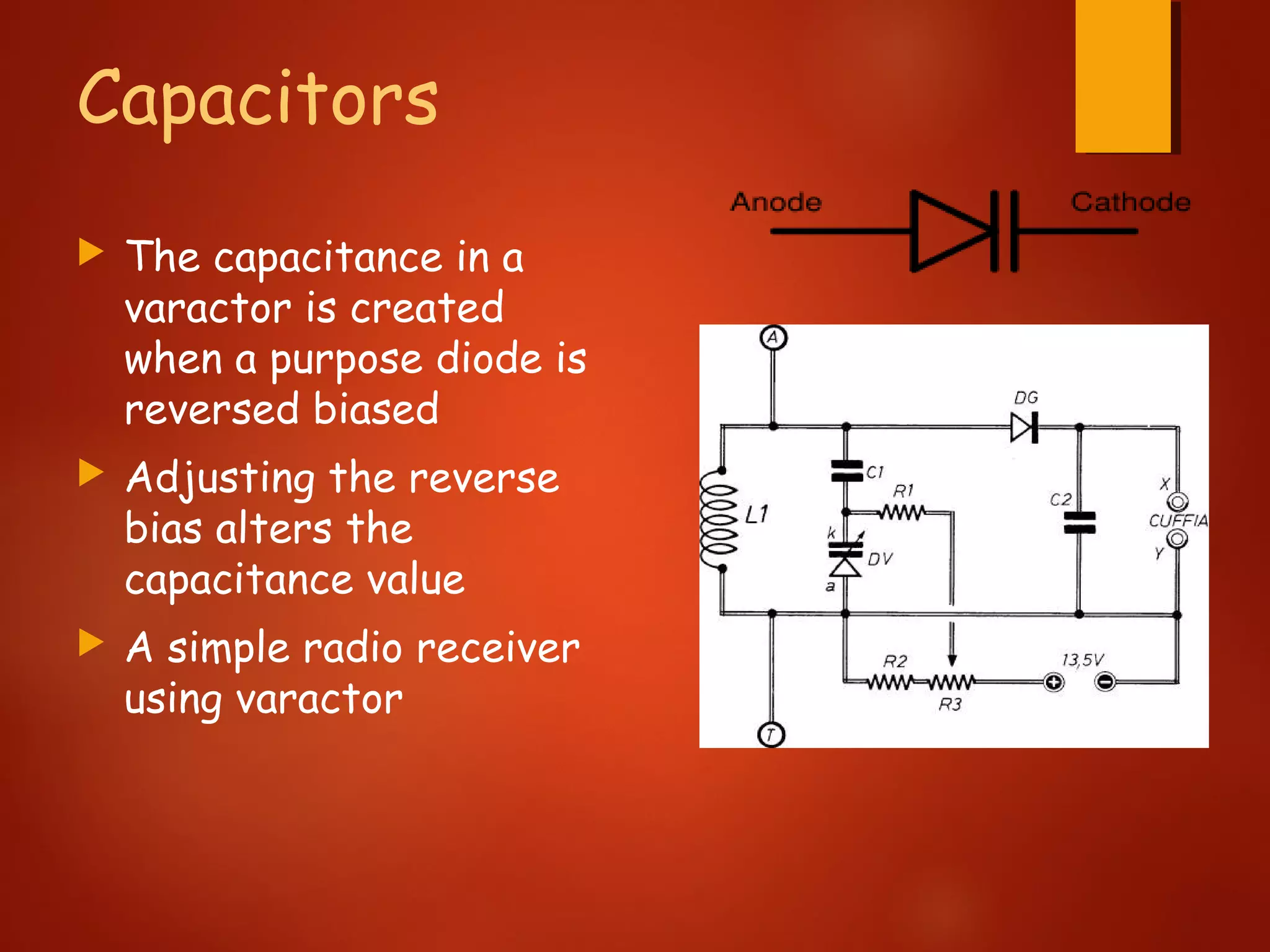
 The capacitance in a
varactor is created
when a purpose diode is
reversed biased
 Adjusting the reverse
bias alters the
capacitance value
 A simple radio receiver
using varactor
Mechanism of Capacitor Presentation

Mechanism of Capacitor Presentation

  • 1.
    Welcome To OurPresentation
  • 2.
    Mechanism of Capacitor PRESENTEDBY : MD.SUMON SARDER 161-15-953
  • 3.
  • 4.
    Capacitors  A basiccapacitor has two parallel plates separated by an insulating material  A capacitor stores an electrical charge between the two plates  The unit of capacitance is Farads (F)  Capacitance values are normally smaller, such as µF, nF or pF
  • 5.
    Capacitors  Basic capacitorconstruction Dielectric material Plate 1 Plate 2 The dielectric material is an insulator therefore no current flows through the capacitor
  • 6.
    Capacitors Storing a chargebetween the plates  Electrons on the left plate are attracted toward the positive terminal of the voltage source  This leaves an excess of positively charged holes  The electrons are pushed toward the right plate  Excess electrons leave a negative charge + - + _ + _
  • 7.
    Capacitors Types of capacitors The dielectric material determines the type of capacitor  Common types of capacitors are:  Mica  Ceramic  Plastic film
  • 8.
    Capacitors  Some capacitorsare polarised, they can only be connected one way around  Electrolytic capacitors are polarised
  • 9.
    Capacitors  Variable capacitorsare used in communication equipment, radios, televisions and VCRs  They can be adjusted by consumers by tuning controls  Trimmers are internal adjusted capacitors that a consumer cannot adjust
  • 10.
    Capacitors  These variable capacitorswould be difficult to squeeze into your mobile phone and iPod  Current technology uses semi-conductor variable capacitors called varactors (varicaps)
  • 11.
    Capacitors  The capacitancein a varactor is created when a purpose diode is reversed biased  Adjusting the reverse bias alters the capacitance value  A simple radio receiver using varactor