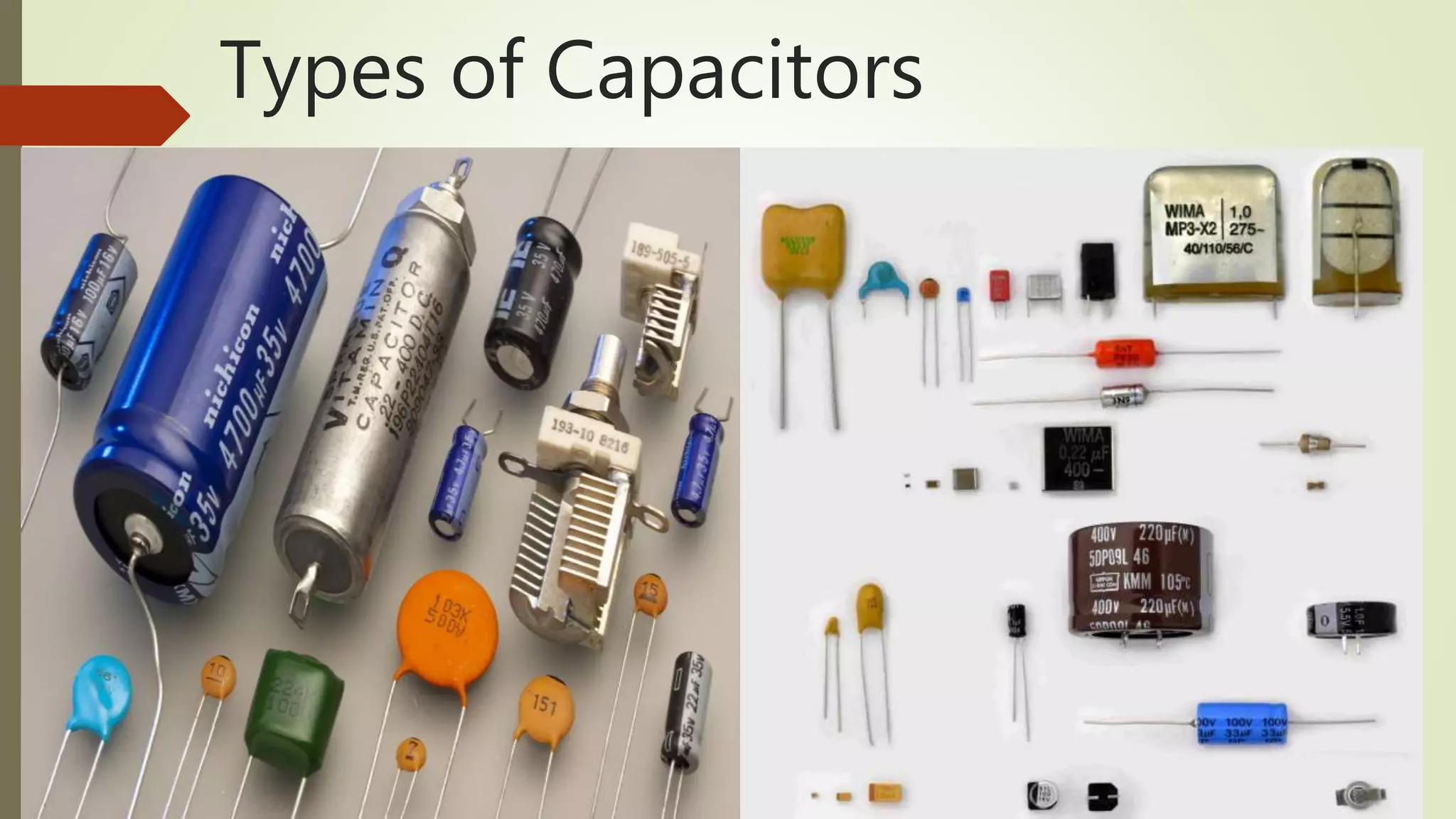
Types of Capacitors
Types of Capacitors
 A capacitor (formerly known as a condenser, and prior to that known as a permittor) is a passive two-
terminal electrical component that stores electric energy in an electric field. The forms, styles, and materials of
practical capacitors vary widely, but all contain at least two electrical conductors (called "plates") separated by
an insulating layer (called the dielectric). Capacitors are widely used as parts of electrical circuits in many
common electrical devices.
Classifications of capacitors
Non polarized capacitors
Polarized capacitors
Obsolete capacitors
Lyden jar silver mica capacitors
Vacuum capacitor with uranium
glass encapsulation
Ceramic capacitors
 Ceramic capacitor is a fixed value capacitor in which ceramic material
acts as the dielectric. It is constructed of two or more alternating layers
of ceramic and a metal layer acting as the electrodes.
Types of ceramic Capacitors
 Class 1
 Class 2
Ceramic capcitor types
Ceramic disc capacitor Multilayer ceramic chip
capacitor (MLCC)
High voltage ceramic power
capacitor
Electrolytic capacitors
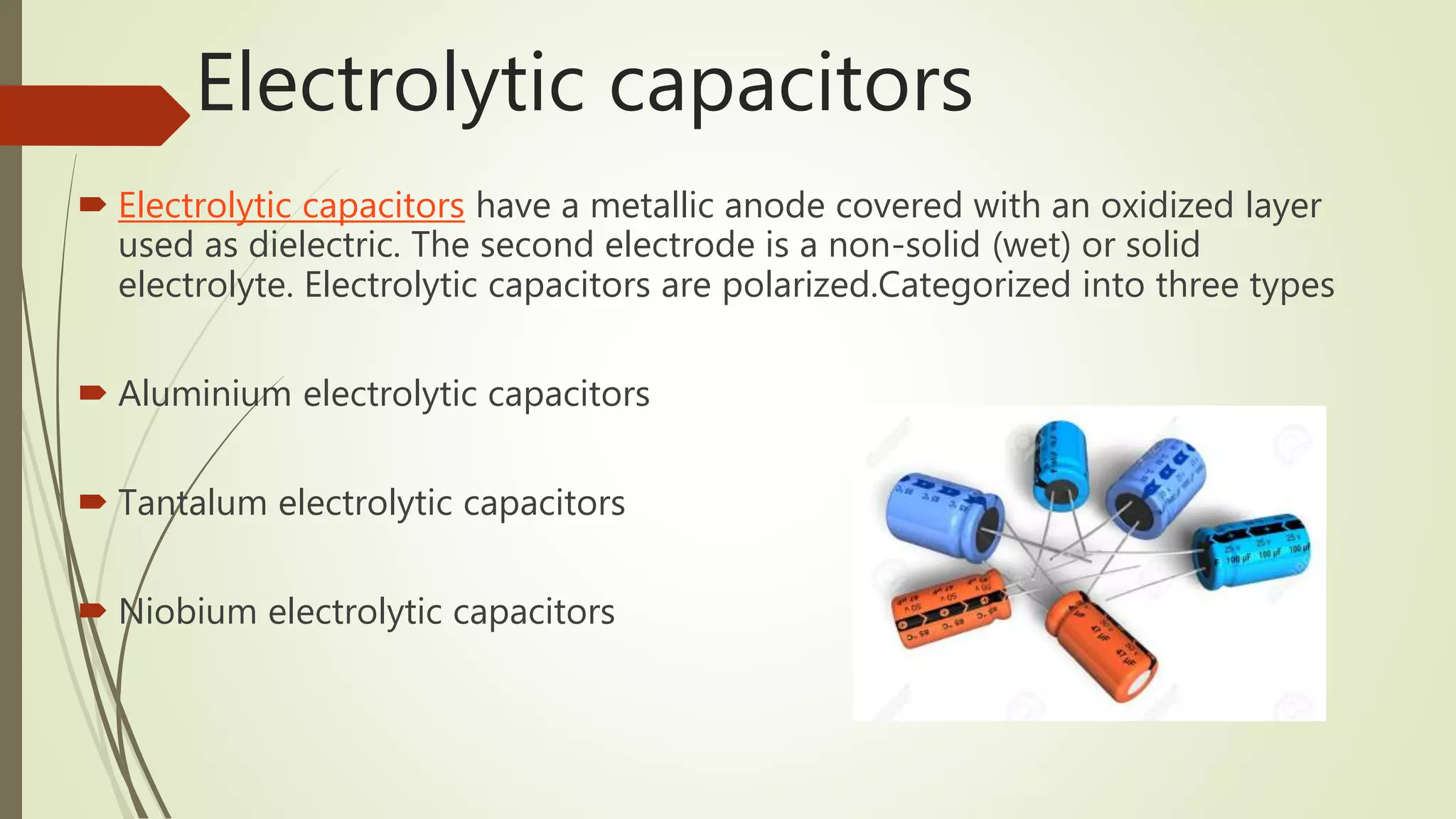
 Electrolytic capacitors have a metallic anode covered with an oxidized layer
used as dielectric. The second electrode is a non-solid (wet) or solid
electrolyte. Electrolytic capacitors are polarized.Categorized into three types
 Aluminium electrolytic capacitors
 Tantalum electrolytic capacitors
 Niobium electrolytic capacitors
Electrolytic capacitor types
Axial, radial (single ended) and V-chip styles Snap-in style Tantalum electrolytic chip
capacitors
Supercapacitors
 Supercapacitors (SC), comprise a family of electrochemical capacitors. Super capacitor, sometimes
called ultra capacitor is a generic term for electric double-layer capacitors (EDLC), pseudo
capacitors and hybrid capacitors
 Double-layer capacitance – Storage is achieved by separation of charge in a Helmholtz double
layer at the interface between the surface of a conductor and an electrolytic solution. The distance
of separation of charge in a double-layer is on the order of a fewAngstroms (0.3–0.8 nm). This
storage is electrostatic in origin
 Pseudocapacitance – Storage is achieved by redox reactions, electrosorbtion or intercalation on the
surface of the electrode or by specifically adsorpted ions that results in a reversible faradaic charge-
transfer. The pseudocapacitance is faradaic in origin
Supercapacitors
 Supercapacitors are divided into three families, based on the design of the electrodes:
 Double-layer capacitors – with carbon electrodes or derivatives with much higher
static double-layer capacitance than the faradaic pseudocapacitance
 Pseudocapacitors – with electrodes out of metal oxides or conducting polymers with
a high amount of faradaic pseudocapacitance
 Hybrid capacitors – capacitors with special and asymmetric electrodes that exhibit
both significant double-layer capacitance and pseudocapacitance, such as lithium-ion
capacitors
Super capacitors types
Double-layer capacitor Radial (single ended) style of lithium ion
capacitors
Cylindrical Supercapacitors
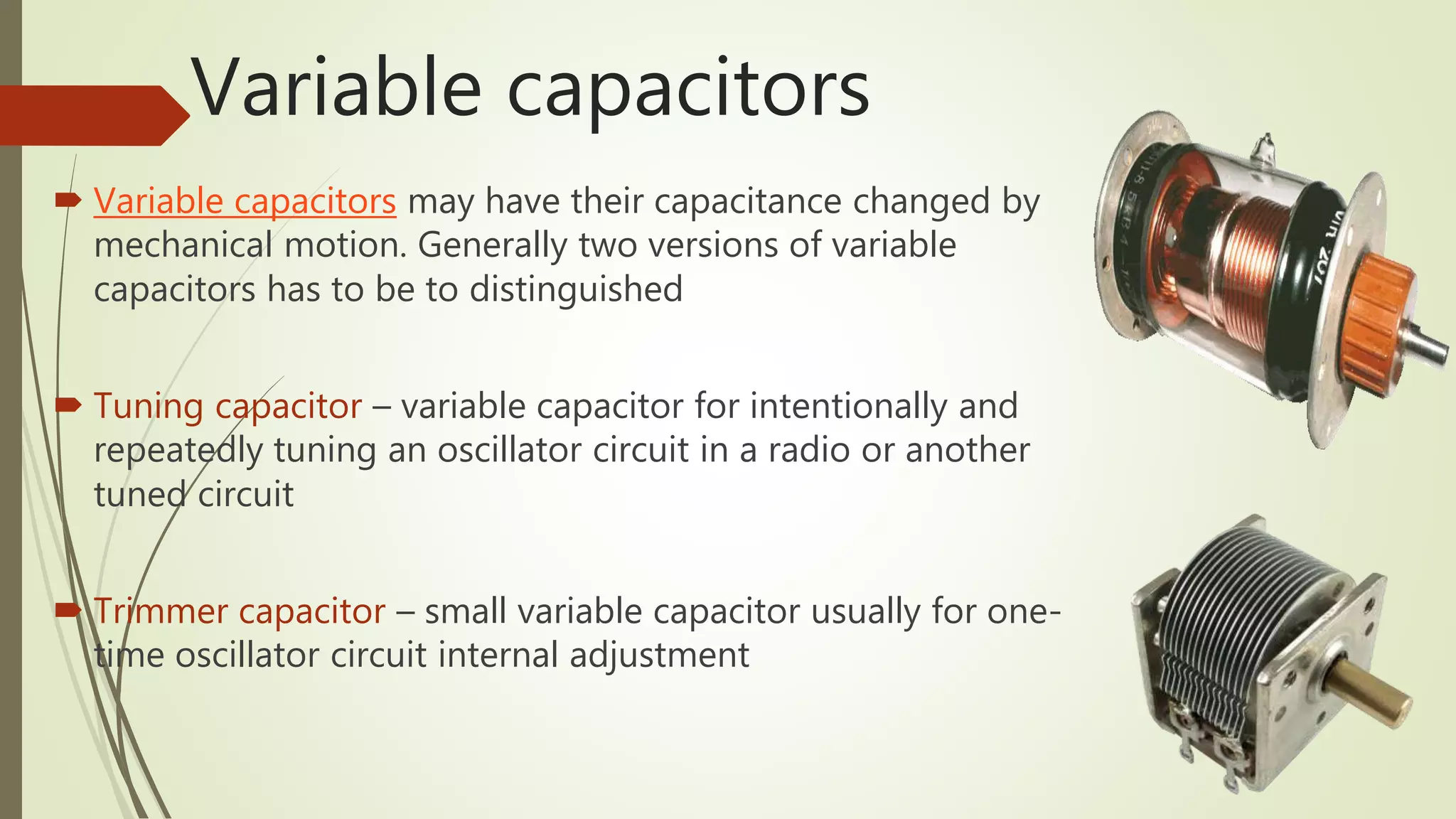
Variable capacitors
 Variable capacitors may have their capacitance changed by
mechanical motion. Generally two versions of variable
capacitors has to be to distinguished
 Tuning capacitor – variable capacitor for intentionally and
repeatedly tuning an oscillator circuit in a radio or another
tuned circuit
 Trimmer capacitor – small variable capacitor usually for one-
time oscillator circuit internal adjustment
Variable capacitors types
Air gap tuning capacitor Vacuum tuning capacitor Trimmer capacitor
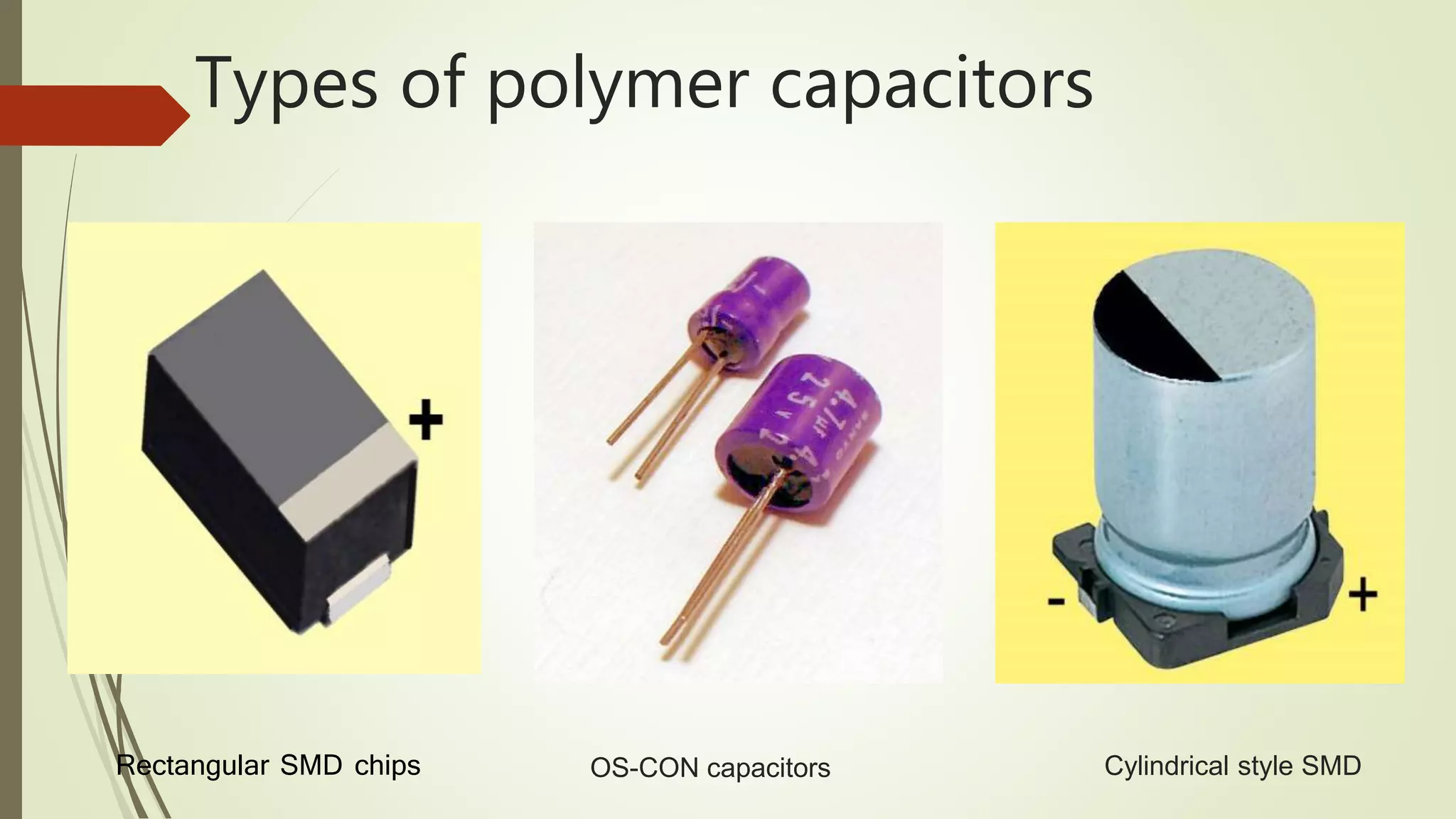
Polymer capacitors
 A polymer capacitor, or more accurate a polymer electrolytic capacitor is an electrolytic capacitor (e-
cap) with a solid electrolyte of a conductive polymer. There are three different types:
 Polymer tantalum electrolytic capacitor (Polymer Ta-e-cap)
 Polymer aluminum electrolytic capacitor (Polymer Al-e-cap)
 Hybrid polymer capacitor (Hybrid polymer Al-e-cap)
Types of polymer capacitors
OS-CON capacitorsRectangular SMD chips Cylindrical style SMD
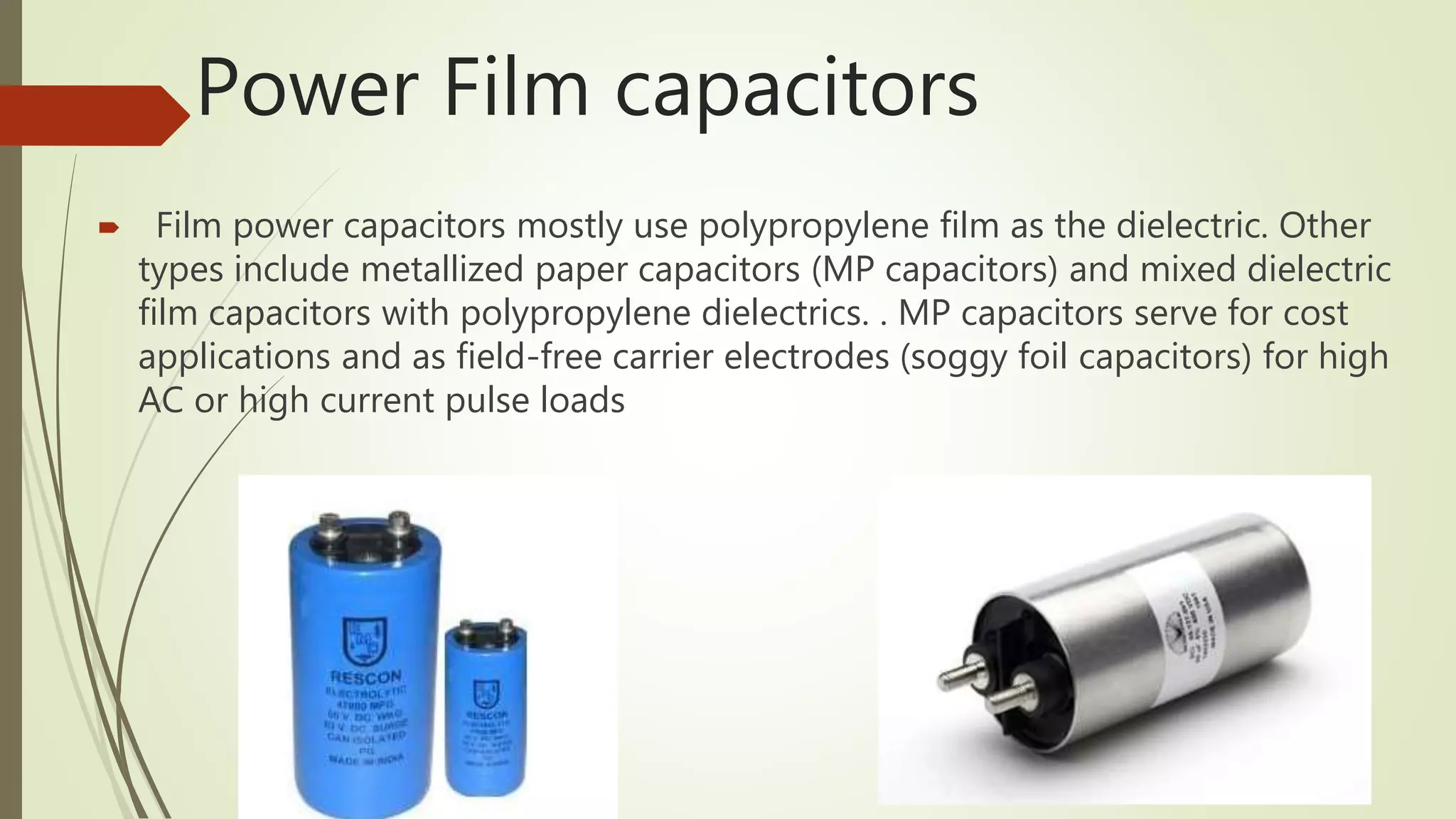
Power Film capacitors
 Film power capacitors mostly use polypropylene film as the dielectric. Other
types include metallized paper capacitors (MP capacitors) and mixed dielectric
film capacitors with polypropylene dielectrics. . MP capacitors serve for cost
applications and as field-free carrier electrodes (soggy foil capacitors) for high
AC or high current pulse loads
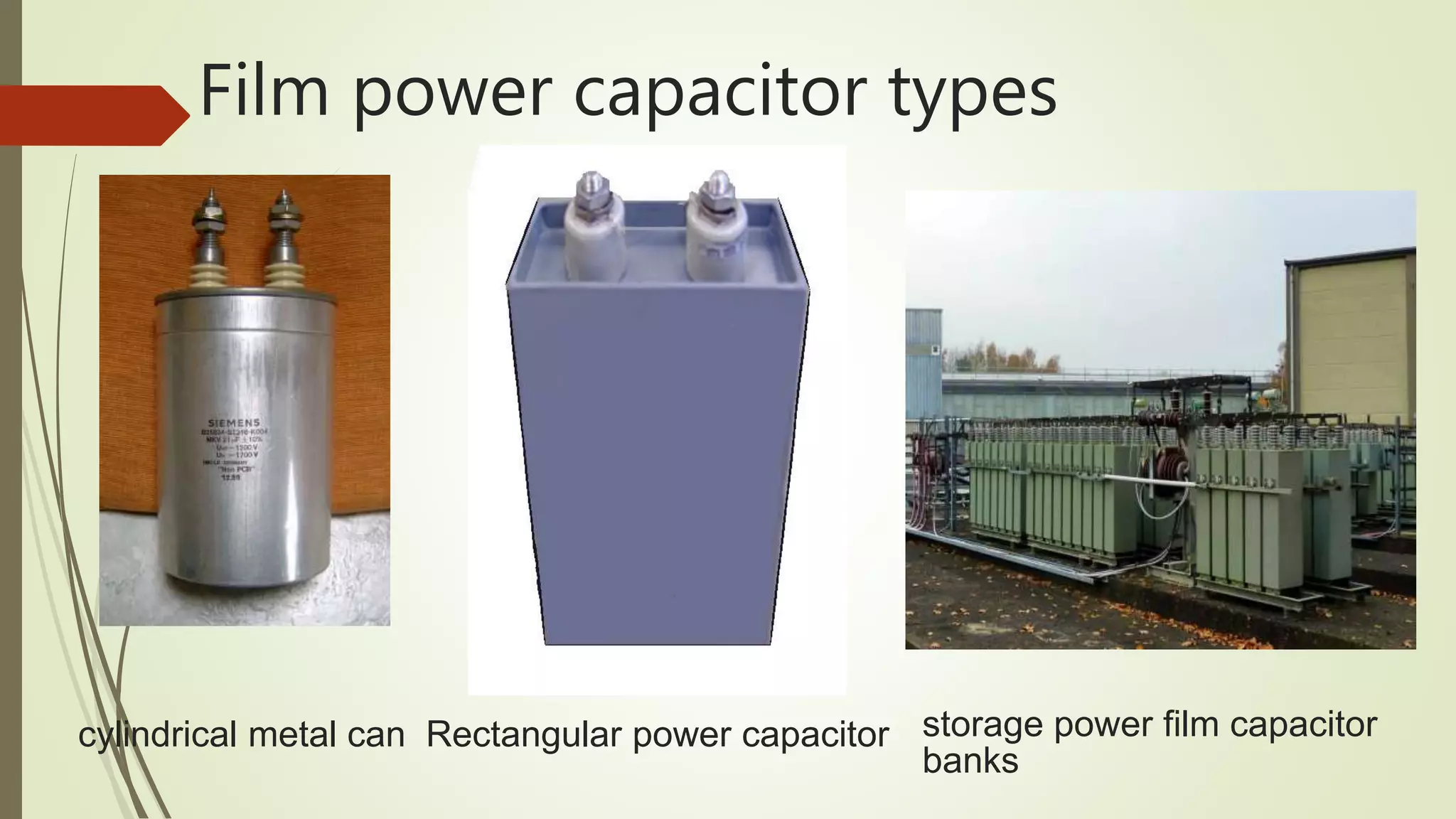
Film power capacitor types
cylindrical metal can Rectangular power capacitor storage power film capacitor
banks
Film capacitors
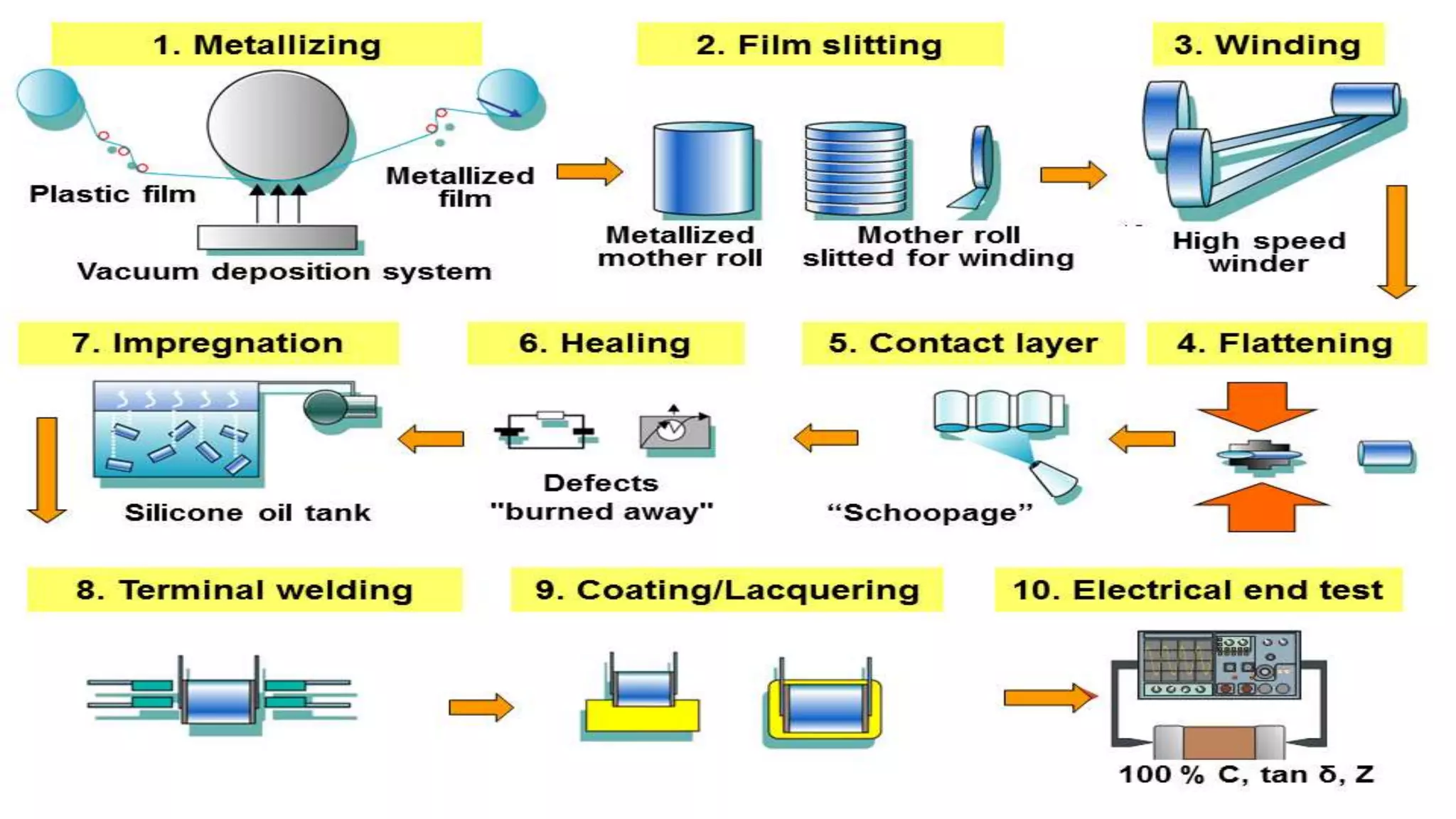
 Film capacitors or plastic film capacitors are non-polarized capacitors with an
insulating plastic film as the dielectric. The dielectric films are drawn to a thin
layer, provided with metallic electrodes and wound into a cylindrical winding. The
electrodes of film capacitors may be metallized aluminum or zinc, applied on one
or both sides of the plastic film, resulting in metallized film capacitors or a
separate metallic foil overlying the film, called film/foil capacitors.
Film capacitors types
Radial style (single ended) SMD style Heavy-duty snubber capacitor
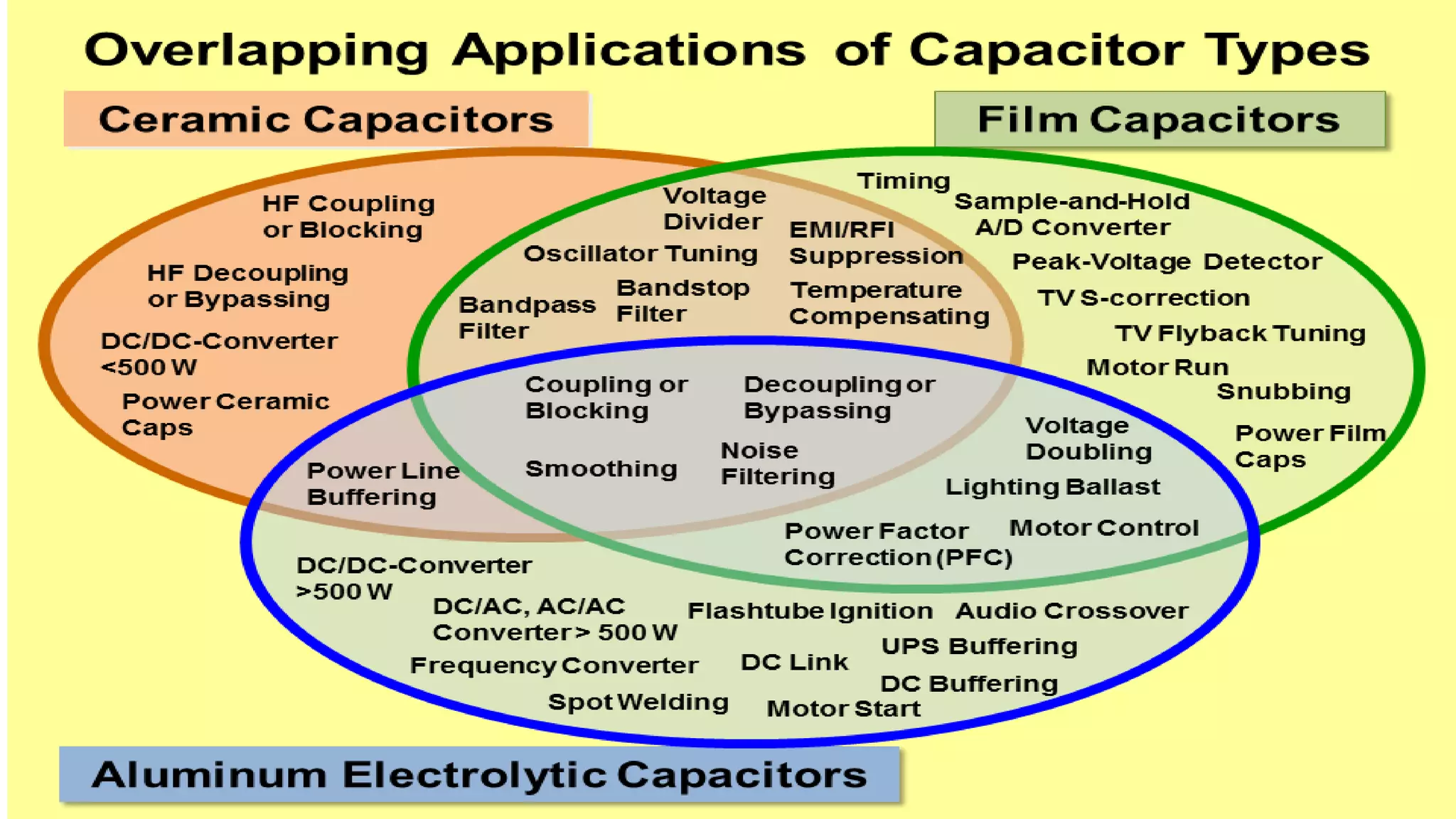
typical applications of film capacitors for
use in electronic equipment
Applications

Types of Capacitors

  • 1.
  • 2.
    Types of Capacitors A capacitor (formerly known as a condenser, and prior to that known as a permittor) is a passive two- terminal electrical component that stores electric energy in an electric field. The forms, styles, and materials of practical capacitors vary widely, but all contain at least two electrical conductors (called "plates") separated by an insulating layer (called the dielectric). Capacitors are widely used as parts of electrical circuits in many common electrical devices.
  • 3.
    Classifications of capacitors Nonpolarized capacitors Polarized capacitors
  • 5.
    Obsolete capacitors Lyden jarsilver mica capacitors Vacuum capacitor with uranium glass encapsulation
  • 6.
    Ceramic capacitors  Ceramiccapacitor is a fixed value capacitor in which ceramic material acts as the dielectric. It is constructed of two or more alternating layers of ceramic and a metal layer acting as the electrodes. Types of ceramic Capacitors  Class 1  Class 2
  • 7.
    Ceramic capcitor types Ceramicdisc capacitor Multilayer ceramic chip capacitor (MLCC) High voltage ceramic power capacitor
  • 8.
    Electrolytic capacitors  Electrolyticcapacitors have a metallic anode covered with an oxidized layer used as dielectric. The second electrode is a non-solid (wet) or solid electrolyte. Electrolytic capacitors are polarized.Categorized into three types  Aluminium electrolytic capacitors  Tantalum electrolytic capacitors  Niobium electrolytic capacitors
  • 10.
    Electrolytic capacitor types Axial,radial (single ended) and V-chip styles Snap-in style Tantalum electrolytic chip capacitors
  • 11.
    Supercapacitors  Supercapacitors (SC),comprise a family of electrochemical capacitors. Super capacitor, sometimes called ultra capacitor is a generic term for electric double-layer capacitors (EDLC), pseudo capacitors and hybrid capacitors  Double-layer capacitance – Storage is achieved by separation of charge in a Helmholtz double layer at the interface between the surface of a conductor and an electrolytic solution. The distance of separation of charge in a double-layer is on the order of a fewAngstroms (0.3–0.8 nm). This storage is electrostatic in origin  Pseudocapacitance – Storage is achieved by redox reactions, electrosorbtion or intercalation on the surface of the electrode or by specifically adsorpted ions that results in a reversible faradaic charge- transfer. The pseudocapacitance is faradaic in origin
  • 13.
    Supercapacitors  Supercapacitors aredivided into three families, based on the design of the electrodes:  Double-layer capacitors – with carbon electrodes or derivatives with much higher static double-layer capacitance than the faradaic pseudocapacitance  Pseudocapacitors – with electrodes out of metal oxides or conducting polymers with a high amount of faradaic pseudocapacitance  Hybrid capacitors – capacitors with special and asymmetric electrodes that exhibit both significant double-layer capacitance and pseudocapacitance, such as lithium-ion capacitors
  • 14.
    Super capacitors types Double-layercapacitor Radial (single ended) style of lithium ion capacitors Cylindrical Supercapacitors
  • 15.
    Variable capacitors  Variablecapacitors may have their capacitance changed by mechanical motion. Generally two versions of variable capacitors has to be to distinguished  Tuning capacitor – variable capacitor for intentionally and repeatedly tuning an oscillator circuit in a radio or another tuned circuit  Trimmer capacitor – small variable capacitor usually for one- time oscillator circuit internal adjustment
  • 16.
    Variable capacitors types Airgap tuning capacitor Vacuum tuning capacitor Trimmer capacitor
  • 17.
    Polymer capacitors  Apolymer capacitor, or more accurate a polymer electrolytic capacitor is an electrolytic capacitor (e- cap) with a solid electrolyte of a conductive polymer. There are three different types:  Polymer tantalum electrolytic capacitor (Polymer Ta-e-cap)  Polymer aluminum electrolytic capacitor (Polymer Al-e-cap)  Hybrid polymer capacitor (Hybrid polymer Al-e-cap)
  • 18.
    Types of polymercapacitors OS-CON capacitorsRectangular SMD chips Cylindrical style SMD
  • 19.
    Power Film capacitors Film power capacitors mostly use polypropylene film as the dielectric. Other types include metallized paper capacitors (MP capacitors) and mixed dielectric film capacitors with polypropylene dielectrics. . MP capacitors serve for cost applications and as field-free carrier electrodes (soggy foil capacitors) for high AC or high current pulse loads
  • 20.
    Film power capacitortypes cylindrical metal can Rectangular power capacitor storage power film capacitor banks
  • 21.
    Film capacitors  Filmcapacitors or plastic film capacitors are non-polarized capacitors with an insulating plastic film as the dielectric. The dielectric films are drawn to a thin layer, provided with metallic electrodes and wound into a cylindrical winding. The electrodes of film capacitors may be metallized aluminum or zinc, applied on one or both sides of the plastic film, resulting in metallized film capacitors or a separate metallic foil overlying the film, called film/foil capacitors.
  • 23.
    Film capacitors types Radialstyle (single ended) SMD style Heavy-duty snubber capacitor
  • 24.
    typical applications offilm capacitors for use in electronic equipment
  • 25.