
B A S I C S O F B I O M E D I C A L
Inductors
Presented by Atheena Pandian
B A S I C S O F B I O M E D I C A L
Inductors
Presented by Atheena Pandian
ContentSummary
DISCUSSION OVERVIEW
What is inductor?
Symbol
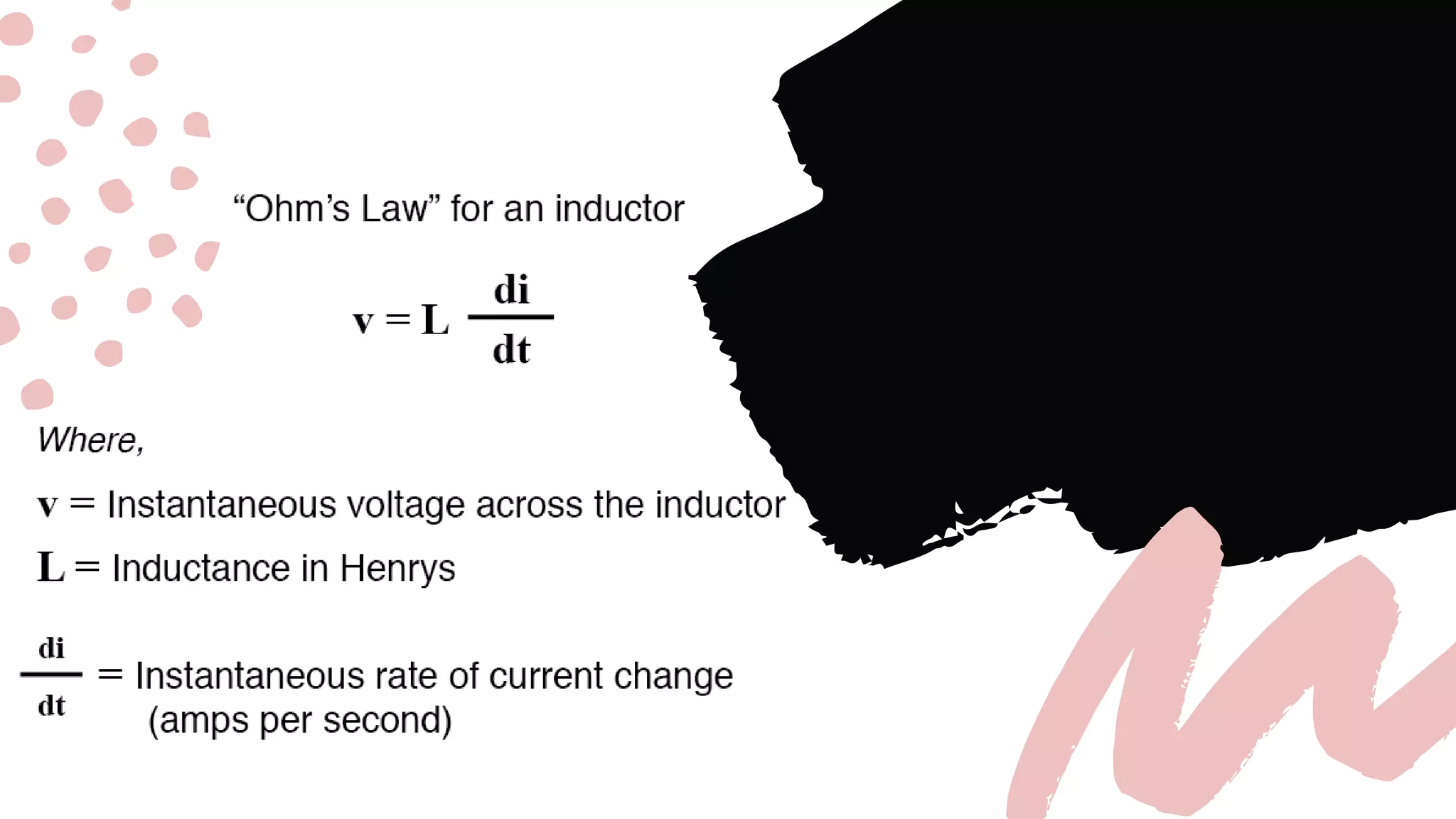
Formula
Structure
Inductance
Function
Applications
1.
2.
3.
4.
5.
6.
7.
Whatisinductor?
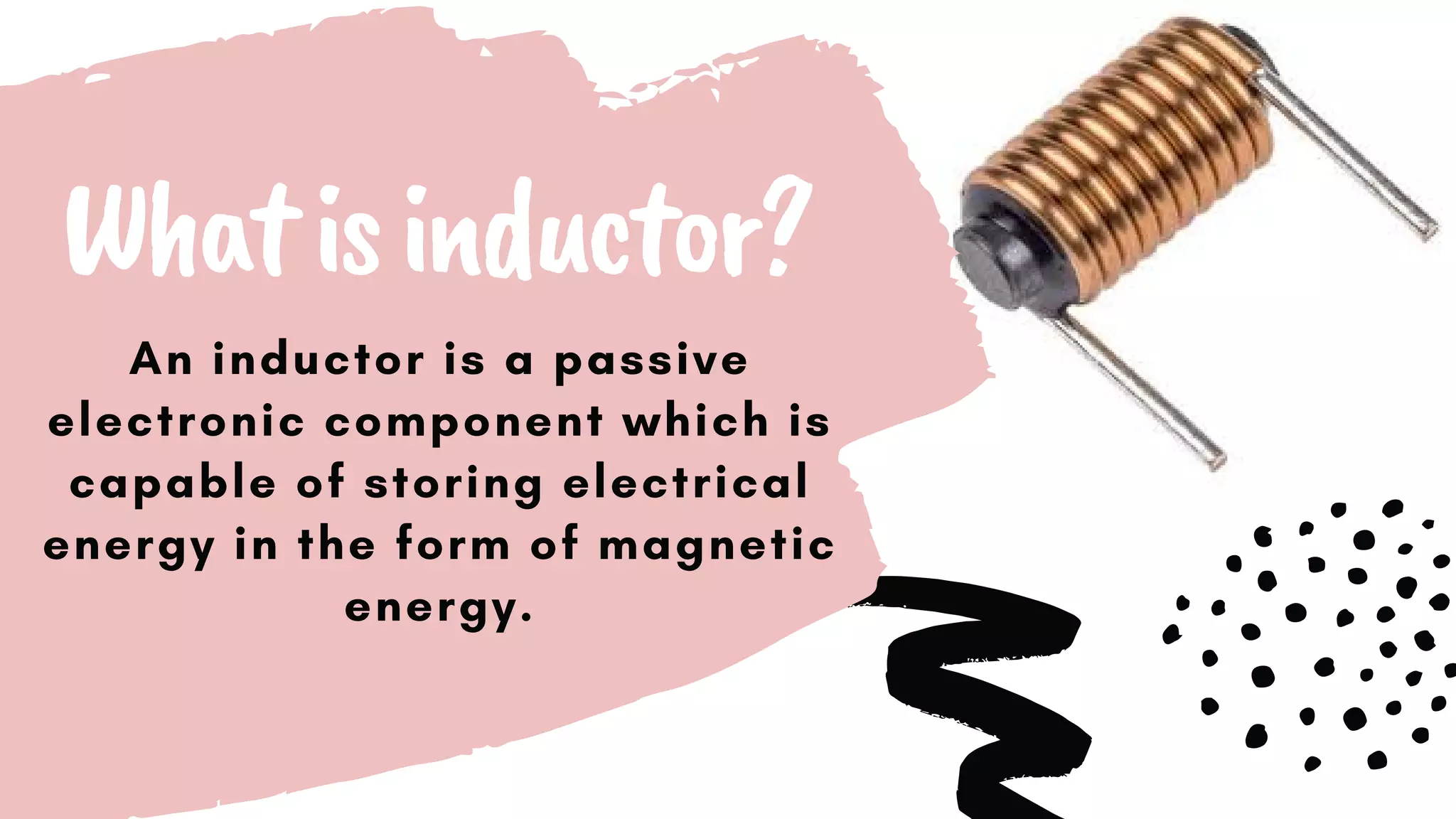
An inductor is a passive
electronic component which is
capable of storing electrical
energy in the form of magnetic
energy.
Symbol
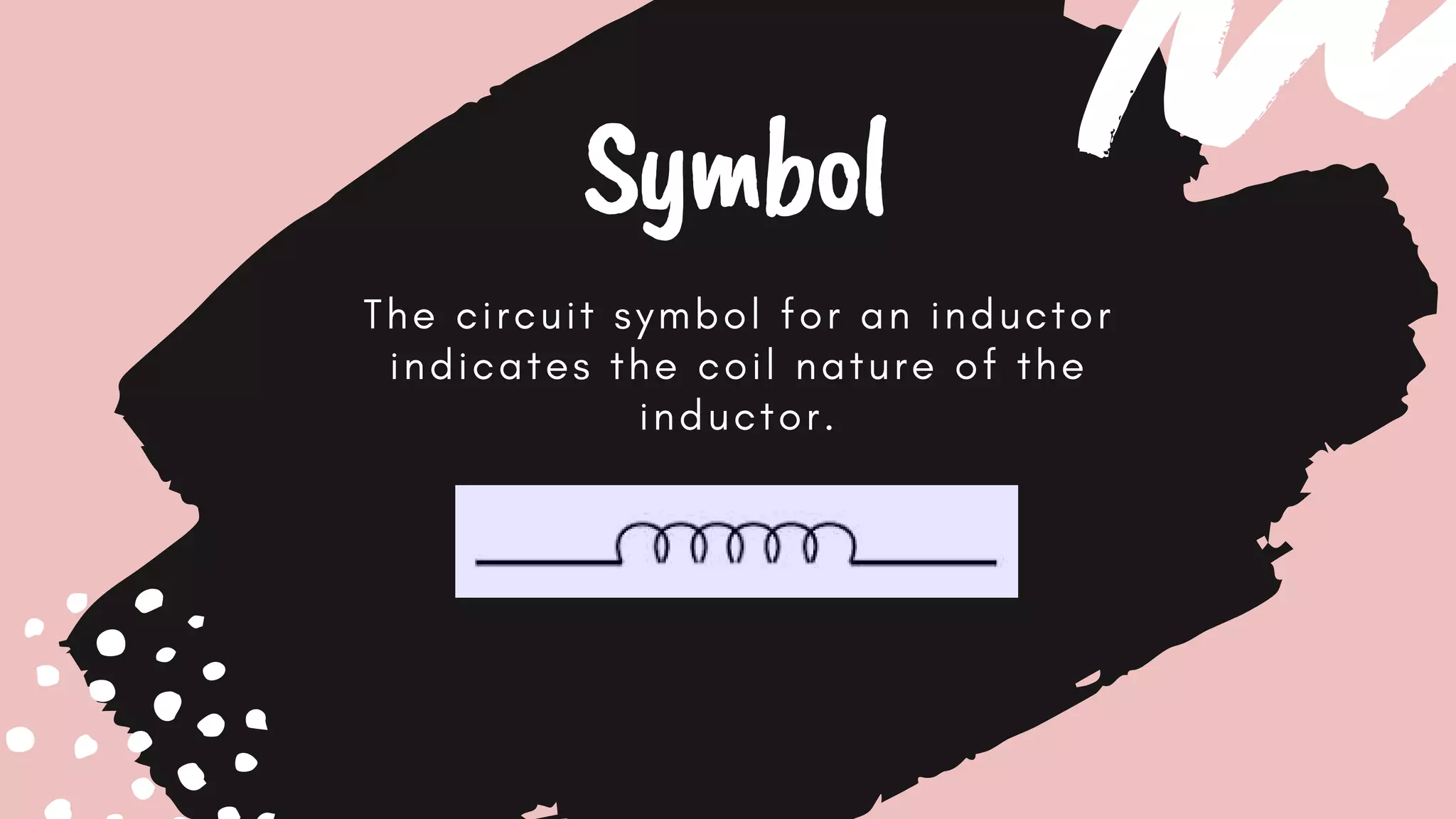
T h e   c i r c u i t s y m b o l   f o r a n i n d u c t o r
i n d i c a t e s t h e c o i l n a t u r e o f t h e
i n d u c t o r .
Formula
Structure
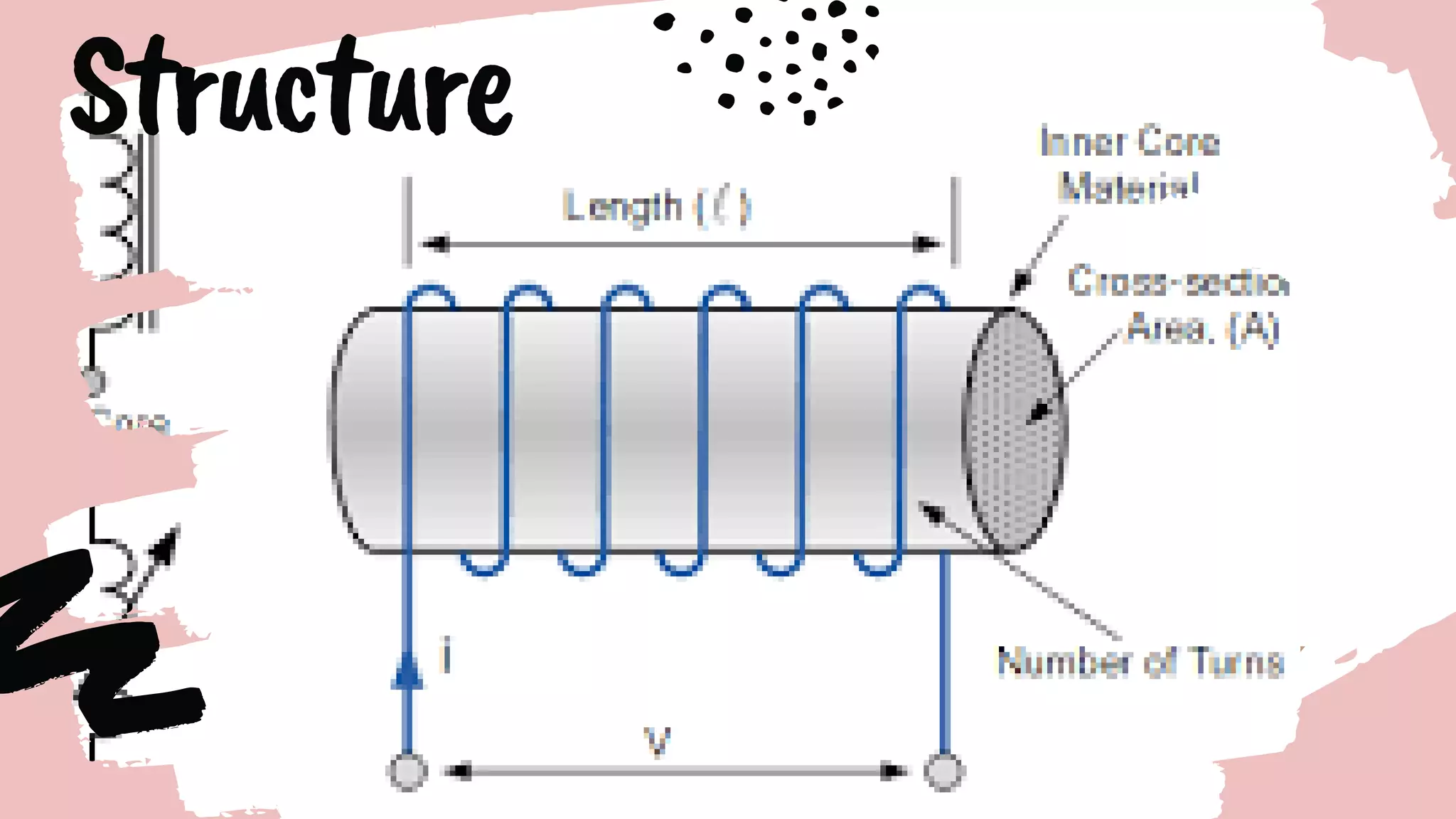
An inductor usually consists of a
coil of conducting material,
typically insulated copper wire,
wrapped around a core either of
plastic (to create an air-
core inductor) or of a
ferromagnetic (or ferrimagnetic)
material; the latter is called an
"iron core" inductor.
Construction
INDUCTANCE
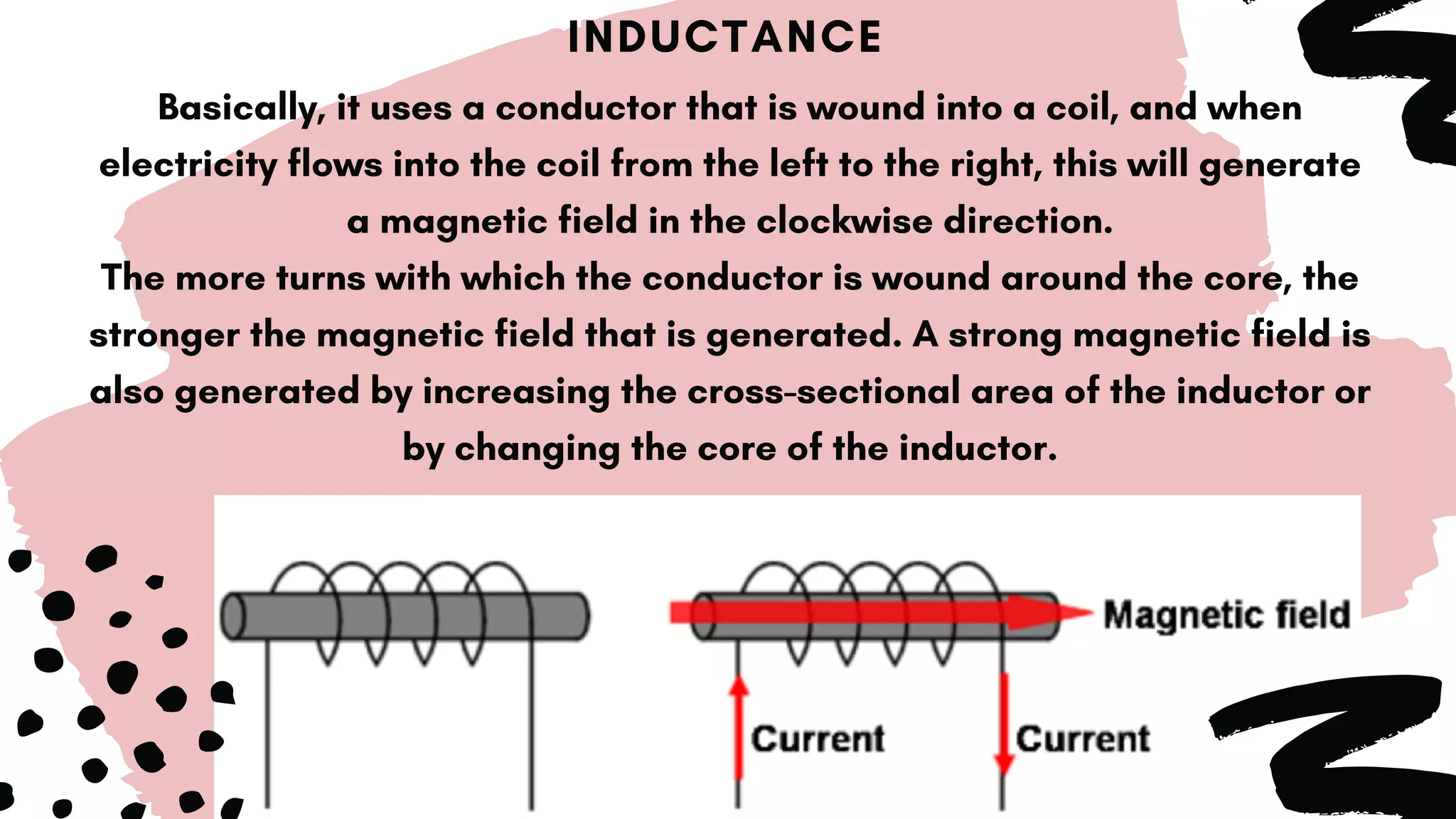
Basically, it uses a conductor that is wound into a coil, and when
electricity flows into the coil from the left to the right, this will generate
a magnetic field in the clockwise direction.
The more turns with which the conductor is wound around the core, the
stronger the magnetic field that is generated. A strong magnetic field is
also generated by increasing the cross-sectional area of the inductor or
by changing the core of the inductor.
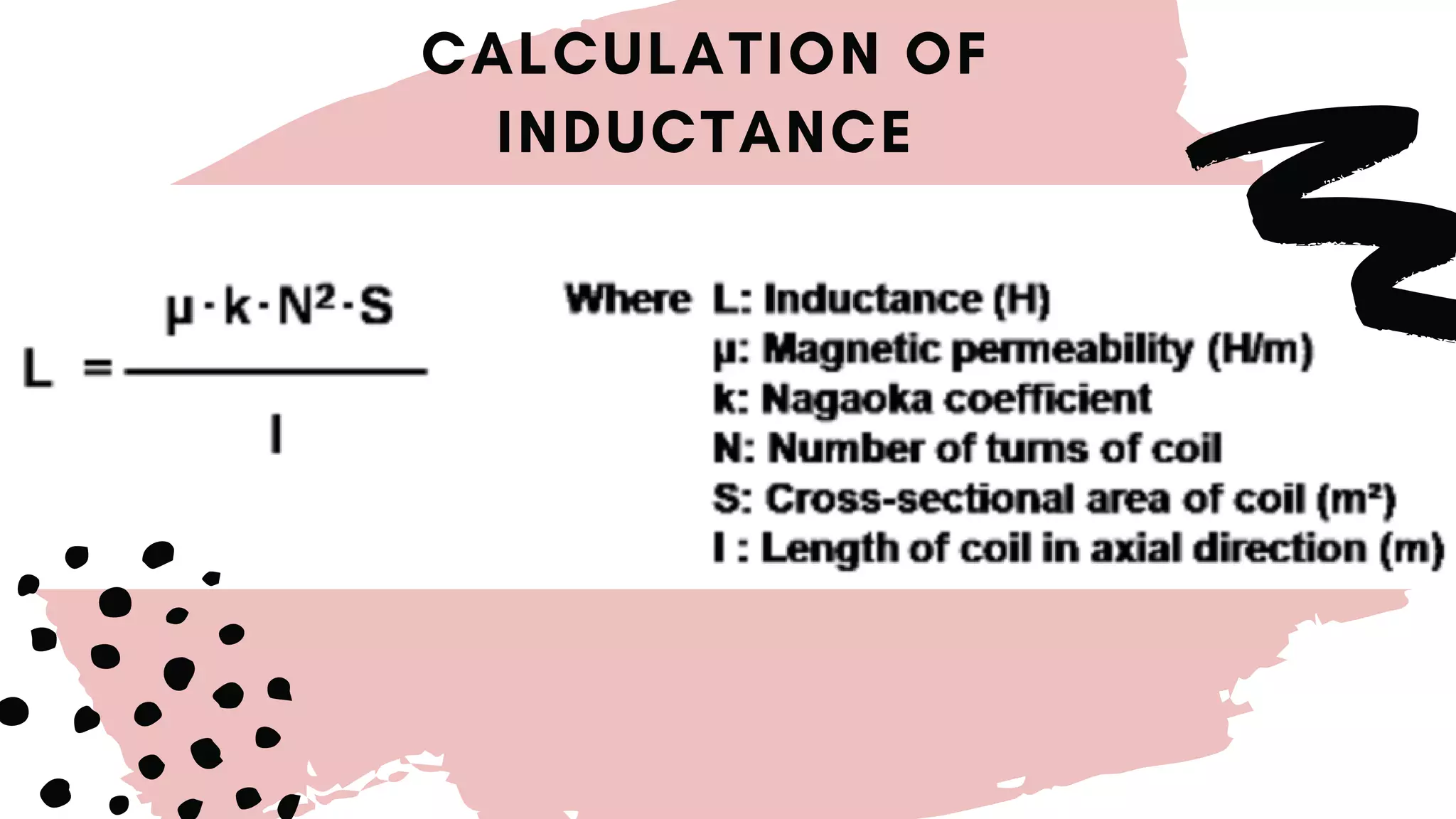
CALCULATION OF
INDUCTANCE
USES
Inductors are used in
tuning circuits.
These are used as sensors.
It is also used to store
energy in a device.
Inductors are used in
induction motors.
It is used as transformers.
Inductors are used as
filters.
Uses of inductors in
chokes.
1.
2.
3.
4.
5.
6.
7.
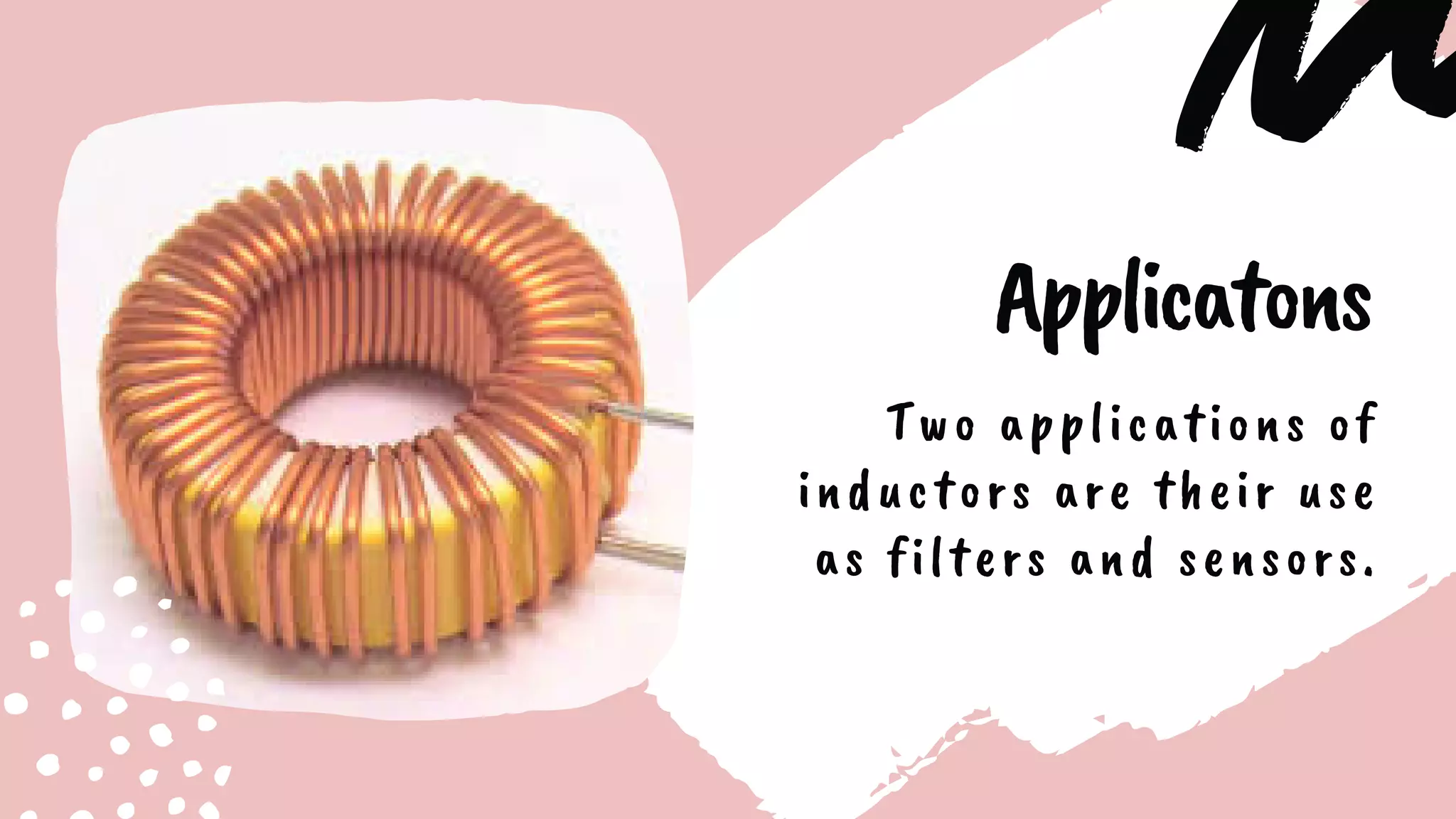
Applicatons
Two applications of
inductors are their use
as filters and sensors.
WORKING EFFICIENTLY
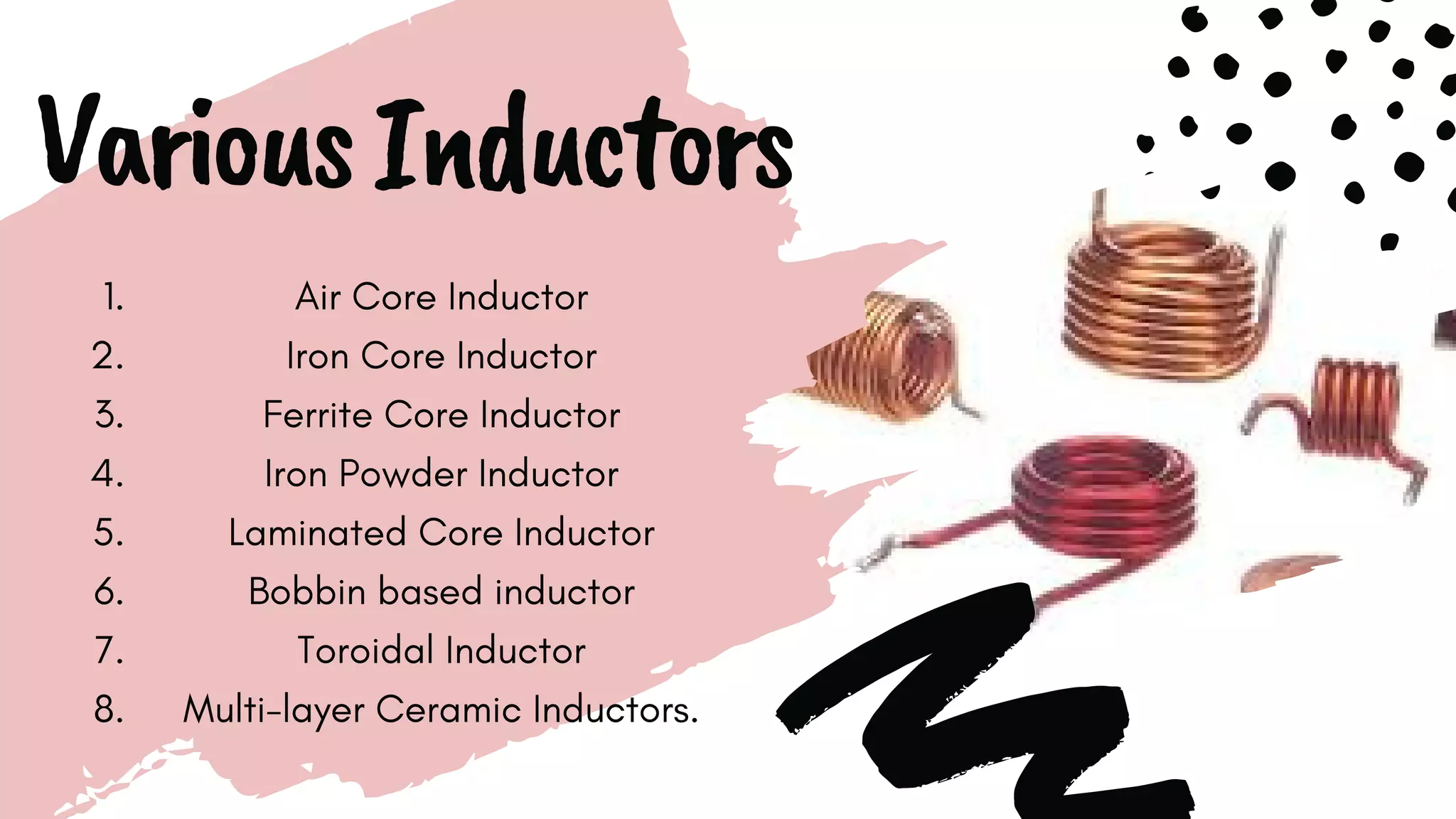
VariousInductors
Air Core Inductor
Iron Core Inductor
Ferrite Core Inductor
Iron Powder Inductor
Laminated Core Inductor
Bobbin based inductor
Toroidal Inductor
Multi-layer Ceramic Inductors.
1.
2.
3.
4.
5.
6.
7.
8.
Thank You

Inductor basics