
• What kind of skills the manager should have to
help their employees to develop and improve
their performance?
Who is Manger?
Manager is some one who
oversees the project and
they are responsible for
getting the job done and
motivating people. And overcome
issues such as limited resources and time.
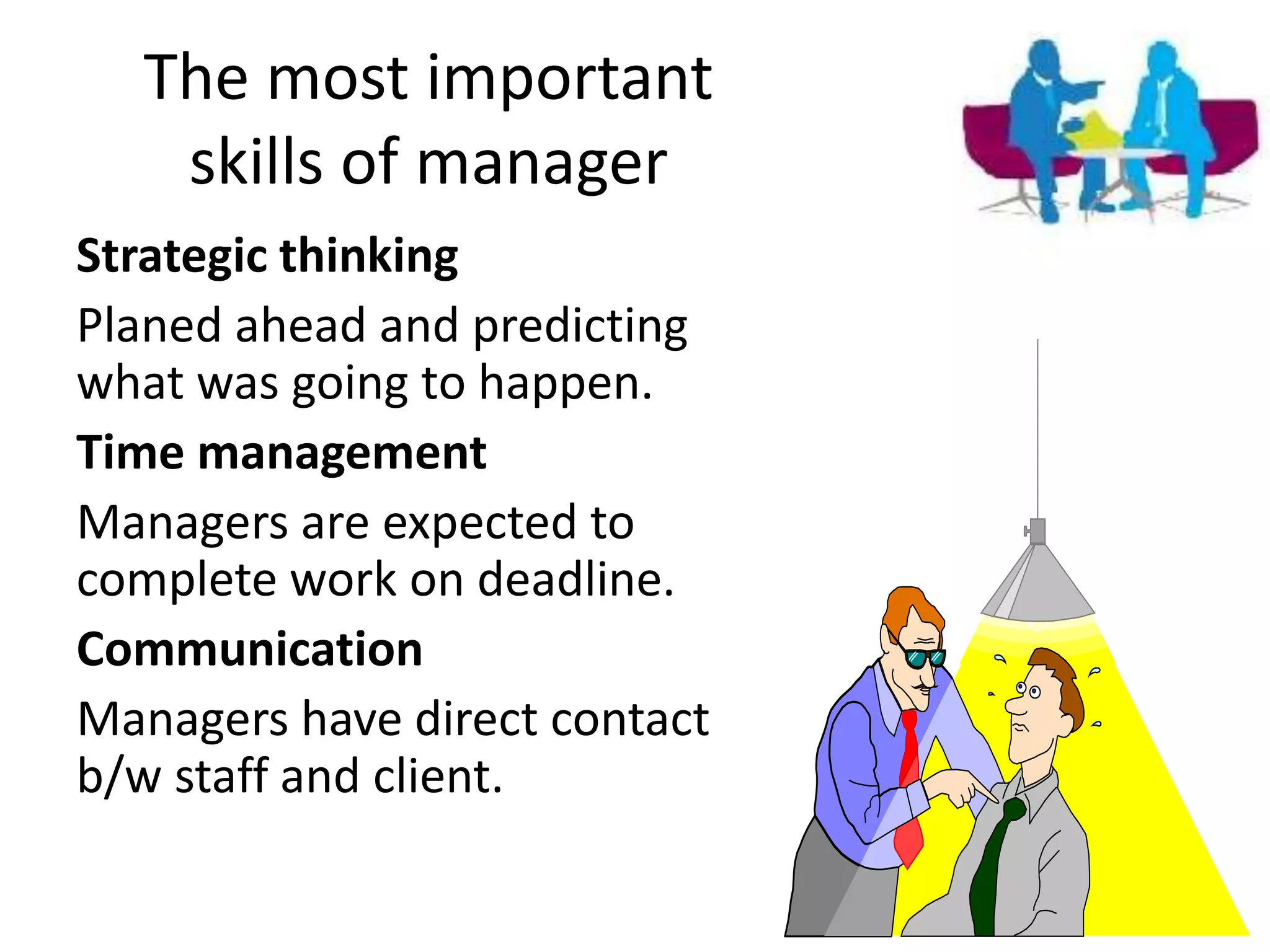
The most important
skills of manager
Strategic thinking
Planed ahead and predicting
what was going to happen.
Time management
Managers are expected to
complete work on deadline.
Communication
Managers have direct contact
b/w staff and client.
Problem Solving:
Manager may encounter problems
in their work
Collaboration:
Four barriers to collaboration;
Distance,dominance,discomfort
Dissonance.
Financial Skills:
manager will usually expected to
set budget.
Interpersonal skill:
Manager work closely with in
their team assigning them work
and ensuring that all perform or
not.
Coaching :
It helps people learn to improve
their work and make decision
efficiently.
Coaching
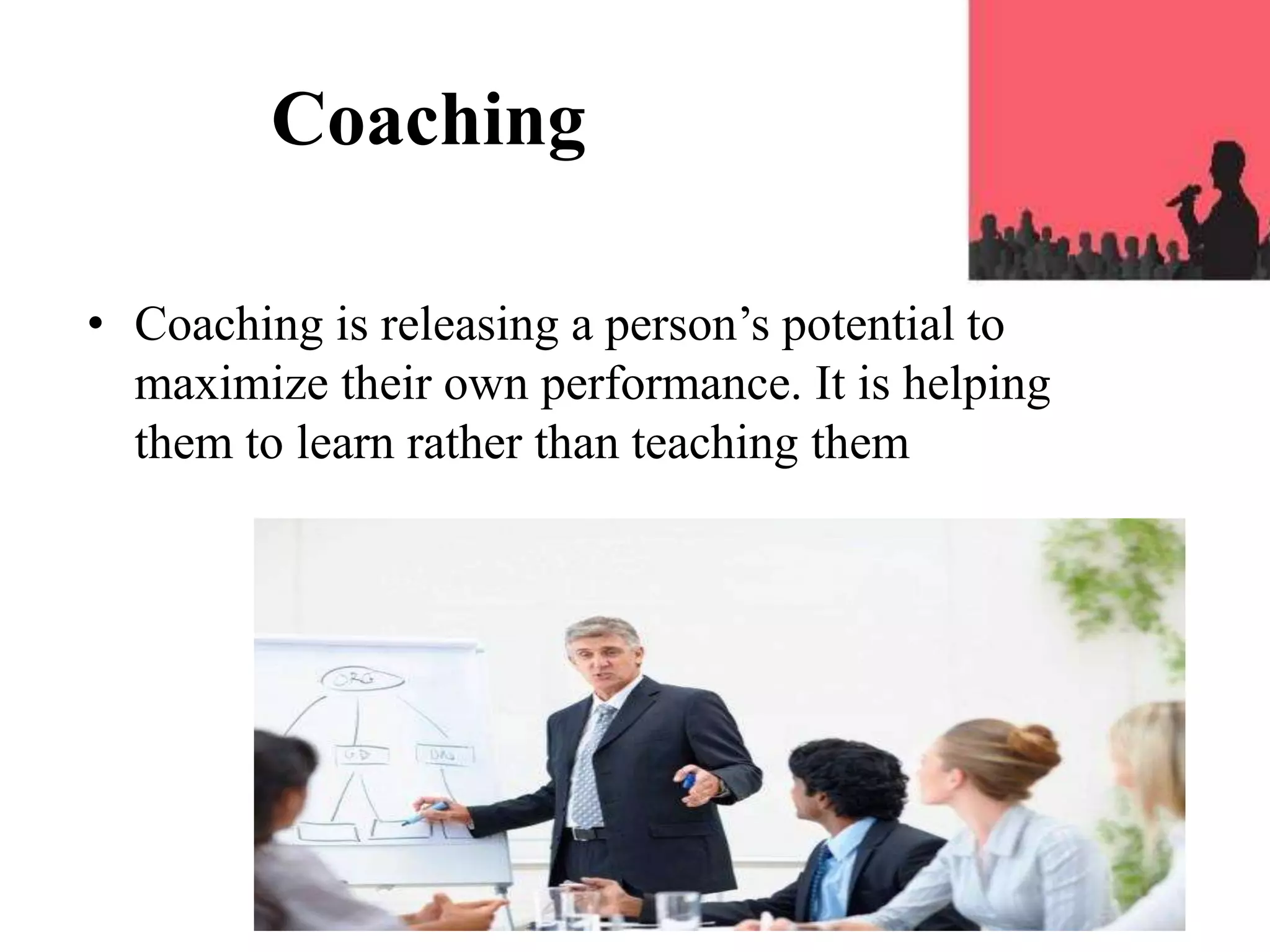
• Coaching is releasing a person’s potential to
maximize their own performance. It is helping
them to learn rather than teaching them
Coaching
Process
Coaching process
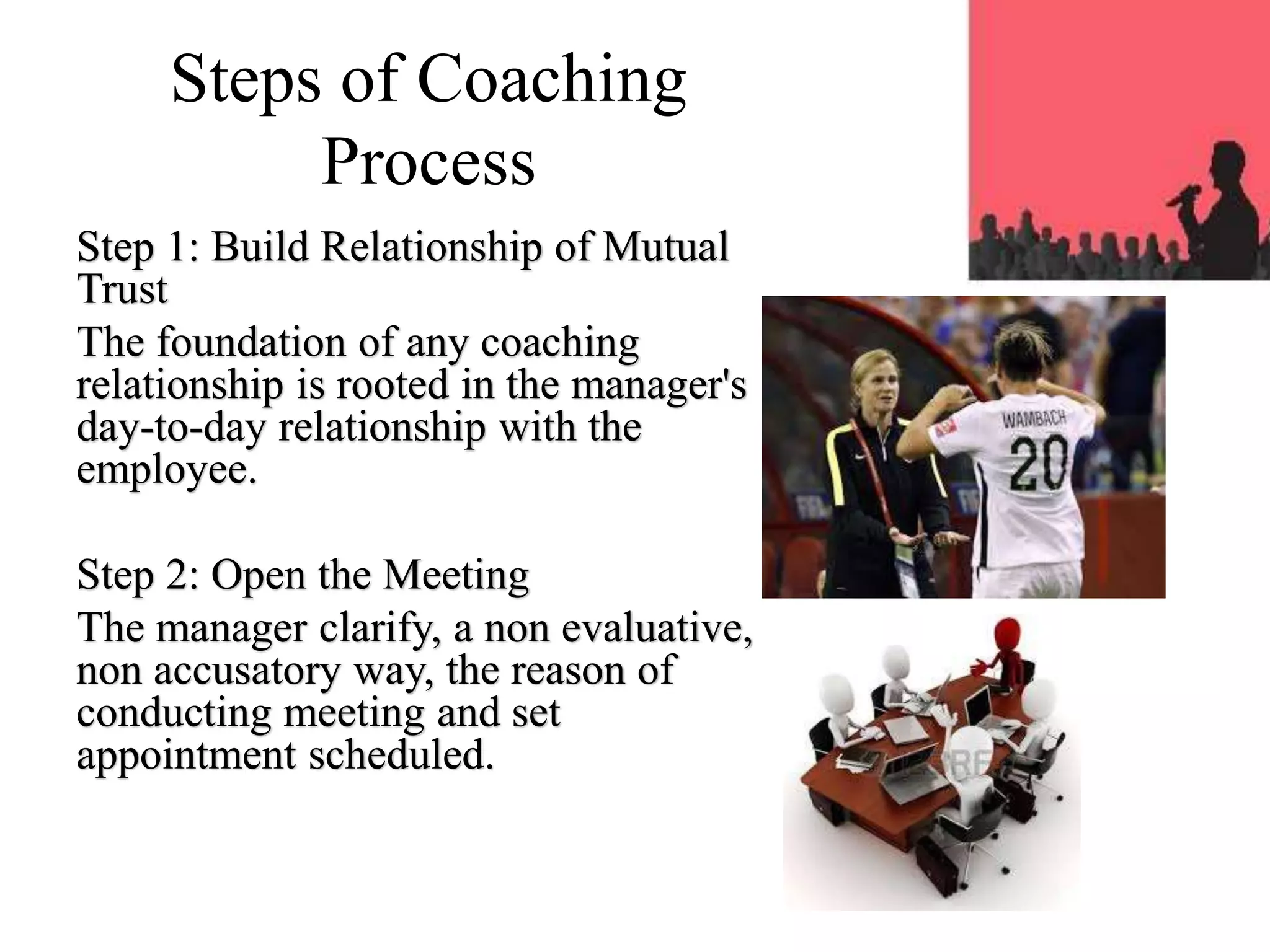
• Coaching process doesn't rely
on prescribed solution or
directive but rather on mutual
understanding, fact finding,
careful through reflection,
creative action planning and
compassionate follow
up.(Harvard business review)
Steps of Coaching
Process
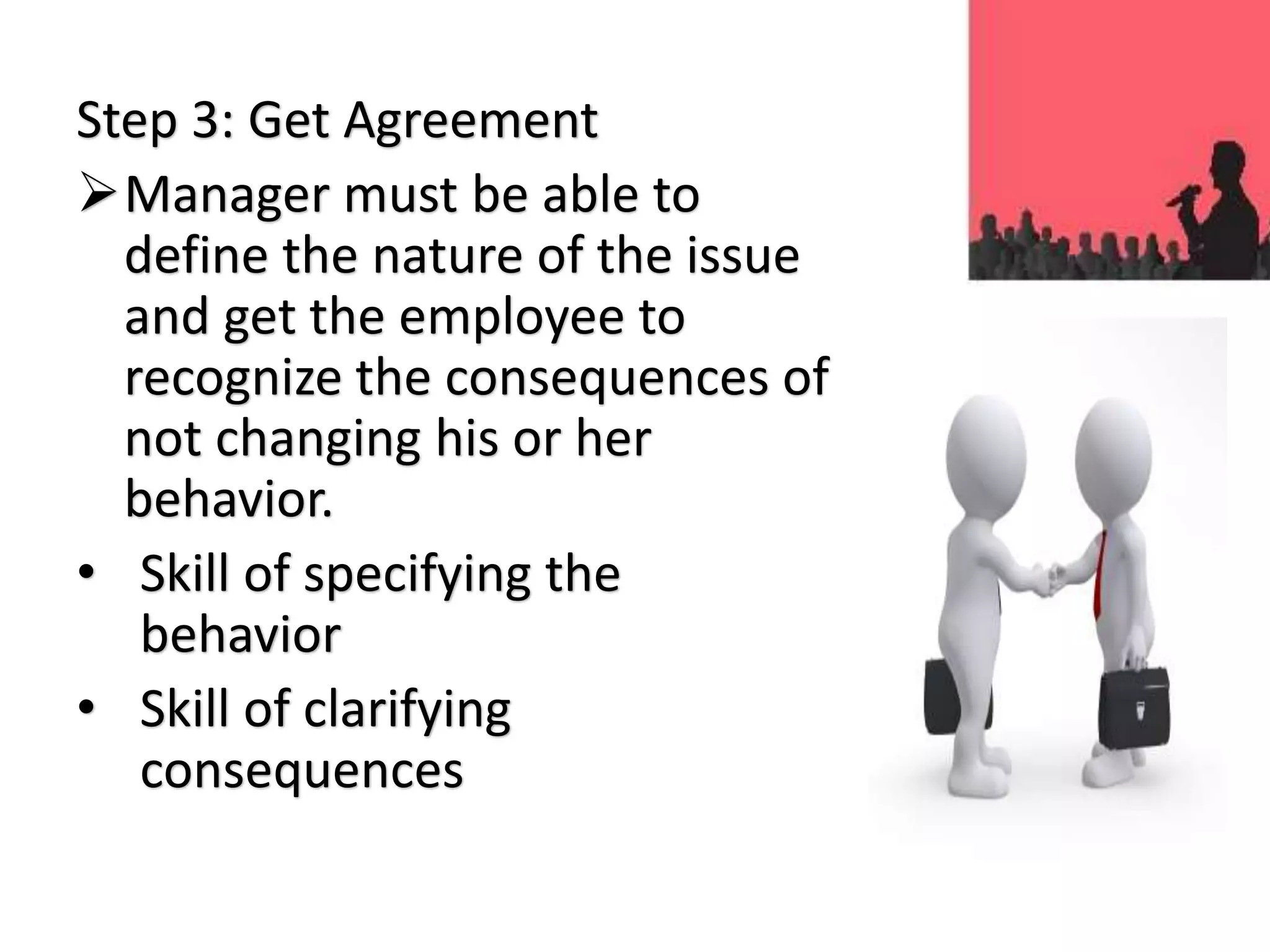
Step 1: Build Relationship of Mutual
Trust
The foundation of any coaching
relationship is rooted in the manager's
day-to-day relationship with the
employee.
Step 2: Open the Meeting
The manager clarify, a non evaluative,
non accusatory way, the reason of
conducting meeting and set
appointment scheduled.
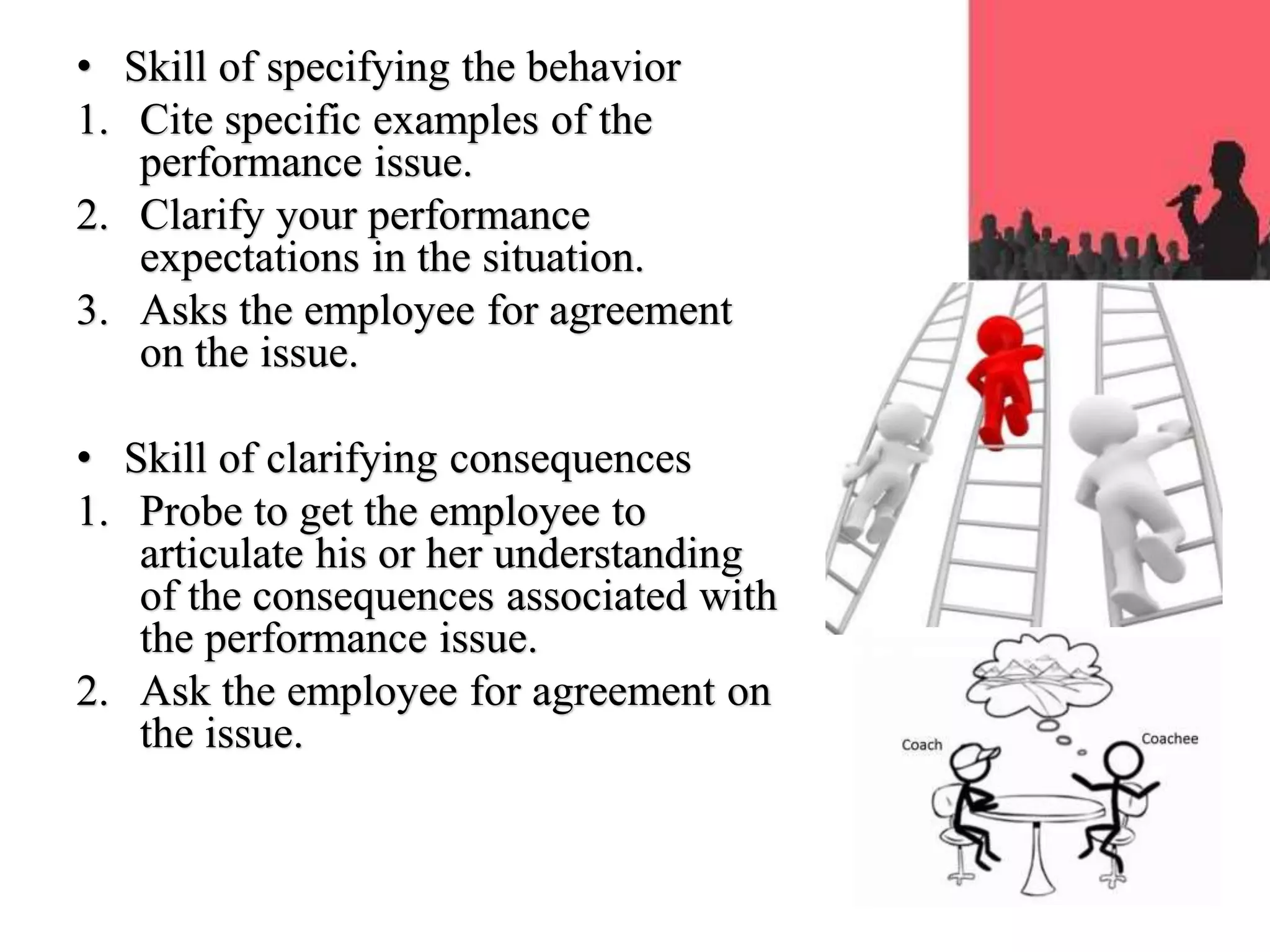
Step 3: Get Agreement
Manager must be able to
define the nature of the issue
and get the employee to
recognize the consequences of
not changing his or her
behavior.
• Skill of specifying the
behavior
• Skill of clarifying
consequences
• Skill of specifying the behavior
1. Cite specific examples of the
performance issue.
2. Clarify your performance
expectations in the situation.
3. Asks the employee for agreement
on the issue.
• Skill of clarifying consequences
1. Probe to get the employee to
articulate his or her understanding
of the consequences associated with
the performance issue.
2. Ask the employee for agreement on
the issue.
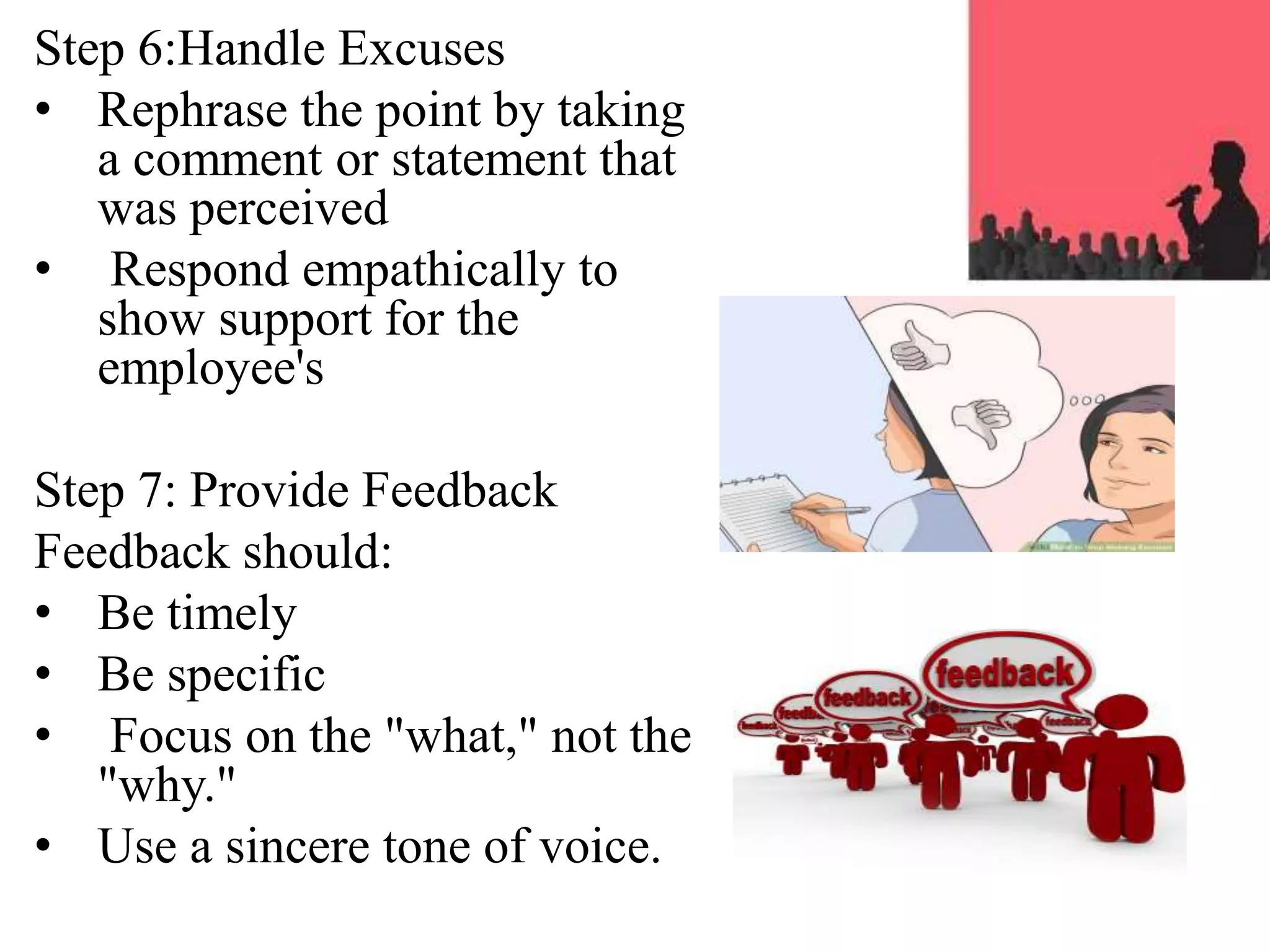
Step 4: Explore Alternatives
Explore ways the issue can be improved or
corrected by encouraging the employee to
identify alternative solutions.
Alternatives specific and not generalize.
Maximize the number of choices and discuss
their advantages and disadvantages.
Step 5: Get a Commitment to Act
• Help the employee choose an alternative.
• The manager must be sure to get a verbal
commitment from the employee
regarding what action will be taken and
when it will be taken and have the
support of employer
Step 6:Handle Excuses
• Rephrase the point by taking
a comment or statement that
was perceived
• Respond empathically to
show support for the
employee's
Step 7: Provide Feedback
Feedback should:
• Be timely
• Be specific
• Focus on the "what," not the
"why."
• Use a sincere tone of voice.
Performance Review Meetings & Types
What is Performance Review
Meetings?
• Manager and employee work together to assess the degree to
which the employee has attained agree-upon goals work and to
overcome difficulties to attain these goals.
• Also called performance appraisal meeting, or performance
evaluation meeting.
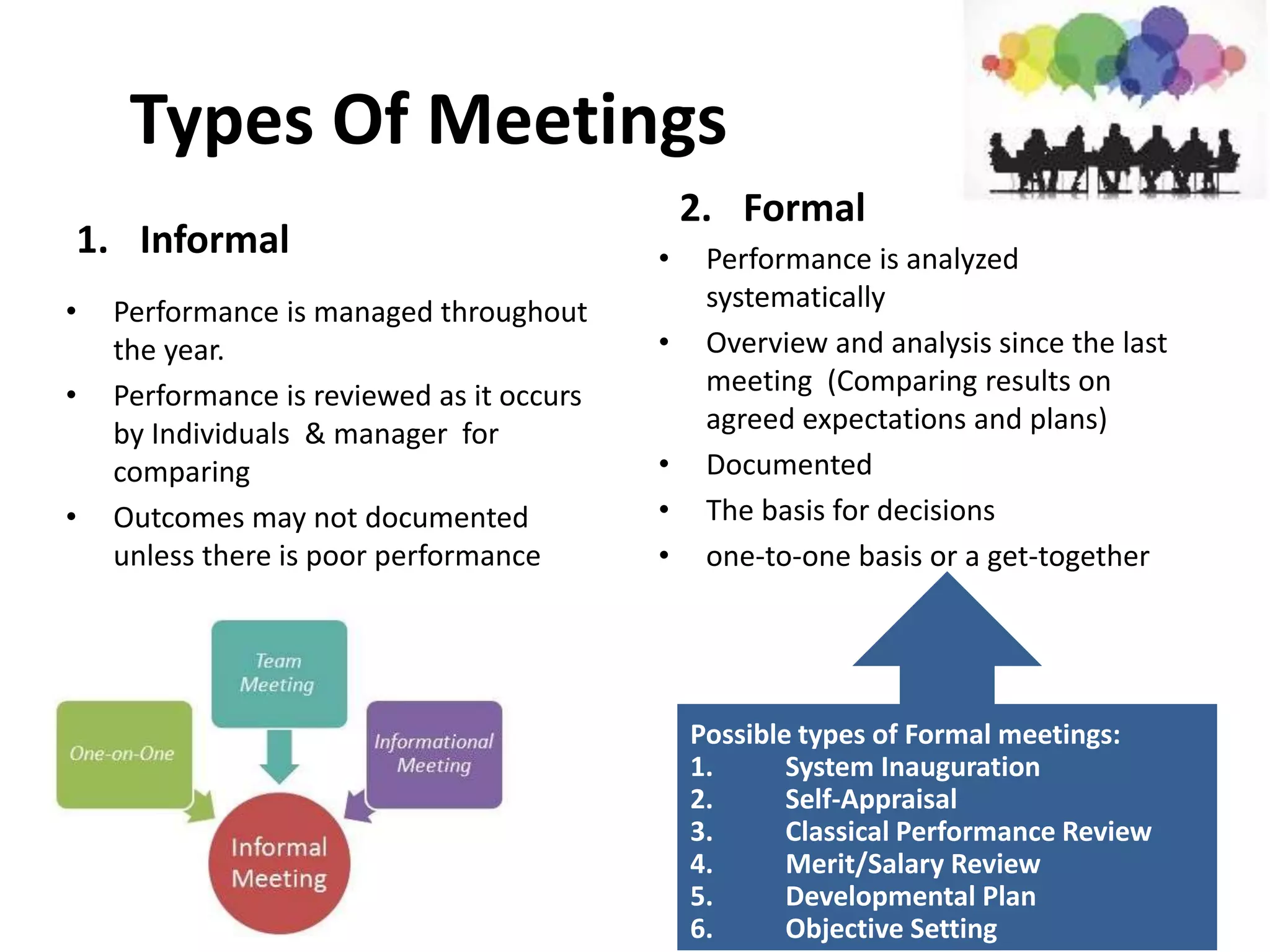
Types Of Meetings
1. Informal
• Performance is managed throughout
the year.
• Performance is reviewed as it occurs
by Individuals & manager for
comparing
• Outcomes may not documented
unless there is poor performance
2. Formal
• Performance is analyzed
systematically
• Overview and analysis since the last
meeting (Comparing results on
agreed expectations and plans)
• Documented
• The basis for decisions
• one-to-one basis or a get-together
Possible types of Formal meetings:
1. System Inauguration
2. Self-Appraisal
3. Classical Performance Review
4. Merit/Salary Review
5. Developmental Plan
6. Objective Setting
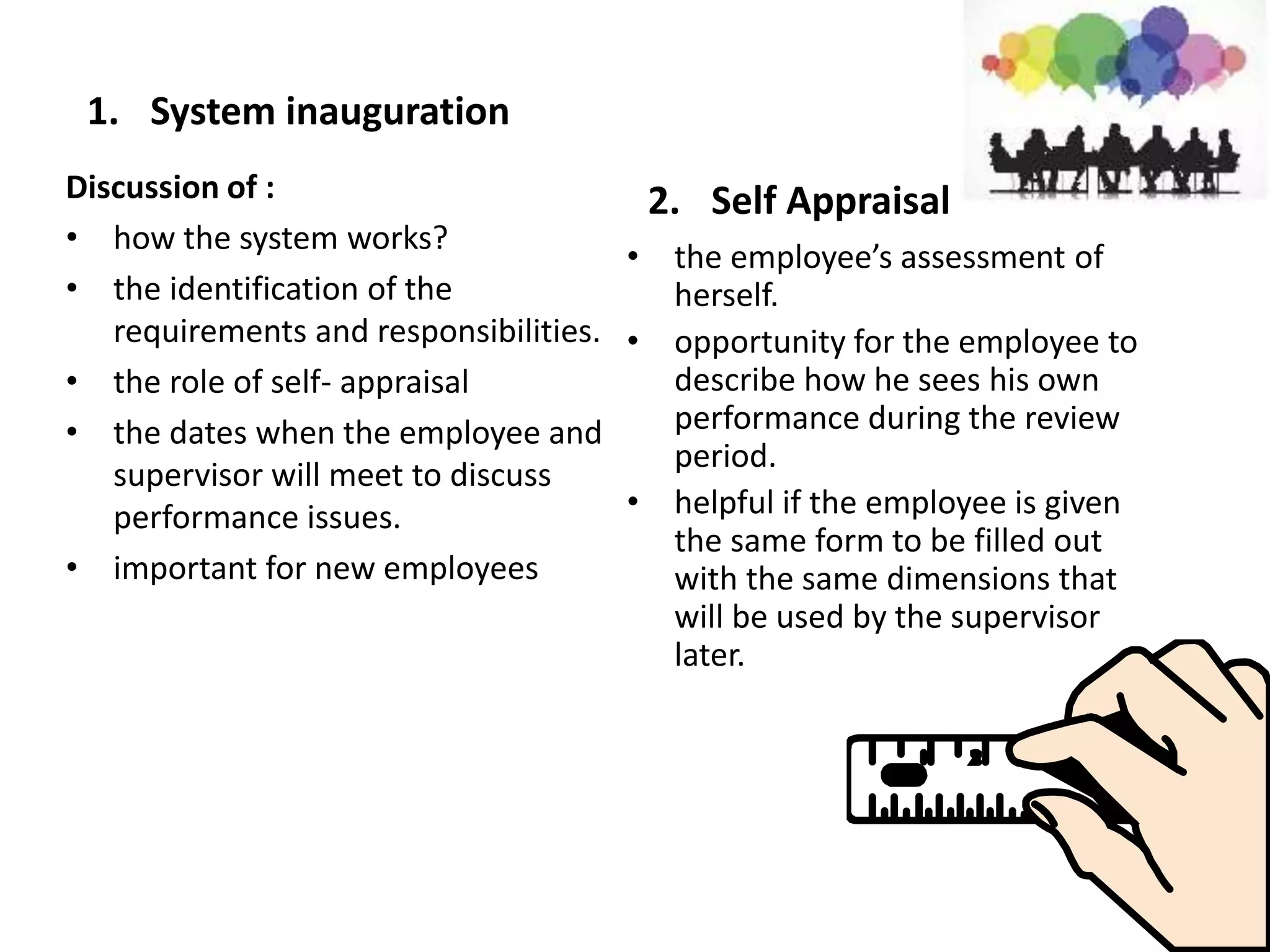
1. System inauguration
2. Self Appraisal
• the employee’s assessment of
herself.
• opportunity for the employee to
describe how he sees his own
performance during the review
period.
• helpful if the employee is given
the same form to be filled out
with the same dimensions that
will be used by the supervisor
later.
Discussion of :
• how the system works?
• the identification of the
requirements and responsibilities.
• the role of self- appraisal
• the dates when the employee and
supervisor will meet to discuss
performance issues.
• important for new employees
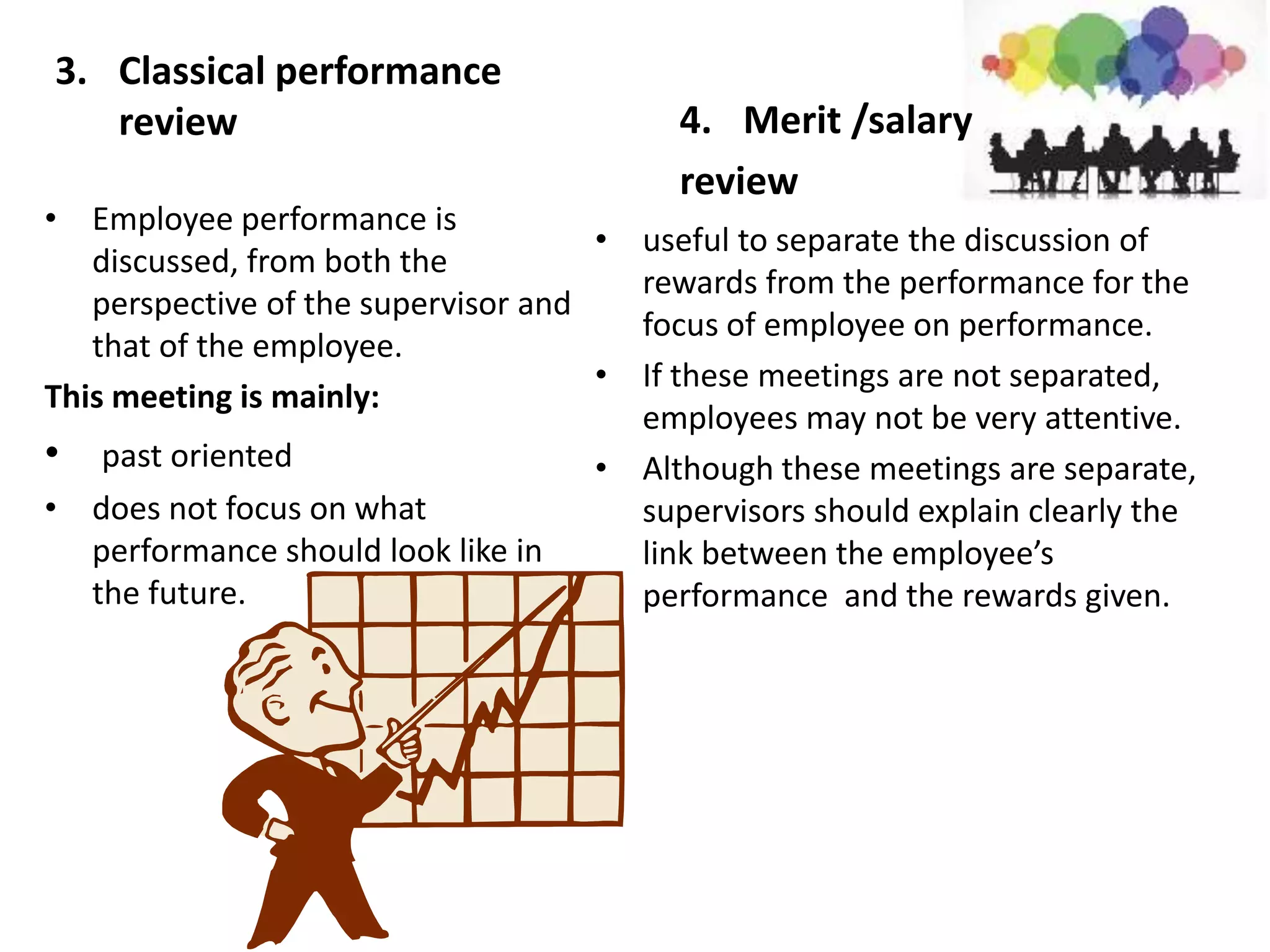
3. Classical performance
review
• Employee performance is
discussed, from both the
perspective of the supervisor and
that of the employee.
This meeting is mainly:
• past oriented
• does not focus on what
performance should look like in
the future.
4. Merit /salary
review
• useful to separate the discussion of
rewards from the performance for the
focus of employee on performance.
• If these meetings are not separated,
employees may not be very attentive.
• Although these meetings are separate,
supervisors should explain clearly the
link between the employee’s
performance and the rewards given.
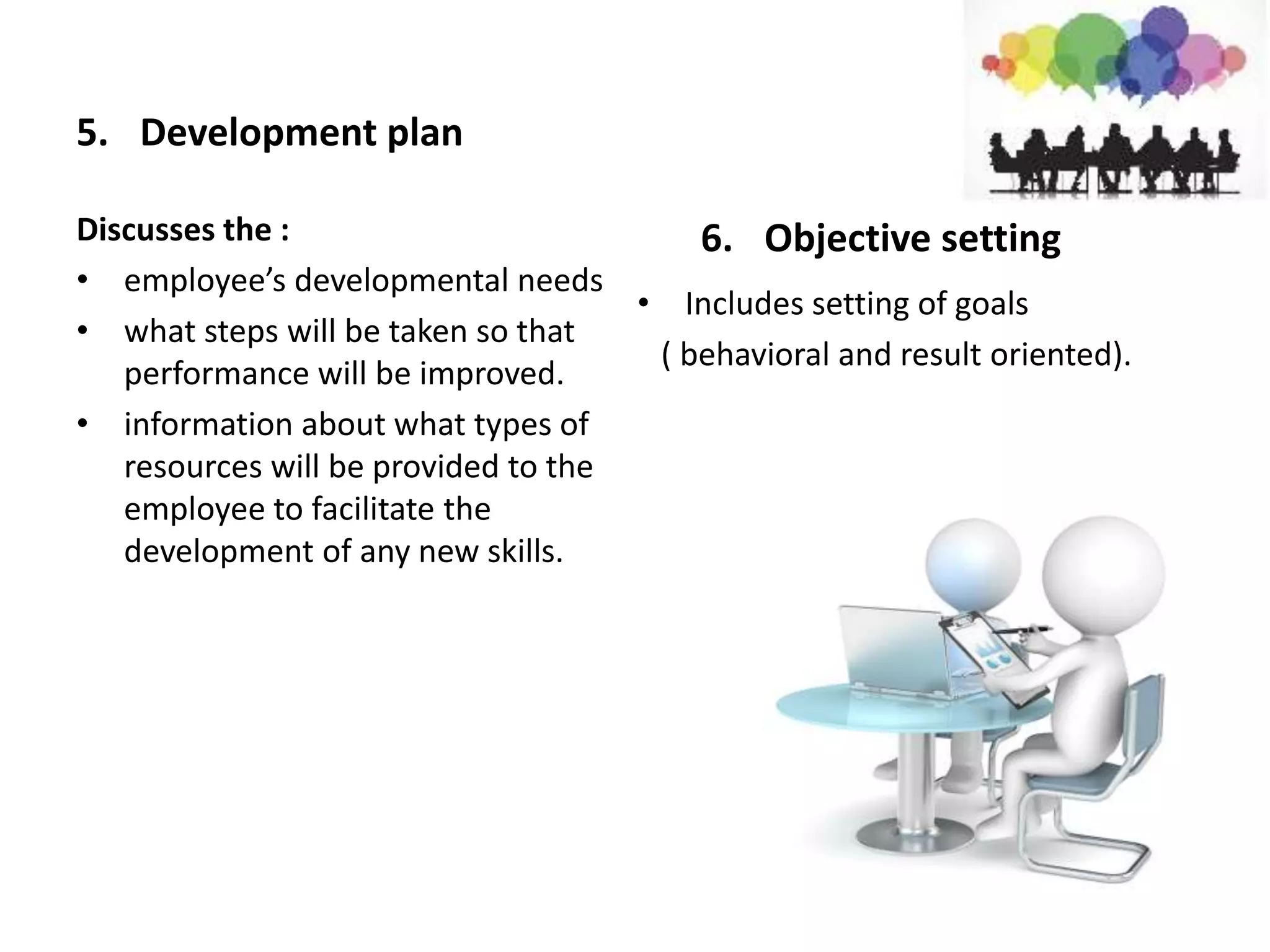
5. Development plan
Discusses the :
• employee’s developmental needs
• what steps will be taken so that
performance will be improved.
• information about what types of
resources will be provided to the
employee to facilitate the
development of any new skills.
6. Objective setting
• Includes setting of goals
( behavioral and result oriented).
Are all the meeting conducted at the same time or
they follow one by one? Explain with Example
Time duration of conductive
meetings
 Annually
 Semi-Annually
 Quarterly
Steps to take before Formal
meeting:
• Give at least 2-weeks notice
• Give sufficient time
• Arrange to meet in a private location without
interruptions
Formal Meetings
• Formal meetings to present
important financial, organizational
and operational information.
Examples :
Finance committee meeting,
Board of directors meetings,
reporting and presenting
important financial and
large-scale
of operations
types of Formal meetings that followed
one by one :
1. System Inauguration
2. Self-Appraisal
3. Classical Performance Review
4. Merit/Salary Review
5. Developmental Plan
6. Objective Setting
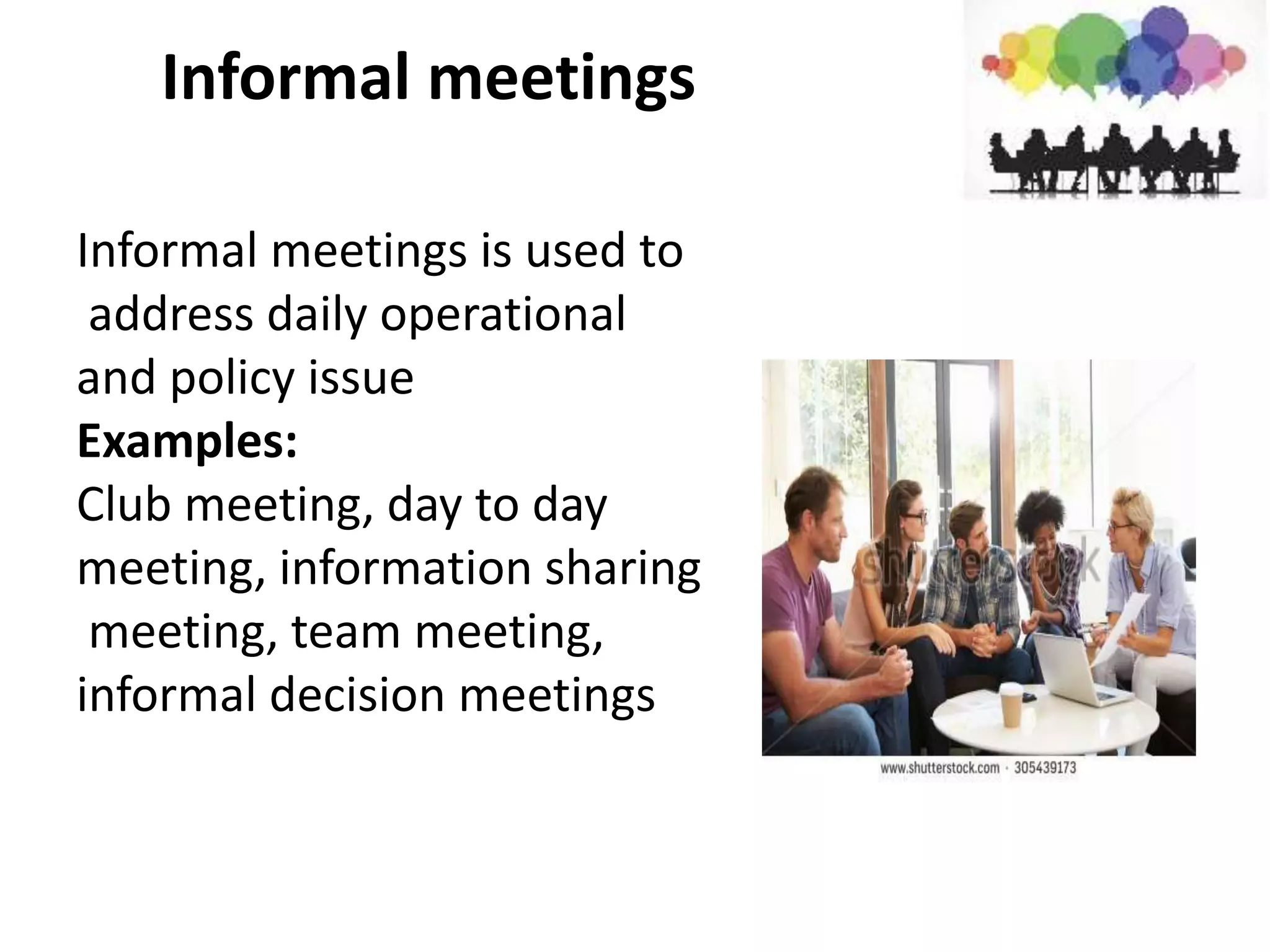
Informal meetings
Informal meetings is used to
address daily operational
and policy issue
Examples:
Club meeting, day to day
meeting, information sharing
meeting, team meeting,
informal decision meetings
Managers skills ,Coaching ,Performance review meetings

Managers skills ,Coaching ,Performance review meetings

  • 1.
    • What kindof skills the manager should have to help their employees to develop and improve their performance?
  • 2.
    Who is Manger? Manageris some one who oversees the project and they are responsible for getting the job done and motivating people. And overcome issues such as limited resources and time.
  • 4.
    The most important skillsof manager Strategic thinking Planed ahead and predicting what was going to happen. Time management Managers are expected to complete work on deadline. Communication Managers have direct contact b/w staff and client.
  • 5.
    Problem Solving: Manager mayencounter problems in their work Collaboration: Four barriers to collaboration; Distance,dominance,discomfort Dissonance.
  • 6.
    Financial Skills: manager willusually expected to set budget. Interpersonal skill: Manager work closely with in their team assigning them work and ensuring that all perform or not. Coaching : It helps people learn to improve their work and make decision efficiently.
  • 8.
    Coaching • Coaching isreleasing a person’s potential to maximize their own performance. It is helping them to learn rather than teaching them
  • 12.
  • 13.
    Coaching process • Coachingprocess doesn't rely on prescribed solution or directive but rather on mutual understanding, fact finding, careful through reflection, creative action planning and compassionate follow up.(Harvard business review)
  • 14.
    Steps of Coaching Process Step1: Build Relationship of Mutual Trust The foundation of any coaching relationship is rooted in the manager's day-to-day relationship with the employee. Step 2: Open the Meeting The manager clarify, a non evaluative, non accusatory way, the reason of conducting meeting and set appointment scheduled.
  • 15.
    Step 3: GetAgreement Manager must be able to define the nature of the issue and get the employee to recognize the consequences of not changing his or her behavior. • Skill of specifying the behavior • Skill of clarifying consequences
  • 16.
    • Skill ofspecifying the behavior 1. Cite specific examples of the performance issue. 2. Clarify your performance expectations in the situation. 3. Asks the employee for agreement on the issue. • Skill of clarifying consequences 1. Probe to get the employee to articulate his or her understanding of the consequences associated with the performance issue. 2. Ask the employee for agreement on the issue.
  • 17.
    Step 4: ExploreAlternatives Explore ways the issue can be improved or corrected by encouraging the employee to identify alternative solutions. Alternatives specific and not generalize. Maximize the number of choices and discuss their advantages and disadvantages. Step 5: Get a Commitment to Act • Help the employee choose an alternative. • The manager must be sure to get a verbal commitment from the employee regarding what action will be taken and when it will be taken and have the support of employer
  • 18.
    Step 6:Handle Excuses •Rephrase the point by taking a comment or statement that was perceived • Respond empathically to show support for the employee's Step 7: Provide Feedback Feedback should: • Be timely • Be specific • Focus on the "what," not the "why." • Use a sincere tone of voice.
  • 19.
  • 20.
    What is PerformanceReview Meetings? • Manager and employee work together to assess the degree to which the employee has attained agree-upon goals work and to overcome difficulties to attain these goals. • Also called performance appraisal meeting, or performance evaluation meeting.
  • 21.
    Types Of Meetings 1.Informal • Performance is managed throughout the year. • Performance is reviewed as it occurs by Individuals & manager for comparing • Outcomes may not documented unless there is poor performance 2. Formal • Performance is analyzed systematically • Overview and analysis since the last meeting (Comparing results on agreed expectations and plans) • Documented • The basis for decisions • one-to-one basis or a get-together Possible types of Formal meetings: 1. System Inauguration 2. Self-Appraisal 3. Classical Performance Review 4. Merit/Salary Review 5. Developmental Plan 6. Objective Setting
  • 22.
    1. System inauguration 2.Self Appraisal • the employee’s assessment of herself. • opportunity for the employee to describe how he sees his own performance during the review period. • helpful if the employee is given the same form to be filled out with the same dimensions that will be used by the supervisor later. Discussion of : • how the system works? • the identification of the requirements and responsibilities. • the role of self- appraisal • the dates when the employee and supervisor will meet to discuss performance issues. • important for new employees
  • 23.
    3. Classical performance review •Employee performance is discussed, from both the perspective of the supervisor and that of the employee. This meeting is mainly: • past oriented • does not focus on what performance should look like in the future. 4. Merit /salary review • useful to separate the discussion of rewards from the performance for the focus of employee on performance. • If these meetings are not separated, employees may not be very attentive. • Although these meetings are separate, supervisors should explain clearly the link between the employee’s performance and the rewards given.
  • 24.
    5. Development plan Discussesthe : • employee’s developmental needs • what steps will be taken so that performance will be improved. • information about what types of resources will be provided to the employee to facilitate the development of any new skills. 6. Objective setting • Includes setting of goals ( behavioral and result oriented).
  • 25.
    Are all themeeting conducted at the same time or they follow one by one? Explain with Example
  • 26.
    Time duration ofconductive meetings  Annually  Semi-Annually  Quarterly Steps to take before Formal meeting: • Give at least 2-weeks notice • Give sufficient time • Arrange to meet in a private location without interruptions
  • 27.
    Formal Meetings • Formalmeetings to present important financial, organizational and operational information. Examples : Finance committee meeting, Board of directors meetings, reporting and presenting important financial and large-scale of operations types of Formal meetings that followed one by one : 1. System Inauguration 2. Self-Appraisal 3. Classical Performance Review 4. Merit/Salary Review 5. Developmental Plan 6. Objective Setting
  • 28.
    Informal meetings Informal meetingsis used to address daily operational and policy issue Examples: Club meeting, day to day meeting, information sharing meeting, team meeting, informal decision meetings

Editor's Notes

  • #22 Informal reviews are the process by which performance is managed throughout the year. Performance is reviewed as it occurs by the individual as well as the manager, comparing what happened with what should have happened. Whenever appropriate, managers meet individual members of their teams to provide feedback, initiate coaching or other learning activities, and agree on revised goals or any corrective action required. The outcome of such meetings may not be formally documented unless action to deal with poor performance through a capability procedure is invoked. Formal reviews are meetings in which performance is analyzed more systematically. They include an overview and analysis of performance since the last review, comparing results with agreed expectations and plans. Formal reviews are usually documented on paper or recorded on a computer. They can provide the basis for decisions on performance pay, promotion, inclusion in talent management development programs, training, performance and development plans, and action to deal with poor performance (although the latter is best carried out at the time rather than waiting for an annual review). All this happens on a one-to-one basis – a get-together of the manager and the individual. This should be a conversation involving dialogue and joint analysis of performance.
  • #23 System inauguration mean introduction of new system or policy
  • #24 If these meetings are not separated, employees may not be very attentive during the discussion of performance and are likely to feel it is merely the price they must pay to move on to the part of the meeting that really matters: the discussion about rewards.