Herman Aguinis, University of Colorado at
Performance Management
Skill
Prof. Preeti Bhaskar
Symbiosis Centre for
Management Studies, NOIDA
Herman Aguinis, University of Colorado at
Coaching: Definition
• Manager
– Interacts with employee and
– Takes active role and interest in performance
• Collaborative ongoing process
– Directing employee behavior
– Motivating employee behavior
– Rewarding employee behavior
• Concerned with long-term performance
Prentice Hall, Inc. © 2006
Herman Aguinis, University of Colorado at
Major Coaching Functions:
• Give advice
• Provide guidance
• Provide support
• Give confidence
• Promote greater competence
Prentice Hall, Inc. © 2006
Herman Aguinis, University of Colorado at
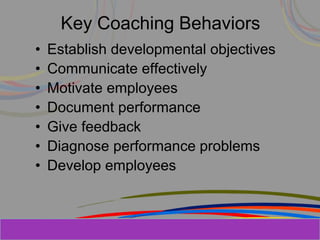
Key Coaching Behaviors
• Establish developmental objectives
• Communicate effectively
• Motivate employees
• Document performance
• Give feedback
• Diagnose performance problems
• Develop employees
Prentice Hall, Inc. © 2006
Herman Aguinis, University of Colorado at
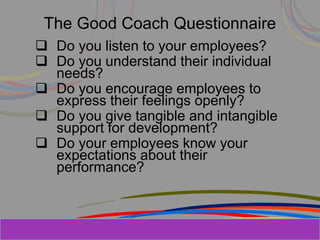
The Good Coach Questionnaire
 Do you listen to your employees?
 Do you understand their individual
needs?
 Do you encourage employees to
express their feelings openly?
 Do you give tangible and intangible
support for development?
 Do your employees know your
expectations about their
performance?
Prentice Hall, Inc. © 2006
Herman Aguinis, University of Colorado at
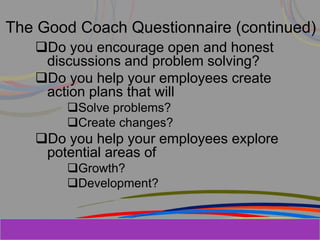
The Good Coach Questionnaire (continued)
Do you encourage open and honest
discussions and problem solving?
Do you help your employees create
action plans that will
Solve problems?
Create changes?
Do you help your employees explore
potential areas of
Growth?
Development?
Prentice Hall, Inc. © 2006
Herman Aguinis, University of Colorado at
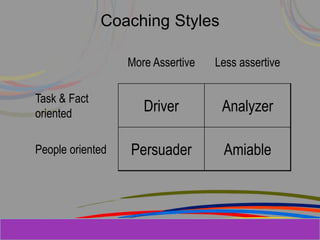
Coaching Styles
More Assertive Less assertive
Task & Fact
oriented Driver Analyzer
People oriented Persuader Amiable
Prentice Hall, Inc. © 2006
Herman Aguinis, University of Colorado at
Adaptive coaches use all styles
according to employee needs:
• Sometimes providing direction
• Sometimes persuading
• Sometimes showing empathy
• Sometimes paying close attention to
rules and established procedures
Prentice Hall, Inc. © 2006
Herman Aguinis, University of Colorado at
Prentice Hall, Inc. © 2006
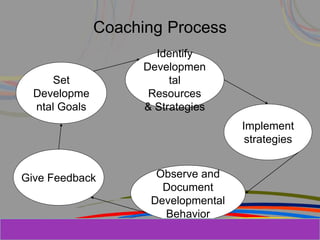
Coaching Process
Set
Developme
ntal Goals
Identify
Developmen
tal
Resources
& Strategies
Implement
strategies
Observe and
Document
Developmental
Behavior
Give Feedback
Herman Aguinis, University of Colorado at
Coaching Process:
Steps covered in Chapter 8
• Set Developmental Goals
• Identify Resources and Strategies
Needed to Implement
Developmental Goals
• Implement Developmental Goals
Prentice Hall, Inc. © 2006
Herman Aguinis, University of Colorado at
Coaching Process:
Overview of remaining steps
• Observe and Document
Developmental Behavior and
Outcomes
• Give Feedback
–Praise
–Negative Feedback
Prentice Hall, Inc. © 2006
Herman Aguinis, University of Colorado at
Observe and Document Developmental Behavior
and Outcomes
Constraints:
• Time
• Situation
• Activity
Prentice Hall, Inc. © 2006
Herman Aguinis, University of Colorado at
Organizational Activities
to improve documentation of performance
• Good communication plan to get manager
buy-in
• Training programs
– Rater error training
– Frame-of-reference training
– Behavioral observation training
– Self-leadership training
Prentice Hall, Inc. © 2006
Herman Aguinis, University of Colorado at
Reasons to document performance
• Minimize cognitive load
• Create trust
• Plan for the future
• Legal protection
Prentice Hall, Inc. © 2006
Herman Aguinis, University of Colorado at
Recommendations for Documentation
• Be specific
• Use adjectives and adverbs sparingly
• Balance positives with negatives
• Focus on job-related information
• Be comprehensive
• Standardize procedures
• Describe observable behavior
Prentice Hall, Inc. © 2006
Herman Aguinis, University of Colorado at
Giving Feedback
• Main purposes:
–Help build confidence
–Develop competence
–Enhance involvement
–Improve future performance
Prentice Hall, Inc. © 2006
Herman Aguinis, University of Colorado at
Potential costs of failing to provide feedback:
• Employees are deprived of chance to
improve their own performance
• Chronic poor performance
• Employees have inaccurate
perceptions of how their performance
is regarded by others
Prentice Hall, Inc. © 2006
Herman Aguinis, University of Colorado at
To be effective, feedback should:
• Be timely
• Be frequent
• Be specific
• Be verifiable
• Be consistent (over time and across
employees)
• Be given privately
• Provide context and consequences
(continued next slide)
Prentice Hall, Inc. © 2006
Herman Aguinis, University of Colorado at
To be effective, feedback should: (continued)
• Describe first, evaluate second
• Cover the continuum of performance
• Identify patterns
• Demonstrate confidence in
employee
• Allow for both advice and idea
generation
Prentice Hall, Inc. © 2006
Herman Aguinis, University of Colorado at
Guidelines for Giving Praise
• Be sincere – only give praise when it is
deserved
• Give praise about specific behaviors or
results
• Take your time
• Be comfortable with act of praising
• Emphasize the positive
Prentice Hall, Inc. © 2006
Herman Aguinis, University of Colorado at
Giving Negative Feedback
Managers avoid giving negative
feedback due to:
• Negative reactions and consequences
• Negative experiences in the past
• Playing “god”
• Need for irrefutable and conclusive
evidence
Prentice Hall, Inc. © 2006
Herman Aguinis, University of Colorado at
Negative feedback is most useful when it:
• Identifies warning signs and
performance problem is still
manageable
• Clarifies unwanted behaviors and
consequences
• Focuses on behaviors that can be
changed
• Comes from a credible source
• Is supported by data
Prentice Hall, Inc. © 2006
Herman Aguinis, University of Colorado at
Feedback Sessions should always answer:
• How is your job going?
• What can be done to make it better?
– Job
– Product
– Services
• How can you better serve your
customers?
– Internal
– External
Prentice Hall, Inc. © 2006
Herman Aguinis, University of Colorado at
Supervisory roles in managing performance
• Judge
– Evaluate performance
– Allocate rewards
• Coach
– Help employee solve performance
problems
– Identify performance weaknesses
– Design developmental plans
Prentice Hall, Inc. © 2006
Herman Aguinis, University of Colorado at
Performance Review Formal Meetings
Possible types of formal meetings:
1. System Inauguration
2. Self-Appraisal
3. Classical Performance Review
4. Merit/Salary Review
5. Developmental Plan
6. Objective Setting
Prentice Hall, Inc. © 2006
Herman Aguinis, University of Colorado at
Steps to take before meeting:
• Give at least 2-weeks notice
• Block sufficient time
• Arrange to meet in a private location
without interruptions
Prentice Hall, Inc. © 2006
Herman Aguinis, University of Colorado at
Merged Performance Review Meeting
Components
1. Explanation of meeting purpose
2. Employee self-appraisal
3. Supervisor & employee share rating and
rationale
4. Developmental discussion
5. Employee summary
6. Rewards discussion
7. Follow-up meeting arrangement
8. Approval and appeals process discussion
9. Final recap
Herman Aguinis, University of Colorado at
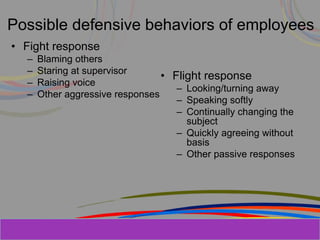
Possible defensive behaviors of employees
• Fight response
– Blaming others
– Staring at supervisor
– Raising voice
– Other aggressive responses
• Flight response
– Looking/turning away
– Speaking softly
– Continually changing the
subject
– Quickly agreeing without
basis
– Other passive responses
Herman Aguinis, University of Colorado at
To prevent/reduce defensive behaviors
• Establish and maintain rapport
• Be empathetic
• Observe verbal and nonverbal cues
• Minimize threats
• Encourage participation
Prentice Hall, Inc. © 2006
Herman Aguinis, University of Colorado at
When defensiveness is unavoidable:
Recognize it
Allow its expression
If situation becomes intolerable
Reschedule the meeting for a later
time
Prentice Hall, Inc. © 2006

Unit- 9. Performance Management skill

  • 1.
    Herman Aguinis, Universityof Colorado at Performance Management Skill Prof. Preeti Bhaskar Symbiosis Centre for Management Studies, NOIDA
  • 2.
    Herman Aguinis, Universityof Colorado at Coaching: Definition • Manager – Interacts with employee and – Takes active role and interest in performance • Collaborative ongoing process – Directing employee behavior – Motivating employee behavior – Rewarding employee behavior • Concerned with long-term performance Prentice Hall, Inc. © 2006
  • 3.
    Herman Aguinis, Universityof Colorado at Major Coaching Functions: • Give advice • Provide guidance • Provide support • Give confidence • Promote greater competence Prentice Hall, Inc. © 2006
  • 4.
    Herman Aguinis, Universityof Colorado at Key Coaching Behaviors • Establish developmental objectives • Communicate effectively • Motivate employees • Document performance • Give feedback • Diagnose performance problems • Develop employees Prentice Hall, Inc. © 2006
  • 5.
    Herman Aguinis, Universityof Colorado at The Good Coach Questionnaire  Do you listen to your employees?  Do you understand their individual needs?  Do you encourage employees to express their feelings openly?  Do you give tangible and intangible support for development?  Do your employees know your expectations about their performance? Prentice Hall, Inc. © 2006
  • 6.
    Herman Aguinis, Universityof Colorado at The Good Coach Questionnaire (continued) Do you encourage open and honest discussions and problem solving? Do you help your employees create action plans that will Solve problems? Create changes? Do you help your employees explore potential areas of Growth? Development? Prentice Hall, Inc. © 2006
  • 7.
    Herman Aguinis, Universityof Colorado at Coaching Styles More Assertive Less assertive Task & Fact oriented Driver Analyzer People oriented Persuader Amiable Prentice Hall, Inc. © 2006
  • 8.
    Herman Aguinis, Universityof Colorado at Adaptive coaches use all styles according to employee needs: • Sometimes providing direction • Sometimes persuading • Sometimes showing empathy • Sometimes paying close attention to rules and established procedures Prentice Hall, Inc. © 2006
  • 9.
    Herman Aguinis, Universityof Colorado at Prentice Hall, Inc. © 2006 Coaching Process Set Developme ntal Goals Identify Developmen tal Resources & Strategies Implement strategies Observe and Document Developmental Behavior Give Feedback
  • 10.
    Herman Aguinis, Universityof Colorado at Coaching Process: Steps covered in Chapter 8 • Set Developmental Goals • Identify Resources and Strategies Needed to Implement Developmental Goals • Implement Developmental Goals Prentice Hall, Inc. © 2006
  • 11.
    Herman Aguinis, Universityof Colorado at Coaching Process: Overview of remaining steps • Observe and Document Developmental Behavior and Outcomes • Give Feedback –Praise –Negative Feedback Prentice Hall, Inc. © 2006
  • 12.
    Herman Aguinis, Universityof Colorado at Observe and Document Developmental Behavior and Outcomes Constraints: • Time • Situation • Activity Prentice Hall, Inc. © 2006
  • 13.
    Herman Aguinis, Universityof Colorado at Organizational Activities to improve documentation of performance • Good communication plan to get manager buy-in • Training programs – Rater error training – Frame-of-reference training – Behavioral observation training – Self-leadership training Prentice Hall, Inc. © 2006
  • 14.
    Herman Aguinis, Universityof Colorado at Reasons to document performance • Minimize cognitive load • Create trust • Plan for the future • Legal protection Prentice Hall, Inc. © 2006
  • 15.
    Herman Aguinis, Universityof Colorado at Recommendations for Documentation • Be specific • Use adjectives and adverbs sparingly • Balance positives with negatives • Focus on job-related information • Be comprehensive • Standardize procedures • Describe observable behavior Prentice Hall, Inc. © 2006
  • 16.
    Herman Aguinis, Universityof Colorado at Giving Feedback • Main purposes: –Help build confidence –Develop competence –Enhance involvement –Improve future performance Prentice Hall, Inc. © 2006
  • 17.
    Herman Aguinis, Universityof Colorado at Potential costs of failing to provide feedback: • Employees are deprived of chance to improve their own performance • Chronic poor performance • Employees have inaccurate perceptions of how their performance is regarded by others Prentice Hall, Inc. © 2006
  • 18.
    Herman Aguinis, Universityof Colorado at To be effective, feedback should: • Be timely • Be frequent • Be specific • Be verifiable • Be consistent (over time and across employees) • Be given privately • Provide context and consequences (continued next slide) Prentice Hall, Inc. © 2006
  • 19.
    Herman Aguinis, Universityof Colorado at To be effective, feedback should: (continued) • Describe first, evaluate second • Cover the continuum of performance • Identify patterns • Demonstrate confidence in employee • Allow for both advice and idea generation Prentice Hall, Inc. © 2006
  • 20.
    Herman Aguinis, Universityof Colorado at Guidelines for Giving Praise • Be sincere – only give praise when it is deserved • Give praise about specific behaviors or results • Take your time • Be comfortable with act of praising • Emphasize the positive Prentice Hall, Inc. © 2006
  • 21.
    Herman Aguinis, Universityof Colorado at Giving Negative Feedback Managers avoid giving negative feedback due to: • Negative reactions and consequences • Negative experiences in the past • Playing “god” • Need for irrefutable and conclusive evidence Prentice Hall, Inc. © 2006
  • 22.
    Herman Aguinis, Universityof Colorado at Negative feedback is most useful when it: • Identifies warning signs and performance problem is still manageable • Clarifies unwanted behaviors and consequences • Focuses on behaviors that can be changed • Comes from a credible source • Is supported by data Prentice Hall, Inc. © 2006
  • 23.
    Herman Aguinis, Universityof Colorado at Feedback Sessions should always answer: • How is your job going? • What can be done to make it better? – Job – Product – Services • How can you better serve your customers? – Internal – External Prentice Hall, Inc. © 2006
  • 24.
    Herman Aguinis, Universityof Colorado at Supervisory roles in managing performance • Judge – Evaluate performance – Allocate rewards • Coach – Help employee solve performance problems – Identify performance weaknesses – Design developmental plans Prentice Hall, Inc. © 2006
  • 25.
    Herman Aguinis, Universityof Colorado at Performance Review Formal Meetings Possible types of formal meetings: 1. System Inauguration 2. Self-Appraisal 3. Classical Performance Review 4. Merit/Salary Review 5. Developmental Plan 6. Objective Setting Prentice Hall, Inc. © 2006
  • 26.
    Herman Aguinis, Universityof Colorado at Steps to take before meeting: • Give at least 2-weeks notice • Block sufficient time • Arrange to meet in a private location without interruptions Prentice Hall, Inc. © 2006
  • 27.
    Herman Aguinis, Universityof Colorado at Merged Performance Review Meeting Components 1. Explanation of meeting purpose 2. Employee self-appraisal 3. Supervisor & employee share rating and rationale 4. Developmental discussion 5. Employee summary 6. Rewards discussion 7. Follow-up meeting arrangement 8. Approval and appeals process discussion 9. Final recap
  • 28.
    Herman Aguinis, Universityof Colorado at Possible defensive behaviors of employees • Fight response – Blaming others – Staring at supervisor – Raising voice – Other aggressive responses • Flight response – Looking/turning away – Speaking softly – Continually changing the subject – Quickly agreeing without basis – Other passive responses
  • 29.
    Herman Aguinis, Universityof Colorado at To prevent/reduce defensive behaviors • Establish and maintain rapport • Be empathetic • Observe verbal and nonverbal cues • Minimize threats • Encourage participation Prentice Hall, Inc. © 2006
  • 30.
    Herman Aguinis, Universityof Colorado at When defensiveness is unavoidable: Recognize it Allow its expression If situation becomes intolerable Reschedule the meeting for a later time Prentice Hall, Inc. © 2006