E-Commerce and Internet
Misbah Javid
E-Commerce
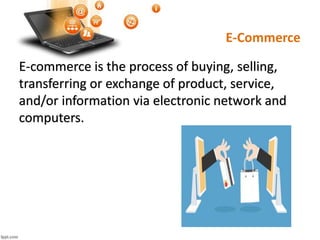
E-commerce is the process of buying, selling,
transferring or exchange of product, service,
and/or information via electronic network and
computers.
Internet
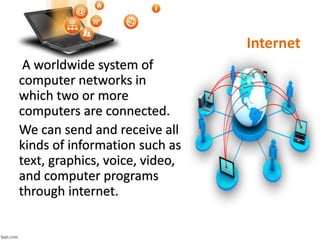
A worldwide system of
computer networks in
which two or more
computers are connected.
We can send and receive all
kinds of information such as
text, graphics, voice, video,
and computer programs
through internet.
Type of E-Commerce
There are 6 basic types of e-commerce:
• Business-to-Business (B2B)
Manufacturer issuing goods to the retailer or
wholesaler.e.g Intel selling microprocessors
to Dell.
• Business-to-Consumer (B2C)
Company sell goods to its consumer. It is an
indirect trade between company and
consumer, it can be direct trade through
oline.e.g. Dell sell laptop to me.
• Consumer-to-Consumer (C2C)
Online dealing of goods and services
among people, no major third party is
involve.e.g.olx
• Customer-to-Business (C2B)
Consumers (individuals) create value
and businesses consume that value.
e.g.naukri .com,Rozee.com
• Business-to-Administration (B2A)
All transactions that are carried out between
business and government bodies using the
Internet as medium.e.g.Accela.com
• Mobile-Commerce
Online sales transactions that use wireless
electronic devices such as hand-held
computers, mobile phones or laptops.
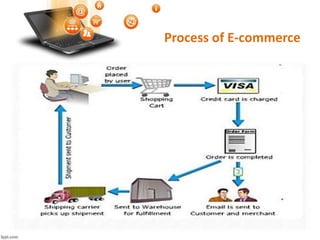
Process of E-commerce
Past, Present and
Future of E-commerce
• ‘
• Began in the 1970s when larger corporations
started creating private networks to share
information with business partners and suppliers.
(EDI)
Prodigy was running text ads and selling flowers in the
early '80s
The first documented Online sale in 1994 was what?
It Was
A CD
• In 1990s the World Wide Web on
the Internet provides easy-to-use
technology for information publishing and distribution
– (economies of scale)
– (economies of scope)
• Early E-Commerce was pioneered by Internet
companies that did not perform traditional retail.
Called Pure Plays: such as Amazon.com and CD Now.
• More recently click and mortar stores have moved
online: like Barnes and Noble, Best Buy, the Gap, and
Wal-Mart
Interesting Fact
Every 1.2 second a
Canadian make
purchase with their
PayPal account.
In India, it is 10
second.
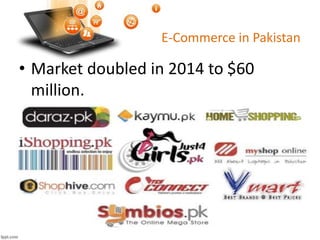
E-Commerce in Pakistan
• Market doubled in 2014 to $60
million.
• it a time-saving,
• hassle-free experience
• feel online offer access to immense variety of
products that are available to comparatively
cheaper prices.
• People now tend to avoid huge public
gatherings and/or roaming in shopping malls
and markets.
• convenient, safe
Why E-Commerce in Pakistan
is growing
Future of E-commerce
in Pakistan
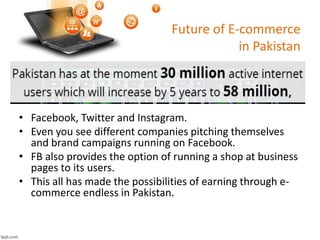
• Facebook, Twitter and Instagram.
• Even you see different companies pitching themselves
and brand campaigns running on Facebook.
• FB also provides the option of running a shop at business
pages to its users.
• This all has made the possibilities of earning through e-
commerce endless in Pakistan.
Uses of E-Commerce
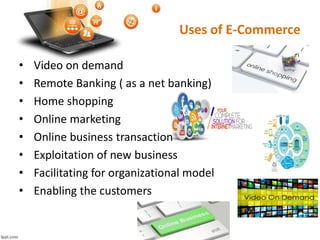
• Video on demand
• Remote Banking ( as a net banking)
• Home shopping
• Online marketing
• Online business transaction
• Exploitation of new business
• Facilitating for organizational model
• Enabling the customers
Who uses E-Commerce
E-Business might be a partitioned into following
subsection
• Buying and Offering on site or online commercial
centers
• Electronic information trade, the Business-to-
Business trade of information
• Business-to-Business purchasing and offering
• security of business transactions
Why use E-Commerce
• Low Entry Cost
• Reduce Transaction Cost
• Access the Global Market
• Good Market shares can be
captured
E commerce strategies
Here are 12 e-commerce strategies you should plan to
implement:
• Micro-Target an Online Audience
• Personalize
• Create Content to Build Stickiness
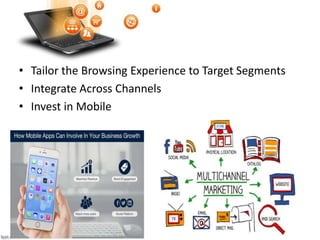
• Tailor the Browsing Experience to Target Segments
• Integrate Across Channels
• Invest in Mobile
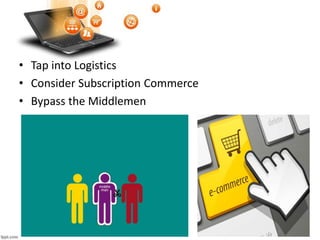
• Tap into Logistics
• Consider Subscription Commerce
• Bypass the Middlemen
• Offer a Seamless Experience across Channels
• Proprietary Selection
• Sell Internet-Only Merchandise
Relationship between
Internet and E-commerce
Advantages of E-commerce
• Easier to compare prices
• No need for physical stores
• Lots of Choices
• Services for 247
• Unlimited shelf space
• No need to handle currency
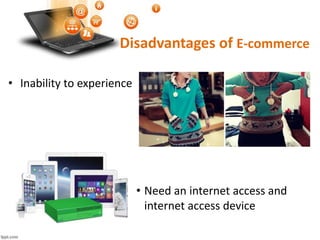
Disadvantages of E-commerce
• Inability to experience
• Need an internet access and
internet access device
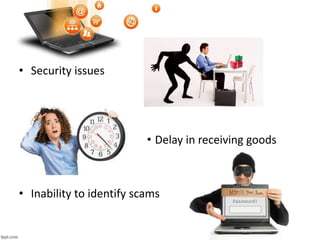
• Security issues
• Delay in receiving goods
• Inability to identify scams
Conclusion
• The Internet has led to the birth and evolution of E-
commerce.
• E-commerce has now become a key component for
many organizations in the daily running of their
business.
• As the Internet and in turn Ecommerce has
developed, and continues to evolve and grow, it is
vital that any organization, in any industry, must base
its strategic planning around such rapidly growing
medium

E commerce and internet in Pakistan

  • 1.
  • 2.
    E-Commerce E-commerce is theprocess of buying, selling, transferring or exchange of product, service, and/or information via electronic network and computers.
  • 3.
    Internet A worldwide systemof computer networks in which two or more computers are connected. We can send and receive all kinds of information such as text, graphics, voice, video, and computer programs through internet.
  • 4.
    Type of E-Commerce Thereare 6 basic types of e-commerce: • Business-to-Business (B2B) Manufacturer issuing goods to the retailer or wholesaler.e.g Intel selling microprocessors to Dell. • Business-to-Consumer (B2C) Company sell goods to its consumer. It is an indirect trade between company and consumer, it can be direct trade through oline.e.g. Dell sell laptop to me.
  • 5.
    • Consumer-to-Consumer (C2C) Onlinedealing of goods and services among people, no major third party is involve.e.g.olx • Customer-to-Business (C2B) Consumers (individuals) create value and businesses consume that value. e.g.naukri .com,Rozee.com
  • 6.
    • Business-to-Administration (B2A) Alltransactions that are carried out between business and government bodies using the Internet as medium.e.g.Accela.com • Mobile-Commerce Online sales transactions that use wireless electronic devices such as hand-held computers, mobile phones or laptops.
  • 7.
  • 8.
    Past, Present and Futureof E-commerce • ‘ • Began in the 1970s when larger corporations started creating private networks to share information with business partners and suppliers. (EDI) Prodigy was running text ads and selling flowers in the early '80s The first documented Online sale in 1994 was what? It Was A CD
  • 9.
    • In 1990sthe World Wide Web on the Internet provides easy-to-use technology for information publishing and distribution – (economies of scale) – (economies of scope) • Early E-Commerce was pioneered by Internet companies that did not perform traditional retail. Called Pure Plays: such as Amazon.com and CD Now. • More recently click and mortar stores have moved online: like Barnes and Noble, Best Buy, the Gap, and Wal-Mart Interesting Fact Every 1.2 second a Canadian make purchase with their PayPal account. In India, it is 10 second.
  • 10.
    E-Commerce in Pakistan •Market doubled in 2014 to $60 million.
  • 12.
    • it atime-saving, • hassle-free experience • feel online offer access to immense variety of products that are available to comparatively cheaper prices. • People now tend to avoid huge public gatherings and/or roaming in shopping malls and markets. • convenient, safe Why E-Commerce in Pakistan is growing
  • 13.
    Future of E-commerce inPakistan • Facebook, Twitter and Instagram. • Even you see different companies pitching themselves and brand campaigns running on Facebook. • FB also provides the option of running a shop at business pages to its users. • This all has made the possibilities of earning through e- commerce endless in Pakistan.
  • 14.
    Uses of E-Commerce •Video on demand • Remote Banking ( as a net banking) • Home shopping • Online marketing • Online business transaction • Exploitation of new business • Facilitating for organizational model • Enabling the customers
  • 15.
    Who uses E-Commerce E-Businessmight be a partitioned into following subsection • Buying and Offering on site or online commercial centers • Electronic information trade, the Business-to- Business trade of information • Business-to-Business purchasing and offering • security of business transactions
  • 16.
    Why use E-Commerce •Low Entry Cost • Reduce Transaction Cost • Access the Global Market • Good Market shares can be captured
  • 17.
    E commerce strategies Hereare 12 e-commerce strategies you should plan to implement: • Micro-Target an Online Audience • Personalize • Create Content to Build Stickiness
  • 18.
    • Tailor theBrowsing Experience to Target Segments • Integrate Across Channels • Invest in Mobile
  • 19.
    • Tap intoLogistics • Consider Subscription Commerce • Bypass the Middlemen
  • 20.
    • Offer aSeamless Experience across Channels • Proprietary Selection • Sell Internet-Only Merchandise
  • 21.
  • 22.
    Advantages of E-commerce •Easier to compare prices • No need for physical stores • Lots of Choices
  • 23.
    • Services for247 • Unlimited shelf space • No need to handle currency
  • 24.
    Disadvantages of E-commerce •Inability to experience • Need an internet access and internet access device
  • 25.
    • Security issues •Delay in receiving goods • Inability to identify scams
  • 26.
    Conclusion • The Internethas led to the birth and evolution of E- commerce. • E-commerce has now become a key component for many organizations in the daily running of their business. • As the Internet and in turn Ecommerce has developed, and continues to evolve and grow, it is vital that any organization, in any industry, must base its strategic planning around such rapidly growing medium