Mall Architecture

                           Presented By:
         Anurag Dua                 A0101906052
         Bharat Bhatia              A0101906070
         Kanika Chandhoke           A0101906131
         Sonali Nirwal              A0101906307
         Sugandha Mukerjei          A0101906311
         Suchi Sidhar               A0101906298
Mall Architecture:
 Mall architecture is the art of designing a
 mall and its related structures.
 Architectural design is primarily driven by
 the creative manipulation of mass, space,
 volume, texture, light, shadow, materials,
 program, and pragmatic elements such as
 cost, construction and technology, in order
 to achieve an end which is aesthetic,
 functional and often artistic.
Purpose of Mall Architecture
 Optimum utilization of available space.
 Good store environment (Ambience &
 overall looks).
 Get customer into the mall (Footfall).
 Good ticket size.
 To improve Mall Image (Mall image is the
 overall perception the consumer has of the
 store’s environment.
Elements of Mall Architecture


            Elements
Store Planning
 A schema that shows where the customer
 service department are located and how
 customer circulate through the store and how
 much space is dedicated to each department.
 Purpose:
     a) Better allocation of space.
     b) Proper circulation of crowd.
     c) Shrinkage prevention
Types of Mall Architecture
1. Free Flow Layout
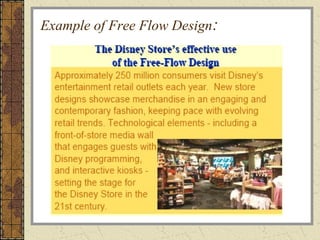
Example of Free Flow Design:
2. Grid Layout
Circulation Loop Layout:
Most Common Type.
Example: CSM, Idiom Mall
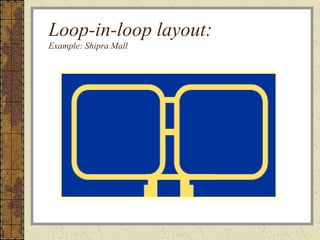
Loop-in-loop layout:
Example: Shipra Mall
3. Green Architecture

 Use of transparent or
 semi-opaque glass or
 fibre glass in roofing
 so as to provide
 natural light and save
 the lighting cost at
 day time.
Upcoming Trends: Kiosks
  Convenient
  Requires less
  space.
  Easy to operate.
Factors affecting Mall Architecture

  Façade: Mallfront designing.
  Atrium/Arcade: Interior designing.
  Lighting design.
  Sound related aspects.
  Odour related aspects.
Thank You………

Mall Architecture

  • 1.
    Mall Architecture Presented By: Anurag Dua A0101906052 Bharat Bhatia A0101906070 Kanika Chandhoke A0101906131 Sonali Nirwal A0101906307 Sugandha Mukerjei A0101906311 Suchi Sidhar A0101906298
  • 2.
    Mall Architecture: Mallarchitecture is the art of designing a mall and its related structures. Architectural design is primarily driven by the creative manipulation of mass, space, volume, texture, light, shadow, materials, program, and pragmatic elements such as cost, construction and technology, in order to achieve an end which is aesthetic, functional and often artistic.
  • 3.
    Purpose of MallArchitecture Optimum utilization of available space. Good store environment (Ambience & overall looks). Get customer into the mall (Footfall). Good ticket size. To improve Mall Image (Mall image is the overall perception the consumer has of the store’s environment.
  • 4.
    Elements of MallArchitecture Elements
  • 5.
    Store Planning Aschema that shows where the customer service department are located and how customer circulate through the store and how much space is dedicated to each department. Purpose: a) Better allocation of space. b) Proper circulation of crowd. c) Shrinkage prevention
  • 7.
    Types of MallArchitecture
  • 8.
  • 10.
    Example of FreeFlow Design:
  • 11.
  • 13.
    Circulation Loop Layout: MostCommon Type. Example: CSM, Idiom Mall
  • 14.
  • 15.
    3. Green Architecture Use of transparent or semi-opaque glass or fibre glass in roofing so as to provide natural light and save the lighting cost at day time.
  • 16.
    Upcoming Trends: Kiosks Convenient Requires less space. Easy to operate.
  • 17.
    Factors affecting MallArchitecture Façade: Mallfront designing. Atrium/Arcade: Interior designing. Lighting design. Sound related aspects. Odour related aspects.
  • 18.