Citing Sources:
 Simple as 1-2-3?
  Maybe not, but
here’s the A, B, Cs!
QUESTIONS to be ANSWERED

 What is the References page?

 Why do we need or use it?

 When do we create the Reference page?

 Where is the Reference page located?

 How do we cite sources?
What is the References page?

QUESTION
   You’ve been told that your paper is fine, but you
    did not include a References page (Works Cited
    or Bibliography)… but what is this page?
       - What should it contain?
       - Where should it be placed?
What is the References page?
ANSWER
   The References page is:
       Your reference page or bibliography; it can be one or
        more pages depending on how many sources you use
       The page where your reader can find out about your
        sources:
         • Who authored them and where they were printed;
         • How current they are; when the article or book was written
                              And…most importantly…
         • Where your reader can find this information (just in
           case they want to “check out” the source document)
Why do we use
          a References page?
QUESTION
   I just don’t understand why we create the
    References page. Why waste our time?
Why do we use
           a References page?
ANSWER
There is no new information in the world.

                     Agree or disagree?
   You might not agree with the previous statement, but at the
    associates- or bachelors-degree level, you are not presenting new
    information, but using researched information and data to uphold
    the ideas in your papers, portfolios or presentations.
   You are presenting scholarly, well-researched, academic writing on
    the topic of your choice (or your instructor’s choice)
Do your sources pass the test?
   Basically, the References page is where your
    reader can “test” your resources
   They assess you as an academic writer by:
       Seeing how current the resources are
       How reliable they are
       How valid they are
   This is where you reaffirm to your reader that
    you know what you are talking about
Ensure you document your trail
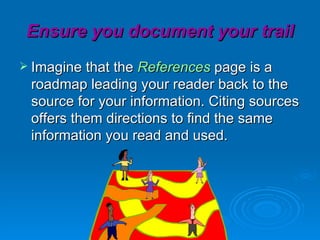
 Imagine that the References page is a
 roadmap leading your reader back to the
 source for your information. Citing sources
 offers them directions to find the same
 information you read and used.
What if the reader gets lost?
   If the information on
    the References page             What will your reader
                                     think?
    is poorly formatted                 Does this author know
       Ok, let’s just say it…           what he/she is talking
                                         about?
        what if it is wrong?            Is this source credible?
       Or, worse yet, what if          Can I trust what I am
        you misrepresent the             reading here?

        source information?
When do we need to create
      the References page?
QUESTION
   Hmmm, this is the final item in our document, so
    the References page should be created last,
    right?
When do we need to create
      the References page?
ANSWER
   The References page is a work-in-progress.
   Recommend:
       Starting your References page when you begin your
        research.
       Continue to add and subtract from your works cited
        page while writing the document
       Then finish it and format the list of sources as you
        finish your paper.
Recommendation
 When creating your References page,
  why not create your citations at the same
  time?
 Create a working list of citations.
     So when you take a quote or a paraphrase
      from your resource, you have the citation
      readily available and you don’t forget to
      include it.
Where is the References
          page located?
QUESTION
   Help! I know I need a References page… but
    where do I put this?
Where is the References
       page located?
ANSWER
 The References page is placed on the
 final page of your document.
 Your References page must be double-
 spaced and indented, so it may run for
 several pages.
 In any case, it should appear on the last
 pages of your paper.
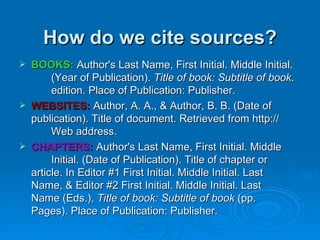
How do we cite sources?
   BOOKS: Author's Last Name, First Initial. Middle Initial.
         (Year of Publication). Title of book: Subtitle of book.
         edition. Place of Publication: Publisher.
   WEBSITES: Author, A. A., & Author, B. B. (Date of
    publication). Title of document. Retrieved from http://
         Web address.
   CHAPTERS: Author's Last Name, First Initial. Middle
         Initial. (Date of Publication). Title of chapter or
    article. In Editor #1 First Initial. Middle Initial. Last
    Name, & Editor #2 First Initial. Middle Initial. Last
    Name (Eds.), Title of book: Subtitle of book (pp.
    Pages). Place of Publication: Publisher.
REMEMBER…
         For every reference listed on your
            References page, there will be a
 corresponding citation within your document.

Parenthetical Citation                Works Cited Page


…and we will get to parenthetical
    (in-text) citations soon!
Post questions as needed to
the discussion area or email Dr. Lori.

    Let’s learn from each other!

M2 citing sources-COM300

  • 1.
    Citing Sources: Simpleas 1-2-3? Maybe not, but here’s the A, B, Cs!
  • 2.
    QUESTIONS to beANSWERED  What is the References page?  Why do we need or use it?  When do we create the Reference page?  Where is the Reference page located?  How do we cite sources?
  • 3.
    What is theReferences page? QUESTION  You’ve been told that your paper is fine, but you did not include a References page (Works Cited or Bibliography)… but what is this page? - What should it contain? - Where should it be placed?
  • 4.
    What is theReferences page? ANSWER  The References page is:  Your reference page or bibliography; it can be one or more pages depending on how many sources you use  The page where your reader can find out about your sources: • Who authored them and where they were printed; • How current they are; when the article or book was written And…most importantly… • Where your reader can find this information (just in case they want to “check out” the source document)
  • 5.
    Why do weuse a References page? QUESTION  I just don’t understand why we create the References page. Why waste our time?
  • 6.
    Why do weuse a References page? ANSWER There is no new information in the world. Agree or disagree?  You might not agree with the previous statement, but at the associates- or bachelors-degree level, you are not presenting new information, but using researched information and data to uphold the ideas in your papers, portfolios or presentations.  You are presenting scholarly, well-researched, academic writing on the topic of your choice (or your instructor’s choice)
  • 7.
    Do your sourcespass the test?  Basically, the References page is where your reader can “test” your resources  They assess you as an academic writer by:  Seeing how current the resources are  How reliable they are  How valid they are  This is where you reaffirm to your reader that you know what you are talking about
  • 8.
    Ensure you documentyour trail  Imagine that the References page is a roadmap leading your reader back to the source for your information. Citing sources offers them directions to find the same information you read and used.
  • 9.
    What if thereader gets lost?  If the information on the References page  What will your reader think? is poorly formatted  Does this author know  Ok, let’s just say it… what he/she is talking about? what if it is wrong?  Is this source credible?  Or, worse yet, what if  Can I trust what I am you misrepresent the reading here? source information?
  • 10.
    When do weneed to create the References page? QUESTION  Hmmm, this is the final item in our document, so the References page should be created last, right?
  • 11.
    When do weneed to create the References page? ANSWER  The References page is a work-in-progress.  Recommend:  Starting your References page when you begin your research.  Continue to add and subtract from your works cited page while writing the document  Then finish it and format the list of sources as you finish your paper.
  • 12.
    Recommendation  When creatingyour References page, why not create your citations at the same time?  Create a working list of citations.  So when you take a quote or a paraphrase from your resource, you have the citation readily available and you don’t forget to include it.
  • 13.
    Where is theReferences page located? QUESTION  Help! I know I need a References page… but where do I put this?
  • 14.
    Where is theReferences page located? ANSWER  The References page is placed on the final page of your document.  Your References page must be double- spaced and indented, so it may run for several pages.  In any case, it should appear on the last pages of your paper.
  • 15.
    How do wecite sources?  BOOKS: Author's Last Name, First Initial. Middle Initial. (Year of Publication). Title of book: Subtitle of book. edition. Place of Publication: Publisher.  WEBSITES: Author, A. A., & Author, B. B. (Date of publication). Title of document. Retrieved from http:// Web address.  CHAPTERS: Author's Last Name, First Initial. Middle Initial. (Date of Publication). Title of chapter or article. In Editor #1 First Initial. Middle Initial. Last Name, & Editor #2 First Initial. Middle Initial. Last Name (Eds.), Title of book: Subtitle of book (pp. Pages). Place of Publication: Publisher.
  • 16.
    REMEMBER… For every reference listed on your References page, there will be a corresponding citation within your document. Parenthetical Citation Works Cited Page …and we will get to parenthetical (in-text) citations soon!
  • 17.
    Post questions asneeded to the discussion area or email Dr. Lori. Let’s learn from each other!