Citing, Referencing & Plagiarism An introduction to correct academic writing
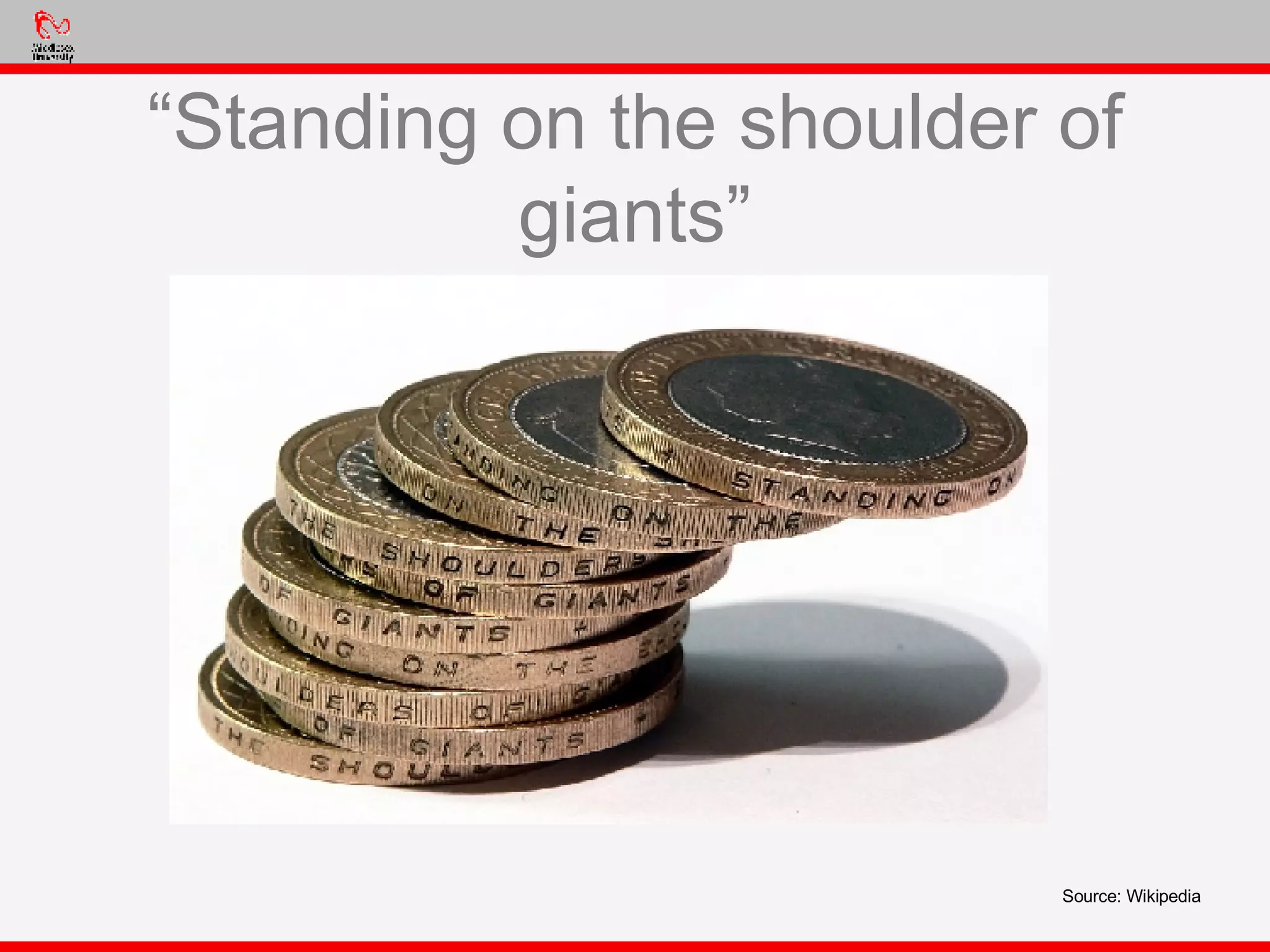
“ Standing on the shoulder of giants” Source: Wikipedia
Overview Understanding academic writing Citing, paraphrasing and quoting References- why? Types of references Referencing styles Plagiarism
Academic Writing Demonstrate your reading & critical analysis Give arguments supporting your hypothesis Provide an overview over previous research Give factual background information, e.g. market data Demonstrate your understanding of the topic area = Showing  scholarship !
Scholarship High level of learning Demonstration of critical understanding Mastering of knowledge Developing abstract theoretical and practical knowledge Contributing to the body of knowledge
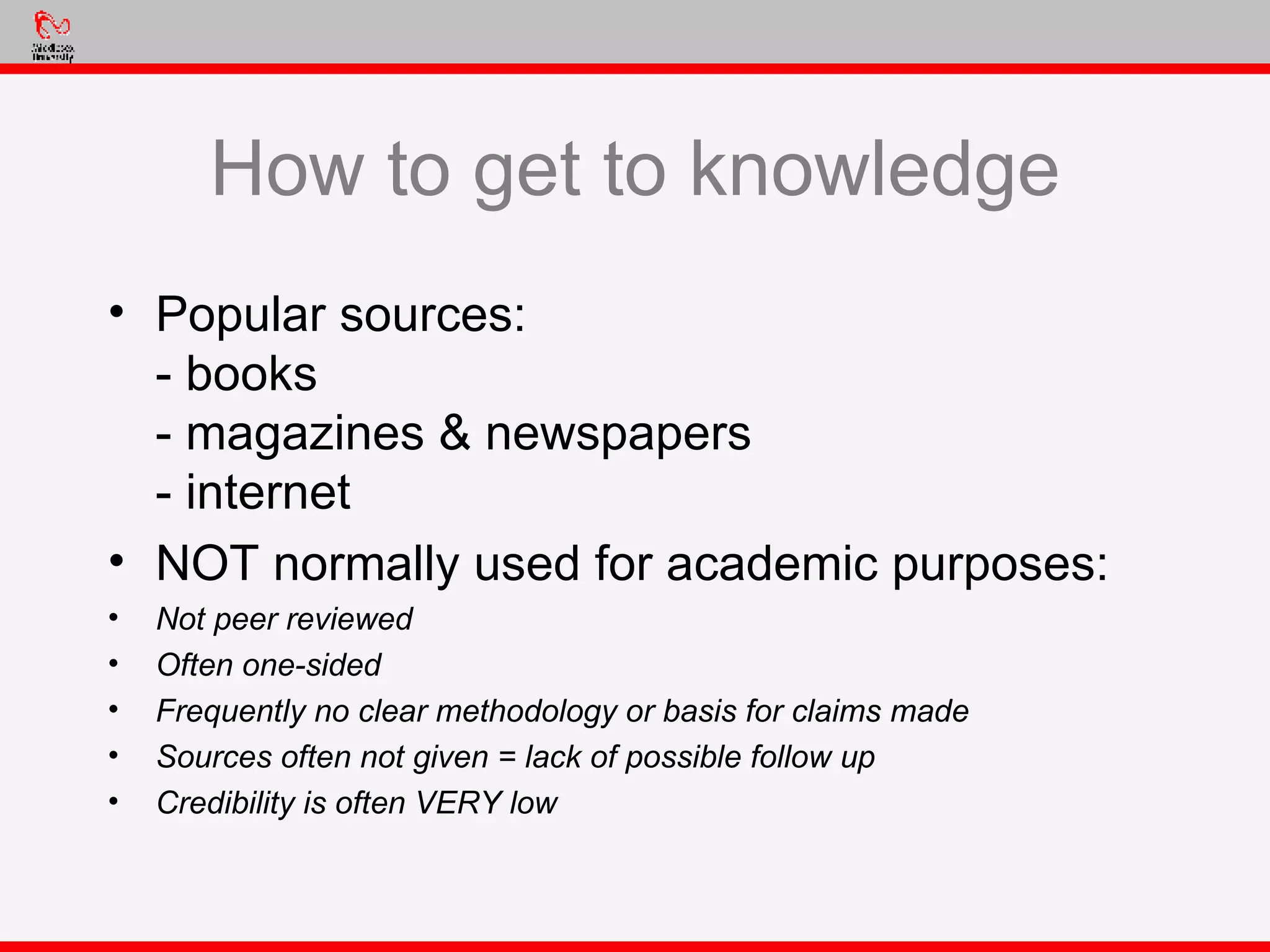
How to get to knowledge Popular sources: - books - magazines & newspapers - internet NOT normally used for academic purposes: Not peer reviewed Often one-sided Frequently no clear methodology or basis for claims made Sources often not given = lack of possible follow up Credibility is often VERY low
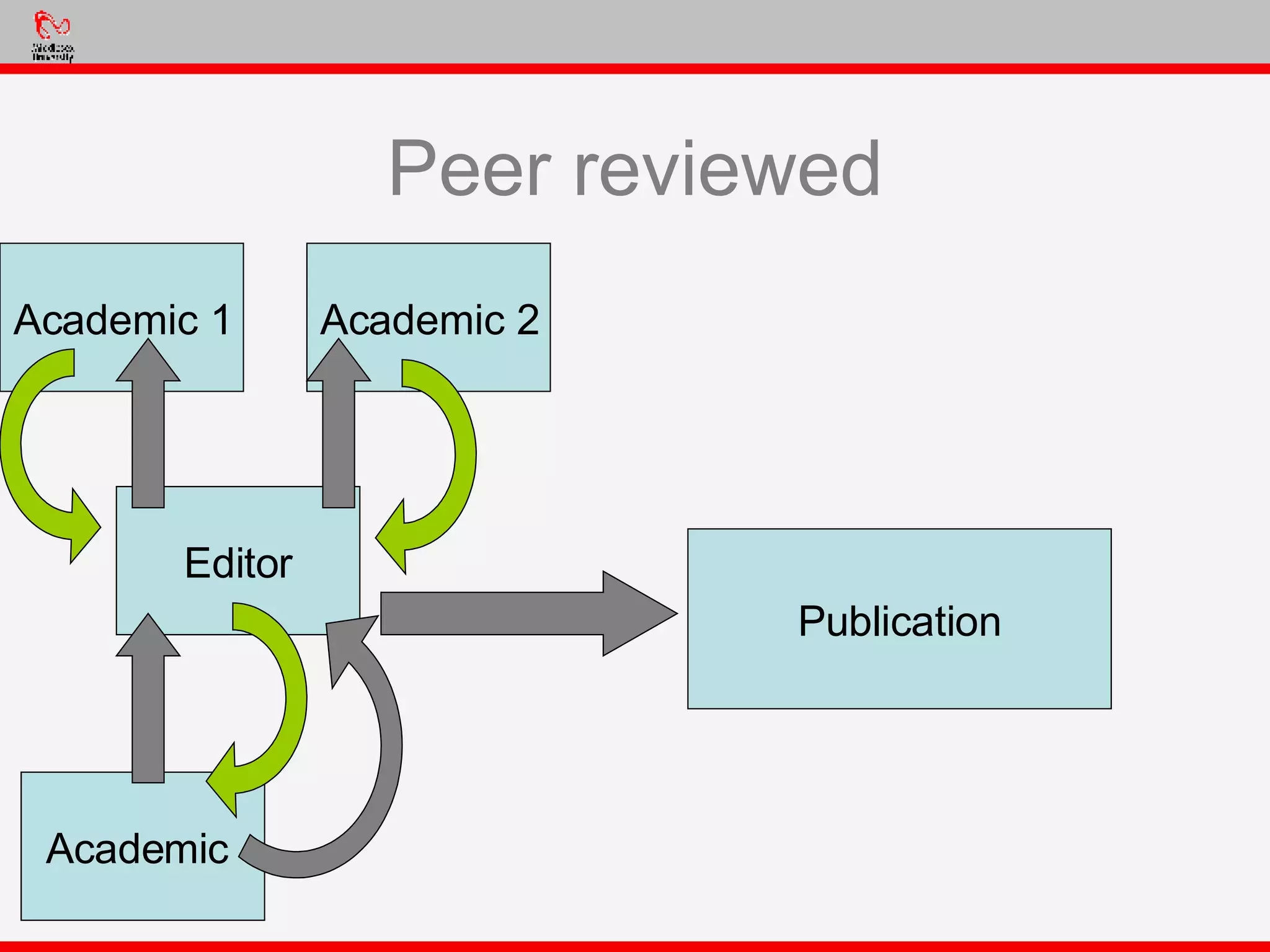
Peer reviewed Academic  Academic 1 Academic 2 Editor Publication
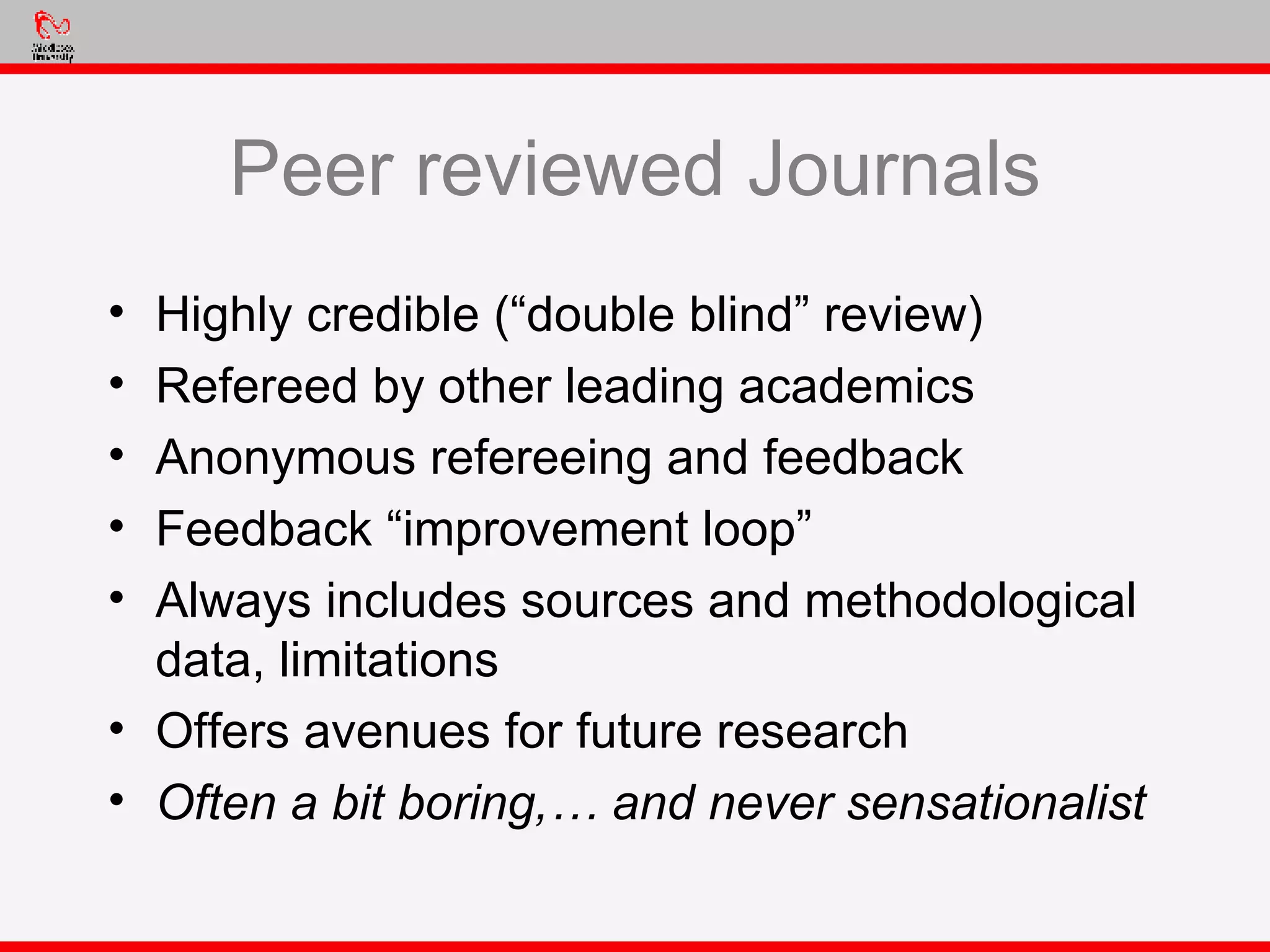
Peer reviewed Journals Highly credible (“double blind” review) Refereed by other leading academics Anonymous refereeing and feedback Feedback “improvement loop” Always includes sources and methodological data, limitations Offers avenues for future research Often a bit boring,… and never sensationalist
How to get it? Printed journals - available in the LRC - a bit tedious - easy to browse Electronic sources - Athens authenticated sources - available 24 hours - download and read later - keyword search
The “scholar loop” Research Your work Practice extract feed back: Theory Practice
What will you present? Your work Reader reads more information further research follow up on source
Two problems: How do you “extract” knowledge? How can the reader find and verify your knowledge? Solution:  Citing & Referencing
Two ways of presenting knowledge Paraphrasing/Citing: Saying what someone else said/wrote in your own words Quoting: Literally transcribing what someone else said/wrote But whatever you do:  Reference the source!
Reference Styles Various styles are in use All have one aim:  - find the source - show that you are a true scholar - make your work more credible
Author Date Most popular in social sciences In the text, refer to the author and date of publication (Miller, 2006) when citing or paraphrasing. But give a page number “when quoting word by word” (Miller, 2006:9) You can also say that Miller (2006) claims… to make nicer sentences
Authors Use only the last name (e.g Miller,  never James Miller ) Two authors should all be names (Miller & Smith, 2006) For more authors, use  et al  (Miller et al, 2006) No date is marked “n.d.” More than one citation from one author in the same year: (Miller 2005a) and (Miller 2005b) A new edition of a later edition is marked (Miller [1877] 2006)
Citing Journals Miller, J (2006). The Article’s Title. Journal Name 23 (3): 120-143 Dahl, S and L Eagle  (2006). Analyzing Advergames: Active Deception? Journal of Marketing Communications 11 (3): 120-131
Citing Newspapers Miller, J (2006) “The Title”, Evening Standard, 18 September Evening Standard (2006), “The Title”, 18 September
Citing Books Miller, J (2006): Title of Book, Place: Publisher Chapter in a Book: Miller J (2006): “Title of Chapter” in Title of Book, edited by  E Jones, 120-145, London: Sage
Citing Websites BBC News (2006), “Title of the Page”, BBC, http://news.bbc.co.uk/2578.html [accessed 18.9.2006] Miller, J  (n.d.) “Title of the Page”, The Blog, http://www.blog.com/123.html [accessed 18.9.2006]
Plagiarism When you don’t reference: - you are not really a scholar - you are  dishonest  by passing off someone else’s work as your own - you demonstrate that you  don’t understand  the subject  - you show you  can’t critically evaluate  knowledge and research You should NOT be a (postgraduate) student
Plagiarism definition Various definitions,... but in essence: Passing off someone else’s work, whether intentionally or unintentionally, as your own for your own benefit  Carroll, J. (2002): A Handbook for Deterring Plagiarism in Higher Education, Oxford: Oxford Brooks :  P.S.: Can also include your own work! P.P.S: Don’t quote several paragraphs – paraphrase & reference ! P.P.P.S: Ideas are also work – so reference them!
What happens if you get caught? Standard penalty: a  The reduction of a degree by a class or division; or b  Expulsion from the University, which incorporates failure of any and all assessment taken that academic year. (Middlesex Regulations, 2004, Section F)
How it “happens” Cut and paste from the internet, books, journals etc Essays from “friends” - or “friends” just taking a look The “friend” who did the course the year before... Recycling your “old” papers ... and a very special service:
Buy one (and  fail your degree free ) and many more,... Yes $10/page http://www.academon.co.uk/ Yes $14.95/page http://www.customresearchpapers.us/ Yes $10.55/page http://www.essaytoday.com/ Yes $136.00 http://www.research-assistance.com/ Yes $29.95 http://www.essaytown.com/ Yes £9.95/page http://www.essayrelief.co.uk/ Yes £29.95 http://www.papers4you.com/ Yes $169.00 http://essayfinder.com Yes £90 http://www.ukessays.com/ Detected? Price
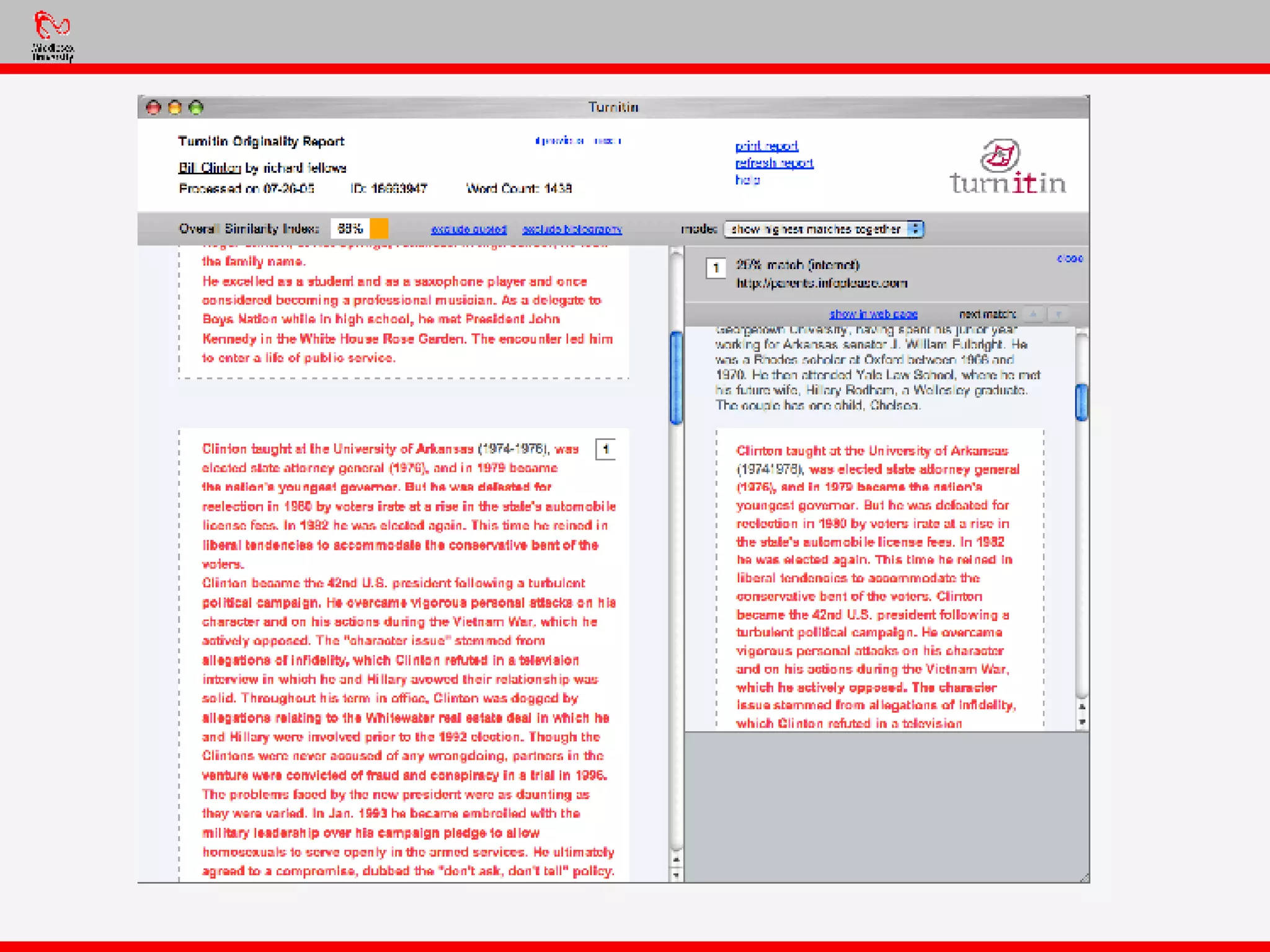
Turnitin A massive database: 4.5 billion publicly accessible internet sites 40 million pages updated daily 15 million previously submitted assignments Sources: All publications on the Proquest database All universities in New Zealand, Australia; most universities in the UK, US Many other international universities, colleges and further and higher education institutions Books and other publications
 
 
Summary You must cite and show the sources of your knowledge Citing makes you a true scholar, whose work is based on reliable evidence  Not citing will make you fail your course Don’t rely on popular sources, and remember to evaluate how credible your source is! Never plagiarise!

Induction2007 Plagiarism

  • 1.
    Citing, Referencing &Plagiarism An introduction to correct academic writing
  • 2.
    “ Standing onthe shoulder of giants” Source: Wikipedia
  • 3.
    Overview Understanding academicwriting Citing, paraphrasing and quoting References- why? Types of references Referencing styles Plagiarism
  • 4.
    Academic Writing Demonstrateyour reading & critical analysis Give arguments supporting your hypothesis Provide an overview over previous research Give factual background information, e.g. market data Demonstrate your understanding of the topic area = Showing scholarship !
  • 5.
    Scholarship High levelof learning Demonstration of critical understanding Mastering of knowledge Developing abstract theoretical and practical knowledge Contributing to the body of knowledge
  • 6.
    How to getto knowledge Popular sources: - books - magazines & newspapers - internet NOT normally used for academic purposes: Not peer reviewed Often one-sided Frequently no clear methodology or basis for claims made Sources often not given = lack of possible follow up Credibility is often VERY low
  • 7.
    Peer reviewed Academic Academic 1 Academic 2 Editor Publication
  • 8.
    Peer reviewed JournalsHighly credible (“double blind” review) Refereed by other leading academics Anonymous refereeing and feedback Feedback “improvement loop” Always includes sources and methodological data, limitations Offers avenues for future research Often a bit boring,… and never sensationalist
  • 9.
    How to getit? Printed journals - available in the LRC - a bit tedious - easy to browse Electronic sources - Athens authenticated sources - available 24 hours - download and read later - keyword search
  • 10.
    The “scholar loop”Research Your work Practice extract feed back: Theory Practice
  • 11.
    What will youpresent? Your work Reader reads more information further research follow up on source
  • 12.
    Two problems: Howdo you “extract” knowledge? How can the reader find and verify your knowledge? Solution: Citing & Referencing
  • 13.
    Two ways ofpresenting knowledge Paraphrasing/Citing: Saying what someone else said/wrote in your own words Quoting: Literally transcribing what someone else said/wrote But whatever you do: Reference the source!
  • 14.
    Reference Styles Variousstyles are in use All have one aim: - find the source - show that you are a true scholar - make your work more credible
  • 15.
    Author Date Mostpopular in social sciences In the text, refer to the author and date of publication (Miller, 2006) when citing or paraphrasing. But give a page number “when quoting word by word” (Miller, 2006:9) You can also say that Miller (2006) claims… to make nicer sentences
  • 16.
    Authors Use onlythe last name (e.g Miller, never James Miller ) Two authors should all be names (Miller & Smith, 2006) For more authors, use et al (Miller et al, 2006) No date is marked “n.d.” More than one citation from one author in the same year: (Miller 2005a) and (Miller 2005b) A new edition of a later edition is marked (Miller [1877] 2006)
  • 17.
    Citing Journals Miller,J (2006). The Article’s Title. Journal Name 23 (3): 120-143 Dahl, S and L Eagle (2006). Analyzing Advergames: Active Deception? Journal of Marketing Communications 11 (3): 120-131
  • 18.
    Citing Newspapers Miller,J (2006) “The Title”, Evening Standard, 18 September Evening Standard (2006), “The Title”, 18 September
  • 19.
    Citing Books Miller,J (2006): Title of Book, Place: Publisher Chapter in a Book: Miller J (2006): “Title of Chapter” in Title of Book, edited by E Jones, 120-145, London: Sage
  • 20.
    Citing Websites BBCNews (2006), “Title of the Page”, BBC, http://news.bbc.co.uk/2578.html [accessed 18.9.2006] Miller, J (n.d.) “Title of the Page”, The Blog, http://www.blog.com/123.html [accessed 18.9.2006]
  • 21.
    Plagiarism When youdon’t reference: - you are not really a scholar - you are dishonest by passing off someone else’s work as your own - you demonstrate that you don’t understand the subject - you show you can’t critically evaluate knowledge and research You should NOT be a (postgraduate) student
  • 22.
    Plagiarism definition Variousdefinitions,... but in essence: Passing off someone else’s work, whether intentionally or unintentionally, as your own for your own benefit Carroll, J. (2002): A Handbook for Deterring Plagiarism in Higher Education, Oxford: Oxford Brooks : P.S.: Can also include your own work! P.P.S: Don’t quote several paragraphs – paraphrase & reference ! P.P.P.S: Ideas are also work – so reference them!
  • 23.
    What happens ifyou get caught? Standard penalty: a The reduction of a degree by a class or division; or b Expulsion from the University, which incorporates failure of any and all assessment taken that academic year. (Middlesex Regulations, 2004, Section F)
  • 24.
    How it “happens”Cut and paste from the internet, books, journals etc Essays from “friends” - or “friends” just taking a look The “friend” who did the course the year before... Recycling your “old” papers ... and a very special service:
  • 25.
    Buy one (and fail your degree free ) and many more,... Yes $10/page http://www.academon.co.uk/ Yes $14.95/page http://www.customresearchpapers.us/ Yes $10.55/page http://www.essaytoday.com/ Yes $136.00 http://www.research-assistance.com/ Yes $29.95 http://www.essaytown.com/ Yes £9.95/page http://www.essayrelief.co.uk/ Yes £29.95 http://www.papers4you.com/ Yes $169.00 http://essayfinder.com Yes £90 http://www.ukessays.com/ Detected? Price
  • 26.
    Turnitin A massivedatabase: 4.5 billion publicly accessible internet sites 40 million pages updated daily 15 million previously submitted assignments Sources: All publications on the Proquest database All universities in New Zealand, Australia; most universities in the UK, US Many other international universities, colleges and further and higher education institutions Books and other publications
  • 27.
  • 28.
  • 29.
    Summary You mustcite and show the sources of your knowledge Citing makes you a true scholar, whose work is based on reliable evidence Not citing will make you fail your course Don’t rely on popular sources, and remember to evaluate how credible your source is! Never plagiarise!