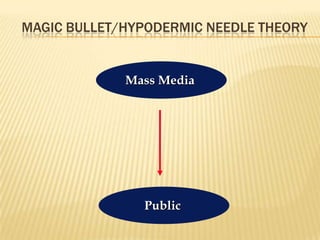
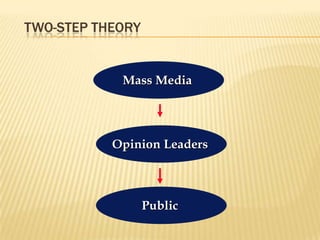
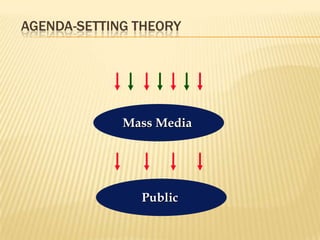
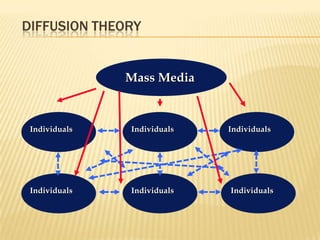
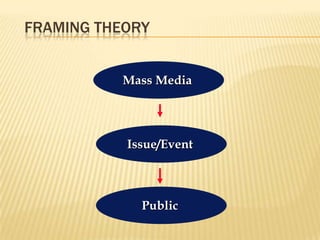
This document outlines several mass communication theories: the Magic Bullet Theory which suggests media has a direct influence on audiences; the Two-Step Theory where opinion leaders influence the public; the Agenda-Setting Theory where media tells the public what issues are important; Diffusion Theory where opinion leaders spread messages to influence the masses; and Framing Theory where how an issue is presented influences choices. It provides diagrams and brief explanations of each theory and links to additional mass communication theory resources.