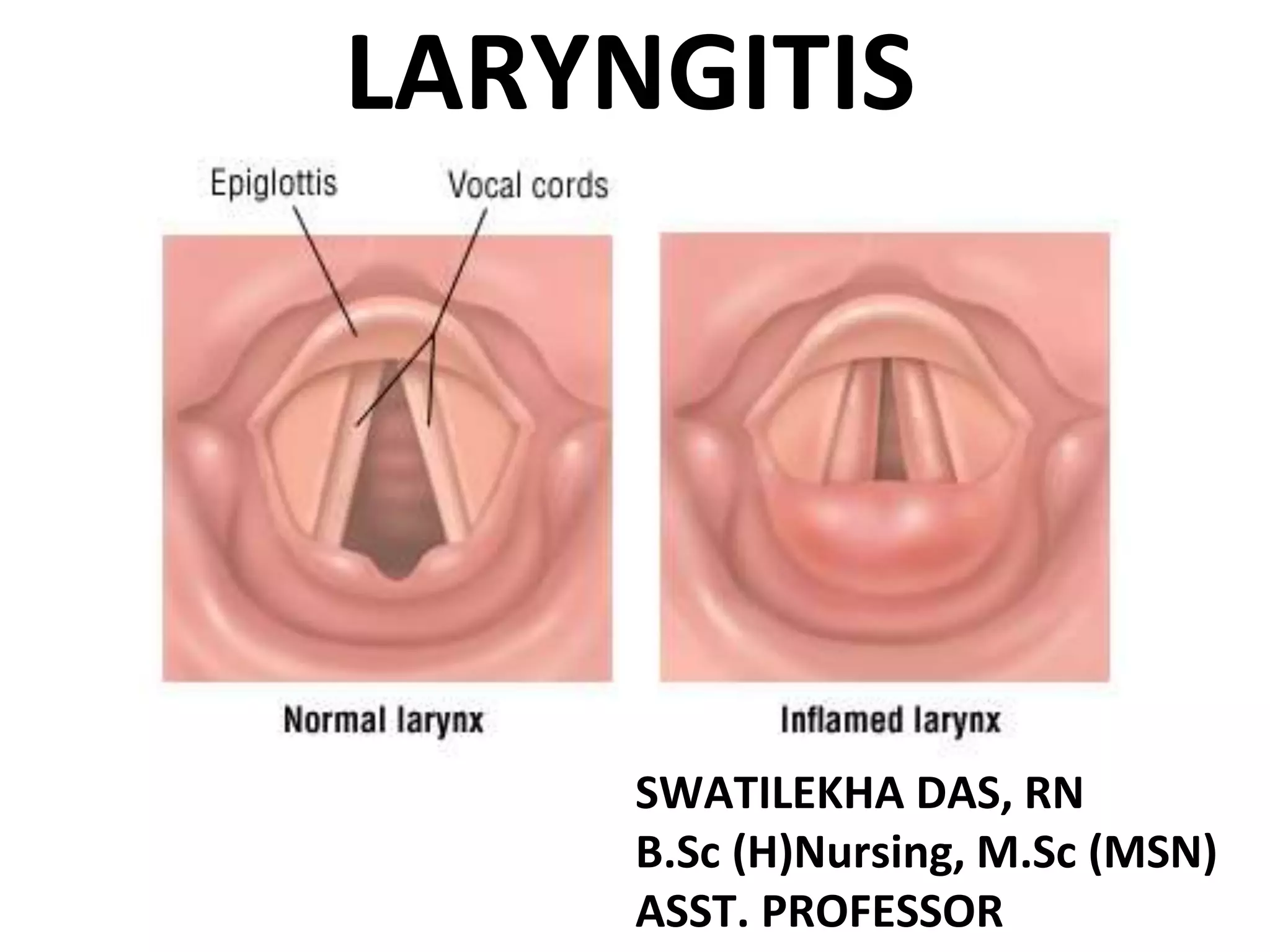
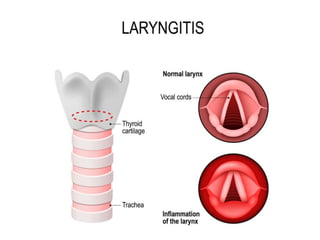

LARYNGITIS
SWATILEKHA DAS, RN
B.Sc (H)Nursing, M.Sc (MSN)
ASST. PROFESSOR
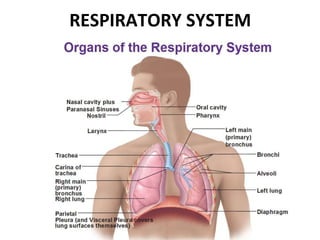
RESPIRATORY SYSTEM
DEFINITION
• an inflammation of the larynx, often
occurs as a result of voice abuse or
exposure to dust, chemicals, smoke,
and other pollutants or as part of a
URI.
CAUSES
• The most common cause is a virus, and laryngitis
is often associated with allergic rhinitis or
pharyngitis. (H.Influenza)
• Over use of voice during cold
• Bacterial invasion may be secondary. The onset of
infection may be associated with exposure to
sudden temperature changes,
deficiencies, malnutrition, or
dietary
an
immunosuppressed state.
• Viral laryngitis is common in the winter and is
easily transmitted to others.
CLINICAL FEATURES
• hoarseness or aphonia (complete loss of
voice) and severe cough.
• Chronic laryngitis is marked by persistent
hoarseness.
• Other signs of acute laryngitis include
sudden onset made worse by cold dry
wind.
• The throat feels worse in the morning
and improves when the patient is
indoors in a warmer climate.
• At times, the patient presents with a dry
cough and a dry, sore
throat that worsens in the evening hours.
• Dyspnea, fever
• If allergies are present the uvula will be
visibly edematous.
• Many patients also complain of a “tickle”
in the throat that is made
worse by cold air or cold liquids.
TREATMENT
• Resting the voice
• Avoiding irritants (including
smoking)
• Encourage fluid intake
• Inhaling cool steam or an aerosol. If the
laryngitis is part of a more extensive
respiratory infection caused by a bacterial
organism or if it is severe, appropriate
antibacterial therapy
• The majority of patients recover with
conservative treatment
• Eliminating any primary respiratory tract
infection,
• Eliminating smoking, and avoiding second hand
smoke.
• Topical corticosteroids, such as
beclomethasone, dipropionate (Vanceril)
may be given by inhalation.
• Treatment for reflux laryngitis typically involves use
of proton pump inhibitors such as omeprazole given
once daily.
THANK YOU

Laryngitis-Easy PPT for Nursing Students

  • 1.
    LARYNGITIS SWATILEKHA DAS, RN B.Sc(H)Nursing, M.Sc (MSN) ASST. PROFESSOR
  • 2.
  • 3.
    DEFINITION • an inflammationof the larynx, often occurs as a result of voice abuse or exposure to dust, chemicals, smoke, and other pollutants or as part of a URI.
  • 5.
    CAUSES • The mostcommon cause is a virus, and laryngitis is often associated with allergic rhinitis or pharyngitis. (H.Influenza) • Over use of voice during cold • Bacterial invasion may be secondary. The onset of infection may be associated with exposure to sudden temperature changes, deficiencies, malnutrition, or dietary an immunosuppressed state. • Viral laryngitis is common in the winter and is easily transmitted to others.
  • 6.
    CLINICAL FEATURES • hoarsenessor aphonia (complete loss of voice) and severe cough. • Chronic laryngitis is marked by persistent hoarseness. • Other signs of acute laryngitis include sudden onset made worse by cold dry wind. • The throat feels worse in the morning and improves when the patient is indoors in a warmer climate.
  • 7.
    • At times,the patient presents with a dry cough and a dry, sore throat that worsens in the evening hours. • Dyspnea, fever • If allergies are present the uvula will be visibly edematous. • Many patients also complain of a “tickle” in the throat that is made worse by cold air or cold liquids.
  • 8.
    TREATMENT • Resting thevoice • Avoiding irritants (including smoking) • Encourage fluid intake
  • 9.
    • Inhaling coolsteam or an aerosol. If the laryngitis is part of a more extensive respiratory infection caused by a bacterial organism or if it is severe, appropriate antibacterial therapy • The majority of patients recover with conservative treatment • Eliminating any primary respiratory tract infection,
  • 10.
    • Eliminating smoking,and avoiding second hand smoke. • Topical corticosteroids, such as beclomethasone, dipropionate (Vanceril) may be given by inhalation. • Treatment for reflux laryngitis typically involves use of proton pump inhibitors such as omeprazole given once daily.
  • 11.