DEFINITION:
• Myasthenia gravis is an autoimmune
  disorder affecting the myoneural
  junction, is characterized by varying
  degrees of weakness of the voluntary
  muscles.
CAUSES:
• In MG, the receptors at the muscle
  surface are destroyed or deformed by
  antibodies that prevent a normal
  muscular reaction from occurring.
• The causative factor is unknown, but the
  disorder may have a genetic link.
RISK FACTORS:

Risk factors for myasthenia gravis
  include:
• Female gender and age under 40 years
• Male gender and age over 60 years
• Other autoimmune disorders
Factors that can worsen myasthenia
                    gravis
•   Fatigue
•   Illness
•   Stress
•   Extreme heat
•   Some medications — such as beta
    blockers, calcium channel blockers,
    quinine and some antibiotics
PATHO PHYSIOLOGY:


    POSTER
SIGN AND SYMPTOMS:

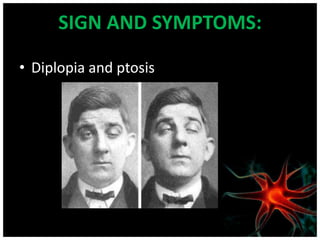
• Diplopia and ptosis
• Weakness of the muscles of the face and
  the throat, and generalized weakness.
  Weakness of the facial muscles results in
  bland facial expression.

• Laryngeal irritation causes voice
  impairment and dysphonias and
  increases the patient’s risk for choking
  and aspiration.
• Generalized weakness of all the
  extremities and the intercoastal
  muscles resulting in decreased
  respiratory capacity and vital capacity.

• Myasthenia gravis is purely a motor
  disorder with no effect on the
  sensation and coordination.
DIAGNOSTIC TEST:

• Edrophonium test:

 Injection of the chemical edrophonium
 (Tensilon) may result in a sudden,
 although temporary, improvement in
 muscle strength - an indication that
 patient may have myasthenia gravis.
Blood analysis

• A blood test may reveal the presence of
  abnormal antibodies that disrupt the
  receptor sites where nerve impulses
  signal muscles to move.
Ice Pack Test

• Cooling may improve
  neuromuscular transmission. In a
  patient with myasthenia gravis who
  has ptosis, placing ice over an
  eyelid will lead to cooling of the lid,
  which leads to improvement of the
  ptosis.
• Repetitive nerve stimulation

• Pulmonary function tests
MEDICAL MANAGEMENT:

• Cholinesterase inhibitors.
• Corticosteroids
• Immunosuppressant


Plasmapheresis
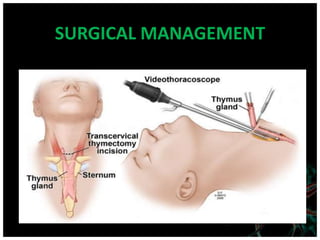
SURGICAL MANAGEMENT
DIETARY MANAGEMENT
• Reduce protein intake to 10 percent of
  total calories; replace animal protein as
  much as possible with plant protein
• Eliminate milk and milk products
  (substitute other calcium sources).
• Eat more fruits and vegetables (make
  sure that they are organically grown).
• Eliminate polyunsaturated vegetable
  oils, margarine, vegetable shortening, all
  partially hydrogenated oils, and all foods
  (such as deep-fried foods) that might
  contain trans-fatty acids. Use extra-virgin
  olive oil as your main fat.

• Take ginger.
NURSING MANAGEMENT
• Ineffective breathing pattern related to
  intercoastal muscle weakness

• Impaired verbal communication related
  to weakness of the larynx ,lips, mouth,
  paharynx and jaw
• Impaired physical mobility related to
  voluntary muscle weakness

• Risk for aspiration related to weakness of
  the bulbar muscles

• Disturbed sensory perception related to
  ptosis,and decreased eye movements.
ASSIGNMENT


Write down Nursing Care plan of patient
        with Myasthenia Gravis.
BIBLIOGRAPHY
Myasthenia gravis

Myasthenia gravis

  • 3.
    DEFINITION: • Myasthenia gravisis an autoimmune disorder affecting the myoneural junction, is characterized by varying degrees of weakness of the voluntary muscles.
  • 4.
    CAUSES: • In MG,the receptors at the muscle surface are destroyed or deformed by antibodies that prevent a normal muscular reaction from occurring. • The causative factor is unknown, but the disorder may have a genetic link.
  • 5.
    RISK FACTORS: Risk factorsfor myasthenia gravis include: • Female gender and age under 40 years • Male gender and age over 60 years • Other autoimmune disorders
  • 6.
    Factors that canworsen myasthenia gravis • Fatigue • Illness • Stress • Extreme heat • Some medications — such as beta blockers, calcium channel blockers, quinine and some antibiotics
  • 7.
  • 8.
    SIGN AND SYMPTOMS: •Diplopia and ptosis
  • 9.
    • Weakness ofthe muscles of the face and the throat, and generalized weakness. Weakness of the facial muscles results in bland facial expression. • Laryngeal irritation causes voice impairment and dysphonias and increases the patient’s risk for choking and aspiration.
  • 10.
    • Generalized weaknessof all the extremities and the intercoastal muscles resulting in decreased respiratory capacity and vital capacity. • Myasthenia gravis is purely a motor disorder with no effect on the sensation and coordination.
  • 11.
    DIAGNOSTIC TEST: • Edrophoniumtest: Injection of the chemical edrophonium (Tensilon) may result in a sudden, although temporary, improvement in muscle strength - an indication that patient may have myasthenia gravis.
  • 12.
    Blood analysis • Ablood test may reveal the presence of abnormal antibodies that disrupt the receptor sites where nerve impulses signal muscles to move.
  • 13.
    Ice Pack Test •Cooling may improve neuromuscular transmission. In a patient with myasthenia gravis who has ptosis, placing ice over an eyelid will lead to cooling of the lid, which leads to improvement of the ptosis.
  • 14.
    • Repetitive nervestimulation • Pulmonary function tests
  • 15.
    MEDICAL MANAGEMENT: • Cholinesteraseinhibitors. • Corticosteroids • Immunosuppressant Plasmapheresis
  • 16.
  • 17.
    DIETARY MANAGEMENT • Reduceprotein intake to 10 percent of total calories; replace animal protein as much as possible with plant protein • Eliminate milk and milk products (substitute other calcium sources). • Eat more fruits and vegetables (make sure that they are organically grown).
  • 18.
    • Eliminate polyunsaturatedvegetable oils, margarine, vegetable shortening, all partially hydrogenated oils, and all foods (such as deep-fried foods) that might contain trans-fatty acids. Use extra-virgin olive oil as your main fat. • Take ginger.
  • 19.
    NURSING MANAGEMENT • Ineffectivebreathing pattern related to intercoastal muscle weakness • Impaired verbal communication related to weakness of the larynx ,lips, mouth, paharynx and jaw
  • 20.
    • Impaired physicalmobility related to voluntary muscle weakness • Risk for aspiration related to weakness of the bulbar muscles • Disturbed sensory perception related to ptosis,and decreased eye movements.
  • 22.
    ASSIGNMENT Write down NursingCare plan of patient with Myasthenia Gravis.
  • 24.