HOD& ASSOCIATE PROFESSOR
VNS COLLEGE OF NURSING
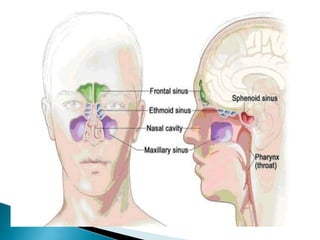
Paranasal sinuses are a group of 4 paired air
filled spaces that surround the nasal cavity.
 Frontal sinus
 Ethmoid sinus
 Sphenoid sinus
 Maxillary sinus
 They reduce the weight of the skull and they
humidify the inspired air.
 Sinusitis is an inflammation of the mucus
membrane of the Paranasal sinuses.
 Pansinusitis is infection of more than one
sinus.
 Rhinosinusitis is referred to as an
inflammatory disease of the nose or sinuses.
ON THE BASIS OF
LOCATION
1. Frontal sinusitis
2. Ethmoid Sinusitis
3. Maxillary sinusitis
4. Sphenoid sinusitis
ON THE BASIS OFDURATION
Acute sinusitis( infection
lasts up to 4 weeks)
Sub-acute sinusitis (
lasts between 4 -12
weeks)
Chronic sinusitis( more
than 12 weeks)
Re-current acute
bacterial sinusitis
 BACTERIOLOGY: Streptococcus pneumoniae,
Haemophilus influenza, Moraxella catarrhalis,
Streptococcus pyogenes, Satphylococcus
aureus, Klebsiella pneumoniae.
 VIRAL INFECTION: 90% of sinusitis occurs
due to Rhinovirus, Coronavirus
 Pollutants: Chemical/irritants may trigger the
build of mucus (e.g. pollens, dust etc.)
• Nasal infections: Viral rhinitis followed by bacterial
invasion.
• Swimming and diving: infected water enters sinuses
through ostium.
• Trauma: Compound fractures or penetrating injuries.
• Dental infections.
REDISPOSING CAUSES :
LOCAL: Obstruction to sinus ventilation and drainage (
DNS, polyp, neoplasms, edema of ostium).
 Stasis of secretions in nasal cavity ( Cystic fibrosis
,enlarged adenoids, choanal atresia)
 Previous histories of sinusitis.
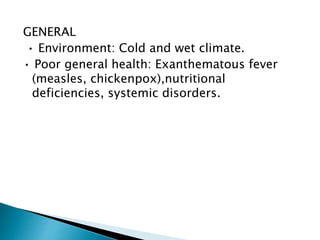
GENERAL
• Environment: Cold and wet climate.
• Poor general health: Exanthematous fever
(measles, chickenpox),nutritional
deficiencies, systemic disorders.
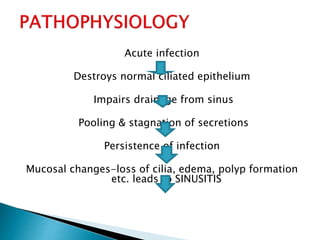
Acute infection
Destroys normal ciliated epithelium
Impairs drainage from sinus
Pooling & stagnation of secretions
Persistence of infection
Mucosal changes-loss of cilia, edema, polyp formation
etc. leads to SINUSITIS
 Maxillary sinusitis: Pain in the upper jaw.
 Frontal Sinusitis: Pain in the forehead.
 Ethmoid sinusitis: Pain over nasal bridge.
 Sphenoid sinusitis: Pain over the occiput or
vertex.
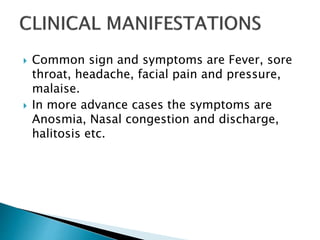
 Common sign and symptoms are Fever, sore
throat, headache, facial pain and pressure,
malaise.
 In more advance cases the symptoms are
Anosmia, Nasal congestion and discharge,
halitosis etc.
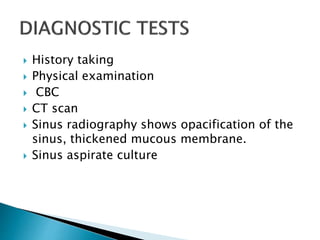
 History taking
 Physical examination
 CBC
 CT scan
 Sinus radiography shows opacification of the
sinus, thickened mucous membrane.
 Sinus aspirate culture
 Treatment depends on the how long
condition lasts. Most acute cases resolves
without treatment
 In most of the sinusitis antibiotics are not
recommended because viral causes
 Symptomatic treatment is given to the
patient
 Sinusitis develops as a complication of a viral
infection of Upper respiratory tract
 In most cases, any rhinoviral illness improves
within 7-10 days
 Therefore, a bacterial sinusitis requires the
persistence of symptoms for longer than 10 days
 A 7-10 days of watchful waiting before
antibiotics are prescribed which is reasonable,
since symptoms in most patients resolved
without the use of antibiotics
 Treatment of symptoms with
ANALGESICS, ANTIPYRETICS
 DECONGESTANTS (Xylometazoline nasal
drops. These are used to reduce nasal edema
& are preferred as initial strategy for
management)
 ANTIHISTAMINES
 Mucolytic agents
 Steam inhalation
 Pseudoephedrine and Phenylephrine can be used
for 10 to 14 days. These drugs allow the
restoration of normal mucocilliary function and
drainage
Conditions required action before 7 days:-
 Fever>100 degree F
 Upper tooth ache
 Severe symptoms
 Known anatomical blockage (e.g. nasal polyps,
DNS, recurrent sinusitis) need immediate
treatment
ANTIBIOTICS
 1ST LINE: AMOXICILLIN (45 mg/kg/day)
AMOXYCLAV 625 mg(Amoxycillin 500 mg +
clavulanic acid 125 mg) in patients not
responding to amoxicillin in <72 hours.
 2ND LINE: MACROLIDE(Azithromycin,
Clarithromycin) FLUOROQUINOLONE
(Levofloxacin, Ofloxacin, Moxyfloxacin)
Cefdinir, Cefuroxime, Cefpodoxime
 Functional Endoscopic sinus surgery
 External spheno ethmoidectomy
 Nasal antrostomy
 Caldwell –Luk procedure
 Pansinusitis
 Middle ear infection
 Pharyngitis, Laryngitis and tracheo-
bronchitis Perorbital and orbital cellulitis
 Osteomyelitis of the axilla
 Aggravation of asthma
 Mucocele or pyocele

Sinusitis

  • 1.
    HOD& ASSOCIATE PROFESSOR VNSCOLLEGE OF NURSING
  • 2.
    Paranasal sinuses area group of 4 paired air filled spaces that surround the nasal cavity.  Frontal sinus  Ethmoid sinus  Sphenoid sinus  Maxillary sinus  They reduce the weight of the skull and they humidify the inspired air.
  • 4.
     Sinusitis isan inflammation of the mucus membrane of the Paranasal sinuses.  Pansinusitis is infection of more than one sinus.  Rhinosinusitis is referred to as an inflammatory disease of the nose or sinuses.
  • 6.
    ON THE BASISOF LOCATION 1. Frontal sinusitis 2. Ethmoid Sinusitis 3. Maxillary sinusitis 4. Sphenoid sinusitis ON THE BASIS OFDURATION Acute sinusitis( infection lasts up to 4 weeks) Sub-acute sinusitis ( lasts between 4 -12 weeks) Chronic sinusitis( more than 12 weeks) Re-current acute bacterial sinusitis
  • 7.
     BACTERIOLOGY: Streptococcuspneumoniae, Haemophilus influenza, Moraxella catarrhalis, Streptococcus pyogenes, Satphylococcus aureus, Klebsiella pneumoniae.  VIRAL INFECTION: 90% of sinusitis occurs due to Rhinovirus, Coronavirus  Pollutants: Chemical/irritants may trigger the build of mucus (e.g. pollens, dust etc.)
  • 8.
    • Nasal infections:Viral rhinitis followed by bacterial invasion. • Swimming and diving: infected water enters sinuses through ostium. • Trauma: Compound fractures or penetrating injuries. • Dental infections. REDISPOSING CAUSES : LOCAL: Obstruction to sinus ventilation and drainage ( DNS, polyp, neoplasms, edema of ostium).  Stasis of secretions in nasal cavity ( Cystic fibrosis ,enlarged adenoids, choanal atresia)  Previous histories of sinusitis.
  • 9.
    GENERAL • Environment: Coldand wet climate. • Poor general health: Exanthematous fever (measles, chickenpox),nutritional deficiencies, systemic disorders.
  • 10.
    Acute infection Destroys normalciliated epithelium Impairs drainage from sinus Pooling & stagnation of secretions Persistence of infection Mucosal changes-loss of cilia, edema, polyp formation etc. leads to SINUSITIS
  • 11.
     Maxillary sinusitis:Pain in the upper jaw.  Frontal Sinusitis: Pain in the forehead.  Ethmoid sinusitis: Pain over nasal bridge.  Sphenoid sinusitis: Pain over the occiput or vertex.
  • 12.
     Common signand symptoms are Fever, sore throat, headache, facial pain and pressure, malaise.  In more advance cases the symptoms are Anosmia, Nasal congestion and discharge, halitosis etc.
  • 13.
     History taking Physical examination  CBC  CT scan  Sinus radiography shows opacification of the sinus, thickened mucous membrane.  Sinus aspirate culture
  • 14.
     Treatment dependson the how long condition lasts. Most acute cases resolves without treatment  In most of the sinusitis antibiotics are not recommended because viral causes  Symptomatic treatment is given to the patient
  • 15.
     Sinusitis developsas a complication of a viral infection of Upper respiratory tract  In most cases, any rhinoviral illness improves within 7-10 days  Therefore, a bacterial sinusitis requires the persistence of symptoms for longer than 10 days  A 7-10 days of watchful waiting before antibiotics are prescribed which is reasonable, since symptoms in most patients resolved without the use of antibiotics
  • 16.
     Treatment ofsymptoms with ANALGESICS, ANTIPYRETICS  DECONGESTANTS (Xylometazoline nasal drops. These are used to reduce nasal edema & are preferred as initial strategy for management)  ANTIHISTAMINES
  • 17.
     Mucolytic agents Steam inhalation  Pseudoephedrine and Phenylephrine can be used for 10 to 14 days. These drugs allow the restoration of normal mucocilliary function and drainage Conditions required action before 7 days:-  Fever>100 degree F  Upper tooth ache  Severe symptoms  Known anatomical blockage (e.g. nasal polyps, DNS, recurrent sinusitis) need immediate treatment
  • 18.
    ANTIBIOTICS  1ST LINE:AMOXICILLIN (45 mg/kg/day) AMOXYCLAV 625 mg(Amoxycillin 500 mg + clavulanic acid 125 mg) in patients not responding to amoxicillin in <72 hours.  2ND LINE: MACROLIDE(Azithromycin, Clarithromycin) FLUOROQUINOLONE (Levofloxacin, Ofloxacin, Moxyfloxacin) Cefdinir, Cefuroxime, Cefpodoxime
  • 19.
     Functional Endoscopicsinus surgery  External spheno ethmoidectomy  Nasal antrostomy  Caldwell –Luk procedure
  • 20.
     Pansinusitis  Middleear infection  Pharyngitis, Laryngitis and tracheo- bronchitis Perorbital and orbital cellulitis  Osteomyelitis of the axilla  Aggravation of asthma  Mucocele or pyocele