RATHEESH R.L
1
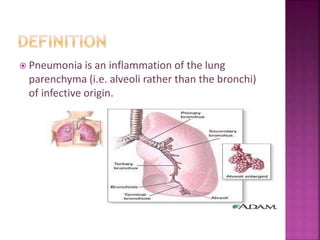
 Pneumonia is an inflammation of the lung
parenchyma (i.e. alveoli rather than the bronchi)
of infective origin.
 It is the most common infectious cause of death.
 It is usually characterized by consolidation.
 Consolidation is a pathological process in which the
alveoli are filled with a mixture of inflammatory
exudate, bacteria & WBC
12/12/2011Pneumonia 3
 Occurs throughout the year
 Results from different etiological
agents varying with the seasons
 Occurs in persons of all ages
 Clinical manifestations severe in very
young, elderly & in chronically ill
patients
12/12/2011Pneumonia 4
 Bacteria : Streptococcus pneumoniae, Legionella
pneumophila, Chlamydophila pneumoniae,
Staphylococcus aureus, Moraxella catarrhalis,
Streptococcus pyogenes, Neisseria meningitidis,
Klebsiella pneumoniae, and Haemophilus influenzae ,
Pneumocystis jiroveci .
 Viruses : Influenza virus, Adenoviruses, Rhinovirus
 Other infectious agents, such as fungi : Pneumocystis
carini
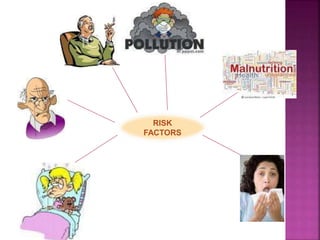
RISK
FACTORS
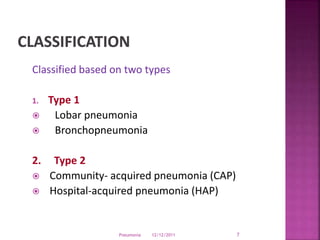
Classified based on two types
1. Type 1
 Lobar pneumonia
 Bronchopneumonia
2. Type 2
 Community- acquired pneumonia (CAP)
 Hospital-acquired pneumonia (HAP)
12/12/2011Pneumonia 7
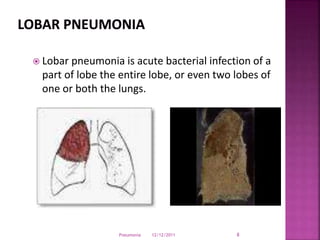
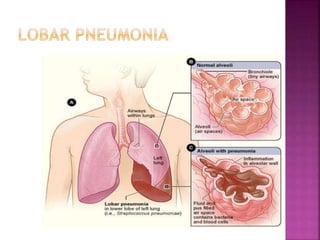
 Lobar pneumonia is acute bacterial infection of a
part of lobe the entire lobe, or even two lobes of
one or both the lungs.
12/12/2011Pneumonia 8
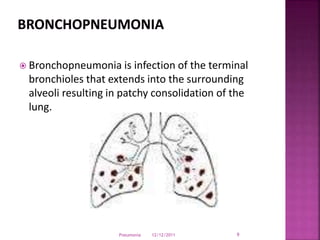
 Bronchopneumonia is infection of the terminal
bronchioles that extends into the surrounding
alveoli resulting in patchy consolidation of the
lung.
12/12/2011Pneumonia 9
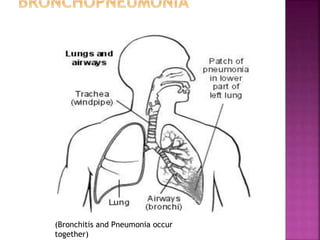
(Bronchitis and Pneumonia occur
together)
 It includes 4 stages
1. congestion
2. red hepatization
3. gray hepatization
4. resolution
 After the pneumococcus organism reaches
the alveoli, there is an outpouring of fluids
into alveoli.
 The organism multiplies in the serous fluid
and infection spreads
 The massive dialation of the capillaries and
alveoli that are filled with this organism,
neutrophils, RBC, and fibrin.
 The lung appears red and granular, similar to
that of liver which is why the process is
called hepatization.
 Blood flow decreases and leukocytes and
fibrin consolidate in the affected part of
lung.
 Complete resolution and healing occurs if
there is no complications.
 The exudates become lysed and is processed
by macrophages.
 The normal lung tissue is restored and the
persons gas exchange ability returns to
normal.
 High fever, Shaking Chills
 Shortness of breath (Dyspnoea)
 Increased breathing rate
 Chest pain when you breathe deeply or cough
 Dusky or purplish skin colour (cyanosis) from poorly
oxygenated blood
 Fatigue and muscle aches
 Nausea, vomiting or diarrhoea
 Cough, particularly cough productive of sputum
12/12/2011
Pneumonia 18
Lobarpneumonia
Consolidation
confined to
one or more
lobes (or
segments of
lobes) of
lungs.
12/12/2011Pneumonia 19
Bronchopneumonia
•Patchy
consolidation
usually in the
bases of both
lungs.
Pneumonia which develops in an otherwise healthy
person outside of hospital or have been in
hospital for less than 48hrs
12/12/2011Pneumonia 20
Pneumonia that was not incubating upon admission
developing in a patient hospitalized for greater
than 48 hrs.
12/12/2011Pneumonia 21
 Bacteria in the bloodstream (bacteremia)
 Lung abscess.
 Build up of fluid in the space between the lung and
chest wall (pleural effusion).
 Difficulty breathing.
 Shock and respiratory failure
 Septic arthritis
 Endocarditis
 Don't smoke.
 Practice good hygiene.
 Stay rested and fit.
 Wearing surgical masks by the sick may also prevent illness.
 Appropriately treating underlying illnesses (such as HIV/AIDS,
diabetes mellitus, and malnutrition) can decrease the risk of
pneumonia.
 Get a Pneumonia Vaccination.
 Pneumococcal conjugate vaccine (Prevnar):
For children less than 2 years of age or between two
and four years with certain medical conditions.
 Pneumococcal polysaccharide vaccine
(Pneumovax) :
Adults who are at increased risk of developing
pneumococcal pneumonia, such as the elderly,
diabetics, those with chronic heart, lung, or kidney
disease, alcoholics, smokers, and those without a
spleen.
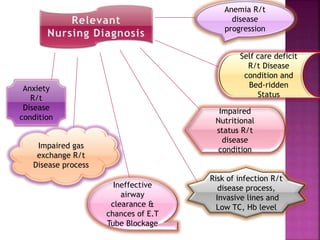
Anemia R/t
disease
progression
Ineffective
airway
clearance &
chances of E.T
Tube Blockage
Self care deficit
R/t Disease
condition and
Bed-ridden
Status
Impaired
Nutritional
status R/t
disease
condition
Risk of infection R/t
disease process,
Invasive lines and
Low TC, Hb level
Anxiety
R/t
Disease
condition
Impaired gas
exchange R/t
Disease process
Pneumonia

Pneumonia

  • 1.
  • 2.
     Pneumonia isan inflammation of the lung parenchyma (i.e. alveoli rather than the bronchi) of infective origin.
  • 3.
     It isthe most common infectious cause of death.  It is usually characterized by consolidation.  Consolidation is a pathological process in which the alveoli are filled with a mixture of inflammatory exudate, bacteria & WBC 12/12/2011Pneumonia 3
  • 4.
     Occurs throughoutthe year  Results from different etiological agents varying with the seasons  Occurs in persons of all ages  Clinical manifestations severe in very young, elderly & in chronically ill patients 12/12/2011Pneumonia 4
  • 5.
     Bacteria :Streptococcus pneumoniae, Legionella pneumophila, Chlamydophila pneumoniae, Staphylococcus aureus, Moraxella catarrhalis, Streptococcus pyogenes, Neisseria meningitidis, Klebsiella pneumoniae, and Haemophilus influenzae , Pneumocystis jiroveci .  Viruses : Influenza virus, Adenoviruses, Rhinovirus  Other infectious agents, such as fungi : Pneumocystis carini
  • 6.
  • 7.
    Classified based ontwo types 1. Type 1  Lobar pneumonia  Bronchopneumonia 2. Type 2  Community- acquired pneumonia (CAP)  Hospital-acquired pneumonia (HAP) 12/12/2011Pneumonia 7
  • 8.
     Lobar pneumoniais acute bacterial infection of a part of lobe the entire lobe, or even two lobes of one or both the lungs. 12/12/2011Pneumonia 8
  • 9.
     Bronchopneumonia isinfection of the terminal bronchioles that extends into the surrounding alveoli resulting in patchy consolidation of the lung. 12/12/2011Pneumonia 9
  • 11.
  • 12.
     It includes4 stages 1. congestion 2. red hepatization 3. gray hepatization 4. resolution
  • 13.
     After thepneumococcus organism reaches the alveoli, there is an outpouring of fluids into alveoli.  The organism multiplies in the serous fluid and infection spreads
  • 14.
     The massivedialation of the capillaries and alveoli that are filled with this organism, neutrophils, RBC, and fibrin.  The lung appears red and granular, similar to that of liver which is why the process is called hepatization.
  • 15.
     Blood flowdecreases and leukocytes and fibrin consolidate in the affected part of lung.
  • 16.
     Complete resolutionand healing occurs if there is no complications.  The exudates become lysed and is processed by macrophages.  The normal lung tissue is restored and the persons gas exchange ability returns to normal.
  • 17.
     High fever,Shaking Chills  Shortness of breath (Dyspnoea)  Increased breathing rate  Chest pain when you breathe deeply or cough  Dusky or purplish skin colour (cyanosis) from poorly oxygenated blood  Fatigue and muscle aches  Nausea, vomiting or diarrhoea  Cough, particularly cough productive of sputum
  • 18.
    12/12/2011 Pneumonia 18 Lobarpneumonia Consolidation confined to oneor more lobes (or segments of lobes) of lungs.
  • 19.
  • 20.
    Pneumonia which developsin an otherwise healthy person outside of hospital or have been in hospital for less than 48hrs 12/12/2011Pneumonia 20
  • 21.
    Pneumonia that wasnot incubating upon admission developing in a patient hospitalized for greater than 48 hrs. 12/12/2011Pneumonia 21
  • 22.
     Bacteria inthe bloodstream (bacteremia)  Lung abscess.  Build up of fluid in the space between the lung and chest wall (pleural effusion).  Difficulty breathing.  Shock and respiratory failure  Septic arthritis  Endocarditis
  • 23.
     Don't smoke. Practice good hygiene.  Stay rested and fit.  Wearing surgical masks by the sick may also prevent illness.  Appropriately treating underlying illnesses (such as HIV/AIDS, diabetes mellitus, and malnutrition) can decrease the risk of pneumonia.  Get a Pneumonia Vaccination.
  • 24.
     Pneumococcal conjugatevaccine (Prevnar): For children less than 2 years of age or between two and four years with certain medical conditions.  Pneumococcal polysaccharide vaccine (Pneumovax) : Adults who are at increased risk of developing pneumococcal pneumonia, such as the elderly, diabetics, those with chronic heart, lung, or kidney disease, alcoholics, smokers, and those without a spleen.
  • 25.
    Anemia R/t disease progression Ineffective airway clearance & chancesof E.T Tube Blockage Self care deficit R/t Disease condition and Bed-ridden Status Impaired Nutritional status R/t disease condition Risk of infection R/t disease process, Invasive lines and Low TC, Hb level Anxiety R/t Disease condition Impaired gas exchange R/t Disease process