
Pulmonary T.B Pneumonia Lung Abscess Influenza  Presenter: Shahina Amiry Sr. Instructor AKUSON
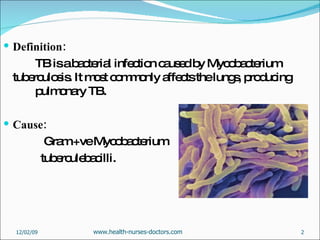
Definition: TB is a bacterial infection caused by Mycobacterium tuberculosis. It most commonly affects the lungs, producing  pulmonary TB. Cause:   Gram +ve Mycobacterium  tuberculebacilli.  06/07/09 www.health-nurses-doctors.com
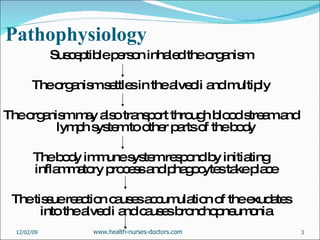
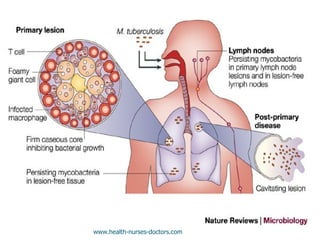
Pathophysiology Susceptible person inhaled the organism The organism settles in the alveoli and multiply The organism may also transport through blood stream and lymph system to other parts of the body The body immune system respond by initiating inflammatory process and phagocytes take place The tissue reaction causes accumulation of the exudates into the alveoli and causes bronchopneumonia 06/07/09 www.health-nurses-doctors.com
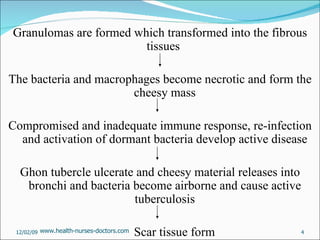
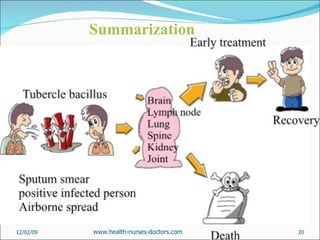
Granulomas are formed which transformed into the fibrous tissues  The bacteria and macrophages become necrotic and form the cheesy mass Compromised and inadequate immune response, re-infection and activation of dormant bacteria develop active disease Ghon tubercle ulcerate and cheesy material releases into bronchi and bacteria become airborne and cause active tuberculosis Scar tissue form  06/07/09 www.health-nurses-doctors.com
06/07/09 www.health-nurses-doctors.com
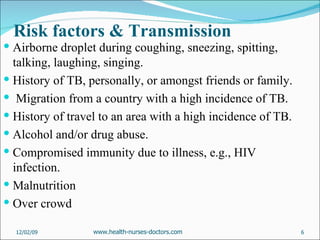
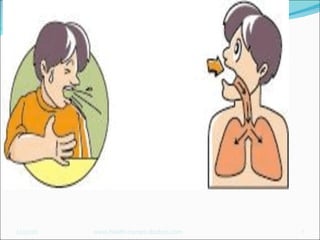
Risk factors & Transmission Airborne droplet during coughing, sneezing, spitting, talking, laughing, singing.  History of TB, personally, or amongst friends or family. Migration from a country with a high incidence of TB. History of travel to an area with a high incidence of TB. Alcohol and/or drug abuse. Compromised immunity due to illness, e.g., HIV infection. Malnutrition  Over crowd 06/07/09 www.health-nurses-doctors.com
06/07/09 www.health-nurses-doctors.com
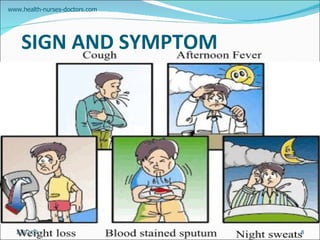
SIGN AND SYMPTOM 06/07/09 www.health-nurses-doctors.com
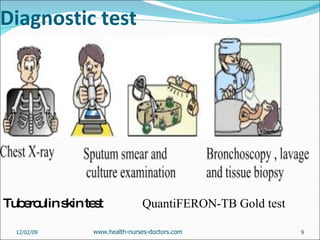
Diagnostic test Tuberculin skin test  QuantiFERON-TB Gold test 06/07/09 www.health-nurses-doctors.com
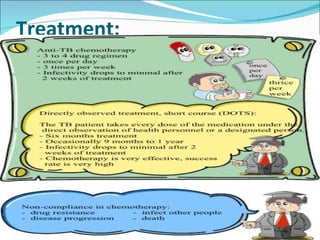
Treatment: 06/07/09
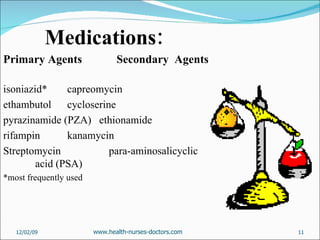
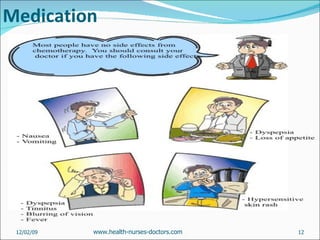
Medications:  Primary Agents  Secondary  Agents  isoniazid* capreomycin ethambutol cycloserine pyrazinamide (PZA) ethionamide rifampin kanamycin Streptomycin  para-aminosalicyclic  acid (PSA) *most frequently used 06/07/09 www.health-nurses-doctors.com
Side Effects of Medication 06/07/09 www.health-nurses-doctors.com
NURSING PRIORITIES 1.  Achieve/maintain adequate ventilation/oxygenation. 2. Prevent spread of infection. 3. Support behaviors/tasks to maintain health. 4. Promote effective coping strategies. 5. Provide information about disease process/prognosis and  treatment needs. 06/07/09 www.health-nurses-doctors.com
Diagnosis: Infection, risk for spread/reactivation Airway Clearance, ineffective  Nutrition: imbalanced, less than body requirment Knowledge, deficient regarding condition, treatment, prevention, self-care, and discharge needs 06/07/09 www.health-nurses-doctors.com
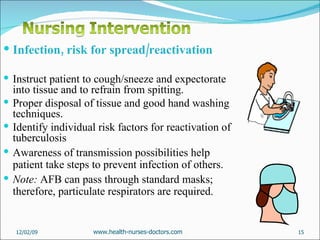
Infection, risk for spread/reactivation Instruct patient to cough/sneeze and expectorate into tissue and to refrain from spitting.  Proper disposal of tissue and good hand washing techniques.  Identify individual risk factors for reactivation of tuberculosis  Awareness of transmission possibilities help patient take steps to prevent infection of others. Note:  AFB can pass through standard masks; therefore, particulate respirators are required.  06/07/09 www.health-nurses-doctors.com
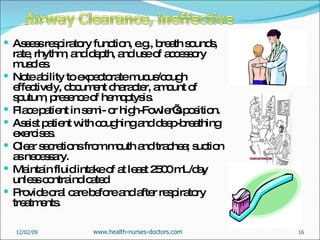
Assess respiratory function, e.g., breath sounds, rate, rhythm, and depth, and use of accessory muscles. Note ability to expectorate mucus/cough effectively, document character, amount of sputum, presence of hemoptysis. Place patient in semi- or high-Fowler’s position.  Assist patient with coughing and deep-breathing exercises. Clear secretions from mouth and trachea; suction as necessary. Maintain fluid intake of at least 2500 mL/day unless contraindicated  Provide oral care before and after respiratory treatments. 06/07/09 www.health-nurses-doctors.com
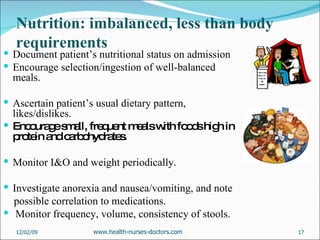
Nutrition: imbalanced, less than body requirements Document patient’s nutritional status on admission Encourage selection/ingestion of well-balanced meals. Ascertain patient’s usual dietary pattern, likes/dislikes. Encourage small, frequent meals with foods high in protein and carbohydrates. Monitor I&O and weight periodically. Investigate anorexia and nausea/vomiting, and note possible correlation to medications. Monitor frequency, volume, consistency of stools. 06/07/09 www.health-nurses-doctors.com
Compliance with multidrug regimens for prolonged periods is difficult, so directly observed therapy (DOT) should be considered. Aids in monitoring the effects of medications and patient’s response to therapy. Monitor laboratory studies, e.g., sputum smear results; Liver function studies, e. g., AST/ALT. 06/07/09 www.health-nurses-doctors.com
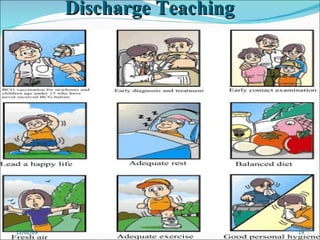
Discharge Teaching  06/07/09
06/07/09 Summarization  www.health-nurses-doctors.com
06/07/09 www.health-nurses-doctors.com
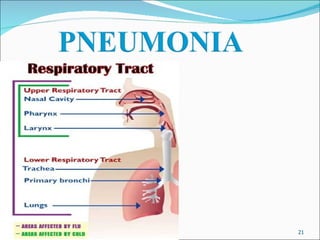
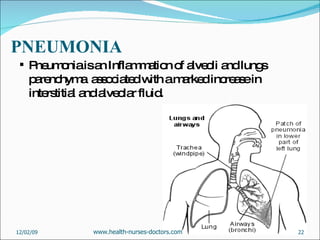
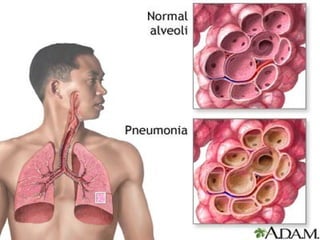
PNEUMONIA Pneumonia is an Inflammation of alveoli and lungs parenchyma  associated with a marked increase in interstitial and alveolar fluid.  06/07/09 www.health-nurses-doctors.com
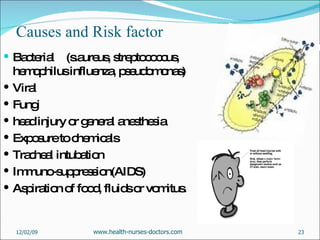
Causes and Risk factor Bacterial  (s.aureus, streptococcus, hemophilus influenza, pseudomonas) Viral Fungi head injury or general anesthesia  Exposure to chemicals  Tracheal intubation Immuno-suppression(AIDS) Aspiration of food, fluids or vomitus. 06/07/09 www.health-nurses-doctors.com
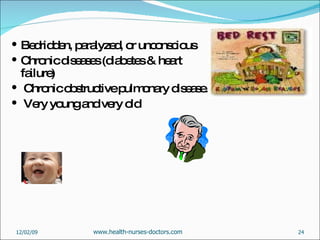
Bedridden, paralyzed, or unconscious Chronic diseases (diabetes & heart failure)  Chronic obstructive pulmonary disease. Very young and very old  06/07/09 www.health-nurses-doctors.com
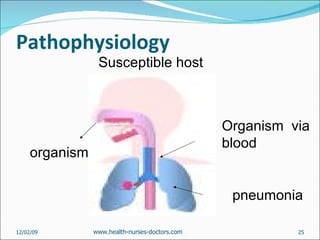
Pathophysiology organism Susceptible host pneumonia Organism  via blood 06/07/09 www.health-nurses-doctors.com
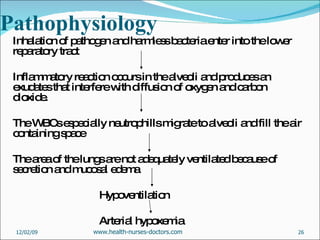
Pathophysiology Inhalation of pathogen and harmless bacteria enter into the lower reparatory tract  Inflammatory reaction occurs in the alveoli and produces an exudates that interfere with diffusion of oxygen and carbon dioxide. The WBCs especially neutrophills migrate to alveoli and fill the air containing space The area of the lungs are not adequately ventilated because of secretion and mucosal edema Hypoventilation  Arterial hypoxemia 06/07/09 www.health-nurses-doctors.com
06/07/09 www.health-nurses-doctors.com
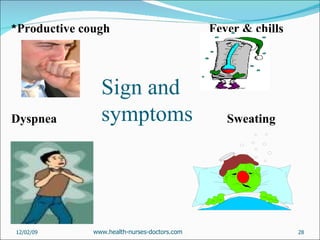
Sign and symptoms * Productive cough  Fever & chills Dyspnea  Sweating  06/07/09 www.health-nurses-doctors.com
Less common sign & symptoms  Fatigue Rapid breathing and heart beat  hemoptysis Chest pain Nausea, vomiting, and muscle aches Loss of appetite 06/07/09 www.health-nurses-doctors.com
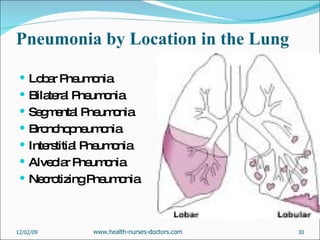
Pneumonia by Location in the Lung Lobar Pneumonia Bilateral Pneumonia Segmental Pneumonia Bronchopneumonia Interstitial Pneumonia Alveolar Pneumonia Necrotizing Pneumonia 06/07/09 www.health-nurses-doctors.com
Pneumonia by Origin of Infection  Community-Acquired Pneumonia (CAP): Most common causes of bacterial CAP is  Streptococcus pneumonia   Hospital-Acquired Pneumonia.  Staphylococcus aureus  Aspiration Pneumonia  06/07/09 www.health-nurses-doctors.com
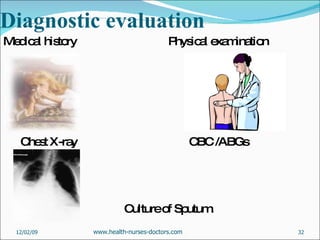
Diagnostic evaluation Medical history  Physical examination Chest X-ray  CBC /ABGs Culture of Sputum. 06/07/09 www.health-nurses-doctors.com
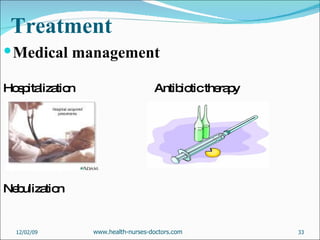
Treatment Medical management Hospitalization  Antibiotic therapy Nebulization 06/07/09 www.health-nurses-doctors.com
Nursing Process Assessment: History Physical examination 06/07/09 www.health-nurses-doctors.com
Nursing Diagnosis Ineffective airway clearance related to copious tracheobronchial secretions. Impaired Gas Exchange related to altered oxygen-carrying capacity of blood  Activity intolerance relate to Imbalance between oxygen supply and demand. Altered nutrition less than body requirement  06/07/09 www.health-nurses-doctors.com
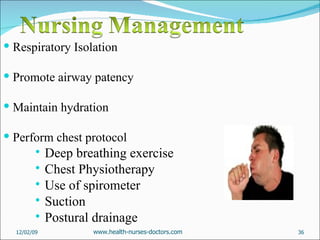
Respiratory Isolation  Promote airway patency Maintain hydration Perform chest protocol Deep breathing exercise Chest Physiotherapy Use of spirometer Suction Postural drainage 06/07/09 www.health-nurses-doctors.com
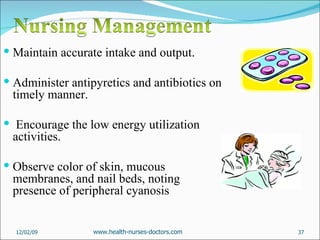
Maintain accurate intake and output. Administer antipyretics and antibiotics on timely manner. Encourage the low energy utilization activities. Observe color of skin, mucous membranes, and nail beds, noting presence of peripheral cyanosis  06/07/09 www.health-nurses-doctors.com
  Instruct Parents on Discharge About medication administration Increase fluids intake Humidified air Signs and symptoms of respiratory  distress Postural drainage techniques Follow care Complications 06/07/09 www.health-nurses-doctors.com
06/07/09 www.health-nurses-doctors.com
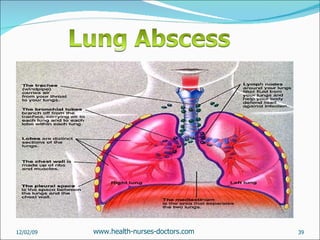
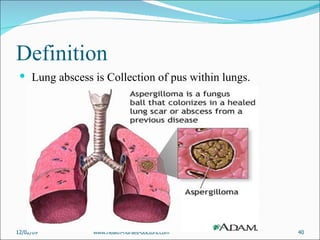
Definition Lung abscess is Collection of pus within lungs. 06/07/09 www.health-nurses-doctors.com
CAUSES Bacteria  Fungi Commonest cause is aspiration Unconscious or very drowsy because of sedation, anesthesia, alcohol or drug abuse, or a disease of the nervous system (CVA). 06/07/09 www.health-nurses-doctors.com
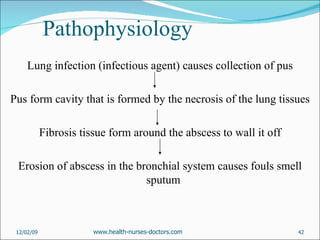
Pathophysiology Lung infection (infectious agent) causes collection of pus Pus form cavity that is formed by the necrosis of the lung tissues Fibrosis tissue form around the abscess to wall it off Erosion of abscess in the bronchial system causes fouls smell sputum  06/07/09 www.health-nurses-doctors.com
Sign And symptoms Chills Fever Foul smell cough Shivering  Night sweat Purulent sputum 06/07/09 www.health-nurses-doctors.com
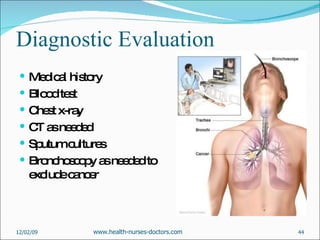
Diagnostic Evaluation Medical history  Blood test  Chest x-ray CT as needed Sputum cultures  Bronchoscopy as needed to exclude cancer 06/07/09 www.health-nurses-doctors.com
Management Antibiotics (penicillin, cephalosporin) Oxygen may be given to patients who are having trouble breathing.  Drainage or aspiration of abscess through bronchoscopy. Pulmonary resection (lobectomy) very rare  06/07/09 www.health-nurses-doctors.com
Nursing Management Emphasize on compliance Teach coughing exercise  Chest physiotherapy Frequent mouth care Provide adequate rest, good nutrition and increase fluid intake High protein high caloric diet. 06/07/09 www.health-nurses-doctors.com
INFLUENZA
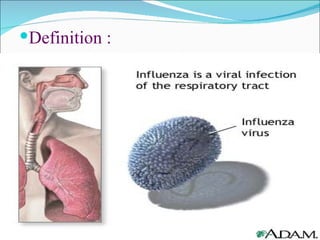
Definition : 06/07/09 www.health-nurses-doctors.com
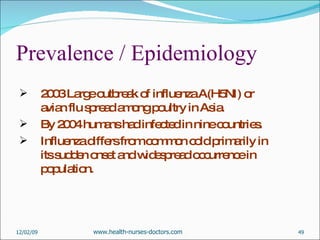
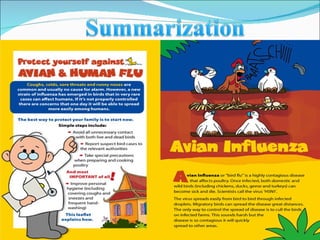
Prevalence / Epidemiology   2003 Large outbreak of influenza A(H5NI) or avian flu spread among poultry in Asia. By 2004 humans had infected in nine countries. Influenza differs from common cold primarily in its sudden onset and widespread occurrence in population.  06/07/09 www.health-nurses-doctors.com
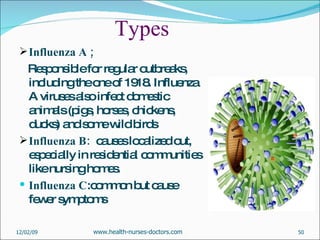
Types   Influenza A ; Responsible for regular outbreaks, including the one of 1918. Influenza A viruses also infect domestic animals (pigs, horses, chickens, ducks) and some wild birds Influenza B:  causes localized out, especially in residential communities like nursing homes.  Influenza C :common but cause fewer symptoms 06/07/09 www.health-nurses-doctors.com
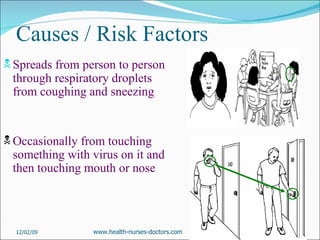
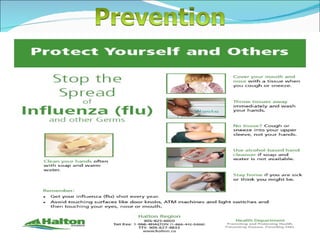
Causes / Risk Factors Spreads from person to person through respiratory droplets from coughing and sneezing Occasionally from touching something with virus on it and then touching mouth or nose 06/07/09 www.health-nurses-doctors.com
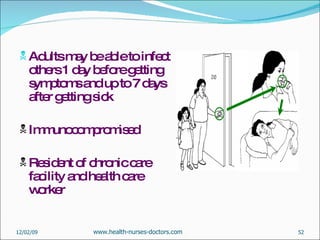
Adults may be able to infect others 1 day before getting symptoms and up to 7 days after getting sick Immunocompromised Resident of chronic care facility and health care worker 06/07/09 www.health-nurses-doctors.com
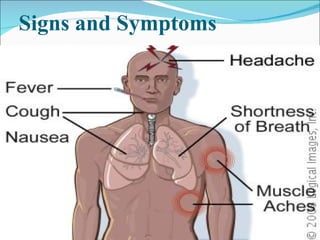
Signs and Symptoms 06/07/09 www.health-nurses-doctors.com
Diagnostic Evaluation CBC, CXR Throat swab for culture 06/07/09 www.health-nurses-doctors.com
Management Interventions are based on manifestation as they arise.  Vaccination (70-90 effective) must be given in mid October Antiviral drugs  Antibiotics Anti-pyretic 06/07/09 www.health-nurses-doctors.com
Nursing Management Highly contagious disease* Respiratory isolation Promote Rest Adequate Hydration Promote  airway patency (chest Protocol) Assess for high risk from complications of the flu such as people 65 years or older, people with chronic medical conditions, pregnant women and young children. 06/07/09 www.health-nurses-doctors.com
06/07/09 www.health-nurses-doctors.com

Infectious Dirorder

  • 1.
    Pulmonary T.B PneumoniaLung Abscess Influenza Presenter: Shahina Amiry Sr. Instructor AKUSON
  • 2.
    Definition: TB isa bacterial infection caused by Mycobacterium tuberculosis. It most commonly affects the lungs, producing pulmonary TB. Cause: Gram +ve Mycobacterium tuberculebacilli. 06/07/09 www.health-nurses-doctors.com
  • 3.
    Pathophysiology Susceptible personinhaled the organism The organism settles in the alveoli and multiply The organism may also transport through blood stream and lymph system to other parts of the body The body immune system respond by initiating inflammatory process and phagocytes take place The tissue reaction causes accumulation of the exudates into the alveoli and causes bronchopneumonia 06/07/09 www.health-nurses-doctors.com
  • 4.
    Granulomas are formedwhich transformed into the fibrous tissues The bacteria and macrophages become necrotic and form the cheesy mass Compromised and inadequate immune response, re-infection and activation of dormant bacteria develop active disease Ghon tubercle ulcerate and cheesy material releases into bronchi and bacteria become airborne and cause active tuberculosis Scar tissue form 06/07/09 www.health-nurses-doctors.com
  • 5.
  • 6.
    Risk factors &Transmission Airborne droplet during coughing, sneezing, spitting, talking, laughing, singing. History of TB, personally, or amongst friends or family. Migration from a country with a high incidence of TB. History of travel to an area with a high incidence of TB. Alcohol and/or drug abuse. Compromised immunity due to illness, e.g., HIV infection. Malnutrition Over crowd 06/07/09 www.health-nurses-doctors.com
  • 7.
  • 8.
    SIGN AND SYMPTOM06/07/09 www.health-nurses-doctors.com
  • 9.
    Diagnostic test Tuberculinskin test QuantiFERON-TB Gold test 06/07/09 www.health-nurses-doctors.com
  • 10.
  • 11.
    Medications: PrimaryAgents Secondary Agents isoniazid* capreomycin ethambutol cycloserine pyrazinamide (PZA) ethionamide rifampin kanamycin Streptomycin para-aminosalicyclic acid (PSA) *most frequently used 06/07/09 www.health-nurses-doctors.com
  • 12.
    Side Effects ofMedication 06/07/09 www.health-nurses-doctors.com
  • 13.
    NURSING PRIORITIES 1. Achieve/maintain adequate ventilation/oxygenation. 2. Prevent spread of infection. 3. Support behaviors/tasks to maintain health. 4. Promote effective coping strategies. 5. Provide information about disease process/prognosis and treatment needs. 06/07/09 www.health-nurses-doctors.com
  • 14.
    Diagnosis: Infection, riskfor spread/reactivation Airway Clearance, ineffective Nutrition: imbalanced, less than body requirment Knowledge, deficient regarding condition, treatment, prevention, self-care, and discharge needs 06/07/09 www.health-nurses-doctors.com
  • 15.
    Infection, risk forspread/reactivation Instruct patient to cough/sneeze and expectorate into tissue and to refrain from spitting. Proper disposal of tissue and good hand washing techniques. Identify individual risk factors for reactivation of tuberculosis Awareness of transmission possibilities help patient take steps to prevent infection of others. Note: AFB can pass through standard masks; therefore, particulate respirators are required. 06/07/09 www.health-nurses-doctors.com
  • 16.
    Assess respiratory function,e.g., breath sounds, rate, rhythm, and depth, and use of accessory muscles. Note ability to expectorate mucus/cough effectively, document character, amount of sputum, presence of hemoptysis. Place patient in semi- or high-Fowler’s position. Assist patient with coughing and deep-breathing exercises. Clear secretions from mouth and trachea; suction as necessary. Maintain fluid intake of at least 2500 mL/day unless contraindicated Provide oral care before and after respiratory treatments. 06/07/09 www.health-nurses-doctors.com
  • 17.
    Nutrition: imbalanced, lessthan body requirements Document patient’s nutritional status on admission Encourage selection/ingestion of well-balanced meals. Ascertain patient’s usual dietary pattern, likes/dislikes. Encourage small, frequent meals with foods high in protein and carbohydrates. Monitor I&O and weight periodically. Investigate anorexia and nausea/vomiting, and note possible correlation to medications. Monitor frequency, volume, consistency of stools. 06/07/09 www.health-nurses-doctors.com
  • 18.
    Compliance with multidrugregimens for prolonged periods is difficult, so directly observed therapy (DOT) should be considered. Aids in monitoring the effects of medications and patient’s response to therapy. Monitor laboratory studies, e.g., sputum smear results; Liver function studies, e. g., AST/ALT. 06/07/09 www.health-nurses-doctors.com
  • 19.
  • 20.
    06/07/09 Summarization www.health-nurses-doctors.com
  • 21.
  • 22.
    PNEUMONIA Pneumonia isan Inflammation of alveoli and lungs parenchyma associated with a marked increase in interstitial and alveolar fluid. 06/07/09 www.health-nurses-doctors.com
  • 23.
    Causes and Riskfactor Bacterial (s.aureus, streptococcus, hemophilus influenza, pseudomonas) Viral Fungi head injury or general anesthesia Exposure to chemicals Tracheal intubation Immuno-suppression(AIDS) Aspiration of food, fluids or vomitus. 06/07/09 www.health-nurses-doctors.com
  • 24.
    Bedridden, paralyzed, orunconscious Chronic diseases (diabetes & heart failure) Chronic obstructive pulmonary disease. Very young and very old 06/07/09 www.health-nurses-doctors.com
  • 25.
    Pathophysiology organism Susceptiblehost pneumonia Organism via blood 06/07/09 www.health-nurses-doctors.com
  • 26.
    Pathophysiology Inhalation ofpathogen and harmless bacteria enter into the lower reparatory tract Inflammatory reaction occurs in the alveoli and produces an exudates that interfere with diffusion of oxygen and carbon dioxide. The WBCs especially neutrophills migrate to alveoli and fill the air containing space The area of the lungs are not adequately ventilated because of secretion and mucosal edema Hypoventilation Arterial hypoxemia 06/07/09 www.health-nurses-doctors.com
  • 27.
  • 28.
    Sign and symptoms* Productive cough Fever & chills Dyspnea Sweating 06/07/09 www.health-nurses-doctors.com
  • 29.
    Less common sign& symptoms Fatigue Rapid breathing and heart beat hemoptysis Chest pain Nausea, vomiting, and muscle aches Loss of appetite 06/07/09 www.health-nurses-doctors.com
  • 30.
    Pneumonia by Locationin the Lung Lobar Pneumonia Bilateral Pneumonia Segmental Pneumonia Bronchopneumonia Interstitial Pneumonia Alveolar Pneumonia Necrotizing Pneumonia 06/07/09 www.health-nurses-doctors.com
  • 31.
    Pneumonia by Originof Infection Community-Acquired Pneumonia (CAP): Most common causes of bacterial CAP is Streptococcus pneumonia Hospital-Acquired Pneumonia. Staphylococcus aureus Aspiration Pneumonia 06/07/09 www.health-nurses-doctors.com
  • 32.
    Diagnostic evaluation Medicalhistory Physical examination Chest X-ray CBC /ABGs Culture of Sputum. 06/07/09 www.health-nurses-doctors.com
  • 33.
    Treatment Medical managementHospitalization Antibiotic therapy Nebulization 06/07/09 www.health-nurses-doctors.com
  • 34.
    Nursing Process Assessment:History Physical examination 06/07/09 www.health-nurses-doctors.com
  • 35.
    Nursing Diagnosis Ineffectiveairway clearance related to copious tracheobronchial secretions. Impaired Gas Exchange related to altered oxygen-carrying capacity of blood Activity intolerance relate to Imbalance between oxygen supply and demand. Altered nutrition less than body requirement 06/07/09 www.health-nurses-doctors.com
  • 36.
    Respiratory Isolation Promote airway patency Maintain hydration Perform chest protocol Deep breathing exercise Chest Physiotherapy Use of spirometer Suction Postural drainage 06/07/09 www.health-nurses-doctors.com
  • 37.
    Maintain accurate intakeand output. Administer antipyretics and antibiotics on timely manner. Encourage the low energy utilization activities. Observe color of skin, mucous membranes, and nail beds, noting presence of peripheral cyanosis 06/07/09 www.health-nurses-doctors.com
  • 38.
    InstructParents on Discharge About medication administration Increase fluids intake Humidified air Signs and symptoms of respiratory distress Postural drainage techniques Follow care Complications 06/07/09 www.health-nurses-doctors.com
  • 39.
  • 40.
    Definition Lung abscessis Collection of pus within lungs. 06/07/09 www.health-nurses-doctors.com
  • 41.
    CAUSES Bacteria Fungi Commonest cause is aspiration Unconscious or very drowsy because of sedation, anesthesia, alcohol or drug abuse, or a disease of the nervous system (CVA). 06/07/09 www.health-nurses-doctors.com
  • 42.
    Pathophysiology Lung infection(infectious agent) causes collection of pus Pus form cavity that is formed by the necrosis of the lung tissues Fibrosis tissue form around the abscess to wall it off Erosion of abscess in the bronchial system causes fouls smell sputum 06/07/09 www.health-nurses-doctors.com
  • 43.
    Sign And symptomsChills Fever Foul smell cough Shivering Night sweat Purulent sputum 06/07/09 www.health-nurses-doctors.com
  • 44.
    Diagnostic Evaluation Medicalhistory Blood test Chest x-ray CT as needed Sputum cultures Bronchoscopy as needed to exclude cancer 06/07/09 www.health-nurses-doctors.com
  • 45.
    Management Antibiotics (penicillin,cephalosporin) Oxygen may be given to patients who are having trouble breathing. Drainage or aspiration of abscess through bronchoscopy. Pulmonary resection (lobectomy) very rare 06/07/09 www.health-nurses-doctors.com
  • 46.
    Nursing Management Emphasizeon compliance Teach coughing exercise Chest physiotherapy Frequent mouth care Provide adequate rest, good nutrition and increase fluid intake High protein high caloric diet. 06/07/09 www.health-nurses-doctors.com
  • 47.
  • 48.
    Definition : 06/07/09www.health-nurses-doctors.com
  • 49.
    Prevalence / Epidemiology 2003 Large outbreak of influenza A(H5NI) or avian flu spread among poultry in Asia. By 2004 humans had infected in nine countries. Influenza differs from common cold primarily in its sudden onset and widespread occurrence in population. 06/07/09 www.health-nurses-doctors.com
  • 50.
    Types Influenza A ; Responsible for regular outbreaks, including the one of 1918. Influenza A viruses also infect domestic animals (pigs, horses, chickens, ducks) and some wild birds Influenza B: causes localized out, especially in residential communities like nursing homes. Influenza C :common but cause fewer symptoms 06/07/09 www.health-nurses-doctors.com
  • 51.
    Causes / RiskFactors Spreads from person to person through respiratory droplets from coughing and sneezing Occasionally from touching something with virus on it and then touching mouth or nose 06/07/09 www.health-nurses-doctors.com
  • 52.
    Adults may beable to infect others 1 day before getting symptoms and up to 7 days after getting sick Immunocompromised Resident of chronic care facility and health care worker 06/07/09 www.health-nurses-doctors.com
  • 53.
    Signs and Symptoms06/07/09 www.health-nurses-doctors.com
  • 54.
    Diagnostic Evaluation CBC,CXR Throat swab for culture 06/07/09 www.health-nurses-doctors.com
  • 55.
    Management Interventions arebased on manifestation as they arise. Vaccination (70-90 effective) must be given in mid October Antiviral drugs Antibiotics Anti-pyretic 06/07/09 www.health-nurses-doctors.com
  • 56.
    Nursing Management Highlycontagious disease* Respiratory isolation Promote Rest Adequate Hydration Promote airway patency (chest Protocol) Assess for high risk from complications of the flu such as people 65 years or older, people with chronic medical conditions, pregnant women and young children. 06/07/09 www.health-nurses-doctors.com
  • 57.
  • 58.