Merlyn A. Baraclan,
RN, RMT
 Overview on Lipids
 Lipoproteins,
Apoliporoteins &
Related Proteins
 Lipid Transport &
Lipoprotein Metabolism
 Lipid & Lipoprotein
Measurement
 The NCEP Guidelines
 Lipids, Lipoproteins &
Disease
 References
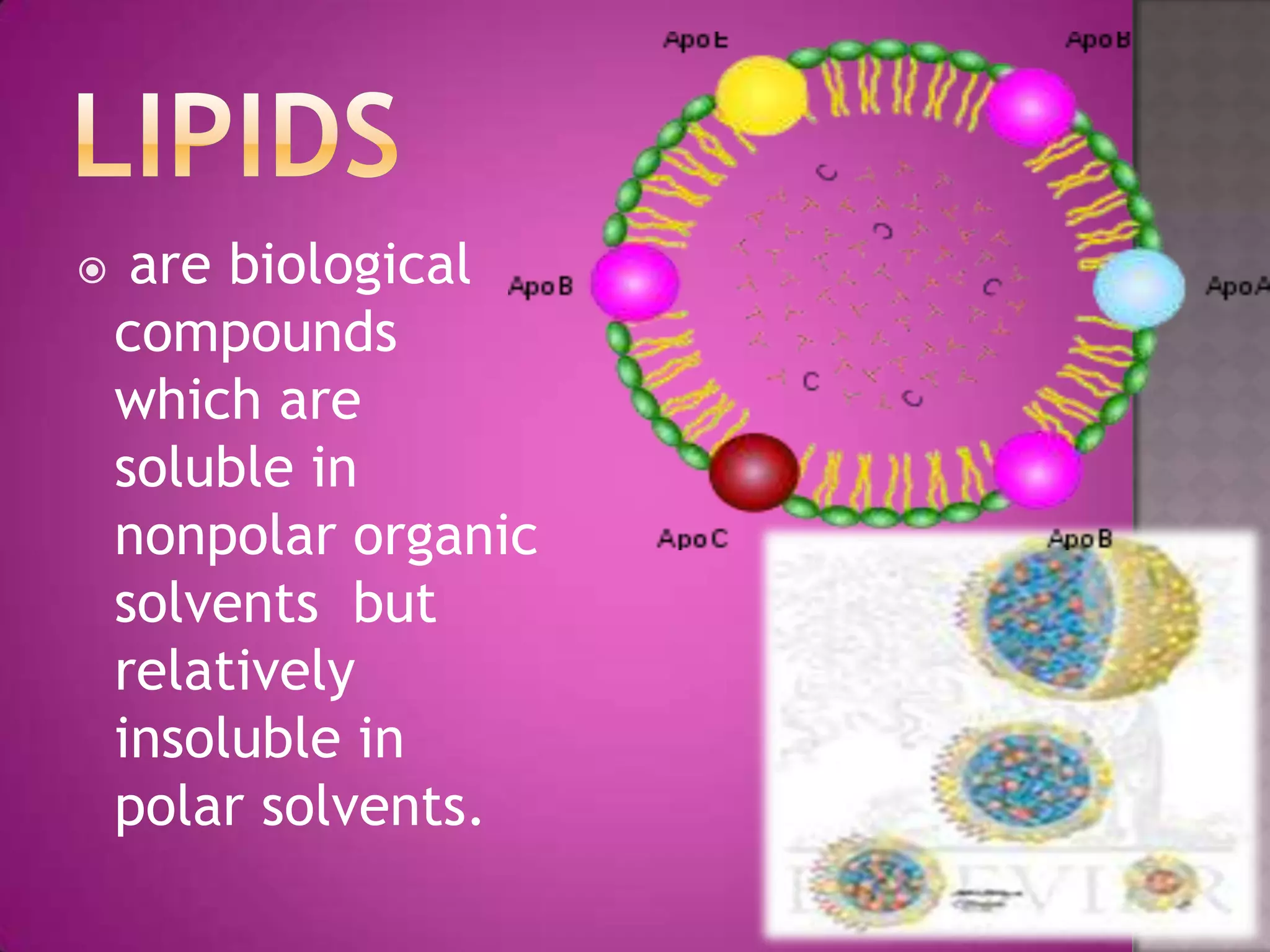
 are biological
compounds
which are
soluble in
nonpolar organic
solvents but
relatively
insoluble in
polar solvents.
Triglycerides / TAG / TG
Cholesterol / C
Phospholipids
Glycolipids
 Primary source of fuel
 Components of cell membranes & many
cell structures
 Provide stability to cell membranes
 Means of transmembrane transport
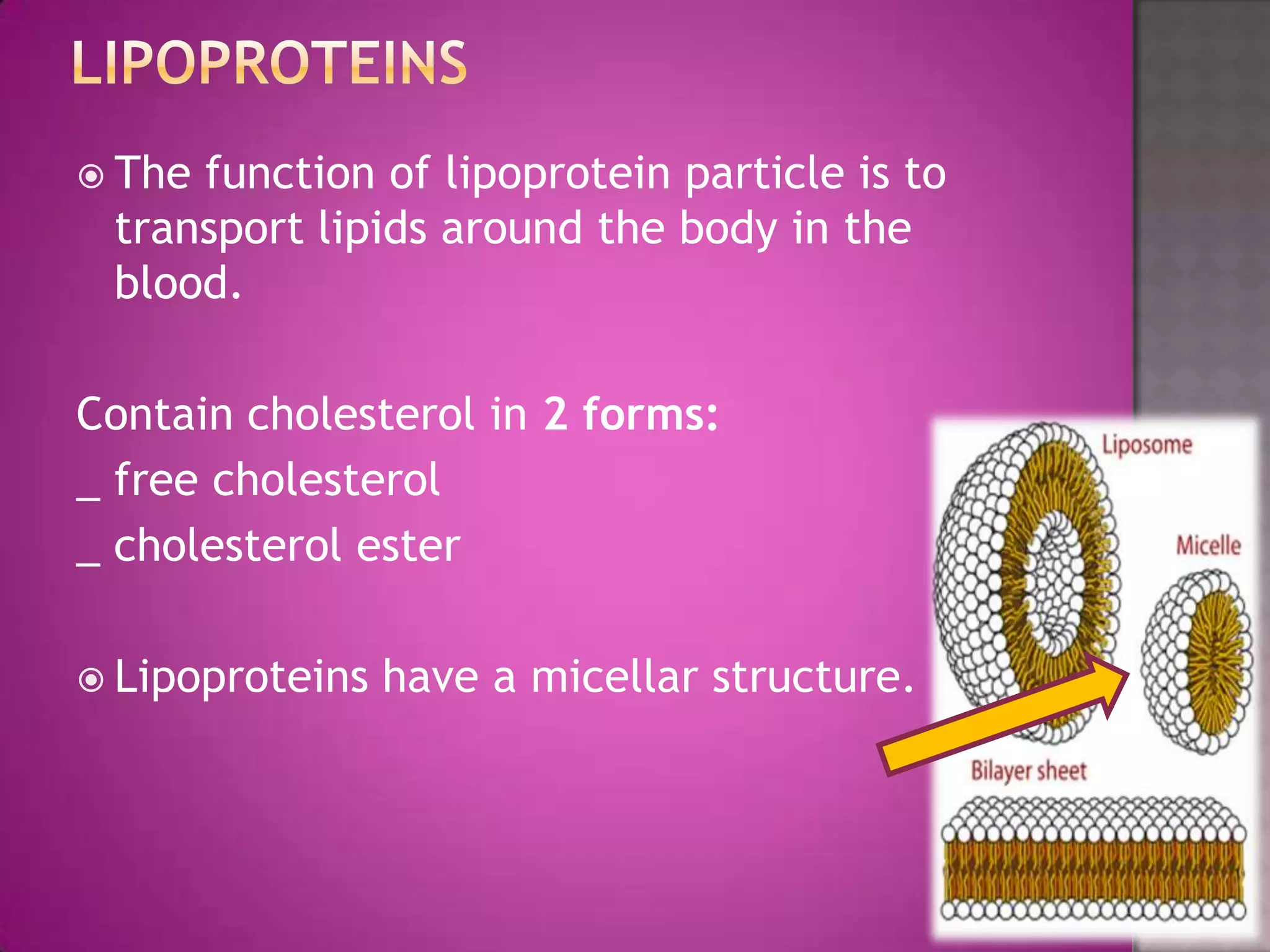
 The function of lipoprotein particle is to
transport lipids around the body in the
blood.
Contain cholesterol in 2 forms:
_ free cholesterol
_ cholesterol ester
 Lipoproteins have a micellar structure.
 The transport proteins of lipids having a
micellar structure composed of two
parts as follows:
Central core
 contains TAG and cholesterol ester
 nonpolar moiety
Surface coat
 contains PL, free cholesterol, and
apolipoproteins
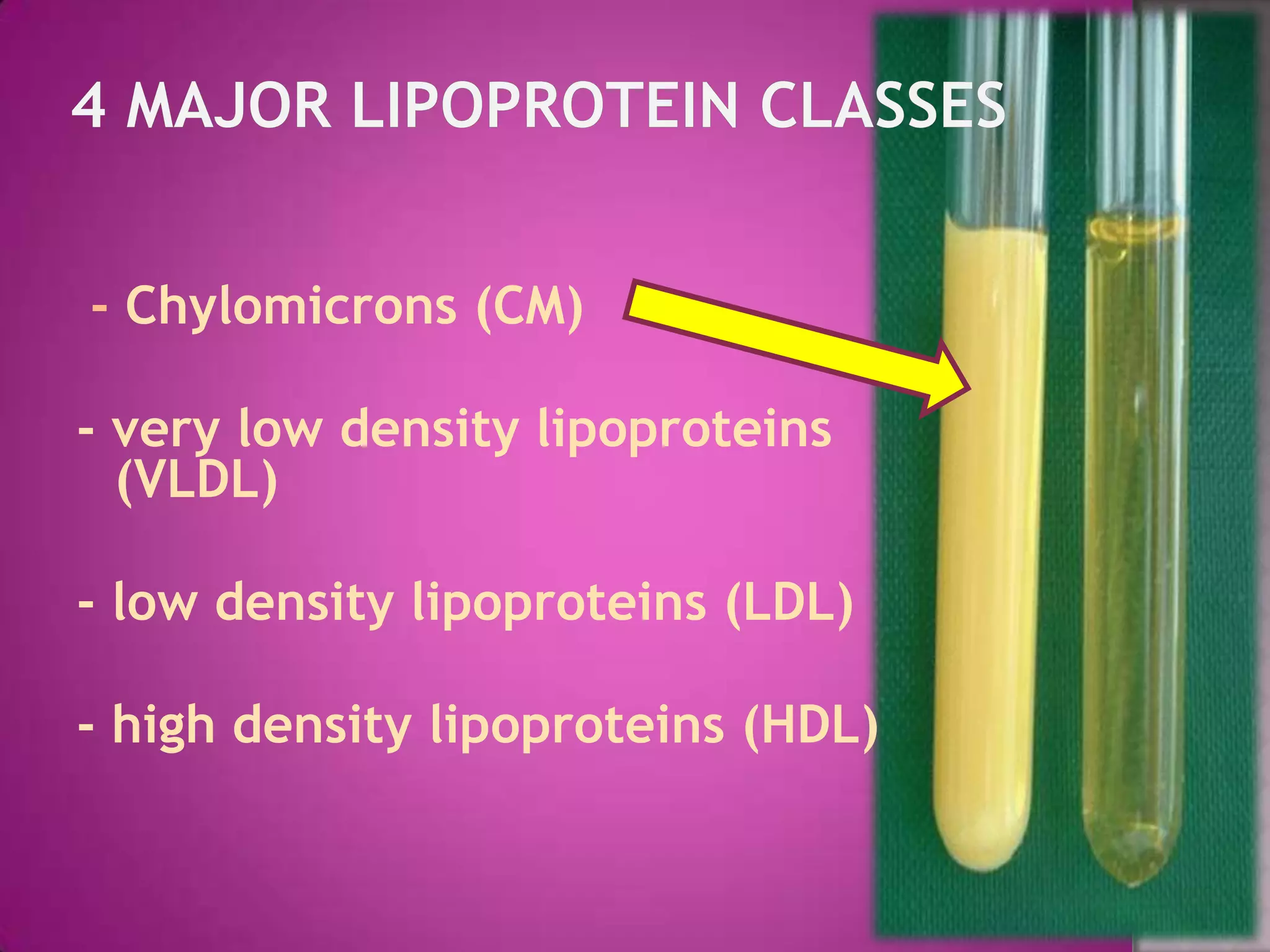
- Chylomicrons (CM)
- very low density lipoproteins
(VLDL)
- low density lipoproteins (LDL)
- high density lipoproteins (HDL)
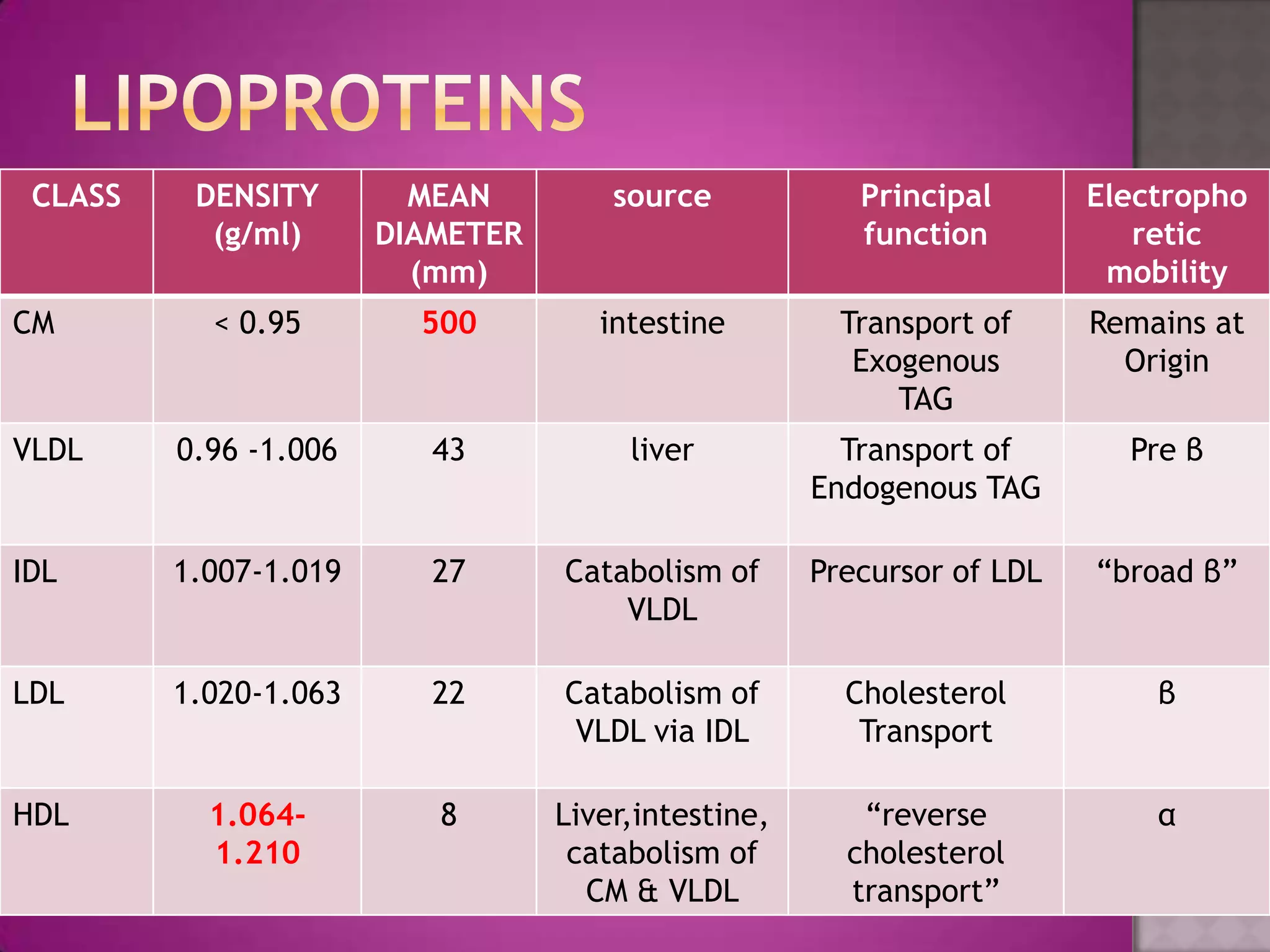
CLASS DENSITY
(g/ml)
MEAN
DIAMETER
(mm)
source Principal
function
Electropho
retic
mobility
CM < 0.95 500 intestine Transport of
Exogenous
TAG
Remains at
Origin
VLDL 0.96 -1.006 43 liver Transport of
Endogenous TAG
Pre β
IDL 1.007-1.019 27 Catabolism of
VLDL
Precursor of LDL “broad β”
LDL 1.020-1.063 22 Catabolism of
VLDL via IDL
Cholesterol
Transport
β
HDL 1.064-
1.210
8 Liver,intestine,
catabolism of
CM & VLDL
“reverse
cholesterol
transport”
α
CLASS PROTEIN
%
TAG
%
CHOLESTEROL
%
PHOSPHO
LIPID
%
Chylomicron
/ CM
1-2 85 - 95 3 -5 5 -10
VLDL 10 60 -70 10 -15 10 – 15
LDL 15 -25 5 - 10 45 20 -30
HDL 50 Very
little
20 30
 MAJOR LIPOPROTEINS
1. CHYLOMICRONS / CM
- Produced by the intestine
- Transport lipids of dietary origin
- Poor in free cholesterol
- Has a “very high lipid/protein ratio
- “milky plasma”
- “Floating creamy layer”
- Removed by the liver
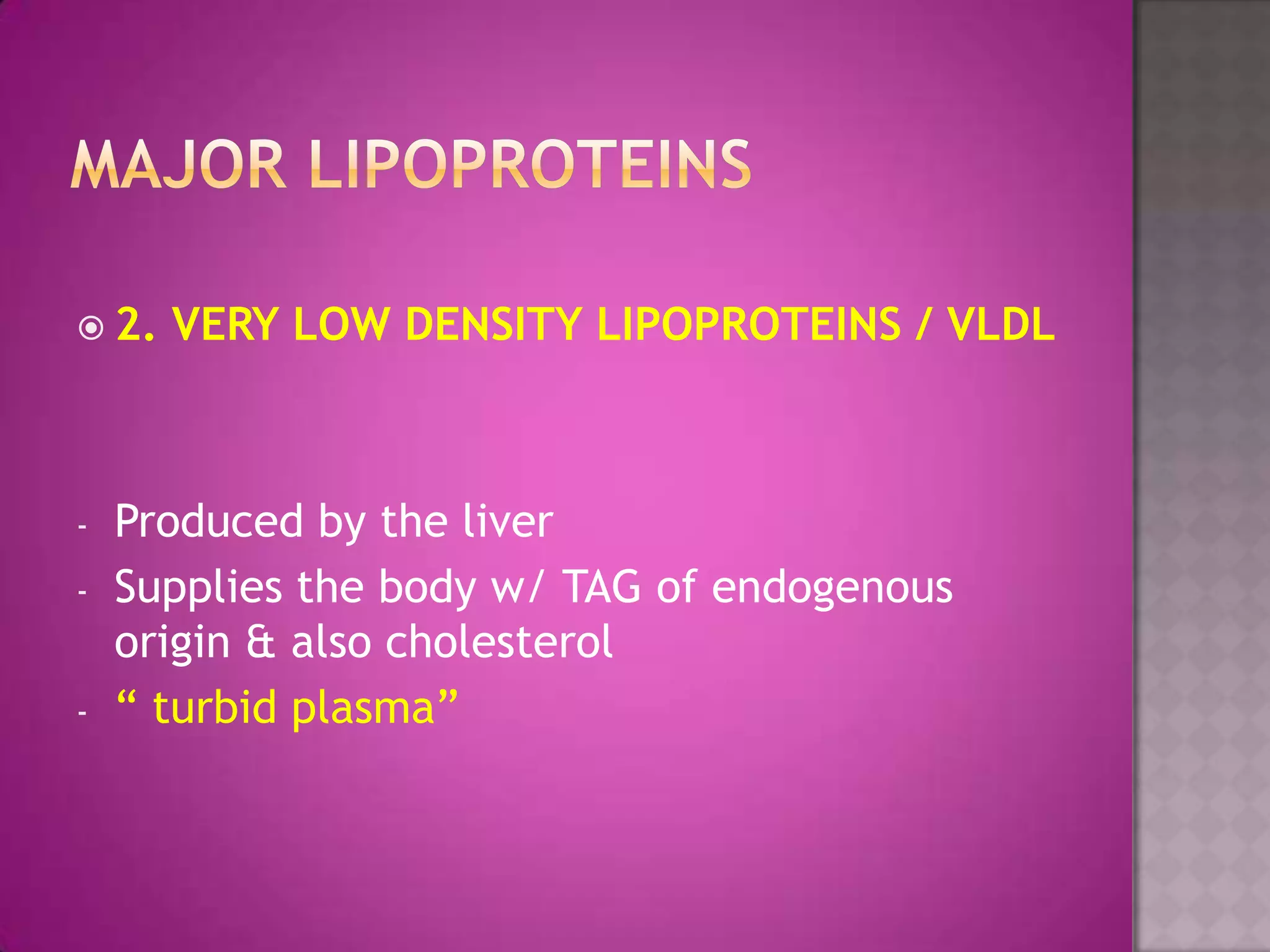
 2. VERY LOW DENSITY LIPOPROTEINS / VLDL
- Produced by the liver
- Supplies the body w/ TAG of endogenous
origin & also cholesterol
- “ turbid plasma”
 3. LOW DENSITY LIPOPROTEINS / LDL
- Produced by the metabolism of VLDL
- The particles do not scatter light
- Removed by the liver & macrophages
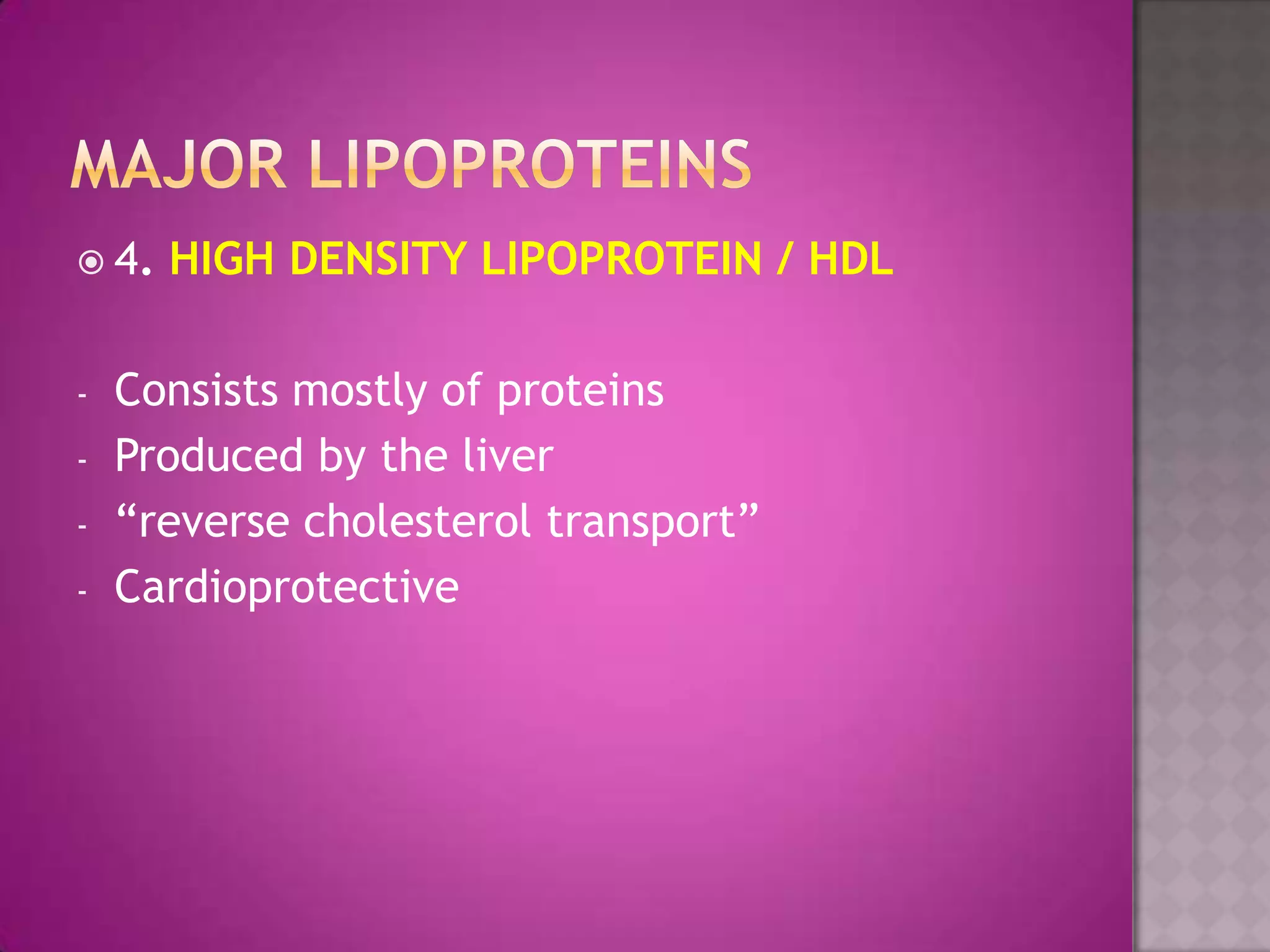
 4. HIGH DENSITY LIPOPROTEIN / HDL
- Consists mostly of proteins
- Produced by the liver
- “reverse cholesterol transport”
- Cardioprotective
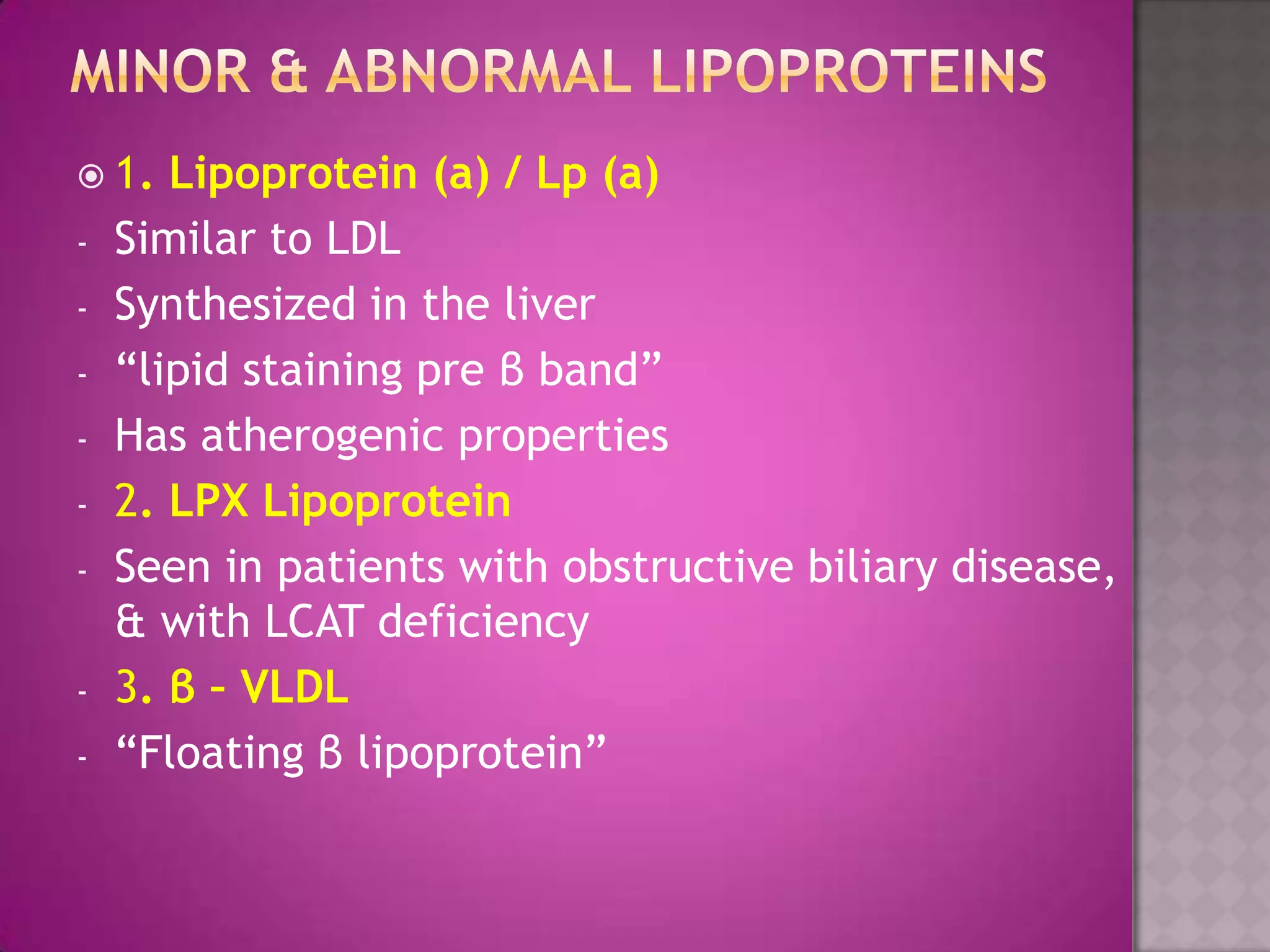
 1. Lipoprotein (a) / Lp (a)
- Similar to LDL
- Synthesized in the liver
- “lipid staining pre β band”
- Has atherogenic properties
- 2. LPX Lipoprotein
- Seen in patients with obstructive biliary disease,
& with LCAT deficiency
- 3. β – VLDL
- “Floating β lipoprotein”
Food intestinal absorption
CM High TAG,Low Chol, Apo B48
TAG in adipose tissue
Muscle & FFA
chylomicron remnants taken by the liver
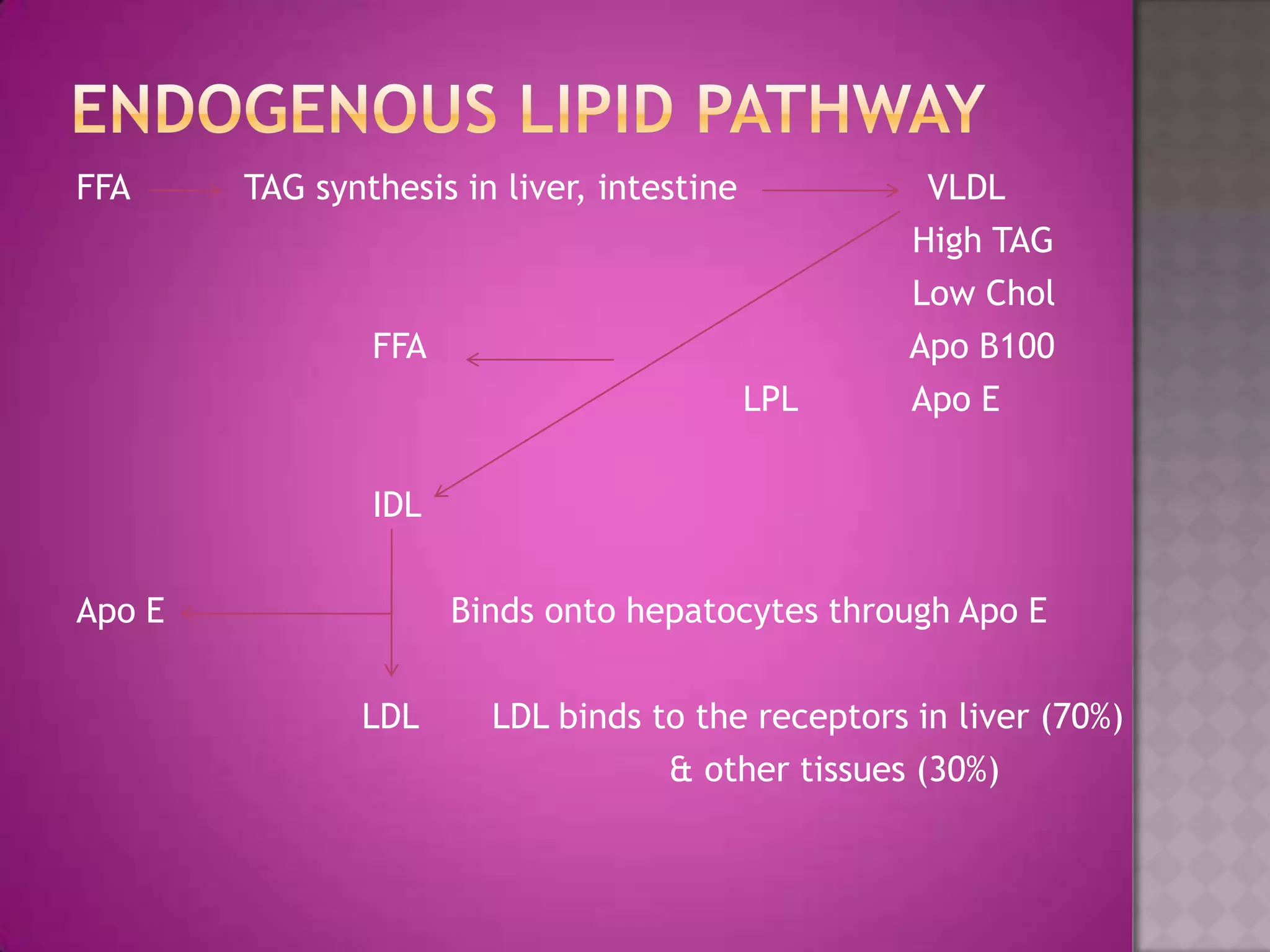
FFA TAG synthesis in liver, intestine VLDL
High TAG
Low Chol
FFA Apo B100
LPL Apo E
IDL
Apo E Binds onto hepatocytes through Apo E
LDL LDL binds to the receptors in liver (70%)
& other tissues (30%)
liver secretes Apo A1 + other Apos + PLs Nascent HDL
Cholesterol from tissues
HDL 3
Esterification of Cholestrol by LCAT
LDL
uptake by liver
Cholesterol transfer to VLDL
excretion into bile
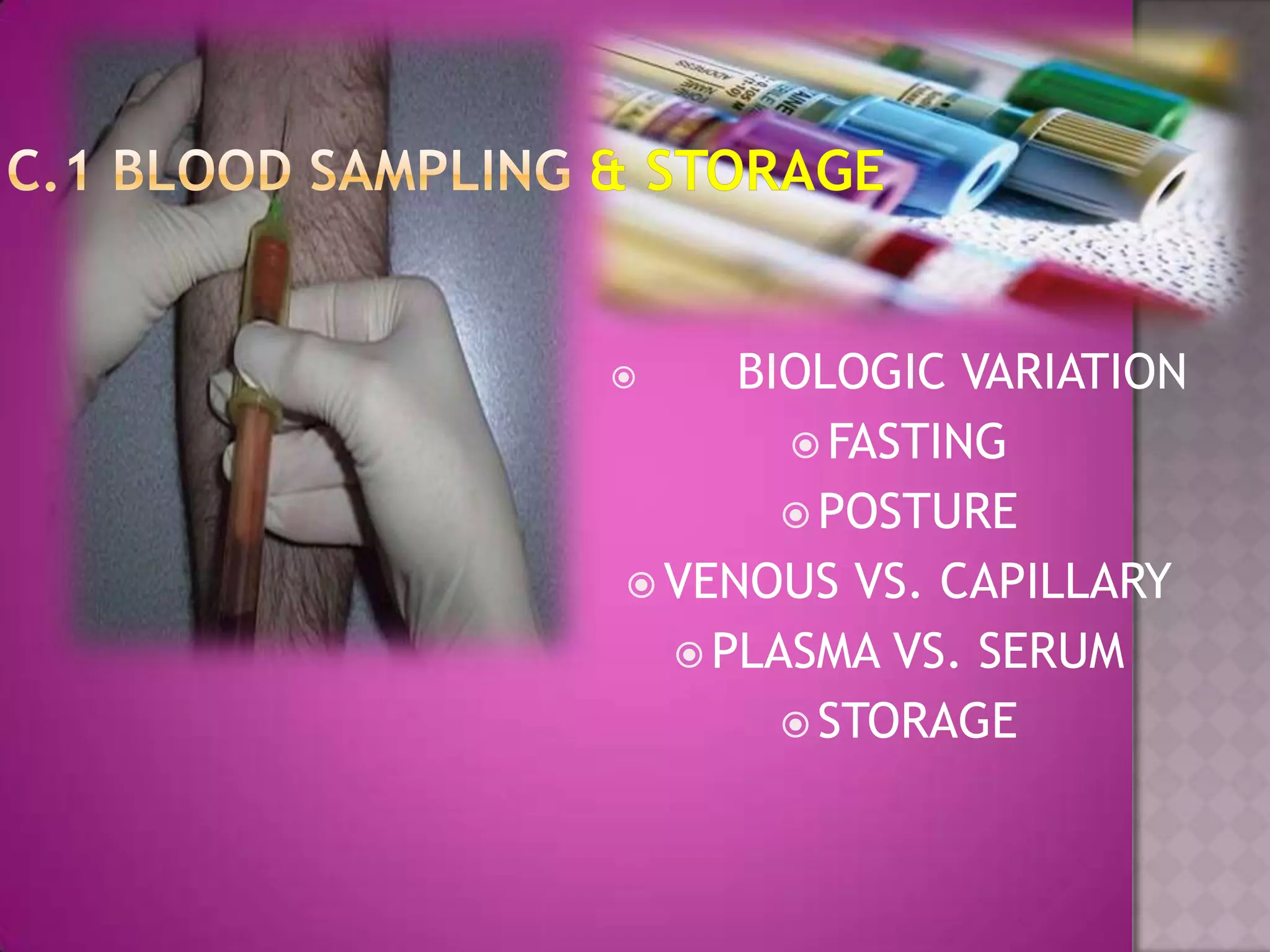
 BIOLOGIC VARIATION
 FASTING
 POSTURE
 VENOUS VS. CAPILLARY
 PLASMA VS. SERUM
 STORAGE
 BIOLOGIC VARIATION
- Cholesterol level rises w/ age
- Women have lower levels than men
(except in childhood & after the early
50’s)
- Age related variation is the basis of
NCEP recommendation that
cholesterol screening be repeated
every 5 years.
 FASTING
- 12 hours before venipuncture
- Chylomicrons are completely cleared w/in 6
– 9 hours
- NCEP Adult Treatment Panel III( ATP III), has
recommended that patients fast for at least
9 hours before blood specimens are taken for
lipid & lipoprotein analysis
 POSTURE
- Current NCEP guidelines recommend that
patients be seated for 5 minutes prior to
sampling.
 VENOUS VS. CAPILLARY SAMPLES
- Measurements in capillary blood samples are
lower than venous samples & tend to be
more variable.
 PLASMA VS. SERUM
- Either plasma or serum can be used when
only TAG, cholesterol & HDL are measured, &
LDL – C is calculated from these three
measurements.
- Plasma is preferred when lipoproteins are
measured by ultracentrifugal or
electrophoretic methods
 PLASMA VS. SERUM Cont.
- EDTA is the preferred anticoagulant - ♥
- Heparin – X
- Citrate – X
 STORAGE
- When serum or plasma must be stored for
long periods it should be maintained at a
temperature of -70⁰C.
- For short term storage, the samples can be
kept at – 20⁰C.
 A. TAG measurement
Chemical Nonenzymatic Methods
General Steps
1. Extraction
- To remove TAG from LP’s
- Accomplished by using MeOH, EtOH,
isopropyl alcohol, Folch’s rgt & diethyl
ether
- - removal of interferences by zeolite
2. Hydrolysis of TAG into FFA & Glycerol
- By saponification w/ alcoholic KOH
3. Measurement of Glycerol
- The glycerol liberated is oxidized by
periodate to HCHO & quantified by using any
of the ff:
- Eegrine reaction
- Schryver’s reaction
- Pay’s reaction
- Hantzsch reaction (method of choice)
 Enzymatic Methods
- Based on the hydrolysis of TAG & the
measurement of glycerol that is released in
the reaction:
LPS
- TAG + 3H2O glycerol + fatty acid
- Methods:
- Boculo David
- Megraw
- Winartasaputra
- Nagele - Trinder
 Chemical Nonenzymatic Methods
4 General Steps
1. Extraction
- Using Bloor’s rgt (3:1 EtOH – ether) or
zeolite extraction
2. Saponification
- Using KOH
3. Purification
- Using digitonin
4. Color development
- May proceed w/ the Leibermann-Burchardt
reaction or Salkowski reaction
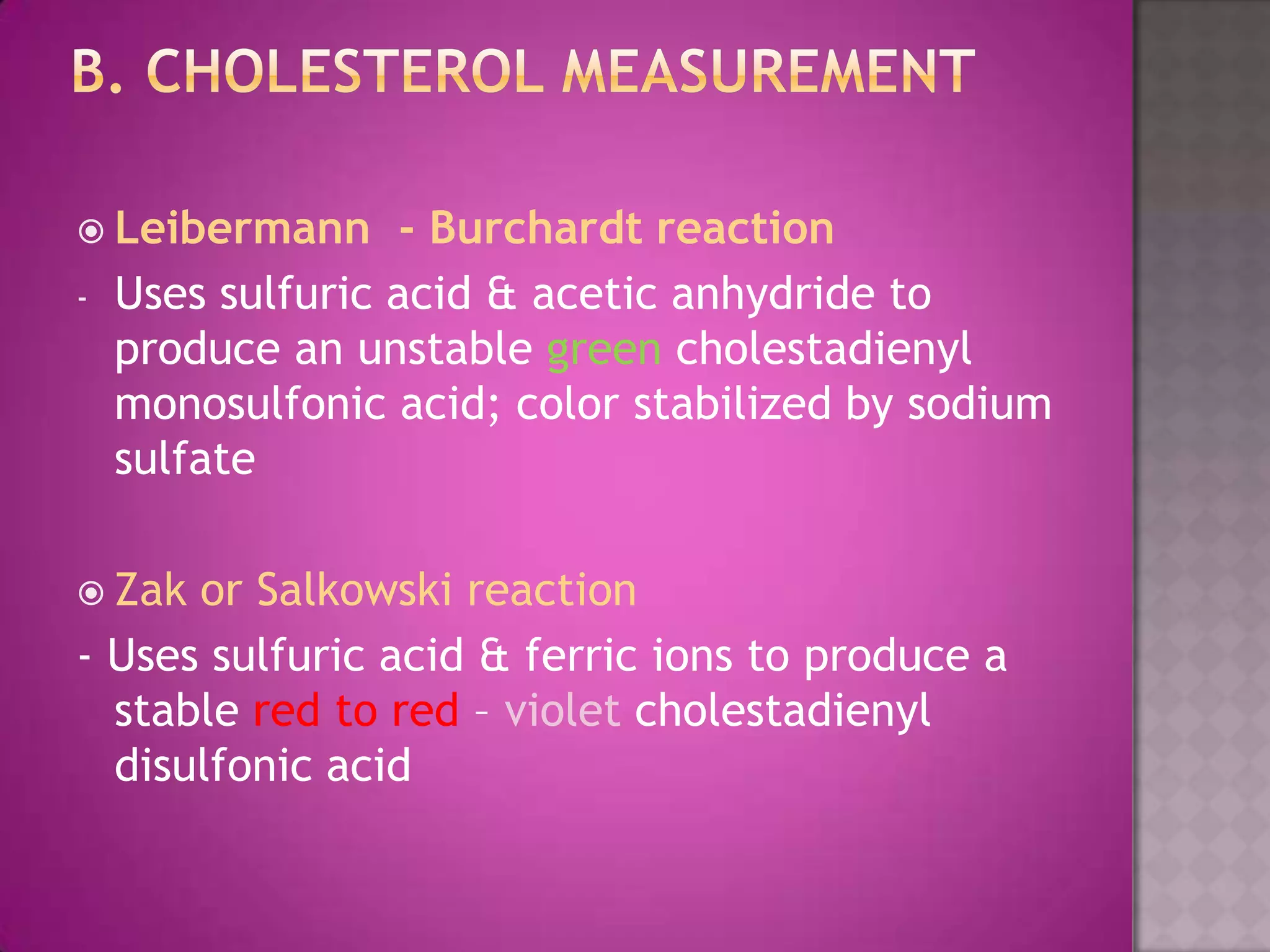
 Leibermann - Burchardt reaction
- Uses sulfuric acid & acetic anhydride to
produce an unstable green cholestadienyl
monosulfonic acid; color stabilized by sodium
sulfate
 Zak or Salkowski reaction
- Uses sulfuric acid & ferric ions to produce a
stable red to red – violet cholestadienyl
disulfonic acid
 1 Step Methods
- Zlatkis – Zak Boyle method
- Ferro – Ham method
- Pearson – Stern – MacGavack
- Wybenga et al
 2 Step Methods
- Carr – Drekter
 3 Step Methods
- Abell – Kendall method (Standard reference
method)
 4 Step Methods
- Schoenheimer – Sperry
- Parek – Jung
- Sperry - webb
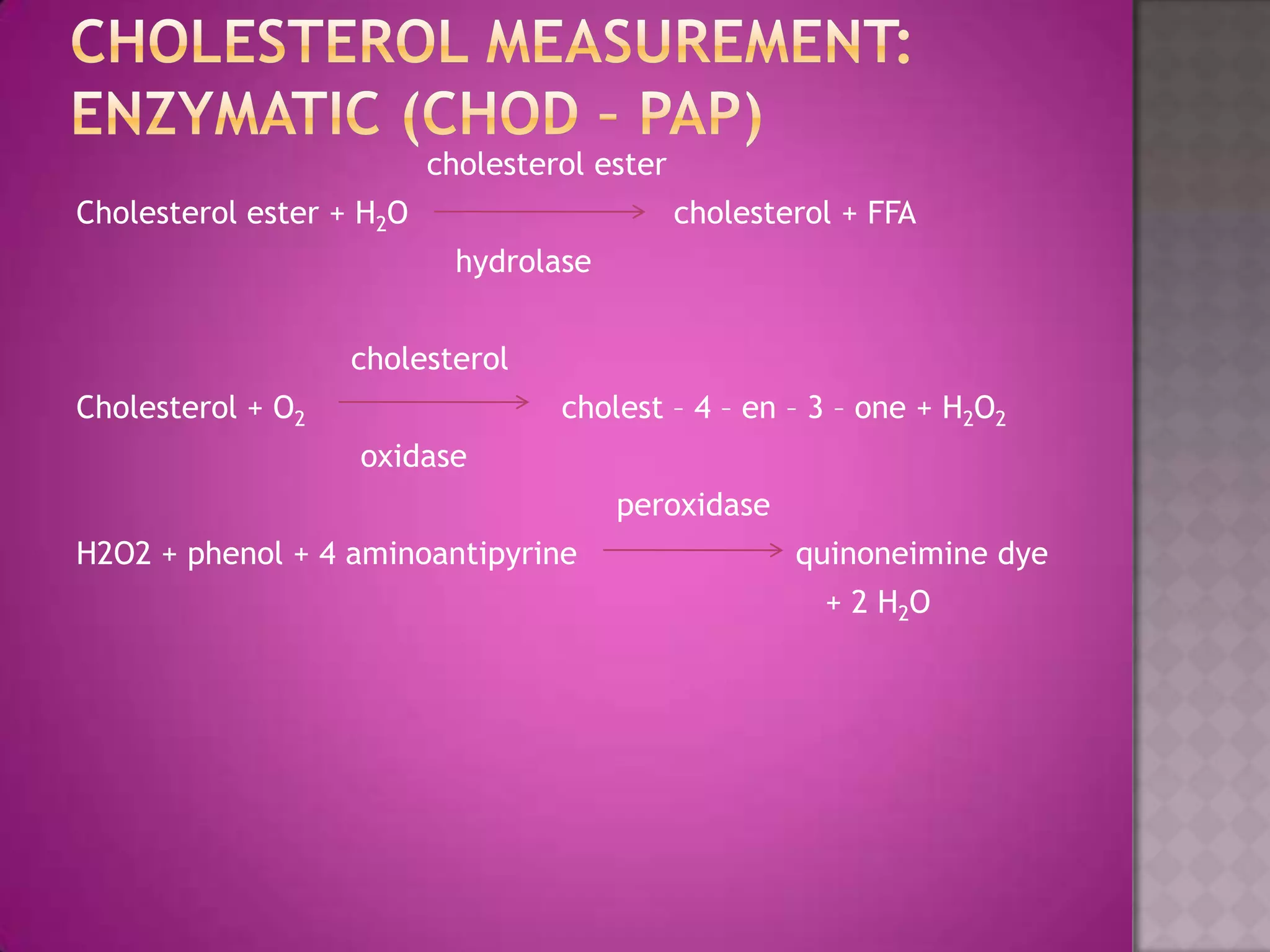
cholesterol ester
Cholesterol ester + H2O cholesterol + FFA
hydrolase
cholesterol
Cholesterol + O2 cholest – 4 – en – 3 – one + H2O2
oxidase
peroxidase
H2O2 + phenol + 4 aminoantipyrine quinoneimine dye
+ 2 H2O
 1. HDL Measurement
- Polyanion precipitation
- Electrophoresis – spectrophotometric det’n
- Ultracentrifugation ( reference method)
 2. Chylomicrons / CM
- Standing Plasma Test
 3. Lipid Profile
- Use of the Friedewald equation
 Testing & Treatment
Cholesterol Goals:
ATP III recommends a complete lipoprotein
profile as the initial test for evaluating blood
cholesterol.
Testing should be performed on all adults aged
20 & older & should be repeated once every
5 years.
The need for a therapeutic lifestyle change &
drug therapy
For Cholesterol: conversion factor to convert mg/dL to mM is 0.02586
For triglyceride : conversion factor to convert mg / dL to mM is 0.011
LDL Cholesterol HDL
Cholester
ol
Total
Cholesterol
Triglyceride
<100 optimal < 40 low < 200 desirable < 150 normal
100-129 Near
optimal /
above
optimal
≥ 90 high 200-
239
Borderline
high
150 -
199
Borderline
high
130-159 Borderline
high
≥ 240 high 200 -
499
high
160 -
189
High ≥ 500 Very high
≥190 Very high
Drug Class Mechanism of Action Example
Statins Lowers LDL cholesterol Lovastatin , simvastatin,
Pravastatin, fluvastatin
Fibric acid
derivatives
Lowers TAG Gemfibrosil, Fenofibrate
Bile acid
resins
Lowers LDL cholesterol Colestipol, cholestyramine
Niacin
(nicotinic
acid)
Lowers TAG niacin
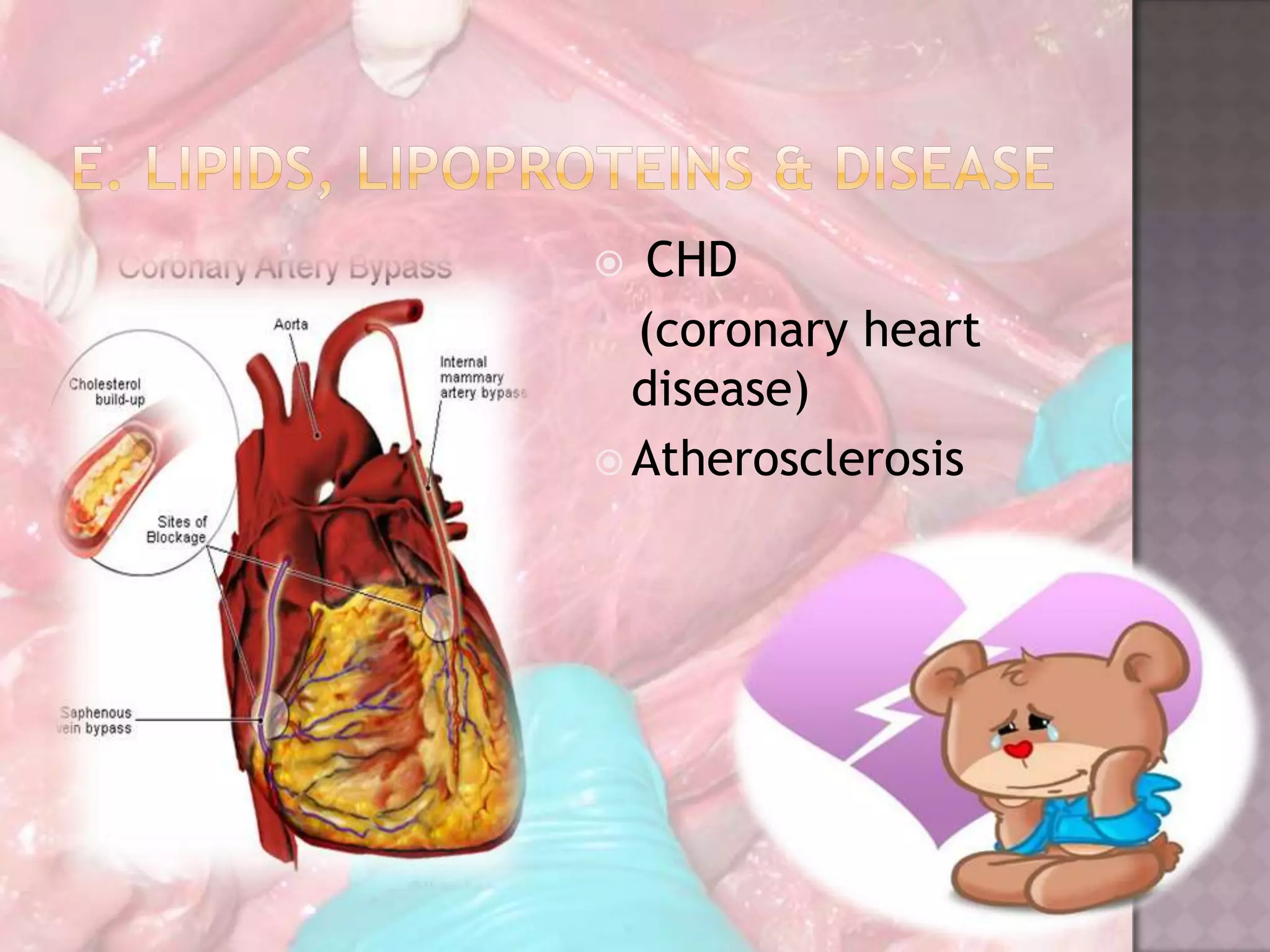
 CHD
(coronary heart
disease)
 Atherosclerosis
Positive
Age: Male 45 yrs and above, Females 55 yrs
and above or premature menopause
without estrogen therapy
Family history of premature CHD
Current cigarette smoking
Hypertension (equal or more than 140/90
mmHg or on antihypertensive therapy)
Low HDL-Chol (<35 mg/dl)
Diabetes mellitus
Negative
High HDL-Cholesterol (equal to or above 60
mg/dl)
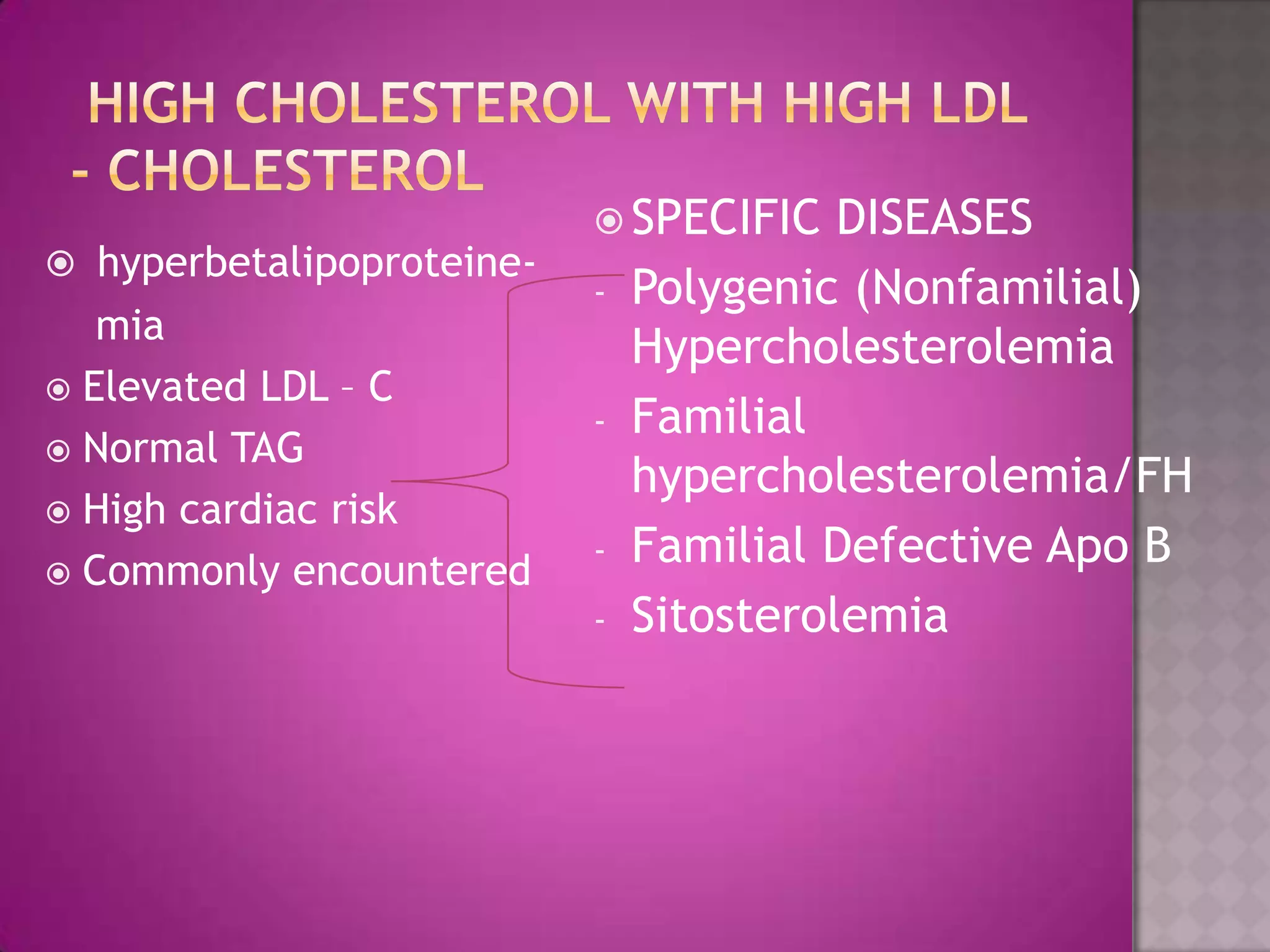
 hyperbetalipoproteine-
mia
 Elevated LDL – C
 Normal TAG
 High cardiac risk
 Commonly encountered
 SPECIFIC DISEASES
- Polygenic (Nonfamilial)
Hypercholesterolemia
- Familial
hypercholesterolemia/FH
- Familial Defective Apo B
- Sitosterolemia
 Due to the elevation
of TAG rich particles
 Hyperprebetalipo –
proteinemia
 secondary to excess
alcohol & high
carbohydrate intake
 SPECIFIC DISEASES
- Diabetic dyslipidemia
- Familial
hypertriglyceridemia
- Lipoprotein lipase
deficiency
- Apo C II deficiency
- Apo C III excess
A group of inherited disorders
characterized by the accumulation of
lipids in tissues especially the “brain”
due to a deficiency in a particular
sphingolipid catabolic enzyme
 Niemann – Pick disease
- Deficiency in sphingomyelinase & accumulation
of sphingomyelin
 Gaucher’s disease
- Deficiency in β – D glucosidase & the
accumulation of glucocerebroside
 Krabbe’s disease
- Deficiency in β – D galactosidase & the
accumulation of galactocerebrosides
 Fabry’s disease
- Deficiency in α – D galactosidase & the
accumulation of ceramide trihexoside
 Tay – Sach’s disease
- Deficiency in β – D hexaminidase & the
accumulation of β - sulfogalactocerebroside
 Ultracentrifugation & electrophoretic techniques are
of historical significance, MOST useful lipid &
lipoprotein testing are now enzymatic.
 LDL – cholesterol can be measured directly , but is
usually calculated using the Friedewald formula.
 LDL – C is now considered the MOST important
value in assessing cardiac risk & directing therapy.
 The profile for initial adult screening aged 20 &
above, includes TC, TAG, HDL – C & LDL – C &
should be repeated every 5 years.
 INTERNET SOURCES
 Bhagavan NV (2002). Medical Biochemistry.
San Diego: Harcourt/Academic Press.
ISBN 0-12-095440-0.
http://books.google.com/?id=vT9YttFTPi0C
&printsec=frontcover.
 http://biology.clc.uc.edu/courses/bio
104/lipids.htm
 BOOK SOURCES
 Clinical Diagnosis and Management
by Laboratory Methods / John
Bernard Henry. 20th ed. 224 – 248
Henry’s Clinical Diagnosis and
Management by Laboratory Methods
/ Richard McPherson & Mathhew
Pincus. 21st ed. 200 – 219
 Clinical Chemistry:
Principles, Procedures &
Correlations / Michael Bishop, Janet
Engelkirk & Edward Fody. 4th ed. 232
– 259
 Southwestern University College of
Medical Technology Clinical
Internship Manual / 2005 ed.
 Southwestern University College of
Medical Technology: Lecture Handbook
in Routine Clinical Chemistry/ Julius
Mario. 2008 ed. 44 -54
 Danny Donor ♥
learn to love
the things you
hate
You're on the road to success when
you realize that failure is only a
detour.

lipids & dyslipoproteinemia

  • 1.
  • 2.
     Overview onLipids  Lipoproteins, Apoliporoteins & Related Proteins  Lipid Transport & Lipoprotein Metabolism  Lipid & Lipoprotein Measurement  The NCEP Guidelines  Lipids, Lipoproteins & Disease  References
  • 3.
     are biological compounds whichare soluble in nonpolar organic solvents but relatively insoluble in polar solvents.
  • 4.
    Triglycerides / TAG/ TG Cholesterol / C Phospholipids Glycolipids
  • 5.
     Primary sourceof fuel  Components of cell membranes & many cell structures  Provide stability to cell membranes  Means of transmembrane transport
  • 6.
     The functionof lipoprotein particle is to transport lipids around the body in the blood. Contain cholesterol in 2 forms: _ free cholesterol _ cholesterol ester  Lipoproteins have a micellar structure.
  • 7.
     The transportproteins of lipids having a micellar structure composed of two parts as follows: Central core  contains TAG and cholesterol ester  nonpolar moiety Surface coat  contains PL, free cholesterol, and apolipoproteins
  • 8.
    - Chylomicrons (CM) -very low density lipoproteins (VLDL) - low density lipoproteins (LDL) - high density lipoproteins (HDL)
  • 9.
    CLASS DENSITY (g/ml) MEAN DIAMETER (mm) source Principal function Electropho retic mobility CM< 0.95 500 intestine Transport of Exogenous TAG Remains at Origin VLDL 0.96 -1.006 43 liver Transport of Endogenous TAG Pre β IDL 1.007-1.019 27 Catabolism of VLDL Precursor of LDL “broad β” LDL 1.020-1.063 22 Catabolism of VLDL via IDL Cholesterol Transport β HDL 1.064- 1.210 8 Liver,intestine, catabolism of CM & VLDL “reverse cholesterol transport” α
  • 10.
    CLASS PROTEIN % TAG % CHOLESTEROL % PHOSPHO LIPID % Chylomicron / CM 1-285 - 95 3 -5 5 -10 VLDL 10 60 -70 10 -15 10 – 15 LDL 15 -25 5 - 10 45 20 -30 HDL 50 Very little 20 30
  • 13.
     MAJOR LIPOPROTEINS 1.CHYLOMICRONS / CM - Produced by the intestine - Transport lipids of dietary origin - Poor in free cholesterol - Has a “very high lipid/protein ratio - “milky plasma” - “Floating creamy layer” - Removed by the liver
  • 14.
     2. VERYLOW DENSITY LIPOPROTEINS / VLDL - Produced by the liver - Supplies the body w/ TAG of endogenous origin & also cholesterol - “ turbid plasma”
  • 15.
     3. LOWDENSITY LIPOPROTEINS / LDL - Produced by the metabolism of VLDL - The particles do not scatter light - Removed by the liver & macrophages
  • 16.
     4. HIGHDENSITY LIPOPROTEIN / HDL - Consists mostly of proteins - Produced by the liver - “reverse cholesterol transport” - Cardioprotective
  • 17.
     1. Lipoprotein(a) / Lp (a) - Similar to LDL - Synthesized in the liver - “lipid staining pre β band” - Has atherogenic properties - 2. LPX Lipoprotein - Seen in patients with obstructive biliary disease, & with LCAT deficiency - 3. β – VLDL - “Floating β lipoprotein”
  • 18.
    Food intestinal absorption CMHigh TAG,Low Chol, Apo B48 TAG in adipose tissue Muscle & FFA chylomicron remnants taken by the liver
  • 19.
    FFA TAG synthesisin liver, intestine VLDL High TAG Low Chol FFA Apo B100 LPL Apo E IDL Apo E Binds onto hepatocytes through Apo E LDL LDL binds to the receptors in liver (70%) & other tissues (30%)
  • 20.
    liver secretes ApoA1 + other Apos + PLs Nascent HDL Cholesterol from tissues HDL 3 Esterification of Cholestrol by LCAT LDL uptake by liver Cholesterol transfer to VLDL excretion into bile
  • 21.
     BIOLOGIC VARIATION FASTING  POSTURE  VENOUS VS. CAPILLARY  PLASMA VS. SERUM  STORAGE
  • 22.
     BIOLOGIC VARIATION -Cholesterol level rises w/ age - Women have lower levels than men (except in childhood & after the early 50’s) - Age related variation is the basis of NCEP recommendation that cholesterol screening be repeated every 5 years.
  • 23.
     FASTING - 12hours before venipuncture - Chylomicrons are completely cleared w/in 6 – 9 hours - NCEP Adult Treatment Panel III( ATP III), has recommended that patients fast for at least 9 hours before blood specimens are taken for lipid & lipoprotein analysis  POSTURE - Current NCEP guidelines recommend that patients be seated for 5 minutes prior to sampling.
  • 24.
     VENOUS VS.CAPILLARY SAMPLES - Measurements in capillary blood samples are lower than venous samples & tend to be more variable.  PLASMA VS. SERUM - Either plasma or serum can be used when only TAG, cholesterol & HDL are measured, & LDL – C is calculated from these three measurements. - Plasma is preferred when lipoproteins are measured by ultracentrifugal or electrophoretic methods
  • 25.
     PLASMA VS.SERUM Cont. - EDTA is the preferred anticoagulant - ♥ - Heparin – X - Citrate – X  STORAGE - When serum or plasma must be stored for long periods it should be maintained at a temperature of -70⁰C. - For short term storage, the samples can be kept at – 20⁰C.
  • 26.
     A. TAGmeasurement Chemical Nonenzymatic Methods General Steps 1. Extraction - To remove TAG from LP’s - Accomplished by using MeOH, EtOH, isopropyl alcohol, Folch’s rgt & diethyl ether - - removal of interferences by zeolite
  • 27.
    2. Hydrolysis ofTAG into FFA & Glycerol - By saponification w/ alcoholic KOH 3. Measurement of Glycerol - The glycerol liberated is oxidized by periodate to HCHO & quantified by using any of the ff: - Eegrine reaction - Schryver’s reaction - Pay’s reaction - Hantzsch reaction (method of choice)
  • 28.
     Enzymatic Methods -Based on the hydrolysis of TAG & the measurement of glycerol that is released in the reaction: LPS - TAG + 3H2O glycerol + fatty acid - Methods: - Boculo David - Megraw - Winartasaputra - Nagele - Trinder
  • 29.
     Chemical NonenzymaticMethods 4 General Steps 1. Extraction - Using Bloor’s rgt (3:1 EtOH – ether) or zeolite extraction 2. Saponification - Using KOH 3. Purification - Using digitonin 4. Color development - May proceed w/ the Leibermann-Burchardt reaction or Salkowski reaction
  • 30.
     Leibermann -Burchardt reaction - Uses sulfuric acid & acetic anhydride to produce an unstable green cholestadienyl monosulfonic acid; color stabilized by sodium sulfate  Zak or Salkowski reaction - Uses sulfuric acid & ferric ions to produce a stable red to red – violet cholestadienyl disulfonic acid
  • 31.
     1 StepMethods - Zlatkis – Zak Boyle method - Ferro – Ham method - Pearson – Stern – MacGavack - Wybenga et al  2 Step Methods - Carr – Drekter  3 Step Methods - Abell – Kendall method (Standard reference method)  4 Step Methods - Schoenheimer – Sperry - Parek – Jung - Sperry - webb
  • 32.
    cholesterol ester Cholesterol ester+ H2O cholesterol + FFA hydrolase cholesterol Cholesterol + O2 cholest – 4 – en – 3 – one + H2O2 oxidase peroxidase H2O2 + phenol + 4 aminoantipyrine quinoneimine dye + 2 H2O
  • 33.
     1. HDLMeasurement - Polyanion precipitation - Electrophoresis – spectrophotometric det’n - Ultracentrifugation ( reference method)  2. Chylomicrons / CM - Standing Plasma Test  3. Lipid Profile - Use of the Friedewald equation
  • 35.
     Testing &Treatment Cholesterol Goals: ATP III recommends a complete lipoprotein profile as the initial test for evaluating blood cholesterol. Testing should be performed on all adults aged 20 & older & should be repeated once every 5 years. The need for a therapeutic lifestyle change & drug therapy
  • 36.
    For Cholesterol: conversionfactor to convert mg/dL to mM is 0.02586 For triglyceride : conversion factor to convert mg / dL to mM is 0.011 LDL Cholesterol HDL Cholester ol Total Cholesterol Triglyceride <100 optimal < 40 low < 200 desirable < 150 normal 100-129 Near optimal / above optimal ≥ 90 high 200- 239 Borderline high 150 - 199 Borderline high 130-159 Borderline high ≥ 240 high 200 - 499 high 160 - 189 High ≥ 500 Very high ≥190 Very high
  • 37.
    Drug Class Mechanismof Action Example Statins Lowers LDL cholesterol Lovastatin , simvastatin, Pravastatin, fluvastatin Fibric acid derivatives Lowers TAG Gemfibrosil, Fenofibrate Bile acid resins Lowers LDL cholesterol Colestipol, cholestyramine Niacin (nicotinic acid) Lowers TAG niacin
  • 38.
  • 39.
    Positive Age: Male 45yrs and above, Females 55 yrs and above or premature menopause without estrogen therapy Family history of premature CHD Current cigarette smoking Hypertension (equal or more than 140/90 mmHg or on antihypertensive therapy) Low HDL-Chol (<35 mg/dl) Diabetes mellitus Negative High HDL-Cholesterol (equal to or above 60 mg/dl)
  • 40.
     hyperbetalipoproteine- mia  ElevatedLDL – C  Normal TAG  High cardiac risk  Commonly encountered  SPECIFIC DISEASES - Polygenic (Nonfamilial) Hypercholesterolemia - Familial hypercholesterolemia/FH - Familial Defective Apo B - Sitosterolemia
  • 41.
     Due tothe elevation of TAG rich particles  Hyperprebetalipo – proteinemia  secondary to excess alcohol & high carbohydrate intake  SPECIFIC DISEASES - Diabetic dyslipidemia - Familial hypertriglyceridemia - Lipoprotein lipase deficiency - Apo C II deficiency - Apo C III excess
  • 42.
    A group ofinherited disorders characterized by the accumulation of lipids in tissues especially the “brain” due to a deficiency in a particular sphingolipid catabolic enzyme
  • 43.
     Niemann –Pick disease - Deficiency in sphingomyelinase & accumulation of sphingomyelin  Gaucher’s disease - Deficiency in β – D glucosidase & the accumulation of glucocerebroside  Krabbe’s disease - Deficiency in β – D galactosidase & the accumulation of galactocerebrosides  Fabry’s disease - Deficiency in α – D galactosidase & the accumulation of ceramide trihexoside  Tay – Sach’s disease - Deficiency in β – D hexaminidase & the accumulation of β - sulfogalactocerebroside
  • 44.
     Ultracentrifugation &electrophoretic techniques are of historical significance, MOST useful lipid & lipoprotein testing are now enzymatic.  LDL – cholesterol can be measured directly , but is usually calculated using the Friedewald formula.  LDL – C is now considered the MOST important value in assessing cardiac risk & directing therapy.  The profile for initial adult screening aged 20 & above, includes TC, TAG, HDL – C & LDL – C & should be repeated every 5 years.
  • 45.
     INTERNET SOURCES Bhagavan NV (2002). Medical Biochemistry. San Diego: Harcourt/Academic Press. ISBN 0-12-095440-0. http://books.google.com/?id=vT9YttFTPi0C &printsec=frontcover.  http://biology.clc.uc.edu/courses/bio 104/lipids.htm  BOOK SOURCES  Clinical Diagnosis and Management by Laboratory Methods / John Bernard Henry. 20th ed. 224 – 248 Henry’s Clinical Diagnosis and Management by Laboratory Methods / Richard McPherson & Mathhew Pincus. 21st ed. 200 – 219  Clinical Chemistry: Principles, Procedures & Correlations / Michael Bishop, Janet Engelkirk & Edward Fody. 4th ed. 232 – 259  Southwestern University College of Medical Technology Clinical Internship Manual / 2005 ed.  Southwestern University College of Medical Technology: Lecture Handbook in Routine Clinical Chemistry/ Julius Mario. 2008 ed. 44 -54  Danny Donor ♥
  • 46.
    learn to love thethings you hate You're on the road to success when you realize that failure is only a detour.