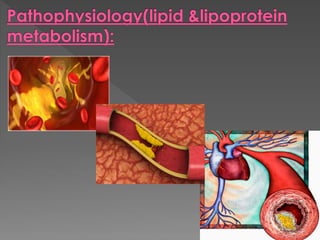
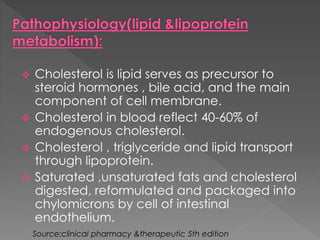
 Cholesterol is lipid serves as precursor to 
steroid hormones , bile acid, and the main 
component of cell membrane. 
 Cholesterol in blood reflect 40-60% of 
endogenous cholesterol. 
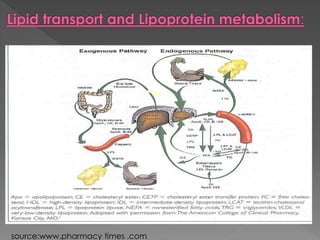
 Cholesterol , triglyceride and lipid transport 
through lipoprotein. 
 Saturated ,unsaturated fats and cholesterol 
digested, reformulated and packaged into 
chylomicrons by cell of intestinal 
endothelium. 
Source:clinical pharmacy &therapeutic 5th edition
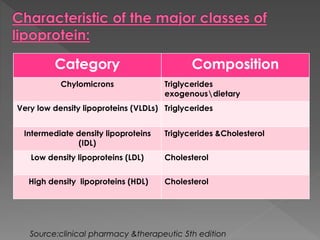
Category Composition 
Chylomicrons Triglycerides 
exogenousdietary 
Very low density lipoproteins (VLDLs) Triglycerides 
Intermediate density lipoproteins 
(IDL) 
Triglycerides &Cholesterol 
Low density lipoproteins (LDL) Cholesterol 
High density lipoproteins (HDL) Cholesterol 
Source:clinical pharmacy &therapeutic 5th edition
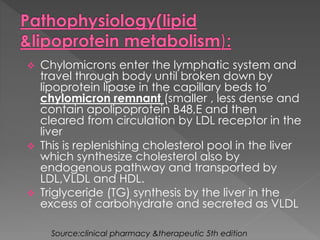
 Chylomicrons enter the lymphatic system and 
travel through body until broken down by 
lipoprotein lipase in the capillary beds to 
chylomicron remnant (smaller , less dense and 
contain apolipoprotein B48,E and then 
cleared from circulation by LDL receptor in the 
liver 
 This is replenishing cholesterol pool in the liver 
which synthesize cholesterol also by 
endogenous pathway and transported by 
LDL,VLDL and HDL. 
 Triglyceride (TG) synthesis by the liver in the 
excess of carbohydrate and secreted as VLDL 
Source:clinical pharmacy &therapeutic 5th edition
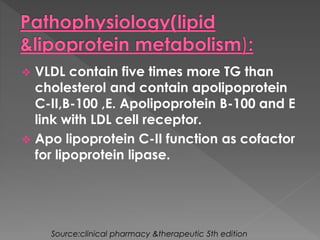
 VLDL contain five times more TG than 
cholesterol and contain apolipoprotein 
C-II,B-100 ,E. Apolipoprotein B-100 and E 
link with LDL cell receptor. 
 Apo lipoprotein C-II function as cofactor 
for lipoprotein lipase. 
Source:clinical pharmacy &therapeutic 5th edition
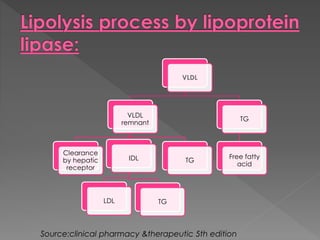
VLDL 
VLDL 
remnant 
Clearance 
by hepatic 
receptor 
IDL 
LDL TG 
TG 
TG 
Free fatty 
acid 
Source:clinical pharmacy &therapeutic 5th edition
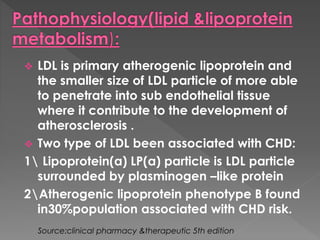
 LDL is primary atherogenic lipoprotein and 
the smaller size of LDL particle of more able 
to penetrate into sub endothelial tissue 
where it contribute to the development of 
atherosclerosis . 
 Two type of LDL been associated with CHD: 
1 Lipoprotein(a) LP(a) particle is LDL particle 
surrounded by plasminogen –like protein 
2Atherogenic lipoprotein phenotype B found 
in30%population associated with CHD risk. 
Source:clinical pharmacy &therapeutic 5th edition
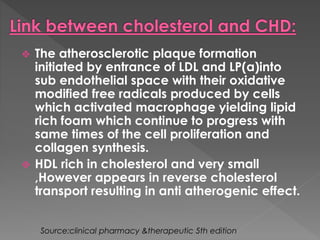
 The atherosclerotic plaque formation 
initiated by entrance of LDL and LP(a)into 
sub endothelial space with their oxidative 
modified free radicals produced by cells 
which activated macrophage yielding lipid 
rich foam which continue to progress with 
same times of the cell proliferation and 
collagen synthesis. 
 HDL rich in cholesterol and very small 
,However appears in reverse cholesterol 
transport resulting in anti atherogenic effect. 
Source:clinical pharmacy &therapeutic 5th edition
source:www.pharmacy times .com
 HDL may prevent or remove cholesterol in 
the intimae by : 
1competitively inhibit uptake of LDL by 
endothelial cells 
2 prevent LDL oxidation. 
3 inhibit platelet activation by LDL and 
aggregation by increase prostacyclin 
production. 
4promote fibrolysis by stabilizing 
prostacyclin. 
 LDL serve as marker of metabolism of 
chylomicron and VLDL (increase TG, 
decrease HDL). 
Source:clinical pharmacy &therapeutic 5th edition
1- Type I (high level of chylomicrons). 
2-Type II a (high level of LDL) 
3-Type II b (high level of LDL+VLDL) 
4-Type III (high level of IDL ) 
5-Type IV (high level of VLDL) 
6-Type V ( high level of VLDL 
+chylomicrons) 
Source:hand book of pharmacotherapy 8th edition
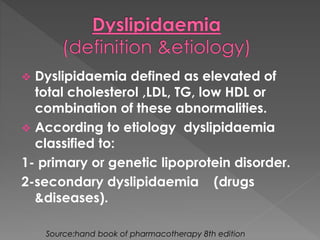
 Dyslipidaemia defined as elevated of 
total cholesterol ,LDL, TG, low HDL or 
combination of these abnormalities. 
 According to etiology dyslipidaemia 
classified to: 
1- primary or genetic lipoprotein disorder. 
2-secondary dyslipidaemia (drugs 
&diseases). 
Source:hand book of pharmacotherapy 8th edition
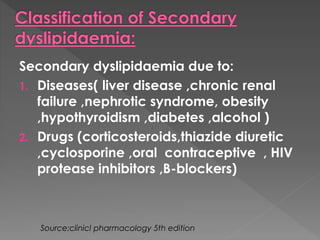
Secondary dyslipidaemia due to: 
1. Diseases( liver disease ,chronic renal 
failure ,nephrotic syndrome, obesity 
,hypothyroidism ,diabetes ,alcohol ) 
2. Drugs (corticosteroids,thiazide diuretic 
,cyclosporine ,oral contraceptive , HIV 
protease inhibitors ,B-blockers) 
Source:clinicl pharmacology 5th edition
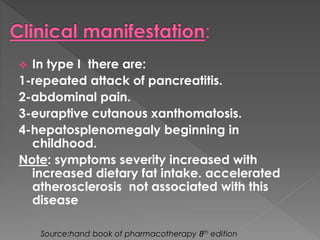
 In type I there are: 
1-repeated attack of pancreatitis. 
2-abdominal pain. 
3-euraptive cutanous xanthomatosis. 
4-hepatosplenomegaly beginning in 
childhood. 
Note: symptoms severity increased with 
increased dietary fat intake. accelerated 
atherosclerosis not associated with this 
disease 
Source:hand book of pharmacotherapy 8th edition
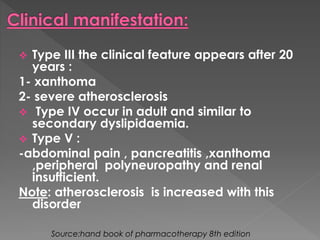
 Type III the clinical feature appears after 20 
years : 
1- xanthoma 
2- severe atherosclerosis 
 Type IV occur in adult and similar to 
secondary dyslipidaemia. 
 Type V : 
-abdominal pain , pancreatitis ,xanthoma 
,peripheral polyneuropathy and renal 
insufficient. 
Note: atherosclerosis is increased with this 
disorder 
Source:hand book of pharmacotherapy 8th edition
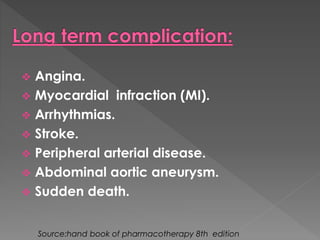
 Angina. 
 Myocardial infraction (MI). 
 Arrhythmias. 
 Stroke. 
 Peripheral arterial disease. 
 Abdominal aortic aneurysm. 
 Sudden death. 
Source:hand book of pharmacotherapy 8th edition
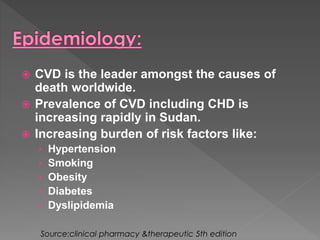
 CVD is the leader amongst the causes of 
death worldwide. 
 Prevalence of CVD including CHD is 
increasing rapidly in Sudan. 
 Increasing burden of risk factors like: 
› Hypertension 
› Smoking 
› Obesity 
› Diabetes 
› Dyslipidemia 
Source:clinical pharmacy &therapeutic 5th edition
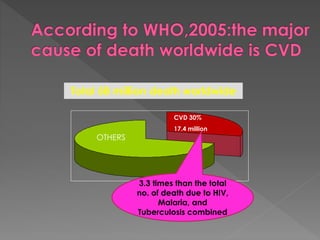
Total 58 million death worldwide 
CVD 30% 
17.4 million 
OTHERS 
3.3 times than the total 
no. of death due to HIV, 
Malaria, and 
Tuberculosis combined
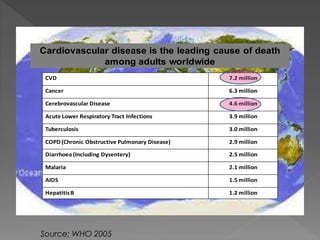
Cardiovascular disease is the leading cause of death 
among adults worldwide 
CVD 7.2 million 
Cancer 6.3 million 
Cerebrovascular Disease 4.6 million 
Acute Lower Respiratory Tract Infections 3.9 million 
Tuberculosis 3.0 million 
COPD (Chronic Obstructive Pulmonary Disease) 2.9 million 
Diarrhoea (Including Dysentery) 2.5 million 
Malaria 2.1 million 
AIDS 1.5 million 
Hepatitis B 1.2 million 
Source: WHO 2005
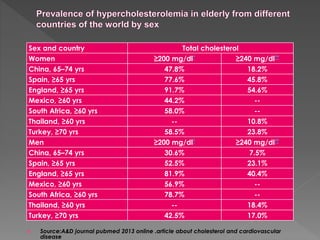
Sex and country Total cholesterol 
Women ≥200 mg/dl* ≥240 mg/dl** 
China, 65–74 yrs 47.8% 18.2% 
Spain, ≥65 yrs 77.6% 45.8% 
England, ≥65 yrs 91.7% 54.6% 
Mexico, ≥60 yrs 44.2% -- 
South Africa, ≥60 yrs 58.0% -- 
Thailand, ≥60 yrs -- 10.8% 
Turkey, ≥70 yrs 58.5% 23.8% 
Men ≥200 mg/dl* ≥240 mg/dl** 
China, 65–74 yrs 30.6% 7.5% 
Spain, ≥65 yrs 52.5% 23.1% 
England, ≥65 yrs 81.9% 40.4% 
Mexico, ≥60 yrs 56.9% -- 
South Africa, ≥60 yrs 78.7% -- 
Thailand, ≥60 yrs -- 18.4% 
Turkey, ≥70 yrs 42.5% 17.0% 
 Source:A&D journal pubmed 2013 online .article about cholesterol and cardiovascular 
disease
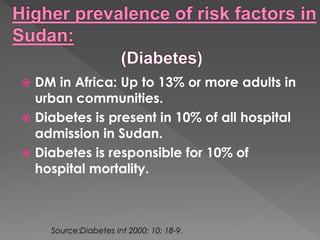
 DM in Africa: Up to 13% or more adults in 
urban communities. 
 Diabetes is present in 10% of all hospital 
admission in Sudan. 
 Diabetes is responsible for 10% of 
hospital mortality. 
Source:Diabetes Int 2000; 10: 18-9.
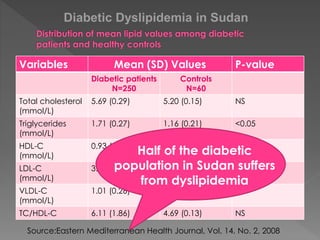
Diabetic Dyslipidemia in Sudan 
Variables Mean (SD) Values P-value 
Diabetic patients 
N=250 
Controls 
N=60 
Total cholesterol 
(mmol/L) 
5.69 (0.29) 5.20 (0.15) NS 
Triglycerides 
(mmol/L) 
1.71 (0.27) 1.16 (0.21) <0.05 
HDL-C 
(mmol/L) 
0.93 (0.15) 1.11 (0.18) <0.05 
LDL-C 
(mmol/L) 
Half of the diabetic 
population in Sudan suffers 
3.68 (0.21) 3.45 (0.14) NS 
VLDL-C 
(mmol/L) 
from dyslipidemia 
1.01 (0.26) 0.81 (0.11) NS 
TC/HDL-C 6.11 (1.86) 4.69 (0.13) NS 
Source:Eastern Mediterranean Health Journal, Vol. 14, No. 2, 2008
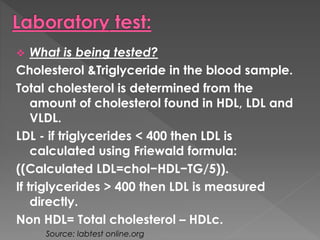
 What is being tested? 
Cholesterol &Triglyceride in the blood sample. 
Total cholesterol is determined from the 
amount of cholesterol found in HDL, LDL and 
VLDL. 
LDL - if triglycerides < 400 then LDL is 
calculated using Friewald formula: 
((Calculated LDL=chol−HDL−TG/5)). 
If triglycerides > 400 then LDL is measured 
directly. 
Non HDL= Total cholesterol – HDLc. 
Source: labtest online.org
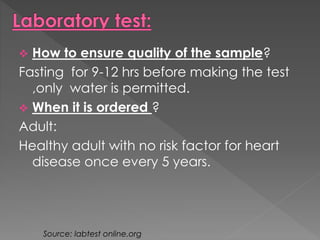
 How to ensure quality of the sample? 
Fasting for 9-12 hrs before making the test 
,only water is permitted. 
 When it is ordered ? 
Adult: 
Healthy adult with no risk factor for heart 
disease once every 5 years. 
Source: labtest online.org
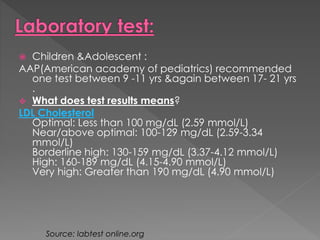
 Children &Adolescent : 
AAP(American academy of pediatrics) recommended 
one test between 9 -11 yrs &again between 17- 21 yrs 
. 
 What does test results means? 
LDL Cholesterol 
Optimal: Less than 100 mg/dL (2.59 mmol/L) 
Near/above optimal: 100-129 mg/dL (2.59-3.34 
mmol/L) 
Borderline high: 130-159 mg/dL (3.37-4.12 mmol/L) 
High: 160-189 mg/dL (4.15-4.90 mmol/L) 
Very high: Greater than 190 mg/dL (4.90 mmol/L) 
Source: labtest online.org
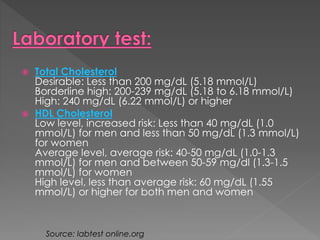
 Total Cholesterol 
Desirable: Less than 200 mg/dL (5.18 mmol/L) 
Borderline high: 200-239 mg/dL (5.18 to 6.18 mmol/L) 
High: 240 mg/dL (6.22 mmol/L) or higher 
 HDL Cholesterol 
Low level, increased risk: Less than 40 mg/dL (1.0 
mmol/L) for men and less than 50 mg/dL (1.3 mmol/L) 
for women 
Average level, average risk: 40-50 mg/dL (1.0-1.3 
mmol/L) for men and between 50-59 mg/dl (1.3-1.5 
mmol/L) for women 
High level, less than average risk: 60 mg/dL (1.55 
mmol/L) or higher for both men and women 
Source: labtest online.org
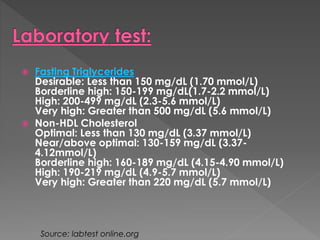
 Fasting Triglycerides 
Desirable: Less than 150 mg/dL (1.70 mmol/L) 
Borderline high: 150-199 mg/dL(1.7-2.2 mmol/L) 
High: 200-499 mg/dL (2.3-5.6 mmol/L) 
Very high: Greater than 500 mg/dL (5.6 mmol/L) 
 Non-HDL Cholesterol 
Optimal: Less than 130 mg/dL (3.37 mmol/L) 
Near/above optimal: 130-159 mg/dL (3.37- 
4.12mmol/L) 
Borderline high: 160-189 mg/dL (4.15-4.90 mmol/L) 
High: 190-219 mg/dL (4.9-5.7 mmol/L) 
Very high: Greater than 220 mg/dL (5.7 mmol/L) 
Source: labtest online.org
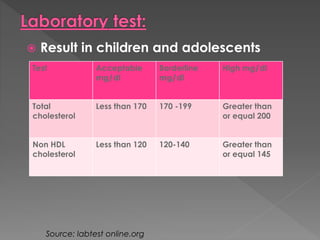
 Result in children and adolescents 
Test Acceptable 
mg/dl 
Borderline 
mg/dl 
High mg/dl 
Total 
cholesterol 
Less than 170 170 -199 Greater than 
or equal 200 
Non HDL 
cholesterol 
Less than 120 120-140 Greater than 
or equal 145 
Source: labtest online.org
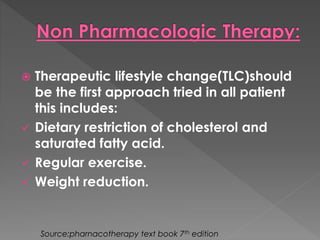
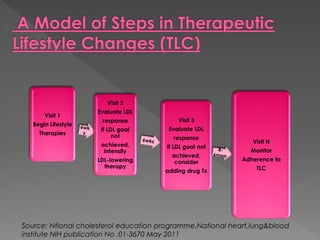
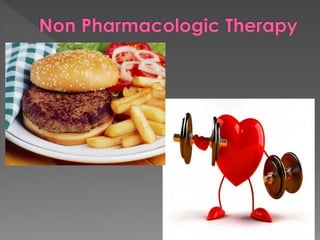
 Therapeutic lifestyle change(TLC)should 
be the first approach tried in all patient 
this includes: 
 Dietary restriction of cholesterol and 
saturated fatty acid. 
 Regular exercise. 
 Weight reduction. 
Source:pharnacotherapy text book 7th edition
 Inhibit cholesterol synthesis by inhibit 
(HMG-Co A), increase LDL receptor and 
enhance receptor mediated metabolism 
and clearance of LDL from serum. 
 Beneficial effect on lipid parameters: 
 LDL c ↓ 18%-55% 
 HDL c ↑5-15% 
 TG ↓7%-30% 
 24%-40% reduction in coronary events. 
source: medescape.org/ view article/561751
 Potential adverse effects: 
Myalgia ,Myopathy and increased liver 
enzymes 
 Contraindications: 
Liver disease. 
 Precautions: 
CYP3A4 enzyme inducer(phenytoin & 
barbiturate) 
CYP3A4 enzyme inhibitors(ciclosporin & 
ketoconazole) 
source: medescape.org/ view article/561751
 Potential pleiotropic effects: 
 Improve endothelial function(up regulate 
eNOs, scavenge superoxide) 
 Antithrombotic effects(improve fibrinolytic 
balance ,inhibit platelet aggregation) 
 Anti-inflammatory effects(decrease 
activation of NF ,decrease macrophage 
infiltration) 
 Enhance plaque stability 
 Attenuate vascular smooth muscle cell 
proliferation 
source: medescape.org/ view article/561751
Response to statin 
Is there a role of ‘GENE’?
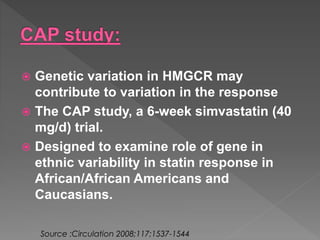
 Genetic variation in HMGCR may 
contribute to variation in the response 
 The CAP study, a 6-week simvastatin (40 
mg/d) trial. 
 Designed to examine role of gene in 
ethnic variability in statin response in 
African/African Americans and 
Caucasians. 
Source :Circulation 2008;117;1537-1544
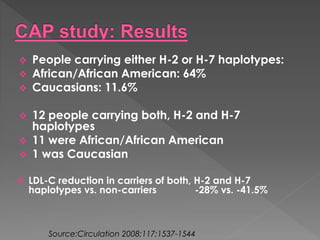
 People carrying either H-2 or H-7 haplotypes: 
 African/African American: 64% 
 Caucasians: 11.6% 
 12 people carrying both, H-2 and H-7 
haplotypes 
 11 were African/African American 
 1 was Caucasian 
 LDL-C reduction in carriers of both, H-2 and H-7 
haplotypes vs. non-carriers -28% vs. -41.5% 
Source:Circulation 2008;117;1537-1544
 We need high dose of statins: 
Increasing prevalence of risk factors 
Presence of multiple risk factors is also very 
high. 
Studies have established that African respond 
lesser to statins compared to Caucasians. 
Two (H-2 and H-7) SNP haplotypes are commonly 
associated with poor response to statins and 
these haplotypes are highly prevalent in African 
compared to Caucasians. 
Statins: benefits are beyond LDL-C and are dose 
dependent. 
Source :Circulation 2008;117;1537-1544
 Early, intensive lipid-lowering treatment with 
statin, initiated during the acute phase of 
unstable angina or non–Q-wave MI, reduces 
early recurrent ischemic events 
 A benefit was observed in a population with 
low to normal baseline LDL-C levels. 
Source:Schwartz et al JAMA 2001;285:1711-8
 Increase peripheral lipolysis and decrease 
hepatic TG production(by binding to 
peroxysome proliferators activated receptors 
alpha in hepatocytes PPAR alpha) 
 Beneficial effects on lipid parameter: 
 TG ↓ 25%-50% 
 LDLc ↓ or remain the same or↑ 
 LDL &HDL ↑ 10%-25% in hypertriglyceridemia 
 Adverse effects: 
GIT up set, cholelithiasis , myositis . 
 Contraindication: hepatic or renal dysfunction 
,gallbladder diseases. 
 Indication: hypertrigylceridemia(type 
IV&V)combined hyperlipidemia(type IIb) with 
low HDLc. 
source: medescape.org/ view article/561751
 Beneficial effect on lipid parameter: 
 LDLc ↓ 5%-25% 
 TG ↓20%-60% 
 HDL ↑15%-39% 
 Reduce coronary events 
 Adverse effect : 
 Flushing ,itching ,headache 
 Hepatotoxicity 
 Activation of peptic ulcer 
 Hyperglycemia/reduced insulin senetivity 
 Contraindications: 
Active liver disease, peptic ulcer disease 
NOTE: Tredaptive(nicotinic acid +laropriprant)2008 
Laropriprant(selective antagonist of prostaglandin D2 receptor). 
source: medescape.org/ view article/561751
 Binding to bile acid and increase excretion of 
cholesterol 
 Beneficial effect on lipid parameter: 
 LDL c↓ 15%-30% 
 HDL c ↑3%-5% 
 TG may increase in patient with elevated TG 
 Reduced coronary events 
 Adverse effect: 
 GIT intolerance ,constipation, bloating 
,abdominal pain, flatulence 
 Drug interaction: 
 Bind negatively to charged drugs, interfere with 
absorption of drugs/fat soluble vitamins(other 
drugs 1hr before or 4-6 hrs after) 
source: medescape.org/ view article/561751
 Reduce cholesterol absorption by 
binding to intestinal cholesterol 
transporter (inhibit delivery of cholesterol 
to liver &increase hepatic LDL receptor) 
 Beneficial effect on lipid parameter: 
 LDL c ↓18%-20%(in monotherapy or 
“add-on” to statin no change in TG&HDL. 
source: medescape.org/ view article/561751
 Fish oil: 
It is rich in omega3 fatty acid ,decrease VLDL 
synthesis and little change in LDL and HDL 
level. 
Omega 3 fatty acids protect against CHD 
mortality particularly sudden death. 
Can be used as alternative to fibrate or in 
combination with statins. 
 Soluble fibers: 
Bind to bile acids in the gut and increase 
conversion of cholesterol to bile acids in the 
liver. 
source: medescape.org/ view article/561751
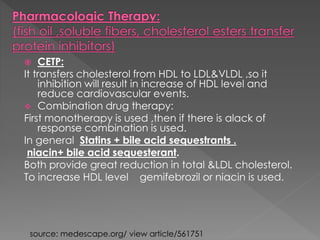
 CETP: 
It transfers cholesterol from HDL to LDL&VLDL ,so it 
inhibition will result in increase of HDL level and 
reduce cardiovascular events. 
 Combination drug therapy: 
First monotherapy is used ,then if there is alack of 
response combination is used. 
In general Statins + bile acid sequestrants . 
niacin+ bile acid sequesterant. 
Both provide great reduction in total &LDL cholesterol. 
To increase HDL level gemifebrozil or niacin is used. 
source: medescape.org/ view article/561751
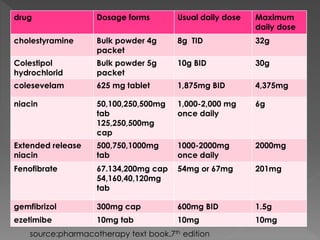
drug Dosage forms Usual daily dose Maximum 
daily dose 
cholestyramine Bulk powder 4g 
packet 
8g TID 32g 
Colestipol 
hydrochlorid 
Bulk powder 5g 
packet 
10g BID 30g 
colesevelam 625 mg tablet 1,875mg BID 4,375mg 
niacin 50,100,250,500mg 
tab 
125,250,500mg 
cap 
1,000-2,000 mg 
once daily 
6g 
Extended release 
niacin 
500,750,1000mg 
tab 
1000-2000mg 
once daily 
2000mg 
Fenofibrate 67.134,200mg cap 
54,160,40,120mg 
tab 
54mg or 67mg 201mg 
gemfibrizol 300mg cap 600mg BID 1.5g 
ezetimibe 10mg tab 10mg 10mg 
source:pharmacotherapy text book.7th edition
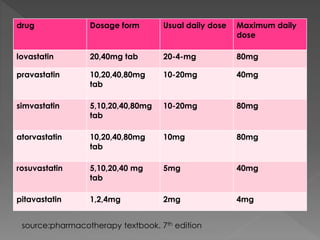
drug Dosage form Usual daily dose Maximum daily 
dose 
lovastatin 20,40mg tab 20-4-mg 80mg 
pravastatin 10,20,40,80mg 
tab 
10-20mg 40mg 
simvastatin 5,10,20,40,80mg 
tab 
10-20mg 80mg 
atorvastatin 10,20,40,80mg 
tab 
10mg 80mg 
rosuvastatin 5,10,20,40 mg 
tab 
5mg 40mg 
pitavastatin 1,2,4mg 2mg 4mg 
source:pharmacotherapy textbook. 7th edition
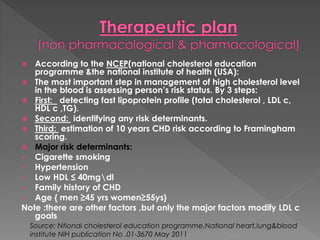
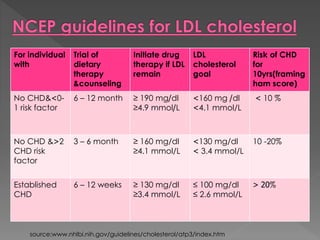
 According to the NCEP(national cholesterol education 
programme &the national institute of health (USA): 
 The most important step in management of high cholesterol level 
in the blood is assessing person’s risk status. By 3 steps: 
 First: detecting fast lipoprotein profile (total cholesterol , LDL c, 
HDL c ,TG). 
 Second: identifying any risk determinants. 
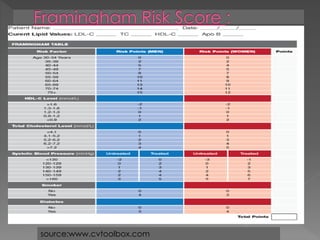
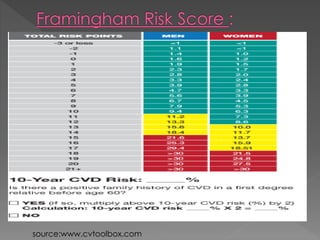
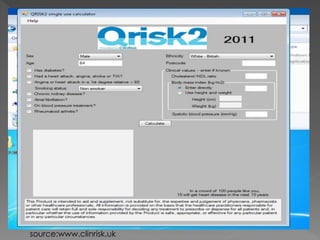
 Third: estimation of 10 years CHD risk according to Framingham 
scoring. 
 Major risk determinants: 
 Cigarette smoking 
 Hypertension 
 Low HDL ≤ 40mgdl 
 Family history of CHD 
 Age { men ≥45 yrs women≥55ys} 
Note :there are other factors ,but only the major factors modify LDL c 
goals 
Source: Ntional cholesterol education programme.National heart,lung&blood 
institute NIH publication No .01-3670 May 2011
For individual 
with 
Trial of 
dietary 
therapy 
&counseling 
Initiate drug 
therapy if LDL 
remain 
LDL 
cholesterol 
goal 
Risk of CHD 
for 
10yrs(framing 
ham score) 
No CHD&>0- 
1 risk factor 
6 – 12 month ≥ 190 mg/dl 
≥4.9 mmol/L 
>160 mg /dl 
>4.1 mmol/L 
> 10 % 
No CHD &<2 
CHD risk 
factor 
3 – 6 month ≥ 160 mg/dl 
≥4.1 mmol/L 
>130 mg/dl 
> 3.4 mmol/L 
10 -20% 
Established 
CHD 
6 – 12 weeks ≥ 130 mg/dl 
≥3.4 mmol/L 
≤ 100 mg/dl 
≤ 2.6 mmol/L 
< 20% 
source:www.nhlbi.nih.gov/guidelines/cholesterol/atp3/index.htm
source:www.cvtoolbox.com
source:www.clinrisk.uk
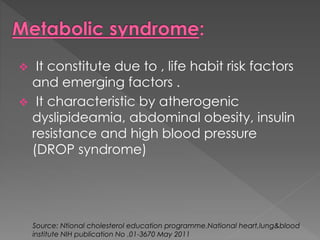
 It constitute due to , life habit risk factors 
and emerging factors . 
 It characteristic by atherogenic 
dyslipideamia, abdominal obesity, insulin 
resistance and high blood pressure 
(DROP syndrome) 
Source: Ntional cholesterol education programme.National heart,lung&blood 
institute NIH publication No .01-3670 May 2011
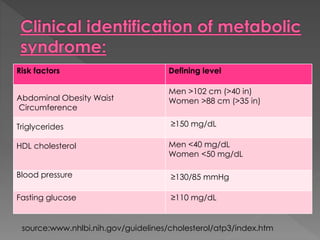
Risk factors Defining level 
Men >102 cm (>40 in) 
Women >88 cm (>35 in) 
≥150 mg/dL 
Men <40 mg/dL 
Women <50 mg/dL 
≥130/85 mmHg 
Abdominal Obesity Waist 
Circumference 
Triglycerides 
HDL cholesterol 
Blood pressure 
Fasting glucose ≥110 mg/dL 
source:www.nhlbi.nih.gov/guidelines/cholesterol/atp3/index.htm
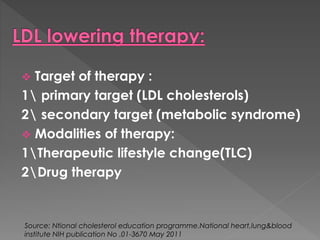
 Target of therapy : 
1 primary target (LDL cholesterols) 
2 secondary target (metabolic syndrome) 
 Modalities of therapy: 
1Therapeutic lifestyle change(TLC) 
2Drug therapy 
Source: Ntional cholesterol education programme.National heart,lung&blood 
institute NIH publication No .01-3670 May 2011
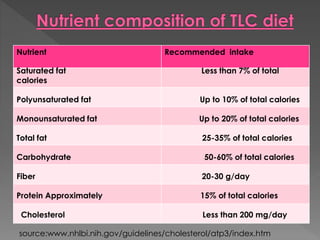
Nutrient Recommended intake 
Saturated fat Less than 7% of total 
calories 
Polyunsaturated fat Up to 10% of total calories 
Monounsaturated fat Up to 20% of total calories 
Total fat 25-35% of total calories 
Carbohydrate 50-60% of total calories 
Fiber 20-30 g/day 
Protein Approximately 15% of total calories 
Cholesterol Less than 200 mg/day 
source:www.nhlbi.nih.gov/guidelines/cholesterol/atp3/index.htm
Visit 1 
Begin Lifestyle 
Therapies 
Visit 2 
Evaluate LDL 
response 
If LDL goal 
not 
achieved, 
intensify 
LDL-lowering 
therapy 
Visit 3 
Evaluate LDL 
response 
If LDL goal not 
achieved, 
consider 
adding drug Tx 
Visit N 
Monitor 
Adherence to 
TLC 
Source: Ntional cholesterol education programme.National heart,lung&blood 
institute NIH publication No .01-3670 May 2011
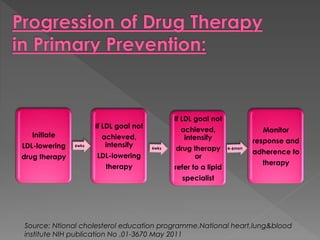
Initiate 
LDL-lowering 
drug therapy 
If LDL goal not 
achieved, 
intensify 
LDL-lowering 
therapy 
If LDL goal not 
achieved, 
intensify 
drug therapy 
or 
refer to a lipid 
specialist 
Monitor 
response and 
adherence to 
therapy 
Source: Ntional cholesterol education programme.National heart,lung&blood 
institute NIH publication No .01-3670 May 2011
 the clinical approach calls for TLC for 
primary prevention of CHD . 
 For higher risk persons , clinical 
approach intensifies prevention 
strategies . aiming to reduce long tern 
risk > 10 years. 
Source: Ntional cholesterol education programme.National heart,lung&blood 
institute NIH publication No .01-3670 May 2011
 The recent clinical trials demonstrate that 
LDL lowering therapy reduce (coronary 
mortality, major coronary events, 
procedures and strokes) 
 For persons with established CHD or CHD 
equivalent ,ATPIII specifies an LDL c < 
100 mg/dl as the goal of therapy for 
secondary prevention. 
Source: Ntional cholesterol education programme.National heart,lung&blood 
institute NIH publication No .01-3670 May 2011
 pharmacists should always counsel 
patients on the disease process, and 
reinforce lifestyle modifications, with 
added emphasis on the benefits of 
intervention and compliance. 
 The most important message pharmacists 
can relay to patients is that the 
management of dyslipidemia is not a 
short- term assignment with immediate, 
visible outcomes. Rather, it is a long-term 
process that should be integrated into 
one’s daily life. 
Source: pharmacytimes.com
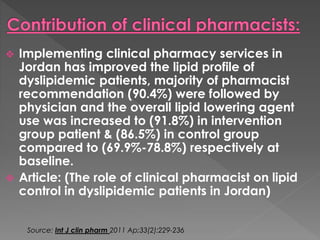
 Implementing clinical pharmacy services in 
Jordan has improved the lipid profile of 
dyslipidemic patients, majority of pharmacist 
recommendation (90.4%) were followed by 
physician and the overall lipid lowering agent 
use was increased to (91.8%) in intervention 
group patient & (86.5%) in control group 
compared to (69.9%-78.8%) respectively at 
baseline. 
 Article: (The role of clinical pharmacist on lipid 
control in dyslipidemic patients in Jordan) 
Source: Int J clin pharm 2011 Ap;33(2):229-236
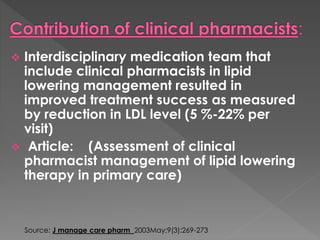
 Interdisciplinary medication team that 
include clinical pharmacists in lipid 
lowering management resulted in 
improved treatment success as measured 
by reduction in LDL level (5 %-22% per 
visit) 
 Article: (Assessment of clinical 
pharmacist management of lipid lowering 
therapy in primary care) 
Source: J manage care pharm 2003May;9(3):269-273
66

Dyslipidemia.docx

  • 3.
     Cholesterol islipid serves as precursor to steroid hormones , bile acid, and the main component of cell membrane.  Cholesterol in blood reflect 40-60% of endogenous cholesterol.  Cholesterol , triglyceride and lipid transport through lipoprotein.  Saturated ,unsaturated fats and cholesterol digested, reformulated and packaged into chylomicrons by cell of intestinal endothelium. Source:clinical pharmacy &therapeutic 5th edition
  • 4.
    Category Composition ChylomicronsTriglycerides exogenousdietary Very low density lipoproteins (VLDLs) Triglycerides Intermediate density lipoproteins (IDL) Triglycerides &Cholesterol Low density lipoproteins (LDL) Cholesterol High density lipoproteins (HDL) Cholesterol Source:clinical pharmacy &therapeutic 5th edition
  • 5.
     Chylomicrons enterthe lymphatic system and travel through body until broken down by lipoprotein lipase in the capillary beds to chylomicron remnant (smaller , less dense and contain apolipoprotein B48,E and then cleared from circulation by LDL receptor in the liver  This is replenishing cholesterol pool in the liver which synthesize cholesterol also by endogenous pathway and transported by LDL,VLDL and HDL.  Triglyceride (TG) synthesis by the liver in the excess of carbohydrate and secreted as VLDL Source:clinical pharmacy &therapeutic 5th edition
  • 6.
     VLDL containfive times more TG than cholesterol and contain apolipoprotein C-II,B-100 ,E. Apolipoprotein B-100 and E link with LDL cell receptor.  Apo lipoprotein C-II function as cofactor for lipoprotein lipase. Source:clinical pharmacy &therapeutic 5th edition
  • 7.
    VLDL VLDL remnant Clearance by hepatic receptor IDL LDL TG TG TG Free fatty acid Source:clinical pharmacy &therapeutic 5th edition
  • 8.
     LDL isprimary atherogenic lipoprotein and the smaller size of LDL particle of more able to penetrate into sub endothelial tissue where it contribute to the development of atherosclerosis .  Two type of LDL been associated with CHD: 1 Lipoprotein(a) LP(a) particle is LDL particle surrounded by plasminogen –like protein 2Atherogenic lipoprotein phenotype B found in30%population associated with CHD risk. Source:clinical pharmacy &therapeutic 5th edition
  • 9.
     The atheroscleroticplaque formation initiated by entrance of LDL and LP(a)into sub endothelial space with their oxidative modified free radicals produced by cells which activated macrophage yielding lipid rich foam which continue to progress with same times of the cell proliferation and collagen synthesis.  HDL rich in cholesterol and very small ,However appears in reverse cholesterol transport resulting in anti atherogenic effect. Source:clinical pharmacy &therapeutic 5th edition
  • 10.
  • 11.
     HDL mayprevent or remove cholesterol in the intimae by : 1competitively inhibit uptake of LDL by endothelial cells 2 prevent LDL oxidation. 3 inhibit platelet activation by LDL and aggregation by increase prostacyclin production. 4promote fibrolysis by stabilizing prostacyclin.  LDL serve as marker of metabolism of chylomicron and VLDL (increase TG, decrease HDL). Source:clinical pharmacy &therapeutic 5th edition
  • 12.
    1- Type I(high level of chylomicrons). 2-Type II a (high level of LDL) 3-Type II b (high level of LDL+VLDL) 4-Type III (high level of IDL ) 5-Type IV (high level of VLDL) 6-Type V ( high level of VLDL +chylomicrons) Source:hand book of pharmacotherapy 8th edition
  • 13.
     Dyslipidaemia definedas elevated of total cholesterol ,LDL, TG, low HDL or combination of these abnormalities.  According to etiology dyslipidaemia classified to: 1- primary or genetic lipoprotein disorder. 2-secondary dyslipidaemia (drugs &diseases). Source:hand book of pharmacotherapy 8th edition
  • 14.
    Secondary dyslipidaemia dueto: 1. Diseases( liver disease ,chronic renal failure ,nephrotic syndrome, obesity ,hypothyroidism ,diabetes ,alcohol ) 2. Drugs (corticosteroids,thiazide diuretic ,cyclosporine ,oral contraceptive , HIV protease inhibitors ,B-blockers) Source:clinicl pharmacology 5th edition
  • 15.
     In typeI there are: 1-repeated attack of pancreatitis. 2-abdominal pain. 3-euraptive cutanous xanthomatosis. 4-hepatosplenomegaly beginning in childhood. Note: symptoms severity increased with increased dietary fat intake. accelerated atherosclerosis not associated with this disease Source:hand book of pharmacotherapy 8th edition
  • 16.
     Type IIIthe clinical feature appears after 20 years : 1- xanthoma 2- severe atherosclerosis  Type IV occur in adult and similar to secondary dyslipidaemia.  Type V : -abdominal pain , pancreatitis ,xanthoma ,peripheral polyneuropathy and renal insufficient. Note: atherosclerosis is increased with this disorder Source:hand book of pharmacotherapy 8th edition
  • 17.
     Angina. Myocardial infraction (MI).  Arrhythmias.  Stroke.  Peripheral arterial disease.  Abdominal aortic aneurysm.  Sudden death. Source:hand book of pharmacotherapy 8th edition
  • 18.
     CVD isthe leader amongst the causes of death worldwide.  Prevalence of CVD including CHD is increasing rapidly in Sudan.  Increasing burden of risk factors like: › Hypertension › Smoking › Obesity › Diabetes › Dyslipidemia Source:clinical pharmacy &therapeutic 5th edition
  • 19.
    Total 58 milliondeath worldwide CVD 30% 17.4 million OTHERS 3.3 times than the total no. of death due to HIV, Malaria, and Tuberculosis combined
  • 20.
    Cardiovascular disease isthe leading cause of death among adults worldwide CVD 7.2 million Cancer 6.3 million Cerebrovascular Disease 4.6 million Acute Lower Respiratory Tract Infections 3.9 million Tuberculosis 3.0 million COPD (Chronic Obstructive Pulmonary Disease) 2.9 million Diarrhoea (Including Dysentery) 2.5 million Malaria 2.1 million AIDS 1.5 million Hepatitis B 1.2 million Source: WHO 2005
  • 21.
    Sex and countryTotal cholesterol Women ≥200 mg/dl* ≥240 mg/dl** China, 65–74 yrs 47.8% 18.2% Spain, ≥65 yrs 77.6% 45.8% England, ≥65 yrs 91.7% 54.6% Mexico, ≥60 yrs 44.2% -- South Africa, ≥60 yrs 58.0% -- Thailand, ≥60 yrs -- 10.8% Turkey, ≥70 yrs 58.5% 23.8% Men ≥200 mg/dl* ≥240 mg/dl** China, 65–74 yrs 30.6% 7.5% Spain, ≥65 yrs 52.5% 23.1% England, ≥65 yrs 81.9% 40.4% Mexico, ≥60 yrs 56.9% -- South Africa, ≥60 yrs 78.7% -- Thailand, ≥60 yrs -- 18.4% Turkey, ≥70 yrs 42.5% 17.0%  Source:A&D journal pubmed 2013 online .article about cholesterol and cardiovascular disease
  • 22.
     DM inAfrica: Up to 13% or more adults in urban communities.  Diabetes is present in 10% of all hospital admission in Sudan.  Diabetes is responsible for 10% of hospital mortality. Source:Diabetes Int 2000; 10: 18-9.
  • 23.
    Diabetic Dyslipidemia inSudan Variables Mean (SD) Values P-value Diabetic patients N=250 Controls N=60 Total cholesterol (mmol/L) 5.69 (0.29) 5.20 (0.15) NS Triglycerides (mmol/L) 1.71 (0.27) 1.16 (0.21) <0.05 HDL-C (mmol/L) 0.93 (0.15) 1.11 (0.18) <0.05 LDL-C (mmol/L) Half of the diabetic population in Sudan suffers 3.68 (0.21) 3.45 (0.14) NS VLDL-C (mmol/L) from dyslipidemia 1.01 (0.26) 0.81 (0.11) NS TC/HDL-C 6.11 (1.86) 4.69 (0.13) NS Source:Eastern Mediterranean Health Journal, Vol. 14, No. 2, 2008
  • 25.
     What isbeing tested? Cholesterol &Triglyceride in the blood sample. Total cholesterol is determined from the amount of cholesterol found in HDL, LDL and VLDL. LDL - if triglycerides < 400 then LDL is calculated using Friewald formula: ((Calculated LDL=chol−HDL−TG/5)). If triglycerides > 400 then LDL is measured directly. Non HDL= Total cholesterol – HDLc. Source: labtest online.org
  • 26.
     How toensure quality of the sample? Fasting for 9-12 hrs before making the test ,only water is permitted.  When it is ordered ? Adult: Healthy adult with no risk factor for heart disease once every 5 years. Source: labtest online.org
  • 27.
     Children &Adolescent: AAP(American academy of pediatrics) recommended one test between 9 -11 yrs &again between 17- 21 yrs .  What does test results means? LDL Cholesterol Optimal: Less than 100 mg/dL (2.59 mmol/L) Near/above optimal: 100-129 mg/dL (2.59-3.34 mmol/L) Borderline high: 130-159 mg/dL (3.37-4.12 mmol/L) High: 160-189 mg/dL (4.15-4.90 mmol/L) Very high: Greater than 190 mg/dL (4.90 mmol/L) Source: labtest online.org
  • 28.
     Total Cholesterol Desirable: Less than 200 mg/dL (5.18 mmol/L) Borderline high: 200-239 mg/dL (5.18 to 6.18 mmol/L) High: 240 mg/dL (6.22 mmol/L) or higher  HDL Cholesterol Low level, increased risk: Less than 40 mg/dL (1.0 mmol/L) for men and less than 50 mg/dL (1.3 mmol/L) for women Average level, average risk: 40-50 mg/dL (1.0-1.3 mmol/L) for men and between 50-59 mg/dl (1.3-1.5 mmol/L) for women High level, less than average risk: 60 mg/dL (1.55 mmol/L) or higher for both men and women Source: labtest online.org
  • 29.
     Fasting Triglycerides Desirable: Less than 150 mg/dL (1.70 mmol/L) Borderline high: 150-199 mg/dL(1.7-2.2 mmol/L) High: 200-499 mg/dL (2.3-5.6 mmol/L) Very high: Greater than 500 mg/dL (5.6 mmol/L)  Non-HDL Cholesterol Optimal: Less than 130 mg/dL (3.37 mmol/L) Near/above optimal: 130-159 mg/dL (3.37- 4.12mmol/L) Borderline high: 160-189 mg/dL (4.15-4.90 mmol/L) High: 190-219 mg/dL (4.9-5.7 mmol/L) Very high: Greater than 220 mg/dL (5.7 mmol/L) Source: labtest online.org
  • 30.
     Result inchildren and adolescents Test Acceptable mg/dl Borderline mg/dl High mg/dl Total cholesterol Less than 170 170 -199 Greater than or equal 200 Non HDL cholesterol Less than 120 120-140 Greater than or equal 145 Source: labtest online.org
  • 32.
     Therapeutic lifestylechange(TLC)should be the first approach tried in all patient this includes:  Dietary restriction of cholesterol and saturated fatty acid.  Regular exercise.  Weight reduction. Source:pharnacotherapy text book 7th edition
  • 34.
     Inhibit cholesterolsynthesis by inhibit (HMG-Co A), increase LDL receptor and enhance receptor mediated metabolism and clearance of LDL from serum.  Beneficial effect on lipid parameters:  LDL c ↓ 18%-55%  HDL c ↑5-15%  TG ↓7%-30%  24%-40% reduction in coronary events. source: medescape.org/ view article/561751
  • 35.
     Potential adverseeffects: Myalgia ,Myopathy and increased liver enzymes  Contraindications: Liver disease.  Precautions: CYP3A4 enzyme inducer(phenytoin & barbiturate) CYP3A4 enzyme inhibitors(ciclosporin & ketoconazole) source: medescape.org/ view article/561751
  • 36.
     Potential pleiotropiceffects:  Improve endothelial function(up regulate eNOs, scavenge superoxide)  Antithrombotic effects(improve fibrinolytic balance ,inhibit platelet aggregation)  Anti-inflammatory effects(decrease activation of NF ,decrease macrophage infiltration)  Enhance plaque stability  Attenuate vascular smooth muscle cell proliferation source: medescape.org/ view article/561751
  • 37.
    Response to statin Is there a role of ‘GENE’?
  • 38.
     Genetic variationin HMGCR may contribute to variation in the response  The CAP study, a 6-week simvastatin (40 mg/d) trial.  Designed to examine role of gene in ethnic variability in statin response in African/African Americans and Caucasians. Source :Circulation 2008;117;1537-1544
  • 39.
     People carryingeither H-2 or H-7 haplotypes:  African/African American: 64%  Caucasians: 11.6%  12 people carrying both, H-2 and H-7 haplotypes  11 were African/African American  1 was Caucasian  LDL-C reduction in carriers of both, H-2 and H-7 haplotypes vs. non-carriers -28% vs. -41.5% Source:Circulation 2008;117;1537-1544
  • 40.
     We needhigh dose of statins: Increasing prevalence of risk factors Presence of multiple risk factors is also very high. Studies have established that African respond lesser to statins compared to Caucasians. Two (H-2 and H-7) SNP haplotypes are commonly associated with poor response to statins and these haplotypes are highly prevalent in African compared to Caucasians. Statins: benefits are beyond LDL-C and are dose dependent. Source :Circulation 2008;117;1537-1544
  • 41.
     Early, intensivelipid-lowering treatment with statin, initiated during the acute phase of unstable angina or non–Q-wave MI, reduces early recurrent ischemic events  A benefit was observed in a population with low to normal baseline LDL-C levels. Source:Schwartz et al JAMA 2001;285:1711-8
  • 42.
     Increase peripherallipolysis and decrease hepatic TG production(by binding to peroxysome proliferators activated receptors alpha in hepatocytes PPAR alpha)  Beneficial effects on lipid parameter:  TG ↓ 25%-50%  LDLc ↓ or remain the same or↑  LDL &HDL ↑ 10%-25% in hypertriglyceridemia  Adverse effects: GIT up set, cholelithiasis , myositis .  Contraindication: hepatic or renal dysfunction ,gallbladder diseases.  Indication: hypertrigylceridemia(type IV&V)combined hyperlipidemia(type IIb) with low HDLc. source: medescape.org/ view article/561751
  • 43.
     Beneficial effecton lipid parameter:  LDLc ↓ 5%-25%  TG ↓20%-60%  HDL ↑15%-39%  Reduce coronary events  Adverse effect :  Flushing ,itching ,headache  Hepatotoxicity  Activation of peptic ulcer  Hyperglycemia/reduced insulin senetivity  Contraindications: Active liver disease, peptic ulcer disease NOTE: Tredaptive(nicotinic acid +laropriprant)2008 Laropriprant(selective antagonist of prostaglandin D2 receptor). source: medescape.org/ view article/561751
  • 44.
     Binding tobile acid and increase excretion of cholesterol  Beneficial effect on lipid parameter:  LDL c↓ 15%-30%  HDL c ↑3%-5%  TG may increase in patient with elevated TG  Reduced coronary events  Adverse effect:  GIT intolerance ,constipation, bloating ,abdominal pain, flatulence  Drug interaction:  Bind negatively to charged drugs, interfere with absorption of drugs/fat soluble vitamins(other drugs 1hr before or 4-6 hrs after) source: medescape.org/ view article/561751
  • 45.
     Reduce cholesterolabsorption by binding to intestinal cholesterol transporter (inhibit delivery of cholesterol to liver &increase hepatic LDL receptor)  Beneficial effect on lipid parameter:  LDL c ↓18%-20%(in monotherapy or “add-on” to statin no change in TG&HDL. source: medescape.org/ view article/561751
  • 46.
     Fish oil: It is rich in omega3 fatty acid ,decrease VLDL synthesis and little change in LDL and HDL level. Omega 3 fatty acids protect against CHD mortality particularly sudden death. Can be used as alternative to fibrate or in combination with statins.  Soluble fibers: Bind to bile acids in the gut and increase conversion of cholesterol to bile acids in the liver. source: medescape.org/ view article/561751
  • 47.
     CETP: Ittransfers cholesterol from HDL to LDL&VLDL ,so it inhibition will result in increase of HDL level and reduce cardiovascular events.  Combination drug therapy: First monotherapy is used ,then if there is alack of response combination is used. In general Statins + bile acid sequestrants . niacin+ bile acid sequesterant. Both provide great reduction in total &LDL cholesterol. To increase HDL level gemifebrozil or niacin is used. source: medescape.org/ view article/561751
  • 48.
    drug Dosage formsUsual daily dose Maximum daily dose cholestyramine Bulk powder 4g packet 8g TID 32g Colestipol hydrochlorid Bulk powder 5g packet 10g BID 30g colesevelam 625 mg tablet 1,875mg BID 4,375mg niacin 50,100,250,500mg tab 125,250,500mg cap 1,000-2,000 mg once daily 6g Extended release niacin 500,750,1000mg tab 1000-2000mg once daily 2000mg Fenofibrate 67.134,200mg cap 54,160,40,120mg tab 54mg or 67mg 201mg gemfibrizol 300mg cap 600mg BID 1.5g ezetimibe 10mg tab 10mg 10mg source:pharmacotherapy text book.7th edition
  • 49.
    drug Dosage formUsual daily dose Maximum daily dose lovastatin 20,40mg tab 20-4-mg 80mg pravastatin 10,20,40,80mg tab 10-20mg 40mg simvastatin 5,10,20,40,80mg tab 10-20mg 80mg atorvastatin 10,20,40,80mg tab 10mg 80mg rosuvastatin 5,10,20,40 mg tab 5mg 40mg pitavastatin 1,2,4mg 2mg 4mg source:pharmacotherapy textbook. 7th edition
  • 50.
     According tothe NCEP(national cholesterol education programme &the national institute of health (USA):  The most important step in management of high cholesterol level in the blood is assessing person’s risk status. By 3 steps:  First: detecting fast lipoprotein profile (total cholesterol , LDL c, HDL c ,TG).  Second: identifying any risk determinants.  Third: estimation of 10 years CHD risk according to Framingham scoring.  Major risk determinants:  Cigarette smoking  Hypertension  Low HDL ≤ 40mgdl  Family history of CHD  Age { men ≥45 yrs women≥55ys} Note :there are other factors ,but only the major factors modify LDL c goals Source: Ntional cholesterol education programme.National heart,lung&blood institute NIH publication No .01-3670 May 2011
  • 51.
    For individual with Trial of dietary therapy &counseling Initiate drug therapy if LDL remain LDL cholesterol goal Risk of CHD for 10yrs(framing ham score) No CHD&>0- 1 risk factor 6 – 12 month ≥ 190 mg/dl ≥4.9 mmol/L >160 mg /dl >4.1 mmol/L > 10 % No CHD &<2 CHD risk factor 3 – 6 month ≥ 160 mg/dl ≥4.1 mmol/L >130 mg/dl > 3.4 mmol/L 10 -20% Established CHD 6 – 12 weeks ≥ 130 mg/dl ≥3.4 mmol/L ≤ 100 mg/dl ≤ 2.6 mmol/L < 20% source:www.nhlbi.nih.gov/guidelines/cholesterol/atp3/index.htm
  • 52.
  • 53.
  • 54.
  • 55.
     It constitutedue to , life habit risk factors and emerging factors .  It characteristic by atherogenic dyslipideamia, abdominal obesity, insulin resistance and high blood pressure (DROP syndrome) Source: Ntional cholesterol education programme.National heart,lung&blood institute NIH publication No .01-3670 May 2011
  • 56.
    Risk factors Defininglevel Men >102 cm (>40 in) Women >88 cm (>35 in) ≥150 mg/dL Men <40 mg/dL Women <50 mg/dL ≥130/85 mmHg Abdominal Obesity Waist Circumference Triglycerides HDL cholesterol Blood pressure Fasting glucose ≥110 mg/dL source:www.nhlbi.nih.gov/guidelines/cholesterol/atp3/index.htm
  • 57.
     Target oftherapy : 1 primary target (LDL cholesterols) 2 secondary target (metabolic syndrome)  Modalities of therapy: 1Therapeutic lifestyle change(TLC) 2Drug therapy Source: Ntional cholesterol education programme.National heart,lung&blood institute NIH publication No .01-3670 May 2011
  • 58.
    Nutrient Recommended intake Saturated fat Less than 7% of total calories Polyunsaturated fat Up to 10% of total calories Monounsaturated fat Up to 20% of total calories Total fat 25-35% of total calories Carbohydrate 50-60% of total calories Fiber 20-30 g/day Protein Approximately 15% of total calories Cholesterol Less than 200 mg/day source:www.nhlbi.nih.gov/guidelines/cholesterol/atp3/index.htm
  • 59.
    Visit 1 BeginLifestyle Therapies Visit 2 Evaluate LDL response If LDL goal not achieved, intensify LDL-lowering therapy Visit 3 Evaluate LDL response If LDL goal not achieved, consider adding drug Tx Visit N Monitor Adherence to TLC Source: Ntional cholesterol education programme.National heart,lung&blood institute NIH publication No .01-3670 May 2011
  • 60.
    Initiate LDL-lowering drugtherapy If LDL goal not achieved, intensify LDL-lowering therapy If LDL goal not achieved, intensify drug therapy or refer to a lipid specialist Monitor response and adherence to therapy Source: Ntional cholesterol education programme.National heart,lung&blood institute NIH publication No .01-3670 May 2011
  • 61.
     the clinicalapproach calls for TLC for primary prevention of CHD .  For higher risk persons , clinical approach intensifies prevention strategies . aiming to reduce long tern risk > 10 years. Source: Ntional cholesterol education programme.National heart,lung&blood institute NIH publication No .01-3670 May 2011
  • 62.
     The recentclinical trials demonstrate that LDL lowering therapy reduce (coronary mortality, major coronary events, procedures and strokes)  For persons with established CHD or CHD equivalent ,ATPIII specifies an LDL c < 100 mg/dl as the goal of therapy for secondary prevention. Source: Ntional cholesterol education programme.National heart,lung&blood institute NIH publication No .01-3670 May 2011
  • 63.
     pharmacists shouldalways counsel patients on the disease process, and reinforce lifestyle modifications, with added emphasis on the benefits of intervention and compliance.  The most important message pharmacists can relay to patients is that the management of dyslipidemia is not a short- term assignment with immediate, visible outcomes. Rather, it is a long-term process that should be integrated into one’s daily life. Source: pharmacytimes.com
  • 64.
     Implementing clinicalpharmacy services in Jordan has improved the lipid profile of dyslipidemic patients, majority of pharmacist recommendation (90.4%) were followed by physician and the overall lipid lowering agent use was increased to (91.8%) in intervention group patient & (86.5%) in control group compared to (69.9%-78.8%) respectively at baseline.  Article: (The role of clinical pharmacist on lipid control in dyslipidemic patients in Jordan) Source: Int J clin pharm 2011 Ap;33(2):229-236
  • 65.
     Interdisciplinary medicationteam that include clinical pharmacists in lipid lowering management resulted in improved treatment success as measured by reduction in LDL level (5 %-22% per visit)  Article: (Assessment of clinical pharmacist management of lipid lowering therapy in primary care) Source: J manage care pharm 2003May;9(3):269-273
  • 66.

Editor's Notes

  • #23 Diabetes is present in more than 13% adult people, Diabetes is present in more than 10% of hospital admission in Sudan, Diabetes is responsible for more than 10% hospital mortality in Sudan.