CLINICAL ENZYMOLOGY
Presented by:
Dr. Mohammed Al-huraiby
1
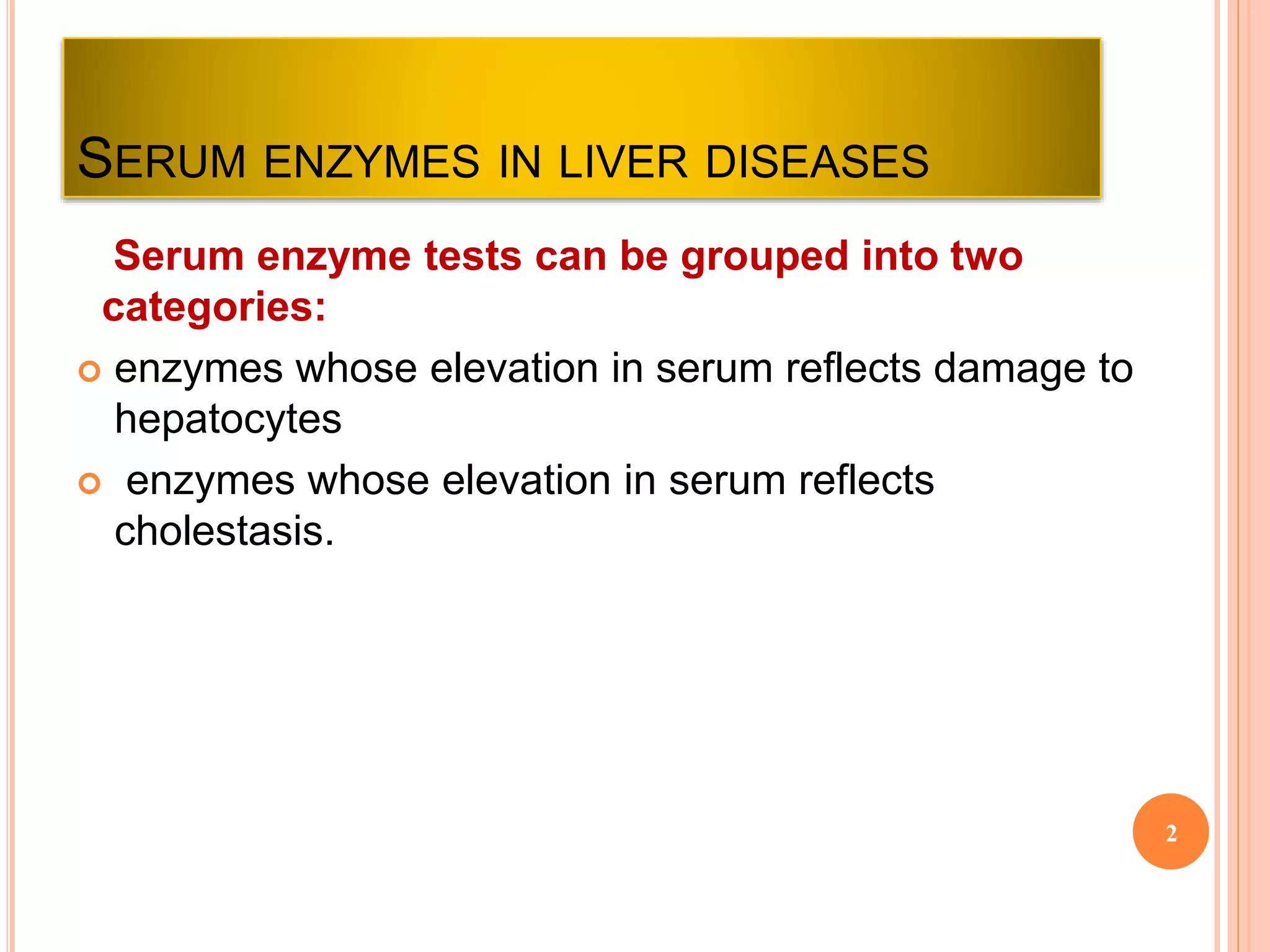
SERUM ENZYMES IN LIVER DISEASES
Serum enzyme tests can be grouped into two
categories:
 enzymes whose elevation in serum reflects damage to
hepatocytes
 enzymes whose elevation in serum reflects
cholestasis.
2
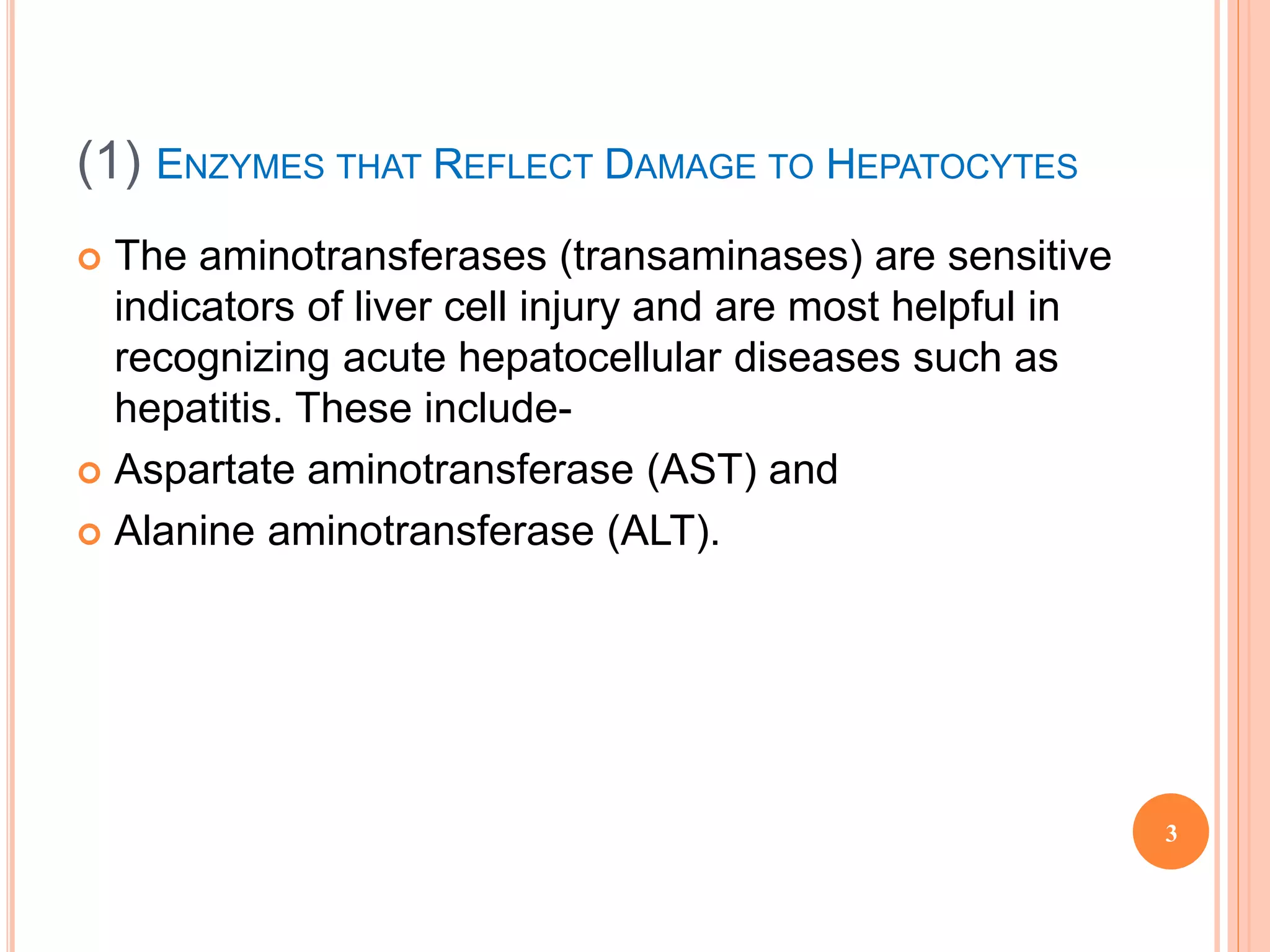
(1) ENZYMES THAT REFLECT DAMAGE TO HEPATOCYTES
 The aminotransferases (transaminases) are sensitive
indicators of liver cell injury and are most helpful in
recognizing acute hepatocellular diseases such as
hepatitis. These include-
 Aspartate aminotransferase (AST) and
 Alanine aminotransferase (ALT).
3
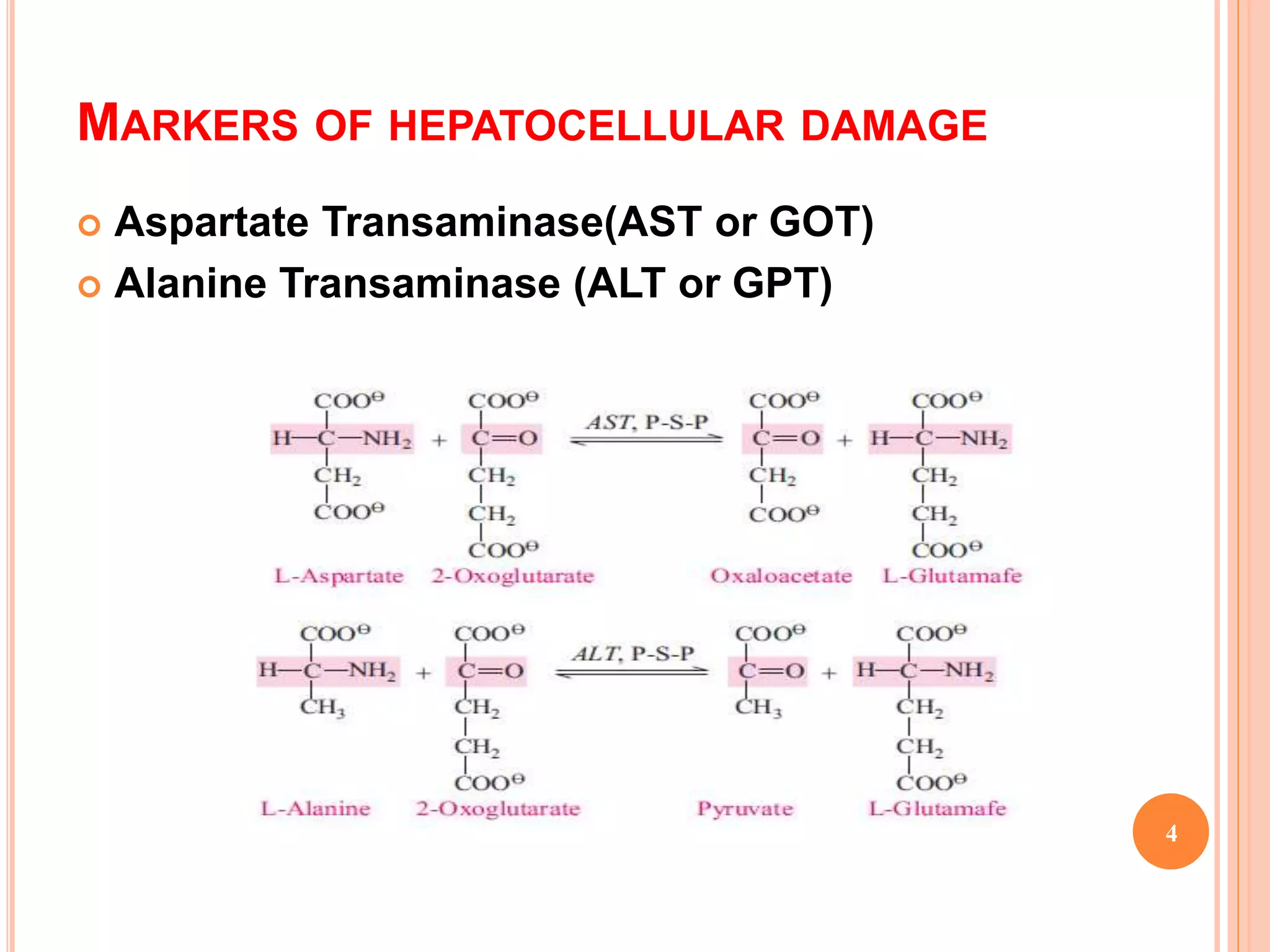
MARKERS OF HEPATOCELLULAR DAMAGE
 Aspartate Transaminase(AST or GOT)
 Alanine Transaminase (ALT or GPT)
4
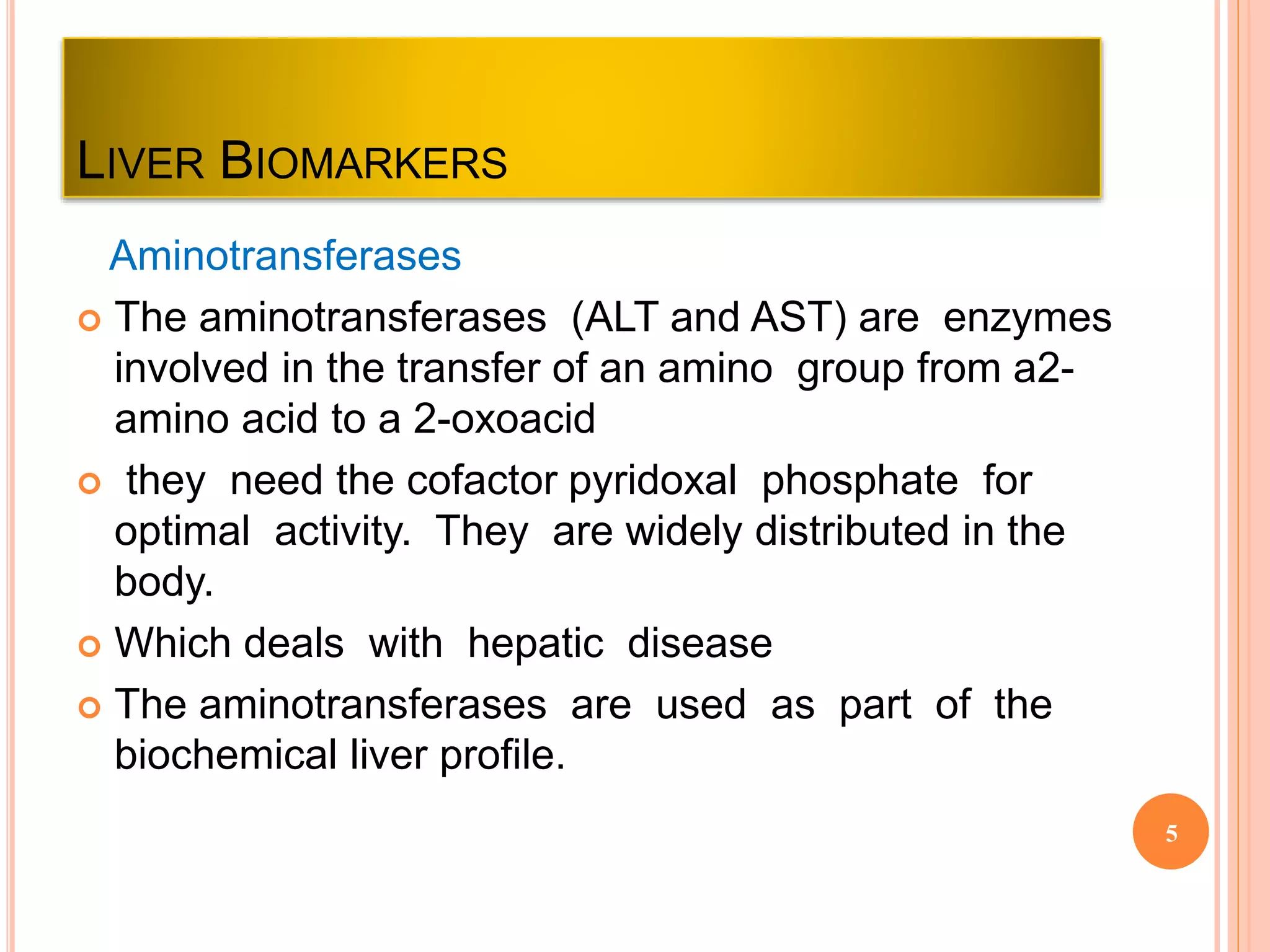
LIVER BIOMARKERS
Aminotransferases
 The aminotransferases (ALT and AST) are enzymes
involved in the transfer of an amino group from a2-
amino acid to a 2-oxoacid
 they need the cofactor pyridoxal phosphate for
optimal activity. They are widely distributed in the
body.
 Which deals with hepatic disease
 The aminotransferases are used as part of the
biochemical liver profile.
5
ASPARTATE TRANSAMINASE AST
Tissue Sources:
 AST is found in high concentration in cardiac tissue,
liver, skeletal muscle.
 In less extended kidney, pancreas and RBC.
Reference Range:
 Normal values
 AST: Male: <35 U/L
 Female: <31 U/L
 Reference range based on age, sex, race, body mass
and exercise like adults is higher than in children, in
men.
6
 AST :AST levels in plasma increase after 6 to 8hours
of chest pain and it reaches the peak value by 2nd day,
but comes to normal by4th or 5thday.
7
CAUSES OF RAISED PLASMA ASPARTATE
AMINOTRANSFERASE ACTIVITIES
 Artificial: due to in vitro release from
erythrocytes if there is hemolysis or if
separation of plasma from cells is delayed.
 Physiological : during the neonatal period
(about 1.5 times the upper adult reference
limit).
8
Marked increase (may be greater than 5–10 times the
upper reference limit in :
 myocardial infarction
 acute viral or toxic hepatitis.
Moderate to slight increase (usually less than five
times)
 skeletal muscle disease
 certain drugs.
 severe hemolytic episodes (of erythrocyte origin)
9
Alanine aminotransferase
 Alanine aminotransferase (glutamate pyruvate
 aminotransferase, GPT) is present in high
concentrations in liver and, to a lesser extent, in skeletal
muscle, kidney and heart.
Reference Range : ALT:
Male: <45 U/L
Female: <34 U/L
10
CLINICAL SIGNIFICANCE
 In the liver, ALT >AST
 Elevated plasma ALT are considered to be relatively
specific for liver disease.
 AST may be elevated in other forms of tissue damage,
such as myocardial infarction, muscle necrosis and
renal disorders.
 In liver disease, the ALT level is increased markedly
compared to AST.
 In acute viral hepatitis there is a 100-1000 times
increase in both ALT and AST but ALT level is
increased more than that of AST
11
CAUSES OF RAISED PLASMA ALT ACTIVITIES
Marked increase (10 to 100 X UNL)
 Circulatory failure with 'shock' and hypoxia
 Acute viral or toxic hepatitis
Moderate increase
 Cirrhosis (may be normal or twice of UNL)
 Infectious mononucleosis (due to liver involvement)
 Liver congestion secondary to congestive cardiac failure
 Cholestatic jaundice (non-malignant disease ALT>AST,
Malignant AST>ALT)
 Surgery or extensive trauma and skeletal muscle disease
 Chronic persistent hepatitis AST: ALT <1
12
(2) ENZYMES THAT REFLECT CHOLESTASIS
Cholestasis: is the term used to describe the
consequences of failure to produce and/or excrete bile.
The activities of three enzymes—
 1)Alkaline phosphatase,
 2) 5'-nucleotidase, and
 3) γ-Glutamyl transpeptidase (GGT)—are usually
elevated in cholestasis.
 Alkaline phosphatase and 5'-nucleotidase are found in or
near the bile canalicular membrane of hepatocytes, while
GGT is found in the cell membrane and mitochondria of
liver and other tissues 13
MARKERS OF CHOLESTASIS
Alkaline phosphatase
 The ALPs are a group of enzymes that hydrolyse organic
phosphates at high pH.
 They are present in most tissues but are in particularly
high concentration in the osteoblasts of
bone(associated with the calcification process)
 It is localized in cell membranes ( ecto-enzyme), and is
 associated with transport mechanisms in liver, kidney
 and intestinal mucosa
14
Reference Range:
 ALP 98 - 279 U / L.
 Reference range values based on age, gender,
hormone levels and body mass index.
15
ISOZYMES OF ALKALINE PHOSPHATASE
1. Hepatic Isoenzyme – Travels fastest towards the
anode and occupies the same position as Alpha 2
globulin. Its level rises in extra hepatic biliary
obstruction.
2. Bone Isoenzyme-Increases due to osteoblastic
activity and is normally elevated in children during
periods of active growth .
3. Placental Isoenzyme - Rises during last 6 weeks of
pregnancy.
4. Intestinal Isoenzyme- Rise occurs after a fatty meal.
May increase during various GI disorders.
16
ISOZYMES OF ALKALINE PHOSPHATASE
 Regan isoenzyme –
• Present in plasma of about 15% of patients with carcinoma
of lung, liver or gut
• Also seen in chronic smokers
• Structurally resembles placental ALP
 Nagao Isoenzyme
 Variant of Regan isoenzyme
 Detected in metastatic carcinoma of pleural
surfaces and adenocarcinoma of pancreas and bile
duct.
17
Causes of raised plasma alkaline phosphatase activity
Physiological :
 During the last trimester of pregnancy, the plasma total
ALP activity rises due to the contribution of the
placental isoenzyme.
 Plasma ALP concentration may increase by up to five
times and usually returns to normal levels by 1 month
post partum.
18
 There is a gradual increase in the proportion of liver
ALP with age.
 In the elderly, the plasma bone isoenzyme activity
may increase slightly.
19
20
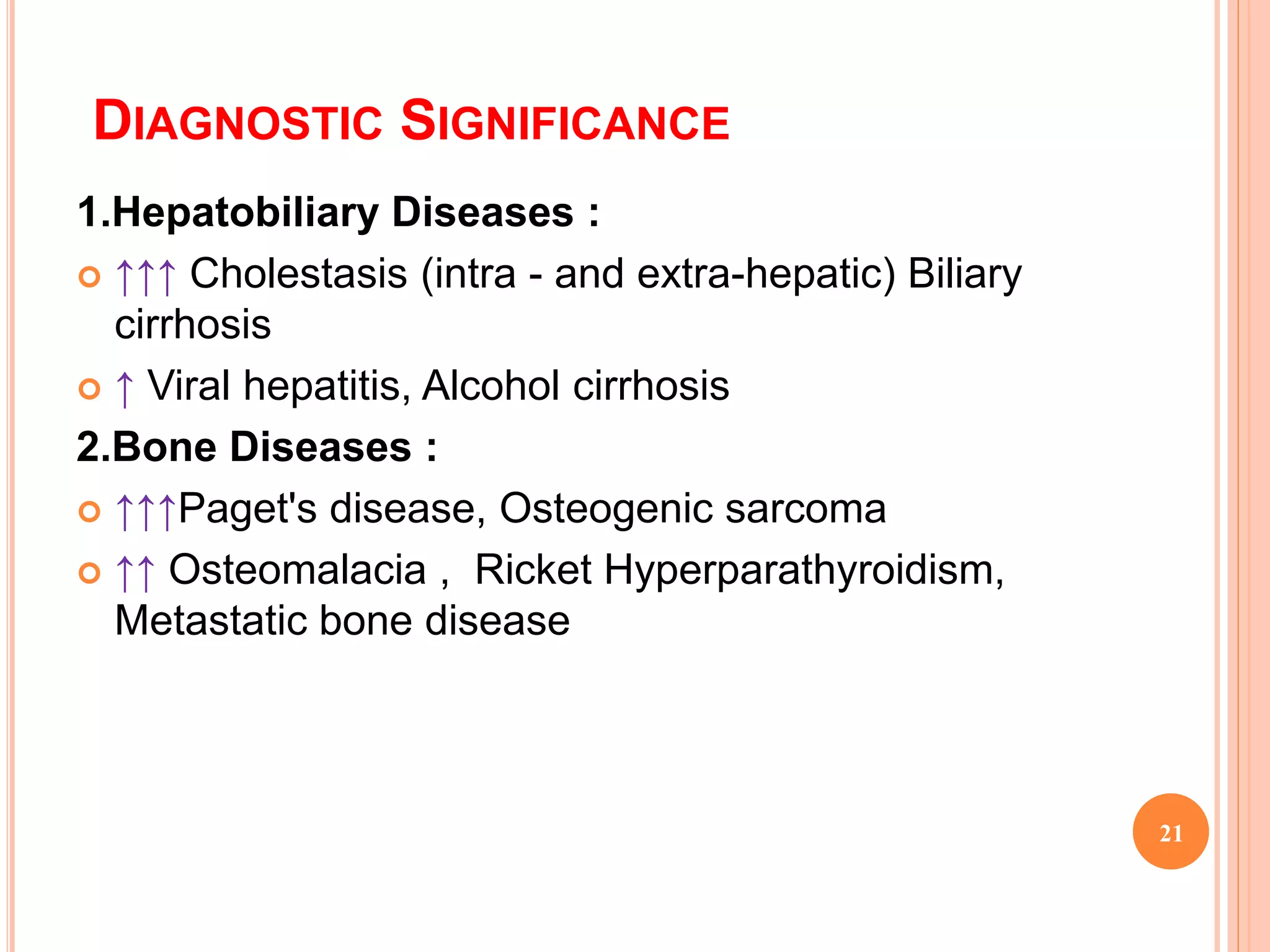
DIAGNOSTIC SIGNIFICANCE
1.Hepatobiliary Diseases :
 ↑↑↑ Cholestasis (intra - and extra-hepatic) Biliary
cirrhosis
 ↑ Viral hepatitis, Alcohol cirrhosis
2.Bone Diseases :
 ↑↑↑Paget's disease, Osteogenic sarcoma
 ↑↑ Osteomalacia , Ricket Hyperparathyroidism,
Metastatic bone disease
21
GAMMA- GLUTAMYL TRANSFERASE ( GT,GGT)
 It is involved in amino acid transport across the membranes.
responsible for the transfer of glutamyl groups from γ-glutamyl
peptides to other peptides or amino acids.
 In the body it is used in the synthesis of glutathione
Found mainly in biliary ducts of the liver, kidney and pancreas.
Enzyme activity is induced by a number of drugs and in particular
alcohol.
-GT increased in liver diseases especially in obstructive jaundice.
-GT levels are used as a marker of alcohol induced liver disease and
in liver cirrhosis.
Reference Range:
GGT 7 - 50 U / L 22
DIAGNOSTIC SIGNIFICANCE:
1. Hepatobiliary disease:
 ↑↑↑Cholestasis, Alcoholic liver disease
 ↑↑ Hepatitis, Cirrhosis, Other liver diseases.
 ↑ Hepatic microsomal enzyme induction: drugs such as
warfarin, phenobarbital.
2. Other:
 ↑ Alcoholism and heavy drinker & Congestive cardiac failure.
23
CLINICAL SIGNIFICANCE
 GGT is used to detect liver dysfunction and Cholestasis
 Elevation of GGT generally parallels that of ALP however,
GGT is more sensitive
 Unlike ALP, GGT and 5’Nucleotidase are not increased in
bone disease
 Normal GGT with Elevated ALP indicates Bone disease
 Elevated GGT and Elevated ALP indicates Hepatobiliary
disease
 Unlike ALP, GGT is not elevated in Childhood or Pregnancy
 GGT can be used to detect Chronic Alcohol Ingestion
 GGT is elevated in about 75% of patients who chronically drink
alcohol
24
5'-NUCLEOTIDASE (5'-NT)
 5'-NT is an enzyme hydrolyses 5‘ nucleotides to
corresponding nucleosides at an optimum pH of 7.5
 It is a marker enzyme for plasma membranes and is seen
as an ecto-enzyme (enzyme present on the cell
membrane).
 The main cause for rise in 5’-NT levels is blockage of the
passageways connecting the liver, duodenum, and gall
bladder. Normal level in serum is 2–10 IU/L
 An elevated 5’-Nucleotidase Blood Test value may
indicate:
 Cholestatic liver disease
 Secondary tumors and lymphoma of the liver
 Early biliary cirrhosis
25
CASE STUDY
 A 50-year old known alcoholic make attended the
general medical clinic because of ascites and the
following abnormal liver test results
 Plasma:
 Bilirubin 52μ mol/L (< 20)
 Alanine amino transferase 76 U/L (< 42)
 Alakaline phosphatase 271 U/L (< 250)
 Albumin 18 g/L (35-45)
 Gamma-glutamyltransferase 324 U/L (< 55)
 Urinary bilirubin and protin normal.
26
CASE STUDY
 A 64-year-old man with lung carcinoma attended
 the oncology clinic. Some of his blood results were
as follows:
 Plasma Bilirubin 10 µmol/L (< 20)
 Alanine aminotransferase 23 U/L (< 42)
 Alkaline phosphatase (ALP) 426 U/L (< 250)
 g-Glutamyl transferase (GGT) 50 U/L (< 55)
 Albumin 36 g/L (35–45)
 Albumin-adjusted calcium 2.22 mmol/L (2.15–2.55)
 Phosphate 1.11 mmol/L (0.80–1.35)
 A liver ultrasound and bone scan were normal.
27
liver enzymes markers.pptx

liver enzymes markers.pptx

  • 1.
  • 2.
    SERUM ENZYMES INLIVER DISEASES Serum enzyme tests can be grouped into two categories:  enzymes whose elevation in serum reflects damage to hepatocytes  enzymes whose elevation in serum reflects cholestasis. 2
  • 3.
    (1) ENZYMES THATREFLECT DAMAGE TO HEPATOCYTES  The aminotransferases (transaminases) are sensitive indicators of liver cell injury and are most helpful in recognizing acute hepatocellular diseases such as hepatitis. These include-  Aspartate aminotransferase (AST) and  Alanine aminotransferase (ALT). 3
  • 4.
    MARKERS OF HEPATOCELLULARDAMAGE  Aspartate Transaminase(AST or GOT)  Alanine Transaminase (ALT or GPT) 4
  • 5.
    LIVER BIOMARKERS Aminotransferases  Theaminotransferases (ALT and AST) are enzymes involved in the transfer of an amino group from a2- amino acid to a 2-oxoacid  they need the cofactor pyridoxal phosphate for optimal activity. They are widely distributed in the body.  Which deals with hepatic disease  The aminotransferases are used as part of the biochemical liver profile. 5
  • 6.
    ASPARTATE TRANSAMINASE AST TissueSources:  AST is found in high concentration in cardiac tissue, liver, skeletal muscle.  In less extended kidney, pancreas and RBC. Reference Range:  Normal values  AST: Male: <35 U/L  Female: <31 U/L  Reference range based on age, sex, race, body mass and exercise like adults is higher than in children, in men. 6
  • 7.
     AST :ASTlevels in plasma increase after 6 to 8hours of chest pain and it reaches the peak value by 2nd day, but comes to normal by4th or 5thday. 7
  • 8.
    CAUSES OF RAISEDPLASMA ASPARTATE AMINOTRANSFERASE ACTIVITIES  Artificial: due to in vitro release from erythrocytes if there is hemolysis or if separation of plasma from cells is delayed.  Physiological : during the neonatal period (about 1.5 times the upper adult reference limit). 8
  • 9.
    Marked increase (maybe greater than 5–10 times the upper reference limit in :  myocardial infarction  acute viral or toxic hepatitis. Moderate to slight increase (usually less than five times)  skeletal muscle disease  certain drugs.  severe hemolytic episodes (of erythrocyte origin) 9
  • 10.
    Alanine aminotransferase  Alanineaminotransferase (glutamate pyruvate  aminotransferase, GPT) is present in high concentrations in liver and, to a lesser extent, in skeletal muscle, kidney and heart. Reference Range : ALT: Male: <45 U/L Female: <34 U/L 10
  • 11.
    CLINICAL SIGNIFICANCE  Inthe liver, ALT >AST  Elevated plasma ALT are considered to be relatively specific for liver disease.  AST may be elevated in other forms of tissue damage, such as myocardial infarction, muscle necrosis and renal disorders.  In liver disease, the ALT level is increased markedly compared to AST.  In acute viral hepatitis there is a 100-1000 times increase in both ALT and AST but ALT level is increased more than that of AST 11
  • 12.
    CAUSES OF RAISEDPLASMA ALT ACTIVITIES Marked increase (10 to 100 X UNL)  Circulatory failure with 'shock' and hypoxia  Acute viral or toxic hepatitis Moderate increase  Cirrhosis (may be normal or twice of UNL)  Infectious mononucleosis (due to liver involvement)  Liver congestion secondary to congestive cardiac failure  Cholestatic jaundice (non-malignant disease ALT>AST, Malignant AST>ALT)  Surgery or extensive trauma and skeletal muscle disease  Chronic persistent hepatitis AST: ALT <1 12
  • 13.
    (2) ENZYMES THATREFLECT CHOLESTASIS Cholestasis: is the term used to describe the consequences of failure to produce and/or excrete bile. The activities of three enzymes—  1)Alkaline phosphatase,  2) 5'-nucleotidase, and  3) γ-Glutamyl transpeptidase (GGT)—are usually elevated in cholestasis.  Alkaline phosphatase and 5'-nucleotidase are found in or near the bile canalicular membrane of hepatocytes, while GGT is found in the cell membrane and mitochondria of liver and other tissues 13
  • 14.
    MARKERS OF CHOLESTASIS Alkalinephosphatase  The ALPs are a group of enzymes that hydrolyse organic phosphates at high pH.  They are present in most tissues but are in particularly high concentration in the osteoblasts of bone(associated with the calcification process)  It is localized in cell membranes ( ecto-enzyme), and is  associated with transport mechanisms in liver, kidney  and intestinal mucosa 14
  • 15.
    Reference Range:  ALP98 - 279 U / L.  Reference range values based on age, gender, hormone levels and body mass index. 15
  • 16.
    ISOZYMES OF ALKALINEPHOSPHATASE 1. Hepatic Isoenzyme – Travels fastest towards the anode and occupies the same position as Alpha 2 globulin. Its level rises in extra hepatic biliary obstruction. 2. Bone Isoenzyme-Increases due to osteoblastic activity and is normally elevated in children during periods of active growth . 3. Placental Isoenzyme - Rises during last 6 weeks of pregnancy. 4. Intestinal Isoenzyme- Rise occurs after a fatty meal. May increase during various GI disorders. 16
  • 17.
    ISOZYMES OF ALKALINEPHOSPHATASE  Regan isoenzyme – • Present in plasma of about 15% of patients with carcinoma of lung, liver or gut • Also seen in chronic smokers • Structurally resembles placental ALP  Nagao Isoenzyme  Variant of Regan isoenzyme  Detected in metastatic carcinoma of pleural surfaces and adenocarcinoma of pancreas and bile duct. 17
  • 18.
    Causes of raisedplasma alkaline phosphatase activity Physiological :  During the last trimester of pregnancy, the plasma total ALP activity rises due to the contribution of the placental isoenzyme.  Plasma ALP concentration may increase by up to five times and usually returns to normal levels by 1 month post partum. 18
  • 19.
     There isa gradual increase in the proportion of liver ALP with age.  In the elderly, the plasma bone isoenzyme activity may increase slightly. 19
  • 20.
  • 21.
    DIAGNOSTIC SIGNIFICANCE 1.Hepatobiliary Diseases:  ↑↑↑ Cholestasis (intra - and extra-hepatic) Biliary cirrhosis  ↑ Viral hepatitis, Alcohol cirrhosis 2.Bone Diseases :  ↑↑↑Paget's disease, Osteogenic sarcoma  ↑↑ Osteomalacia , Ricket Hyperparathyroidism, Metastatic bone disease 21
  • 22.
    GAMMA- GLUTAMYL TRANSFERASE( GT,GGT)  It is involved in amino acid transport across the membranes. responsible for the transfer of glutamyl groups from γ-glutamyl peptides to other peptides or amino acids.  In the body it is used in the synthesis of glutathione Found mainly in biliary ducts of the liver, kidney and pancreas. Enzyme activity is induced by a number of drugs and in particular alcohol. -GT increased in liver diseases especially in obstructive jaundice. -GT levels are used as a marker of alcohol induced liver disease and in liver cirrhosis. Reference Range: GGT 7 - 50 U / L 22
  • 23.
    DIAGNOSTIC SIGNIFICANCE: 1. Hepatobiliarydisease:  ↑↑↑Cholestasis, Alcoholic liver disease  ↑↑ Hepatitis, Cirrhosis, Other liver diseases.  ↑ Hepatic microsomal enzyme induction: drugs such as warfarin, phenobarbital. 2. Other:  ↑ Alcoholism and heavy drinker & Congestive cardiac failure. 23
  • 24.
    CLINICAL SIGNIFICANCE  GGTis used to detect liver dysfunction and Cholestasis  Elevation of GGT generally parallels that of ALP however, GGT is more sensitive  Unlike ALP, GGT and 5’Nucleotidase are not increased in bone disease  Normal GGT with Elevated ALP indicates Bone disease  Elevated GGT and Elevated ALP indicates Hepatobiliary disease  Unlike ALP, GGT is not elevated in Childhood or Pregnancy  GGT can be used to detect Chronic Alcohol Ingestion  GGT is elevated in about 75% of patients who chronically drink alcohol 24
  • 25.
    5'-NUCLEOTIDASE (5'-NT)  5'-NTis an enzyme hydrolyses 5‘ nucleotides to corresponding nucleosides at an optimum pH of 7.5  It is a marker enzyme for plasma membranes and is seen as an ecto-enzyme (enzyme present on the cell membrane).  The main cause for rise in 5’-NT levels is blockage of the passageways connecting the liver, duodenum, and gall bladder. Normal level in serum is 2–10 IU/L  An elevated 5’-Nucleotidase Blood Test value may indicate:  Cholestatic liver disease  Secondary tumors and lymphoma of the liver  Early biliary cirrhosis 25
  • 26.
    CASE STUDY  A50-year old known alcoholic make attended the general medical clinic because of ascites and the following abnormal liver test results  Plasma:  Bilirubin 52μ mol/L (< 20)  Alanine amino transferase 76 U/L (< 42)  Alakaline phosphatase 271 U/L (< 250)  Albumin 18 g/L (35-45)  Gamma-glutamyltransferase 324 U/L (< 55)  Urinary bilirubin and protin normal. 26
  • 27.
    CASE STUDY  A64-year-old man with lung carcinoma attended  the oncology clinic. Some of his blood results were as follows:  Plasma Bilirubin 10 µmol/L (< 20)  Alanine aminotransferase 23 U/L (< 42)  Alkaline phosphatase (ALP) 426 U/L (< 250)  g-Glutamyl transferase (GGT) 50 U/L (< 55)  Albumin 36 g/L (35–45)  Albumin-adjusted calcium 2.22 mmol/L (2.15–2.55)  Phosphate 1.11 mmol/L (0.80–1.35)  A liver ultrasound and bone scan were normal. 27