Lincosamides
Antibiotics
DR SHILPA S HARAK
Lincosamides
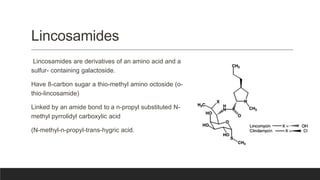
Lincosamides are derivatives of an amino acid and a
sulfur- containing galactoside.
Have 8-carbon sugar a thio-methyl amino octoside (o-
thio-lincosamide)
Linked by an amide bond to a n-propyl substituted N-
methyl pyrrolidyl carboxylic acid
(N-methyl-n-propyl-trans-hygric acid.
Lincosamides
 Lincomycins resemble macrolides in antibacterial spectrum and biochemical mechanisms of
action.
 They are primarily active against Grampositive bacteria, particularly the cocci, but are also
effective against non–spore-forming anaerobic bacteria, actinomycetes, mycoplasma, and some
species of Plasmodium.
 Lincomycin binds to the 50S ribosomal subunit to inhibit protein synthesis.
 Its action may be bacteriostatic or bactericidal depending on various factors, including the
concentration of the antibiotic.
 A pattern of bacterial resistance and cross-resistance to lincomycins similar to that observed
with the macrolides has been emerging.
Lincosamides
The lincosamide class of antimicrobial drugs includes:
1. Lincomycin
2. Clindamycin
3. Pirlimycin
These antibiotics differ in structure at one or more of three positions of the lincomycin
structure:
(a) the N-methyl of the hygric acid moiety is substituted by a hydrogen;
(b) the n-propyl group of the hygric acid moiety is substituted by an ethyl group; and
(c) the thiomethyl ether of the –thiolincosamide moiety is substituted by a thioethyl ether.
Lincomycin
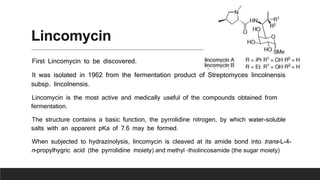
First Lincomycin to be discovered.
It was isolated in 1962 from the fermentation product of Streptomyces lincolnensis
subsp. lincolnensis.
Lincomycin is the most active and medically useful of the compounds obtained from
fermentation.
The structure contains a basic function, the pyrrolidine nitrogen, by which water-soluble
salts with an apparent pKa of 7.6 may be formed.
When subjected to hydrazinolysis, lincomycin is cleaved at its amide bond into trans-L-4-
n-propylhygric acid (the pyrrolidine moiety) and methyl -thiolincosamide (the sugar moiety)
Clindamycin
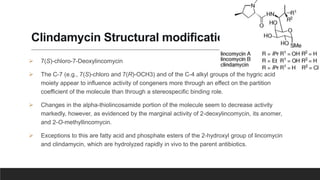
7(S)-chloro-7-Deoxylincomycin
It is a semi-synthetic derivative of lincomycin
Extensive efforts to modify the lincomycin structure to improve its antibacterial and
pharmacological
properties resulted in the preparation of the 7-chloro-7-deoxy derivative clindamycin.
Derived from lincomycin by using thionyl chloride to replace the 7-hydroxy group with a
chlorine atom with inversion of chirality. (Launched 1964).
greater antibacterial potency and better pharmacokinetic properties.
Clindamycin Structural modifications
 7(S)-chloro-7-Deoxylincomycin
 The C-7 (e.g., 7(S)-chloro and 7(R)-OCH3) and of the C-4 alkyl groups of the hygric acid
moiety appear to influence activity of congeners more through an effect on the partition
coefficient of the molecule than through a stereospecific binding role.
 Changes in the alpha-thiolincosamide portion of the molecule seem to decrease activity
markedly, however, as evidenced by the marginal activity of 2-deoxylincomycin, its anomer,
and 2-O-methyllincomycin.
 Exceptions to this are fatty acid and phosphate esters of the 2-hydroxyl group of lincomycin
and clindamycin, which are hydrolyzed rapidly in vivo to the parent antibiotics.
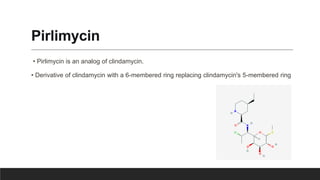
Pirlimycin
• Pirlimycin is an analog of clindamycin.
• Derivative of clindamycin with a 6-membered ring replacing clindamycin's 5-membered ring
Lincosamides
 Lincomycin and pirlimycin are approved for use in food- producing species.
 Clindamycin has a wider spectrum of activity than does lincomycin, but it is not approved
for use in food-producing animals
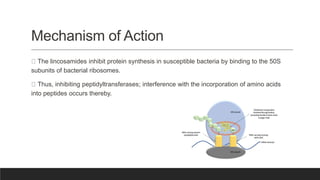
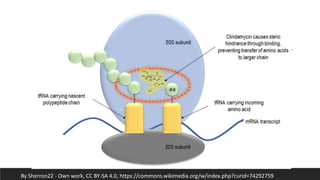
Mechanism of Action
The lincosamides inhibit protein synthesis in susceptible bacteria by binding to the 50S
subunits of bacterial ribosomes.
Thus, inhibiting peptidyltransferases; interference with the incorporation of amino acids
into peptides occurs thereby.
Mechanism of Action
By Sherron22 - Own work, CC BY-SA 4.0, https://commons.wikimedia.org/w/index.php?curid=74292759
Spectrum
Lincosamides may be bacteriostatic or bactericidal depending on;
1. Concentration of drug at the infection site
2. Bacterial species and bacterial strain
They are active against:
1. Many Gram-positive bacteria
2. Most obligate anaerobes
They are not effective against most Gram-negative organisms.
Lincomycin is effective against:
1. Staphylococcus species
2. Streptococcus species (except Streptococcus faecalis)
3. Erysipelothrix insidiosa
4. Leptospira pomona
5. Mycoplasma species

Lincosamides

  • 1.
  • 2.
    Lincosamides Lincosamides are derivativesof an amino acid and a sulfur- containing galactoside. Have 8-carbon sugar a thio-methyl amino octoside (o- thio-lincosamide) Linked by an amide bond to a n-propyl substituted N- methyl pyrrolidyl carboxylic acid (N-methyl-n-propyl-trans-hygric acid.
  • 3.
    Lincosamides  Lincomycins resemblemacrolides in antibacterial spectrum and biochemical mechanisms of action.  They are primarily active against Grampositive bacteria, particularly the cocci, but are also effective against non–spore-forming anaerobic bacteria, actinomycetes, mycoplasma, and some species of Plasmodium.  Lincomycin binds to the 50S ribosomal subunit to inhibit protein synthesis.  Its action may be bacteriostatic or bactericidal depending on various factors, including the concentration of the antibiotic.  A pattern of bacterial resistance and cross-resistance to lincomycins similar to that observed with the macrolides has been emerging.
  • 4.
    Lincosamides The lincosamide classof antimicrobial drugs includes: 1. Lincomycin 2. Clindamycin 3. Pirlimycin These antibiotics differ in structure at one or more of three positions of the lincomycin structure: (a) the N-methyl of the hygric acid moiety is substituted by a hydrogen; (b) the n-propyl group of the hygric acid moiety is substituted by an ethyl group; and (c) the thiomethyl ether of the –thiolincosamide moiety is substituted by a thioethyl ether.
  • 5.
    Lincomycin First Lincomycin tobe discovered. It was isolated in 1962 from the fermentation product of Streptomyces lincolnensis subsp. lincolnensis. Lincomycin is the most active and medically useful of the compounds obtained from fermentation. The structure contains a basic function, the pyrrolidine nitrogen, by which water-soluble salts with an apparent pKa of 7.6 may be formed. When subjected to hydrazinolysis, lincomycin is cleaved at its amide bond into trans-L-4- n-propylhygric acid (the pyrrolidine moiety) and methyl -thiolincosamide (the sugar moiety)
  • 6.
    Clindamycin 7(S)-chloro-7-Deoxylincomycin It is asemi-synthetic derivative of lincomycin Extensive efforts to modify the lincomycin structure to improve its antibacterial and pharmacological properties resulted in the preparation of the 7-chloro-7-deoxy derivative clindamycin. Derived from lincomycin by using thionyl chloride to replace the 7-hydroxy group with a chlorine atom with inversion of chirality. (Launched 1964). greater antibacterial potency and better pharmacokinetic properties.
  • 7.
    Clindamycin Structural modifications 7(S)-chloro-7-Deoxylincomycin  The C-7 (e.g., 7(S)-chloro and 7(R)-OCH3) and of the C-4 alkyl groups of the hygric acid moiety appear to influence activity of congeners more through an effect on the partition coefficient of the molecule than through a stereospecific binding role.  Changes in the alpha-thiolincosamide portion of the molecule seem to decrease activity markedly, however, as evidenced by the marginal activity of 2-deoxylincomycin, its anomer, and 2-O-methyllincomycin.  Exceptions to this are fatty acid and phosphate esters of the 2-hydroxyl group of lincomycin and clindamycin, which are hydrolyzed rapidly in vivo to the parent antibiotics.
  • 8.
    Pirlimycin • Pirlimycin isan analog of clindamycin. • Derivative of clindamycin with a 6-membered ring replacing clindamycin's 5-membered ring
  • 9.
    Lincosamides  Lincomycin andpirlimycin are approved for use in food- producing species.  Clindamycin has a wider spectrum of activity than does lincomycin, but it is not approved for use in food-producing animals
  • 10.
    Mechanism of Action Thelincosamides inhibit protein synthesis in susceptible bacteria by binding to the 50S subunits of bacterial ribosomes. Thus, inhibiting peptidyltransferases; interference with the incorporation of amino acids into peptides occurs thereby.
  • 11.
    Mechanism of Action BySherron22 - Own work, CC BY-SA 4.0, https://commons.wikimedia.org/w/index.php?curid=74292759
  • 12.
    Spectrum Lincosamides may bebacteriostatic or bactericidal depending on; 1. Concentration of drug at the infection site 2. Bacterial species and bacterial strain They are active against: 1. Many Gram-positive bacteria 2. Most obligate anaerobes They are not effective against most Gram-negative organisms.
  • 13.
    Lincomycin is effectiveagainst: 1. Staphylococcus species 2. Streptococcus species (except Streptococcus faecalis) 3. Erysipelothrix insidiosa 4. Leptospira pomona 5. Mycoplasma species