
ANTIFUNGAL AGENTS
Dr. Shilpa Sudhakar Harak
Asst. Prof., Pharm. Chem.,
GES Sir Dr. M. S. Gosavi College of Pharmaceutical Education and Research,
Nashik
▪ A eukaryotic organisms.
▪ Fungi are neither a plants, non animals
▪ A heterotrophic organism devoid of chlorophyll that obtains its nutrients by absorption.
▪ Reproduce sexually and asexually
▪ The primary carbohydrate storage product of fungi is glycogen.
▪ Most fungi have a thallus composed of hyphae (sing. hypha) that elongate by tip
growth
▪ The fungal thallus consists of hyphae; a mass of hyphae is a mycelium .
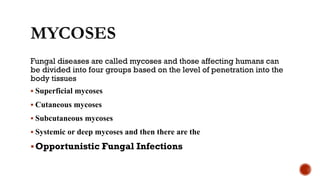
Fungal diseases are called mycoses and those affecting humans can
be divided into four groups based on the level of penetration into the
body tissues
▪ Superficial mycoses
▪ Cutaneous mycoses
▪ Subcutaneous mycoses
▪ Systemic or deep mycoses and then there are the
▪Opportunistic Fungal Infections
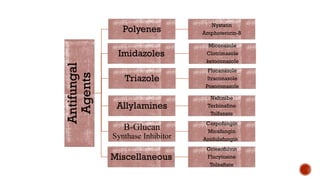
Antifungal
Agents
Polyenes
Nystatin
Amphotericin-B
Triazole
Flucanazole
Itraconazole
Posoconazole
Imidazoles
Miconazole
Clotrimazole
ketoconazole
Allylamines
Naftinibe
Terbinafine
Tolfanate
Β-Glucan
Synthase Inhibitor
Caspofungin
Micafungin
Anidulafungin
Miscellaneous
Griesofulvin
Flucytosine
Tolnaftate
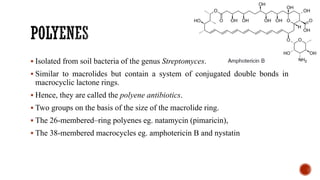
▪ Isolated from soil bacteria of the genus Streptomyces.
▪ Similar to macrolides but contain a system of conjugated double bonds in
macrocyclic lactone rings.
▪ Hence, they are called the polyene antibiotics.
▪ Two groups on the basis of the size of the macrolide ring.
▪ The 26-membered–ring polyenes eg. natamycin (pimaricin),
▪ The 38-membered macrocycles eg. amphotericin B and nystatin
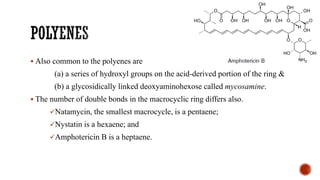
▪ Also common to the polyenes are
(a) a series of hydroxyl groups on the acid-derived portion of the ring &
(b) a glycosidically linked deoxyaminohexose called mycosamine.
▪ The number of double bonds in the macrocyclic ring differs also.
✓Natamycin, the smallest macrocycle, is a pentaene;
✓Nystatin is a hexaene; and
✓Amphotericin B is a heptaene.
▪ The polyenes have no activity against bacteria, rickettsia, or viruses.
▪ They are highly potent, broad-spectrum anti- fungal agents.
▪ They do have activity against certain protozoa, such as Leishmania spp.
▪ They are effective against pathogenic yeasts, molds, and dermatophytes.
▪ Low concentrations of the polyenes in vitro will inhibit Candida spp.,
Coccidioides immitis, Cryptococcus neoformans, H. capsu- latum, Blastomyces
dermatitidis, Mucor mucedo, Aspergillusfumigatus, Cephalosporium spp., and
Fusarium spp.
▪ The use of the polyenes for the treatment of systemic infections is limited by
the toxicities of the drugs, their low water solubilities, and their poor chemical
stabilities.
▪ Amphotericin B, the only polyene useful for the treatment of serious systemic
infections, must be solubilized with a detergent.
▪ The other polyenes are indicated only as topical agents for superficial fungal
infections.
▪ The three-dimensional shape, a barrel-like nonpolar structure capped by a polar group
(the sugar), they penetrate the fungal cell membrane, acting as “false membrane
components,” and bind closely with ergosterol, causing
➢ membrane disruption,
➢ cessation of membrane enzyme activity, and
➢ loss of cellular constituents, especially potassium ions.
▪ In fact, the first observable in vitro reaction upon treating a fungal culture with
amphotericin B is the loss of potassium ions.
▪ The drug is fungistatic at low concentrations and fungicidal at high concentrations.
▪ At low concentrations, the polyenes bind to a membrane bound enzyme component,
such as an ATPase.
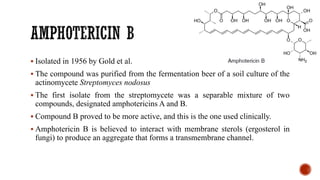
▪ Isolated in 1956 by Gold et al.
▪ The compound was purified from the fermentation beer of a soil culture of the
actinomycete Streptomyces nodosus
▪ The first isolate from the streptomycete was a separable mixture of two
compounds, designated amphotericins A and B.
▪ Compound B proved to be more active, and this is the one used clinically.
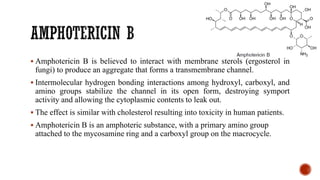
▪ Amphotericin B is believed to interact with membrane sterols (ergosterol in
fungi) to produce an aggregate that forms a transmembrane channel.
▪ Amphotericin B is believed to interact with membrane sterols (ergosterol in
fungi) to produce an aggregate that forms a transmembrane channel.
▪ Intermolecular hydrogen bonding interactions among hydroxyl, carboxyl, and
amino groups stabilize the channel in its open form, destroying symport
activity and allowing the cytoplasmic contents to leak out.
▪ The effect is similar with cholesterol resulting into toxicity in human patients.
▪ Amphotericin B is an amphoteric substance, with a primary amino group
attached to the mycosamine ring and a carboxyl group on the macrocycle.
▪ Parenteral amphotericin B is indicated for the treatment of severe, potentially
life-threatening fungal infections like
▪ Disseminated forms of coccidioidomycosis and histoplasmosis,
▪ Sporotrichosis,
▪ North American Blastomycosis,
▪ Cryptococcosis,
▪ Mucormycosis, and
▪ Aspergillosis.
▪ Nearly 80% of patients treated with amphotericin B develop nephrotoxicity.
▪ Fever, headache, anorexia, gastrointestinal distress, malaise, and muscle and
joint pain are common.
▪ Pain at the site of injection and thrombophlebitis are frequent complications of
intravenous administration. The drug must never be administered
intramuscularly.
▪ The hemolytic activity of amphotericin B may be a consequence of its ability
to leach cholesterol from erythrocyte cell membranes.
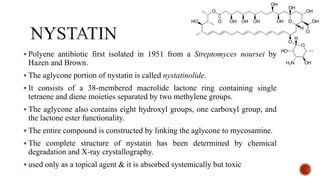
▪ Polyene antibiotic first isolated in 1951 from a Streptomyces noursei by
Hazen and Brown.
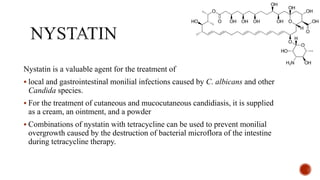
▪ The aglycone portion of nystatin is called nystatinolide.
▪ It consists of a 38-membered macrolide lactone ring containing single
tetraene and diene moieties separated by two methylene groups.
▪ The aglycone also contains eight hydroxyl groups, one carboxyl group, and
the lactone ester functionality.
▪ The entire compound is constructed by linking the aglycone to mycosamine.
▪ The complete structure of nystatin has been determined by chemical
degradation and X-ray crystallography.
▪ used only as a topical agent & it is absorbed systemically but toxic
Nystatin is a valuable agent for the treatment of
▪ local and gastrointestinal monilial infections caused by C. albicans and other
Candida species.
▪ For the treatment of cutaneous and mucocutaneous candidiasis, it is supplied
as a cream, an ointment, and a powder
▪ Combinations of nystatin with tetracycline can be used to prevent monilial
overgrowth caused by the destruction of bacterial microflora of the intestine
during tetracycline therapy.
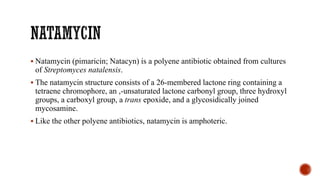
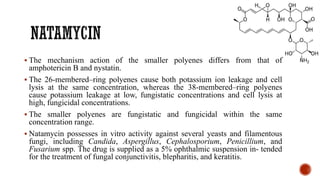
▪ Natamycin (pimaricin; Natacyn) is a polyene antibiotic obtained from cultures
of Streptomyces natalensis.
▪ The natamycin structure consists of a 26-membered lactone ring containing a
tetraene chromophore, an ,-unsaturated lactone carbonyl group, three hydroxyl
groups, a carboxyl group, a trans epoxide, and a glycosidically joined
mycosamine.
▪ Like the other polyene antibiotics, natamycin is amphoteric.
▪ The mechanism action of the smaller polyenes differs from that of
amphotericin B and nystatin.
▪ The 26-membered–ring polyenes cause both potassium ion leakage and cell
lysis at the same concentration, whereas the 38-membered–ring polyenes
cause potassium leakage at low, fungistatic concentrations and cell lysis at
high, fungicidal concentrations.
▪ The smaller polyenes are fungistatic and fungicidal within the same
concentration range.
▪ Natamycin possesses in vitro activity against several yeasts and filamentous
fungi, including Candida, Aspergillus, Cephalosporium, Penicillium, and
Fusarium spp. The drug is supplied as a 5% ophthalmic suspension in- tended
for the treatment of fungal conjunctivitis, blepharitis, and keratitis.
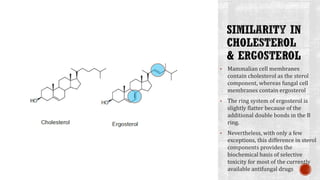
• Mammalian cell membranes
contain cholesterol as the sterol
component, whereas fungal cell
membranes contain ergosterol
• The ring system of ergosterol is
slightly flatter because of the
additional double bonds in the B
ring.
• Nevertheless, with only a few
exceptions, this difference in sterol
components provides the
biochemical basis of selective
toxicity for most of the currently
available antifungal drugs
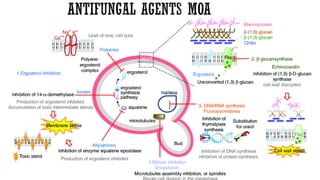
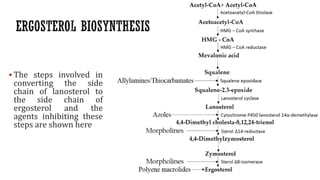
▪ The steps involved in
converting the side
chain of lanosterol to
the side chain of
ergosterol and the
agents inhibiting these
steps are shown here
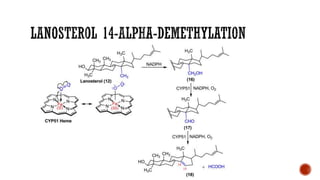
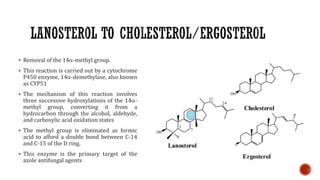
▪ Removal of the 14-methyl group.
▪ This reaction is carried out by a cytochrome
P450 enzyme, 14-demethylase, also known
as CYP51
▪ The mechanism of this reaction involves
three successive hydroxylations of the 14-
methyl group, converting it from a
hydrocarbon through the alcohol, aldehyde,
and carboxylic acid oxidation states
▪ The methyl group is eliminated as formic
acid to afford a double bond between C-14
and C-15 of the D ring.
▪ This enzyme is the primary target of the
azole antifungal agents
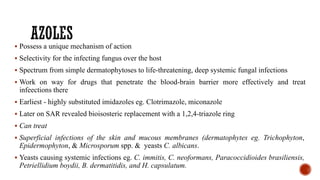
▪ Possess a unique mechanism of action
▪ Selectivity for the infecting fungus over the host
▪ Spectrum from simple dermatophytoses to life-threatening, deep systemic fungal infections
▪ Work on way for drugs that penetrate the blood-brain barrier more effectively and treat
infeections there
▪ Earliest - highly substituted imidazoles eg. Clotrimazole, miconazole
▪ Later on SAR revealed bioisosteric replacement with a 1,2,4-triazole ring
▪ Can treat
▪ Superficial infections of the skin and mucous membranes (dermatophytes eg. Trichophyton,
Epidermophyton, & Microsporum spp. & yeasts C. albicans.
▪ Yeasts causing systemic infections eg. C. immitis, C. neoformans, Paracoccidioides brasiliensis,
Petriellidium boydii, B. dermatitidis, and H. capsulatum.
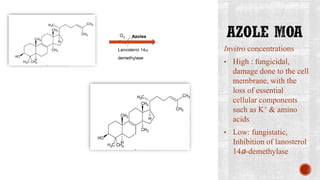
Invitro concentrations
• High : fungicidal,
damage done to the cell
membrane, with the
loss of essential
cellular components
such as K+ & amino
acids
• Low: fungistatic,
Inhibition of lanosterol
14a-demethylase
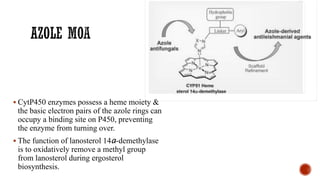
▪ CytP450 enzymes possess a heme moiety &
the basic electron pairs of the azole rings can
occupy a binding site on P450, preventing
the enzyme from turning over.
▪ The function of lanosterol 14a-demethylase
is to oxidatively remove a methyl group
from lanosterol during ergosterol
biosynthesis.
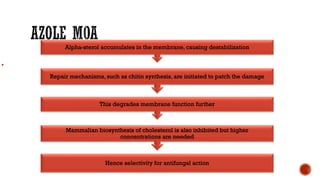
Alpha-sterol accumulates in the membrane, causing destabilization
Repair mechanisms, such as chitin synthesis, are initiated to patch the damage
This degrades membrane function further
Mammalian biosynthesis of cholesterol is also inhibited but higher
concentrations are needed
Hence selectivity for antifungal action
▪ 1,2,4-triazoles appear to cause a lower incidence of endocrine effects and hepatotoxicity than the
correspon- ding imidazoles, possibly because of a lower affinity for the mammalian cytochrome P450
enzymes involved.48 The pri- mary mode of resistance to the triazoles and imidazoles in
▪ C. albicans is the development of mutations in ERG 11, the gene coding for C14-a-sterol demethylase.
These mutations appear to protect heme in the enzyme pocket from binding to azole but allow access of
the natural substrate of the en- zyme, lanosterol. Cross-resistance is conferred to all azoles. Increased
azole efflux by the ATP-binding cassette (ABC-1, which normally transports cholesterol) and major
facilitator superfamily transporters can add to fluconazole resistance in
▪ C. albicans and C. glabrata. Increased production of C14-
▪ a-sterol demethylase could be another cause of resistance.
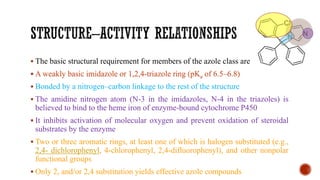
▪ The basic structural requirement for members of the azole class are:
▪ A weakly basic imidazole or 1,2,4-triazole ring (pKa of 6.5–6.8)
▪ Bonded by a nitrogen–carbon linkage to the rest of the structure
▪ The amidine nitrogen atom (N-3 in the imidazoles, N-4 in the triazoles) is
believed to bind to the heme iron of enzyme-bound cytochrome P450
▪ It inhibits activation of molecular oxygen and prevent oxidation of steroidal
substrates by the enzyme
▪ Two or three aromatic rings, at least one of which is halogen substituted (e.g.,
2,4- dichlorophenyl, 4-chlorophenyl, 2,4-difluorophenyl), and other nonpolar
functional groups
▪ Only 2, and/or 2,4 substitution yields effective azole compounds
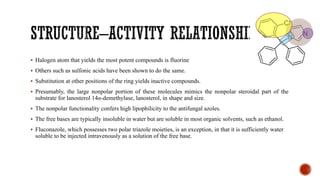
▪ Halogen atom that yields the most potent compounds is fluorine
▪ Others such as sulfonic acids have been shown to do the same.
▪ Substitution at other positions of the ring yields inactive compounds.
▪ Presumably, the large nonpolar portion of these molecules mimics the nonpolar steroidal part of the
substrate for lanosterol 14α-demethylase, lanosterol, in shape and size.
▪ The nonpolar functionality confers high lipophilicity to the antifungal azoles.
▪ The free bases are typically insoluble in water but are soluble in most organic solvents, such as ethanol.
▪ Fluconazole, which possesses two polar triazole moieties, is an exception, in that it is sufficiently water
soluble to be injected intravenously as a solution of the free base.
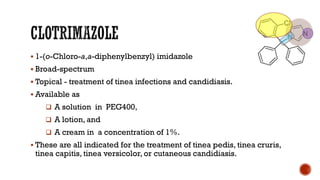
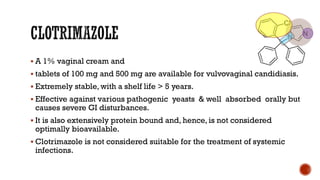
▪ 1-(o-Chloro-a,a-diphenylbenzyl) imidazole
▪ Broad-spectrum
▪ Topical - treatment of tinea infections and candidiasis.
▪ Available as
❑ A solution in PEG400,
❑ A lotion, and
❑ A cream in a concentration of 1%.
▪ These are all indicated for the treatment of tinea pedis, tinea cruris,
tinea capitis, tinea versicolor, or cutaneous candidiasis.
▪ A 1% vaginal cream and
▪ tablets of 100 mg and 500 mg are available for vulvovaginal candidiasis.
▪ Extremely stable, with a shelf life > 5 years.
▪ Effective against various pathogenic yeasts & well absorbed orally but
causes severe GI disturbances.
▪ It is also extensively protein bound and, hence, is not considered
optimally bioavailable.
▪ Clotrimazole is not considered suitable for the treatment of systemic
infections.
▪1-[2-[(4-Chlorophenyl)methoxy]-2-(2,4-
dichlorophenyl)-ethyl]-1H-imidazole
(Spectazole) is a white crystalline nitric acid salt
of econazole. It is only slightly soluble in water
and most organic solvents.
▪Econazole is used as a 1% cream for the topical
treatment of local tinea infections and cutaneous
candidiasis.
▪ 1-[4-(4-Chlorophenyl)-2-[(2,6-dichlorophenyl)-thio]butyl]-1H-
imidazole
▪ An extremely broad-spectrum antifungal drug that is specifically
effective against C. albicans.
▪ It is supplied as a vaginal cream containing 2% of the salt.
▪ It is intended for the treatment of vaginal candidiasis
▪ 1-[2,4-Dichloro-/3-[p-chlorobenzyl)thio]phenethyl]imidazole
mononitrate (Exelderm)
▪ White crystalline nitric acid salt of sulconazole.
▪ It is sparingly soluble in water but soluble in ethanol.
▪ The salt is used in a solution and a cream in 1% concentration for the
treatment of local tinea infections,
▪ such as jock itch, athlete’s foot, and ringworm.
▪ (Z)-1-(2,4-dichlorophenyl)-2-(1H-imidazol-1-yl)ethanone-
▪ O-[2,4-dichlorophenyl)methyl]oxime mononitrate (Oxistat)
▪ White crystalline nitric acid salt
▪ It is used in cream and lotion dosage forms in 1% concentration for
the treatment of
▪ tinea pedis, tinea corporis, and tinea capitis.
▪ 1-[2-[(2-chloro-3-thienyl)methoxy]2-(2,4-dichlorophenyl)- ethyl]-1H-imidazole
(Vagistat)
▪ Treatment of vulvovaginal candidiasis.
▪ A vaginal ointment containing 6.5% of the free base is available.
▪ Tioconazole is more effective against Torulopsis glabrata than are other azoles.
▪ 1-[2-(2,4-Dichlorophenyl)-2-[2,4-dichlorophenyl]-methoxy]ethyl]-1H-imidazole (Monistat,
Micatin)
▪ Weak base with a pKa of 6.65.
▪ The free base is available in an injectable form (PEG & castor oil) used to treat serious
systemic fungal infections - candidiasis, coccidioidomycosis, cryptococcosis, etc.
▪ Chronic mucocutaneous candidiasis.
▪ Adverse effects serious toxic effects of systemic administration rare but still
thrombophlebitis, pruritus, fever, and GI upset are relatively common.
▪ Dosage forms cream, lotion, powder, and spray (2%) for treatment of tinea infections and
cutaneous candidiasis.
▪ 2%Vaginal creams and suppositories for vaginal candidiasis.
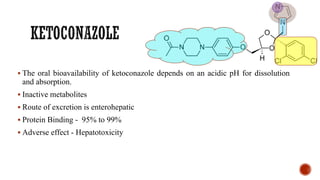
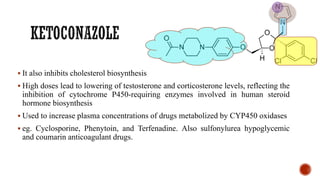
▪ 1-Acetyl-4-[4-[[2-(2,4-dichlorophenyl)-2(1H-imidazole-1-ylmethyl)-1,3-dioxolan-4-
yl]methoxy]phenyl]piperazine (Nizoral)
▪ A broad-spectrum imidazole antifungal agent
▪ Ketoconazole is a racemic compound, consisting of the cis-2S,4R and cis-2R,4S isomers.
▪ The 2S,4R isomer is 2.5 times more active than its 2R,4S enantiomer.
▪ The trans-isomers, 2S,4S and 2R,4R, are much less active.
▪ Administered orally for the treatment of systemic fungal infections.
▪ It is a weakly basic compound that occurs as a white crystalline solid that is very slightly
soluble in water.
▪ The oral bioavailability of ketoconazole depends on an acidic pH for dissolution
and absorption.
▪ Inactive metabolites
▪ Route of excretion is enterohepatic
▪ Protein Binding - 95% to 99%
▪ Adverse effect - Hepatotoxicity
▪ It also inhibits cholesterol biosynthesis
▪ High doses lead to lowering of testosterone and corticosterone levels, reflecting the
inhibition of cytochrome P450-requiring enzymes involved in human steroid
hormone biosynthesis
▪ Used to increase plasma concentrations of drugs metabolized by CYP450 oxidases
▪ eg. Cyclosporine, Phenytoin, and Terfenadine. Also sulfonylurea hypoglycemic
and coumarin anticoagulant drugs.
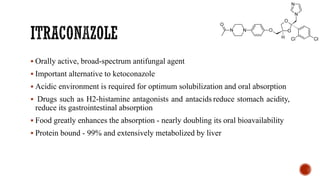
▪ 4-[4-[4-[4-[[2-(2,4-Dichlorophenyl)-2-1H-1,2,4-triazol-1- ylmethyl)-1,3-dioxolan-4-
yl]methoxy]phenyl]-1-piper- azinyl]phenyl]-2,4-dihydro-2-(1-methylpropyl)-3H-1,2,4-
triazol-3-one (Sporanox)
▪ Unique member of the azole class that contains two triazole moieties in its structure:
❑a weakly basic 1,2,4-triazole and
❑a nonbasic 1,2,4-triazol-3-one.
▪ Orally active, broad-spectrum antifungal agent
▪ Important alternative to ketoconazole
▪ Acidic environment is required for optimum solubilization and oral absorption
▪ Drugs such as H2-histamine antagonists and antacids reduce stomach acidity,
reduce its gastrointestinal absorption
▪ Food greatly enhances the absorption - nearly doubling its oral bioavailability
▪ Protein bound - 99% and extensively metabolized by liver
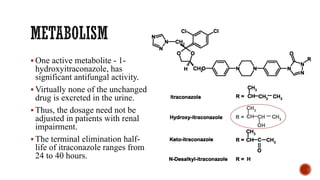
▪ One active metabolite - 1-
hydroxyitraconazole, has
significant antifungal activity.
▪ Virtually none of the unchanged
drug is excreted in the urine.
▪ Thus, the dosage need not be
adjusted in patients with renal
impairment.
▪ The terminal elimination half-
life of itraconazole ranges from
24 to 40 hours.
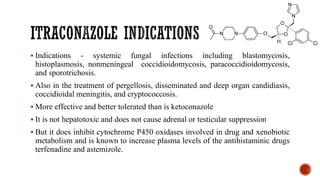
▪ Indications - systemic fungal infections including blastomycosis,
histoplasmosis, nonmeningeal coccidioidomycosis, paracoccidioidomycosis,
and sporotrichosis.
▪ Also in the treatment of pergellosis, disseminated and deep organ candidiasis,
coccidioidal meningitis, and cryptococcosis.
▪ More effective and better tolerated than is ketoconazole
▪ It is not hepatotoxic and does not cause adrenal or testicular suppression
▪ But it does inhibit cytochrome P450 oxidases involved in drug and xenobiotic
metabolism and is known to increase plasma levels of the antihistaminic drugs
terfenadine and astemizole.
▪ cis-1-[4-[[2-(2,4-Dichlorophenyl)-2-(1H-1,2,4-triazol-1-yl-methyl)-1,3-
dioxolan-4-yl)methoxy]phenyl]-4-(1-methylethyl)piperazine
(Terazol)
▪ Used exclusively for the control of vulvovaginal moniliasis caused
by C. albicans and other Candida species.
▪ Creams containing 0.4% and 0.8%
▪ Suppositories containing 80 mg of the free base are also available.
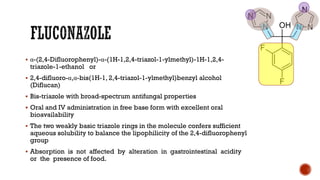
▪ α-(2,4-Difluorophenyl)-α-(1H-1,2,4-triazol-1-ylmethyl)-1H-1,2,4-
triazole-1-ethanol or
▪ 2,4-difluoro-α,α-bis(1H-1, 2,4-triazol-1-ylmethyl)benzyl alcohol
(Diflucan)
▪ Bis-triazole with broad-spectrum antifungal properties
▪ Oral and IV administration in free base form with excellent oral
bioavailability
▪ The two weakly basic triazole rings in the molecule confers sufficient
aqueous solubility to balance the lipophilicity of the 2,4-difluorophenyl
group
▪ Absorption is not affected by alteration in gastrointestinal acidity
or the presence of food.
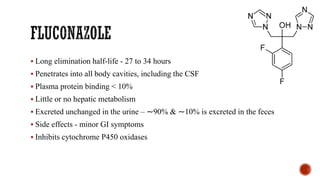
▪ Long elimination half-life - 27 to 34 hours
▪ Penetrates into all body cavities, including the CSF
▪ Plasma protein binding < 10%
▪ Little or no hepatic metabolism
▪ Excreted unchanged in the urine – ~90% & ~10% is excreted in the feces
▪ Side effects - minor GI symptoms
▪ Inhibits cytochrome P450 oxidases
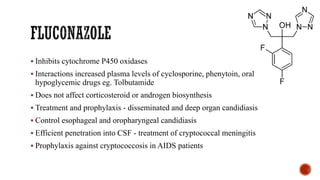
▪ Interactions increased plasma levels of cyclosporine, phenytoin, oral
hypoglycemic drugs eg. Tolbutamide
▪ Does not affect corticosteroid or androgen biosynthesis
▪ Treatment and prophylaxis - disseminated and deep organ candidiasis
▪ Control esophageal and oropharyngeal candidiasis
▪ Efficient penetration into CSF - treatment of cryptococcal meningitis
▪ Prophylaxis against cryptococcosis in AIDS patients
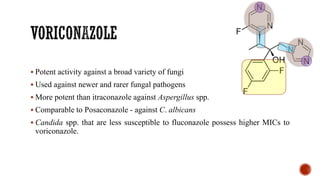
▪ Potent activity against a broad variety of fungi
▪ Used against newer and rarer fungal pathogens
▪ More potent than itraconazole against Aspergillus spp.
▪ Comparable to Posaconazole - against C. albicans
▪ Candida spp. that are less susceptible to fluconazole possess higher MICs to
voriconazole.
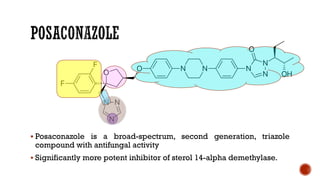
▪ Posaconazole is a broad-spectrum, second generation, triazole
compound with antifungal activity
▪ Significantly more potent inhibitor of sterol 14-alpha demethylase.
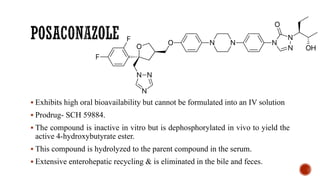
▪ Exhibits high oral bioavailability but cannot be formulated into an IV solution
▪ Prodrug- SCH 59884.
▪ The compound is inactive in vitro but is dephosphorylated in vivo to yield the
active 4-hydroxybutyrate ester.
▪ This compound is hydrolyzed to the parent compound in the serum.
▪ Extensive enterohepatic recycling & is eliminated in the bile and feces.
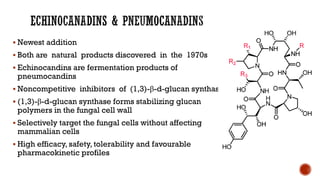
▪ Newest addition
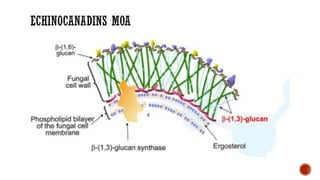
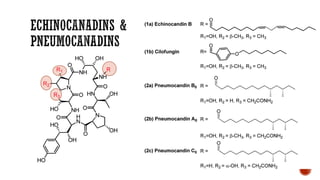
▪ Both are natural products discovered in the 1970s
▪ Echinocandins are fermentation products of
pneumocandins
▪ Noncompetitive inhibitors of (1,3)-β-d-glucan synthase
▪ (1,3)-β-d-glucan synthase forms stabilizing glucan
polymers in the fungal cell wall
▪ Selectively target the fungal cells without affecting
mammalian cells
▪ High efficacy, safety, tolerability and favourable
pharmacokinetic profiles
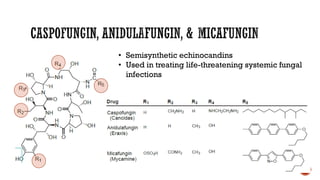
• Semisynthetic echinocandins
• Used in treating life-threatening systemic fungal
infections
▪ First class of antifungal agents with a novel mechanism of action
▪ valuable therapy for systemic fungal infections
▪ Effective against a variety of Candida species & azole-resistant Aspergillus
▪ Life saving incase of resistant fungi
▪ Not effective against Cryptococcus neoformans
▪ Not orally active hence IV infusion only
▪ Limited hepatic metabolism ↓ drug–drug interactions
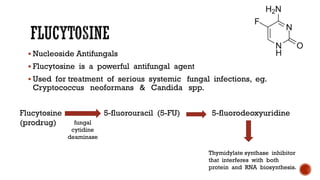
▪ Nucleoside Antifungals
▪ Flucytosine is a powerful antifungal agent
▪ Used for treatment of serious systemic fungal infections, eg.
Cryptococcus neoformans & Candida spp.
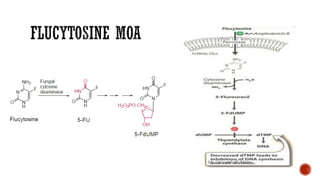
Flucytosine 5-fluorouracil (5-FU) 5-fluorodeoxyuridine
(prodrug) fungal
cytidine
deaminase
Thymidylate synthase inhibitor
that interferes with both
protein and RNA biosynthesis.
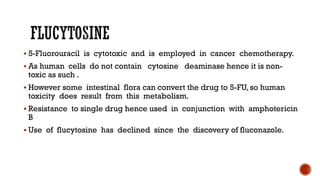
▪ 5-Fluorouracil is cytotoxic and is employed in cancer chemotherapy.
▪ As human cells do not contain cytosine deaminase hence it is non-
toxic as such .
▪ However some intestinal flora can convert the drug to 5-FU, so human
toxicity does result from this metabolism.
▪ Resistance to single drug hence used in conjunction with amphotericin
B
▪ Use of flucytosine has declined since the discovery of fluconazole.
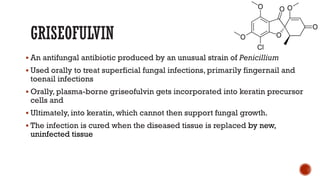
GRISEOFULVIN
▪ An antifungal antibiotic produced by an unusual strain of Penicillium
▪ Used orally to treat superficial fungal infections, primarily fingernail and
toenail infections
▪ Orally, plasma-borne griseofulvin gets incorporated into keratin precursor
cells and
▪ Ultimately, into keratin, which cannot then support fungal growth.
▪ The infection is cured when the diseased tissue is replaced by new,
uninfected tissue
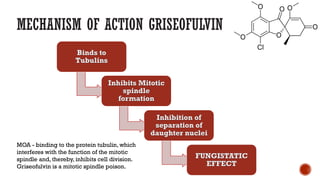
MECHANISM OF ACTION GRISEOFULVIN
MOA - binding to the protein tubulin, which
interferes with the function of the mitotic
spindle and, thereby, inhibits cell division.
Griseofulvin is a mitotic spindle poison.
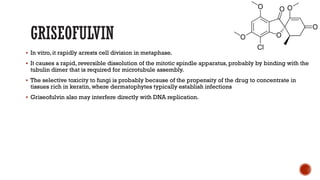
GRISEOFULVIN
▪ In vitro, it rapidly arrests cell division in metaphase.
▪ It causes a rapid, reversible dissolution of the mitotic spindle apparatus, probably by binding with the
tubulin dimer that is required for microtubule assembly.
▪ The selective toxicity to fungi is probably because of the propensity of the drug to concentrate in
tissues rich in keratin, where dermatophytes typically establish infections
▪ Griseofulvin also may interfere directly with DNA replication.
▪ Several phenols and their derivatives possess topical antifungal properties.
▪ Hexylresorcinols and para-chloro-meta-xylenol have been used for the
treatment of tinea infections.
▪ Two phenolic compounds, clioquinol and haloprogin, are still official in the
USP.
▪ A third agent, ciclopirox olamine, is not a phenol but has properties like those
of phenols.
▪ All of these agents appear to interfere with cell membrane integrity and
function in susceptible fungi.
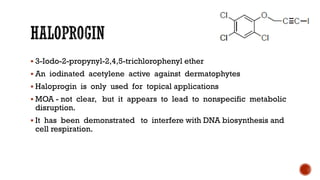
▪ 3-Iodo-2-propynyl-2,4,5-trichlorophenyl ether
▪ An iodinated acetylene active against dermatophytes
▪ Haloprogin is only used for topical applications
▪ MOA - not clear, but it appears to lead to nonspecific metabolic
disruption.
▪ It has been demonstrated to interfere with DNA biosynthesis and
cell respiration.
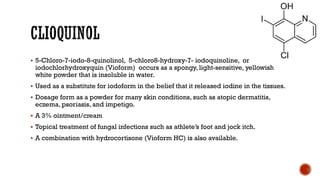
▪ 5-Chloro-7-iodo-8-quinolinol, 5-chloro8-hydroxy-7- iodoquinoline, or
iodochlorhydroxyquin (Vioform) occurs as a spongy, light-sensitive, yellowish
white powder that is insoluble in water.
▪ Used as a substitute for iodoform in the belief that it released iodine in the tissues.
▪ Dosage form as a powder for many skin conditions, such as atopic dermatitis,
eczema, psoriasis, and impetigo.
▪ A 3% ointment/cream
▪ Topical treatment of fungal infections such as athlete’s foot and jock itch.
▪ A combination with hydrocortisone (Vioform HC) is also available.
FATTY ACIDS
▪ As salicylic acid or other -hydroxy compounds perform this
function reasonably well.
▪ Adults have an acidic, fatty substance in and on the skin called
sebum.
▪ Sebum functions as a natural antifungal agent, part of the innate
immune system.
▪ The application of fatty acids or their salts does in fact have an
antifungal effect, albeit a feeble one.
▪ The higher–molecular-weight fatty acids have the advantage of
having lower volatility.
▪ Salts of fatty acids are also fungicidal and provide nonvolatile forms
for topical application.
▪ Antifungal agent that is nonirritating and nontoxic.
▪ After application, it is present in perspiration in low concentration (0.01%).
▪ Salt forms with sodium, potassium, calcium, and ammonium are also
fungicidal.
▪ Propionic acid is a clear, corrosive liquid with a characteristic odor.
▪ It is soluble in water and alcohol.
▪ The salts are usually used because they are nonvolatile and odorless.
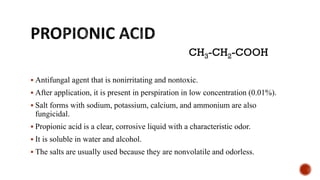
CH3-CH2-COOH
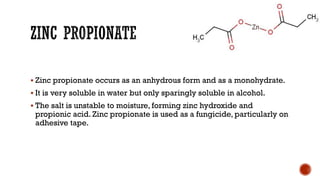
▪ Zinc propionate occurs as an anhydrous form and as a monohydrate.
▪ It is very soluble in water but only sparingly soluble in alcohol.
▪ The salt is unstable to moisture, forming zinc hydroxide and
propionic acid. Zinc propionate is used as a fungicide, particularly on
adhesive tape.
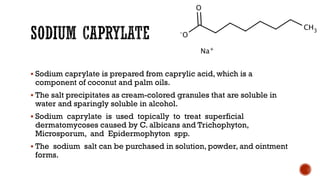
▪ Sodium caprylate is prepared from caprylic acid, which is a
component of coconut and palm oils.
▪ The salt precipitates as cream-colored granules that are soluble in
water and sparingly soluble in alcohol.
▪ Sodium caprylate is used topically to treat superficial
dermatomycoses caused by C. albicans and Trichophyton,
Microsporum, and Epidermophyton spp.
▪ The sodium salt can be purchased in solution, powder, and ointment
forms.
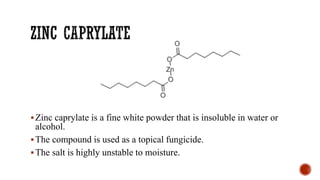
▪Zinc caprylate is a fine white powder that is insoluble in water or
alcohol.
▪The compound is used as a topical fungicide.
▪The salt is highly unstable to moisture.
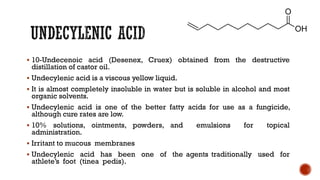
▪ 10-Undecenoic acid (Desenex, Cruex) obtained from the destructive
distillation of castor oil.
▪ Undecylenic acid is a viscous yellow liquid.
▪ It is almost completely insoluble in water but is soluble in alcohol and most
organic solvents.
▪ Undecylenic acid is one of the better fatty acids for use as a fungicide,
although cure rates are low.
▪ 10% solutions, ointments, powders, and emulsions for topical
administration.
▪ Irritant to mucous membranes
▪ Undecylenic acid has been one of the agents traditionally used for
athlete’s foot (tinea pedis).
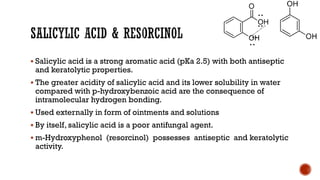
▪ Salicylic acid is a strong aromatic acid (pKa 2.5) with both antiseptic
and keratolytic properties.
▪ The greater acidity of salicylic acid and its lower solubility in water
compared with p-hydroxybenzoic acid are the consequence of
intramolecular hydrogen bonding.
▪ Used externally in form of ointments and solutions
▪ By itself, salicylic acid is a poor antifungal agent.
▪ m-Hydroxyphenol (resorcinol) possesses antiseptic and keratolytic
activity.
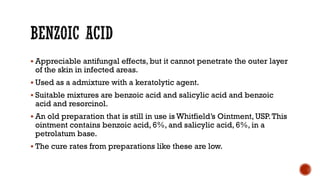
▪ Appreciable antifungal effects, but it cannot penetrate the outer layer
of the skin in infected areas.
▪ Used as a admixture with a keratolytic agent.
▪ Suitable mixtures are benzoic acid and salicylic acid and benzoic
acid and resorcinol.
▪ An old preparation that is still in use is Whitfield’s Ointment, USP.This
ointment contains benzoic acid, 6%, and salicylic acid, 6%, in a
petrolatum base.
▪ The cure rates from preparations like these are low.
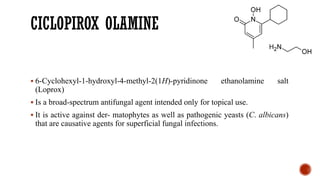
CICLOPIROX OLAMINE
▪ 6-Cyclohexyl-1-hydroxyl-4-methyl-2(1H)-pyridinone ethanolamine salt
(Loprox)
▪ Is a broad-spectrum antifungal agent intended only for topical use.
▪ It is active against der- matophytes as well as pathogenic yeasts (C. albicans)
that are causative agents for superficial fungal infections.
▪ A result of random screening of a chemical inventory for compounds with antifungal
activity.
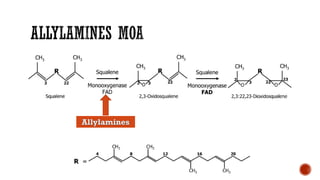
▪ SAR lead to development of terbinafine who has enhanced potency and potential oral
activity
▪ Fungicidal against dermatophytes and other filamentous fungi
▪ Fungistatic against pathogenic yeasts, eg. Candida spp.
▪ Topical agents naftifine and terbinafine -
▪ the treatment of tinea pedis, tinea cruris, and tinea corporis caused by Trichophyton
rubrum,Trichophyton mentagrophytes, or Epidermophyton floccosum, respectively.
▪ Tolnaftate non-allylamine also inhibits squalene epoxidase and has a spectrum of
activity similar to allylamines.
▪ Therefore tolnaftate is classified with the allylamines.
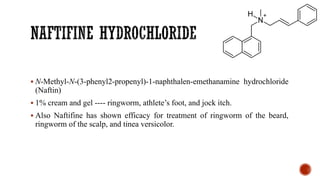
▪ N-Methyl-N-(3-phenyl2-propenyl)-1-naphthalen-emethanamine hydrochloride
(Naftin)
▪ 1% cream and gel ---- ringworm, athlete’s foot, and jock itch.
▪ Also Naftifine has shown efficacy for treatment of ringworm of the beard,
ringworm of the scalp, and tinea versicolor.
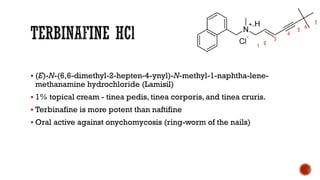
▪ (E)-N-(6,6-dimethyl-2-hepten-4-ynyl)-N-methyl-1-naphtha-lene-
methanamine hydrochloride (Lamisil)
▪ 1% topical cream - tinea pedis, tinea corporis, and tinea cruris.
▪ Terbinafine is more potent than naftifine
▪ Oral active against onychomycosis (ring-worm of the nails)
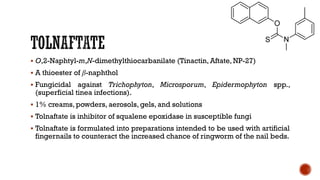
▪ O,2-Naphtyl-m,N-dimethylthiocarbanilate (Tinactin, Aftate, NP-27)
▪ A thioester of β-naphthol
▪ Fungicidal against Trichophyton, Microsporum, Epidermophyton spp.,
(superficial tinea infections).
▪ 1% creams, powders, aerosols, gels, and solutions
▪ Tolnaftate is inhibitor of squalene epoxidase in susceptible fungi
▪ Tolnaftate is formulated into preparations intended to be used with artificial
fingernails to counteract the increased chance of ringworm of the nail beds.

Antifungal agents

  • 1.
    ANTIFUNGAL AGENTS Dr. ShilpaSudhakar Harak Asst. Prof., Pharm. Chem., GES Sir Dr. M. S. Gosavi College of Pharmaceutical Education and Research, Nashik
  • 2.
    ▪ A eukaryoticorganisms. ▪ Fungi are neither a plants, non animals ▪ A heterotrophic organism devoid of chlorophyll that obtains its nutrients by absorption. ▪ Reproduce sexually and asexually ▪ The primary carbohydrate storage product of fungi is glycogen. ▪ Most fungi have a thallus composed of hyphae (sing. hypha) that elongate by tip growth ▪ The fungal thallus consists of hyphae; a mass of hyphae is a mycelium .
  • 4.
    Fungal diseases arecalled mycoses and those affecting humans can be divided into four groups based on the level of penetration into the body tissues ▪ Superficial mycoses ▪ Cutaneous mycoses ▪ Subcutaneous mycoses ▪ Systemic or deep mycoses and then there are the ▪Opportunistic Fungal Infections
  • 5.
  • 7.
    ▪ Isolated fromsoil bacteria of the genus Streptomyces. ▪ Similar to macrolides but contain a system of conjugated double bonds in macrocyclic lactone rings. ▪ Hence, they are called the polyene antibiotics. ▪ Two groups on the basis of the size of the macrolide ring. ▪ The 26-membered–ring polyenes eg. natamycin (pimaricin), ▪ The 38-membered macrocycles eg. amphotericin B and nystatin
  • 8.
    ▪ Also commonto the polyenes are (a) a series of hydroxyl groups on the acid-derived portion of the ring & (b) a glycosidically linked deoxyaminohexose called mycosamine. ▪ The number of double bonds in the macrocyclic ring differs also. ✓Natamycin, the smallest macrocycle, is a pentaene; ✓Nystatin is a hexaene; and ✓Amphotericin B is a heptaene.
  • 9.
    ▪ The polyeneshave no activity against bacteria, rickettsia, or viruses. ▪ They are highly potent, broad-spectrum anti- fungal agents. ▪ They do have activity against certain protozoa, such as Leishmania spp. ▪ They are effective against pathogenic yeasts, molds, and dermatophytes. ▪ Low concentrations of the polyenes in vitro will inhibit Candida spp., Coccidioides immitis, Cryptococcus neoformans, H. capsu- latum, Blastomyces dermatitidis, Mucor mucedo, Aspergillusfumigatus, Cephalosporium spp., and Fusarium spp.
  • 10.
    ▪ The useof the polyenes for the treatment of systemic infections is limited by the toxicities of the drugs, their low water solubilities, and their poor chemical stabilities. ▪ Amphotericin B, the only polyene useful for the treatment of serious systemic infections, must be solubilized with a detergent. ▪ The other polyenes are indicated only as topical agents for superficial fungal infections.
  • 11.
    ▪ The three-dimensionalshape, a barrel-like nonpolar structure capped by a polar group (the sugar), they penetrate the fungal cell membrane, acting as “false membrane components,” and bind closely with ergosterol, causing ➢ membrane disruption, ➢ cessation of membrane enzyme activity, and ➢ loss of cellular constituents, especially potassium ions. ▪ In fact, the first observable in vitro reaction upon treating a fungal culture with amphotericin B is the loss of potassium ions. ▪ The drug is fungistatic at low concentrations and fungicidal at high concentrations. ▪ At low concentrations, the polyenes bind to a membrane bound enzyme component, such as an ATPase.
  • 12.
    ▪ Isolated in1956 by Gold et al. ▪ The compound was purified from the fermentation beer of a soil culture of the actinomycete Streptomyces nodosus ▪ The first isolate from the streptomycete was a separable mixture of two compounds, designated amphotericins A and B. ▪ Compound B proved to be more active, and this is the one used clinically. ▪ Amphotericin B is believed to interact with membrane sterols (ergosterol in fungi) to produce an aggregate that forms a transmembrane channel.
  • 13.
    ▪ Amphotericin Bis believed to interact with membrane sterols (ergosterol in fungi) to produce an aggregate that forms a transmembrane channel. ▪ Intermolecular hydrogen bonding interactions among hydroxyl, carboxyl, and amino groups stabilize the channel in its open form, destroying symport activity and allowing the cytoplasmic contents to leak out. ▪ The effect is similar with cholesterol resulting into toxicity in human patients. ▪ Amphotericin B is an amphoteric substance, with a primary amino group attached to the mycosamine ring and a carboxyl group on the macrocycle.
  • 14.
    ▪ Parenteral amphotericinB is indicated for the treatment of severe, potentially life-threatening fungal infections like ▪ Disseminated forms of coccidioidomycosis and histoplasmosis, ▪ Sporotrichosis, ▪ North American Blastomycosis, ▪ Cryptococcosis, ▪ Mucormycosis, and ▪ Aspergillosis.
  • 15.
    ▪ Nearly 80%of patients treated with amphotericin B develop nephrotoxicity. ▪ Fever, headache, anorexia, gastrointestinal distress, malaise, and muscle and joint pain are common. ▪ Pain at the site of injection and thrombophlebitis are frequent complications of intravenous administration. The drug must never be administered intramuscularly. ▪ The hemolytic activity of amphotericin B may be a consequence of its ability to leach cholesterol from erythrocyte cell membranes.
  • 16.
    ▪ Polyene antibioticfirst isolated in 1951 from a Streptomyces noursei by Hazen and Brown. ▪ The aglycone portion of nystatin is called nystatinolide. ▪ It consists of a 38-membered macrolide lactone ring containing single tetraene and diene moieties separated by two methylene groups. ▪ The aglycone also contains eight hydroxyl groups, one carboxyl group, and the lactone ester functionality. ▪ The entire compound is constructed by linking the aglycone to mycosamine. ▪ The complete structure of nystatin has been determined by chemical degradation and X-ray crystallography. ▪ used only as a topical agent & it is absorbed systemically but toxic
  • 17.
    Nystatin is avaluable agent for the treatment of ▪ local and gastrointestinal monilial infections caused by C. albicans and other Candida species. ▪ For the treatment of cutaneous and mucocutaneous candidiasis, it is supplied as a cream, an ointment, and a powder ▪ Combinations of nystatin with tetracycline can be used to prevent monilial overgrowth caused by the destruction of bacterial microflora of the intestine during tetracycline therapy.
  • 18.
    ▪ Natamycin (pimaricin;Natacyn) is a polyene antibiotic obtained from cultures of Streptomyces natalensis. ▪ The natamycin structure consists of a 26-membered lactone ring containing a tetraene chromophore, an ,-unsaturated lactone carbonyl group, three hydroxyl groups, a carboxyl group, a trans epoxide, and a glycosidically joined mycosamine. ▪ Like the other polyene antibiotics, natamycin is amphoteric.
  • 19.
    ▪ The mechanismaction of the smaller polyenes differs from that of amphotericin B and nystatin. ▪ The 26-membered–ring polyenes cause both potassium ion leakage and cell lysis at the same concentration, whereas the 38-membered–ring polyenes cause potassium leakage at low, fungistatic concentrations and cell lysis at high, fungicidal concentrations. ▪ The smaller polyenes are fungistatic and fungicidal within the same concentration range. ▪ Natamycin possesses in vitro activity against several yeasts and filamentous fungi, including Candida, Aspergillus, Cephalosporium, Penicillium, and Fusarium spp. The drug is supplied as a 5% ophthalmic suspension in- tended for the treatment of fungal conjunctivitis, blepharitis, and keratitis.
  • 20.
    • Mammalian cellmembranes contain cholesterol as the sterol component, whereas fungal cell membranes contain ergosterol • The ring system of ergosterol is slightly flatter because of the additional double bonds in the B ring. • Nevertheless, with only a few exceptions, this difference in sterol components provides the biochemical basis of selective toxicity for most of the currently available antifungal drugs
  • 22.
    ▪ The stepsinvolved in converting the side chain of lanosterol to the side chain of ergosterol and the agents inhibiting these steps are shown here
  • 24.
    ▪ Removal ofthe 14-methyl group. ▪ This reaction is carried out by a cytochrome P450 enzyme, 14-demethylase, also known as CYP51 ▪ The mechanism of this reaction involves three successive hydroxylations of the 14- methyl group, converting it from a hydrocarbon through the alcohol, aldehyde, and carboxylic acid oxidation states ▪ The methyl group is eliminated as formic acid to afford a double bond between C-14 and C-15 of the D ring. ▪ This enzyme is the primary target of the azole antifungal agents
  • 25.
    ▪ Possess aunique mechanism of action ▪ Selectivity for the infecting fungus over the host ▪ Spectrum from simple dermatophytoses to life-threatening, deep systemic fungal infections ▪ Work on way for drugs that penetrate the blood-brain barrier more effectively and treat infeections there ▪ Earliest - highly substituted imidazoles eg. Clotrimazole, miconazole ▪ Later on SAR revealed bioisosteric replacement with a 1,2,4-triazole ring ▪ Can treat ▪ Superficial infections of the skin and mucous membranes (dermatophytes eg. Trichophyton, Epidermophyton, & Microsporum spp. & yeasts C. albicans. ▪ Yeasts causing systemic infections eg. C. immitis, C. neoformans, Paracoccidioides brasiliensis, Petriellidium boydii, B. dermatitidis, and H. capsulatum.
  • 26.
    Invitro concentrations • High: fungicidal, damage done to the cell membrane, with the loss of essential cellular components such as K+ & amino acids • Low: fungistatic, Inhibition of lanosterol 14a-demethylase
  • 27.
    ▪ CytP450 enzymespossess a heme moiety & the basic electron pairs of the azole rings can occupy a binding site on P450, preventing the enzyme from turning over. ▪ The function of lanosterol 14a-demethylase is to oxidatively remove a methyl group from lanosterol during ergosterol biosynthesis.
  • 28.
    Alpha-sterol accumulates inthe membrane, causing destabilization Repair mechanisms, such as chitin synthesis, are initiated to patch the damage This degrades membrane function further Mammalian biosynthesis of cholesterol is also inhibited but higher concentrations are needed Hence selectivity for antifungal action
  • 29.
    ▪ 1,2,4-triazoles appearto cause a lower incidence of endocrine effects and hepatotoxicity than the correspon- ding imidazoles, possibly because of a lower affinity for the mammalian cytochrome P450 enzymes involved.48 The pri- mary mode of resistance to the triazoles and imidazoles in ▪ C. albicans is the development of mutations in ERG 11, the gene coding for C14-a-sterol demethylase. These mutations appear to protect heme in the enzyme pocket from binding to azole but allow access of the natural substrate of the en- zyme, lanosterol. Cross-resistance is conferred to all azoles. Increased azole efflux by the ATP-binding cassette (ABC-1, which normally transports cholesterol) and major facilitator superfamily transporters can add to fluconazole resistance in ▪ C. albicans and C. glabrata. Increased production of C14- ▪ a-sterol demethylase could be another cause of resistance.
  • 30.
    ▪ The basicstructural requirement for members of the azole class are: ▪ A weakly basic imidazole or 1,2,4-triazole ring (pKa of 6.5–6.8) ▪ Bonded by a nitrogen–carbon linkage to the rest of the structure ▪ The amidine nitrogen atom (N-3 in the imidazoles, N-4 in the triazoles) is believed to bind to the heme iron of enzyme-bound cytochrome P450 ▪ It inhibits activation of molecular oxygen and prevent oxidation of steroidal substrates by the enzyme ▪ Two or three aromatic rings, at least one of which is halogen substituted (e.g., 2,4- dichlorophenyl, 4-chlorophenyl, 2,4-difluorophenyl), and other nonpolar functional groups ▪ Only 2, and/or 2,4 substitution yields effective azole compounds
  • 31.
    ▪ Halogen atomthat yields the most potent compounds is fluorine ▪ Others such as sulfonic acids have been shown to do the same. ▪ Substitution at other positions of the ring yields inactive compounds. ▪ Presumably, the large nonpolar portion of these molecules mimics the nonpolar steroidal part of the substrate for lanosterol 14α-demethylase, lanosterol, in shape and size. ▪ The nonpolar functionality confers high lipophilicity to the antifungal azoles. ▪ The free bases are typically insoluble in water but are soluble in most organic solvents, such as ethanol. ▪ Fluconazole, which possesses two polar triazole moieties, is an exception, in that it is sufficiently water soluble to be injected intravenously as a solution of the free base.
  • 33.
    ▪ 1-(o-Chloro-a,a-diphenylbenzyl) imidazole ▪Broad-spectrum ▪ Topical - treatment of tinea infections and candidiasis. ▪ Available as ❑ A solution in PEG400, ❑ A lotion, and ❑ A cream in a concentration of 1%. ▪ These are all indicated for the treatment of tinea pedis, tinea cruris, tinea capitis, tinea versicolor, or cutaneous candidiasis.
  • 34.
    ▪ A 1%vaginal cream and ▪ tablets of 100 mg and 500 mg are available for vulvovaginal candidiasis. ▪ Extremely stable, with a shelf life > 5 years. ▪ Effective against various pathogenic yeasts & well absorbed orally but causes severe GI disturbances. ▪ It is also extensively protein bound and, hence, is not considered optimally bioavailable. ▪ Clotrimazole is not considered suitable for the treatment of systemic infections.
  • 35.
    ▪1-[2-[(4-Chlorophenyl)methoxy]-2-(2,4- dichlorophenyl)-ethyl]-1H-imidazole (Spectazole) is awhite crystalline nitric acid salt of econazole. It is only slightly soluble in water and most organic solvents. ▪Econazole is used as a 1% cream for the topical treatment of local tinea infections and cutaneous candidiasis.
  • 36.
    ▪ 1-[4-(4-Chlorophenyl)-2-[(2,6-dichlorophenyl)-thio]butyl]-1H- imidazole ▪ Anextremely broad-spectrum antifungal drug that is specifically effective against C. albicans. ▪ It is supplied as a vaginal cream containing 2% of the salt. ▪ It is intended for the treatment of vaginal candidiasis
  • 37.
    ▪ 1-[2,4-Dichloro-/3-[p-chlorobenzyl)thio]phenethyl]imidazole mononitrate (Exelderm) ▪White crystalline nitric acid salt of sulconazole. ▪ It is sparingly soluble in water but soluble in ethanol. ▪ The salt is used in a solution and a cream in 1% concentration for the treatment of local tinea infections, ▪ such as jock itch, athlete’s foot, and ringworm.
  • 38.
    ▪ (Z)-1-(2,4-dichlorophenyl)-2-(1H-imidazol-1-yl)ethanone- ▪ O-[2,4-dichlorophenyl)methyl]oximemononitrate (Oxistat) ▪ White crystalline nitric acid salt ▪ It is used in cream and lotion dosage forms in 1% concentration for the treatment of ▪ tinea pedis, tinea corporis, and tinea capitis.
  • 39.
    ▪ 1-[2-[(2-chloro-3-thienyl)methoxy]2-(2,4-dichlorophenyl)- ethyl]-1H-imidazole (Vagistat) ▪Treatment of vulvovaginal candidiasis. ▪ A vaginal ointment containing 6.5% of the free base is available. ▪ Tioconazole is more effective against Torulopsis glabrata than are other azoles.
  • 40.
    ▪ 1-[2-(2,4-Dichlorophenyl)-2-[2,4-dichlorophenyl]-methoxy]ethyl]-1H-imidazole (Monistat, Micatin) ▪Weak base with a pKa of 6.65. ▪ The free base is available in an injectable form (PEG & castor oil) used to treat serious systemic fungal infections - candidiasis, coccidioidomycosis, cryptococcosis, etc. ▪ Chronic mucocutaneous candidiasis. ▪ Adverse effects serious toxic effects of systemic administration rare but still thrombophlebitis, pruritus, fever, and GI upset are relatively common. ▪ Dosage forms cream, lotion, powder, and spray (2%) for treatment of tinea infections and cutaneous candidiasis. ▪ 2%Vaginal creams and suppositories for vaginal candidiasis.
  • 41.
    ▪ 1-Acetyl-4-[4-[[2-(2,4-dichlorophenyl)-2(1H-imidazole-1-ylmethyl)-1,3-dioxolan-4- yl]methoxy]phenyl]piperazine (Nizoral) ▪A broad-spectrum imidazole antifungal agent ▪ Ketoconazole is a racemic compound, consisting of the cis-2S,4R and cis-2R,4S isomers. ▪ The 2S,4R isomer is 2.5 times more active than its 2R,4S enantiomer. ▪ The trans-isomers, 2S,4S and 2R,4R, are much less active. ▪ Administered orally for the treatment of systemic fungal infections. ▪ It is a weakly basic compound that occurs as a white crystalline solid that is very slightly soluble in water.
  • 42.
    ▪ The oralbioavailability of ketoconazole depends on an acidic pH for dissolution and absorption. ▪ Inactive metabolites ▪ Route of excretion is enterohepatic ▪ Protein Binding - 95% to 99% ▪ Adverse effect - Hepatotoxicity
  • 43.
    ▪ It alsoinhibits cholesterol biosynthesis ▪ High doses lead to lowering of testosterone and corticosterone levels, reflecting the inhibition of cytochrome P450-requiring enzymes involved in human steroid hormone biosynthesis ▪ Used to increase plasma concentrations of drugs metabolized by CYP450 oxidases ▪ eg. Cyclosporine, Phenytoin, and Terfenadine. Also sulfonylurea hypoglycemic and coumarin anticoagulant drugs.
  • 45.
    ▪ 4-[4-[4-[4-[[2-(2,4-Dichlorophenyl)-2-1H-1,2,4-triazol-1- ylmethyl)-1,3-dioxolan-4- yl]methoxy]phenyl]-1-piper-azinyl]phenyl]-2,4-dihydro-2-(1-methylpropyl)-3H-1,2,4- triazol-3-one (Sporanox) ▪ Unique member of the azole class that contains two triazole moieties in its structure: ❑a weakly basic 1,2,4-triazole and ❑a nonbasic 1,2,4-triazol-3-one.
  • 46.
    ▪ Orally active,broad-spectrum antifungal agent ▪ Important alternative to ketoconazole ▪ Acidic environment is required for optimum solubilization and oral absorption ▪ Drugs such as H2-histamine antagonists and antacids reduce stomach acidity, reduce its gastrointestinal absorption ▪ Food greatly enhances the absorption - nearly doubling its oral bioavailability ▪ Protein bound - 99% and extensively metabolized by liver
  • 47.
    ▪ One activemetabolite - 1- hydroxyitraconazole, has significant antifungal activity. ▪ Virtually none of the unchanged drug is excreted in the urine. ▪ Thus, the dosage need not be adjusted in patients with renal impairment. ▪ The terminal elimination half- life of itraconazole ranges from 24 to 40 hours.
  • 48.
    ▪ Indications -systemic fungal infections including blastomycosis, histoplasmosis, nonmeningeal coccidioidomycosis, paracoccidioidomycosis, and sporotrichosis. ▪ Also in the treatment of pergellosis, disseminated and deep organ candidiasis, coccidioidal meningitis, and cryptococcosis. ▪ More effective and better tolerated than is ketoconazole ▪ It is not hepatotoxic and does not cause adrenal or testicular suppression ▪ But it does inhibit cytochrome P450 oxidases involved in drug and xenobiotic metabolism and is known to increase plasma levels of the antihistaminic drugs terfenadine and astemizole.
  • 49.
    ▪ cis-1-[4-[[2-(2,4-Dichlorophenyl)-2-(1H-1,2,4-triazol-1-yl-methyl)-1,3- dioxolan-4-yl)methoxy]phenyl]-4-(1-methylethyl)piperazine (Terazol) ▪ Usedexclusively for the control of vulvovaginal moniliasis caused by C. albicans and other Candida species. ▪ Creams containing 0.4% and 0.8% ▪ Suppositories containing 80 mg of the free base are also available.
  • 50.
    ▪ α-(2,4-Difluorophenyl)-α-(1H-1,2,4-triazol-1-ylmethyl)-1H-1,2,4- triazole-1-ethanol or ▪2,4-difluoro-α,α-bis(1H-1, 2,4-triazol-1-ylmethyl)benzyl alcohol (Diflucan) ▪ Bis-triazole with broad-spectrum antifungal properties ▪ Oral and IV administration in free base form with excellent oral bioavailability ▪ The two weakly basic triazole rings in the molecule confers sufficient aqueous solubility to balance the lipophilicity of the 2,4-difluorophenyl group ▪ Absorption is not affected by alteration in gastrointestinal acidity or the presence of food.
  • 51.
    ▪ Long eliminationhalf-life - 27 to 34 hours ▪ Penetrates into all body cavities, including the CSF ▪ Plasma protein binding < 10% ▪ Little or no hepatic metabolism ▪ Excreted unchanged in the urine – ~90% & ~10% is excreted in the feces ▪ Side effects - minor GI symptoms ▪ Inhibits cytochrome P450 oxidases
  • 52.
    ▪ Inhibits cytochromeP450 oxidases ▪ Interactions increased plasma levels of cyclosporine, phenytoin, oral hypoglycemic drugs eg. Tolbutamide ▪ Does not affect corticosteroid or androgen biosynthesis ▪ Treatment and prophylaxis - disseminated and deep organ candidiasis ▪ Control esophageal and oropharyngeal candidiasis ▪ Efficient penetration into CSF - treatment of cryptococcal meningitis ▪ Prophylaxis against cryptococcosis in AIDS patients
  • 53.
    ▪ Potent activityagainst a broad variety of fungi ▪ Used against newer and rarer fungal pathogens ▪ More potent than itraconazole against Aspergillus spp. ▪ Comparable to Posaconazole - against C. albicans ▪ Candida spp. that are less susceptible to fluconazole possess higher MICs to voriconazole.
  • 54.
    ▪ Posaconazole isa broad-spectrum, second generation, triazole compound with antifungal activity ▪ Significantly more potent inhibitor of sterol 14-alpha demethylase.
  • 55.
    ▪ Exhibits highoral bioavailability but cannot be formulated into an IV solution ▪ Prodrug- SCH 59884. ▪ The compound is inactive in vitro but is dephosphorylated in vivo to yield the active 4-hydroxybutyrate ester. ▪ This compound is hydrolyzed to the parent compound in the serum. ▪ Extensive enterohepatic recycling & is eliminated in the bile and feces.
  • 56.
    ▪ Newest addition ▪Both are natural products discovered in the 1970s ▪ Echinocandins are fermentation products of pneumocandins ▪ Noncompetitive inhibitors of (1,3)-β-d-glucan synthase ▪ (1,3)-β-d-glucan synthase forms stabilizing glucan polymers in the fungal cell wall ▪ Selectively target the fungal cells without affecting mammalian cells ▪ High efficacy, safety, tolerability and favourable pharmacokinetic profiles
  • 59.
    • Semisynthetic echinocandins •Used in treating life-threatening systemic fungal infections
  • 60.
    ▪ First classof antifungal agents with a novel mechanism of action ▪ valuable therapy for systemic fungal infections ▪ Effective against a variety of Candida species & azole-resistant Aspergillus ▪ Life saving incase of resistant fungi ▪ Not effective against Cryptococcus neoformans ▪ Not orally active hence IV infusion only ▪ Limited hepatic metabolism ↓ drug–drug interactions
  • 62.
    ▪ Nucleoside Antifungals ▪Flucytosine is a powerful antifungal agent ▪ Used for treatment of serious systemic fungal infections, eg. Cryptococcus neoformans & Candida spp. Flucytosine 5-fluorouracil (5-FU) 5-fluorodeoxyuridine (prodrug) fungal cytidine deaminase Thymidylate synthase inhibitor that interferes with both protein and RNA biosynthesis.
  • 64.
    ▪ 5-Fluorouracil iscytotoxic and is employed in cancer chemotherapy. ▪ As human cells do not contain cytosine deaminase hence it is non- toxic as such . ▪ However some intestinal flora can convert the drug to 5-FU, so human toxicity does result from this metabolism. ▪ Resistance to single drug hence used in conjunction with amphotericin B ▪ Use of flucytosine has declined since the discovery of fluconazole.
  • 65.
    GRISEOFULVIN ▪ An antifungalantibiotic produced by an unusual strain of Penicillium ▪ Used orally to treat superficial fungal infections, primarily fingernail and toenail infections ▪ Orally, plasma-borne griseofulvin gets incorporated into keratin precursor cells and ▪ Ultimately, into keratin, which cannot then support fungal growth. ▪ The infection is cured when the diseased tissue is replaced by new, uninfected tissue
  • 66.
    MECHANISM OF ACTIONGRISEOFULVIN MOA - binding to the protein tubulin, which interferes with the function of the mitotic spindle and, thereby, inhibits cell division. Griseofulvin is a mitotic spindle poison.
  • 67.
    GRISEOFULVIN ▪ In vitro,it rapidly arrests cell division in metaphase. ▪ It causes a rapid, reversible dissolution of the mitotic spindle apparatus, probably by binding with the tubulin dimer that is required for microtubule assembly. ▪ The selective toxicity to fungi is probably because of the propensity of the drug to concentrate in tissues rich in keratin, where dermatophytes typically establish infections ▪ Griseofulvin also may interfere directly with DNA replication.
  • 68.
    ▪ Several phenolsand their derivatives possess topical antifungal properties. ▪ Hexylresorcinols and para-chloro-meta-xylenol have been used for the treatment of tinea infections. ▪ Two phenolic compounds, clioquinol and haloprogin, are still official in the USP. ▪ A third agent, ciclopirox olamine, is not a phenol but has properties like those of phenols. ▪ All of these agents appear to interfere with cell membrane integrity and function in susceptible fungi.
  • 69.
    ▪ 3-Iodo-2-propynyl-2,4,5-trichlorophenyl ether ▪An iodinated acetylene active against dermatophytes ▪ Haloprogin is only used for topical applications ▪ MOA - not clear, but it appears to lead to nonspecific metabolic disruption. ▪ It has been demonstrated to interfere with DNA biosynthesis and cell respiration.
  • 70.
    ▪ 5-Chloro-7-iodo-8-quinolinol, 5-chloro8-hydroxy-7-iodoquinoline, or iodochlorhydroxyquin (Vioform) occurs as a spongy, light-sensitive, yellowish white powder that is insoluble in water. ▪ Used as a substitute for iodoform in the belief that it released iodine in the tissues. ▪ Dosage form as a powder for many skin conditions, such as atopic dermatitis, eczema, psoriasis, and impetigo. ▪ A 3% ointment/cream ▪ Topical treatment of fungal infections such as athlete’s foot and jock itch. ▪ A combination with hydrocortisone (Vioform HC) is also available.
  • 71.
  • 72.
    ▪ As salicylicacid or other -hydroxy compounds perform this function reasonably well. ▪ Adults have an acidic, fatty substance in and on the skin called sebum. ▪ Sebum functions as a natural antifungal agent, part of the innate immune system. ▪ The application of fatty acids or their salts does in fact have an antifungal effect, albeit a feeble one. ▪ The higher–molecular-weight fatty acids have the advantage of having lower volatility. ▪ Salts of fatty acids are also fungicidal and provide nonvolatile forms for topical application.
  • 73.
    ▪ Antifungal agentthat is nonirritating and nontoxic. ▪ After application, it is present in perspiration in low concentration (0.01%). ▪ Salt forms with sodium, potassium, calcium, and ammonium are also fungicidal. ▪ Propionic acid is a clear, corrosive liquid with a characteristic odor. ▪ It is soluble in water and alcohol. ▪ The salts are usually used because they are nonvolatile and odorless. CH3-CH2-COOH
  • 74.
    ▪ Zinc propionateoccurs as an anhydrous form and as a monohydrate. ▪ It is very soluble in water but only sparingly soluble in alcohol. ▪ The salt is unstable to moisture, forming zinc hydroxide and propionic acid. Zinc propionate is used as a fungicide, particularly on adhesive tape.
  • 75.
    ▪ Sodium caprylateis prepared from caprylic acid, which is a component of coconut and palm oils. ▪ The salt precipitates as cream-colored granules that are soluble in water and sparingly soluble in alcohol. ▪ Sodium caprylate is used topically to treat superficial dermatomycoses caused by C. albicans and Trichophyton, Microsporum, and Epidermophyton spp. ▪ The sodium salt can be purchased in solution, powder, and ointment forms.
  • 76.
    ▪Zinc caprylate isa fine white powder that is insoluble in water or alcohol. ▪The compound is used as a topical fungicide. ▪The salt is highly unstable to moisture.
  • 77.
    ▪ 10-Undecenoic acid(Desenex, Cruex) obtained from the destructive distillation of castor oil. ▪ Undecylenic acid is a viscous yellow liquid. ▪ It is almost completely insoluble in water but is soluble in alcohol and most organic solvents. ▪ Undecylenic acid is one of the better fatty acids for use as a fungicide, although cure rates are low. ▪ 10% solutions, ointments, powders, and emulsions for topical administration. ▪ Irritant to mucous membranes ▪ Undecylenic acid has been one of the agents traditionally used for athlete’s foot (tinea pedis).
  • 78.
    ▪ Salicylic acidis a strong aromatic acid (pKa 2.5) with both antiseptic and keratolytic properties. ▪ The greater acidity of salicylic acid and its lower solubility in water compared with p-hydroxybenzoic acid are the consequence of intramolecular hydrogen bonding. ▪ Used externally in form of ointments and solutions ▪ By itself, salicylic acid is a poor antifungal agent. ▪ m-Hydroxyphenol (resorcinol) possesses antiseptic and keratolytic activity.
  • 79.
    ▪ Appreciable antifungaleffects, but it cannot penetrate the outer layer of the skin in infected areas. ▪ Used as a admixture with a keratolytic agent. ▪ Suitable mixtures are benzoic acid and salicylic acid and benzoic acid and resorcinol. ▪ An old preparation that is still in use is Whitfield’s Ointment, USP.This ointment contains benzoic acid, 6%, and salicylic acid, 6%, in a petrolatum base. ▪ The cure rates from preparations like these are low.
  • 80.
    CICLOPIROX OLAMINE ▪ 6-Cyclohexyl-1-hydroxyl-4-methyl-2(1H)-pyridinoneethanolamine salt (Loprox) ▪ Is a broad-spectrum antifungal agent intended only for topical use. ▪ It is active against der- matophytes as well as pathogenic yeasts (C. albicans) that are causative agents for superficial fungal infections.
  • 82.
    ▪ A resultof random screening of a chemical inventory for compounds with antifungal activity. ▪ SAR lead to development of terbinafine who has enhanced potency and potential oral activity ▪ Fungicidal against dermatophytes and other filamentous fungi ▪ Fungistatic against pathogenic yeasts, eg. Candida spp. ▪ Topical agents naftifine and terbinafine - ▪ the treatment of tinea pedis, tinea cruris, and tinea corporis caused by Trichophyton rubrum,Trichophyton mentagrophytes, or Epidermophyton floccosum, respectively. ▪ Tolnaftate non-allylamine also inhibits squalene epoxidase and has a spectrum of activity similar to allylamines. ▪ Therefore tolnaftate is classified with the allylamines.
  • 84.
    ▪ N-Methyl-N-(3-phenyl2-propenyl)-1-naphthalen-emethanamine hydrochloride (Naftin) ▪1% cream and gel ---- ringworm, athlete’s foot, and jock itch. ▪ Also Naftifine has shown efficacy for treatment of ringworm of the beard, ringworm of the scalp, and tinea versicolor.
  • 85.
    ▪ (E)-N-(6,6-dimethyl-2-hepten-4-ynyl)-N-methyl-1-naphtha-lene- methanamine hydrochloride(Lamisil) ▪ 1% topical cream - tinea pedis, tinea corporis, and tinea cruris. ▪ Terbinafine is more potent than naftifine ▪ Oral active against onychomycosis (ring-worm of the nails)
  • 86.
    ▪ O,2-Naphtyl-m,N-dimethylthiocarbanilate (Tinactin,Aftate, NP-27) ▪ A thioester of β-naphthol ▪ Fungicidal against Trichophyton, Microsporum, Epidermophyton spp., (superficial tinea infections). ▪ 1% creams, powders, aerosols, gels, and solutions ▪ Tolnaftate is inhibitor of squalene epoxidase in susceptible fungi ▪ Tolnaftate is formulated into preparations intended to be used with artificial fingernails to counteract the increased chance of ringworm of the nail beds.