Macrolides
Introduction
 Group of compounds contain macrocyclic lactone ring
 Erythromycin ( from saccharopolyspora erythraea )
 Clarithromycin ( semi-synthetic )
 Azithromycin ( semi-synthetic)
 Fidaxomicin
Mechanism of action
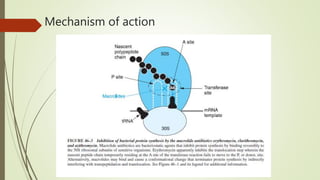
Mechanism of action
 Inhibition pf protein synthesis
 Binding to 50-s ribosome
 inhibits the translocation step wherein a newly synthesized peptidyl
tRNA molecule moves from the acceptor site ( A site ) on the ribosome
to the peptidyl donor site ( P site)
Erythromycin
Active against :
 gram positive pneumococci, streptococci, staphylococci and
corynebacteria
 Mycoplasma pneumoniae, L pneumophila, Chlamydia trachomatis,
Chlamydophila psittaci, Chlamydophila pneumoniae, H pylori, Listeria
monocytogenes,
 certain mycobacteria (Mycobacterium kansasii, Mycobacterium
scrofulaceum)
 Gram-negative  Neisseria sp, Bordetella pertussis, Bartonella
 Rickettsia species, Treponema pallidum, and Campylobacter
Erythromycin
Resistance mechanisms:
 reduced permeability of the cell membrane or active efflux;
 Production enzymes that hydrolyze macrolides;
 modification of the ribosomal binding site
 There is cross resistance between erythromycin and the other macrolides.
Erythromycin
pharmacokinetics
 destroyed by stomach acid and must be administered with enteric coating.
 Food interferes with absorption.
 serum half-life is 1.5 hours  250–500 g every 6 hours, max 1-2g/d
 distributed widely except to the brain and cerebrospinal fluid.
 excreted in the bile, and only 5% is excreted in the urine
CLARITHROMYCIN
derived from erythromycin by addition of a methyl group
improved acid stability and oral absorption
 mechanism of action: same as erythromycin
CLARITHROMYCIN
Pharmacokinetics
 improved acid stability and oral absorption compared with erythromycin
 half-life 6 hours 250–500 mg twice daily
 penetrates most tissues well
 metabolized in the liver and is partially eliminated in the urine
CLARITHROMYCIN
 advantages of clarithromycin compared with erythromycin : lower
incidence of gastrointestinal intolerance and less frequent dosing.
AZITHROMYCIN
 derived from erythromycin by addition of a methylated nitrogen
 mechanism of action : similar to those of clarithromycin and
erythomycin
AZITHROMYCIN
pharmacokinetics :
 similar to those of clarithromycin.
 slightly less active than erythromycin and clarithromycin against
staphylococci and streptococci
 slightly more active against H influenzae.
 highly active against Chlamydia sp
Therapeutic uses of macrolides
 Respiratory tract infections
 community acquired pneumonia, atypical pneumonia
 Legionellosis: azithromycin ( first line)
 Acute exacerbation of chronic bronchitis, acute otitis media, acute streptococcal
pharyngitis, acute bacterial sinusitis
 Azithromycin and clarithromycin are preferred to erythromycin due to broader
spectrum and superior tolerability
 Skin and soft tissue infections:
 In patients allergic to penicillin
 Erysipelas and cellulitis
Therapeutic uses of macrolides
Chlamydial infections:
 Can use any macrolide
 Azithromycin- urethral, endocervical , rectal , epididymal infections by chlamydia
 Erythromycin- chlamydial pneumonia of infancy and ophthalmia neonatorum
 Diphtheria
 Erythromycin- acute infection or eradication of carrier state
 Other macrolides not recommended
 Pertussis
 Erythromycin – drug of choice
 Clarithromycin and azithromycin are also effective
Therapeutic uses of macrolides
Helicobacter pylori:
 Clarithromycin + omeprazole+ amoxicillin
 Mycobacterial infections:
 Clarithromycin or azithromycin ( first line) for MAI (mycobacterium avium-
intracellulare)
 Clarithromycin -- Lepromatous leprosy
 Prophylactic use:
 Azithromycin or clarithromycin for prevention of MAI in HIV
 Erythromycin – alternative prophylaxis for recurrence of rheumatic fever ( in
patients allergic to penicillin)
Adverse effects of macrolides
GI toxicity
 Erythromycin --Moderate to severe epigastric distress due to a direct stimulation of gut
motility Anorexia, nausea, vomiting, and diarrhea
 clarithromycin, azithromycin – lesser degree of GI upset
 Cardiac toxicity
 Cardiac arrythmias– QT prolongation, ventricular tacycardia
 Hepatotoxicity
 Erythromycin long term use – cholestatic hepatitis
 Azithromycin, clarithromycin- lesser degree
 Allergic reactions- fever, skin eruptions
 Auditory impairment, tinnitus
Drug interactions of macrolides
Erythromycin and clarithromycin-- inhibit cytochrome P450 enzymes
and, thus increase the serum concentrations of theophylline, warfarin,
cyclosporine, methylprednisolone, carbamazipine, digoxin
Azithromycin– less likely in drug interactions