INTERCHANGEABLE
MANUFACTURE, TERMINOLOGY FOR
LIMITS & FITS

                            Presented By
                     Md. Ashfaqur Rahman
                         ID:10.01.07.077
Interchangeable Manufacture


Definition
  The interchangeable manufacture implies that,
  the parts that are for practical purposes
  identical. They are made to specifications by
  processes that ensure that they are so nearly
  identical that they will fit into any device of the
  same type
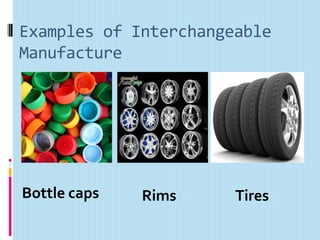
Examples of Interchangeable
Manufacture


Bottle caps   Rims     Tires
Advantages For Interchangeable
Manufacture
 Replacement: One such part can freely replace
  another, without any custom fitting (such
  as filling).
 Easy to Assembly: This interchangeability
  allows easy assembly of new devices
 Repairing: Easier repair of existing devices.
 Minimizing time and cost :Minimizing both the
  time and skill required of the person doing the
  assembly or repair.
 Rapid Manufacturing :Machine tool enables the
  components to be manufactured more rapidly
Terminology for LIMITS & FITS

   Terminology:- The terms related to limit system are as
    below:
                                    Size:- It is a number expressed
                                     in a particular unit in the
                                     measurement of length.
                       Basic Size


                                    Basic Size:- It is the size based
          Hole


          Shaft                      on which the dimensional
                                     deviations are given.

Actual Size:- It is the size of the component by actual
 measurement after it is manufactured. It should lie
 between the two limits of size.
Terminology for Limits                 and Fits Cont.
 Limits of size:- These are the maximum and minimum
  permissible sizes of the part.
 Maximum limit:- Is the maximum size permitted for the part.
 Minimum limit:- it is the minimum size permitted for the part
  limit of size.

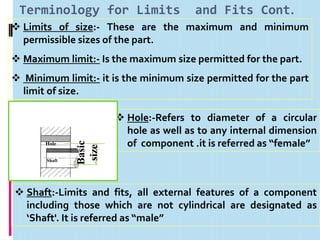
                        Hole:-Refers to diameter of a circular
                         hole as well as to any internal dimension
                         of component .it is referred as “female”
               Basic


       Hole
                size


       Shaft


 Shaft:-Limits and fits, all external features of a component
  including those which are not cylindrical are designated as
  ‘Shaft'. It is referred as “male”
Terminology for Limits and Fits Cont.
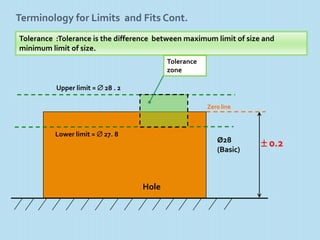
Tolerance :Tolerance is the difference between maximum limit of size and
minimum limit of size.
                                          Tolerance
                                          zone

          Upper limit =  28 . 2

                                                      Zero line


          Lower limit =  27. 8
                                                         Ø28         0.2
                                                         (Basic)


                                   Hole
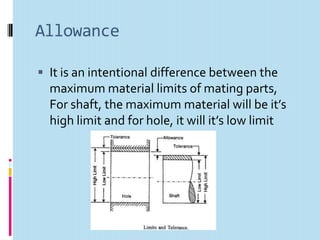
Allowance

 It is an intentional difference between the
  maximum material limits of mating parts,
  For shaft, the maximum material will be it’s
  high limit and for hole, it will it’s low limit
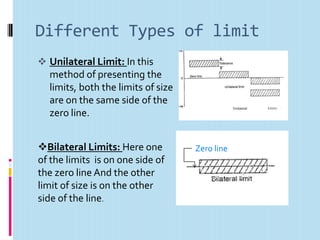
Different Types of limit
 Unilateral Limit: In this
  method of presenting the
  limits, both the limits of size
  are on the same side of the
  zero line.


Bilateral Limits: Here one         Zero line
of the limits is on one side of
the zero line And the other
limit of size is on the other
side of the line.
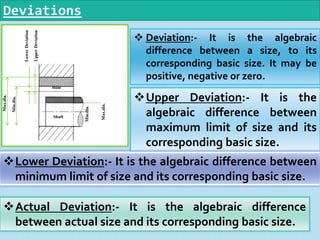
Deviations
                                        Upper Deviation
                      Lower Deviation

                                                                                         Deviation:- It is the algebraic
                                                                                          difference between a size, to its
                                                                                          corresponding basic size. It may be
                                                                                          positive, negative or zero.
                                                          Hole

                                                                                        Upper Deviation:- It is the
Max.dia.

           Min.dia.


                                                                             Max.dia.
                                                                  Min.dia.


                                                          Shaft                          algebraic difference between
                                                                                         maximum limit of size and its
                                                                                         corresponding basic size.
Lower Deviation:- It is the algebraic difference between
 minimum limit of size and its corresponding basic size.

Actual Deviation:- It is the algebraic difference
 between actual size and its corresponding basic size.
Fit
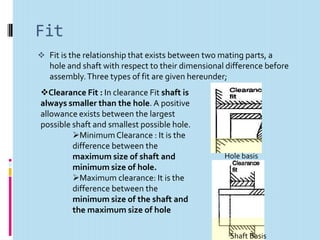
 Fit is the relationship that exists between two mating parts, a
   hole and shaft with respect to their dimensional difference before
   assembly. Three types of fit are given hereunder;
Clearance Fit : In clearance Fit shaft is
always smaller than the hole. A positive
allowance exists between the largest
possible shaft and smallest possible hole.
         Minimum Clearance : It is the
         difference between the
         maximum size of shaft and                 Hole basis
         minimum size of hole.
         Maximum clearance: It is the
         difference between the
         minimum size of the shaft and
         the maximum size of hole

                                                     Shaft Basis
Fit Cont.
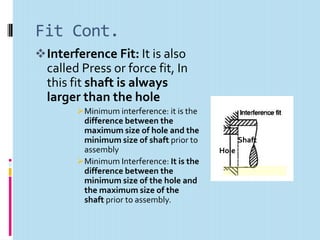
 Interference Fit: It is also
  called Press or force fit, In
  this fit shaft is always
  larger than the hole
        Minimum interference: it is the
         difference between the
         maximum size of hole and the
         minimum size of shaft prior to           Shaft
         assembly                          Hole
        Minimum Interference: It is the
         difference between the
         minimum size of the hole and
         the maximum size of the
         shaft prior to assembly.
Fit Cont.
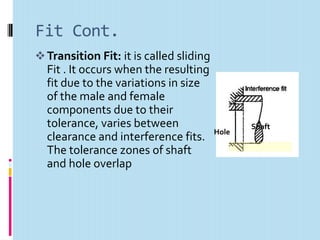
 Transition Fit: it is called sliding
  Fit . It occurs when the resulting
  fit due to the variations in size
  of the male and female
  components due to their
  tolerance, varies between                     Shaft
                                         Hole
  clearance and interference fits.
  The tolerance zones of shaft
  and hole overlap
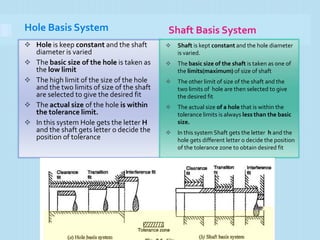
Hole Basis System                             Shaft Basis System
 Hole is keep constant and the shaft            Shaft is kept constant and the hole diameter
    diameter is varied                            is varied.
   The basic size of the hole is taken as       The basic size of the shaft is taken as one of
    the low limit                                 the limits(maximum) of size of shaft
   The high limit of the size of the hole       The other limit of size of the shaft and the
    and the two limits of size of the shaft       two limits of hole are then selected to give
    are selected to give the desired fit          the desired fit
   The actual size of the hole is within        The actual size of a hole that is within the
    the tolerance limit.                          tolerance limits is always less than the basic
   In this system Hole gets the letter H         size.
    and the shaft gets letter o decide the       In this system Shaft gets the letter h and the
    position of tolerance                         hole gets different letter o decide the position
                                                  of the tolerance zone to obtain desired fit
THANK
  YOU

Limits,tolarence and fits

  • 1.
    INTERCHANGEABLE MANUFACTURE, TERMINOLOGY FOR LIMITS& FITS Presented By Md. Ashfaqur Rahman ID:10.01.07.077
  • 2.
    Interchangeable Manufacture Definition The interchangeable manufacture implies that, the parts that are for practical purposes identical. They are made to specifications by processes that ensure that they are so nearly identical that they will fit into any device of the same type
  • 3.
  • 4.
    Advantages For Interchangeable Manufacture Replacement: One such part can freely replace another, without any custom fitting (such as filling).  Easy to Assembly: This interchangeability allows easy assembly of new devices  Repairing: Easier repair of existing devices.  Minimizing time and cost :Minimizing both the time and skill required of the person doing the assembly or repair.  Rapid Manufacturing :Machine tool enables the components to be manufactured more rapidly
  • 5.
    Terminology for LIMITS& FITS  Terminology:- The terms related to limit system are as below: Size:- It is a number expressed in a particular unit in the measurement of length. Basic Size Basic Size:- It is the size based Hole Shaft on which the dimensional deviations are given. Actual Size:- It is the size of the component by actual measurement after it is manufactured. It should lie between the two limits of size.
  • 6.
    Terminology for Limits and Fits Cont.  Limits of size:- These are the maximum and minimum permissible sizes of the part.  Maximum limit:- Is the maximum size permitted for the part.  Minimum limit:- it is the minimum size permitted for the part limit of size.  Hole:-Refers to diameter of a circular hole as well as to any internal dimension of component .it is referred as “female” Basic Hole size Shaft  Shaft:-Limits and fits, all external features of a component including those which are not cylindrical are designated as ‘Shaft'. It is referred as “male”
  • 7.
    Terminology for Limitsand Fits Cont. Tolerance :Tolerance is the difference between maximum limit of size and minimum limit of size. Tolerance zone Upper limit =  28 . 2 Zero line Lower limit =  27. 8 Ø28  0.2 (Basic) Hole
  • 8.
    Allowance  It isan intentional difference between the maximum material limits of mating parts, For shaft, the maximum material will be it’s high limit and for hole, it will it’s low limit
  • 9.
    Different Types oflimit  Unilateral Limit: In this method of presenting the limits, both the limits of size are on the same side of the zero line. Bilateral Limits: Here one Zero line of the limits is on one side of the zero line And the other limit of size is on the other side of the line.
  • 10.
    Deviations Upper Deviation Lower Deviation  Deviation:- It is the algebraic difference between a size, to its corresponding basic size. It may be positive, negative or zero. Hole Upper Deviation:- It is the Max.dia. Min.dia. Max.dia. Min.dia. Shaft algebraic difference between maximum limit of size and its corresponding basic size. Lower Deviation:- It is the algebraic difference between minimum limit of size and its corresponding basic size. Actual Deviation:- It is the algebraic difference between actual size and its corresponding basic size.
  • 11.
    Fit  Fit isthe relationship that exists between two mating parts, a hole and shaft with respect to their dimensional difference before assembly. Three types of fit are given hereunder; Clearance Fit : In clearance Fit shaft is always smaller than the hole. A positive allowance exists between the largest possible shaft and smallest possible hole. Minimum Clearance : It is the difference between the maximum size of shaft and Hole basis minimum size of hole. Maximum clearance: It is the difference between the minimum size of the shaft and the maximum size of hole Shaft Basis
  • 12.
    Fit Cont.  InterferenceFit: It is also called Press or force fit, In this fit shaft is always larger than the hole Minimum interference: it is the difference between the maximum size of hole and the minimum size of shaft prior to Shaft assembly Hole Minimum Interference: It is the difference between the minimum size of the hole and the maximum size of the shaft prior to assembly.
  • 13.
    Fit Cont.  TransitionFit: it is called sliding Fit . It occurs when the resulting fit due to the variations in size of the male and female components due to their tolerance, varies between Shaft Hole clearance and interference fits. The tolerance zones of shaft and hole overlap
  • 14.
    Hole Basis System Shaft Basis System  Hole is keep constant and the shaft  Shaft is kept constant and the hole diameter diameter is varied is varied.  The basic size of the hole is taken as  The basic size of the shaft is taken as one of the low limit the limits(maximum) of size of shaft  The high limit of the size of the hole  The other limit of size of the shaft and the and the two limits of size of the shaft two limits of hole are then selected to give are selected to give the desired fit the desired fit  The actual size of the hole is within  The actual size of a hole that is within the the tolerance limit. tolerance limits is always less than the basic  In this system Hole gets the letter H size. and the shaft gets letter o decide the  In this system Shaft gets the letter h and the position of tolerance hole gets different letter o decide the position of the tolerance zone to obtain desired fit
  • 15.