TYPES OF FITS
WHAT ARE FITS?
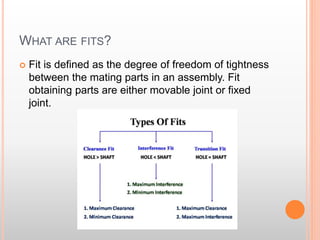
 Fit is defined as the degree of freedom of tightness
between the mating parts in an assembly. Fit
obtaining parts are either movable joint or fixed
joint.
CLEARANCE FIT
 This means there is a gap between the two
mating parts.
 Clearance fit is arises at the Diameter of the shaft is
smaller then the hole.
 The minimum diameter of hole is grater then large
diameter of the shaft.
 Clearance value is positive when in this type of fit.
CLEARANCE FIT
CLEARANCE FIT
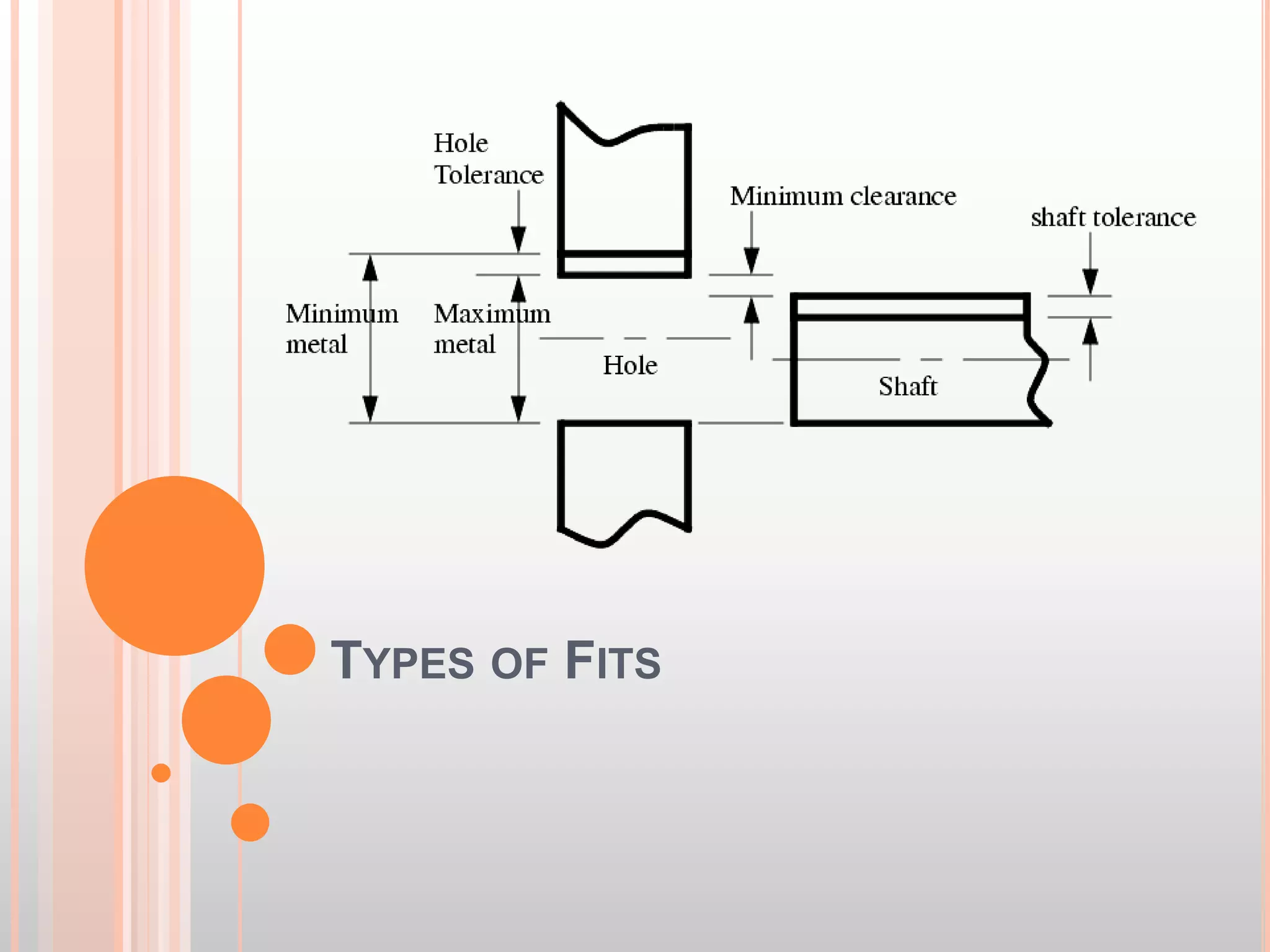
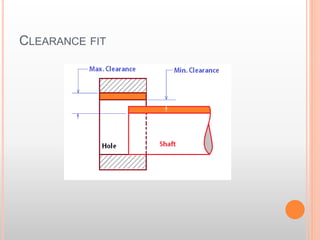
 Maximum Clearance: It is the difference between
the maximum size of hole and minimum size of
shaft.
 Minimum clearance : It is the difference between
the maximum size of shaft and minimum size of the
hole.
CLEARANCE FIT
 The most commonly used fits of the clearance type
are.
 Slide fit
 Easy Slide
 Running Fit
 Slack running Fits
 Loose Running Fits
TRANSITION FIT
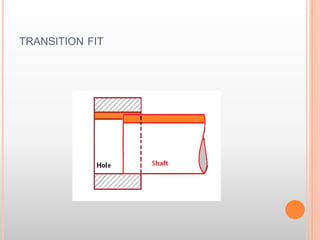
 Transition fit is neither loose nor tight as like
clearance fit and interference fit.
 The transition fit is two types they are.
 Wringing Fit
 Push fit
TRANSITION FIT
TRANSITION FIT
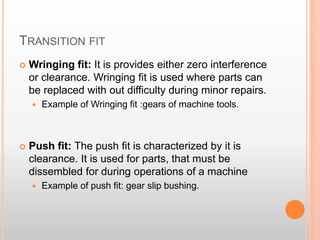
 Wringing fit: It is provides either zero interference
or clearance. Wringing fit is used where parts can
be replaced with out difficulty during minor repairs.
 Example of Wringing fit :gears of machine tools.
 Push fit: The push fit is characterized by it is
clearance. It is used for parts, that must be
dissembled for during operations of a machine
 Example of push fit: gear slip bushing.
INTERFERENCE FIT
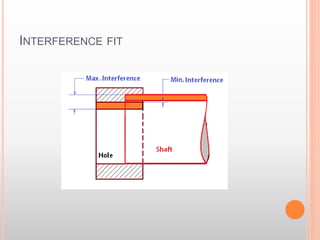
 There is no gap between the faces and there will be
an intersecting of material will occur.
 The interference type of fit the minimum allowable
diameter of the shaft is larger then the maximum
permissible diameter of the hole as the diameter of
the shaft is larger then the diameter of hole.
INTERFERENCE FIT
INTERFERENCE FIT
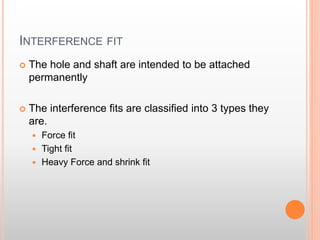
 The hole and shaft are intended to be attached
permanently
 The interference fits are classified into 3 types they
are.
 Force fit
 Tight fit
 Heavy Force and shrink fit
INTERFERENCE FIT
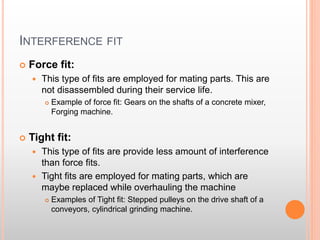
 Force fit:
 This type of fits are employed for mating parts. This are
not disassembled during their service life.
 Example of force fit: Gears on the shafts of a concrete mixer,
Forging machine.
 Tight fit:
 This type of fits are provide less amount of interference
than force fits.
 Tight fits are employed for mating parts, which are
maybe replaced while overhauling the machine
 Examples of Tight fit: Stepped pulleys on the drive shaft of a
conveyors, cylindrical grinding machine.
INTERFERENCE FIT
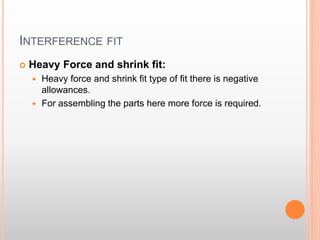
 Heavy Force and shrink fit:
 Heavy force and shrink fit type of fit there is negative
allowances.
 For assembling the parts here more force is required.

Types of fits

  • 1.
  • 2.
    WHAT ARE FITS? Fit is defined as the degree of freedom of tightness between the mating parts in an assembly. Fit obtaining parts are either movable joint or fixed joint.
  • 3.
    CLEARANCE FIT  Thismeans there is a gap between the two mating parts.  Clearance fit is arises at the Diameter of the shaft is smaller then the hole.  The minimum diameter of hole is grater then large diameter of the shaft.  Clearance value is positive when in this type of fit.
  • 4.
  • 5.
    CLEARANCE FIT  MaximumClearance: It is the difference between the maximum size of hole and minimum size of shaft.  Minimum clearance : It is the difference between the maximum size of shaft and minimum size of the hole.
  • 6.
    CLEARANCE FIT  Themost commonly used fits of the clearance type are.  Slide fit  Easy Slide  Running Fit  Slack running Fits  Loose Running Fits
  • 7.
    TRANSITION FIT  Transitionfit is neither loose nor tight as like clearance fit and interference fit.  The transition fit is two types they are.  Wringing Fit  Push fit
  • 8.
  • 9.
    TRANSITION FIT  Wringingfit: It is provides either zero interference or clearance. Wringing fit is used where parts can be replaced with out difficulty during minor repairs.  Example of Wringing fit :gears of machine tools.  Push fit: The push fit is characterized by it is clearance. It is used for parts, that must be dissembled for during operations of a machine  Example of push fit: gear slip bushing.
  • 10.
    INTERFERENCE FIT  Thereis no gap between the faces and there will be an intersecting of material will occur.  The interference type of fit the minimum allowable diameter of the shaft is larger then the maximum permissible diameter of the hole as the diameter of the shaft is larger then the diameter of hole.
  • 11.
  • 12.
    INTERFERENCE FIT  Thehole and shaft are intended to be attached permanently  The interference fits are classified into 3 types they are.  Force fit  Tight fit  Heavy Force and shrink fit
  • 13.
    INTERFERENCE FIT  Forcefit:  This type of fits are employed for mating parts. This are not disassembled during their service life.  Example of force fit: Gears on the shafts of a concrete mixer, Forging machine.  Tight fit:  This type of fits are provide less amount of interference than force fits.  Tight fits are employed for mating parts, which are maybe replaced while overhauling the machine  Examples of Tight fit: Stepped pulleys on the drive shaft of a conveyors, cylindrical grinding machine.
  • 14.
    INTERFERENCE FIT  HeavyForce and shrink fit:  Heavy force and shrink fit type of fit there is negative allowances.  For assembling the parts here more force is required.