
Systems of Fit
Hole based
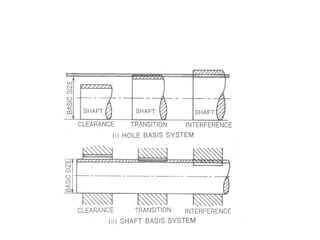
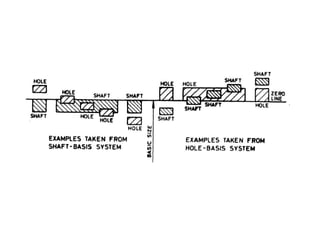
Hole basis System
• In the hole basis system the hole is kept constant
and the shaft size is varied to give the various types
of fits
• in this system lower deviation of the hole is zero
i.e. the lower limit of the hole is the same as the basic
size.
• The upper limit of the hole and the two limit of
the size of the shaft are then varied to give the desired
type of fit
Shaft basis system
• In the shaft basis system the shaft is kept constant
and the sizes of the hole is varied to give the various
types of fits.
• The upper deviation of the shaft is zero i.e. the
upper limit of the shaft is the same as basic size and
the various types of fits are obtained by varying the
lower limit of shaft and both the limits of hole.
The hole basis system is commonly used because it is
more convenient to make correct holes of fixed sizes
Shaft basis system is used when the ground bars or
drawn bars are readily available.
Gauges
• Gauge is a tool or instrument used to measure or
compare a component
• Gauges are scaleless inspection tool at rigid
design, which are used to check the diameters of
manufactured parts.
• They are also used to check the form and relative
positions of the surfaces of parts.
• they are only used to determine Wheather the
inspected part has been made within the specified
limits
Gauges differ from other measuring instruments
because
• No adjustment is required in their use
• They are not general purpose instruments but are
specially made for specific purposes
• They quick results
Types of gauges
According to their type
(a) Standard gauges (b) Limit gauges
According to purposes
(a) Workshop gauge (b) Inspection gauges
(c) Reference or master gauges
According to form of the tested surface
(a) Plug gauge (b) Snap, Gap, Ring gauge
According to their design
(a) Single limit and double limit gauges
(b) Single ended and double ended gauges
(c) Fixed and adjustable gauges
Limit Gauges
Are widely used
The gauges has got two ends
One end with upper limits and the other end with lower
limits
GO and NO-GO gauges
GO end checks the Maximum Metal limit
NO-GO end checks the minimum Metal limits
Gauge Tolerance
• Gauges cannot be manufactured to exact sizes
• Closer the limits more expensive the gauges
• Some variations cannot be eliminated due to
imperfections in the process, skill of worker etc.
Some allowances must therefore be provided to gauge
maker. This is known as gauge makers tolerance or
Gauge tolerance
Presentation of gauge tolerance
Magnitude of the gauge tolerance is determined
Position the tolerance relative to the work limits so
that it does not cause the gauge to accept defective
work
unilateral system of tolerance is preferred
Systems of fit

Systems of fit

  • 1.
  • 2.
    Hole based Hole basisSystem • In the hole basis system the hole is kept constant and the shaft size is varied to give the various types of fits • in this system lower deviation of the hole is zero i.e. the lower limit of the hole is the same as the basic size. • The upper limit of the hole and the two limit of the size of the shaft are then varied to give the desired type of fit
  • 3.
    Shaft basis system •In the shaft basis system the shaft is kept constant and the sizes of the hole is varied to give the various types of fits. • The upper deviation of the shaft is zero i.e. the upper limit of the shaft is the same as basic size and the various types of fits are obtained by varying the lower limit of shaft and both the limits of hole.
  • 6.
    The hole basissystem is commonly used because it is more convenient to make correct holes of fixed sizes Shaft basis system is used when the ground bars or drawn bars are readily available.
  • 7.
    Gauges • Gauge isa tool or instrument used to measure or compare a component • Gauges are scaleless inspection tool at rigid design, which are used to check the diameters of manufactured parts. • They are also used to check the form and relative positions of the surfaces of parts. • they are only used to determine Wheather the inspected part has been made within the specified limits
  • 8.
    Gauges differ fromother measuring instruments because • No adjustment is required in their use • They are not general purpose instruments but are specially made for specific purposes • They quick results
  • 9.
    Types of gauges Accordingto their type (a) Standard gauges (b) Limit gauges According to purposes (a) Workshop gauge (b) Inspection gauges (c) Reference or master gauges According to form of the tested surface (a) Plug gauge (b) Snap, Gap, Ring gauge According to their design (a) Single limit and double limit gauges (b) Single ended and double ended gauges (c) Fixed and adjustable gauges
  • 10.
    Limit Gauges Are widelyused The gauges has got two ends One end with upper limits and the other end with lower limits GO and NO-GO gauges GO end checks the Maximum Metal limit NO-GO end checks the minimum Metal limits
  • 11.
    Gauge Tolerance • Gaugescannot be manufactured to exact sizes • Closer the limits more expensive the gauges • Some variations cannot be eliminated due to imperfections in the process, skill of worker etc. Some allowances must therefore be provided to gauge maker. This is known as gauge makers tolerance or Gauge tolerance
  • 12.
    Presentation of gaugetolerance Magnitude of the gauge tolerance is determined Position the tolerance relative to the work limits so that it does not cause the gauge to accept defective work unilateral system of tolerance is preferred