Limit, Fit, Tolerance
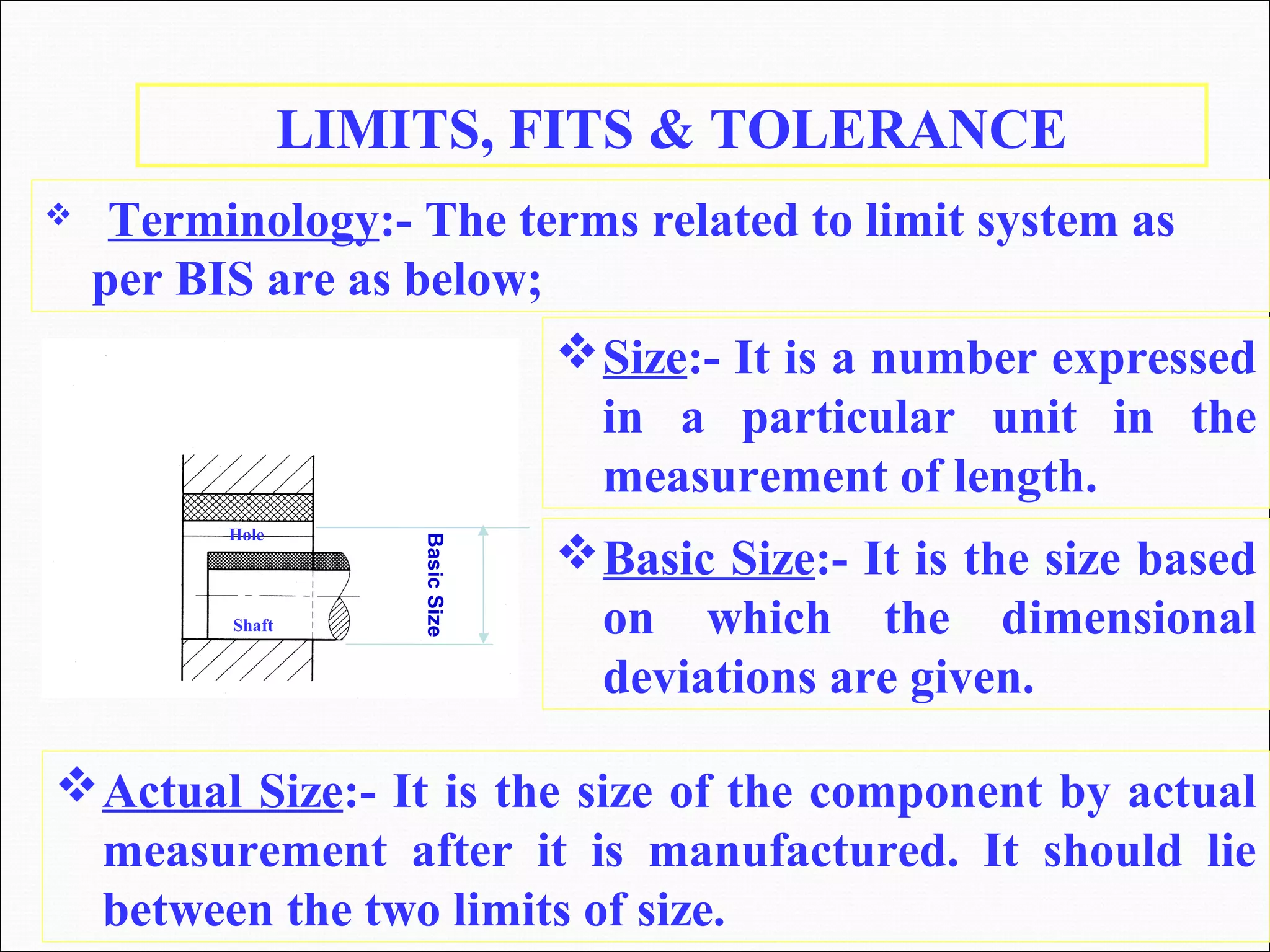
Size:- It is a number expressed
in a particular unit in the
measurement of length.
LIMITS, FITS & TOLERANCE
 Terminology:- The terms related to limit system as
per BIS are as below;
Basic Size:- It is the size based
on which the dimensional
deviations are given.
Actual Size:- It is the size of the component by actual
measurement after it is manufactured. It should lie
between the two limits of size.
Hole
Shaft
BasicSize
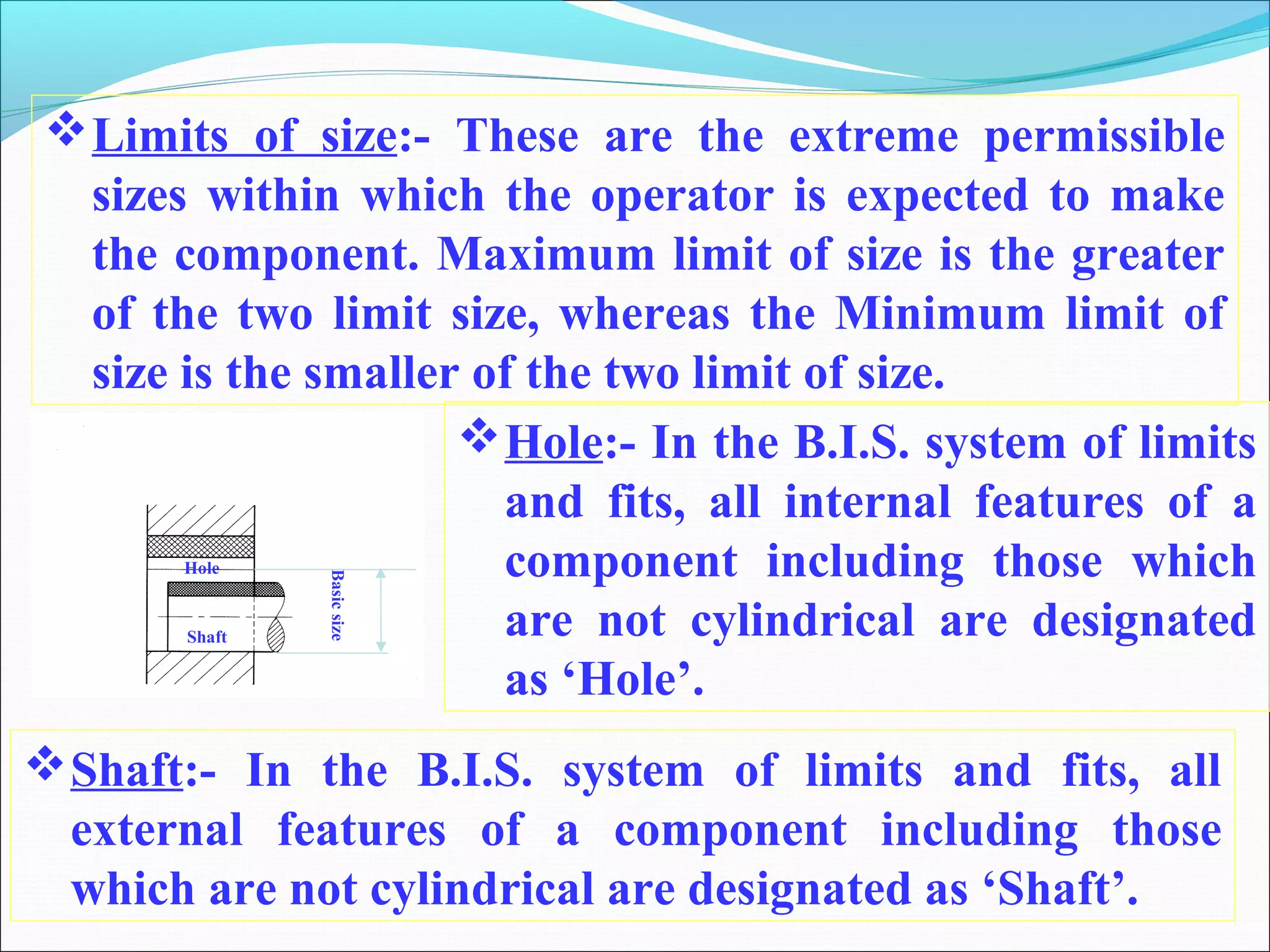
Limits of size:- These are the extreme permissible
sizes within which the operator is expected to make
the component. Maximum limit of size is the greater
of the two limit size, whereas the Minimum limit of
size is the smaller of the two limit of size.
Hole:- In the B.I.S. system of limits
and fits, all internal features of a
component including those which
are not cylindrical are designated
as ‘Hole’.
Shaft:- In the B.I.S. system of limits and fits, all
external features of a component including those
which are not cylindrical are designated as ‘Shaft’.
Hole
Shaft
Basicsize
Actual Deviation:- It is the algebraic difference
between actual size and its corresponding basic size.
Deviation:- It is the algebraic
difference between a size, to its
corresponding basic size. It may
be positive, negative or zero.
Upper Deviation:- It is the
algebraic difference between
maximum limit of size and its
corresponding basic size.
Lower Deviation:- It is the algebraic difference between
minimum limit of size and its corresponding basic size.
Min.dia.
Max.dia.
Hole
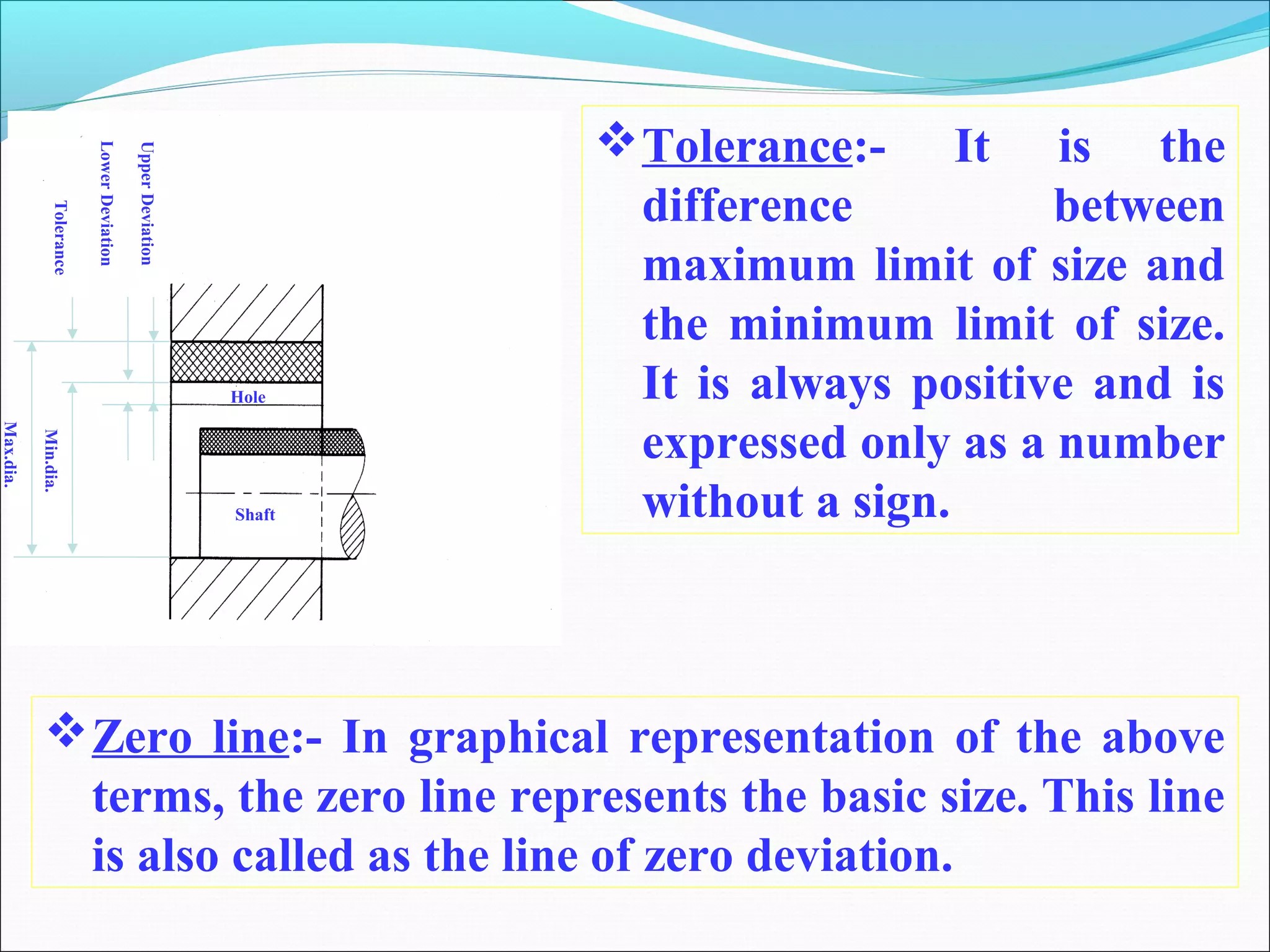
Zero line:- In graphical representation of the above
terms, the zero line represents the basic size. This line
is also called as the line of zero deviation.
UpperDeviation
LowerDeviation
Tolerance
Min.dia.
Max.dia.
Shaft
Hole
Tolerance:- It is the
difference between
maximum limit of size and
the minimum limit of size.
It is always positive and is
expressed only as a number
without a sign.
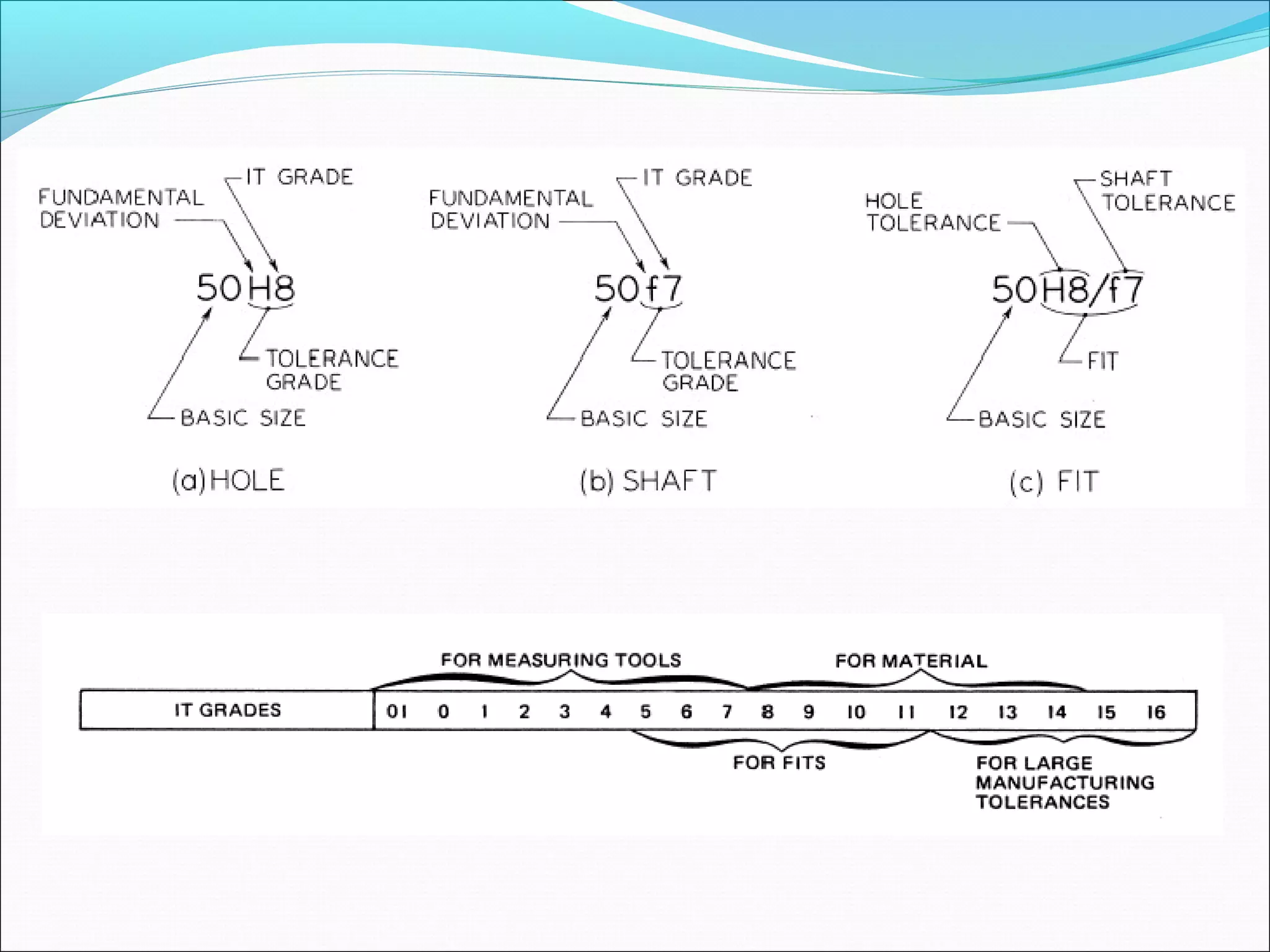
Fundamental deviation:-
There are 25 fundamental
deviations in the B.I.S.
system represented by letter,
symbols (Capital letters for
Holes and small letters for
Shaft)
Max.dia.
Min.dia.
UpperDeviation
LowerDeviation
Tolerance
Tolerance
Min.dia.
Max.dia.
Shaft
Hole
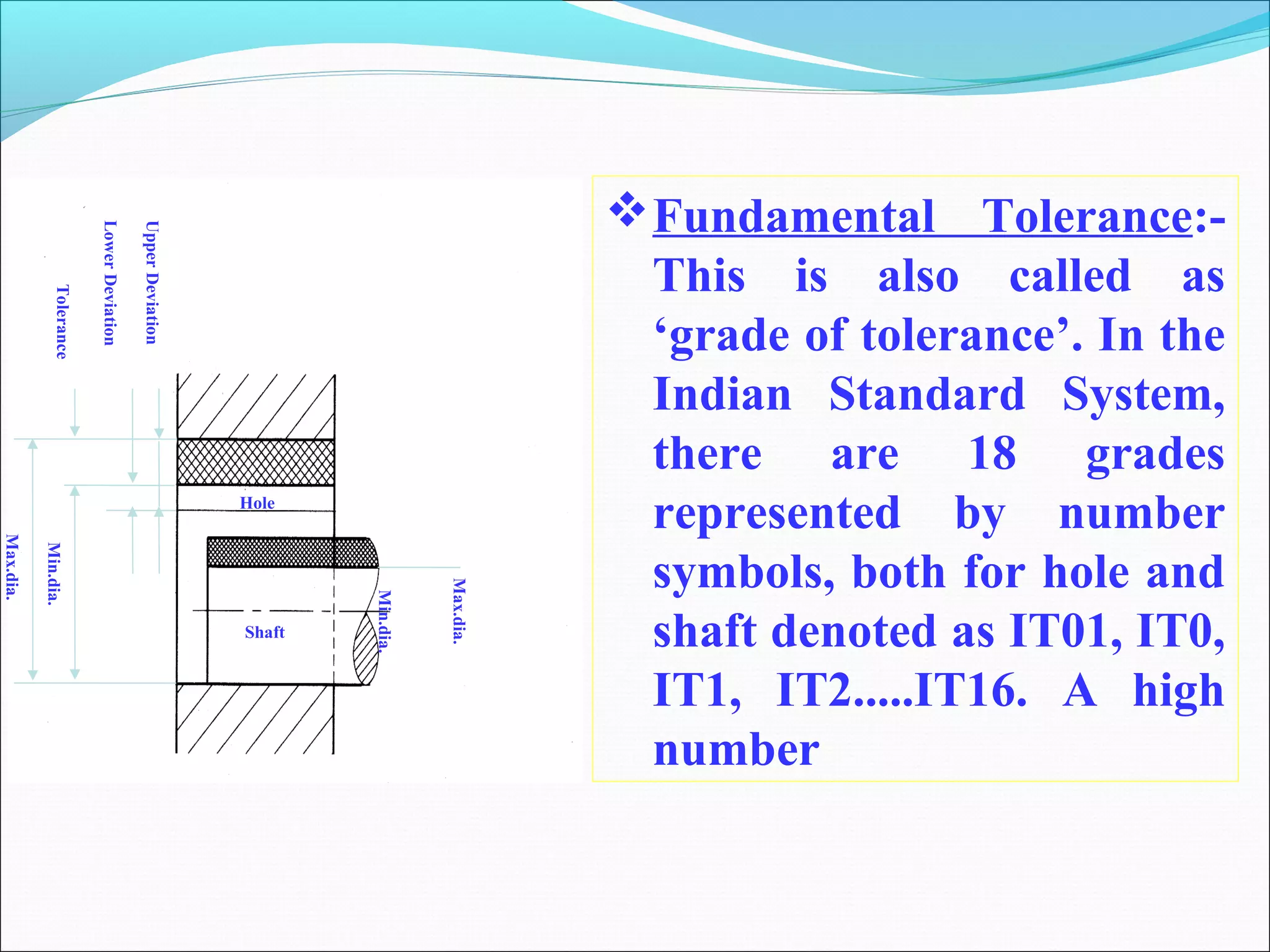
Fundamental Tolerance:-
This is also called as
‘grade of tolerance’. In the
Indian Standard System,
there are 18 grades
represented by number
symbols, both for hole and
shaft denoted as IT01, IT0,
IT1, IT2.....IT16. A high
number
Max.dia.
Min.dia.
UpperDeviation
LowerDeviation
Tolerance
Min.dia.
Max.dia.
Shaft
Hole
 FIT:- It is the relationship that exists between two
mating parts, a hole and shaft with respect to their
dimensional difference before assembly. Three types of
fit are given hereunder;
Clearance fit:- It is a fit which
always provides clearance. Here
the tolerance zone of the hole will
be above the tolerance zone of the
shaft. Maximum clearance is the
difference between the maximum
hole and minimum shaft.
Minimum clearance is the
difference between the minimum
hole and maximum shaft.
ShaftHole
Clearanc
e fit
Interference fit:- It is a fit
which always provides
interference. Here the tolerance
zone of the hole will be below
the tolerance zone of the shaft.
Maximum interference is the
algebraic difference between
the minimum hole and
maximum shaft. Minimum
interference is the algebraic
difference between the
maximum hole and minimum
shaft.
Shaft
Hole
Tolerance Zone of
Hole
Tolerance Zone of
Shaft
Transition fit:- It is a fit which
may sometimes provides
clearance and sometimes
interference. When this class of
fit is represented graphically,
the tolerance zone of the hole
and shaft will overlap each
other.
Hole Hole
Hole
Shaft
Shaft
Shaft
Mass Production :- Mass production means
production of a unit, component or part in large
numbers.
Advantages:- 1.Time for the manufacture of
components is reduced
2.The cost of pieces is reduced. 3.
Spare parts can be quickly made
available. Disadvantages:-1. Special
purpose machines are necessary.
2.Jigs and Fixtures are
needed. 3. Gauges are to be used
instead of conventional precision
instruments. 4. Initial expenditure will be
very high.
 Interchangeability:- When components are mass
produced, unless they are interchangeable, the purpose of
mass production is not fulfilled. By interchangeability, we
mean that identical components, manufactured by
different personnel under different environments, can be
assembled and replaced without any further rectification
during the assembly stage, without affecting the
functioning of the component when assembled.
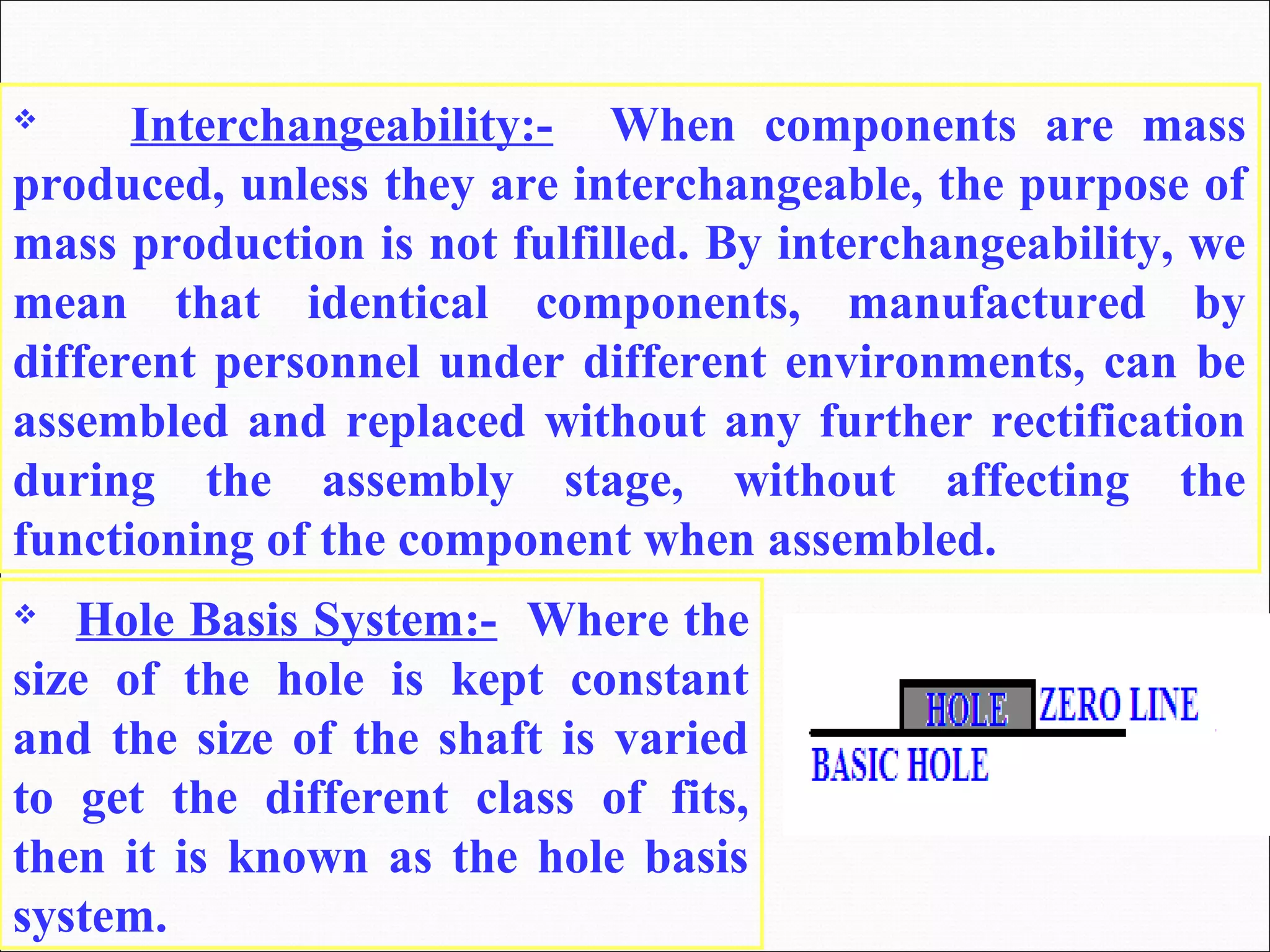
 Hole Basis System:- Where the
size of the hole is kept constant
and the size of the shaft is varied
to get the different class of fits,
then it is known as the hole basis
system.
 Shaft Basis System:- Where the
size of the shaft is kept constant
and the variations given to the
hole to get the different class of
fits, then it is known as the shaft
basis system.
Basic Shaft System
Zero line
Shaft
Limit, fit, tolerance

Limit, fit, tolerance

  • 1.
  • 2.
    Size:- It isa number expressed in a particular unit in the measurement of length. LIMITS, FITS & TOLERANCE  Terminology:- The terms related to limit system as per BIS are as below; Basic Size:- It is the size based on which the dimensional deviations are given. Actual Size:- It is the size of the component by actual measurement after it is manufactured. It should lie between the two limits of size. Hole Shaft BasicSize
  • 3.
    Limits of size:-These are the extreme permissible sizes within which the operator is expected to make the component. Maximum limit of size is the greater of the two limit size, whereas the Minimum limit of size is the smaller of the two limit of size. Hole:- In the B.I.S. system of limits and fits, all internal features of a component including those which are not cylindrical are designated as ‘Hole’. Shaft:- In the B.I.S. system of limits and fits, all external features of a component including those which are not cylindrical are designated as ‘Shaft’. Hole Shaft Basicsize
  • 4.
    Actual Deviation:- Itis the algebraic difference between actual size and its corresponding basic size. Deviation:- It is the algebraic difference between a size, to its corresponding basic size. It may be positive, negative or zero. Upper Deviation:- It is the algebraic difference between maximum limit of size and its corresponding basic size. Lower Deviation:- It is the algebraic difference between minimum limit of size and its corresponding basic size. Min.dia. Max.dia. Hole
  • 5.
    Zero line:- Ingraphical representation of the above terms, the zero line represents the basic size. This line is also called as the line of zero deviation. UpperDeviation LowerDeviation Tolerance Min.dia. Max.dia. Shaft Hole Tolerance:- It is the difference between maximum limit of size and the minimum limit of size. It is always positive and is expressed only as a number without a sign.
  • 6.
    Fundamental deviation:- There are25 fundamental deviations in the B.I.S. system represented by letter, symbols (Capital letters for Holes and small letters for Shaft) Max.dia. Min.dia. UpperDeviation LowerDeviation Tolerance Tolerance Min.dia. Max.dia. Shaft Hole
  • 7.
    Fundamental Tolerance:- This isalso called as ‘grade of tolerance’. In the Indian Standard System, there are 18 grades represented by number symbols, both for hole and shaft denoted as IT01, IT0, IT1, IT2.....IT16. A high number Max.dia. Min.dia. UpperDeviation LowerDeviation Tolerance Min.dia. Max.dia. Shaft Hole
  • 9.
     FIT:- Itis the relationship that exists between two mating parts, a hole and shaft with respect to their dimensional difference before assembly. Three types of fit are given hereunder; Clearance fit:- It is a fit which always provides clearance. Here the tolerance zone of the hole will be above the tolerance zone of the shaft. Maximum clearance is the difference between the maximum hole and minimum shaft. Minimum clearance is the difference between the minimum hole and maximum shaft. ShaftHole Clearanc e fit
  • 10.
    Interference fit:- Itis a fit which always provides interference. Here the tolerance zone of the hole will be below the tolerance zone of the shaft. Maximum interference is the algebraic difference between the minimum hole and maximum shaft. Minimum interference is the algebraic difference between the maximum hole and minimum shaft. Shaft Hole Tolerance Zone of Hole Tolerance Zone of Shaft
  • 11.
    Transition fit:- Itis a fit which may sometimes provides clearance and sometimes interference. When this class of fit is represented graphically, the tolerance zone of the hole and shaft will overlap each other. Hole Hole Hole Shaft Shaft Shaft Mass Production :- Mass production means production of a unit, component or part in large numbers.
  • 12.
    Advantages:- 1.Time forthe manufacture of components is reduced 2.The cost of pieces is reduced. 3. Spare parts can be quickly made available. Disadvantages:-1. Special purpose machines are necessary. 2.Jigs and Fixtures are needed. 3. Gauges are to be used instead of conventional precision instruments. 4. Initial expenditure will be very high.
  • 13.
     Interchangeability:- Whencomponents are mass produced, unless they are interchangeable, the purpose of mass production is not fulfilled. By interchangeability, we mean that identical components, manufactured by different personnel under different environments, can be assembled and replaced without any further rectification during the assembly stage, without affecting the functioning of the component when assembled.  Hole Basis System:- Where the size of the hole is kept constant and the size of the shaft is varied to get the different class of fits, then it is known as the hole basis system.
  • 14.
     Shaft BasisSystem:- Where the size of the shaft is kept constant and the variations given to the hole to get the different class of fits, then it is known as the shaft basis system. Basic Shaft System Zero line Shaft