Changes in the
Ecosystems
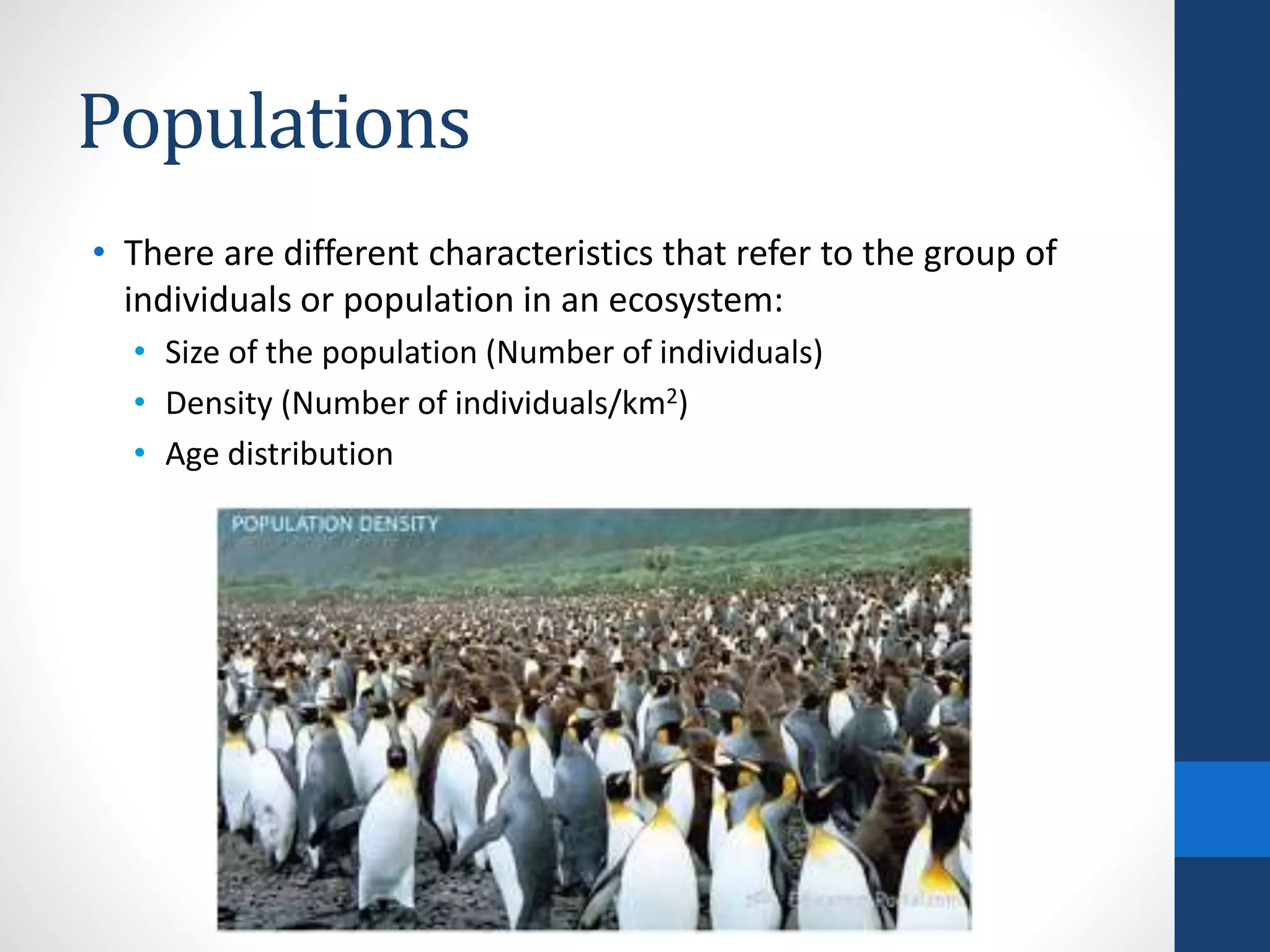
Populations
• There are different characteristics that refer to the group of
individuals or population in an ecosystem:
• Size of the population (Number of individuals)
• Density (Number of individuals/km2)
• Age distribution
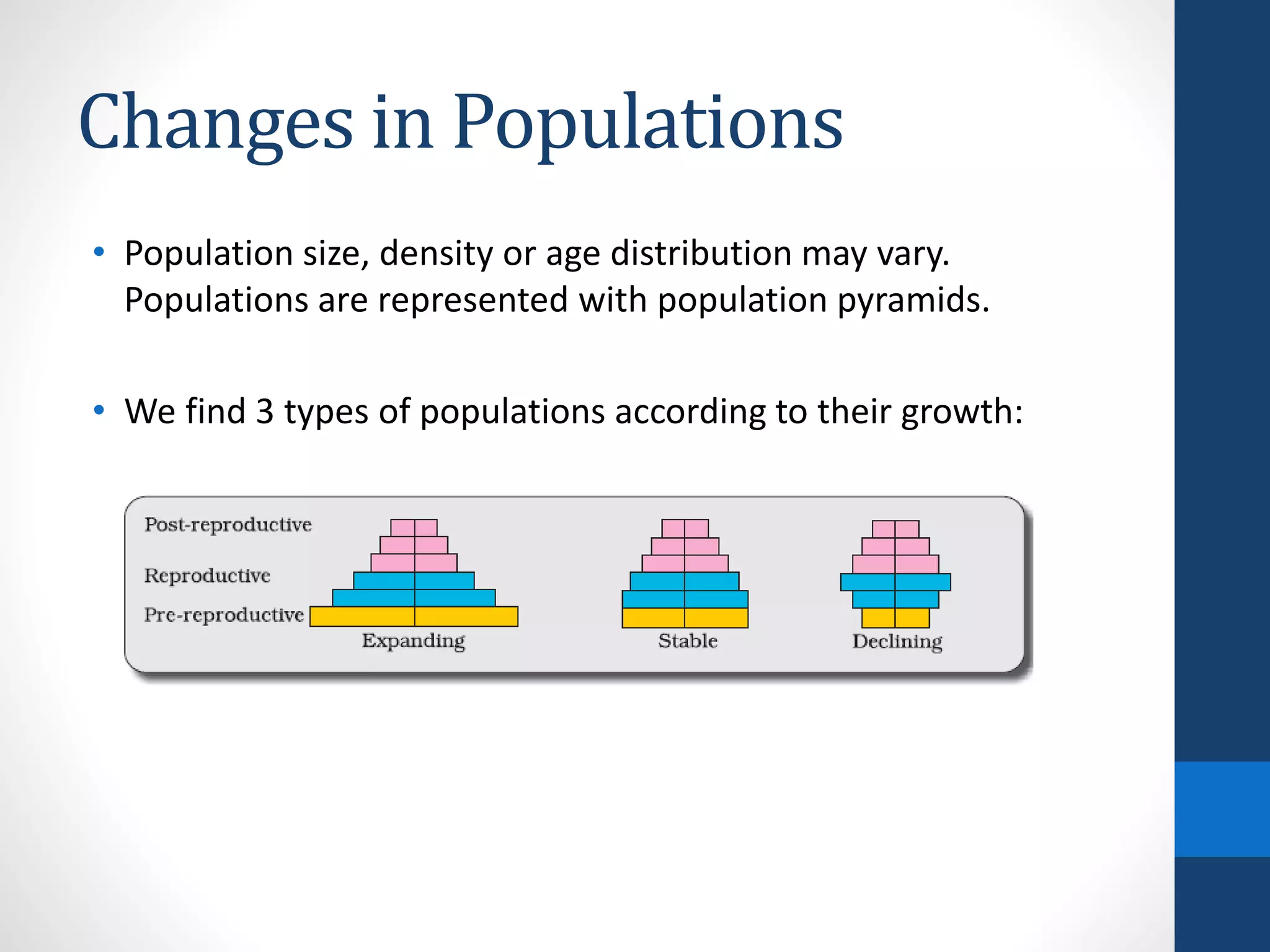
Changes in Populations
• Population size, density or age distribution may vary.
Populations are represented with population pyramids.
• We find 3 types of populations according to their growth:
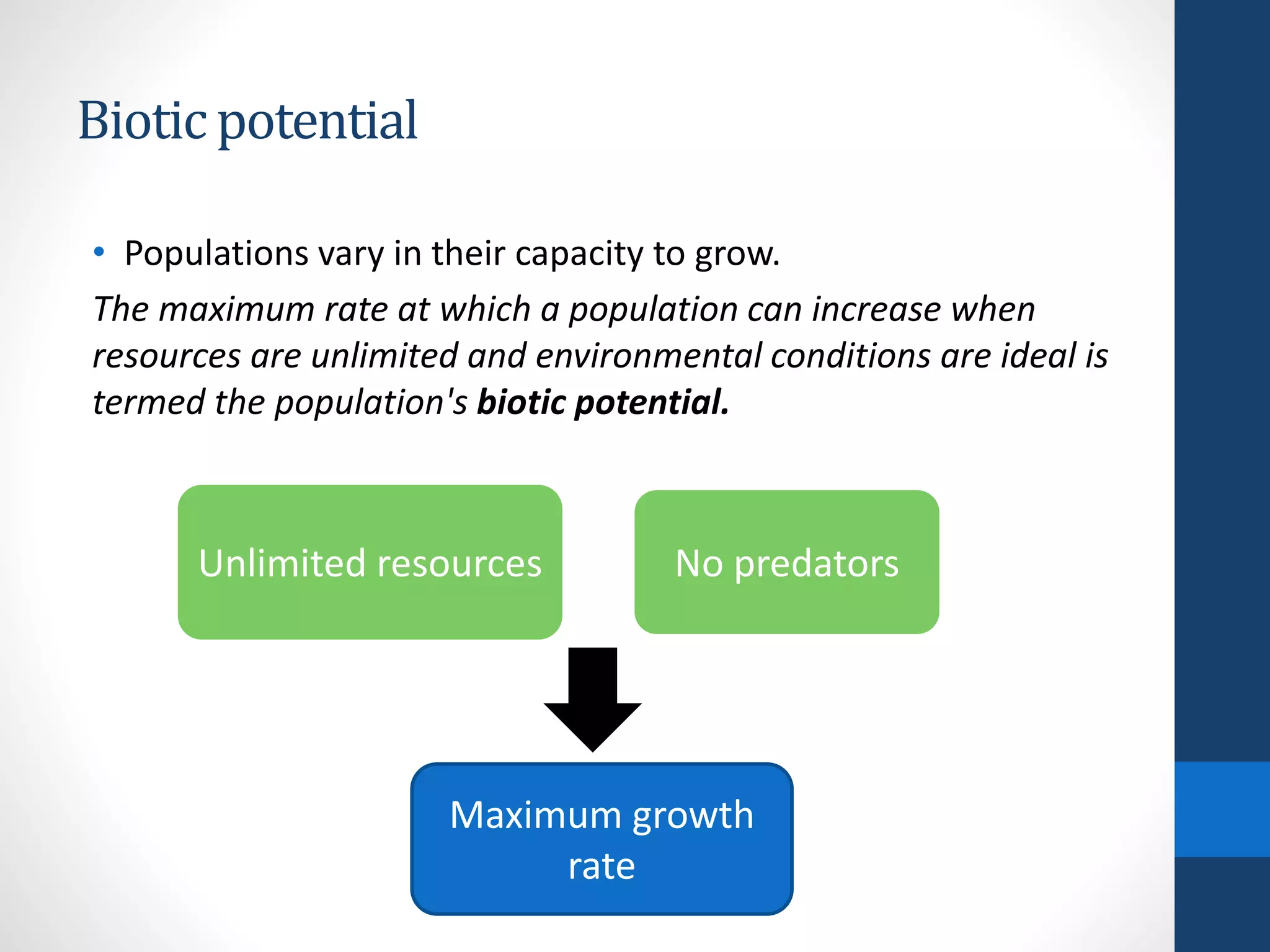
Biotic potential
• Populations vary in their capacity to grow.
The maximum rate at which a population can increase when
resources are unlimited and environmental conditions are ideal is
termed the population's biotic potential.
Unlimited resources
Maximum growth
rate
No predators
Variations in biotic potential
• Each species will have a different biotic potential due to
variations in :
1. “Litter size“: how many offspring are born each time.
2. The breeding frequency : how often an individual can
reproduce.
3. The species' reproductive span: how long an individual is
capable of reproducing.
4. Survival rate: how many offspring survive to reproductive age.
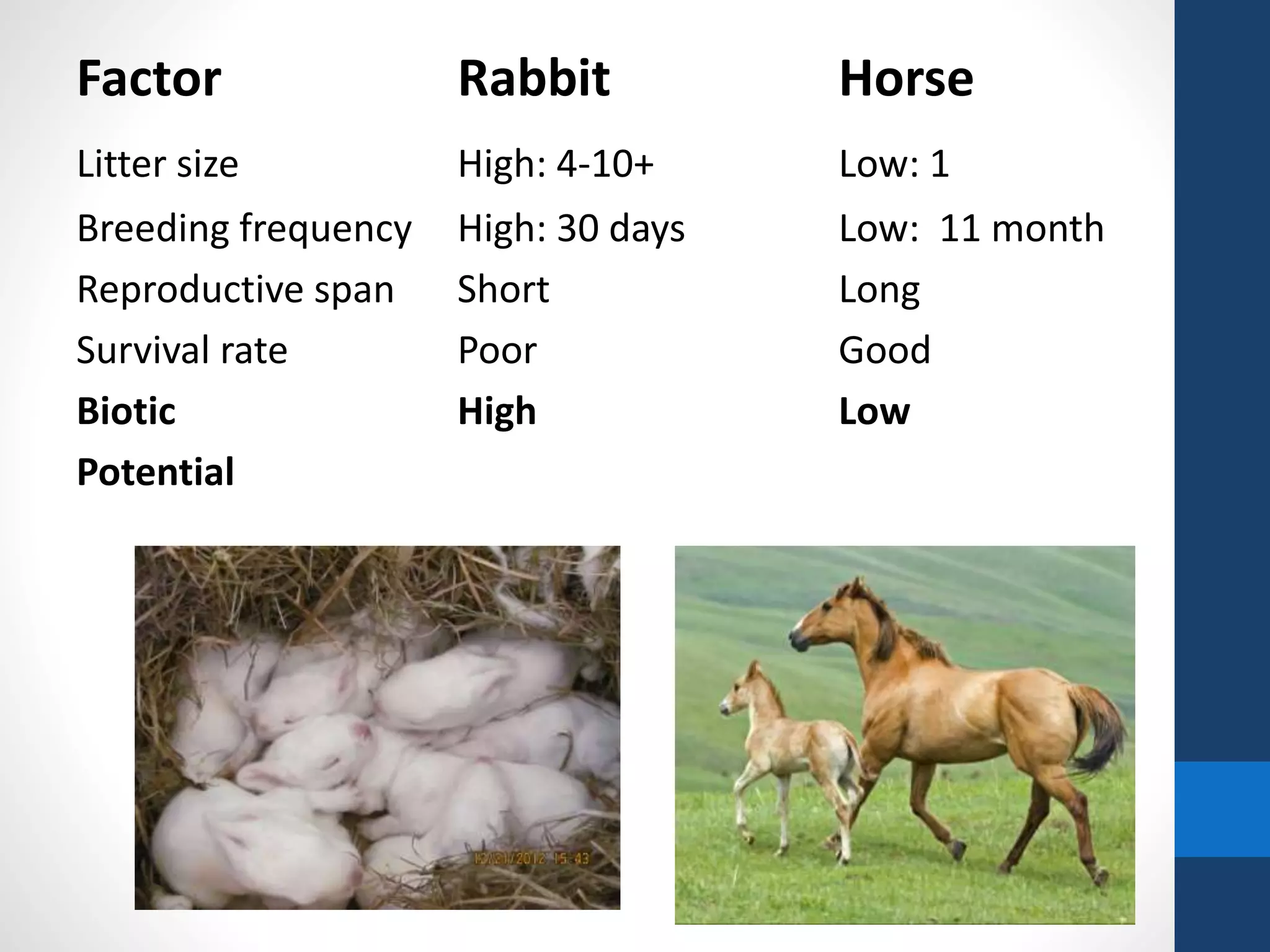
Factor Rabbit Horse
Litter size High: 4-10+ Low: 1
Breeding frequency High: 30 days Low: 11 month
Reproductive span Short Long
Survival rate Poor Good
Biotic High Low
Potential
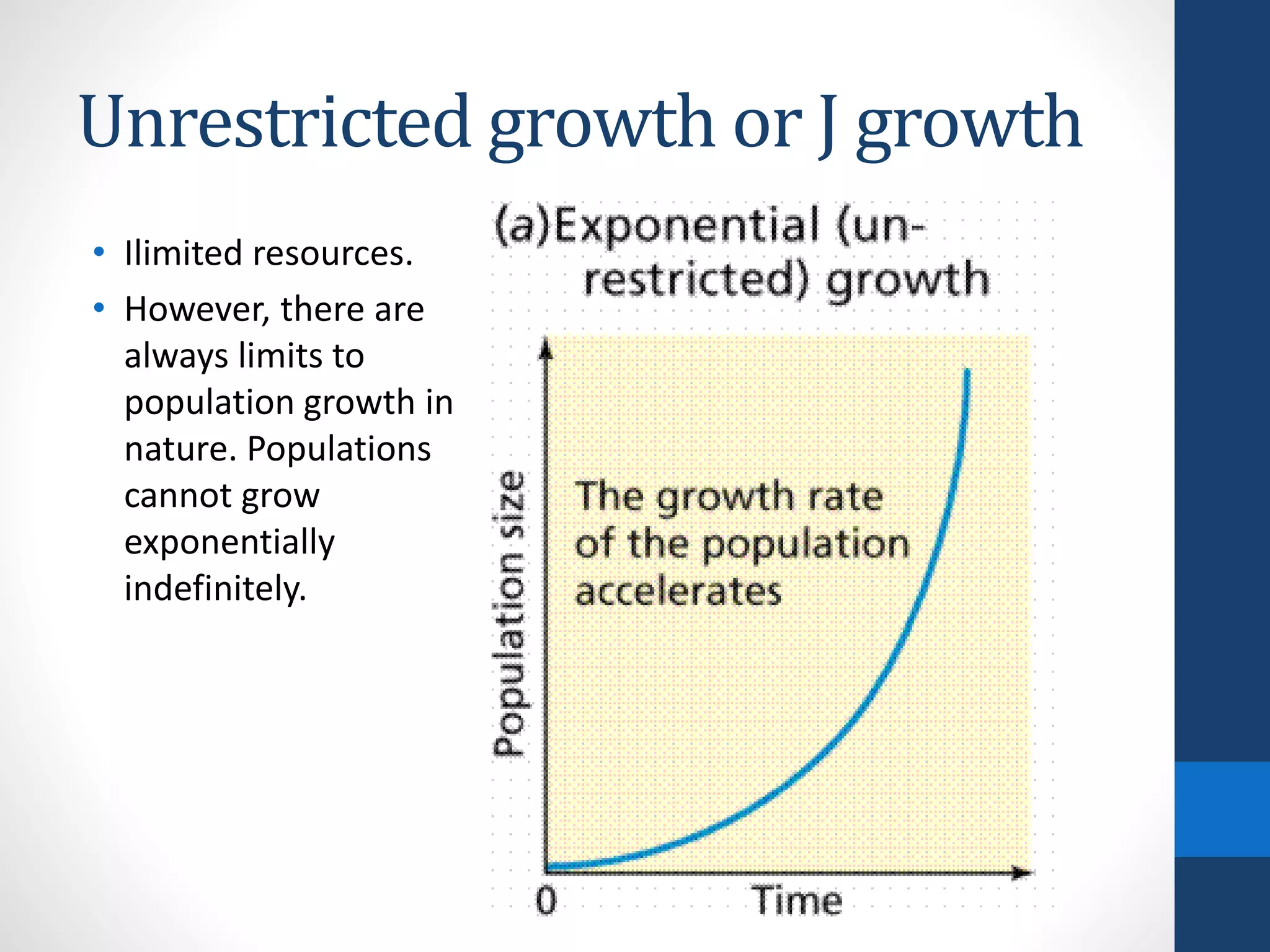
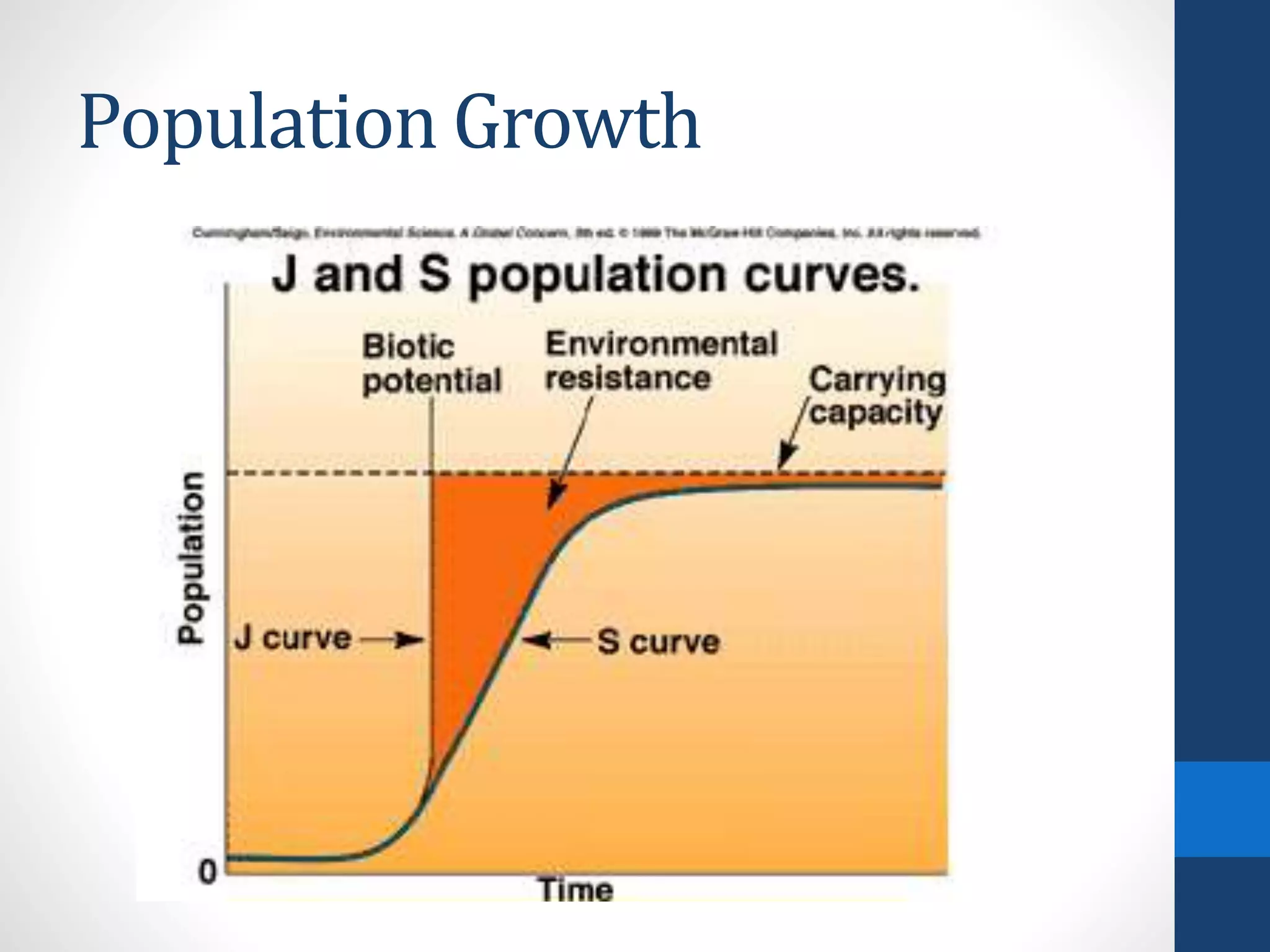
Unrestricted growth or J growth
• Ilimited resources.
• However, there are
always limits to
population growth in
nature. Populations
cannot grow
exponentially
indefinitely.
Environmental resistance
• Exploding populations always reach a size limit imposed by the
shortage of one or more factors such as water, space, and
nutrients or by adverse conditions such as disease, drought
and temperature extremes.
• The factors which act jointly to limit a population's growth are
termed the environmental resistance.
https://www.wou.edu/las/physci/ch371/lecture/popgrowth/carrying.htm
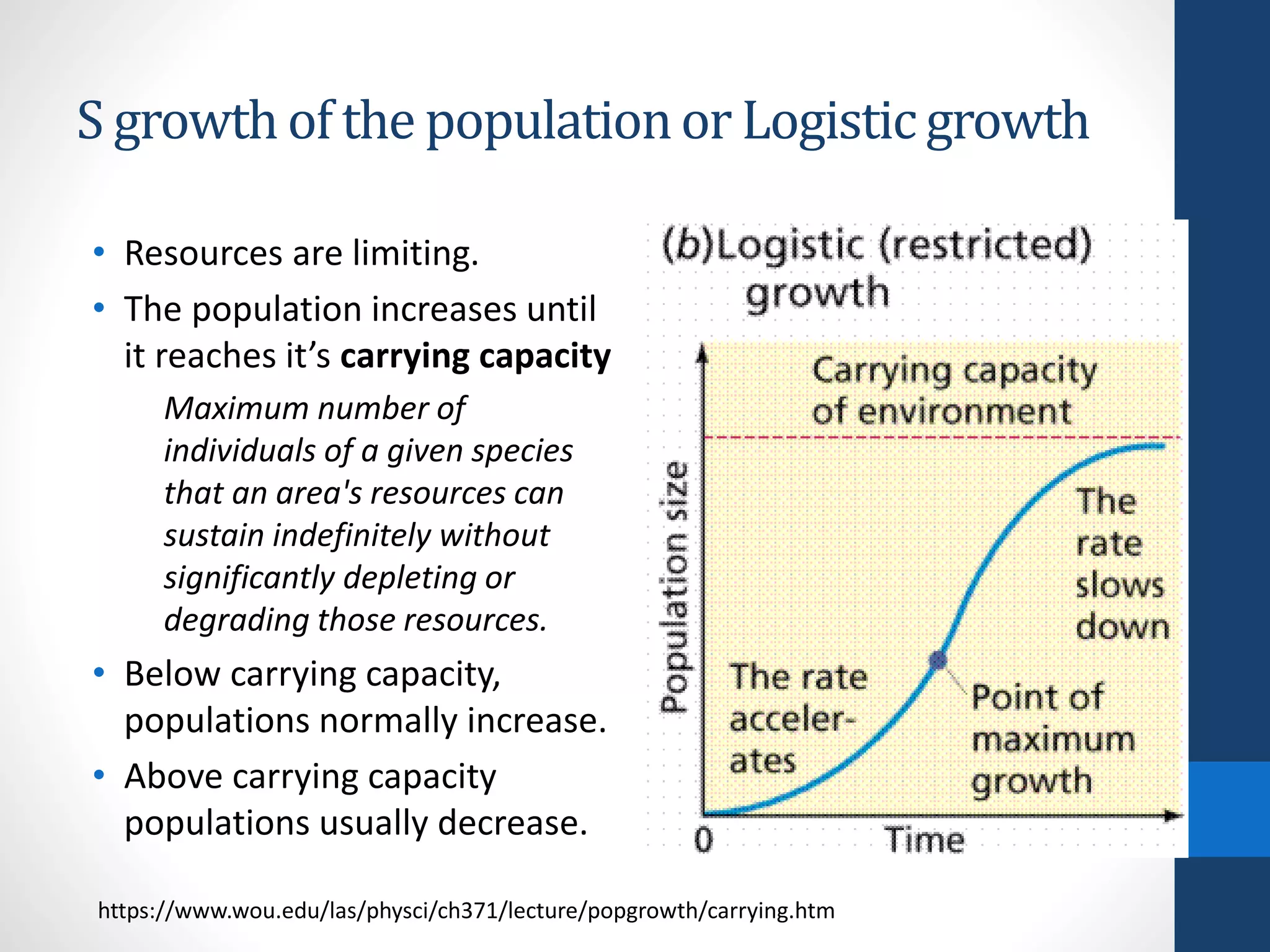
S growthof the populationor Logisticgrowth
• Resources are limiting.
• The population increases until
it reaches it’s carrying capacity
Maximum number of
individuals of a given species
that an area's resources can
sustain indefinitely without
significantly depleting or
degrading those resources.
• Below carrying capacity,
populations normally increase.
• Above carrying capacity
populations usually decrease.
https://www.wou.edu/las/physci/ch371/lecture/popgrowth/carrying.htm
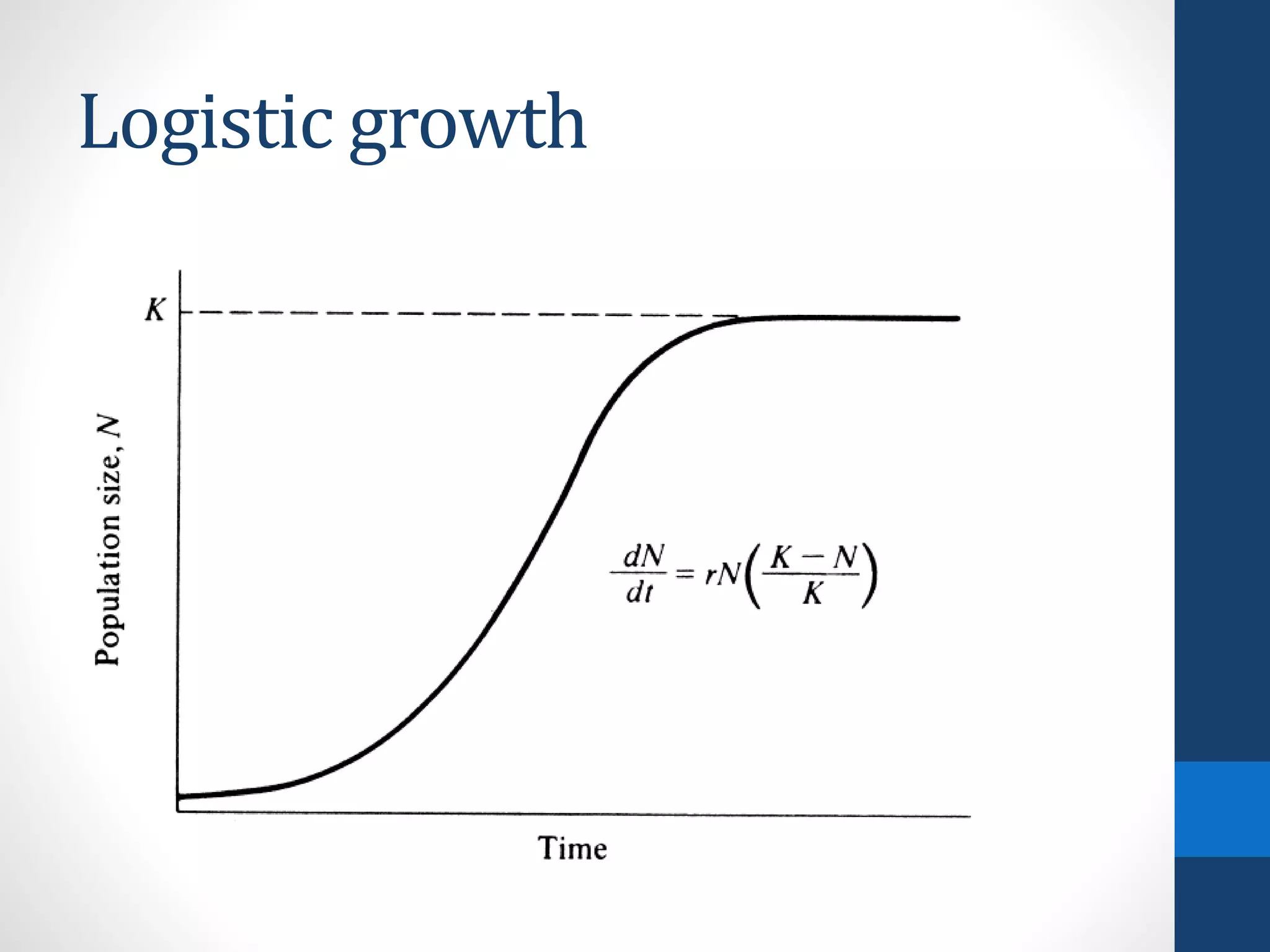
Logistic growth
Population Growth
Regulating factors
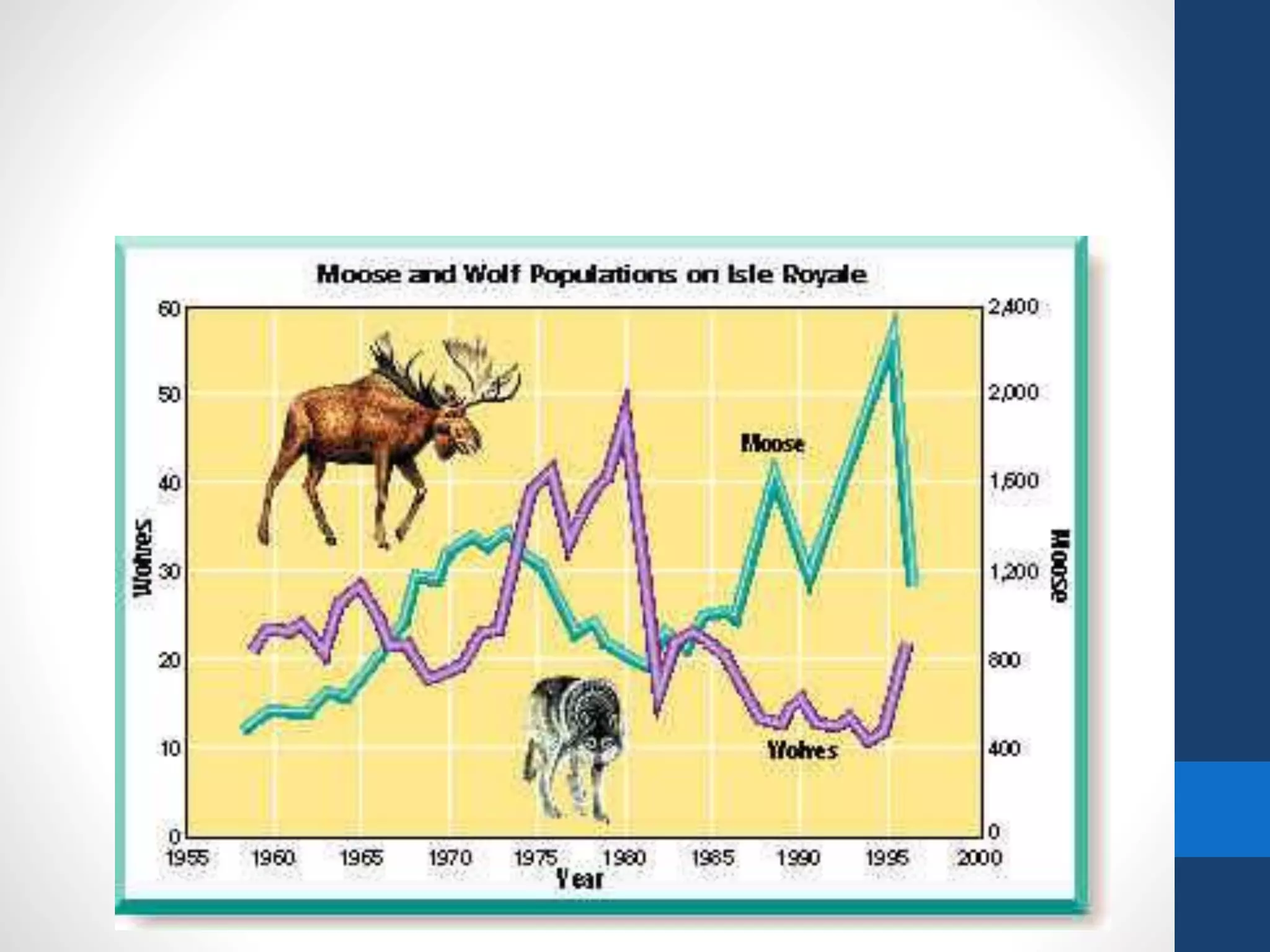
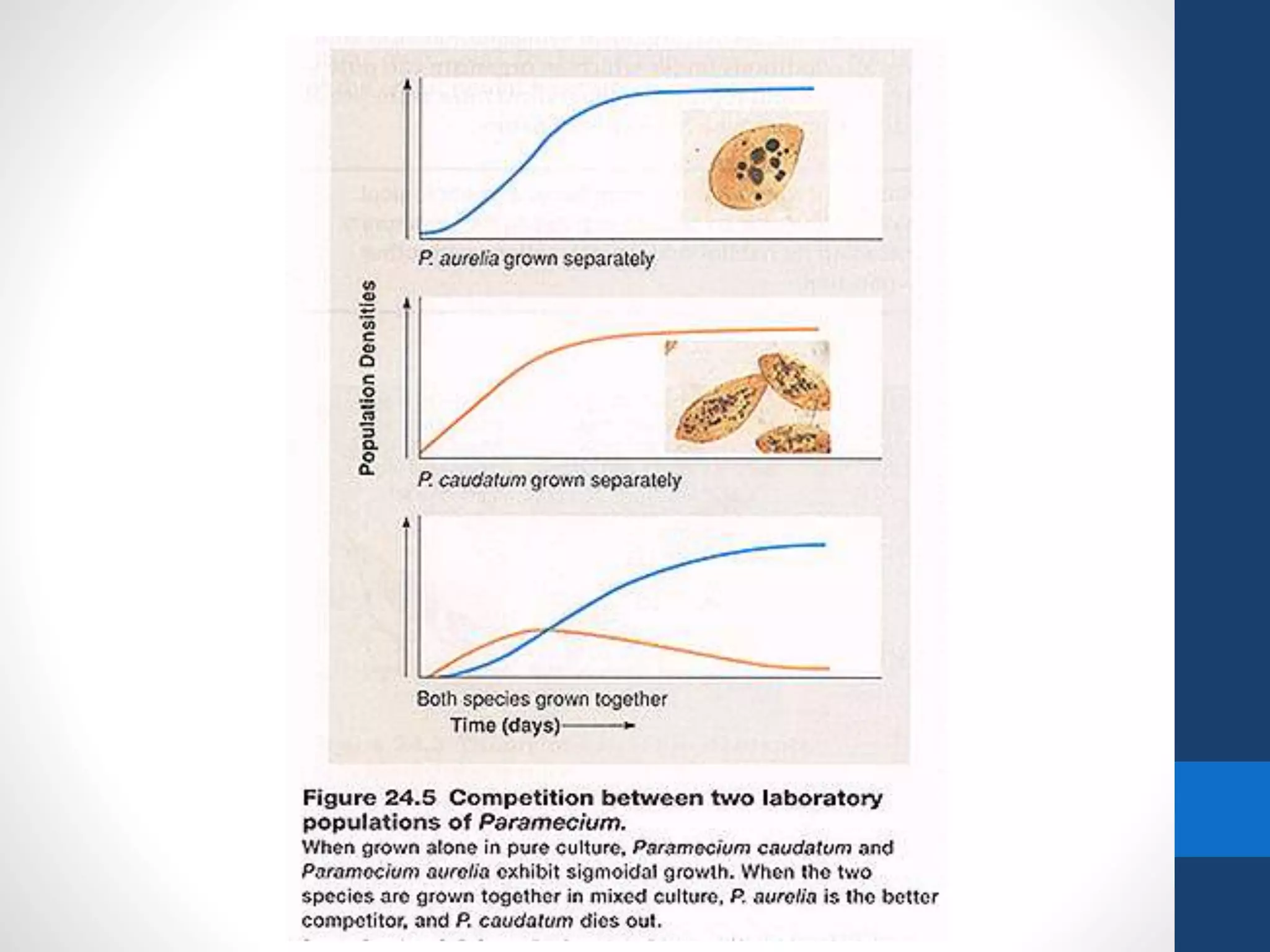
• A factor that keeps population size at equilibrium is known as
a regulating factor.
• Population size decreases above carrying capacity due to a
range of factors depending on the species concerned, but can
include insufficient space, food supply, or sunlight.
• The carrying capacity of an environment may vary for different
species and may change over time due to a variety of factors,
including: food availability, water supply, environmental
conditions and living space.
Lesson 28 changes in the ecosystems

Lesson 28 changes in the ecosystems

  • 1.
  • 2.
    Populations • There aredifferent characteristics that refer to the group of individuals or population in an ecosystem: • Size of the population (Number of individuals) • Density (Number of individuals/km2) • Age distribution
  • 3.
    Changes in Populations •Population size, density or age distribution may vary. Populations are represented with population pyramids. • We find 3 types of populations according to their growth:
  • 5.
    Biotic potential • Populationsvary in their capacity to grow. The maximum rate at which a population can increase when resources are unlimited and environmental conditions are ideal is termed the population's biotic potential. Unlimited resources Maximum growth rate No predators
  • 6.
    Variations in bioticpotential • Each species will have a different biotic potential due to variations in : 1. “Litter size“: how many offspring are born each time. 2. The breeding frequency : how often an individual can reproduce. 3. The species' reproductive span: how long an individual is capable of reproducing. 4. Survival rate: how many offspring survive to reproductive age.
  • 7.
    Factor Rabbit Horse Littersize High: 4-10+ Low: 1 Breeding frequency High: 30 days Low: 11 month Reproductive span Short Long Survival rate Poor Good Biotic High Low Potential
  • 8.
    Unrestricted growth orJ growth • Ilimited resources. • However, there are always limits to population growth in nature. Populations cannot grow exponentially indefinitely.
  • 9.
    Environmental resistance • Explodingpopulations always reach a size limit imposed by the shortage of one or more factors such as water, space, and nutrients or by adverse conditions such as disease, drought and temperature extremes. • The factors which act jointly to limit a population's growth are termed the environmental resistance. https://www.wou.edu/las/physci/ch371/lecture/popgrowth/carrying.htm
  • 10.
    S growthof thepopulationor Logisticgrowth • Resources are limiting. • The population increases until it reaches it’s carrying capacity Maximum number of individuals of a given species that an area's resources can sustain indefinitely without significantly depleting or degrading those resources. • Below carrying capacity, populations normally increase. • Above carrying capacity populations usually decrease. https://www.wou.edu/las/physci/ch371/lecture/popgrowth/carrying.htm
  • 11.
  • 12.
  • 13.
    Regulating factors • Afactor that keeps population size at equilibrium is known as a regulating factor. • Population size decreases above carrying capacity due to a range of factors depending on the species concerned, but can include insufficient space, food supply, or sunlight. • The carrying capacity of an environment may vary for different species and may change over time due to a variety of factors, including: food availability, water supply, environmental conditions and living space.