Lesson # 16
Mutations
Mutations
Production of new alleles
Causes of mutations
 Mutations appear due to a mistake during DNA replication or cell division. A
new sequence of DNA is produced.
 Mutagens: agent which produces or facilitates a mutation to occur.
 Types of mutagens
 Physical mutagen: radiation (X-rays or UV)
 Chemical mutagens: some subtances can cause changes in genes. Like for example
pollutants, substances in tobacco. Risk of mutations increase with the increased
exposure.
 Biological mutagens: some viruses can increase the frequency of genetic mutations
 Some mutations result in the appearance of cancer cells  Cells which avoid
programmed apoptosis “death”.
Consequences of a mutation
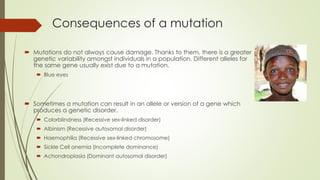
 Mutations do not always cause damage. Thanks to them, there is a greater
genetic variability amongst individuals in a population. Different alleles for
the same gene usually exist due to a mutation.
 Blue eyes
 Sometimes a mutation can result in an allele or version of a gene which
produces a genetic disorder.
 Colorblindness (Recessive sex-linked disorder)
 Albinism (Recessive autosomal disorder)
 Haemophilia (Recessive sex-linked chromosome)
 Sickle Cell anemia (Incomplete dominance)
 Achondroplasia (Dominant autosomal disorder)
Type of mutations
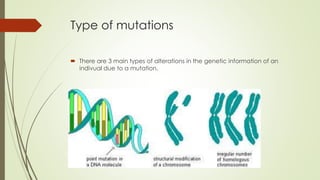
 There are 3 main types of alterations in the genetic information of an
indivual due to a mutation.
Types of mutations
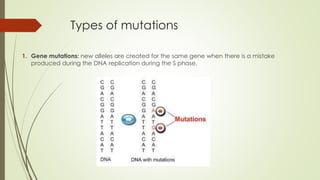
1. Gene mutations: new alleles are created for the same gene when there is a mistake
produced during the DNA replication during the S phase.
Gene mutations
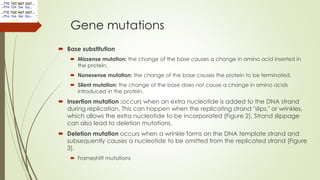
 Base substitution
 Missense mutation: the change of the base causes a change in amino acid inserted in
the protein.
 Nonesense mutation: the change of the base causes the protein to be terminated.
 Silent mutation: the change of the base does not cause a change in amino acids
introduced in the protein.
 Insertion mutation :occurs when an extra nucleotide is added to the DNA strand
during replication. This can happen when the replicating strand "slips," or wrinkles,
which allows the extra nucleotide to be incorporated (Figure 2). Strand slippage
can also lead to deletion mutations.
 Deletion mutation occurs when a wrinkle forms on the DNA template strand and
subsequently causes a nucleotide to be omitted from the replicated strand (Figure
3).
 Frameshift mutations
Ejercicio 1
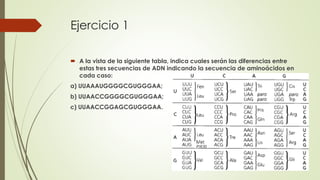
 A la vista de la siguiente tabla, indica cuales serán las diferencias entre
estas tres secuencias de ADN indicando la secuencia de aminoácidos en
cada caso:
a) UUAAAUGGGGCGUGGGAA;
b) UUAACCGGGGCGUGGGAA;
c) UUAACCGGAGCGUGGGAA.
Ejercicio 2
Al comparar la secuencia de aminoácidos de la hemoglobina procedente de un
enfermo de anemia falciforme con la de una persona sana, se observa que sólo se
diferencian en un aminoácido, el sexto de los 146 que forman la cadena. Si
observamos la cadena de nucleótidos para los 6 primeros aminoácidos vemos :
Secuencia de nucleótidos para la Hemoglobina Normal HbA
 CTG ATC CCT GAG GAG AAG TCT
Secuencia de nucleótidos para la Hemoglobina causante de anemia falciforme HbS
 CTG ATC CCT GTG GAG AAG TCT
1. Compara la secuencia de nucleótidos en el alelo normal y en el responsable de
la anemia falciforme. ¿En qué se diferencian?
2. ¿Qué tipo de mutación es la que causó esta diferencia? ¿En qué resulta esta
mutación a nivel peptídico?
3. ¿Qué ocurre con la función de una proteína cuando su secuencia de
aminoácidos sufre algún cambio?
Ejercicio 3
Dado el siguiente fragmento de ADN que será transcrito y traducido
5´ A A A T G C T A C A A T 3’
3´ T T T A C G A T G T T A 5´
1. Escriba la secuencia de nucleótidos y polaridad del ARN mensajero que se
sintetizaría utilizando como molde la cadena inferior del ADN
2. Proporcione los anticodones de los ARNt
3. Escriba la secuencia de aminoácidos del tetrapéptido que se sintetizaría
4. Explique qué ocurriría si en el triplete que codifica para Tyr se cambia la C
por A o G ¿Cuáles serían sus consecuencias?
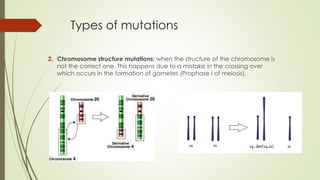
Types of mutations
2. Chromosome structure mutations: when the structure of the chromosome is
not the correct one. This happens due to a mistake in the crossing over
which occurs in the formation of gametes (Prophase I of meiosis).
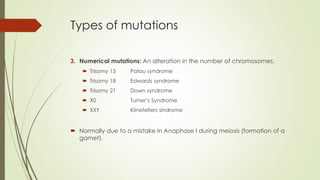
Types of mutations
3. Numerical mutations: An alteration in the number of chromosomes.
 Trisomy 13 Patau syndrome
 Trisomy 18 Edwards syndrome
 Trisomy 21 Down syndrome
 X0 Turner’s Syndrome
 XXY Klinefelters síndrome
 Normally due to a mistake in Anaphase I during meiosis (formation of a
gamet).

Lesson 16 mutations

  • 1.
  • 2.
  • 3.
    Causes of mutations Mutations appear due to a mistake during DNA replication or cell division. A new sequence of DNA is produced.  Mutagens: agent which produces or facilitates a mutation to occur.  Types of mutagens  Physical mutagen: radiation (X-rays or UV)  Chemical mutagens: some subtances can cause changes in genes. Like for example pollutants, substances in tobacco. Risk of mutations increase with the increased exposure.  Biological mutagens: some viruses can increase the frequency of genetic mutations  Some mutations result in the appearance of cancer cells  Cells which avoid programmed apoptosis “death”.
  • 4.
    Consequences of amutation  Mutations do not always cause damage. Thanks to them, there is a greater genetic variability amongst individuals in a population. Different alleles for the same gene usually exist due to a mutation.  Blue eyes  Sometimes a mutation can result in an allele or version of a gene which produces a genetic disorder.  Colorblindness (Recessive sex-linked disorder)  Albinism (Recessive autosomal disorder)  Haemophilia (Recessive sex-linked chromosome)  Sickle Cell anemia (Incomplete dominance)  Achondroplasia (Dominant autosomal disorder)
  • 5.
    Type of mutations There are 3 main types of alterations in the genetic information of an indivual due to a mutation.
  • 6.
    Types of mutations 1.Gene mutations: new alleles are created for the same gene when there is a mistake produced during the DNA replication during the S phase.
  • 7.
    Gene mutations  Basesubstitution  Missense mutation: the change of the base causes a change in amino acid inserted in the protein.  Nonesense mutation: the change of the base causes the protein to be terminated.  Silent mutation: the change of the base does not cause a change in amino acids introduced in the protein.  Insertion mutation :occurs when an extra nucleotide is added to the DNA strand during replication. This can happen when the replicating strand "slips," or wrinkles, which allows the extra nucleotide to be incorporated (Figure 2). Strand slippage can also lead to deletion mutations.  Deletion mutation occurs when a wrinkle forms on the DNA template strand and subsequently causes a nucleotide to be omitted from the replicated strand (Figure 3).  Frameshift mutations
  • 8.
    Ejercicio 1  Ala vista de la siguiente tabla, indica cuales serán las diferencias entre estas tres secuencias de ADN indicando la secuencia de aminoácidos en cada caso: a) UUAAAUGGGGCGUGGGAA; b) UUAACCGGGGCGUGGGAA; c) UUAACCGGAGCGUGGGAA.
  • 9.
    Ejercicio 2 Al compararla secuencia de aminoácidos de la hemoglobina procedente de un enfermo de anemia falciforme con la de una persona sana, se observa que sólo se diferencian en un aminoácido, el sexto de los 146 que forman la cadena. Si observamos la cadena de nucleótidos para los 6 primeros aminoácidos vemos : Secuencia de nucleótidos para la Hemoglobina Normal HbA  CTG ATC CCT GAG GAG AAG TCT Secuencia de nucleótidos para la Hemoglobina causante de anemia falciforme HbS  CTG ATC CCT GTG GAG AAG TCT 1. Compara la secuencia de nucleótidos en el alelo normal y en el responsable de la anemia falciforme. ¿En qué se diferencian? 2. ¿Qué tipo de mutación es la que causó esta diferencia? ¿En qué resulta esta mutación a nivel peptídico? 3. ¿Qué ocurre con la función de una proteína cuando su secuencia de aminoácidos sufre algún cambio?
  • 10.
    Ejercicio 3 Dado elsiguiente fragmento de ADN que será transcrito y traducido 5´ A A A T G C T A C A A T 3’ 3´ T T T A C G A T G T T A 5´ 1. Escriba la secuencia de nucleótidos y polaridad del ARN mensajero que se sintetizaría utilizando como molde la cadena inferior del ADN 2. Proporcione los anticodones de los ARNt 3. Escriba la secuencia de aminoácidos del tetrapéptido que se sintetizaría 4. Explique qué ocurriría si en el triplete que codifica para Tyr se cambia la C por A o G ¿Cuáles serían sus consecuencias?
  • 11.
    Types of mutations 2.Chromosome structure mutations: when the structure of the chromosome is not the correct one. This happens due to a mistake in the crossing over which occurs in the formation of gametes (Prophase I of meiosis).
  • 12.
    Types of mutations 3.Numerical mutations: An alteration in the number of chromosomes.  Trisomy 13 Patau syndrome  Trisomy 18 Edwards syndrome  Trisomy 21 Down syndrome  X0 Turner’s Syndrome  XXY Klinefelters síndrome  Normally due to a mistake in Anaphase I during meiosis (formation of a gamet).