BY: PAULA MARIE M. LLIDO
BSED – 3 BIOLOGICAL SCIENCES
CONSERVATION
GENETICS
CHAPTER 24
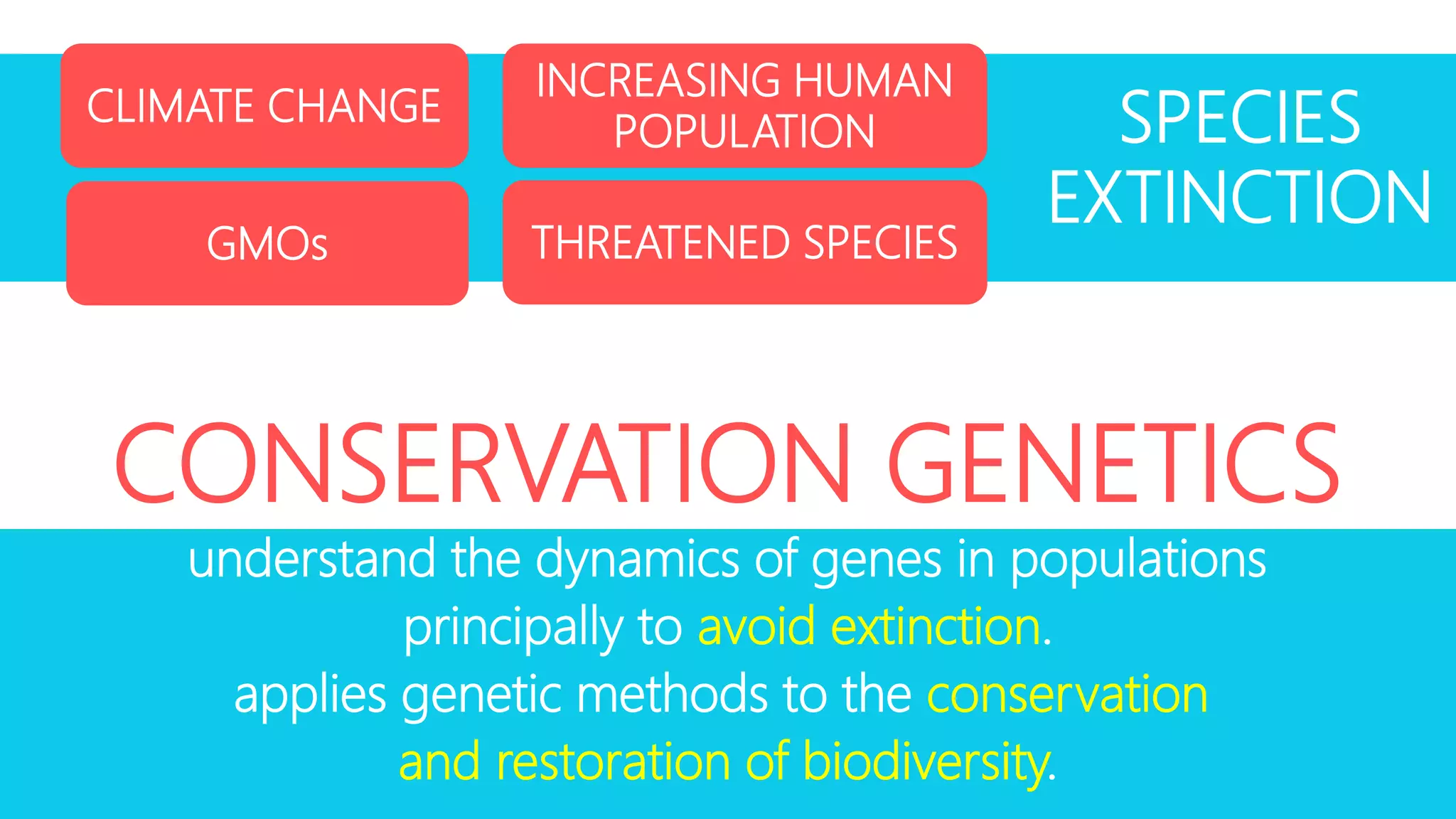
understand the dynamics of genes in populations
principally to avoid extinction.
applies genetic methods to the conservation
and restoration of biodiversity.
CONSERVATION GENETICS
CLIMATE CHANGE
THREATENED SPECIESGMOs
INCREASING HUMAN
POPULATION SPECIES
EXTINCTION
LEVELS OF GENETIC
DIVERSITY
•
INTERSPECIFIC
DIVERSITY
INTRASPECIFIC
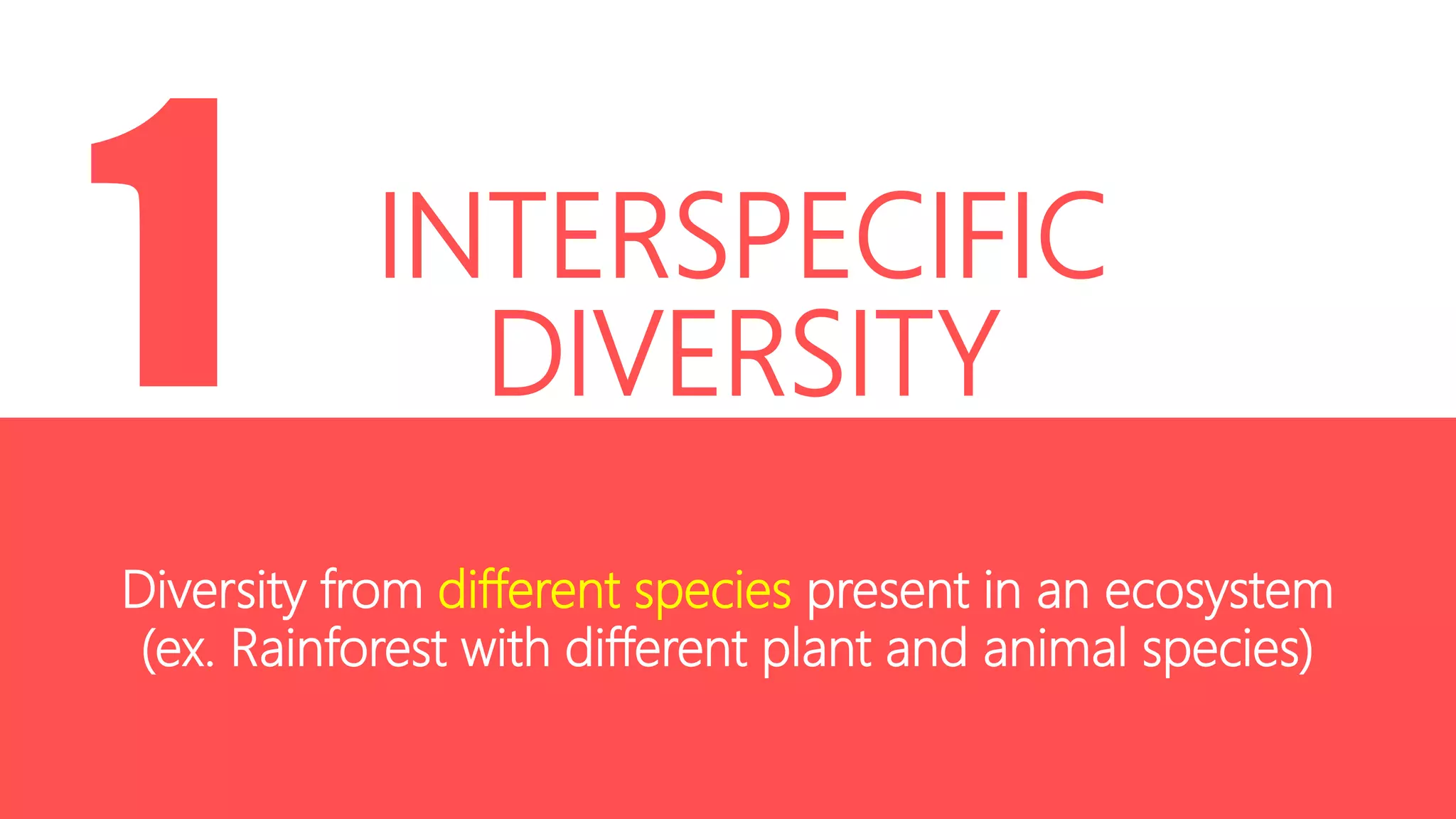
DIVERSITYDiversity from different species present in an ecosystem
(ex. Rainforest with different plant and animal species)
INTERSPECIFIC
DIVERSITY
INTRASPECIFIC
DIVERSITY
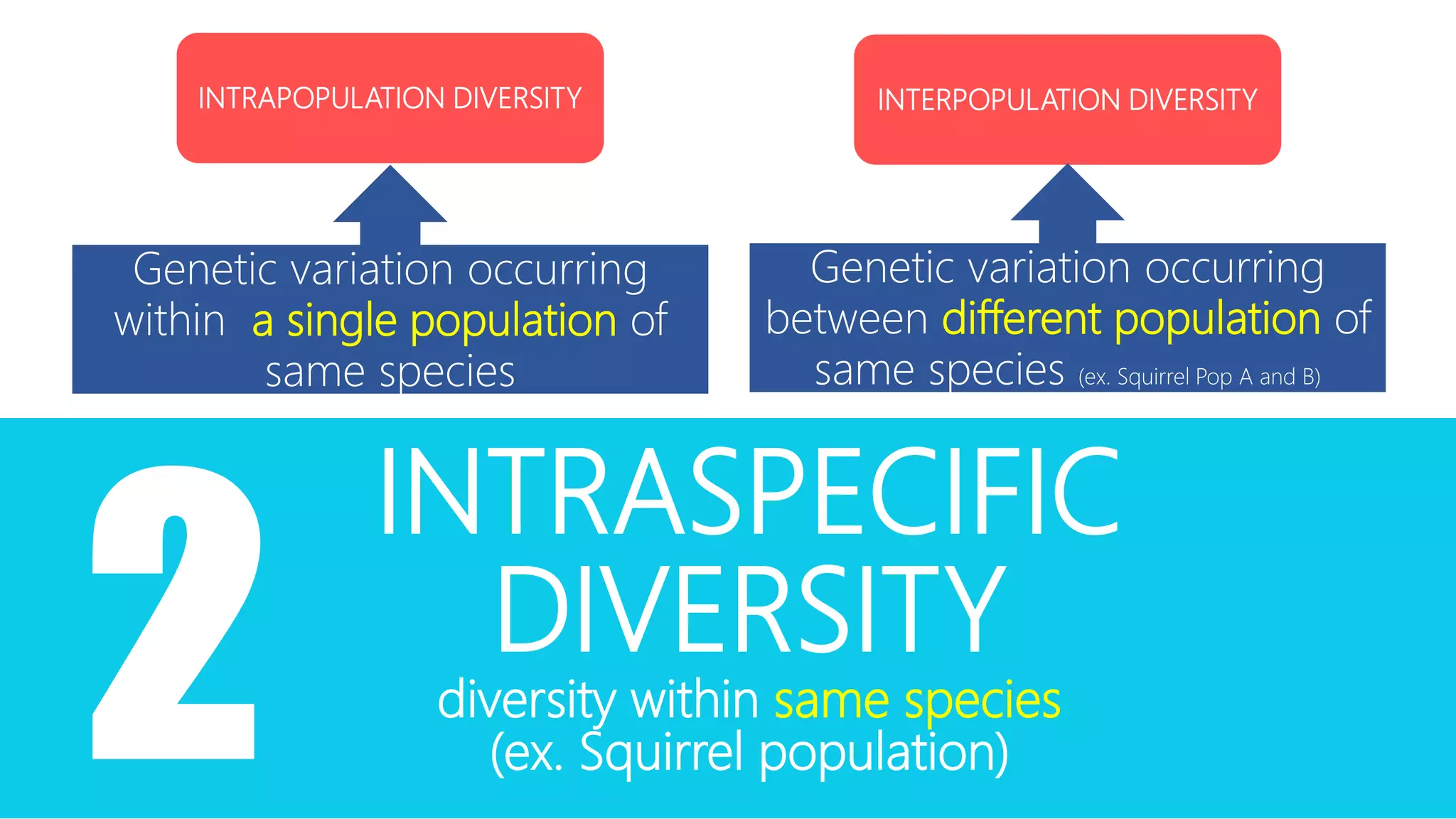
diversity within same species
(ex. Squirrel population)
INTRAPOPULATION DIVERSITY INTERPOPULATION DIVERSITY
Genetic variation occurring
within a single population of
same species
Genetic variation occurring
between different population of
same species (ex. Squirrel Pop A and B)
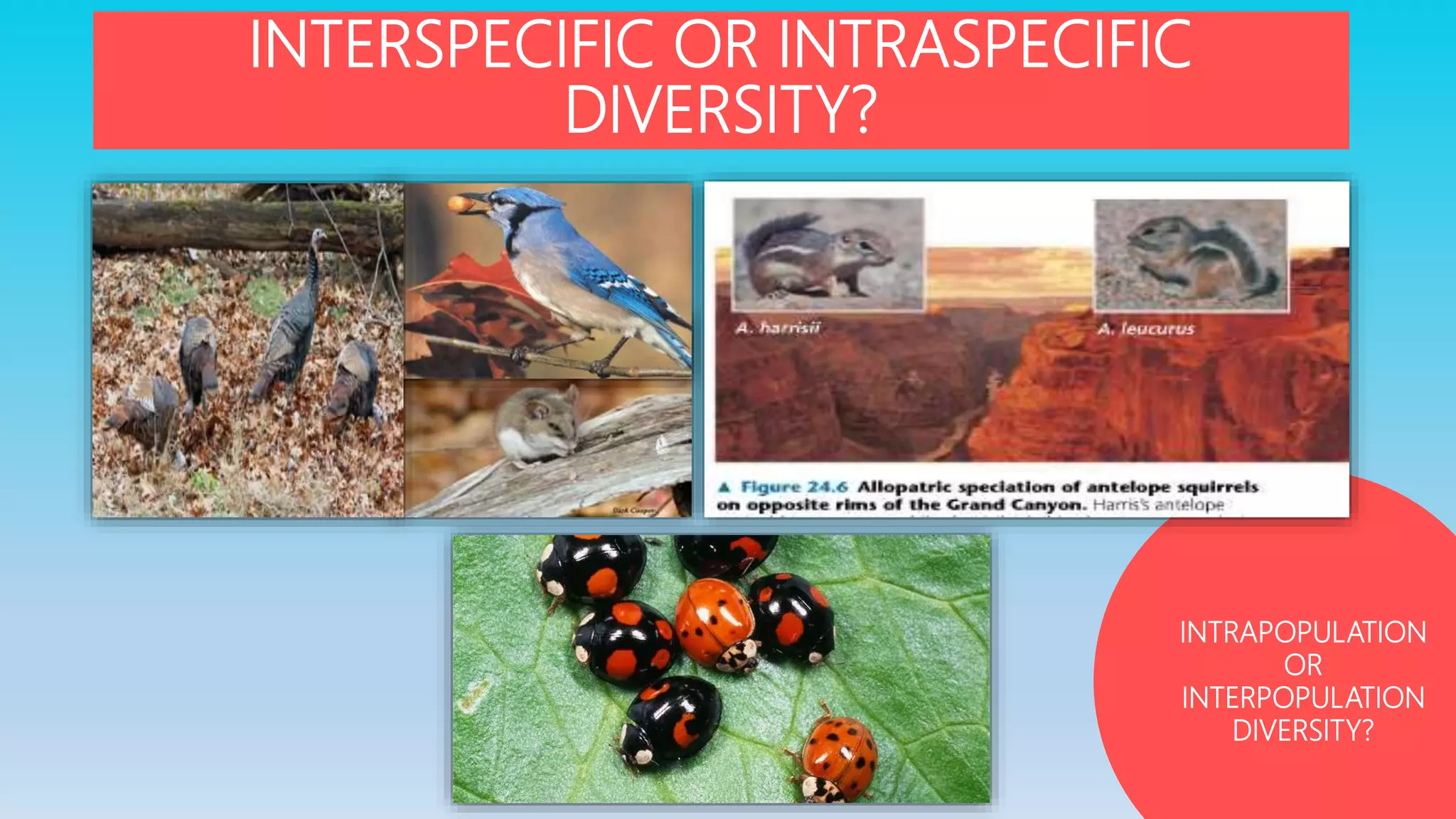
INTRAPOPULATION
OR
INTERPOPULATION
DIVERSITY?
INTERSPECIFIC OR INTRASPECIFIC
DIVERSITY?
LOSS OF GENETIC
DIVERSITY
• Excessive hunting or harvesting
• Habitat loss
cause – human activities
effect – POPULATION FRAGMENTATION
• In domesticated species, abandoning
cultivation of local types, which may
disappear
HEEELP!!!
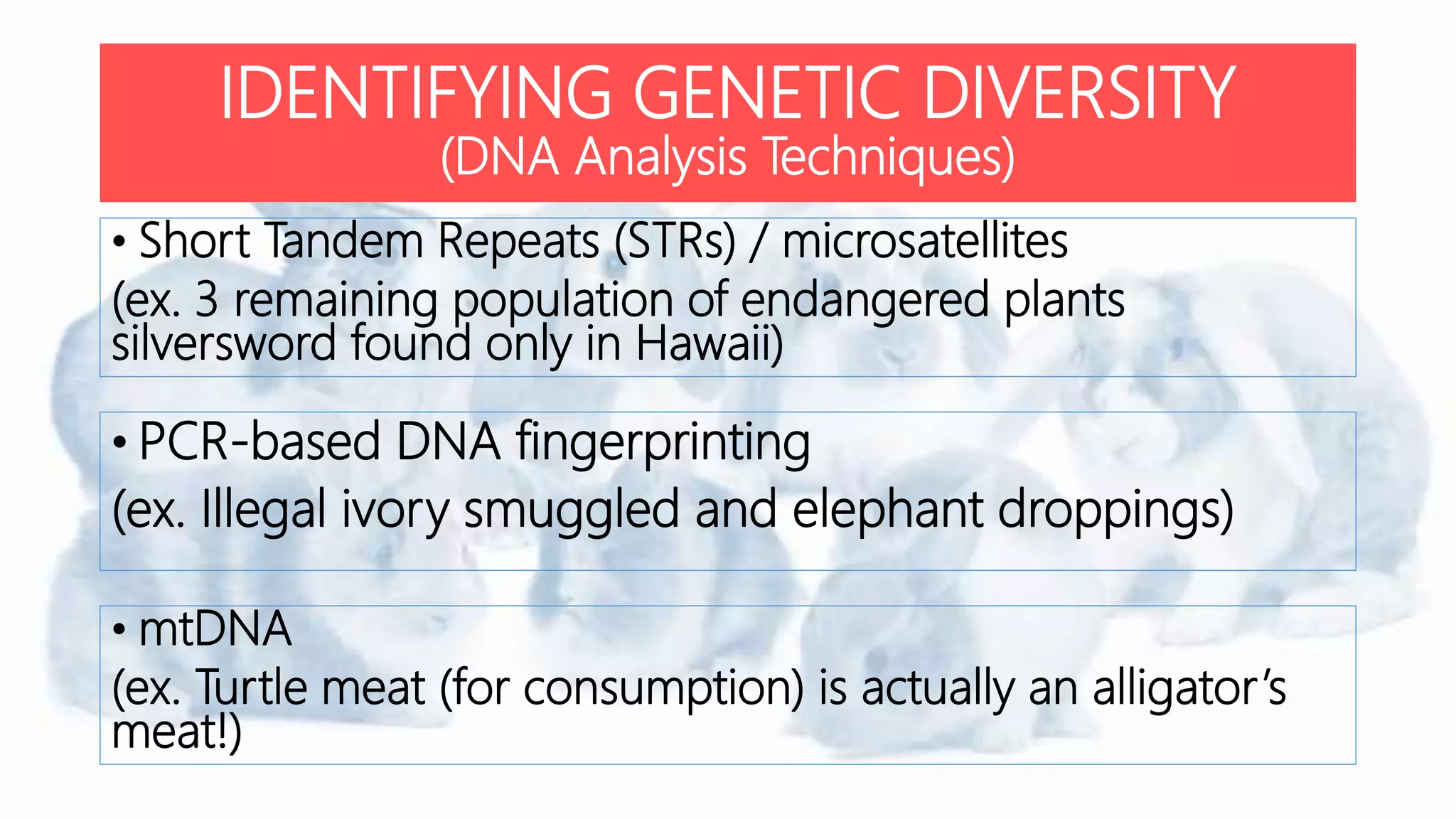
IDENTIFYING GENETIC DIVERSITY
(DNA Analysis Techniques)
• Short Tandem Repeats (STRs) / microsatellites
(ex. 3 remaining population of endangered plants
silversword found only in Hawaii)
• PCR-based DNA fingerprinting
(ex. Illegal ivory smuggled and elephant droppings)
• mtDNA
(ex. Turtle meat (for consumption) is actually an alligator’s
meat!)
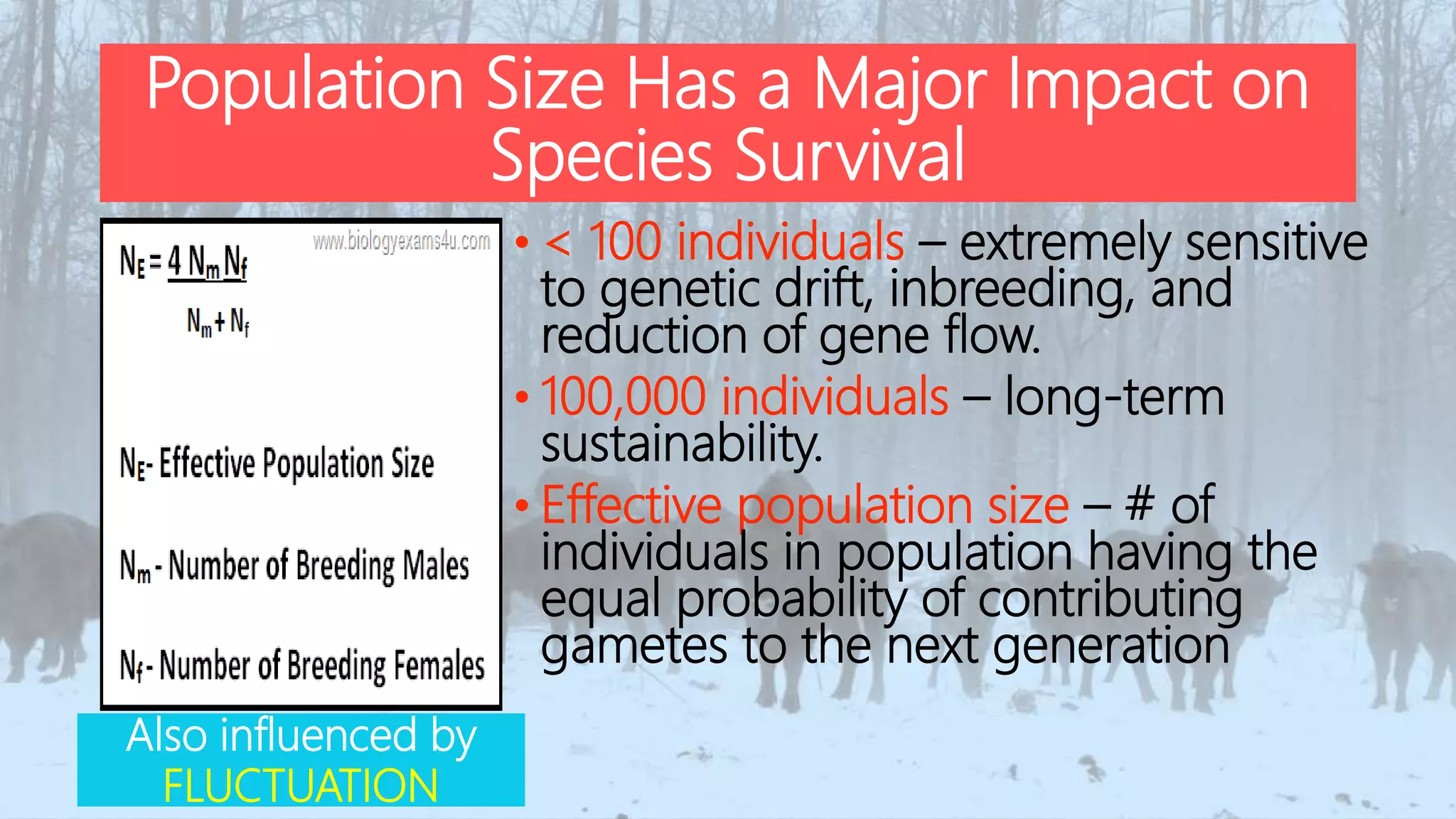
Population Size Has a Major Impact on
Species Survival
• < 100 individuals – extremely sensitive
to genetic drift, inbreeding, and
reduction of gene flow.
• 100,000 individuals – long-term
sustainability.
• Effective population size – # of
individuals in population having the
equal probability of contributing
gametes to the next generation
Also influenced by
FLUCTUATION
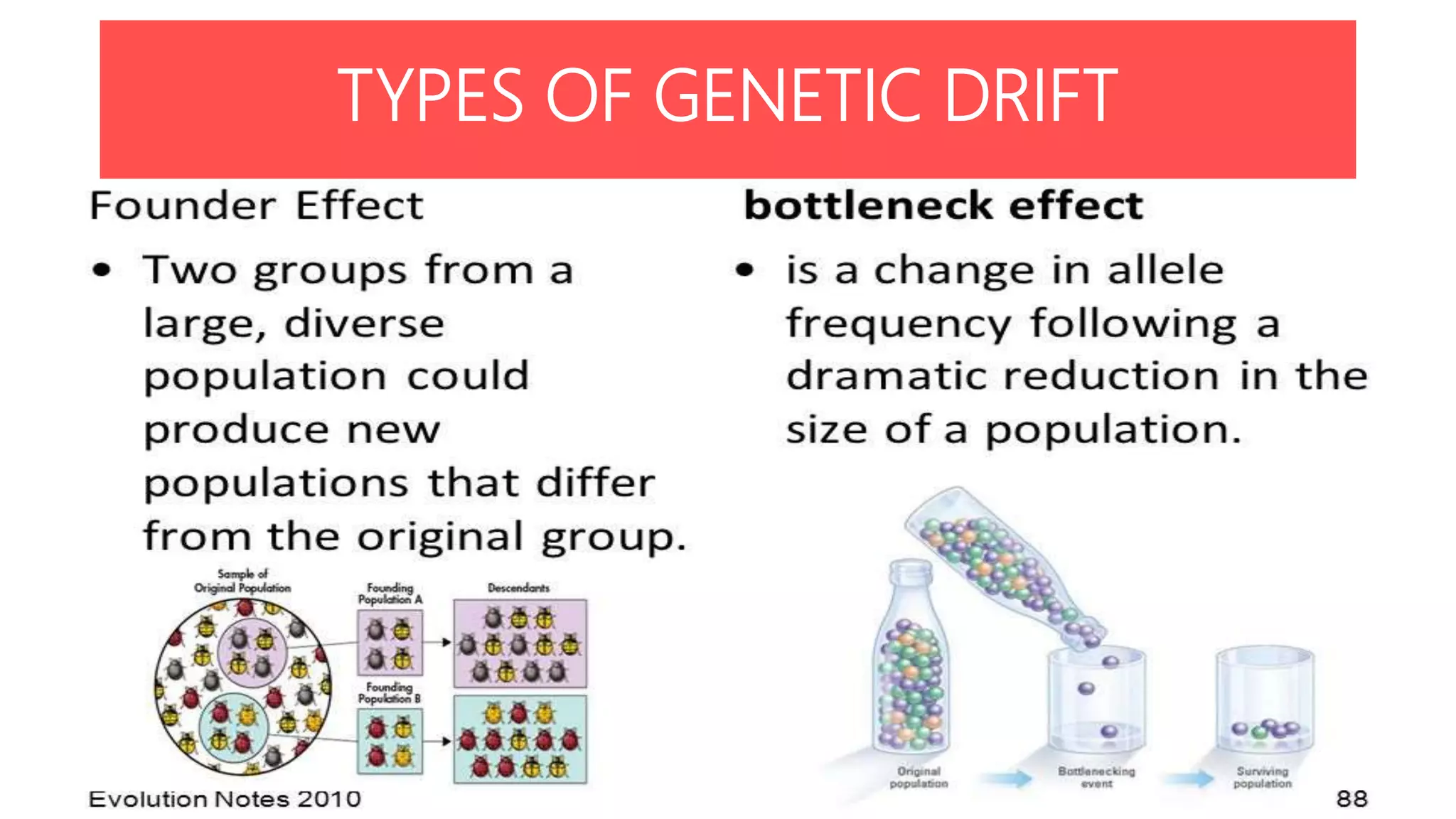
• Population bottleneck –
TYPES OF GENETIC DRIFT
Genetic Effects are More Pronounced in
Small, Isolated Populations
Small isolated populations, such as those
found in threatened and endangered species
or produced by population fragmentation,
are especially vulnerable to genetic drift,
inbreeding, and reduction in gene flow.
GENETIC DRIFT
• variation in the relative frequency of different
genotypes in a small population, owing to the
chance disappearance of particular genes as
individuals die or do not reproduce.
• Loss of genetic variation
• Random process
• Useful alleles for fitness can be lost
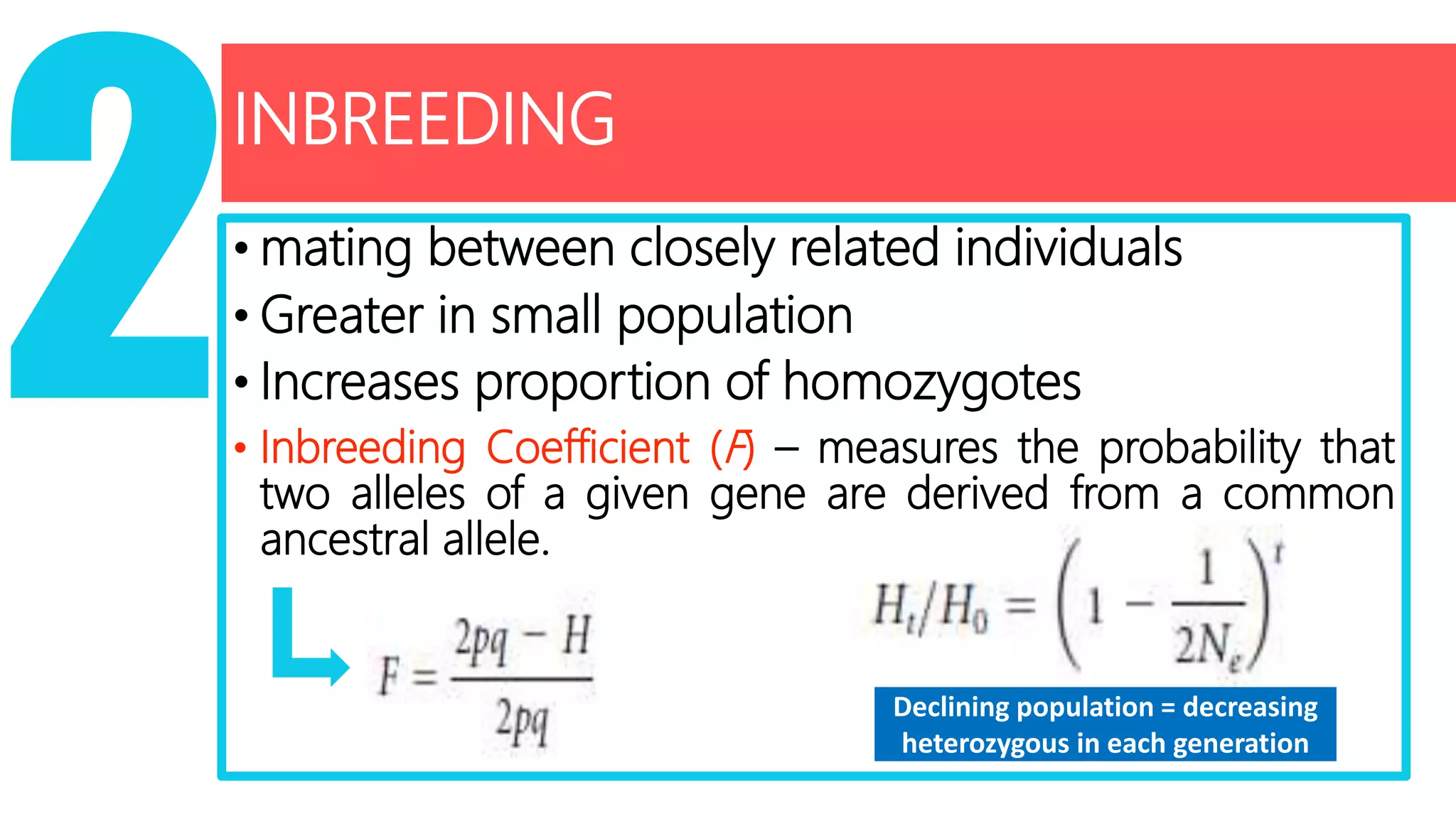
INBREEDING
• mating between closely related individuals
• Greater in small population
• Increases proportion of homozygotes
• Inbreeding Coefficient (F) – measures the probability that
two alleles of a given gene are derived from a common
ancestral allele.
Declining population = decreasing
heterozygous in each generation
• Self-pollinating plants – high levels of homozygosity
and relatively little genetic variation within single
populations (except different).
• Outbreeding species - inbreeding results reduced
fitness and lower survival rates among offspring.
• Inbreeding Depression – increased homozygosity for
deleterious alleles.
• Genetic load (or genetic burden) – # of deleterious
alleles present in the gene pool of a population
REDUCTION IN GENE FLOW
• Migration– main route for gene flow (exchange of
alleles between populations) in animals
• Cross-pollination/ seed dispersal – plants
Isolation and population fragmentation in rare and
declining species significantly reduce gene flow
HINDRANCES?
GENETIC EROSION THREATENS
SPECIES’ SURVIVAL
• Genetic erosion – The loss of previously existing
genetic diversity from a population or species.
• Two important effects on a population:
2. Reduction in levels of heterozygosity.
1. it can result in the loss of potentially useful alleles from
the gene pool, thus reducing the ability of the
population to adapt to changing environmental
conditions and increasing its risk of extinction.
Conservation of Genetic Diversity
Is Essential to Species Survival
EX SITU CONSERVATION
• Captive –breeding programs
• Gene banks
IN SITU CONSERVATION
• Establishment of parks and reserves
POPULATION AUGMENTATION
EX SITU CONSERVATION
• Ex situ (Latin for off-site) conservation
involves removing plants or animals
from their original habitat to an
artificially maintained location such as a
zoo or botanic garden.
• Ex. Captive Breeding
EX SITU CONSERVATION
• Gene banks – preservation for reproductive components,
such as sperm, ova, and frozen embryos in the case of
animals, and seeds, pollen, and cultured tissue in the case of
plants.
• Disadvantage: large collections cannot contain all the genetic
variation that is present in a species.
• Solution: Core collection – is a subset of individual genotypes,
carefully chosen to contain as much as possible of the species’
genetic variation;
EX SITU CONSERVATION
greatest biological diversity in both domesticated and
non domesticated species is frequently found in
underdeveloped countries, most ex situ collections
are situated in developed countries that have the
resources to establish and maintain them.
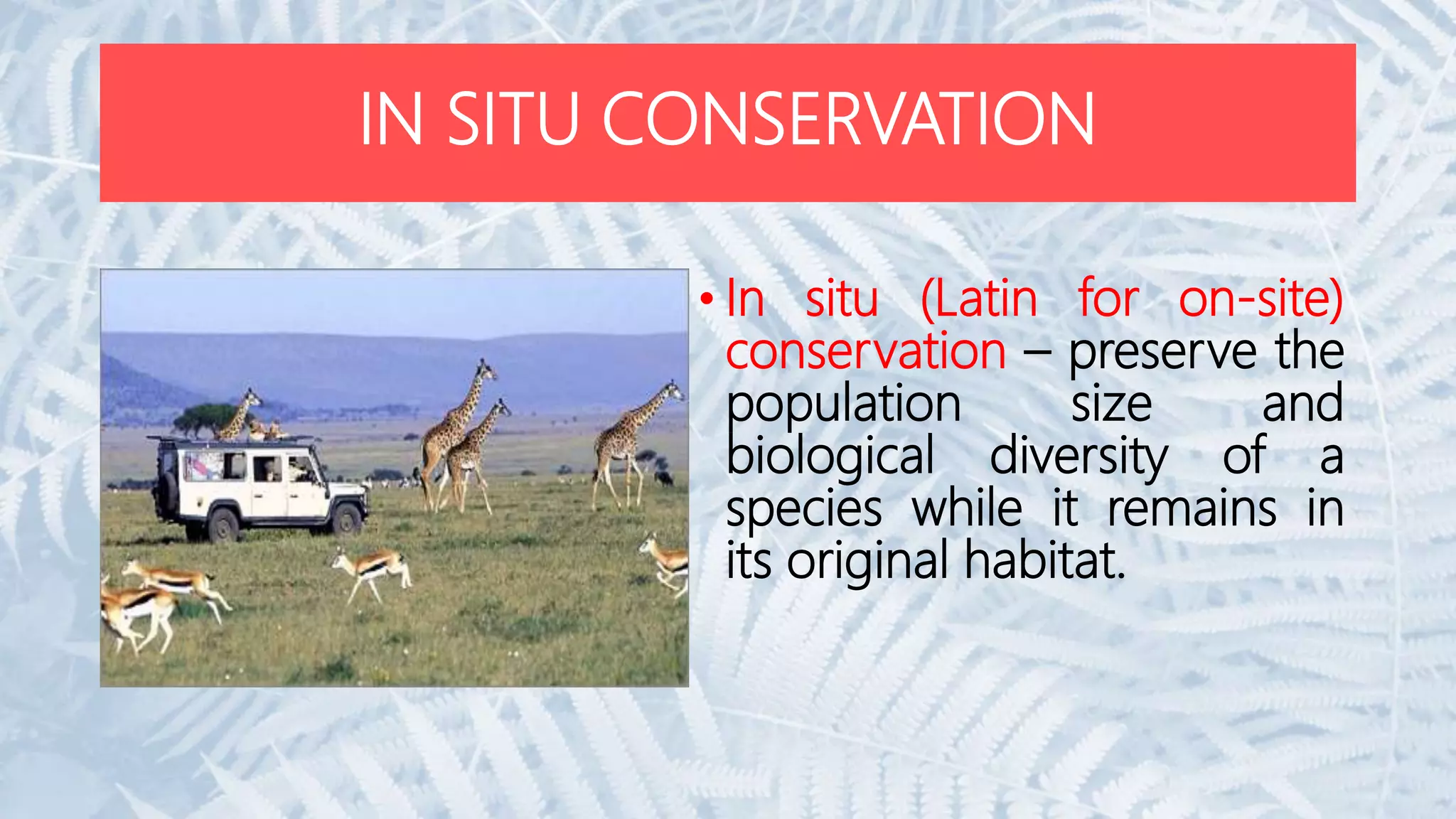
IN SITU CONSERVATION
• In situ (Latin for on-site)
conservation – preserve the
population size and
biological diversity of a
species while it remains in
its original habitat.
POPULATION AUGMENTATION
• Population augmentation—boosting the numbers of a
declining population by transplanting and releasing
individuals of the same species captured or collected
from more numerous populations elsewhere.
• Genetic swamping – gene pool of the original
population is overwhelmed by different genotypes
from the transplanted individuals and loses its identity.
• Outbreeding depression – reduced fitness occurs in
the progeny of matings between genetically diverse
individuals.
POPULATION AUGMENTATION RISKS
Outbreeding depression that occurs in the F2 and later
generations is due to the disruption of
Coadapted gene complexes—
groups of alleles that have evolved to work together
to produce the best level of fitness in an individual.
POPULATION AUGMENTATION RISK
Conservation genetics uses a combination of ecology,
molecular biology, population genetics, mathematical
modeling, and evolutionary taxonomy. It is both a basic
and an applied science. A community rather than
individual effort. First, scientists must understand the
genetic relationships among the organisms they're
studying. Then wildlife managers use techniques to
preserve biological diversity in these species.
SUMMARY

Genetics Chapter 24:Conservation Genetics

  • 1.
    BY: PAULA MARIEM. LLIDO BSED – 3 BIOLOGICAL SCIENCES CONSERVATION GENETICS CHAPTER 24
  • 2.
    understand the dynamicsof genes in populations principally to avoid extinction. applies genetic methods to the conservation and restoration of biodiversity. CONSERVATION GENETICS CLIMATE CHANGE THREATENED SPECIESGMOs INCREASING HUMAN POPULATION SPECIES EXTINCTION
  • 3.
  • 4.
    INTERSPECIFIC DIVERSITY INTRASPECIFIC DIVERSITYDiversity from differentspecies present in an ecosystem (ex. Rainforest with different plant and animal species)
  • 5.
    INTERSPECIFIC DIVERSITY INTRASPECIFIC DIVERSITY diversity within samespecies (ex. Squirrel population) INTRAPOPULATION DIVERSITY INTERPOPULATION DIVERSITY Genetic variation occurring within a single population of same species Genetic variation occurring between different population of same species (ex. Squirrel Pop A and B)
  • 6.
  • 7.
    LOSS OF GENETIC DIVERSITY •Excessive hunting or harvesting • Habitat loss cause – human activities effect – POPULATION FRAGMENTATION • In domesticated species, abandoning cultivation of local types, which may disappear HEEELP!!!
  • 8.
    IDENTIFYING GENETIC DIVERSITY (DNAAnalysis Techniques) • Short Tandem Repeats (STRs) / microsatellites (ex. 3 remaining population of endangered plants silversword found only in Hawaii) • PCR-based DNA fingerprinting (ex. Illegal ivory smuggled and elephant droppings) • mtDNA (ex. Turtle meat (for consumption) is actually an alligator’s meat!)
  • 9.
    Population Size Hasa Major Impact on Species Survival • < 100 individuals – extremely sensitive to genetic drift, inbreeding, and reduction of gene flow. • 100,000 individuals – long-term sustainability. • Effective population size – # of individuals in population having the equal probability of contributing gametes to the next generation Also influenced by FLUCTUATION
  • 10.
    • Population bottleneck– TYPES OF GENETIC DRIFT
  • 11.
    Genetic Effects areMore Pronounced in Small, Isolated Populations Small isolated populations, such as those found in threatened and endangered species or produced by population fragmentation, are especially vulnerable to genetic drift, inbreeding, and reduction in gene flow.
  • 12.
    GENETIC DRIFT • variationin the relative frequency of different genotypes in a small population, owing to the chance disappearance of particular genes as individuals die or do not reproduce. • Loss of genetic variation • Random process • Useful alleles for fitness can be lost
  • 13.
    INBREEDING • mating betweenclosely related individuals • Greater in small population • Increases proportion of homozygotes • Inbreeding Coefficient (F) – measures the probability that two alleles of a given gene are derived from a common ancestral allele. Declining population = decreasing heterozygous in each generation
  • 14.
    • Self-pollinating plants– high levels of homozygosity and relatively little genetic variation within single populations (except different). • Outbreeding species - inbreeding results reduced fitness and lower survival rates among offspring. • Inbreeding Depression – increased homozygosity for deleterious alleles. • Genetic load (or genetic burden) – # of deleterious alleles present in the gene pool of a population
  • 15.
    REDUCTION IN GENEFLOW • Migration– main route for gene flow (exchange of alleles between populations) in animals • Cross-pollination/ seed dispersal – plants Isolation and population fragmentation in rare and declining species significantly reduce gene flow HINDRANCES?
  • 16.
    GENETIC EROSION THREATENS SPECIES’SURVIVAL • Genetic erosion – The loss of previously existing genetic diversity from a population or species. • Two important effects on a population: 2. Reduction in levels of heterozygosity. 1. it can result in the loss of potentially useful alleles from the gene pool, thus reducing the ability of the population to adapt to changing environmental conditions and increasing its risk of extinction.
  • 17.
    Conservation of GeneticDiversity Is Essential to Species Survival EX SITU CONSERVATION • Captive –breeding programs • Gene banks IN SITU CONSERVATION • Establishment of parks and reserves POPULATION AUGMENTATION
  • 18.
    EX SITU CONSERVATION •Ex situ (Latin for off-site) conservation involves removing plants or animals from their original habitat to an artificially maintained location such as a zoo or botanic garden. • Ex. Captive Breeding
  • 19.
    EX SITU CONSERVATION •Gene banks – preservation for reproductive components, such as sperm, ova, and frozen embryos in the case of animals, and seeds, pollen, and cultured tissue in the case of plants. • Disadvantage: large collections cannot contain all the genetic variation that is present in a species. • Solution: Core collection – is a subset of individual genotypes, carefully chosen to contain as much as possible of the species’ genetic variation;
  • 20.
    EX SITU CONSERVATION greatestbiological diversity in both domesticated and non domesticated species is frequently found in underdeveloped countries, most ex situ collections are situated in developed countries that have the resources to establish and maintain them.
  • 21.
    IN SITU CONSERVATION •In situ (Latin for on-site) conservation – preserve the population size and biological diversity of a species while it remains in its original habitat.
  • 22.
    POPULATION AUGMENTATION • Populationaugmentation—boosting the numbers of a declining population by transplanting and releasing individuals of the same species captured or collected from more numerous populations elsewhere.
  • 23.
    • Genetic swamping– gene pool of the original population is overwhelmed by different genotypes from the transplanted individuals and loses its identity. • Outbreeding depression – reduced fitness occurs in the progeny of matings between genetically diverse individuals. POPULATION AUGMENTATION RISKS
  • 24.
    Outbreeding depression thatoccurs in the F2 and later generations is due to the disruption of Coadapted gene complexes— groups of alleles that have evolved to work together to produce the best level of fitness in an individual. POPULATION AUGMENTATION RISK
  • 25.
    Conservation genetics usesa combination of ecology, molecular biology, population genetics, mathematical modeling, and evolutionary taxonomy. It is both a basic and an applied science. A community rather than individual effort. First, scientists must understand the genetic relationships among the organisms they're studying. Then wildlife managers use techniques to preserve biological diversity in these species. SUMMARY

Editor's Notes

  • #9 DNA analysis is a more modern and direct molecular approach for detecting and quantifying genetic differences between individuals. This technique has become an important tool for assessing intraand interpopulation genetic variation. Nuclear, mitochondrial, and chloroplast DNA can all be analyzed to determine levels of genetic diversity.
  • #15 Metapopulations can also contribute to the purging of deleterious recessive alleles. With some level of inbreeding in demes, deleterious recessives will be selected against. With limited amounts of gene flow, the system can effectively purge these alleles that might not be expressed in a large random mating population. One approach is to have semi- isolated subpopulations with corridors for dispersal.
  • #18 A captive-breeding program is rarely initiated until very few individuals are left in the wild, when the original genetic diversity of the species is already depleted.
  • #22 larger populations with greater genetic diversity can be maintained. Another advantage is that species conserved in situ continue to live and reproduce in the environments to which they are adapted, which reduces the likelihood that novel selection pressures will produce undesirable changes in allele frequency.