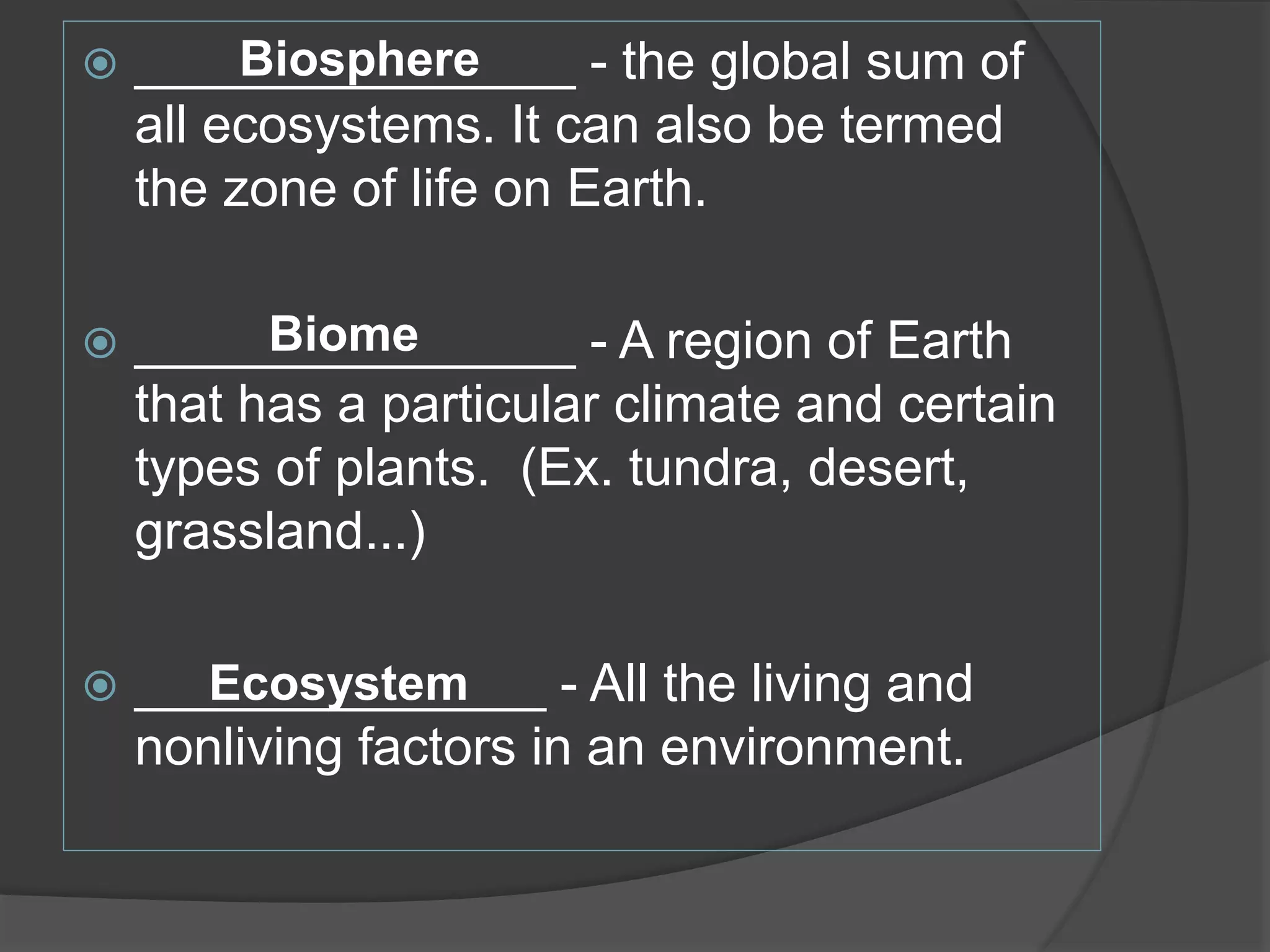
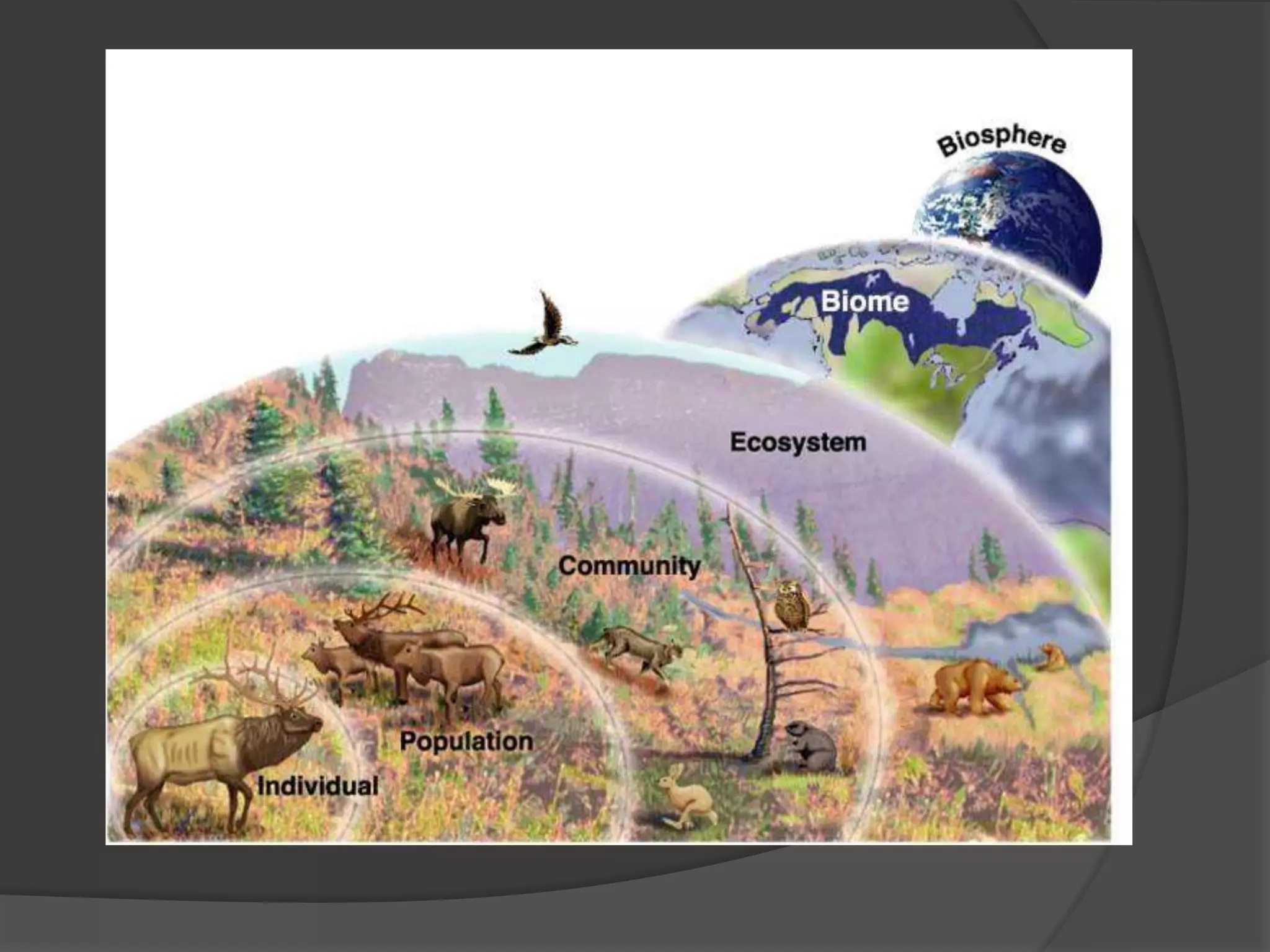
 _______________ - the global sum of
all ecosystems. It can also be termed
the zone of life on Earth.
 _______________ - A region of Earth
that has a particular climate and certain
types of plants. (Ex. tundra, desert,
grassland...)
 ______________ - All the living and
nonliving factors in an environment.
Biosphere
Biome
Ecosystem
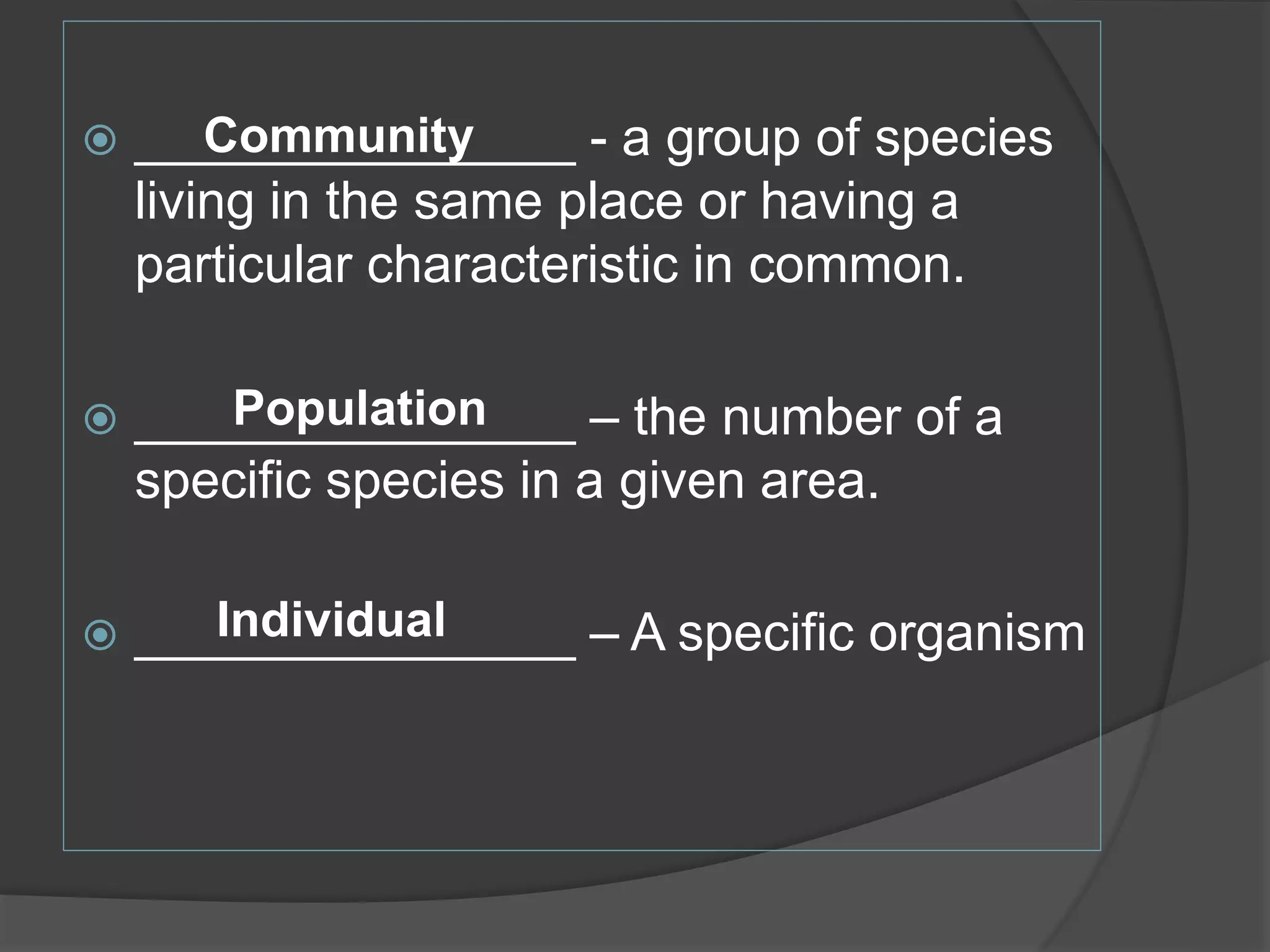
 _______________ - a group of species
living in the same place or having a
particular characteristic in common.
 _______________ – the number of a
specific species in a given area.
 _______________ – A specific organism
Community
Individual
Population
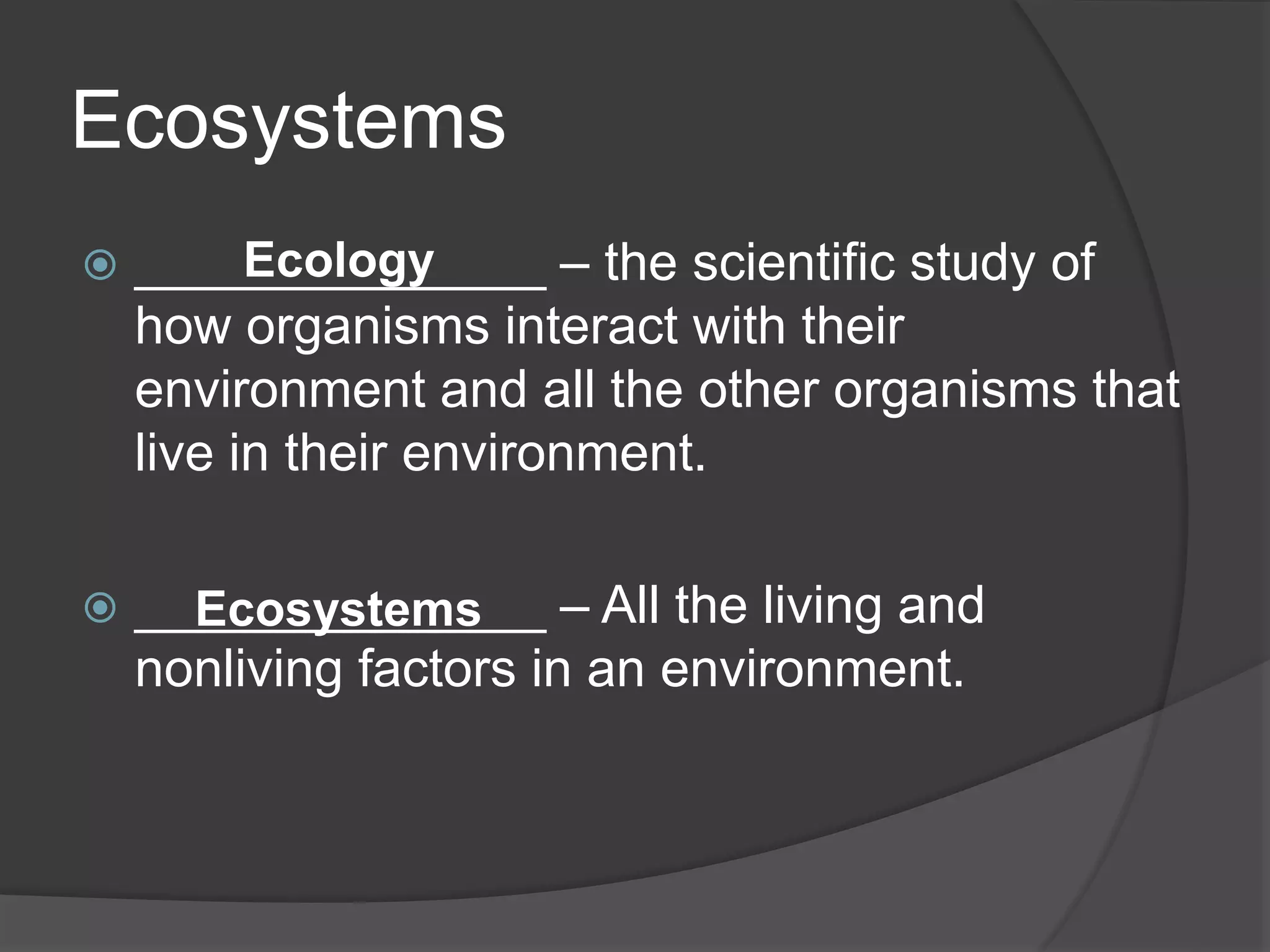
Ecosystems
 ______________ – the scientific study of
how organisms interact with their
environment and all the other organisms that
live in their environment.
 ______________ – All the living and
nonliving factors in an environment.
Ecology
Ecosystems
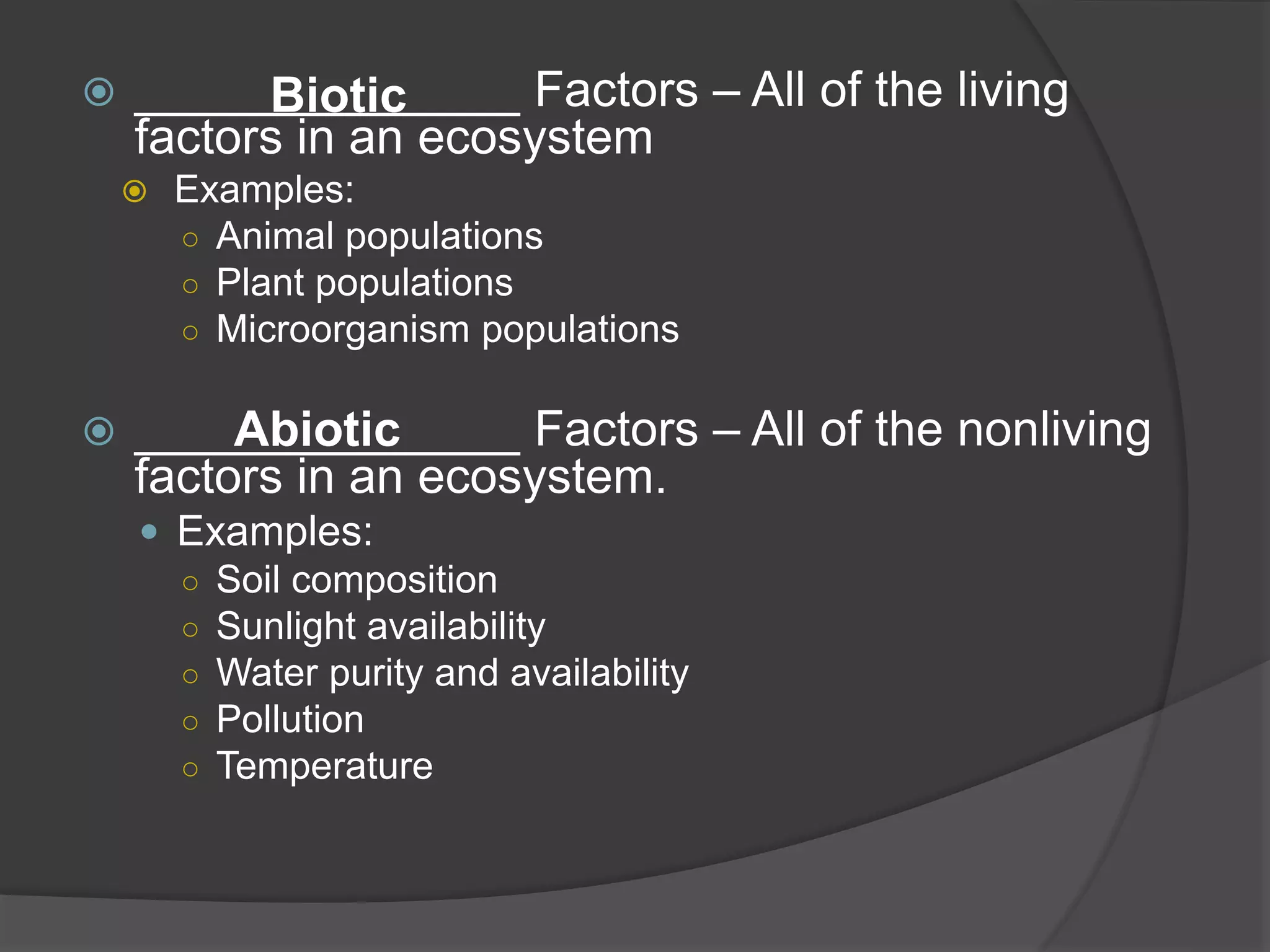
 ______________ Factors – All of the living
factors in an ecosystem
 Examples:
○ Animal populations
○ Plant populations
○ Microorganism populations
 ______________ Factors – All of the nonliving
factors in an ecosystem.
 Examples:
○ Soil composition
○ Sunlight availability
○ Water purity and availability
○ Pollution
○ Temperature
Biotic
Abiotic
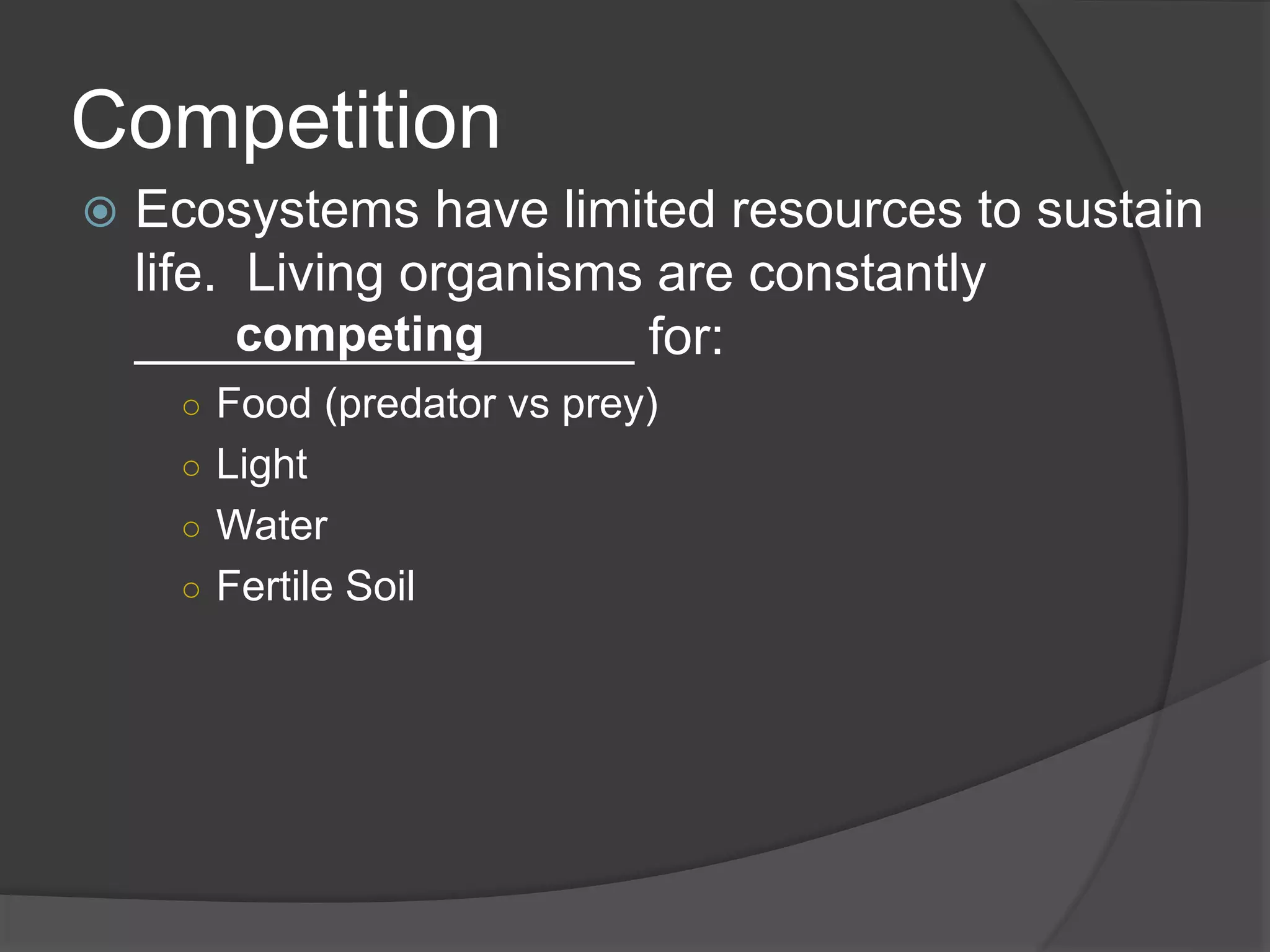
Competition
 Ecosystems have limited resources to sustain
life. Living organisms are constantly
_________________ for:
○ Food (predator vs prey)
○ Light
○ Water
○ Fertile Soil
competing
Changes in
Ecosystems/Environments
 Ecosystems can be benefited and be
harmed by changes.
 Deforestation
 Overpopulation
 Water and air pollution
 Depletion of resources
 Invasive species
 Natural disasters
 …
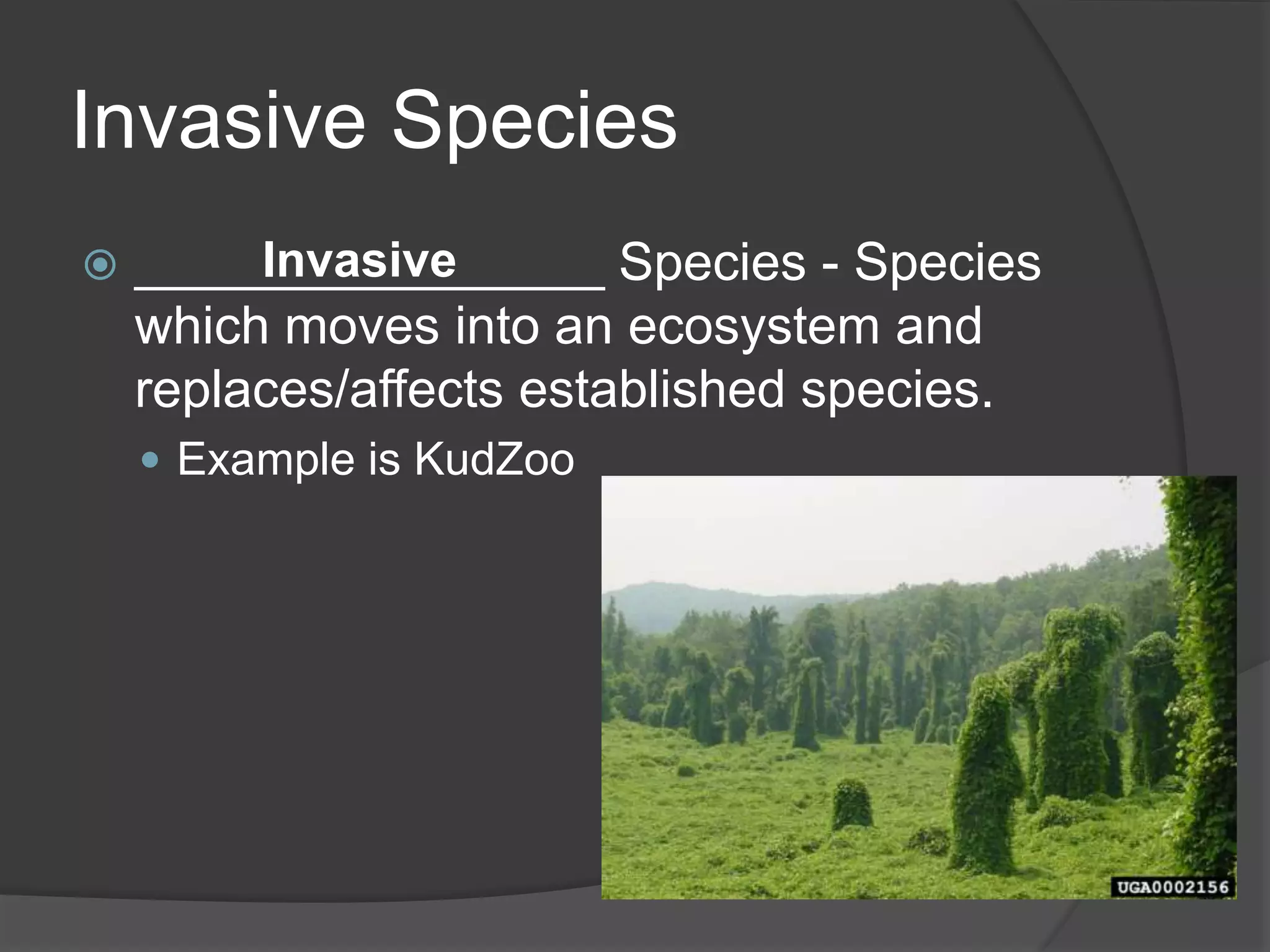
Invasive Species
 ________________ Species - Species
which moves into an ecosystem and
replaces/affects established species.
 Example is KudZoo
Invasive
Impact on environment
(Disease)
 _____________ – an abnormal
condition affecting and organism
 Viruses
 Bacteria
 Protists
 Fungi
Disease
Predict
 Predict the impact (beneficial or harmful)
of a natural environmental change (ie.
forest fire, flood, volcanic eruption,
avalanche) on the organisms in an
ecosystem.
 Describe possible solution to potentially
harmful environmental changes within
an ecosystem.
Energy moves through an
ecosystem
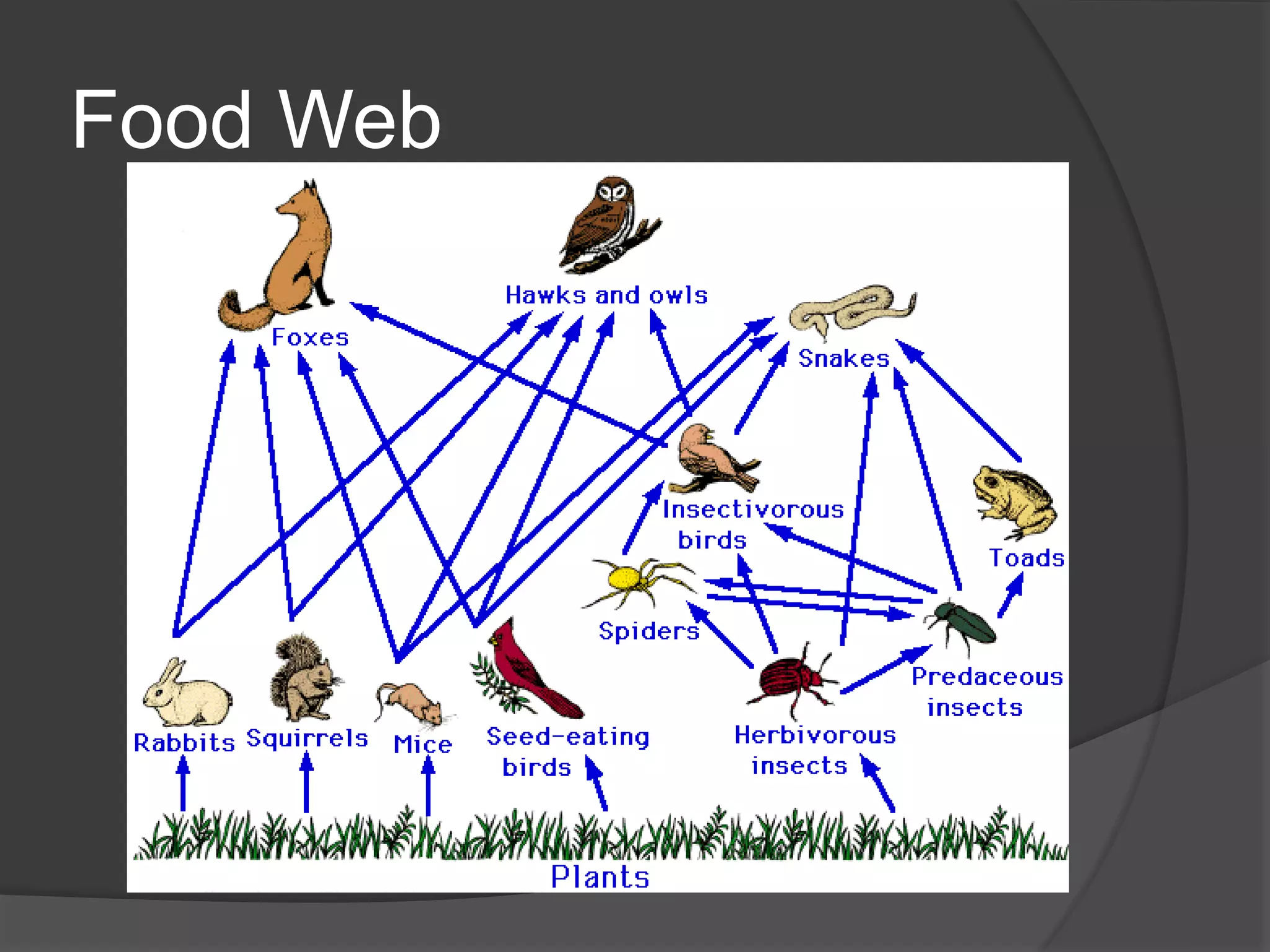
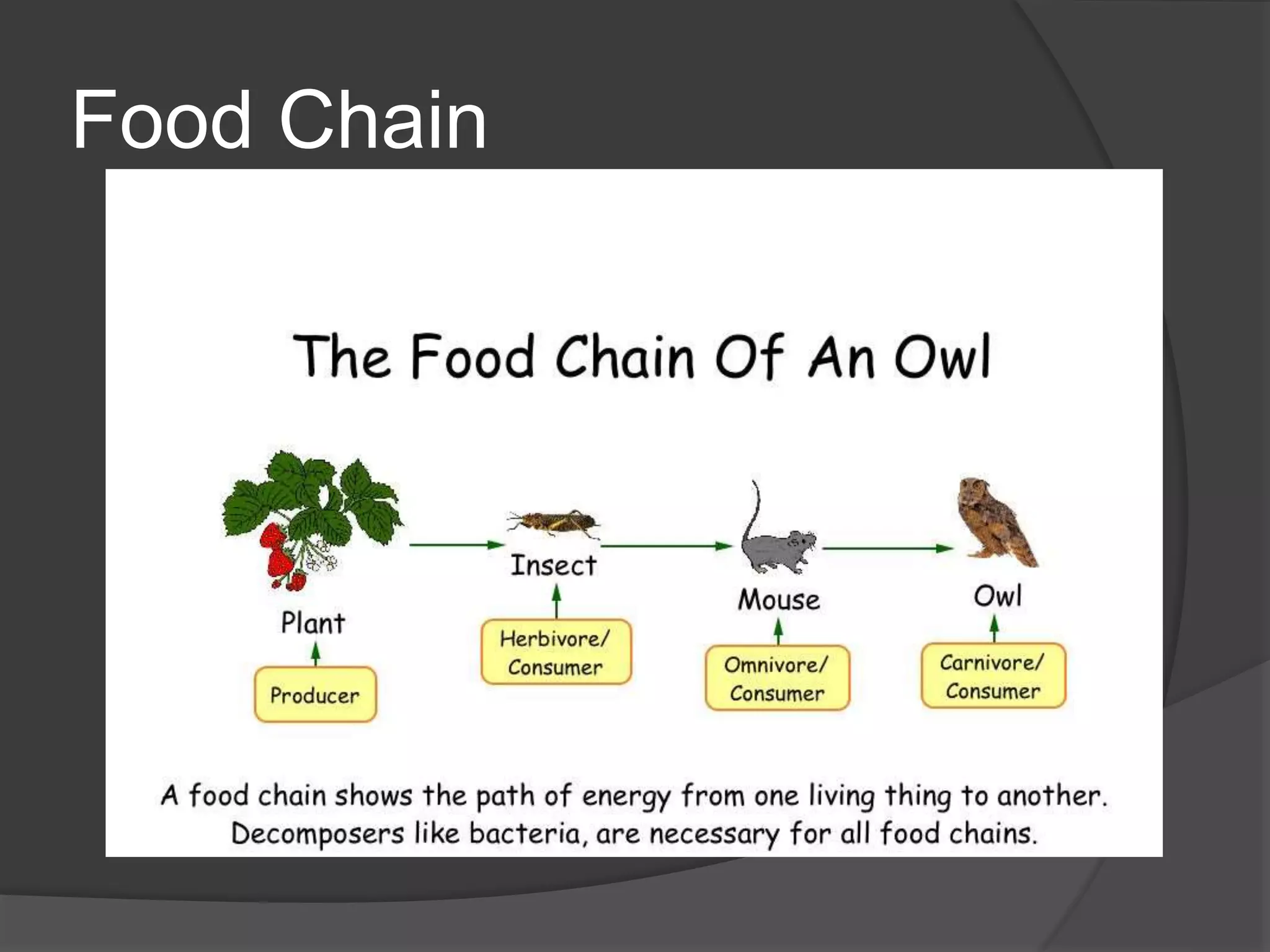
 A ______________________diagrams
the transfer of energy in an ecosystem.
 Decomposers
 Scavengers
 Predator/Prey relationships
Food Web
Food Web
Food Chain
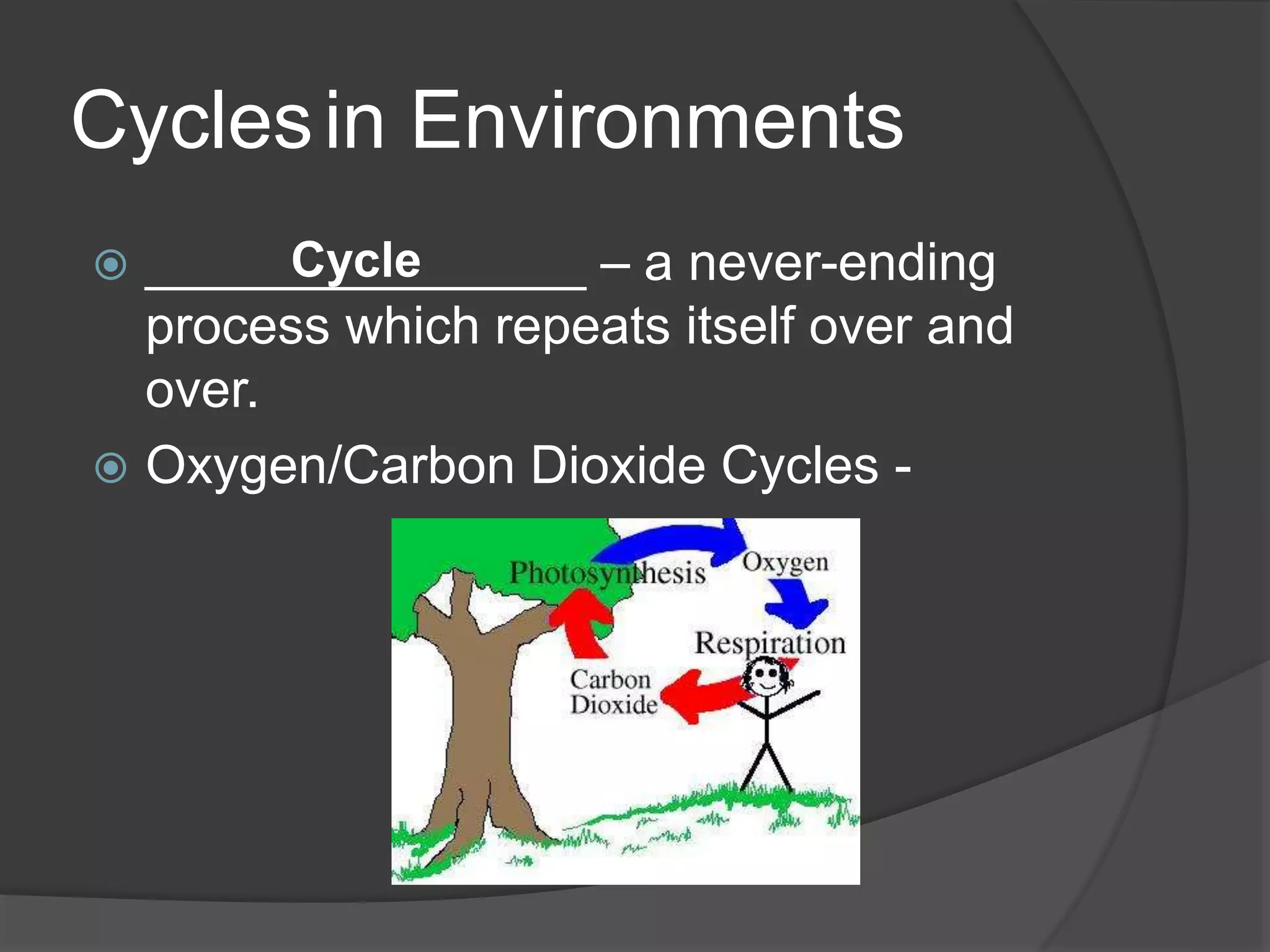
Cyclesin Environments
 _______________ – a never-ending
process which repeats itself over and
over.
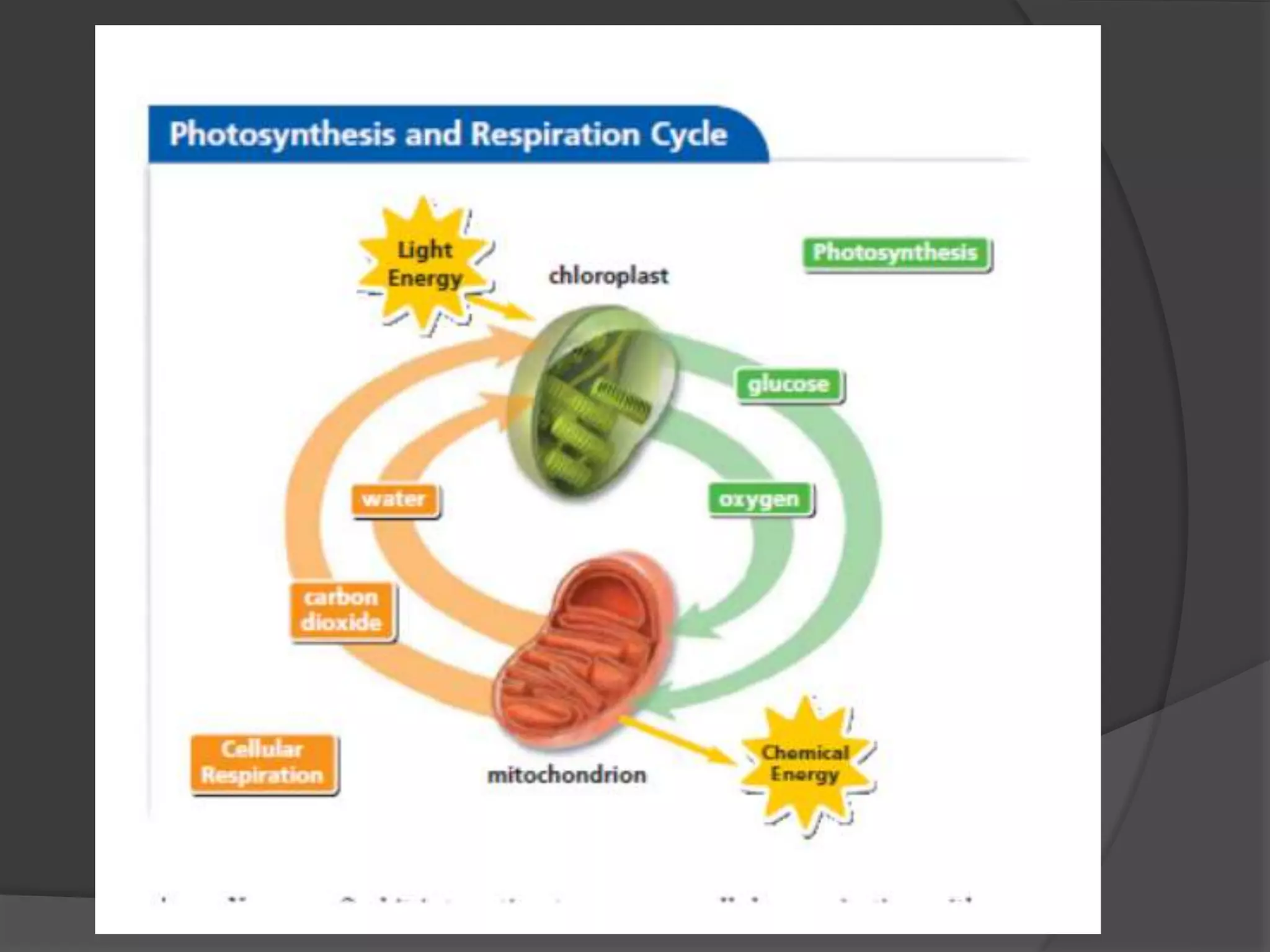
 Oxygen/Carbon Dioxide Cycles -
Cycle
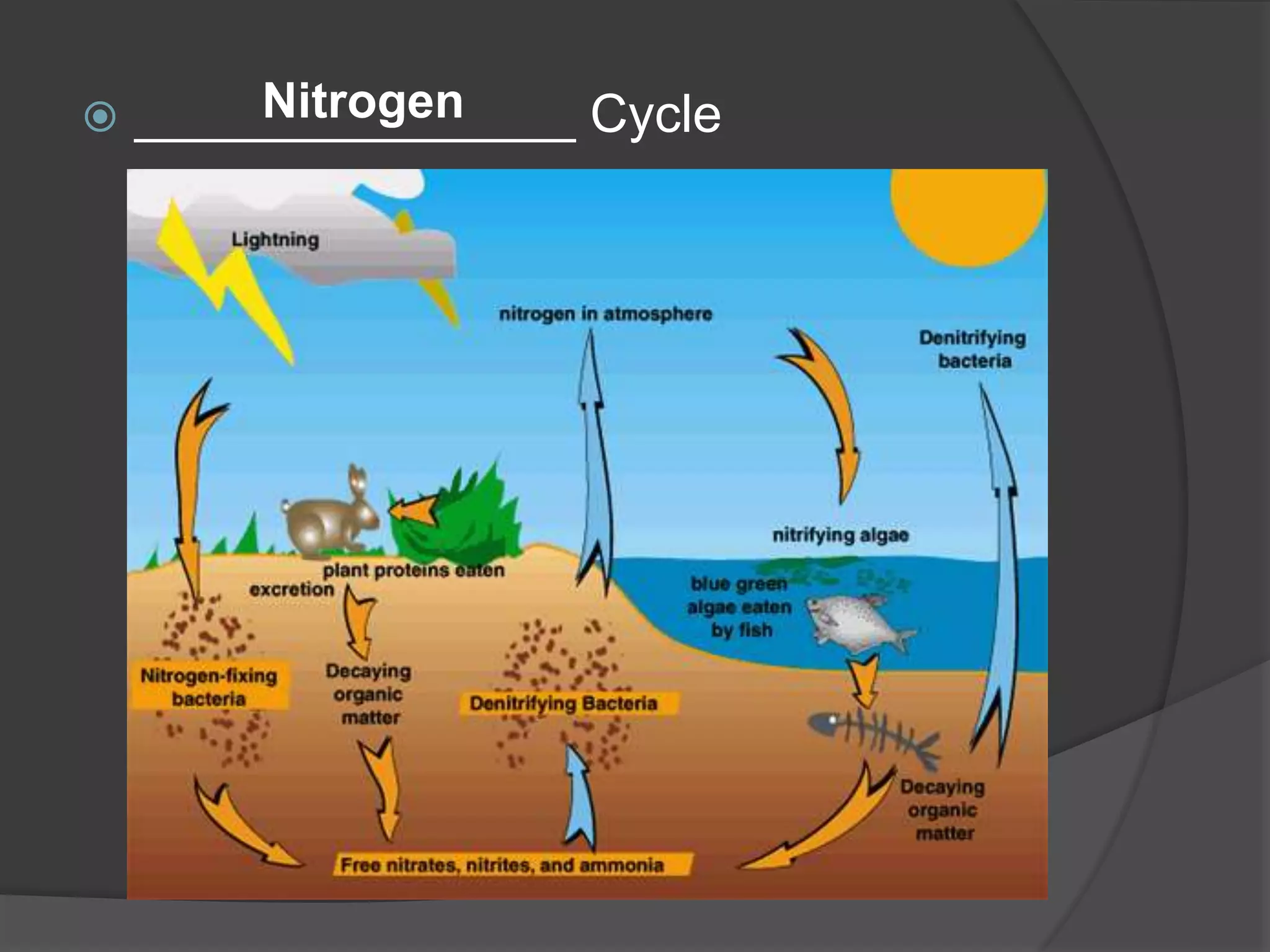
 _______________ CycleNitrogen

8th strand 4 changes in ecosystems

  • 2.
     _______________ -the global sum of all ecosystems. It can also be termed the zone of life on Earth.  _______________ - A region of Earth that has a particular climate and certain types of plants. (Ex. tundra, desert, grassland...)  ______________ - All the living and nonliving factors in an environment. Biosphere Biome Ecosystem
  • 3.
     _______________ -a group of species living in the same place or having a particular characteristic in common.  _______________ – the number of a specific species in a given area.  _______________ – A specific organism Community Individual Population
  • 5.
    Ecosystems  ______________ –the scientific study of how organisms interact with their environment and all the other organisms that live in their environment.  ______________ – All the living and nonliving factors in an environment. Ecology Ecosystems
  • 6.
     ______________ Factors– All of the living factors in an ecosystem  Examples: ○ Animal populations ○ Plant populations ○ Microorganism populations  ______________ Factors – All of the nonliving factors in an ecosystem.  Examples: ○ Soil composition ○ Sunlight availability ○ Water purity and availability ○ Pollution ○ Temperature Biotic Abiotic
  • 7.
    Competition  Ecosystems havelimited resources to sustain life. Living organisms are constantly _________________ for: ○ Food (predator vs prey) ○ Light ○ Water ○ Fertile Soil competing
  • 8.
    Changes in Ecosystems/Environments  Ecosystemscan be benefited and be harmed by changes.  Deforestation  Overpopulation  Water and air pollution  Depletion of resources  Invasive species  Natural disasters  …
  • 9.
    Invasive Species  ________________Species - Species which moves into an ecosystem and replaces/affects established species.  Example is KudZoo Invasive
  • 10.
    Impact on environment (Disease) _____________ – an abnormal condition affecting and organism  Viruses  Bacteria  Protists  Fungi Disease
  • 11.
    Predict  Predict theimpact (beneficial or harmful) of a natural environmental change (ie. forest fire, flood, volcanic eruption, avalanche) on the organisms in an ecosystem.  Describe possible solution to potentially harmful environmental changes within an ecosystem.
  • 12.
    Energy moves throughan ecosystem  A ______________________diagrams the transfer of energy in an ecosystem.  Decomposers  Scavengers  Predator/Prey relationships Food Web
  • 13.
  • 14.
  • 15.
    Cyclesin Environments  _______________– a never-ending process which repeats itself over and over.  Oxygen/Carbon Dioxide Cycles - Cycle
  • 17.