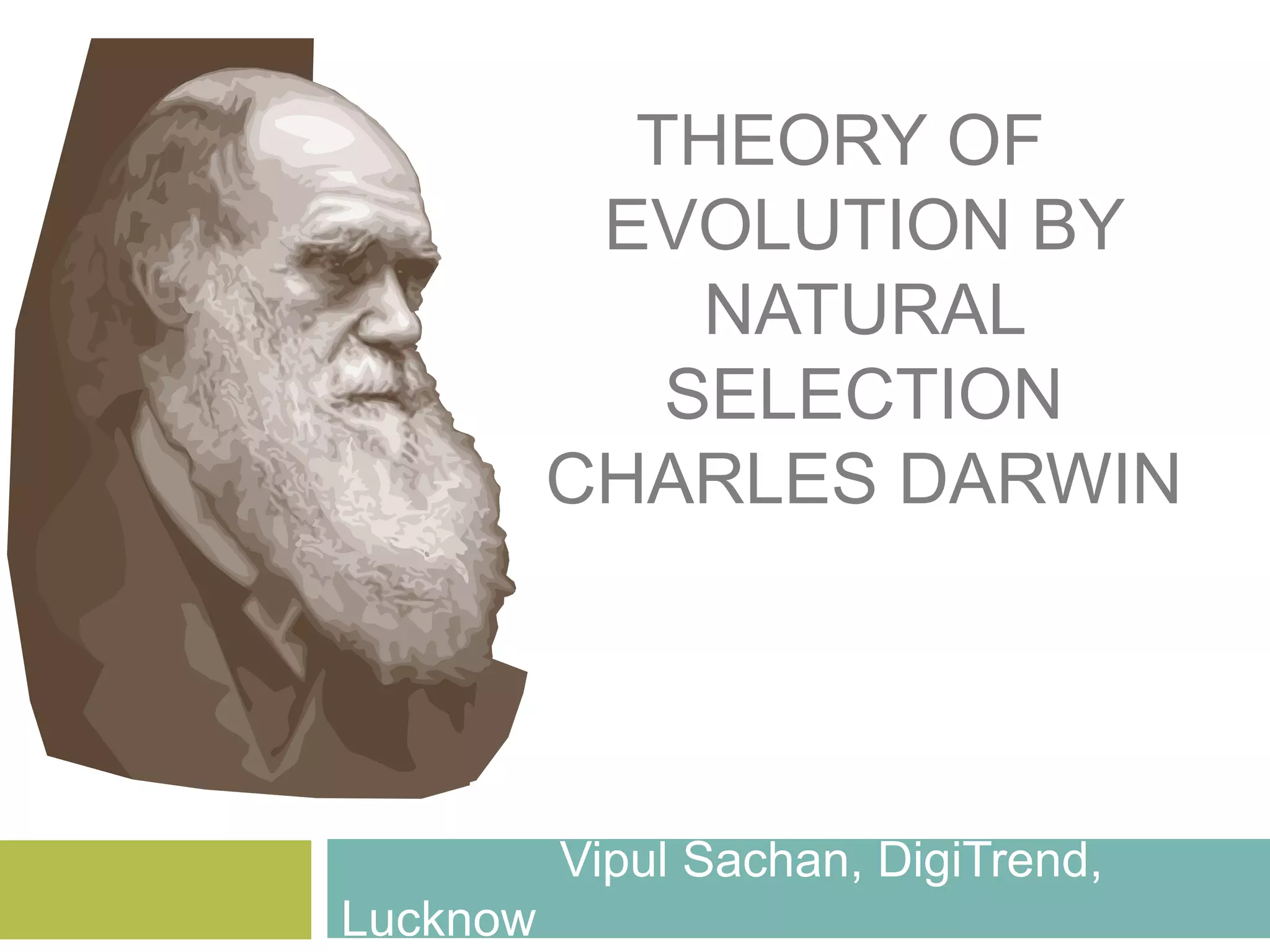
THEORY OF
EVOLUTION BY
NATURAL
SELECTION
CHARLES DARWIN
Vipul Sachan, DigiTrend,
Lucknow
Key Terms
• Mutation: creation of altered DNA
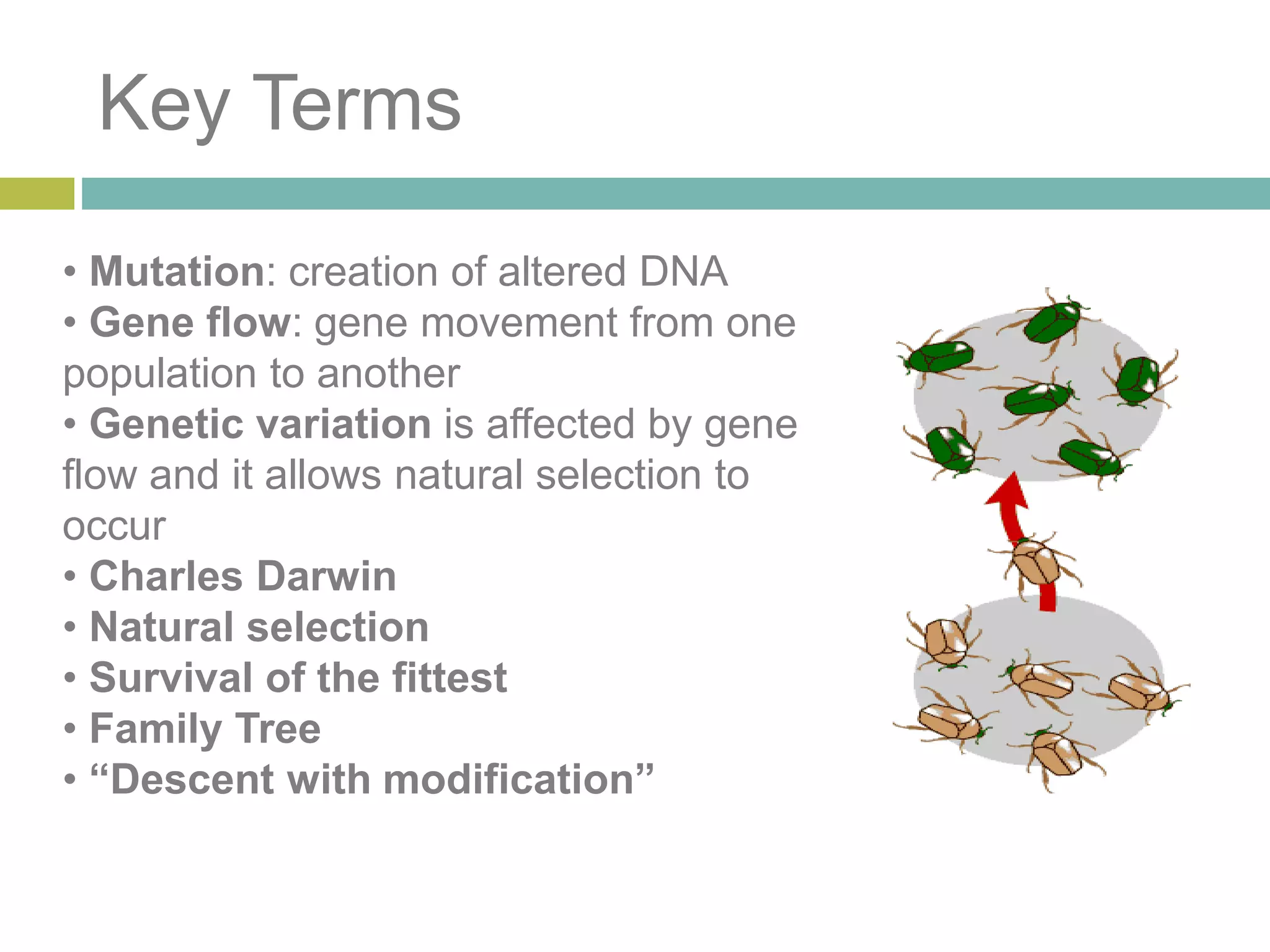
• Gene flow: gene movement from one
population to another
• Genetic variation is affected by gene
flow and it allows natural selection to
occur
• Charles Darwin
• Natural selection
• Survival of the fittest
• Family Tree
• “Descent with modification”
as a Child
 Naughty
 Clumsy
 Athletic
 Gullible
 Lazy
 Slow learner
 Shy
Darwin’s Love for Natural Science
 Was taught the classics, ancient
history, and Greek at Revd. Samuel
Butler's school and found it to be
extremely boring
 He developed his interest for natural
science in activities outside of school
 Hiking
 Book Reading
 Chemistry
Darwin and Medicine
 Darwin was admitted to Edinburgh
University, in Scotland
 Many members of his family including
his dad were in the medical field
 Assisted at his dad’s medical practice
 Again he found most of his school
studies a bore
 Scared of blood
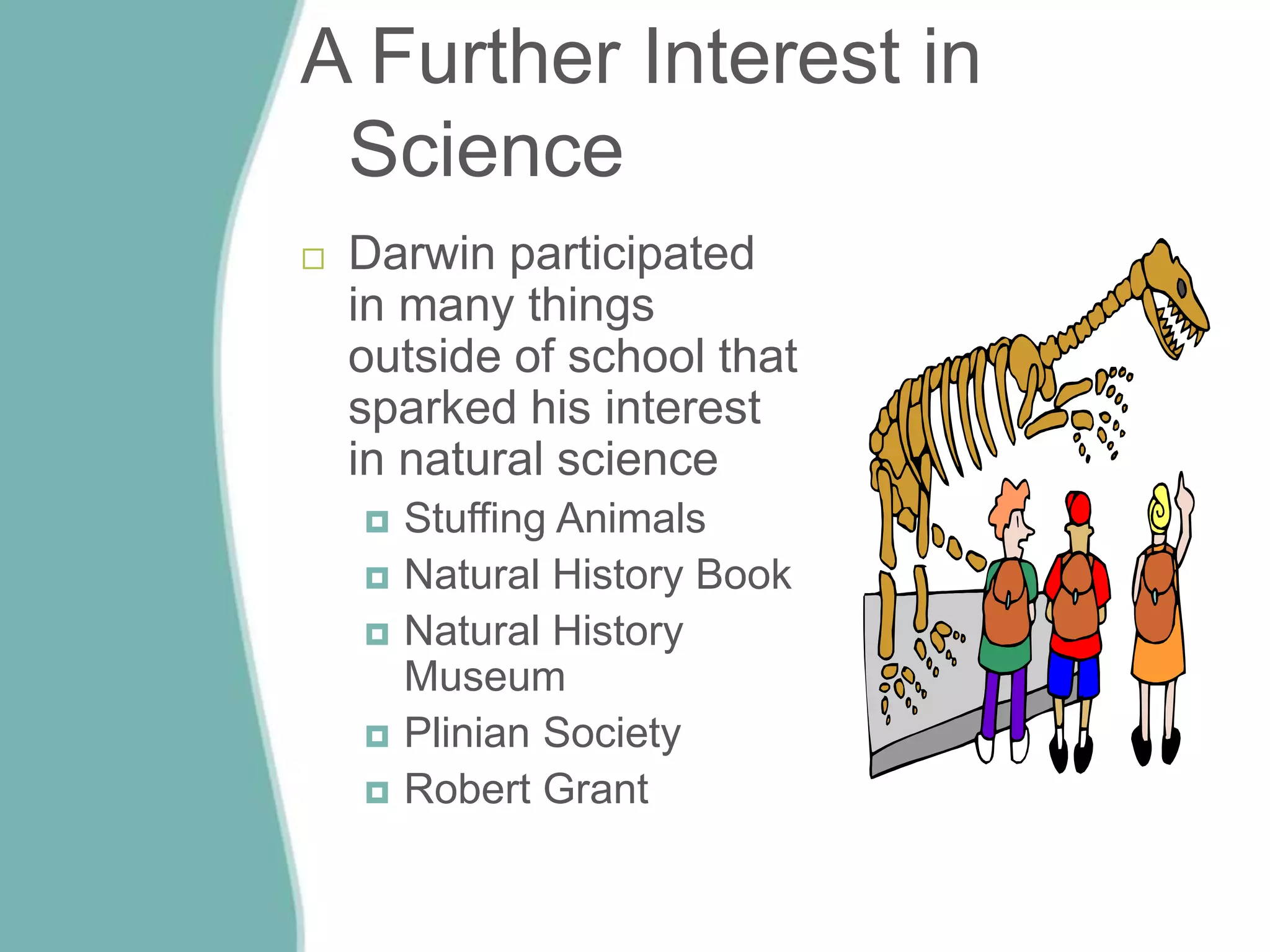
A Further Interest in
Science
 Darwin participated
in many things
outside of school that
sparked his interest
in natural science
 Stuffing Animals
 Natural History Book
 Natural History
Museum
 Plinian Society
 Robert Grant
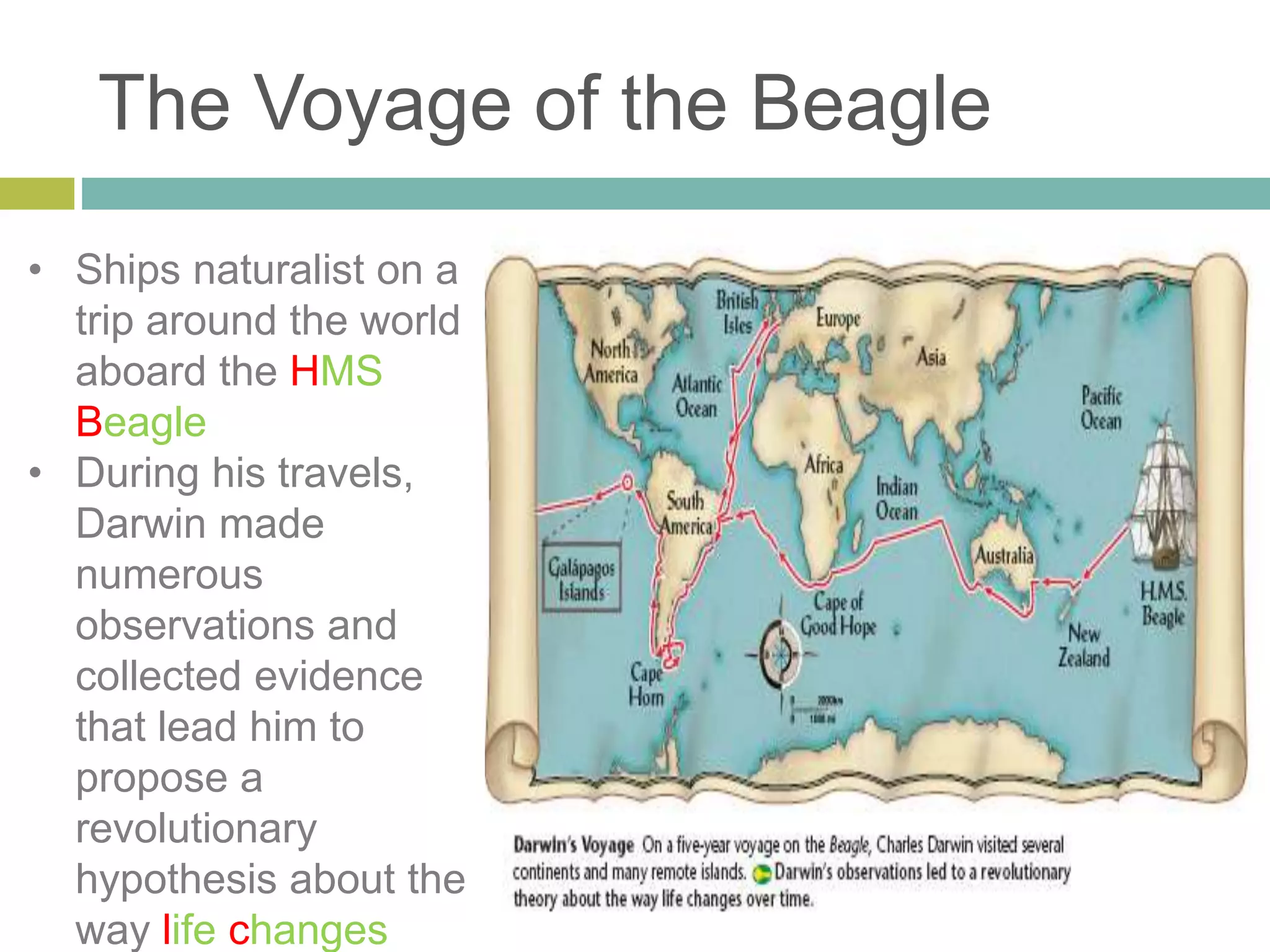
The Voyage of the Beagle
• Ships naturalist on a
trip around the world
aboard the HMS
Beagle
• During his travels,
Darwin made
numerous
observations and
collected evidence
that lead him to
propose a
revolutionary
hypothesis about the
way life changes
 Was a religious orthodox that received
proper religious schooling
 Darwin began to research the origin of
species and saw that the species
adapted to their environment of time
 While coming up with the laws of natural
selection, Darwin became less religious
 In contrast with the churches views
believed that God initiated the process
but did not create each species already
fit for their environment
Religion vs. Science
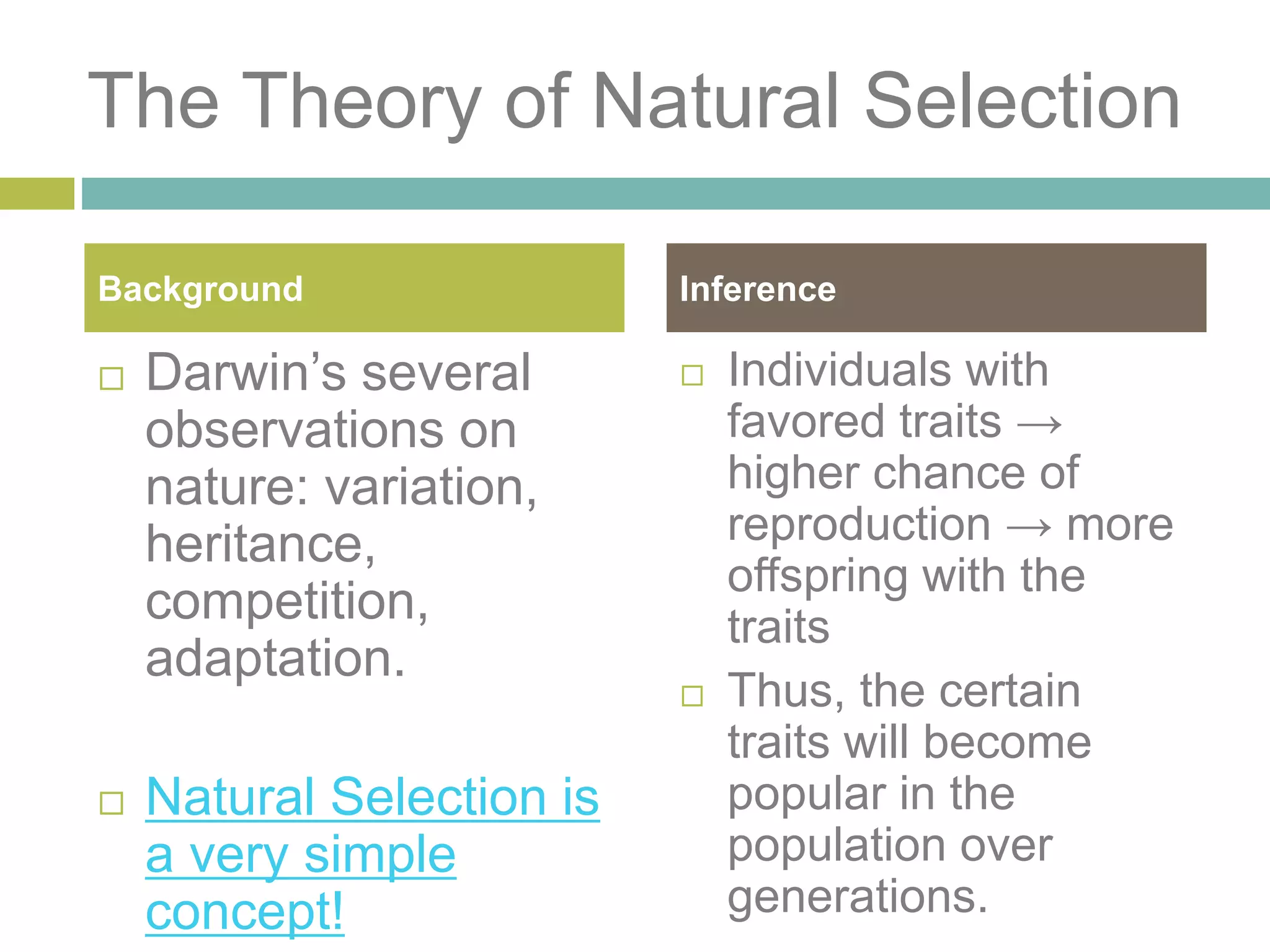
The Theory of Natural Selection
 Darwin’s several
observations on
nature: variation,
heritance,
competition,
adaptation.
 Natural Selection is
a very simple
concept!
 Individuals with
favored traits →
higher chance of
reproduction → more
offspring with the
traits
 Thus, the certain
traits will become
popular in the
population over
generations.
Background Inference
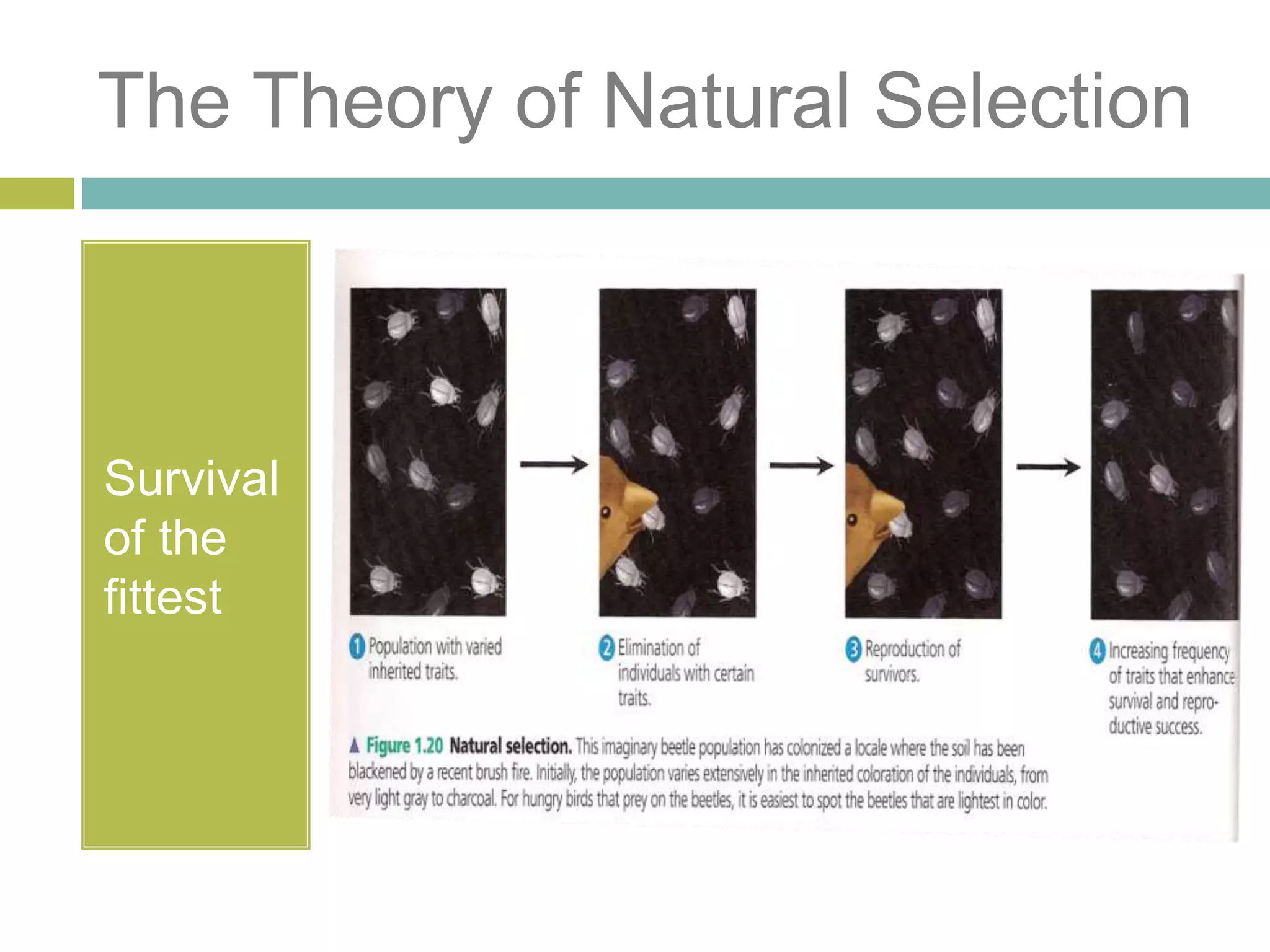
The Theory of Natural Selection
Survival
of the
fittest
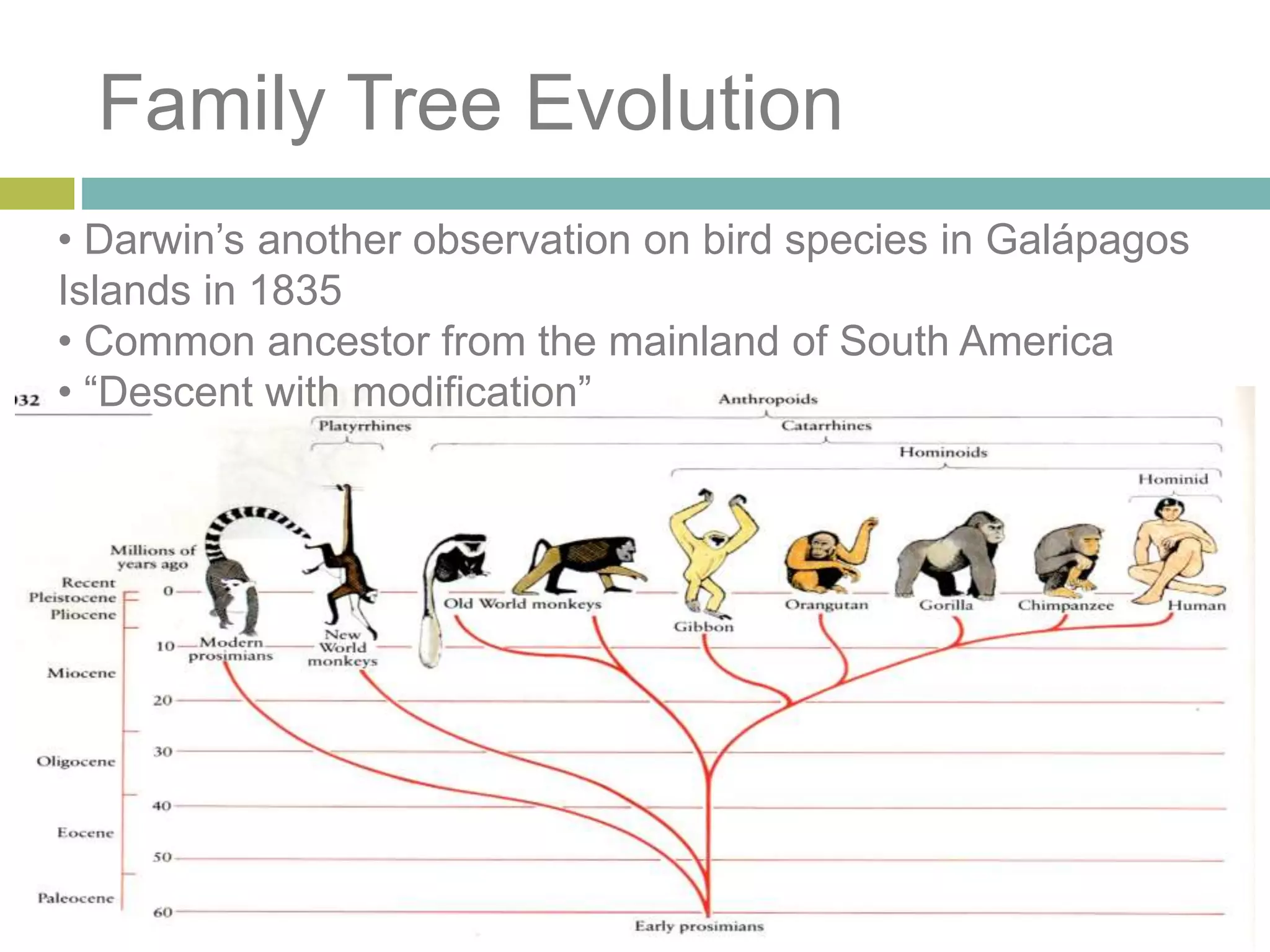
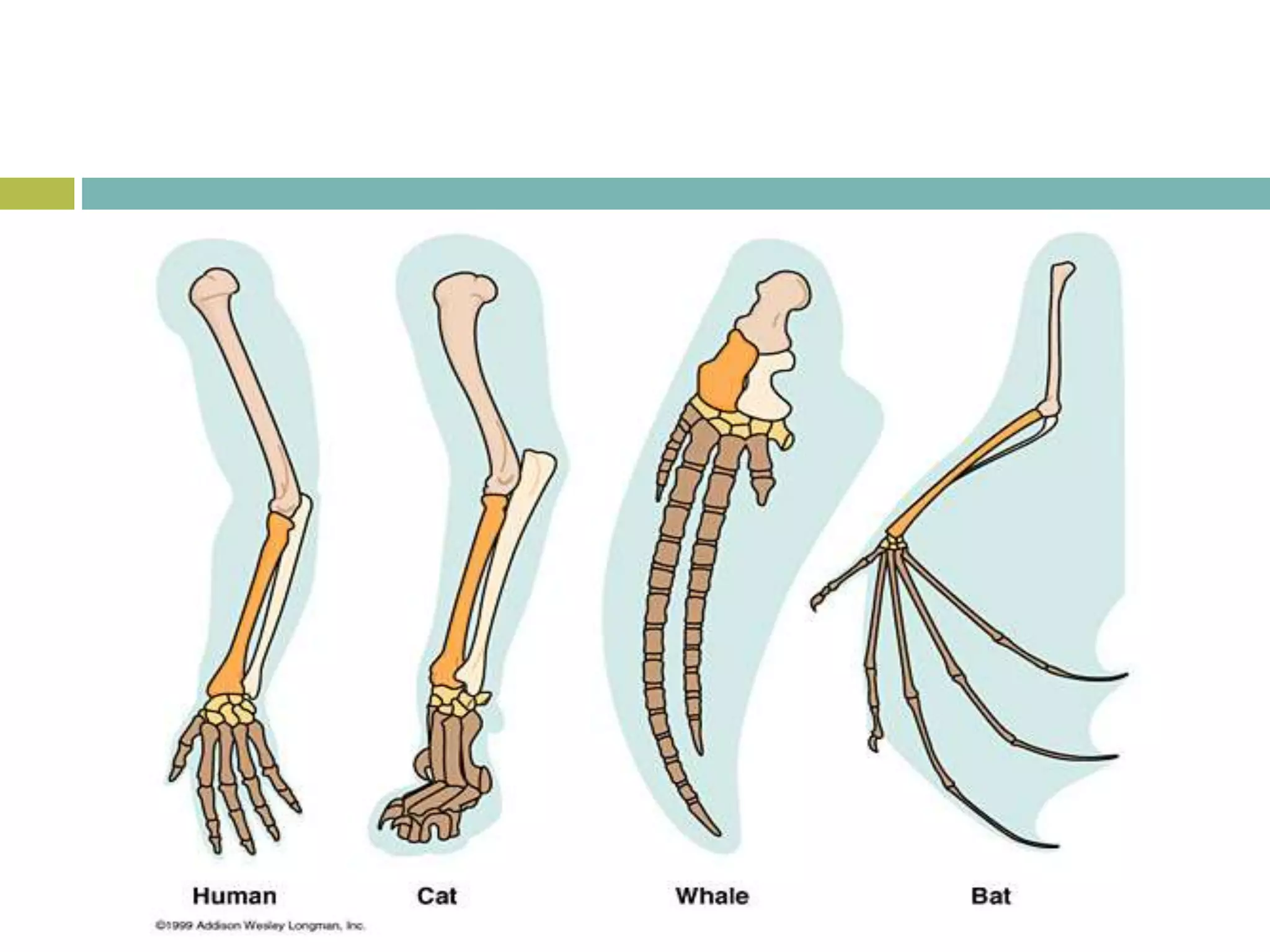
Family Tree Evolution
• Darwin’s another observation on bird species in Galápagos
Islands in 1835
• Common ancestor from the mainland of South America
• “Descent with modification”
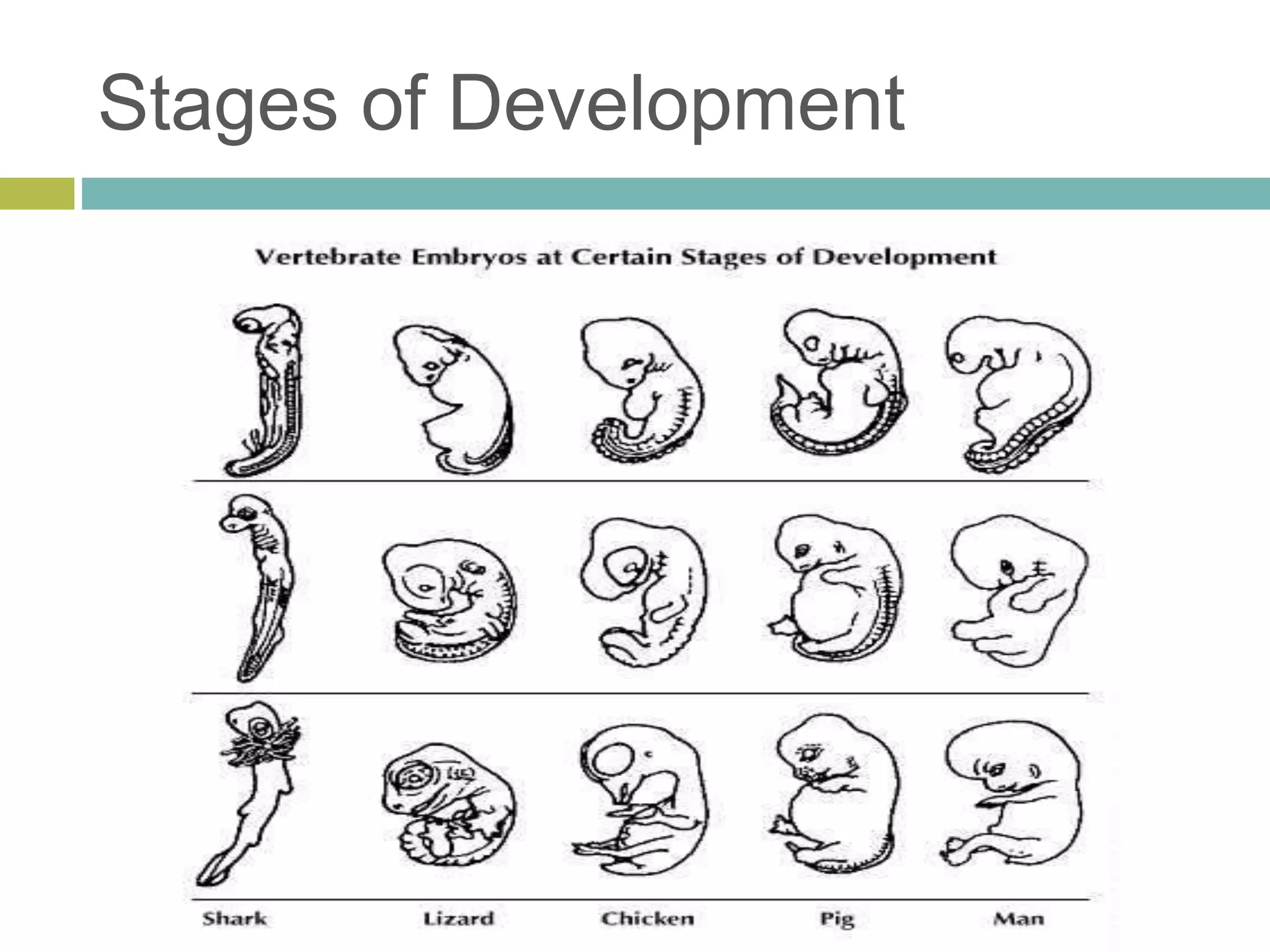
Stages of Development
Keys in Natural Selection
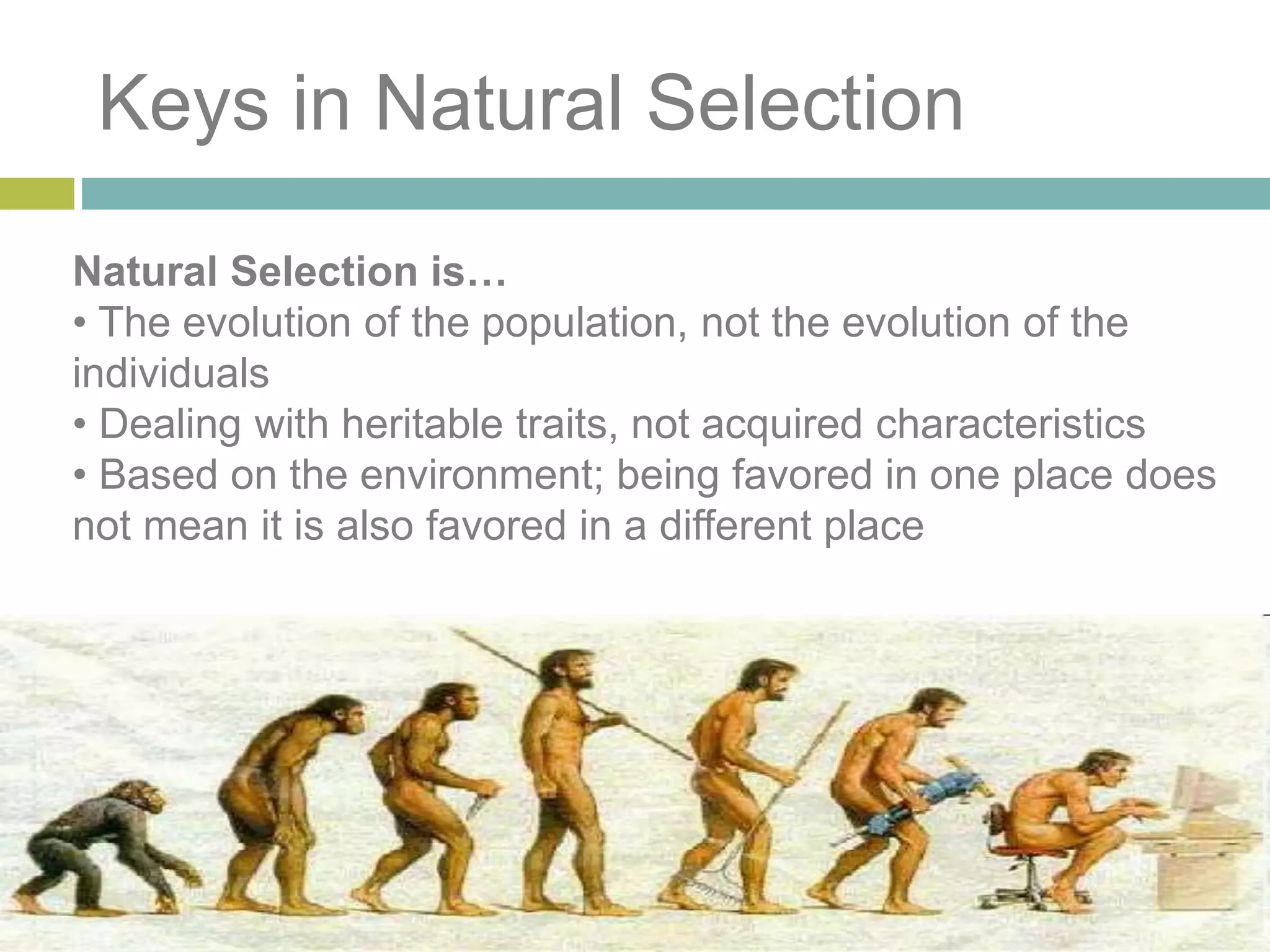
Natural Selection is…
• The evolution of the population, not the evolution of the
individuals
• Dealing with heritable traits, not acquired characteristics
• Based on the environment; being favored in one place does
not mean it is also favored in a different place
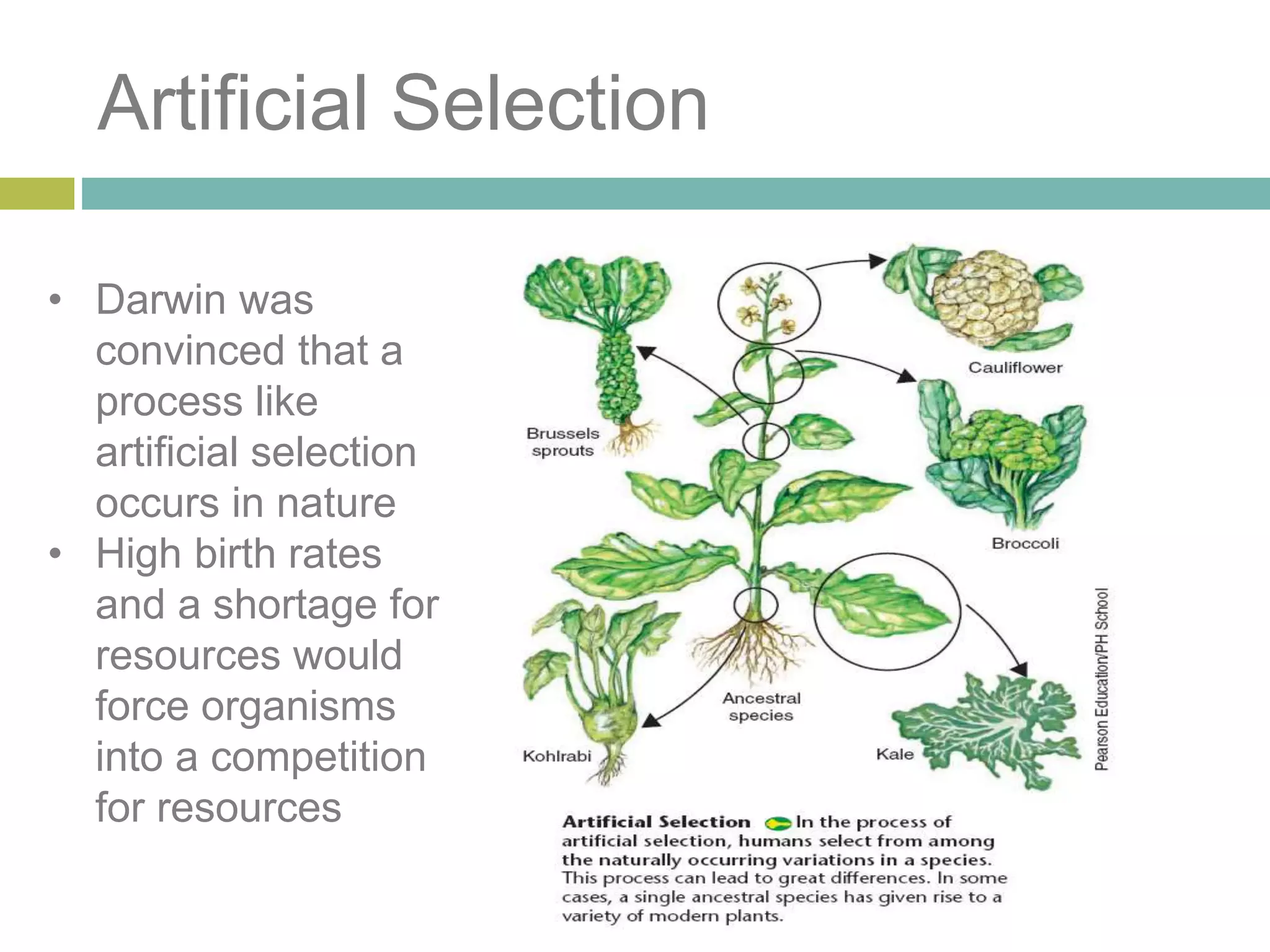
Artificial Selection
• Darwin was
convinced that a
process like
artificial selection
occurs in nature
• High birth rates
and a shortage for
resources would
force organisms
into a competition
for resources
Summary of Darwin’s Theory
1. Individual organisms in nature differ from one another.
Some of this variation is inherited
2. Organisms in nature produce more offspring than can
survive, and many of those that survive do not reproduce.
3. Because more organisms are produced than can survive,
members of each species must compete for resources.
4. Because each organism is unique, each has different
advantages and disadvantages in the struggle for
existence.
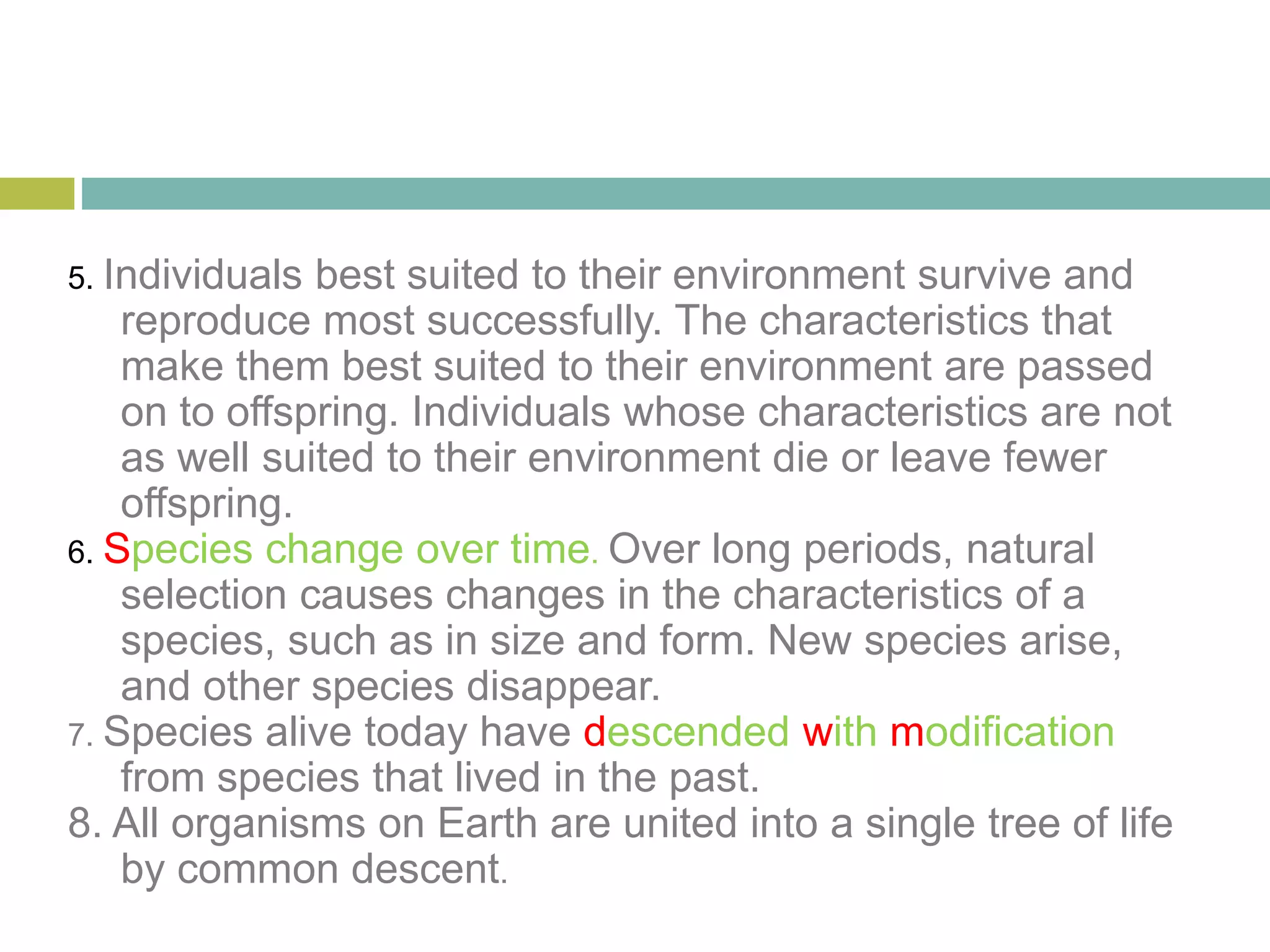
5. Individuals best suited to their environment survive and
reproduce most successfully. The characteristics that
make them best suited to their environment are passed
on to offspring. Individuals whose characteristics are not
as well suited to their environment die or leave fewer
offspring.
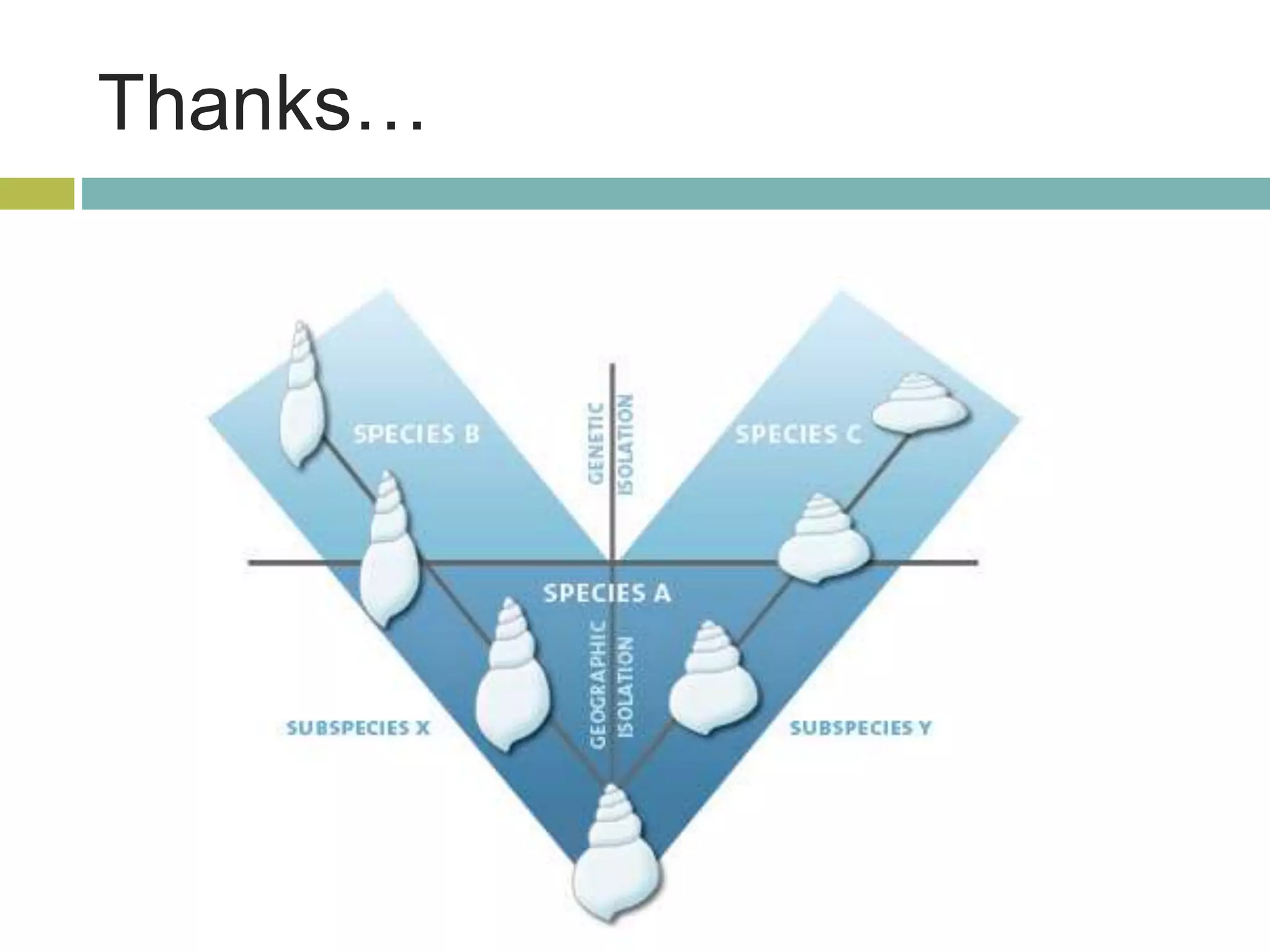
6. Species change over time. Over long periods, natural
selection causes changes in the characteristics of a
species, such as in size and form. New species arise,
and other species disappear.
7. Species alive today have descended with modification
from species that lived in the past.
8. All organisms on Earth are united into a single tree of life
by common descent.
Thanks…

Theory Of Evolution of Natural Selection by DARWIN

  • 1.
    THEORY OF EVOLUTION BY NATURAL SELECTION CHARLESDARWIN Vipul Sachan, DigiTrend, Lucknow
  • 2.
    Key Terms • Mutation:creation of altered DNA • Gene flow: gene movement from one population to another • Genetic variation is affected by gene flow and it allows natural selection to occur • Charles Darwin • Natural selection • Survival of the fittest • Family Tree • “Descent with modification”
  • 3.
    as a Child Naughty  Clumsy  Athletic  Gullible  Lazy  Slow learner  Shy
  • 4.
    Darwin’s Love forNatural Science  Was taught the classics, ancient history, and Greek at Revd. Samuel Butler's school and found it to be extremely boring  He developed his interest for natural science in activities outside of school  Hiking  Book Reading  Chemistry
  • 5.
    Darwin and Medicine Darwin was admitted to Edinburgh University, in Scotland  Many members of his family including his dad were in the medical field  Assisted at his dad’s medical practice  Again he found most of his school studies a bore  Scared of blood
  • 6.
    A Further Interestin Science  Darwin participated in many things outside of school that sparked his interest in natural science  Stuffing Animals  Natural History Book  Natural History Museum  Plinian Society  Robert Grant
  • 7.
    The Voyage ofthe Beagle • Ships naturalist on a trip around the world aboard the HMS Beagle • During his travels, Darwin made numerous observations and collected evidence that lead him to propose a revolutionary hypothesis about the way life changes
  • 8.
     Was areligious orthodox that received proper religious schooling  Darwin began to research the origin of species and saw that the species adapted to their environment of time  While coming up with the laws of natural selection, Darwin became less religious  In contrast with the churches views believed that God initiated the process but did not create each species already fit for their environment Religion vs. Science
  • 9.
    The Theory ofNatural Selection  Darwin’s several observations on nature: variation, heritance, competition, adaptation.  Natural Selection is a very simple concept!  Individuals with favored traits → higher chance of reproduction → more offspring with the traits  Thus, the certain traits will become popular in the population over generations. Background Inference
  • 10.
    The Theory ofNatural Selection Survival of the fittest
  • 11.
    Family Tree Evolution •Darwin’s another observation on bird species in Galápagos Islands in 1835 • Common ancestor from the mainland of South America • “Descent with modification”
  • 12.
  • 14.
    Keys in NaturalSelection Natural Selection is… • The evolution of the population, not the evolution of the individuals • Dealing with heritable traits, not acquired characteristics • Based on the environment; being favored in one place does not mean it is also favored in a different place
  • 15.
    Artificial Selection • Darwinwas convinced that a process like artificial selection occurs in nature • High birth rates and a shortage for resources would force organisms into a competition for resources
  • 16.
    Summary of Darwin’sTheory 1. Individual organisms in nature differ from one another. Some of this variation is inherited 2. Organisms in nature produce more offspring than can survive, and many of those that survive do not reproduce. 3. Because more organisms are produced than can survive, members of each species must compete for resources. 4. Because each organism is unique, each has different advantages and disadvantages in the struggle for existence.
  • 17.
    5. Individuals bestsuited to their environment survive and reproduce most successfully. The characteristics that make them best suited to their environment are passed on to offspring. Individuals whose characteristics are not as well suited to their environment die or leave fewer offspring. 6. Species change over time. Over long periods, natural selection causes changes in the characteristics of a species, such as in size and form. New species arise, and other species disappear. 7. Species alive today have descended with modification from species that lived in the past. 8. All organisms on Earth are united into a single tree of life by common descent.
  • 18.