Natural Selection
    Struggle for Existence
     Survival of the Fittest
  Descent with Modification
  Results of Natural Selection
Natural Selection
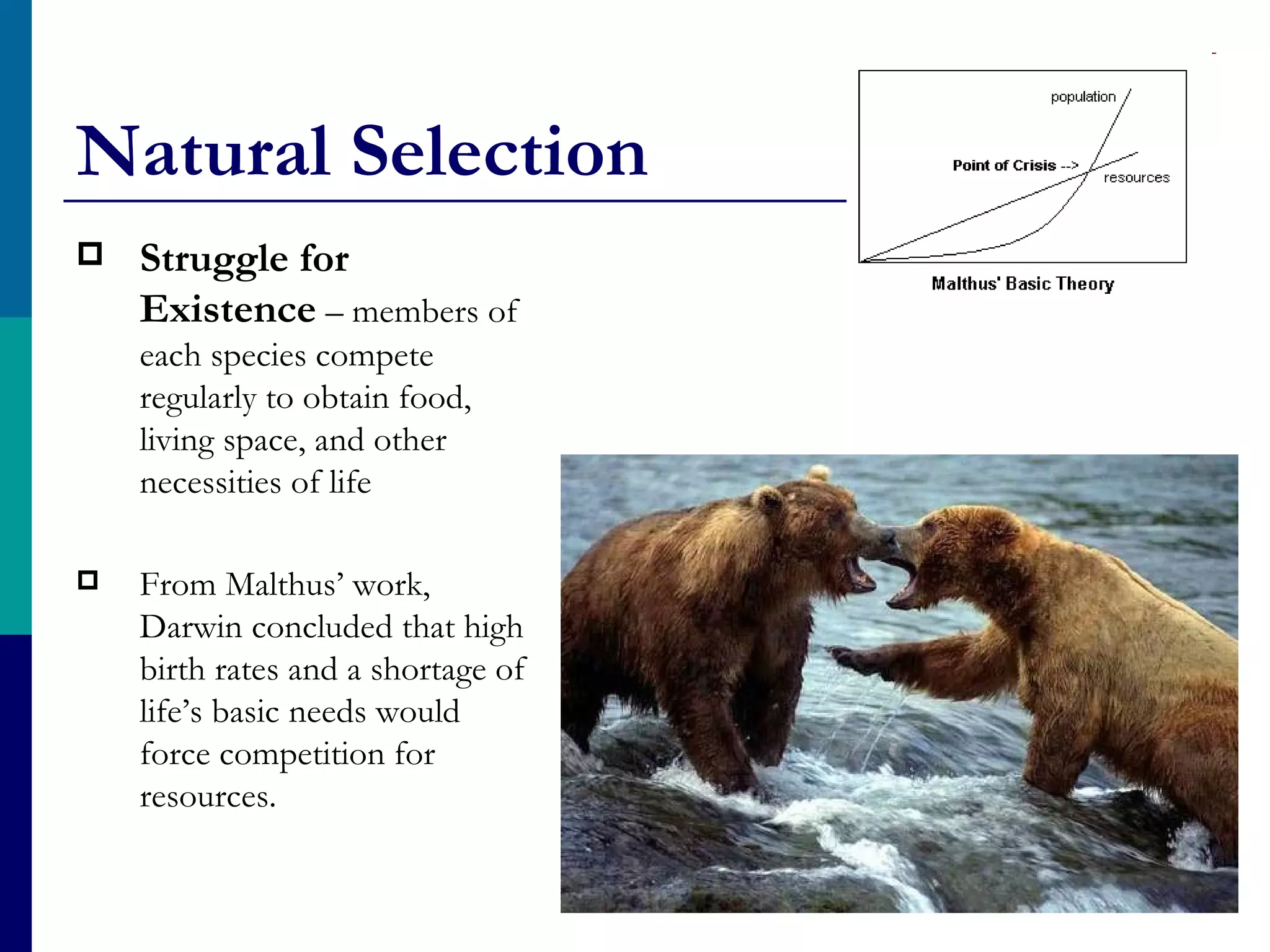
   Struggle for
    Existence – members of
    each species compete
    regularly to obtain food,
    living space, and other
    necessities of life

   From Malthus’ work,
    Darwin concluded that high
    birth rates and a shortage of
    life’s basic needs would
    force competition for
    resources.
Natural Selection
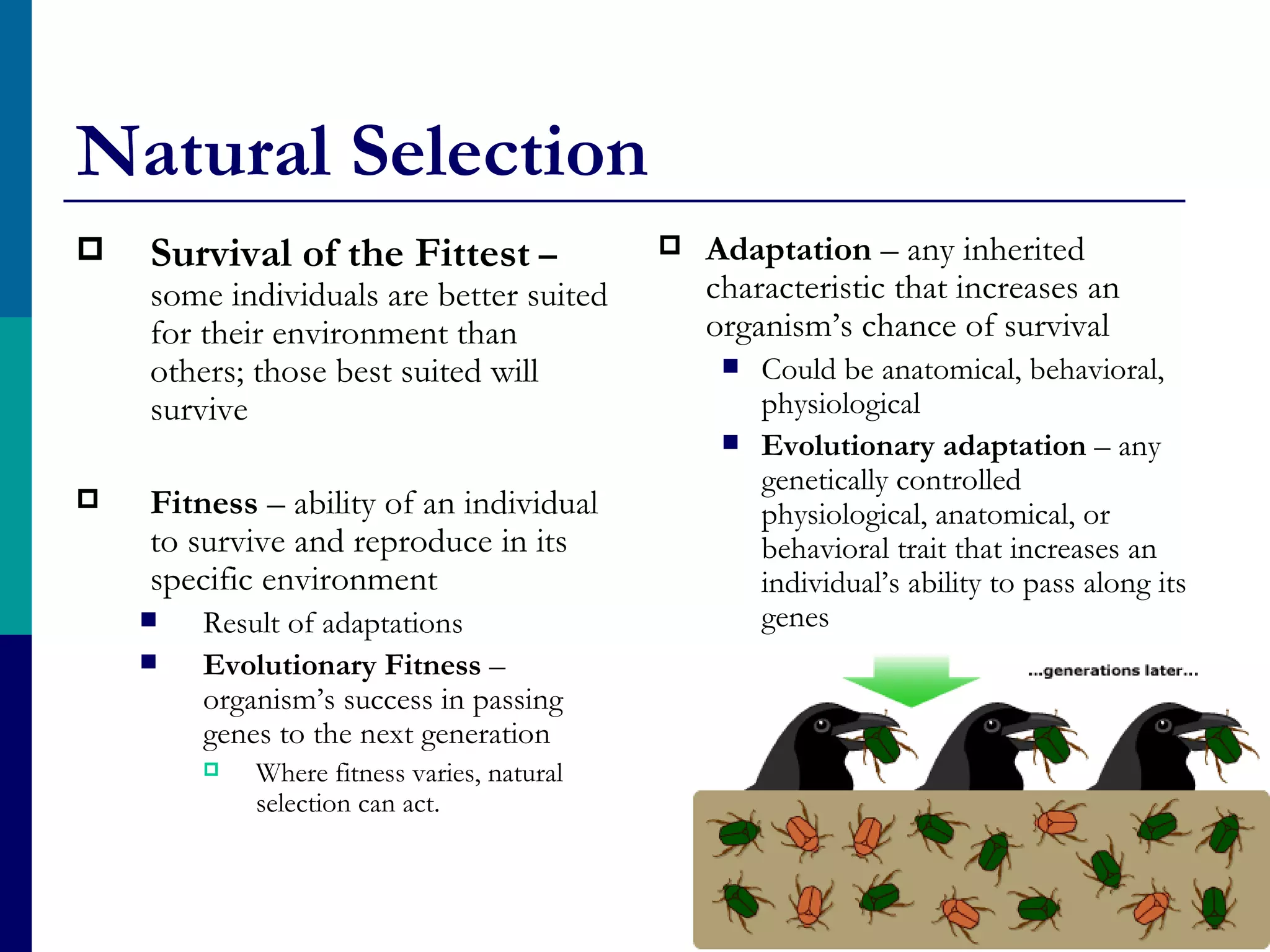
   Survival of the Fittest –                  Adaptation – any inherited
    some individuals are better suited          characteristic that increases an
    for their environment than                  organism’s chance of survival
    others; those best suited will                  Could be anatomical, behavioral,
    survive                                          physiological
                                                    Evolutionary adaptation – any
                                                     genetically controlled
   Fitness – ability of an individual               physiological, anatomical, or
    to survive and reproduce in its                  behavioral trait that increases an
    specific environment                             individual’s ability to pass along its
       Result of adaptations                        genes
       Evolutionary Fitness –
        organism’s success in passing
        genes to the next generation
           Where fitness varies, natural
            selection can act.
Natural Selection
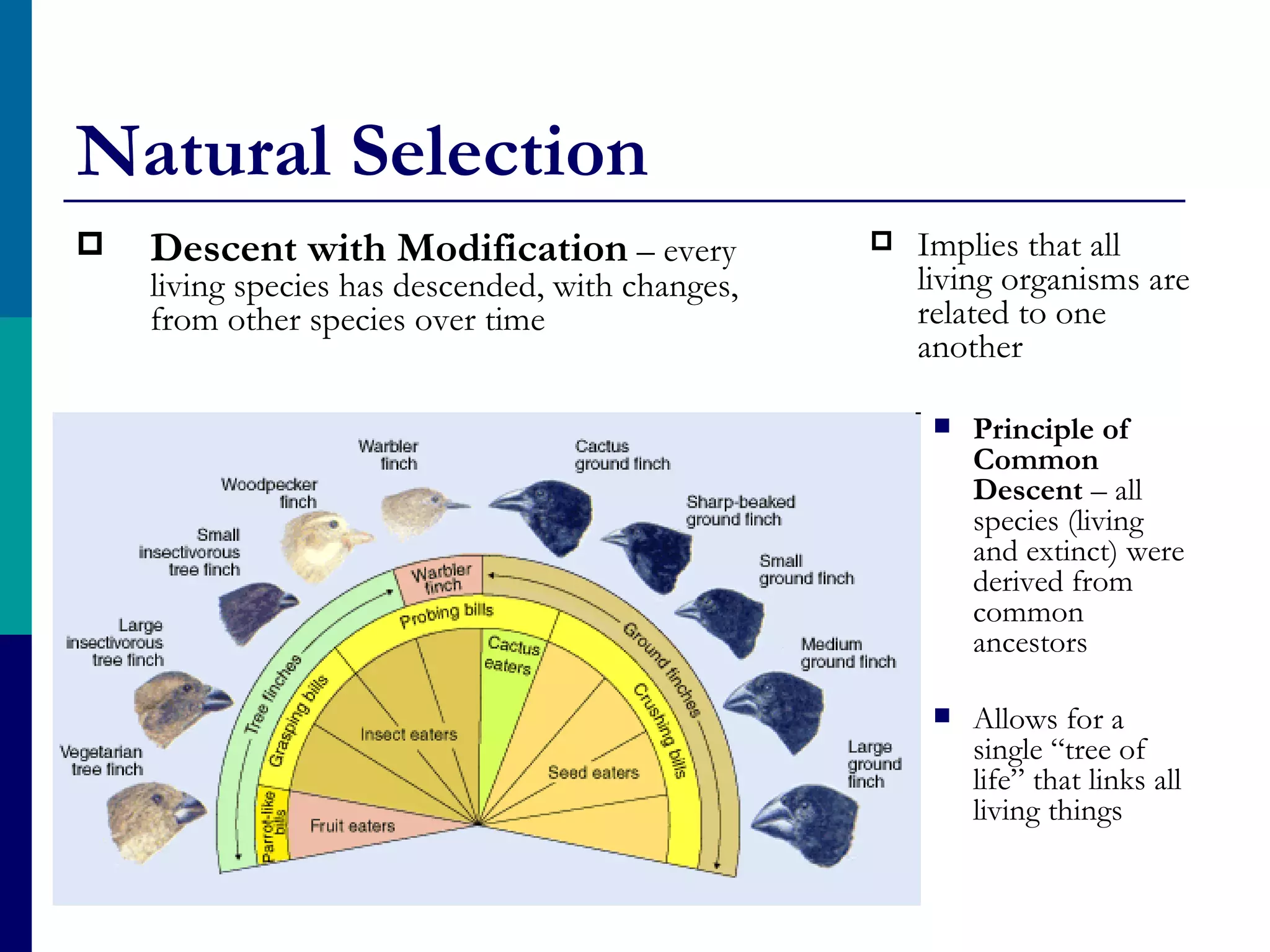
   Descent with Modification – every                Implies that all
    living species has descended, with changes,       living organisms are
    from other species over time                      related to one
                                                      another

                                                          Principle of
                                                           Common
                                                           Descent – all
                                                           species (living
                                                           and extinct) were
                                                           derived from
                                                           common
                                                           ancestors

                                                          Allows for a
                                                           single “tree of
                                                           life” that links all
                                                           living things
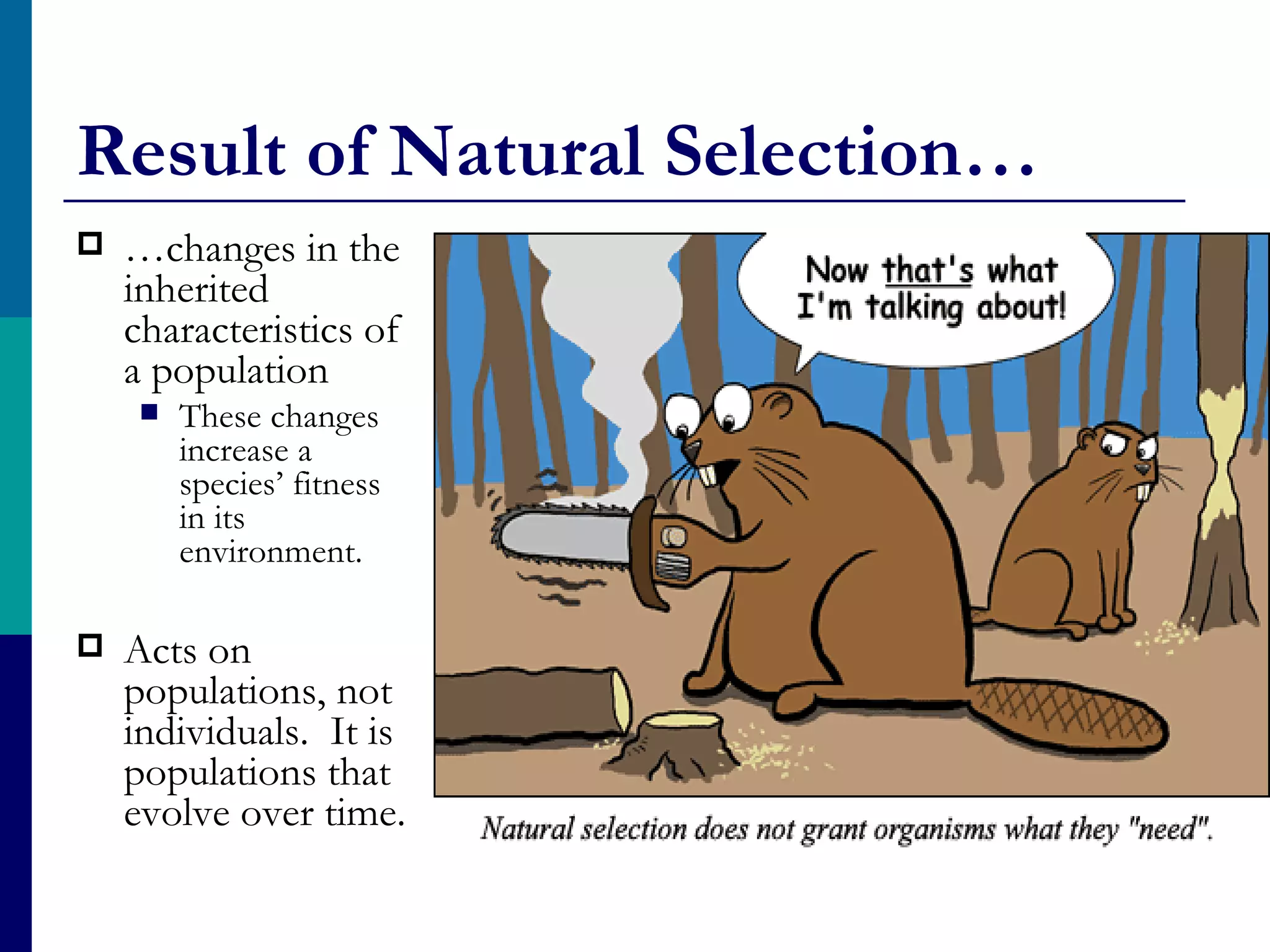
Result of Natural Selection…
   …changes in the
    inherited
    characteristics of
    a population
        These changes
         increase a
         species’ fitness
         in its
         environment.

   Acts on
    populations, not
    individuals. It is
    populations that
    evolve over time.
Summary of Darwin’s Theory of
Evolution
   Individual organisms differ (variations exist in a population).
        Some of this variation is heritable.

   In nature, there is a tendency for overpopulation.
        Organisms produce more offspring than can survive. There is a high death
         rate.
        Only the organisms with the variations that are suitable to the environment
         survive.

   Organisms must compete for limited resources.
        Each unique organism has unique advantages and disadvantages in the struggle
         for existence.
        The organisms that survive get to reproduce and pass on their genes.

   The process of Natural Selection causes species to change over time.
        It is the population that changes to match the environment – not individuals.

   Species alive today are descended with modification from ancestral species.
Evidence of Evolution
 Fossil Record
    Any preserved remains of ancient organisms
 Darwin Proposed that the earth was millions of years
  old and from looking at the fossil records in older rocks
  and fossils from younger rocks scienists could
  document that life on earth had changes over time.
Evidence (continued)
 Geographic    Distribution
     Different species living in the same
      region/environment have similar body structures and
      behaviors
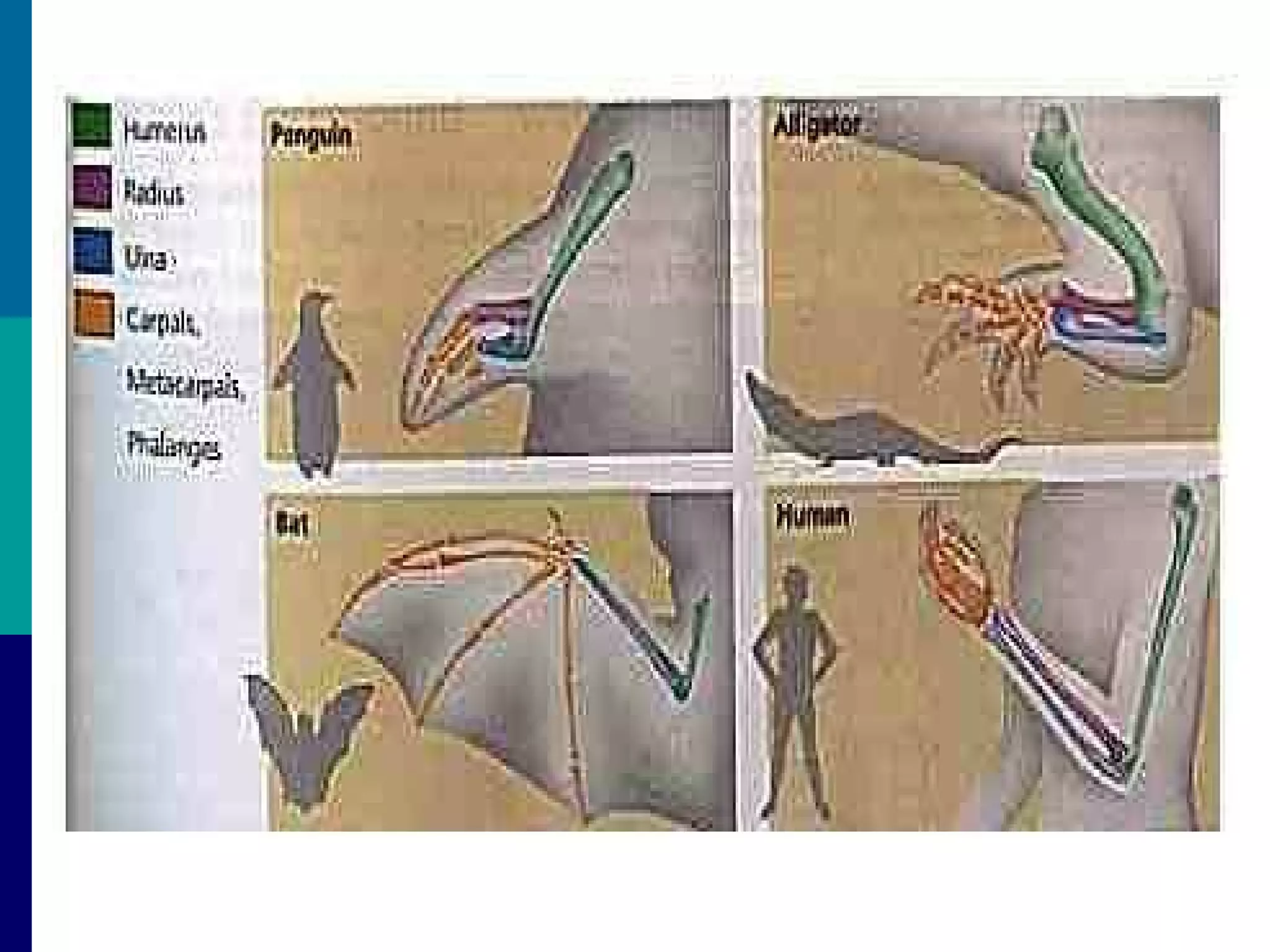
 Homologous   Body Structures
   Structures that have different mature forms
    but develop from the same embryonic tissue;
    look the same but used differently
   Strong evidence that all four-limbed
    vertebrates have descended, with modification
    from common ancestors.
Evidence (continued)
 Vestigial organs
   Organs that are so reduced in size that
    they are just traces of homologous organs
    in other species.
     Example:

        Whale hips
        Human appendix
Evidence (continued)
 Comparative  Genetics
   DNA from different
    organisms works the
    same
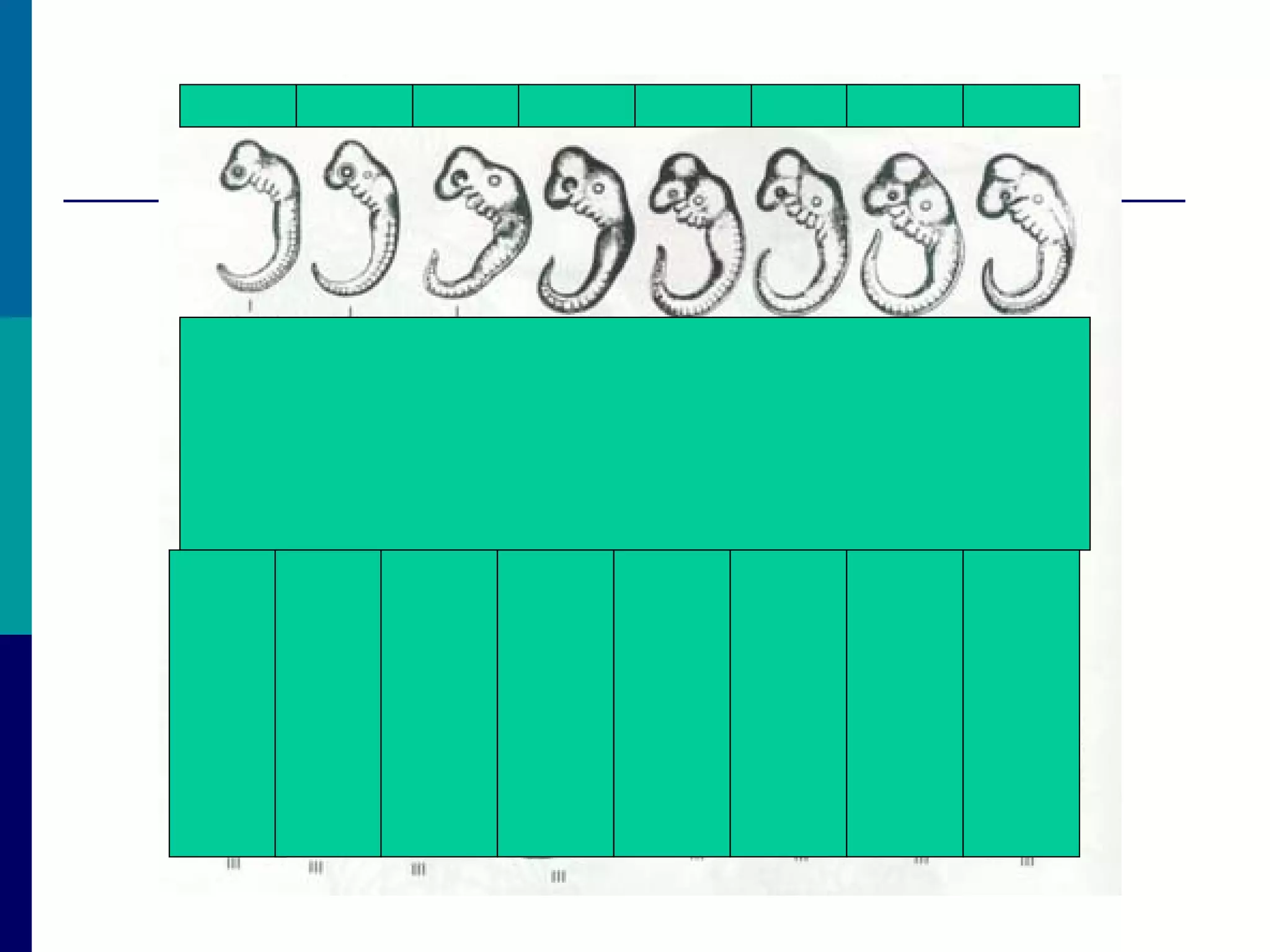
   Early development is
    similar
Natural selection

Natural selection

  • 1.
    Natural Selection Struggle for Existence Survival of the Fittest Descent with Modification Results of Natural Selection
  • 2.
    Natural Selection  Struggle for Existence – members of each species compete regularly to obtain food, living space, and other necessities of life  From Malthus’ work, Darwin concluded that high birth rates and a shortage of life’s basic needs would force competition for resources.
  • 3.
    Natural Selection  Survival of the Fittest –  Adaptation – any inherited some individuals are better suited characteristic that increases an for their environment than organism’s chance of survival others; those best suited will  Could be anatomical, behavioral, survive physiological  Evolutionary adaptation – any genetically controlled  Fitness – ability of an individual physiological, anatomical, or to survive and reproduce in its behavioral trait that increases an specific environment individual’s ability to pass along its  Result of adaptations genes  Evolutionary Fitness – organism’s success in passing genes to the next generation  Where fitness varies, natural selection can act.
  • 4.
    Natural Selection  Descent with Modification – every  Implies that all living species has descended, with changes, living organisms are from other species over time related to one another  Principle of Common Descent – all species (living and extinct) were derived from common ancestors  Allows for a single “tree of life” that links all living things
  • 5.
    Result of NaturalSelection…  …changes in the inherited characteristics of a population  These changes increase a species’ fitness in its environment.  Acts on populations, not individuals. It is populations that evolve over time.
  • 6.
    Summary of Darwin’sTheory of Evolution  Individual organisms differ (variations exist in a population).  Some of this variation is heritable.  In nature, there is a tendency for overpopulation.  Organisms produce more offspring than can survive. There is a high death rate.  Only the organisms with the variations that are suitable to the environment survive.  Organisms must compete for limited resources.  Each unique organism has unique advantages and disadvantages in the struggle for existence.  The organisms that survive get to reproduce and pass on their genes.  The process of Natural Selection causes species to change over time.  It is the population that changes to match the environment – not individuals.  Species alive today are descended with modification from ancestral species.
  • 7.
    Evidence of Evolution Fossil Record  Any preserved remains of ancient organisms  Darwin Proposed that the earth was millions of years old and from looking at the fossil records in older rocks and fossils from younger rocks scienists could document that life on earth had changes over time.
  • 8.
    Evidence (continued)  Geographic Distribution  Different species living in the same region/environment have similar body structures and behaviors  Homologous Body Structures  Structures that have different mature forms but develop from the same embryonic tissue; look the same but used differently  Strong evidence that all four-limbed vertebrates have descended, with modification from common ancestors.
  • 10.
    Evidence (continued)  Vestigialorgans  Organs that are so reduced in size that they are just traces of homologous organs in other species. Example:  Whale hips  Human appendix
  • 11.
    Evidence (continued)  Comparative Genetics  DNA from different organisms works the same  Early development is similar