

Asst. Prof. SD Tidke
Modern College, Pune
 DBT had formulated rDNA guidelines in 1990
which were revised in 1994
 It include guidelines for R&D activities on GMOs,
transgenic plants, animals and products into the
environment
 Four different biosafety levels have been
recognized and containment facilities for each
level are recommended which have already been
explain.
Category I
Category II
Category III
Which are exempt for the purpose of intimation and
approval of competent authority.
 The experiments involving self cloning, using strains and
also inter-species cloning belonging to organism in the
same exchanger group.
 Organelle DNA including those from chloroplasts and
mitochondria.
 Host-vector systems consisting of cells in culture and
vectors, either non-viral or viral containing defective viral
genomes.
It includes:
 Routing cloning of defined genes, defined non-coding
stretches of DNA and open reading frames in defined
genes in E. coli or other bacterial host which are
generally considered safe to human, animals and
plants.
 Transfer of defined clones genes into agrobacterium.
 Use of defined reporter genes to study transient
expression in plant cells and to study genetic
transformation conditions.
It also includes:
 Molecular analysis of transgenic plants grown in
vitro.
 The experiments need intimation to IBSC
(Institutional Biosafety Committee) in the
prescribed proforma.
Those requiring prior intimation of competent authority.
 Experiments falling under containment levels II, III
and IV.
 It include experiment carried out in the lab and
greenhouse using defined DNA fragments non
pathogenic to human and animals for genetic
transformation of plants, both model species and crop
species and the plant grow in green house for
molecular and phenotypic evaluation.
 Large scale use of recombinants made by self cloning
in systems belonging to exempt category (e.g. E.coli,
Saccharomyces, and B. subtilis)
 Experiment where in DNA or RNA molecules derived
from any source except for eukaryotic viral genome
may be transferred to any non-human vertebrate or any
invertebrate organisms and propagated under
conditions of physical containment PC1 and
appropriate to organism under study.
 Experiments involving non pathogen DNA vector
systems and regeneration from single cells.
 Permission to perform experiments will be
provided by IBSC.
 It would be intimated to RCGM (Review
Committee On Genetic Manipulation) before
execution of experiments
Those requiring review and approval of competent authority
before commencement.
 It includes experiments having high risk where the escape of
transgenic traits into the open environment could cause
significant alteration in the biosphears, the ecosystem, plants
and animals by dispersing new genetic traits the effects of
which cannot e judged precisely.
 Further this is also includes experiment conducted in
greenhouse and open field condition not belonging to the
above category II types. Such experiments could be
conducted only after clearance from RCGM and DBT.
 It also includes experiments on toxic genes for vaccine
production etc…
 The controlled release of GMOs should be done under
appropriate containment facilities to ensure safety and
to prevent unwanted release in the environment.
 Pre-release tests of GMOs in agriculture should include
elucidation of requirements for vegetative growth and
persistence and stability in small plots and
experimental fields.
 Experiments involving the use of infectious animal and
plant viruses in tissue culture systems.
 Experiments involving gene transfer to whole plants and
animals.
 Introduction into cultured human cells of recombinant DNA
molecules containing complete genes of potentially
oncogenic viruses or transformed cellular genes.
 Introduction into animal cells of unidentified DNA
molecules derived from cancer cells or in vitro transformed
cells.
 Experiments requiring field testing and release of
rDNA engineered microorganisms and plants.
 Experiments involving engineered microbes with
deletions and certain rearrangements.
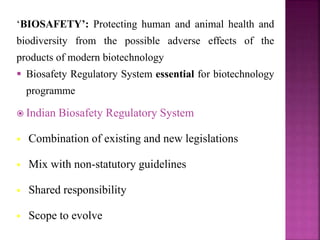
‘BIOSAFETY’: Protecting human and animal health and
biodiversity from the possible adverse effects of the
products of modern biotechnology
 Biosafety Regulatory System essential for biotechnology
programme
 Indian Biosafety Regulatory System
 Combination of existing and new legislations
 Mix with non-statutory guidelines
 Shared responsibility
 Scope to evolve
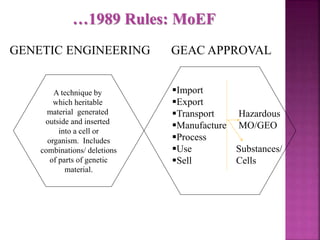
…1989 Rules: MoEF
A technique by
which heritable
material generated
outside and inserted
into a cell or
organism. Includes
combinations/ deletions
of parts of genetic
material.
GENETIC ENGINEERING
Import
Export
Transport Hazardous
Manufacture MO/GEO
Process
Use Substances/
Sell Cells
GEAC APPROVAL
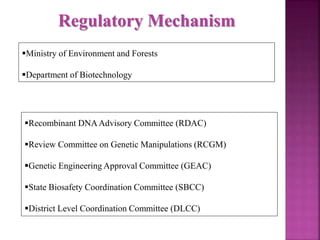
Regulatory Mechanism
Ministry of Environment and Forests
Department of Biotechnology
Recombinant DNAAdvisory Committee (RDAC)
Review Committee on Genetic Manipulations (RCGM)
Genetic Engineering Approval Committee (GEAC)
State Biosafety Coordination Committee (SBCC)
District Level Coordination Committee (DLCC)
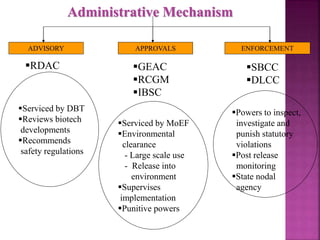
Administrative Mechanism
ADVISORY APPROVALS ENFORCEMENT
RDAC GEAC
RCGM
IBSC
SBCC
DLCC
Serviced by DBT
Reviews biotech
developments
Recommends
safety regulations
Serviced by MoEF
Environmental
clearance
- Large scale use
- Release into
environment
Supervises
implementation
Punitive powers
Powers to inspect,
investigate and
punish statutory
violations
Post release
monitoring
State nodal
agency
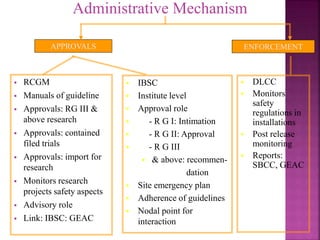
 RCGM
 Manuals of guideline
 Approvals: RG III &
above research
 Approvals: contained
filed trials
 Approvals: import for
research
 Monitors research
projects safety aspects
 Advisory role
 Link: IBSC: GEAC
Administrative Mechanism
APPROVALS ENFORCEMENT
 DLCC
 Monitors
safety
regulations in
installations
 Post release
monitoring
 Reports:
SBCC, GEAC
 IBSC
 Institute level
 Approval role
 - R G I: Intimation
 - R G II: Approval
 - R G III
 & above: recommen-
dation
 Site emergency plan
 Adherence of guidelines
 Nodal point for
interaction
rdna guidelines

rdna guidelines

  • 1.
    Asst. Prof. SDTidke Modern College, Pune
  • 2.
     DBT hadformulated rDNA guidelines in 1990 which were revised in 1994  It include guidelines for R&D activities on GMOs, transgenic plants, animals and products into the environment  Four different biosafety levels have been recognized and containment facilities for each level are recommended which have already been explain.
  • 3.
  • 4.
    Which are exemptfor the purpose of intimation and approval of competent authority.  The experiments involving self cloning, using strains and also inter-species cloning belonging to organism in the same exchanger group.  Organelle DNA including those from chloroplasts and mitochondria.  Host-vector systems consisting of cells in culture and vectors, either non-viral or viral containing defective viral genomes.
  • 5.
    It includes:  Routingcloning of defined genes, defined non-coding stretches of DNA and open reading frames in defined genes in E. coli or other bacterial host which are generally considered safe to human, animals and plants.  Transfer of defined clones genes into agrobacterium.  Use of defined reporter genes to study transient expression in plant cells and to study genetic transformation conditions.
  • 6.
    It also includes: Molecular analysis of transgenic plants grown in vitro.  The experiments need intimation to IBSC (Institutional Biosafety Committee) in the prescribed proforma.
  • 7.
    Those requiring priorintimation of competent authority.  Experiments falling under containment levels II, III and IV.  It include experiment carried out in the lab and greenhouse using defined DNA fragments non pathogenic to human and animals for genetic transformation of plants, both model species and crop species and the plant grow in green house for molecular and phenotypic evaluation.
  • 8.
     Large scaleuse of recombinants made by self cloning in systems belonging to exempt category (e.g. E.coli, Saccharomyces, and B. subtilis)  Experiment where in DNA or RNA molecules derived from any source except for eukaryotic viral genome may be transferred to any non-human vertebrate or any invertebrate organisms and propagated under conditions of physical containment PC1 and appropriate to organism under study.
  • 9.
     Experiments involvingnon pathogen DNA vector systems and regeneration from single cells.  Permission to perform experiments will be provided by IBSC.  It would be intimated to RCGM (Review Committee On Genetic Manipulation) before execution of experiments
  • 10.
    Those requiring reviewand approval of competent authority before commencement.  It includes experiments having high risk where the escape of transgenic traits into the open environment could cause significant alteration in the biosphears, the ecosystem, plants and animals by dispersing new genetic traits the effects of which cannot e judged precisely.  Further this is also includes experiment conducted in greenhouse and open field condition not belonging to the above category II types. Such experiments could be conducted only after clearance from RCGM and DBT.
  • 11.
     It alsoincludes experiments on toxic genes for vaccine production etc…  The controlled release of GMOs should be done under appropriate containment facilities to ensure safety and to prevent unwanted release in the environment.  Pre-release tests of GMOs in agriculture should include elucidation of requirements for vegetative growth and persistence and stability in small plots and experimental fields.
  • 12.
     Experiments involvingthe use of infectious animal and plant viruses in tissue culture systems.  Experiments involving gene transfer to whole plants and animals.  Introduction into cultured human cells of recombinant DNA molecules containing complete genes of potentially oncogenic viruses or transformed cellular genes.  Introduction into animal cells of unidentified DNA molecules derived from cancer cells or in vitro transformed cells.
  • 13.
     Experiments requiringfield testing and release of rDNA engineered microorganisms and plants.  Experiments involving engineered microbes with deletions and certain rearrangements.
  • 15.
    ‘BIOSAFETY’: Protecting humanand animal health and biodiversity from the possible adverse effects of the products of modern biotechnology  Biosafety Regulatory System essential for biotechnology programme  Indian Biosafety Regulatory System  Combination of existing and new legislations  Mix with non-statutory guidelines  Shared responsibility  Scope to evolve
  • 16.
    …1989 Rules: MoEF Atechnique by which heritable material generated outside and inserted into a cell or organism. Includes combinations/ deletions of parts of genetic material. GENETIC ENGINEERING Import Export Transport Hazardous Manufacture MO/GEO Process Use Substances/ Sell Cells GEAC APPROVAL
  • 17.
    Regulatory Mechanism Ministry ofEnvironment and Forests Department of Biotechnology Recombinant DNAAdvisory Committee (RDAC) Review Committee on Genetic Manipulations (RCGM) Genetic Engineering Approval Committee (GEAC) State Biosafety Coordination Committee (SBCC) District Level Coordination Committee (DLCC)
  • 18.
    Administrative Mechanism ADVISORY APPROVALSENFORCEMENT RDAC GEAC RCGM IBSC SBCC DLCC Serviced by DBT Reviews biotech developments Recommends safety regulations Serviced by MoEF Environmental clearance - Large scale use - Release into environment Supervises implementation Punitive powers Powers to inspect, investigate and punish statutory violations Post release monitoring State nodal agency
  • 19.
     RCGM  Manualsof guideline  Approvals: RG III & above research  Approvals: contained filed trials  Approvals: import for research  Monitors research projects safety aspects  Advisory role  Link: IBSC: GEAC Administrative Mechanism APPROVALS ENFORCEMENT  DLCC  Monitors safety regulations in installations  Post release monitoring  Reports: SBCC, GEAC  IBSC  Institute level  Approval role  - R G I: Intimation  - R G II: Approval  - R G III  & above: recommen- dation  Site emergency plan  Adherence of guidelines  Nodal point for interaction