Design and Implementation of VLSI Systems
                   (EN1600)
        Lecture 32: Pad Frame Design and Packaging


S. Reda EN1600 SP’08
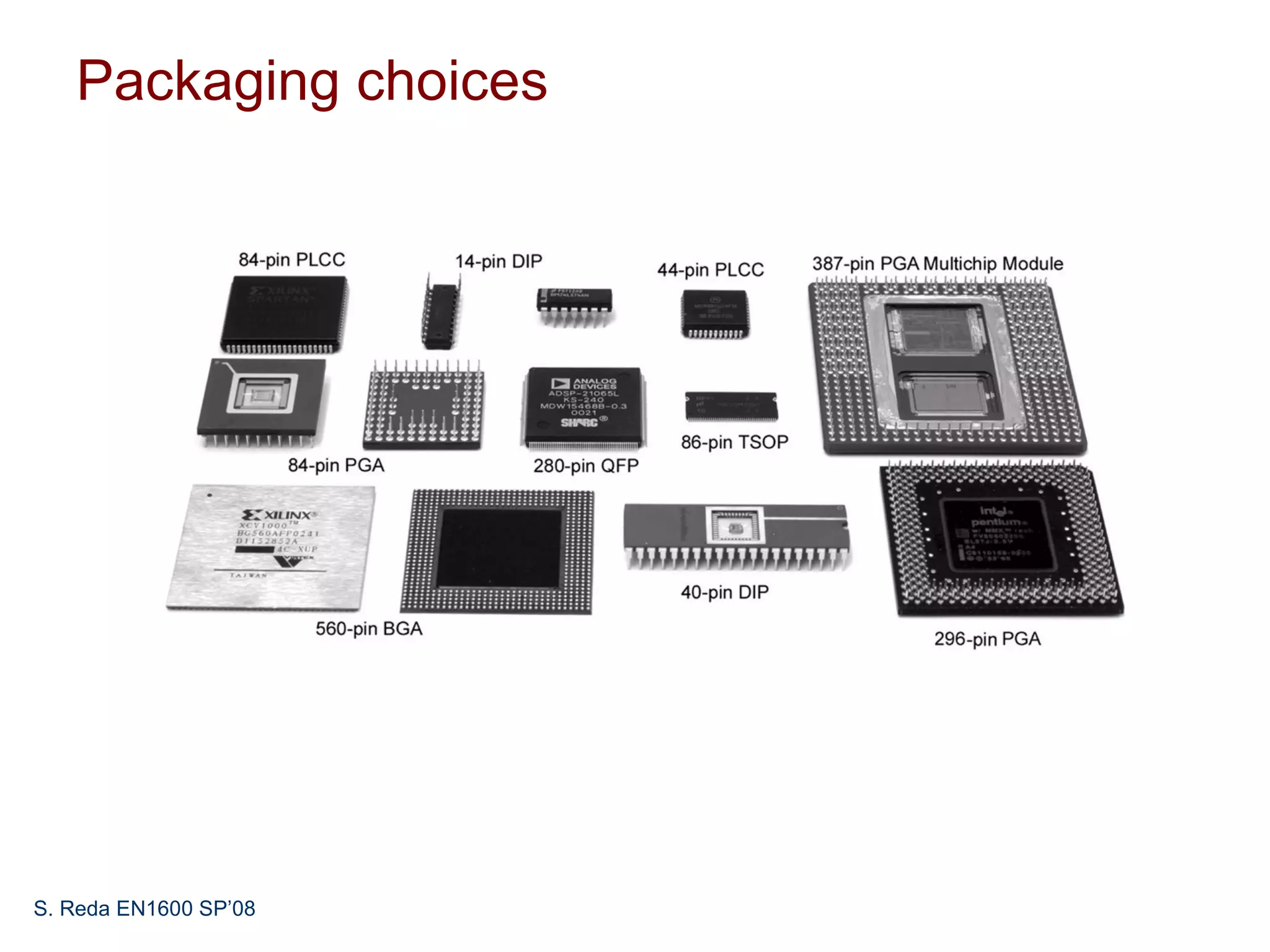
Packaging choices


S. Reda EN1600 SP’08
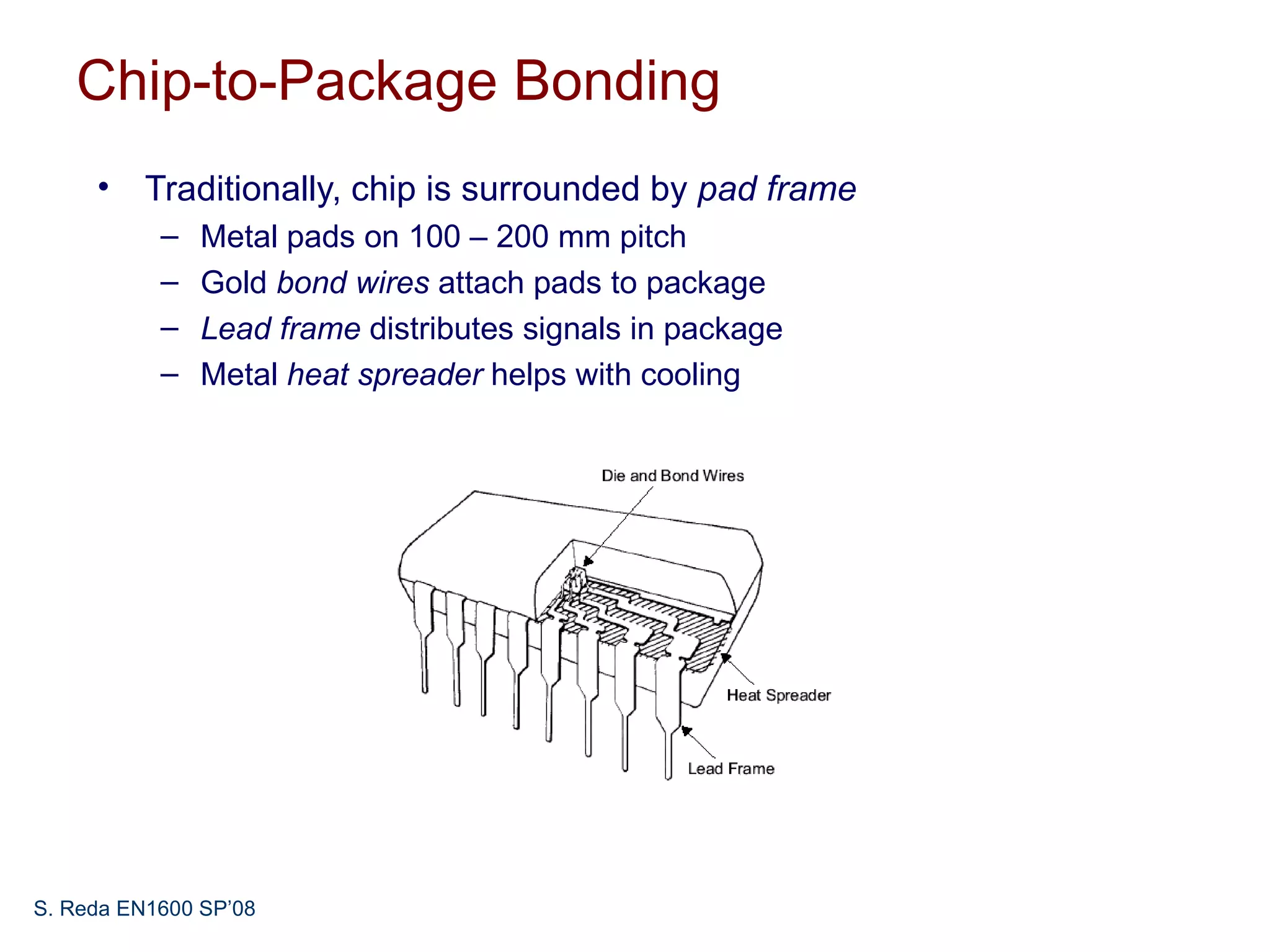
Chip-to-Package Bonding
     • Traditionally, chip is surrounded by pad frame
           –   Metal pads on 100 – 200 mm pitch
           –   Gold bond wires attach pads to package
           –   Lead frame distributes signals in package
           –   Metal heat spreader helps with cooling


S. Reda EN1600 SP’08
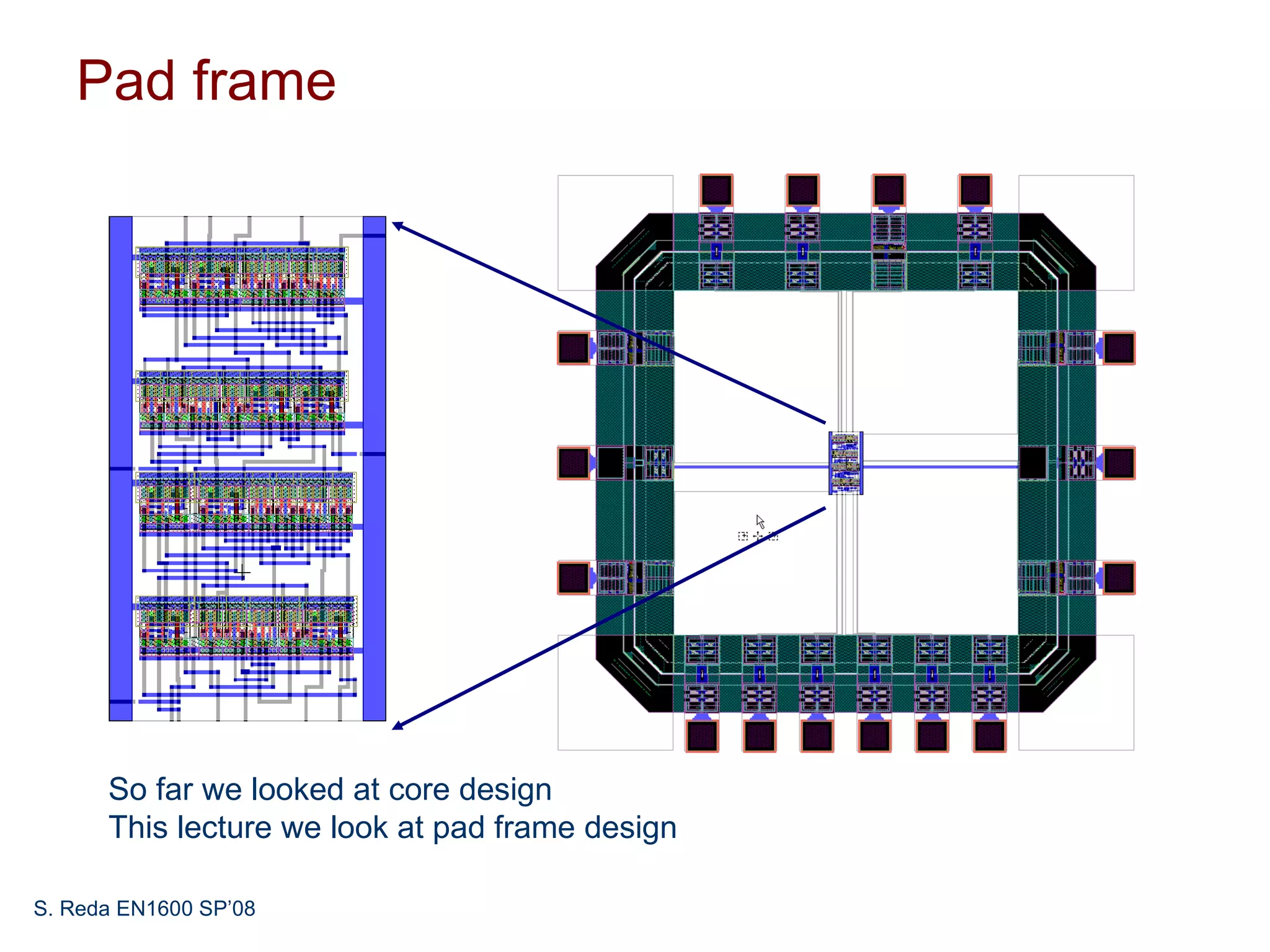
Pad frame


      So far we looked at core design
      This lecture we look at pad frame design

S. Reda EN1600 SP’08
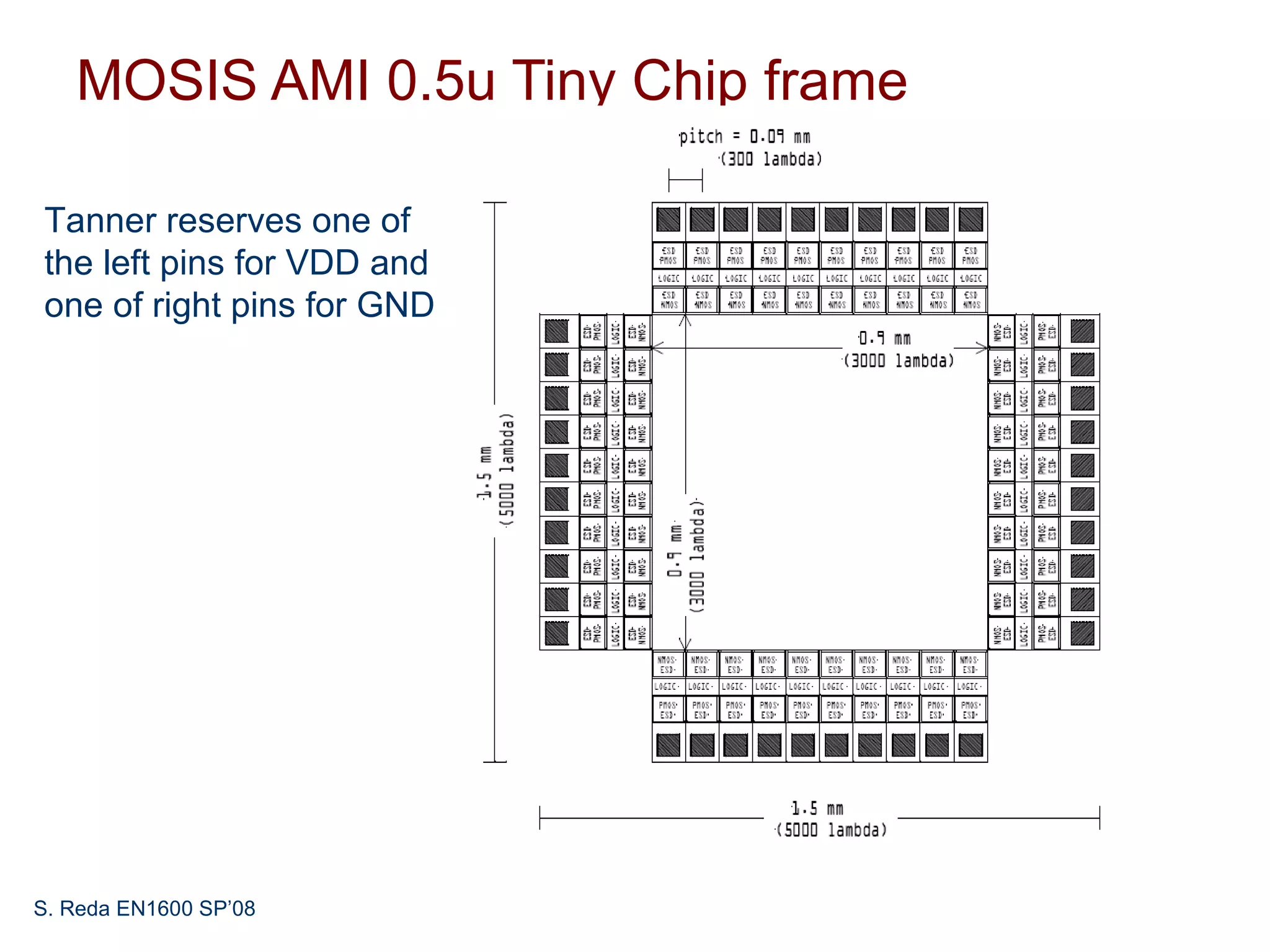
MOSIS AMI 0.5u Tiny Chip frame

Tanner reserves one of
the left pins for VDD and
one of right pins for GND


S. Reda EN1600 SP’08
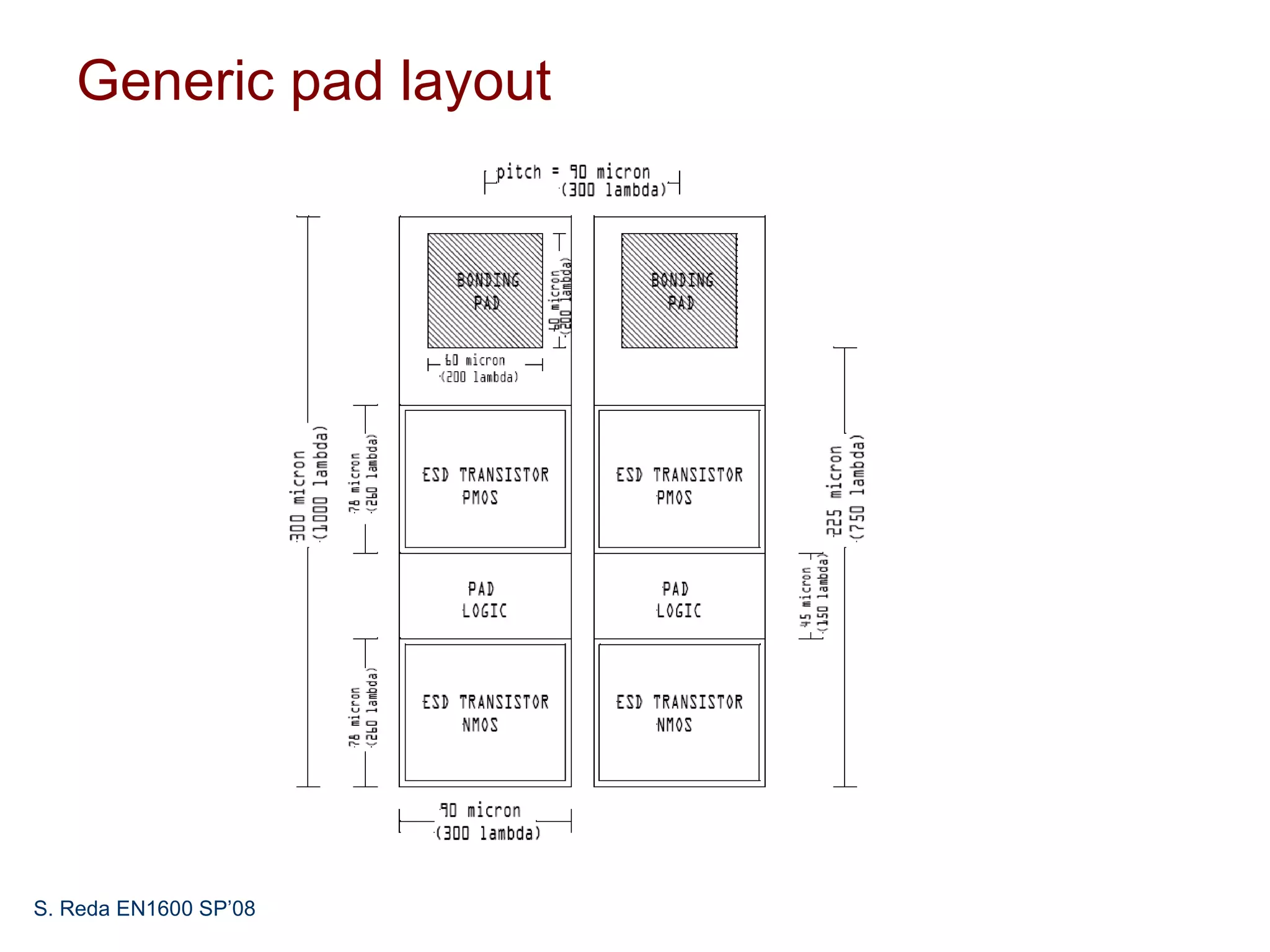
Generic pad layout


S. Reda EN1600 SP’08
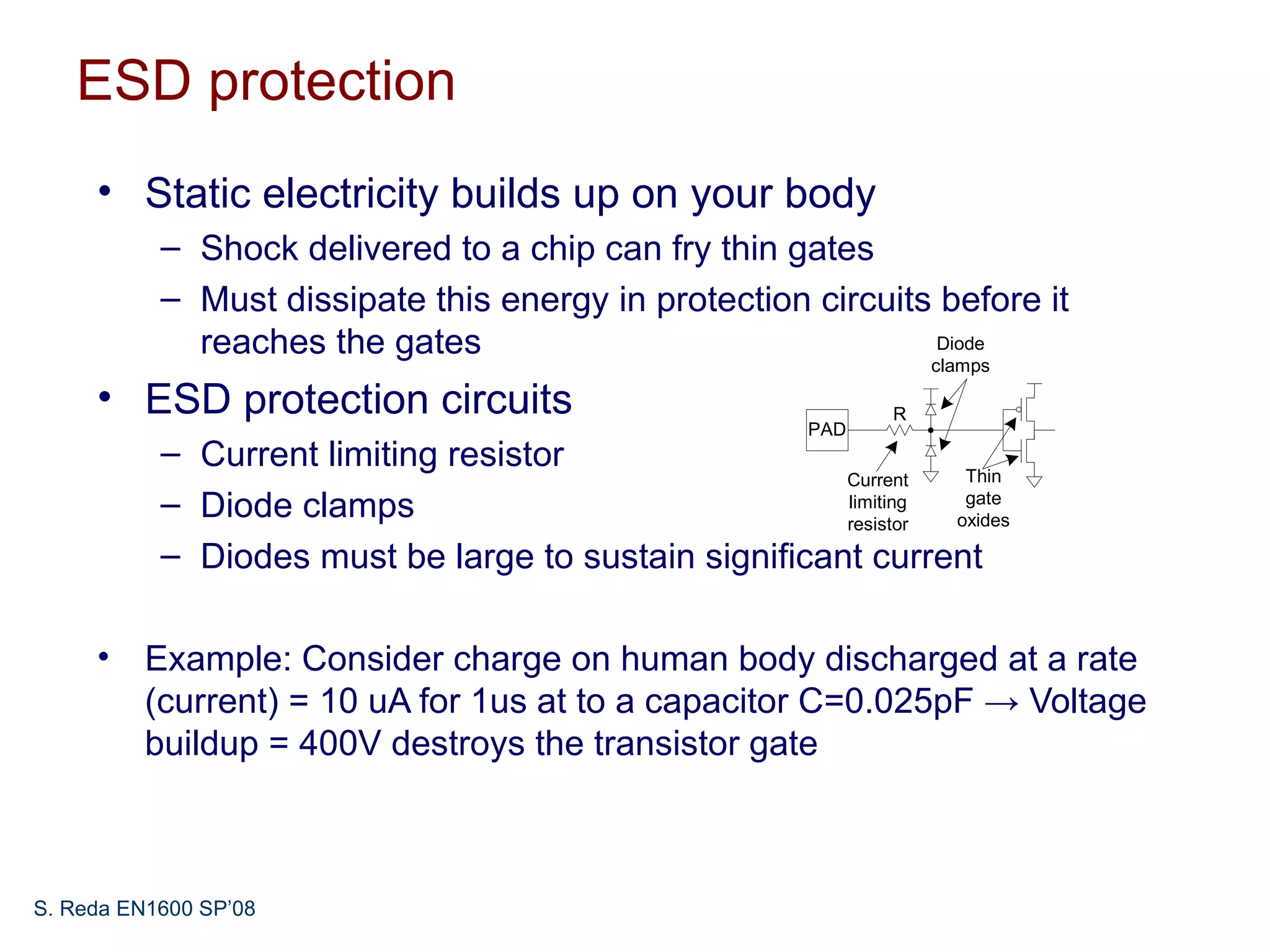
ESD protection
     • Static electricity builds up on your body
           – Shock delivered to a chip can fry thin gates
           – Must dissipate this energy in protection circuits before it
             reaches the gates                                 Diode
                                                                 clamps

     • ESD protection circuits                               R
                                                       PAD
           – Current limiting resistor
                                                       Current   Thin
           – Diode clamps                              limiting
                                                       resistor
                                                                 gate
                                                                oxides

           – Diodes must be large to sustain significant current

     • Example: Consider charge on human body discharged at a rate
       (current) = 10 uA for 1us at to a capacitor C=0.025pF → Voltage
       buildup = 400V destroys the transistor gate


S. Reda EN1600 SP’08
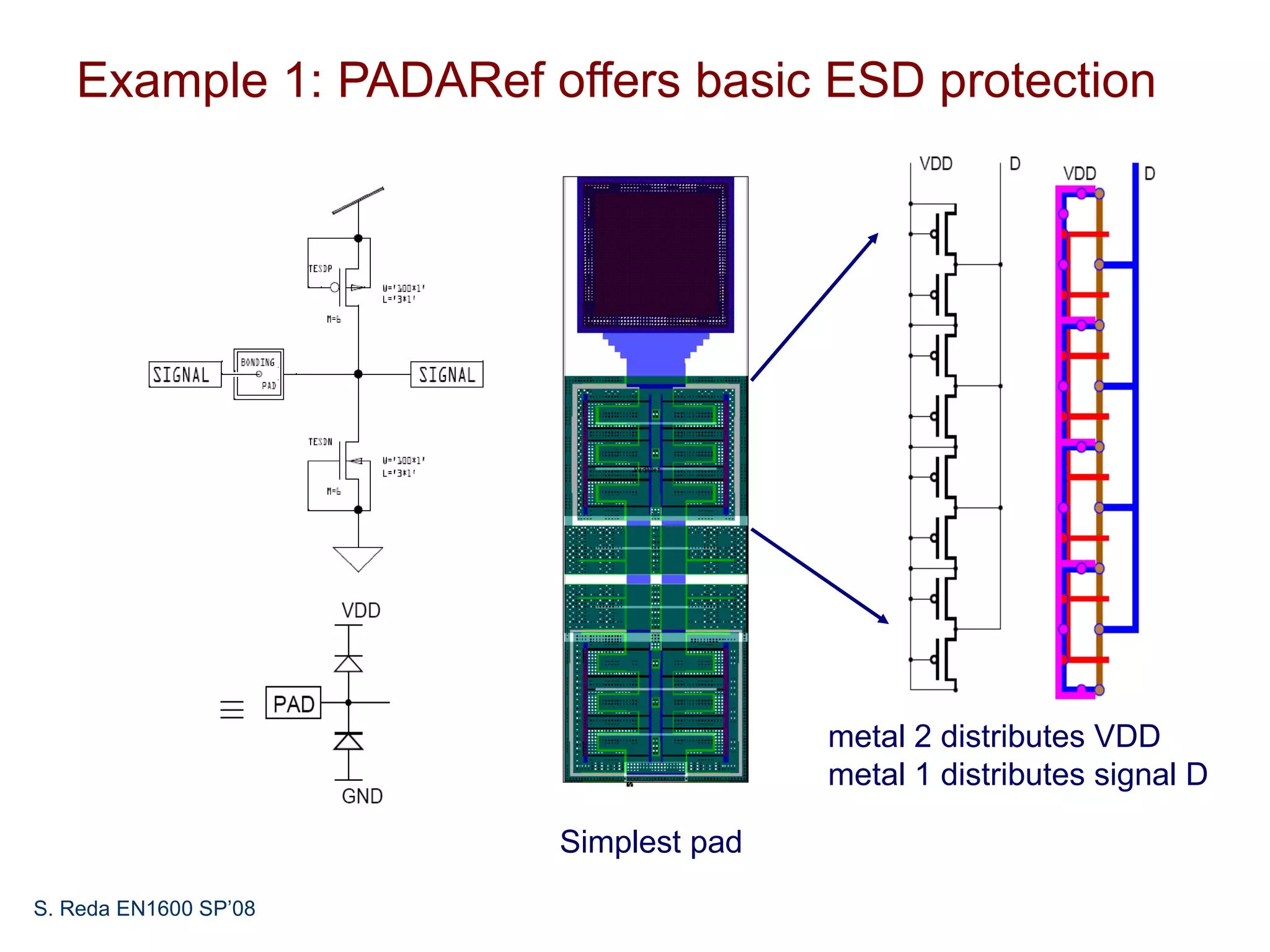
Example 1: PADARef offers basic ESD protection


                                      metal 2 distributes VDD
                                      metal 1 distributes signal D

                       Simplest pad
S. Reda EN1600 SP’08
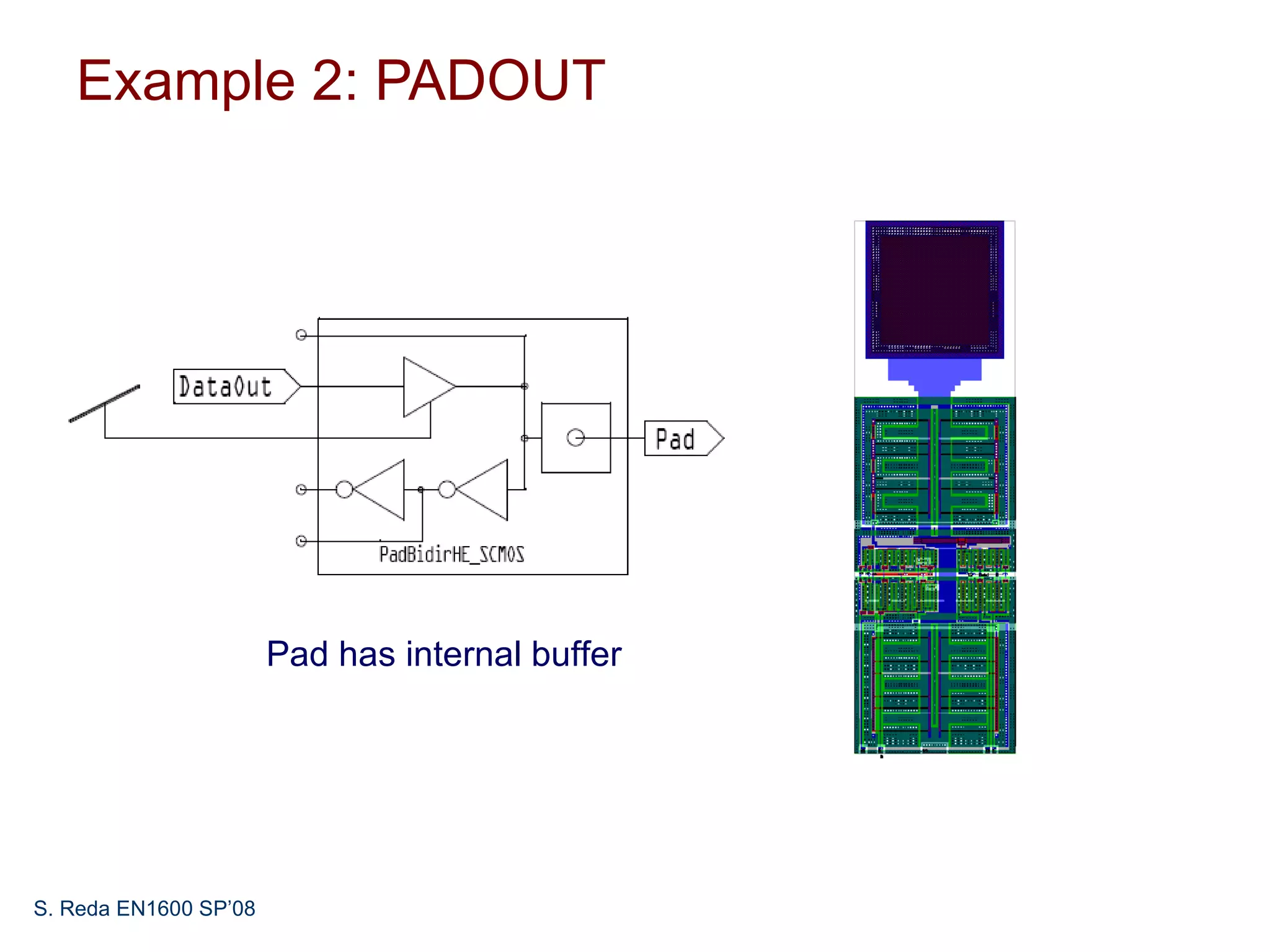
Example 2: PADOUT


                       Pad has internal buffer


S. Reda EN1600 SP’08
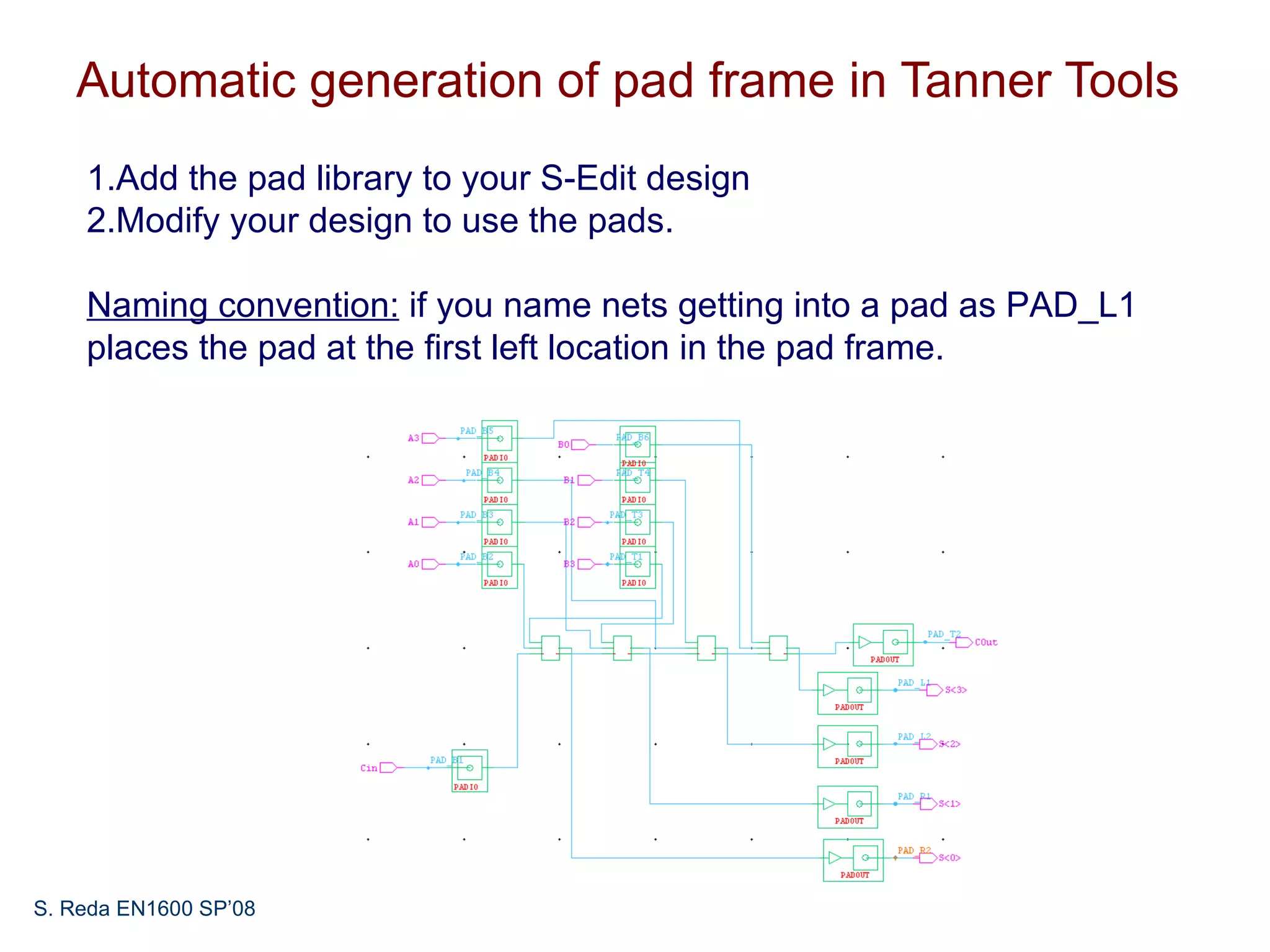
Automatic generation of pad frame in Tanner Tools
    1.Add the pad library to your S-Edit design
    2.Modify your design to use the pads.

    Naming convention: if you name nets getting into a pad as PAD_L1
    places the pad at the first left location in the pad frame.


S. Reda EN1600 SP’08
Automatic generation of pad frame in Tanner Tools
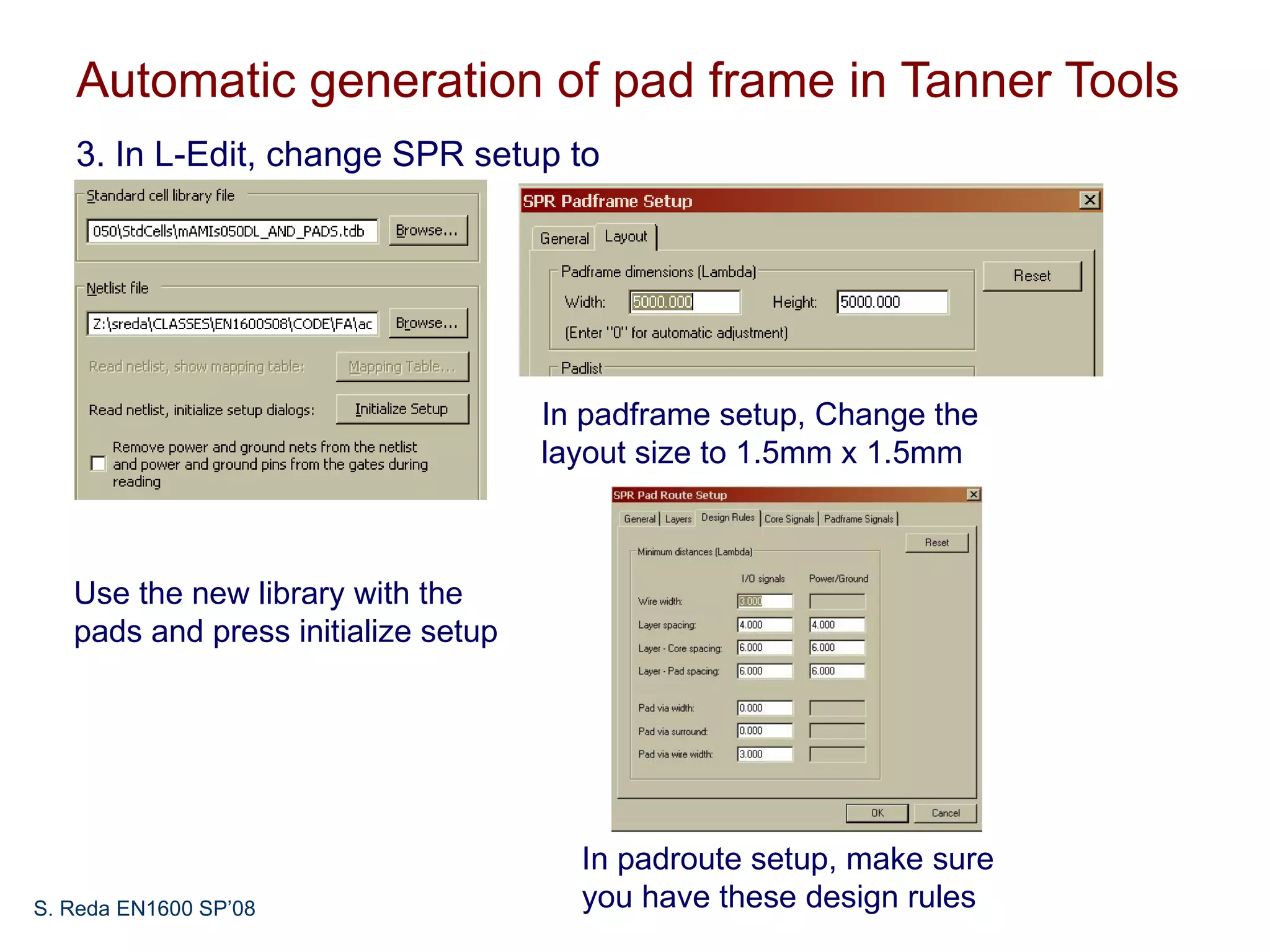
   3. In L-Edit, change SPR setup to


                                     In padframe setup, Change the
                                     layout size to 1.5mm x 1.5mm


   Use the new library with the
   pads and press initialize setup


                                       In padroute setup, make sure
S. Reda EN1600 SP’08                   you have these design rules
Automatic generation of pad frame in Tanner Tools
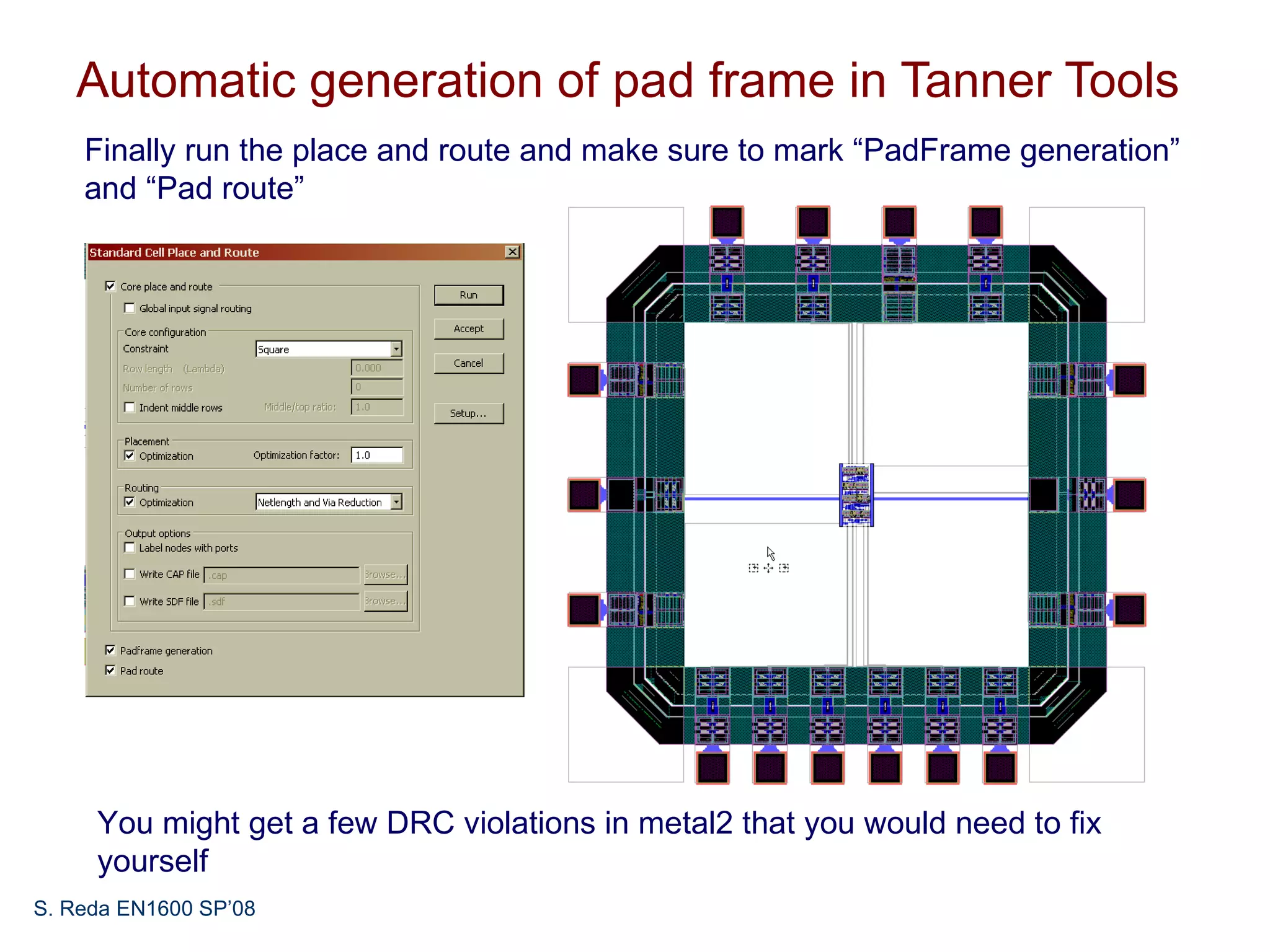
    Finally run the place and route and make sure to mark “PadFrame generation”
    and “Pad route”


     You might get a few DRC violations in metal2 that you would need to fix
     yourself
S. Reda EN1600 SP’08

Lecture32

  • 1.
    Design and Implementationof VLSI Systems (EN1600) Lecture 32: Pad Frame Design and Packaging S. Reda EN1600 SP’08
  • 2.
  • 3.
    Chip-to-Package Bonding • Traditionally, chip is surrounded by pad frame – Metal pads on 100 – 200 mm pitch – Gold bond wires attach pads to package – Lead frame distributes signals in package – Metal heat spreader helps with cooling S. Reda EN1600 SP’08
  • 4.
    Pad frame So far we looked at core design This lecture we look at pad frame design S. Reda EN1600 SP’08
  • 5.
    MOSIS AMI 0.5uTiny Chip frame Tanner reserves one of the left pins for VDD and one of right pins for GND S. Reda EN1600 SP’08
  • 6.
    Generic pad layout S.Reda EN1600 SP’08
  • 7.
    ESD protection • Static electricity builds up on your body – Shock delivered to a chip can fry thin gates – Must dissipate this energy in protection circuits before it reaches the gates Diode clamps • ESD protection circuits R PAD – Current limiting resistor Current Thin – Diode clamps limiting resistor gate oxides – Diodes must be large to sustain significant current • Example: Consider charge on human body discharged at a rate (current) = 10 uA for 1us at to a capacitor C=0.025pF → Voltage buildup = 400V destroys the transistor gate S. Reda EN1600 SP’08
  • 8.
    Example 1: PADARefoffers basic ESD protection metal 2 distributes VDD metal 1 distributes signal D Simplest pad S. Reda EN1600 SP’08
  • 9.
    Example 2: PADOUT Pad has internal buffer S. Reda EN1600 SP’08
  • 10.
    Automatic generation ofpad frame in Tanner Tools 1.Add the pad library to your S-Edit design 2.Modify your design to use the pads. Naming convention: if you name nets getting into a pad as PAD_L1 places the pad at the first left location in the pad frame. S. Reda EN1600 SP’08
  • 11.
    Automatic generation ofpad frame in Tanner Tools 3. In L-Edit, change SPR setup to In padframe setup, Change the layout size to 1.5mm x 1.5mm Use the new library with the pads and press initialize setup In padroute setup, make sure S. Reda EN1600 SP’08 you have these design rules
  • 12.
    Automatic generation ofpad frame in Tanner Tools Finally run the place and route and make sure to mark “PadFrame generation” and “Pad route” You might get a few DRC violations in metal2 that you would need to fix yourself S. Reda EN1600 SP’08