Design and Implementation of VLSI Systems
                (EN1600)
     Lecture 27: Datapath Subsystems 3/4
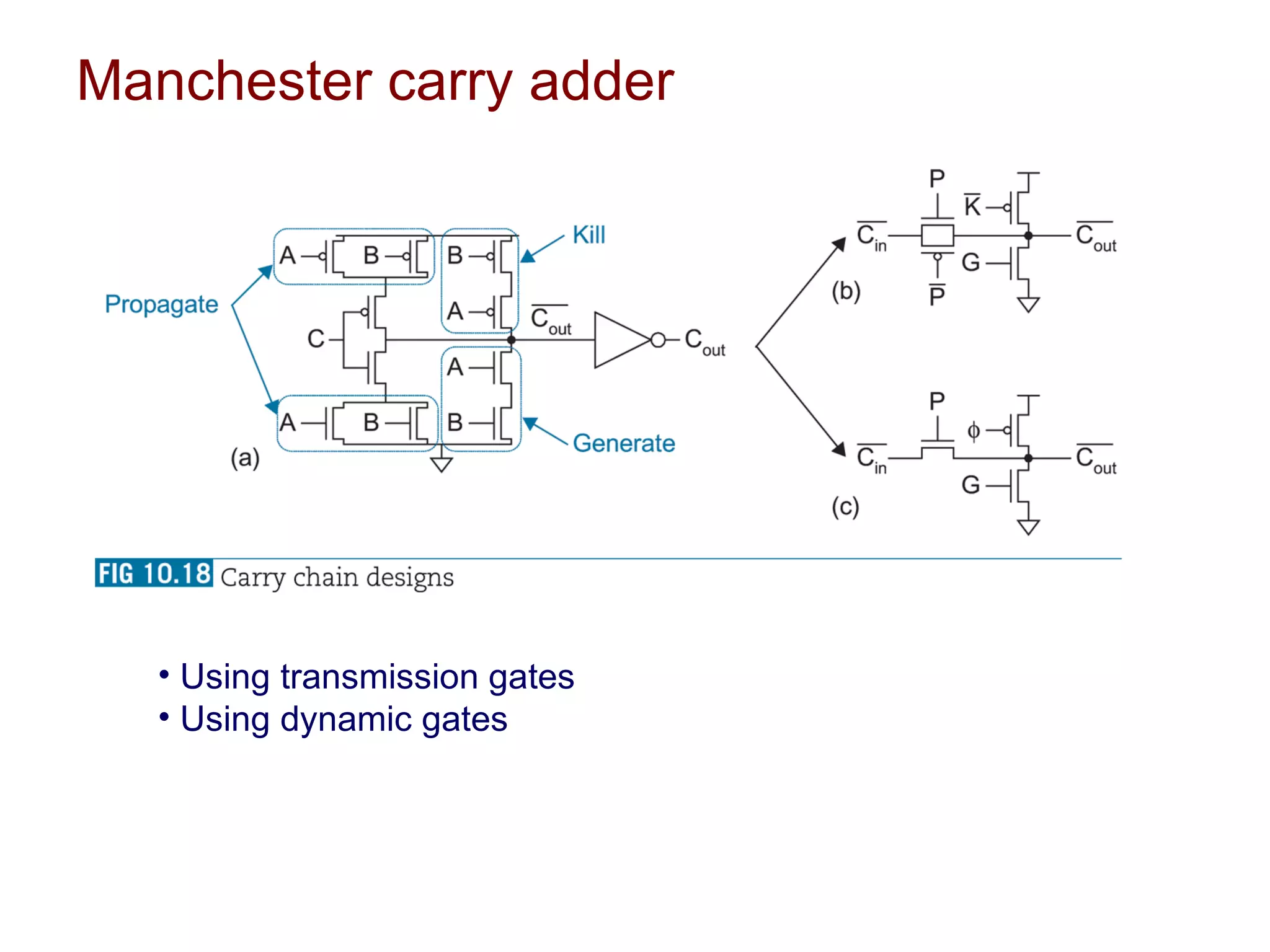
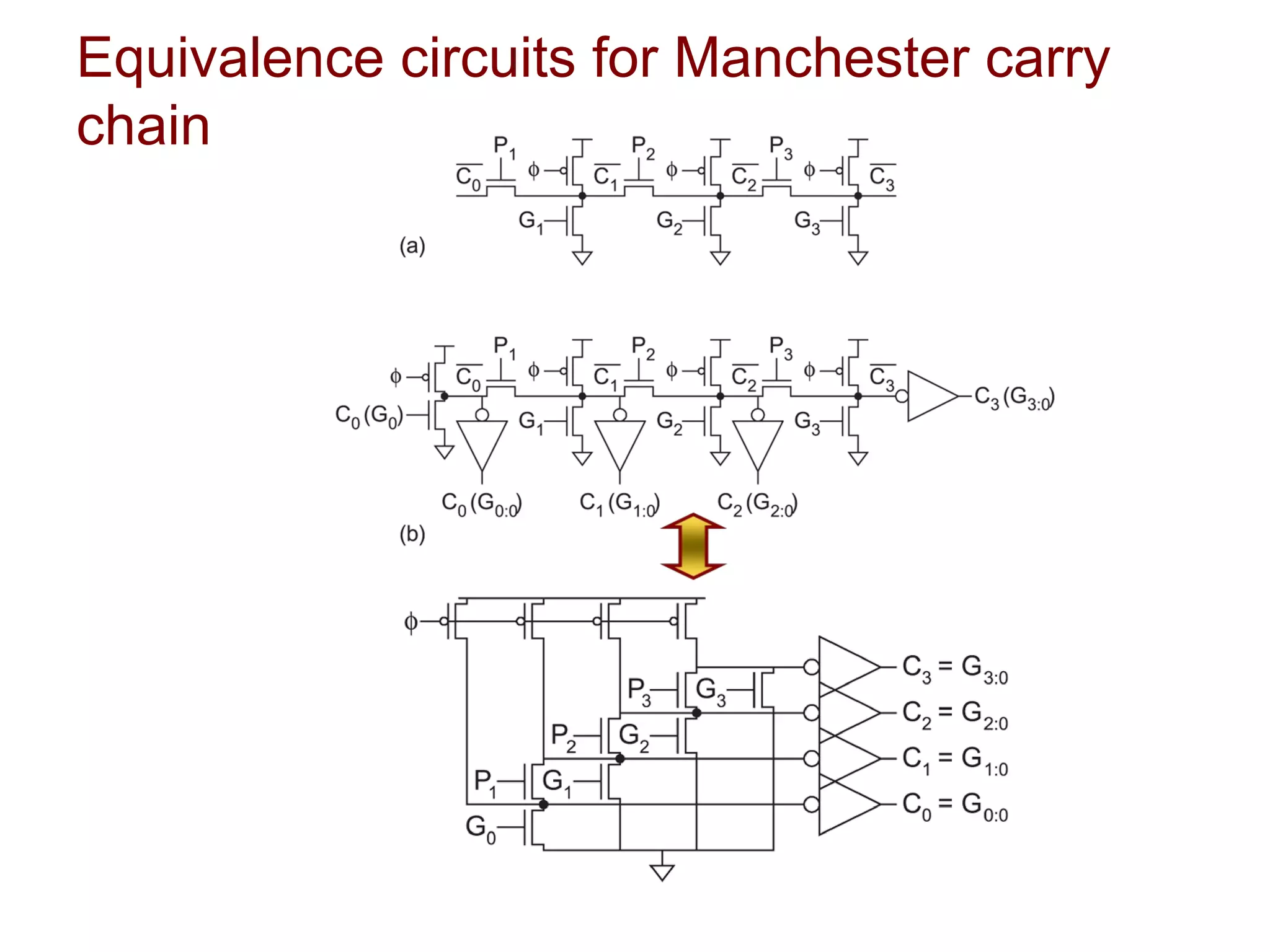
Manchester carry adder


   • Using transmission gates
   • Using dynamic gates
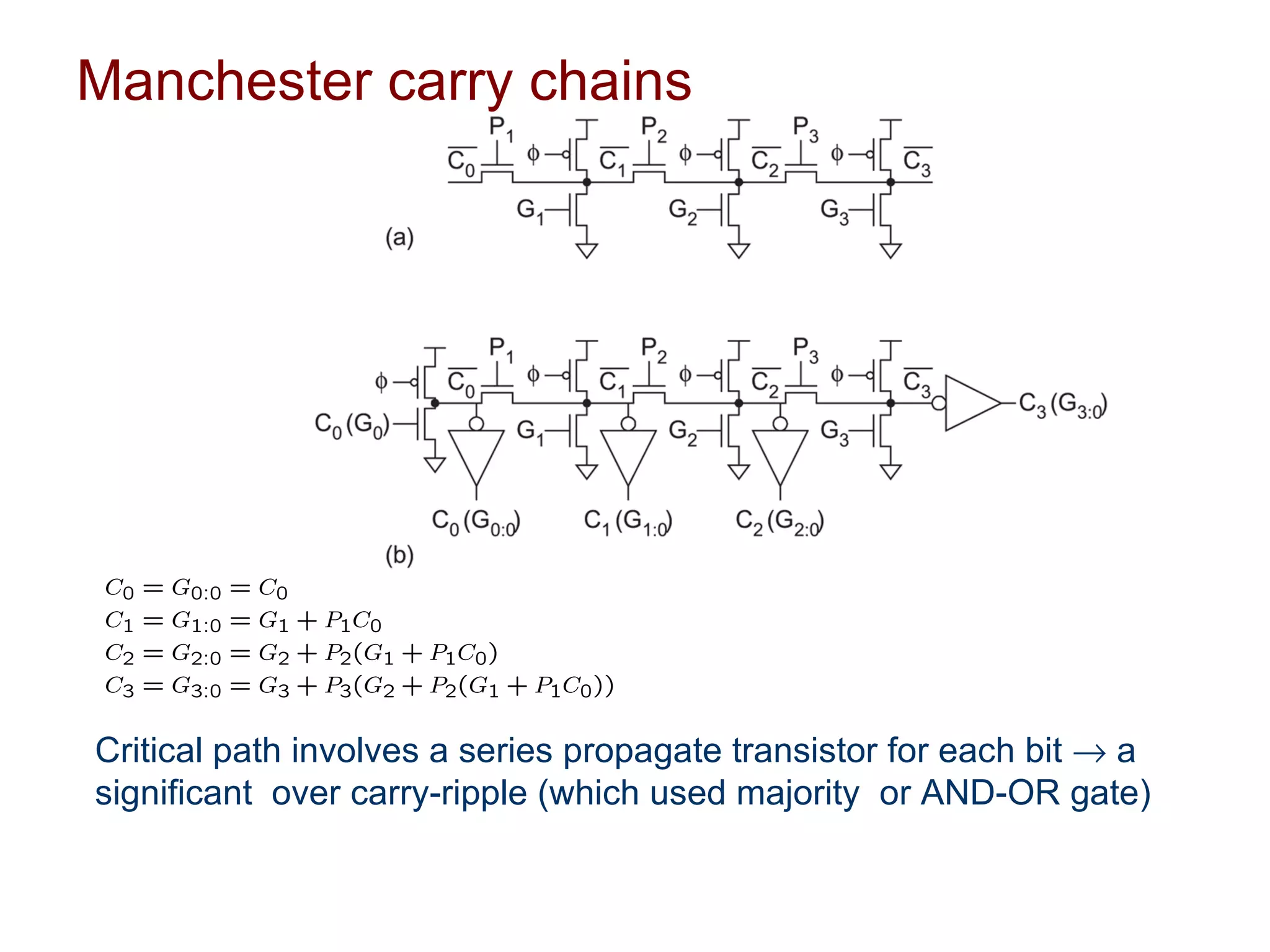
Manchester carry chains


Critical path involves a series propagate transistor for each bit → a
significant over carry-ripple (which used majority or AND-OR gate)
Equivalence circuits for Manchester carry
chain
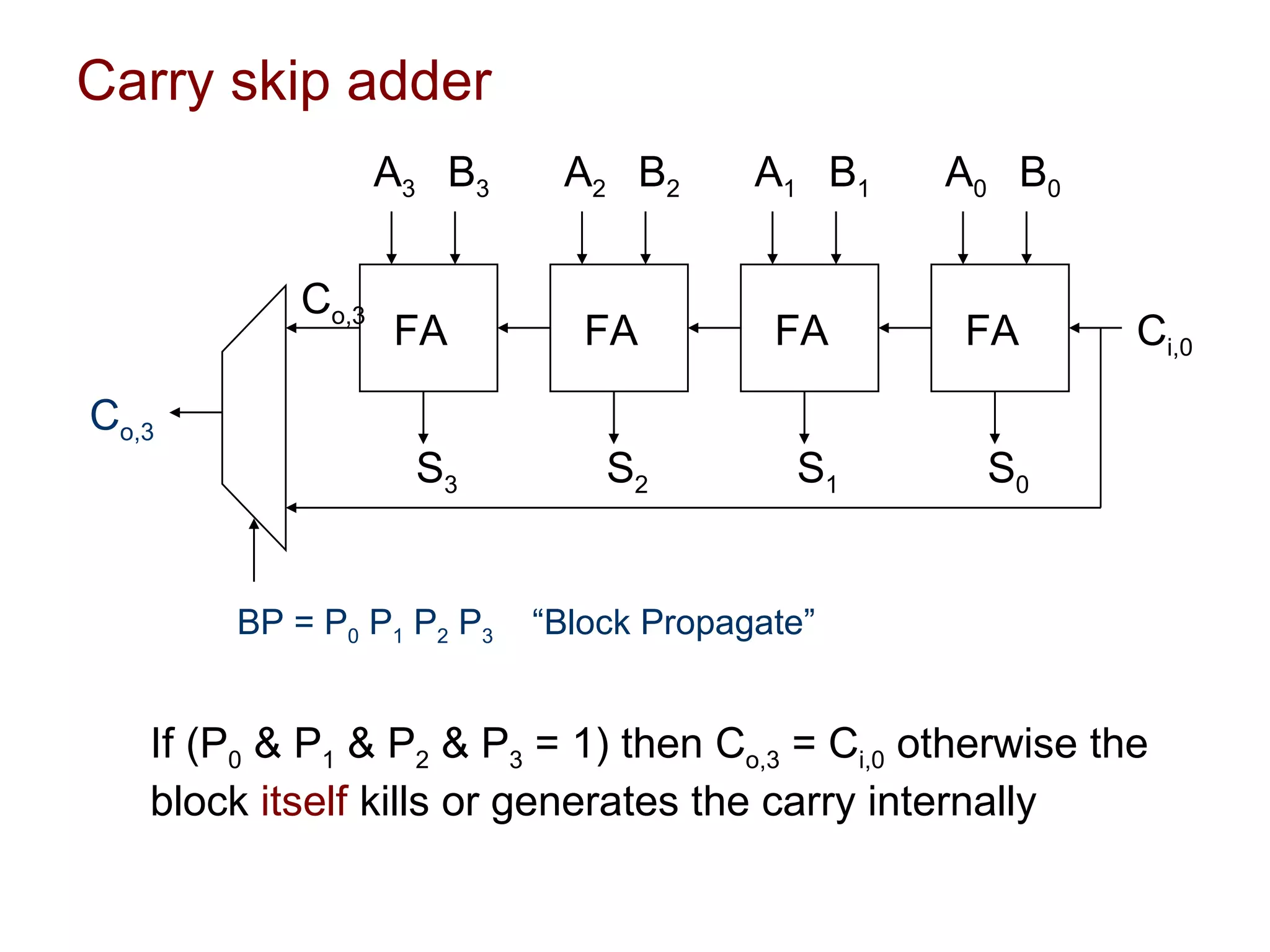
Carry skip adder
                  A3 B3    A2 B2       A1 B1    A0 B0


           Co,3
                  FA         FA         FA       FA        Ci,0

Co,3
                   S3         S2         S1       S0


       BP = P0 P1 P2 P3   “Block Propagate”


   If (P0 & P1 & P2 & P3 = 1) then Co,3 = Ci,0 otherwise the
   block itself kills or generates the carry internally
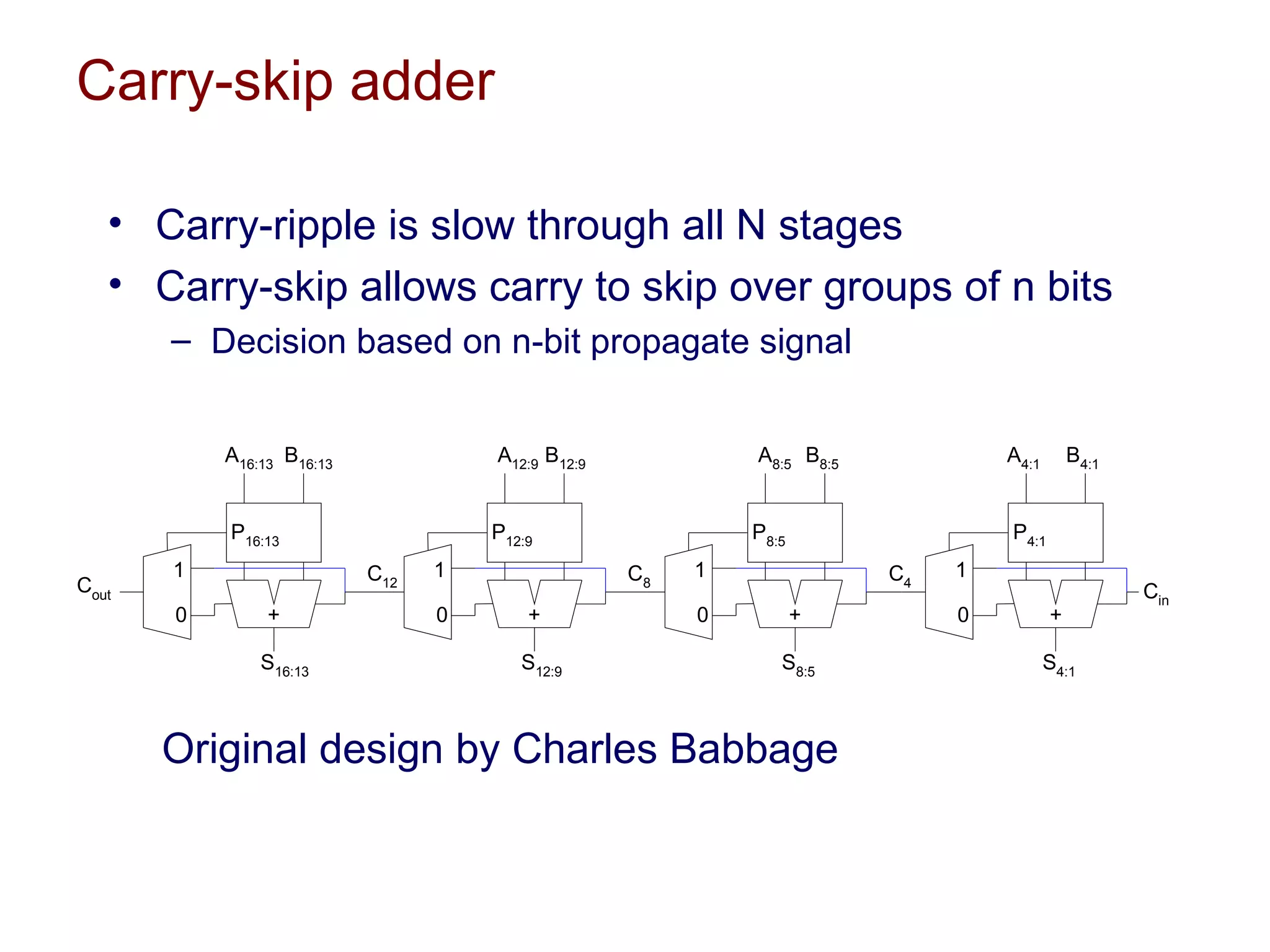
Carry-skip adder

   • Carry-ripple is slow through all N stages
   • Carry-skip allows carry to skip over groups of n bits
       – Decision based on n-bit propagate signal


           A16:13 B16:13             A12:9 B12:9            A8:5 B8:5            A4:1       B4:1


           P16:13                    P12:9                  P8:5                 P4:1
       1                   C12   1                 C8   1               C4   1
Cout                                                                                               Cin
       0        +                0       +              0          +         0          +

               S16:13                   S12:9                  S8:5                     S4:1


       Original design by Charles Babbage
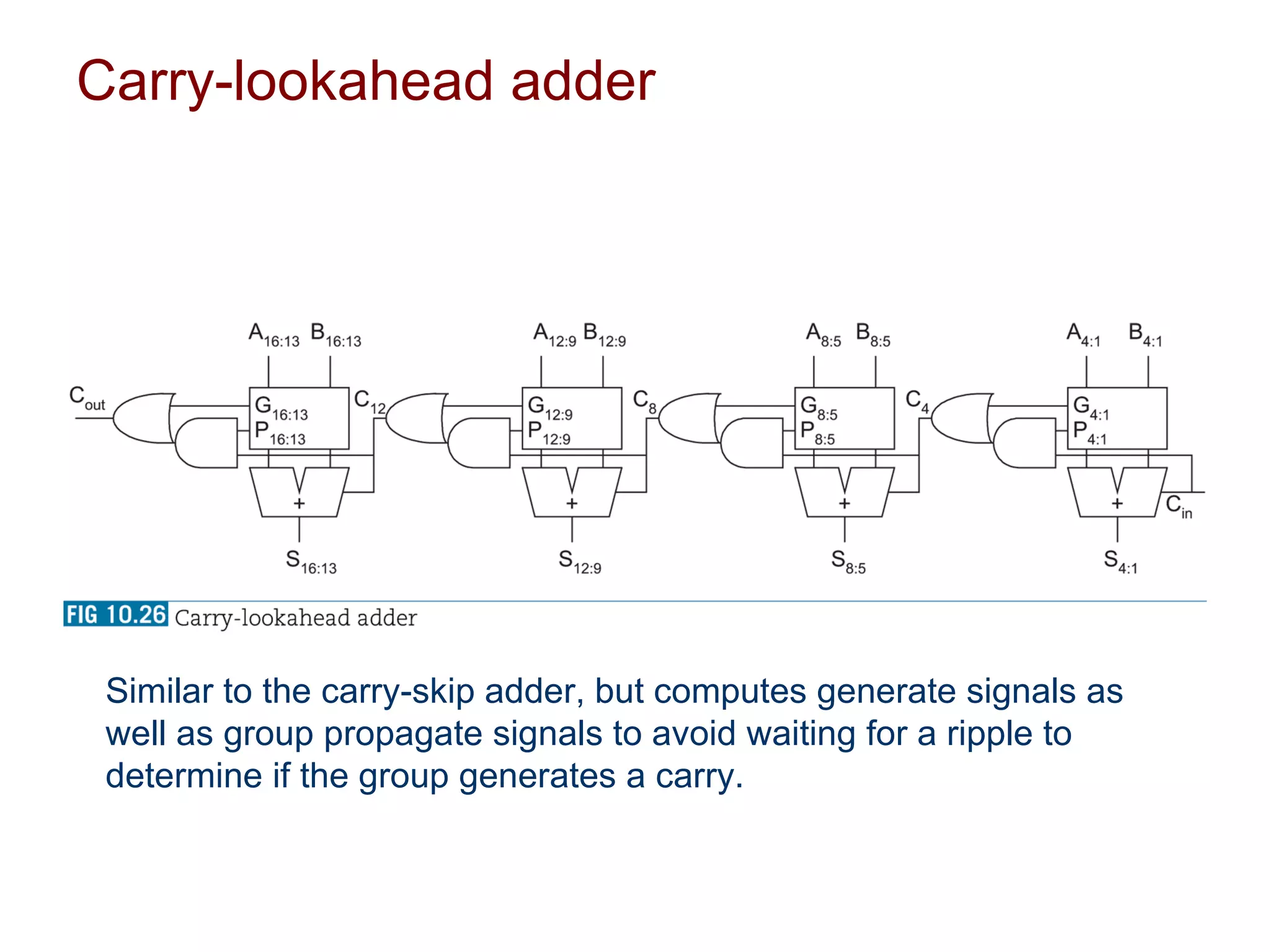
Carry-lookahead adder


 Similar to the carry-skip adder, but computes generate signals as
 well as group propagate signals to avoid waiting for a ripple to
 determine if the group generates a carry.
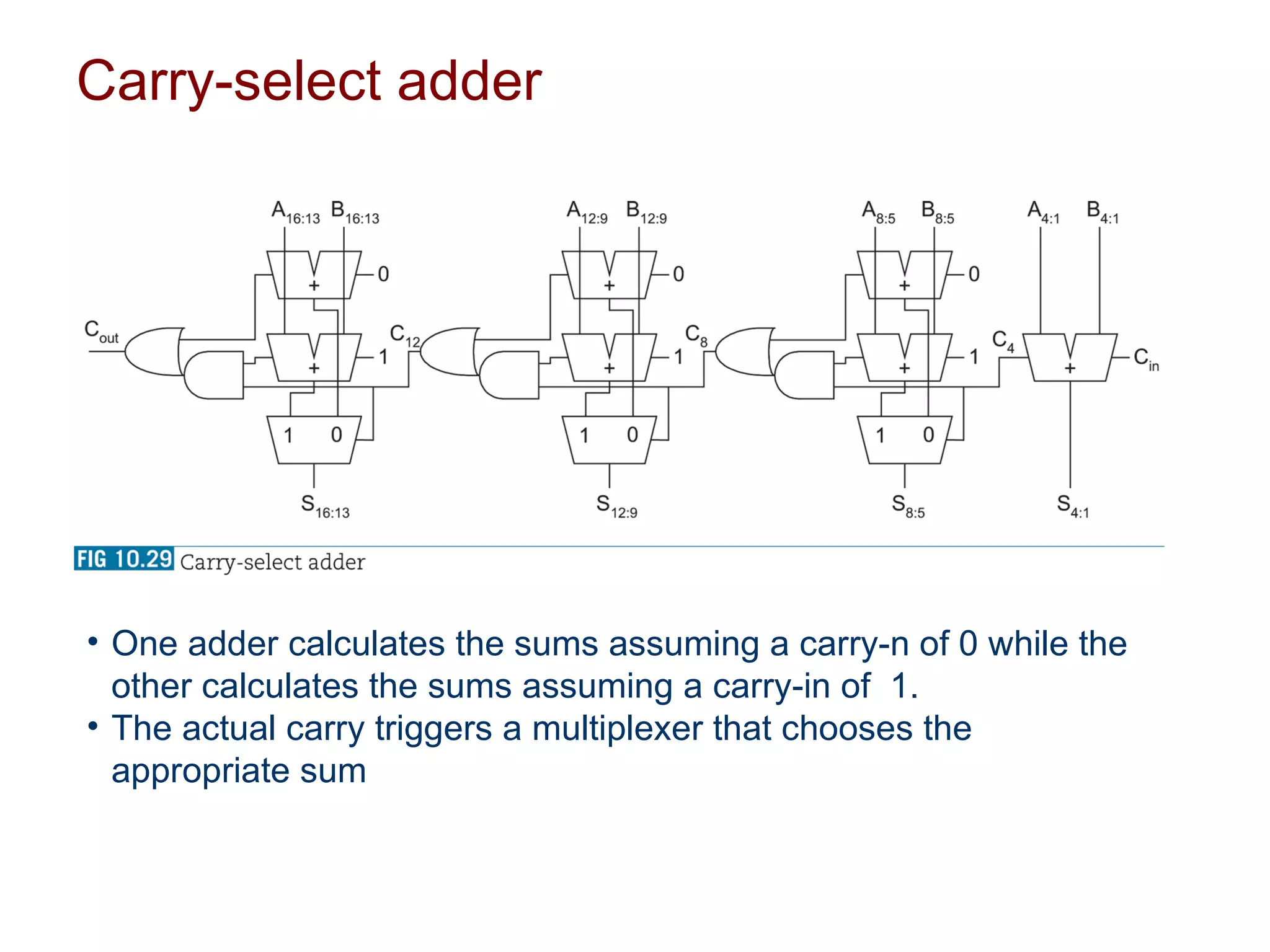
Carry-select adder


• One adder calculates the sums assuming a carry-n of 0 while the
  other calculates the sums assuming a carry-in of 1.
• The actual carry triggers a multiplexer that chooses the
  appropriate sum
II. Comparators
A. 0’s detector and 1’s detectors
B. Equality comparator: A = B
C. Magnitude comparator: A < B
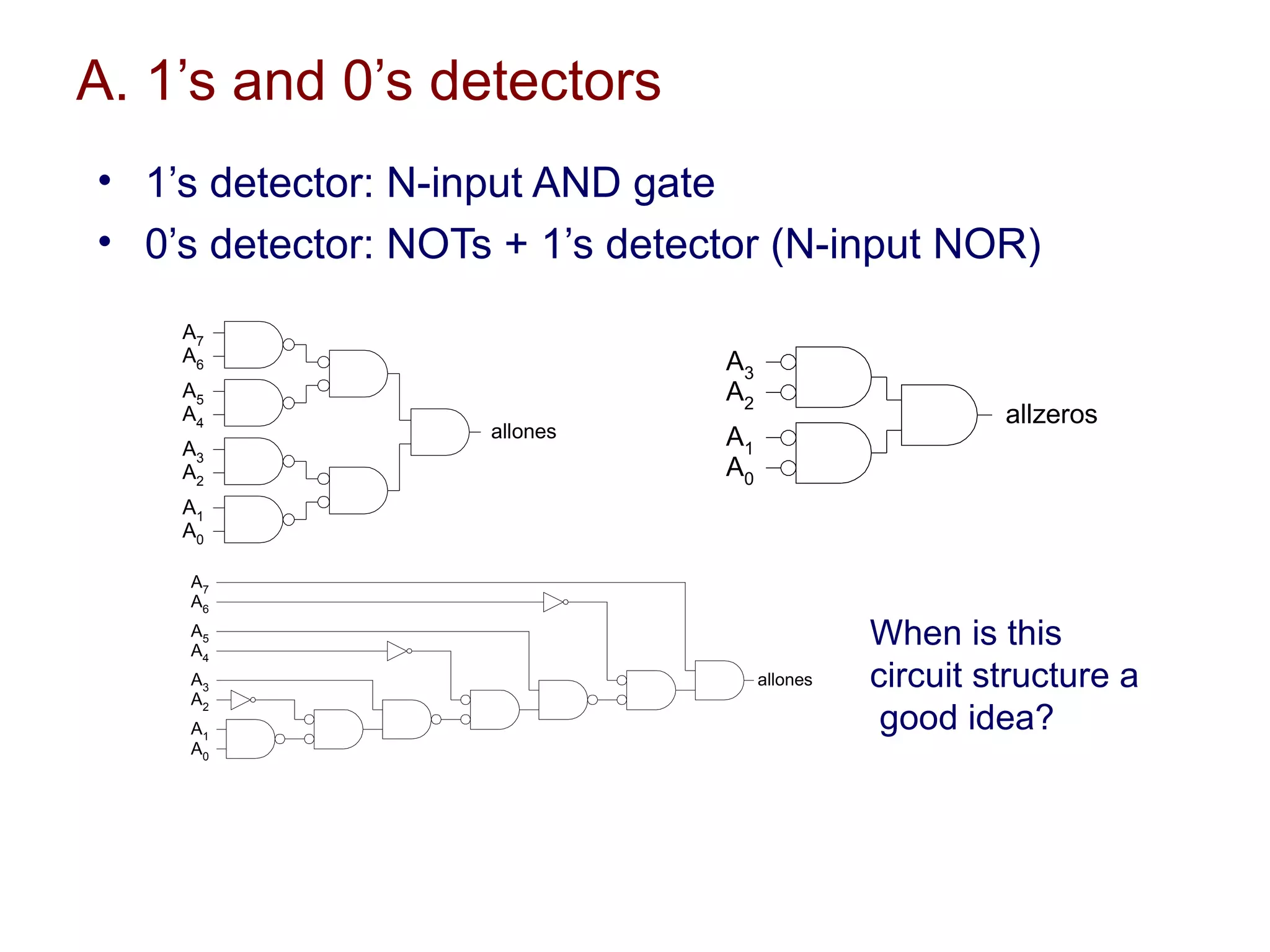
A. 1’s and 0’s detectors
• 1’s detector: N-input AND gate
• 0’s detector: NOTs + 1’s detector (N-input NOR)
    A7
    A6                          A3
    A5                          A2
    A4                                                  allzeros
                    allones     A1
    A3
    A2                          A0
    A1
    A0

    A7
    A6
    A5
    A4
                                               When is this
    A3                               allones   circuit structure a
    A2
    A1                                          good idea?
    A0
B. Equality comparator

 • Check if each bit is equal (XNOR, aka equality gate)
 • 1’s detect on bitwise equality


           B[3]
           A[3]
           B[2]
           A[2]                   A=B
           B[1]
           A[1]
           B[0]
           A[0]
C. Magnitude comparator
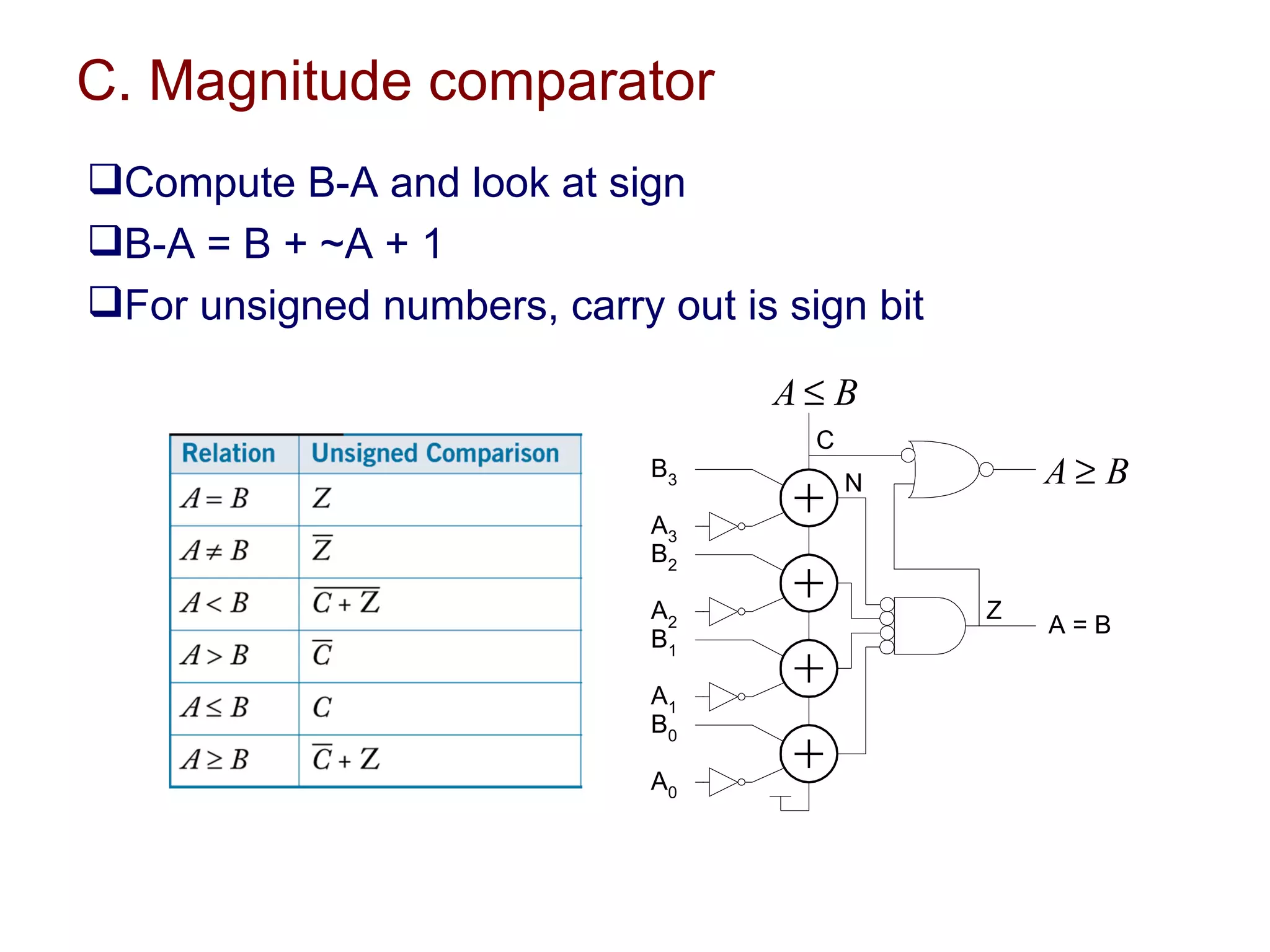
Compute B-A and look at sign
B-A = B + ~A + 1
For unsigned numbers, carry out is sign bit

                                    A≤ B
                                      C
                             B3
                                          N        A≥ B
                             A3
                             B2

                             A2                Z
                                                   A=B
                             B1

                             A1
                             B0

                             A0

Lecture27

  • 1.
    Design and Implementationof VLSI Systems (EN1600) Lecture 27: Datapath Subsystems 3/4
  • 2.
    Manchester carry adder • Using transmission gates • Using dynamic gates
  • 3.
    Manchester carry chains Criticalpath involves a series propagate transistor for each bit → a significant over carry-ripple (which used majority or AND-OR gate)
  • 4.
    Equivalence circuits forManchester carry chain
  • 5.
    Carry skip adder A3 B3 A2 B2 A1 B1 A0 B0 Co,3 FA FA FA FA Ci,0 Co,3 S3 S2 S1 S0 BP = P0 P1 P2 P3 “Block Propagate” If (P0 & P1 & P2 & P3 = 1) then Co,3 = Ci,0 otherwise the block itself kills or generates the carry internally
  • 6.
    Carry-skip adder • Carry-ripple is slow through all N stages • Carry-skip allows carry to skip over groups of n bits – Decision based on n-bit propagate signal A16:13 B16:13 A12:9 B12:9 A8:5 B8:5 A4:1 B4:1 P16:13 P12:9 P8:5 P4:1 1 C12 1 C8 1 C4 1 Cout Cin 0 + 0 + 0 + 0 + S16:13 S12:9 S8:5 S4:1 Original design by Charles Babbage
  • 7.
    Carry-lookahead adder Similarto the carry-skip adder, but computes generate signals as well as group propagate signals to avoid waiting for a ripple to determine if the group generates a carry.
  • 8.
    Carry-select adder • Oneadder calculates the sums assuming a carry-n of 0 while the other calculates the sums assuming a carry-in of 1. • The actual carry triggers a multiplexer that chooses the appropriate sum
  • 9.
    II. Comparators A. 0’sdetector and 1’s detectors B. Equality comparator: A = B C. Magnitude comparator: A < B
  • 10.
    A. 1’s and0’s detectors • 1’s detector: N-input AND gate • 0’s detector: NOTs + 1’s detector (N-input NOR) A7 A6 A3 A5 A2 A4 allzeros allones A1 A3 A2 A0 A1 A0 A7 A6 A5 A4 When is this A3 allones circuit structure a A2 A1 good idea? A0
  • 11.
    B. Equality comparator • Check if each bit is equal (XNOR, aka equality gate) • 1’s detect on bitwise equality B[3] A[3] B[2] A[2] A=B B[1] A[1] B[0] A[0]
  • 12.
    C. Magnitude comparator ComputeB-A and look at sign B-A = B + ~A + 1 For unsigned numbers, carry out is sign bit A≤ B C B3 N A≥ B A3 B2 A2 Z A=B B1 A1 B0 A0