Conference paper SCR based on-chip ESD protection for LNA's in 
90nm and 40nm CMOS 
Taiwan ESD and Reliability Conference 2010 
Nowadays, mobile consumer electronics devices integrate various wireless 
interfaces like WIFI, Bluetooth, GPRS and GPS. Various approaches exist to 
protect the wireless interfaces against ESD stress. In recent years, 
researchers have focused on so‐called 'co‐design' techniques to solve both 
functional and protection constraints together which requires both RF and 
ESD design skills. However many IC designers still prefer to work with 
'plug‐n‐play' protection concepts where the ESD clamps exhibit low 
parasitic capacitance, low series resistance and low leakage. This paper 
presents measurement results of 3 different SCR based protection 
approaches that exhibit high Q‐factor and low and stable parasitic 
capacitance over a broad voltage and frequency range. The clamps are 
used for protection of LNA circuits in 90nm and 40nm Low Power (LP) 
CMOS technologies. 
Scan the code and get additional related content 
Download PDF version, find relevant datasheets, similar content or a link to presentation
SCR based on-chip ESD protection 
for LNA’s in 90nm and 40nm CMOS 
B. Keppens, I. Backers, J. Binnemans*, B. Sorgeloos, O. Marichal, K. Verhaege 
Sofics BVBA, Groendreef 31, B-9880 Aalter, Belgium – bkeppens@sofics.com 
*now with ICSense - This paper is co-copyrighted by Sofics and Taiwan ESD and Reliability Conference. 
Abstract – Nowadays, mobile consumer electronics devices integrate 
various wireless interfaces like WIFI, Bluetooth, GPRS and GPS. 
Various approaches exist to protect the wireless interfaces against 
ESD stress. In recent years, researchers have focused on so-called 
‘co-design’ techniques to solve both functional and protection 
constraints together which requires both RF and ESD design skills. 
However many IC designers still prefer to work with ‘plug-n-play’ 
protection concepts where the ESD clamps exhibit low parasitic 
capacitance, low series resistance and low leakage. This paper 
presents measurement results of 3 different SCR based protection 
approaches that exhibit high Q-factor and low and stable parasitic 
capacitance over a broad voltage and frequency range. The clamps 
are used for protection of LNA circuits in 90nm and 40nm Low 
Power (LP) CMOS technologies. 
INTRODUCTION 
The number of wireless enabled systems is very diverse and 
steadily growing. System makers include wireless functions into 
mature applications like fixed-line telephones and TV’s, increase 
the wireless features in mobile phones with support of multiple 
standards and come up with new device types that thrive on 
being always wirelessly connected for the newest content [1]. 
Further, also the transport, security, medical and payment sectors 
are quickly switching to wireless interfaces for improved user 
experience. Intelligent wireless bus, subway and train tickets 
replace the paper versions. Expensive equipment or resources in 
general are traced back thanks to RFID tags. Sensor networks 
reduce the cost of medical care while they increase the reaction 
speed when needed. Near Field Communication ‘NFC’ bank 
cards replace the smartcard and magnetic strips now commonly 
used. 
Wireless communication comes in many forms, each 
designed or optimized for a specific task and application and 
sometimes constrained by local legislations differences [2]. 
Moreover existing standards are typically upgraded a few years 
down the road to enable higher data throughput or to extend the 
range [3]. Wireless standards can be grouped or compared based 
on different parameters like center frequency, primary use, 
encoding protocol, degree of mobility or range for instance. A 
rather complete overview of industry standards and proprietary 
formats can be found online [4]. 
Despite the improved ESD awareness and control in 
assembly factories and the related push for a reduction of 
component level ESD performance [5, 6] IC’s still need 
adequate ESD protection. In many cases, traditional ESD 
protection devices used for low speed digital interfaces offered 
by foundries, IO library providers are not suited for the RF 
interfaces for a number of reasons: 
- Capacitive loading shunts large part of the RF signal to 
Vdd/Vss lines due to high parasitic junction and metal 
capacitance of ESD clamps. 
- Increased noise injected at the receiver due to series 
resistance used between primary and secondary ESD clamps 
- DC leakage current degrades Q-factor and influences the 
size of the bias circuits 
To reduce the cost of consumer electronics devices designers 
also try to combine different standards into a single silicon die 
[3] adding more constraints for the ESD protection approaches: 
the clamp parasitic influence should be as stable as possible 
across a large frequency band and voltage range. 
This publication first (section I) briefly summarizes existing 
approaches for ESD protection of RF interfaces like plug-n-play, 
co-design and cancellation techniques. Section II describes a 
plug-n-play SCR clamp validated for an 8.5 GHz LNA designed 
in TSMC 90nm LP. Section III describes 2 different SCR based 
protection devices validated in TSMC 40nm LP CMOS to be 
used in a plug-n-play configuration. The most appropriate clamp 
is selected based on TLP, HBM, RF / S-parameter and DC 
leakage measurements at 3 temperatures. 
In this publication we focus on Bluetooth, GPS and the IEEE 
802.15.4a standard used for Real Time Location Systems 
(RTLS) [7] but the ESD devices can be used more broadly 
thanks to the low parasitic capacitance, high Q factor and low 
leakage. 
I. ESD APPROACHES FOR WIRELESS INTERFACES 
IC designers use a variety of ESD protection approaches to 
protect the integrated circuits against ESD stress. The well 
known ‘dual diode’ based ESD protection has been used by 
many designers for the protection of analog circuits thanks to the 
small area, straightforward implementation, low leakage and low 
capacitive loading. Recently however various researches have 
predicted the end of ‘dual diode based ESD design’ for RF 
circuits in advanced CMOS (65nm and beyond) due to the 
shrinking ESD design window of the sensitive circuits [8-13]. 
They reason that to ensure effective protection the diodes 
connected to the IO’s must be designed with larger perimeter to 
reduce the voltage drop (Ron x IESD) which in turn leads to higher 
leakage and higher capacitive loading worsening the RF 
performance of the connected circuits.
Fortunately there are alternatives to protect RF circuits 
against ESD stress. This section very briefly outlines different 
protection approaches [11, 14] and provides relevant references: 
(1) Plug-n-play, minimal parasitic capacitive loading 
The parasitic capacitance of the ESD devices is minimized 
such that the degradation of the RF performance is limited. 
Researchers have compared different device types for this 
purpose [15-17]. Besides the active ESD devices people have 
used low frequency filters for high frequency applications 
(>5GHz) [18-21] 
(2) ‘LC’ Cancellation techniques 
In various publications designers compensated the parasitic 
effects of ESD devices by adding tuned LC elements [10, 13, 
22] 
(3) Co-design 
Through the use of ‘co-design’ traditional ESD solutions 
with high capacitive loading can still be used because the 
negative effects are compensated for in the matching circuits 
[23, 24]. 
The following sections provide case studies based on one 
specific protection approach: plug-n-play protection with low 
capacitive SCR based protection. 
II. ESD FOR 8.5GHZ LNA IN 90NM LP 
An SCR based protection clamp is validated for an 8.5 GHz 
LNA designed in TSMC 90nm LP. The ESD protection is 
designed to protect the ultra-wideband RF circuits based on the 
IEEE 802.15.4a standard [7]. 802.15.4a is an alternate PHY and 
adds location awareness, low power and higher data rates to the 
PHY and MAC specification for Zigbee devices. The circuit can 
be used for accurate real-time indoor location of resources/assets 
and in wireless sensors for health, retail, manufacturing and 
security sectors. One of the key requirements is the low leakage 
core and IO circuits: The chip operates off a single watch battery 
for up to 10 years. 
The proprietary circuit to be protected consists of 3.3V 
transistors leading to a failure voltage (ESD design window) of 
11.4V enabling various ESD protection concepts. To leave room 
for a large analog circuit including coils on the top metal, the IO 
ring is designed such that there is only a low resistive Vss bus 
available at the RF interfaces which means that a ‘dual diode’ 
protection approach is not feasible. To enable the high frequency 
signals the parasitic junction capacitance of ESD clamps has to 
be below 100fF. Furthermore the clamp leakage at room 
temperature must be below 1nA. 
The selected protection design consists of an SCR clamp 
triggered by a NMOS device [25, 27] with dynamic gate bias as 
shown in figure 1 (top). The layout (figure 1 bottom) includes 
the SCR clamp, NMOS trigger, RC ESD detection filter, reverse 
diode and all required guard bands within an area of 55.91um by 
52.08um. Thanks to this small area the ESD cell could be 
located under the bond pad (Circuit under Pad - CUP) leaving 
room for the large area inductors of the RF circuit. Besides the 
IO pad and a low resistive metal connection to Vss, a narrow 
connection to Vdd is required to keep the capacitance of the RC 
detection circuit charged up during functional operation of the 
circuit and to keep the diode from pad to anode reverse biased. 
Figure 1: Schematic and layout view of the MOS triggered SCR 
protection clamp. The total silicon footprint is less than 3000um² 
and could easily fit under the bond pad. 
The parasitic capacitance loading of the ESD clamp is 
calculated based on available models from the foundry following 
the equivalent circuit consisting of 9 junction capacitances and 7 
metal capacitance values (figure 2). Total IO capacitance is less 
than 100fF. 
Figure 2: Equivalent circuit for the calculation of parasitic junction 
and metal capacitance. Total capacitance at the IO’s is 98.62fF. 
The ESD design guarantees effective ESD protection up to 
2kV HBM, well above the standard requirement used for RF 
interfaces in advanced CMOS technology. This means that the 
chip can be handled in low cost assembly houses to push down 
the cost of the system. 
Thanks to the low capacitive loading of 98.62fF and low 
leakage below 0.1 nA (@ 25°C), 55nA (@ 125°C) the clamp 
does not influence the RF behavior thereby greatly simplifying 
the design of the RF circuits. RF data will be available at the 
presentation of the publication.
III. SCR BASED RF PROTECTION IN 40NM LP 
This section outlines various SCR based approaches for ESD 
protection of wireless interfaces in a 40nm Low Power CMOS 
technology. First the different device types and measurement 
setups are described followed by the measurement results. 
Finally the most appropriate ESD protection device is selected 
based on the TLP, HBM, RF / S-parameter and DC leakage 
measurements. 
III.A. DEVICE TYPES 
Two different SCR based protection clamps are compared for 
1.1 (1.2V overdrive) RF interfaces. The variation between the 
clamps is mainly related to the trigger concept. Figure 3 provides 
an overview of the two clamp devices including a top view of 
the layout. 
- The ESD-on-SCR is triggered as soon as the IO level raises 
1 diode drop (Anode-G2) above the Vdd voltage [26]. 
- The DTSCR is turned on once the Anode-G2 and 3 trigger 
diodes are forward biased [27, 28]. 
Besides these two main types some other variations were 
combined on an RF TEG test chip to validate SCR based 
protection for LNA circuits. 
All SCR clamps are designed for 2kV HBM and 200V MM 
which corresponds to more than 2A of TLP current in the TSMC 
40nm process technology. The SCR perimeter of 2x47um is the 
same for all devices. All use 4 layers of metal leaving all other 
layers for bus routing. To limit noise coupling all devices 
described here use the deep Nwell layer. 
Each clamp type is connected to Ground-Signal-Ground pads 
to obtain accurate capacitance and Q-factor values. De-embedding 
structures (short, open) are available too (Figure 4). 
ESD devices are available as stand-alone clamps (for 
accurate leakage tests) and with 2 different monitor structures to 
characterize the effectiveness of the ESD protection: (1) The 
‘GOX’ monitor [25] is a minimum size, fully silicided thin oxide 
transistor with gate connected to the IO pad. (2) The ‘RC-MOS’ 
monitor is a minimum size, fully silicided thin oxide transistor 
where drain is connected to pad, source to ground and gate is 
biased at 1/3 of the drain voltage through an RC-filter scheme. 
Figure 4: 40nm RF test chip overview (left) and GSG layout 
example for a single clamp cell (right). The S-parameters are de-embedded 
to the edge of the ESD-clamps. An individual OPEN 
and SHORT structure is provided for each clamp. 
Figure 3: Overview of the 2 SCR based ESD clamps used in this work. The schematics are depicted on the top, left. The ESD-on-SCR 
is triggered as soon as the IO level raises 1 diode drop (Anode-G2) above the Vdd voltage. The DTSCR is turned on once the Anode- 
G2 and trigger diodes are forward biased. Layout comparison of the clamps is shown top, right: Due to the trigger diodes, the DTSCR 
clamp (1286um²) is twice the size as the ESD-on-SCR clamp (622um²). While the trigger condition of the ESD-on-SCR is partly 
determined by power clamp device the silicon area of the power clamp is not included in this area comparison because the power 
clamp device is required anyway. Measurement results are summarized in the table.
III.B. MEASUREMENT SETUPS AND RESULTS 
The different SCR clamps and monitor structures are 
measured with Transmission Line Pulse (TLP), HBM, MM, DC 
leakage and S-parameter systems. 
The TLP data is performed with a Barth Electronics (10ns 
rise time, 100ns pulse width). For all devices positive stress is 
applied to the IO pad while the local ground (LGND) is 
grounded. During TLP stress relay S1 is open (Figure 5) but in 
order to obtain accurate leakage current results the substrate 
needs to be grounded through the global ground pad (GGND) by 
closing relay S1 during the leakage test. For some devices, a 
diode is present from IO to VDD. This results in an additional 
leakage path through the diode from IO to VDD and through the 
power clamp to LGND/GGND. The leakage current for these 
configurations is still low enough to detect failure if the VDD 
pad is left floating. Therefore the VDD pad is not powered 
during the leakage test. The maximum current level ‘Imax’ is 
defined as It2 failure current minus a 20% safety margin. 
Figure 5: TLP measurement setup: During TLP pulsing between 
IO and ground the global ground ‘GGND’ is not connected. For 
leakage measurements in between ‘zaps’ the global ground (and 
complete substrate) is connected together with the local ground 
‘LGND’. Vdd remains floating during the TLP/leakage tests. 
Figure 6: TLP IV curves for the 2 device types: The clamping 
behavior is identical. For the ESD-on-SCR the Vdd pad is biased 
at 1.1V during the leakage measurement. 
Figure 6 and 7 plot the TLP IV curves of the 2 devices. The 
clamping device (SCR) is the same in the 2 device types also 
evident from the figures: the clamping behavior is exactly the 
same. The failure current It2 is more than 2.5A. After subtracting 
a safety margin of about 20% to cover process variations the 
maximum current level (‘Imax’) is more than 2A for all devices. 
As expected, the triggering of the ESD-on-SCR is strongly 
different compared to the DTSCR and makes it more effective 
for protection of sensitive circuits. 
Figure 7: Zoom-in on the TLP IV curves for the 2 device types: 
The trigger voltage of the ESD-on-SCR is much lower than the 
DTSCR. 
Besides standard TLP tests each clamp is also stressed with 
multiple pulses according to the same test setup. At least 1000 
TLP pulses are applied with current amplitude fixed to the 
maximum current level ‘Imax’ [25, 29]. The leakage current is 
measured after each set of 100 pulses. Failure is defined as any 
significant or systematic deviation from the pre-stress leakage 
current. All devices passed this test condition without leakage 
increase. 
Figure 8: Measurement setup for HBM/MM measurements. VDD 
and GGND are only connected during the curve trace phase by 
closing switch S1 and S2 
HBM, MM measurements are applied to the IO pin with all 
LGND pins grounded and with VDD and GGND floating. The 
DC sweep between zaps is performed while both GND and 
LGND pads are grounded and 1.32V bias is applied to the VDD 
pad. Figure 8 illustrates the measurement setup used for the 
HBM and MM tests. Minimum pass level for HBM and MM 
measurements is given in the table in figure 3, based on data of 6 
samples (3 with ‘GOX’ monitor and 3 with ‘RC-MOS’ monitor).
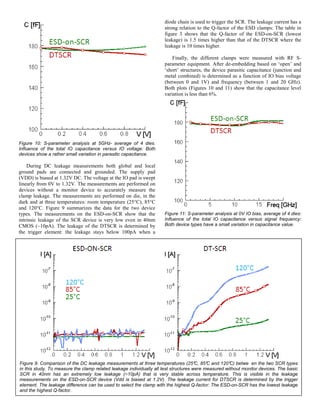
Figure 10: S-parameter analysis at 5GHz- average of 4 dies. 
Influence of the total IO capacitance versus IO voltage: Both 
devices show a rather small variation in parasitic capacitance. 
During DC leakage measurements both global and local 
ground pads are connected and grounded. The supply pad 
(VDD) is biased at 1.32V DC. The voltage at the IO pad is swept 
linearly from 0V to 1.32V. The measurements are performed on 
devices without a monitor device to accurately measure the 
clamp leakage. The measurements are performed on die, in the 
dark and at three temperatures: room temperature (25°C), 85°C 
and 120°C. Figure 9 summarizes the data for the two device 
types. The measurements on the ESD-on-SCR show that the 
intrinsic leakage of the SCR device is very low even in 40nm 
CMOS (~10pA). The leakage of the DTSCR is determined by 
the trigger element: the leakage stays below 100pA when a 
diode chain is used to trigger the SCR. The leakage current has a 
strong relation to the Q-factor of the ESD clamps: The table in 
figure 3 shows that the Q-factor of the ESD-on-SCR (lowest 
leakage) is 1.5 times higher than that of the DTSCR where the 
leakage is 10 times higher. 
Finally, the different clamps were measured with RF S-parameter 
equipment. After de-embedding based on ‘open’ and 
‘short’ structures, the device parasitic capacitance (junction and 
metal combined) is determined as a function of IO bias voltage 
(between 0 and 1V) and frequency (between 1 and 20 GHz). 
Both plots (Figures 10 and 11) show that the capacitance level 
variation is less than 6%. 
Figure 11: S-parameter analysis at 0V IO bias, average of 4 dies: 
Influence of the total IO capacitance versus signal frequency: 
Both device types have a small variation in capacitance value. 
Figure 9: Comparison of the DC leakage measurements at three temperatures (25°C, 85°C and 120°C) betwe en the two SCR types 
in this study. To measure the clamp related leakage individually all test structures were measured without monitor devices. The basic 
SCR in 40nm has an extremely low leakage (~10pA) that is very stable across temperature. This is visible in the leakage 
measurements on the ESD-on-SCR device (Vdd is biased at 1.2V). The leakage current for DTSCR is determined by the trigger 
element. The leakage difference can be used to select the clamp with the highest Q-factor: The ESD-on-SCR has the lowest leakage 
and the highest Q-factor.
Besides the standard devices described above additional 
variations are included on the test chip including capacitance 
reduction circuits, SCR anode/de/cathode layout variations and 
versions without deep Nwell. A summary of the ESD, Q 
and capacitance values is given in figure 12. 
Q-factor 
Figure 12: : Various layout variations were available on the RF test 
chip. High ESD performance combined with low le 
leakage, high Q-factor 
factor and low parasitic capacitance loading can be easily 
achieved in 40nm. 
III.C. SELECTION OF THE MOST APPROPRIATE ESD 
CLAMP 
Based on the different measurements the recommended 
protection solution for LNA circuits in 40nm is the ESD 
ESD-on- 
SCR. While the parasitic capacitance is similar between DTSCR 
and ESD-on-SCR devices, the latter has much lower l 
leakage 
current, higher Q-factor and a much smaller silicon footprint. 
The ESD data shows that the ESD-on-SCR provides an effective 
protection of more than 300V MM and 5.2kV HBM. However, 
in many cases the required protection level is only 2kV HBM. 
Thanks to the simple layout style and st 
straightforward 
metallization concept the ESD-on-SCR can be easily scaled 
down to lower the ESD performance leading to further reduced 
leakage (below 10pA), capacitance (~100fF) and silicon area 
(~500um²). 
Important to note is that the ESD-on-SCR is trigger 
triggered into 
low voltage clamping mode as soon as the IO voltage raises 
0.7V above the Vdd potential (1.2V). For the LNA circuits 
described here this is not a concern: The applied signal has no 
DC component. Also, the he bias circuit has a high output 
resistance and the bias level is somewhere between 
0.3V and 
0.5V much lower than the SCR holding voltage. 
Moreover, the 
input signal from the antenna has a low amplitude 
which means 
that the trigger condition for the ESD-on-SCR is never fulfilled. 
For the protection of f other applications in advanced CMOS the 
SCR can easily be tweaked to solve most latch 
latch-up constraints 
including transient latch-up situations during system level stress 
[30, 31]. 
If the Vdd line is rather noisy it could couple to the RF IO 
pad. Therefore, some designers may prefer the DTSCR device 
type because it has much less parasitic capacitance between IO 
and Vdd. 
IV. DISCUSSION 
, CDM is a major concern but because it can only be measured 
in final products we have confirmed the voltage response of the 
clamps with TLP pulses with fast rise time of 200ps. 
CONCLUSION 
ONCLUSION 
This publication provided information about SCR based ESD 
protection clamps for RF circuits validated in TSMC 90nm and 
TSMC 40nm LP CMOS technologies. 
In both technologies the 
ESD protection clamps described have excellent 
merit: Due to the low parasitic capacitance, low leakage and 
high Q-factor the influence on the RF performance is limited 
designers can rely on these SCR device types without the need 
for extensive co-design optimizations 
circuitry and ESD protection devices. 
The paper provided measurement results on 
LNA’s where the sensitive thin oxide 
protected up to 5.2kV HBM while the leakage 
and the parasitic capacitance is around 180fF over a broad range 
of frequency and voltage. 
While this paper focused on Bluetooth, GPS and the IEEE 
802.15.4a standard the ESD device 
broadly for both high frequency RF IO’s as well as high speed 
differential, digital interfaces like HDMI and USB 3.0 
NOTE 
As is the case with many published ESD design solutions, the 
techniques and protection solutions described in this paper are 
covered under patents and cannot be copied freely. 
REFERENCES 
[1] ITU Internet Reports 2005: The internet of things 
[2] http://www.newscientist.com/blogs/shortsharpscience/spectrum.png 
[3] F. Louagie, “Building tomorrow’s wireless communication systems”, 2009 
[4] http://en.wikipedia.org/wiki/Comparison_of_wireless_data_standards 
[5] White Paper, “A case for lowering component level HBM/MM ESD specification and 
requirements”, 2007 http://www.esdforum.de/ 
[6] White Paper, “Recommended ESD-CDM Target L 
http://www.jedec.org/standards-documents/results/JEP157ESD council 
[7] http://en.wikipedia.org/wiki/IEEE_802.15.4a 
[8] G. Boselli, “Analysis of ESD Protection Components in 65nm CMOS: Scaling Perspective and 
Impact on ESD Design Window”, EOS/ESD 2005 
[9] J. Borremans et al., “A 5 kV HBM transformer-based ESD protected 5 
[10] S. Hyvonen, et al., “Comprehensive ESD protection for RF inputs,” EOS/ESD 2003 
[11] S. Thijs et al., “Implementation of plug-and-play ESD protection in 5.5 GHz 90 nm RF CMOS 
LNAs—Concepts, constraints and solutions”, Microelectronics Reliability 2006 
[12] Ph. Jansen et al., “RF ESD Protection strategies – The design and performance trade 
CICC 2005 
[13] S. Joshi et al., “High-Q Electrostatic Discharge (ESD) protection Devices for Use at Radio 
Frequency (RF) and Broad-band I/O pins”, IEEE transactions on Electron Devices 2005 
[14] D. Linten et al., “ESD protection of Advanced RF and Broadband integrated circuits and ME 
IEW 2010 
[15] Richier et al., ”Investigation on different ESD protection 
in a 0.18 CMOS process”, EOS/ESD 2000 
[16] M.K. Radhakrishnan et al., “ESD Reliability Issues in RF CMOS Circuits”, 2001 
[17] Feng K et al. “A comparison study of ESD protection for 
2000 IEEE RFIC 
[18] S. Thijs, et al., “Implementation of Plug-and-Play ESD Protection 
LNAs - Concepts, Constraints and Solutions,” EOS/ESD 2004 
[19] S. Thijs et al., ”Inductor-Based ESD Protection under CDM 
Applications”, CICC 2008 
[20] D. Linten et al., “A 5-GHz Fully Integrated ESD 
CMOS”, JSSC 2005 
[21] S. Thijs et al., “CDM and HBM Analysis of ESD Protected 60 GHz Power Amplifier in 45 nm Low 
Power Digital CMOS”, EOS/ESD 2009 
[22] S.Hyvonen et al., “Cancellation technique to provide ESD pro 
2003 
[23] W. Soldner et al., “RF ESD Protection Strategies: Codesign vs. low 
[24] V. Vassilev et al., “Co-Design Methodology to Provide High ESD Protection Levels in the Advanced 
RF Circuits”, EOS/ESD 2003 
[25] C. Russ et al., “GGSCRs: GGNMOS Triggered Silicon Controlled Rectifiers for ESD Protection in 
Deep Sub-Micron CMOS Processes”, EOS/ESD 2001 
[26] B. Keppens et al., “ESD Protection Solutions for High Voltage Technologies”, EOS/ESD 2004 
[27] M. Mergens et al., “Advanced SCR ESD Protection Circu 
CICC 2005 
[28] M. Mergens et al., “Diode-Triggered SCR (DTSCR) for RF 
and CMOS Ultra-Thin Gate Oxides”, IEDM 2003 
[29] B. Keppens et al., “Contributions to standardization of 
EOS/ESD 2001 
[30] Y. Fukuda et al., “Solving the problems with traditional Silicon Controlled Rectifier (SCR) 
approaches for ESD”, RCJ 2008 
[31] B. Sorgeloos et al., “On-Chip ESD Protection with Improved High 
Achieving IEC 8kV Contact System Level” IEW 2010 and EOS/ESD 2010 
figures of 
limited. RF 
ptimizations between RF (matching) 
TSMC 40nm RF 
circuit is effectively 
stays below 10pA 
e concepts can be used more 
3.0. 
atents EFERENCES 
Levels”, 2009, JEP157. 
5-6 GHz LNA”, VLSI 2007 
trade-off challenges”, 
MEMS”, 
ation strategies devoted to 3.3 V RF applications 
RFICs: performance versus parasitic”, 
in 5.5 GHz 90 nm RF CMOS 
CDM-like ESD Stress Conditions for RF 
ESD-Protected Low-Noise Amplifier in 90-nm RF 
Low-provide 
protection for multi-GHz RF inputs”, EL 
low-C Protection”, EOS/ESD 2005 
ered , Circuits for CMOS / SOI Nanotechnologies”, 
RF-ESD Protection of BiCMOS SiGe HBTs 
transmission line pulse testing methodology”, 
Holding Current SCR (HHISCR)
About Sofics 
Sofics (www.sofics.com) is the world leader in on‐chip ESD protection. Its 
patented technology is proven in more than a thousand IC designs across all 
major foundries and process nodes. IC companies of all sizes rely on Sofics for off‐the‐ 
shelf or custom‐crafted solutions to protect overvoltage I/Os, other non‐standard 
I/Os, and high‐voltage ICs, including those that require system‐level 
protection on the chip. Sofics technology produces smaller I/Os than any generic 
ESD configuration. It also permits twice the IC performance in high‐frequency and 
high‐speed applications. Sofics ESD solutions and service begin where the foundry 
design manual ends. 
Our service and support 
Our business models include 
• Single‐use, multi‐use or royalty bearing license for ESD clamps 
• Services to customize ESD protection 
o Enable unique requirements for Latch‐up, ESD, EOS 
o Layout, metallization and aspect ratio customization 
o Area, capacitance, leakage optimization 
• Transfer of individual clamps to another target technology 
• Develop custom ESD clamps for foundry or proprietary process 
• Debugging and correcting an existing IC or IO 
• ESD testing and analysis 
Notes 
As is the case with many published ESD design solutions, the techniques and 
protection solutions described in this data sheet are protected by patents and 
patents pending and cannot be copied freely. PowerQubic, TakeCharge, and 
Sofics are trademarks of Sofics BVBA. 
Version 
May 2011 
Sofics Proprietary – ©2011 
ESD SOLUTIONS AT YOUR FINGERTIPS 
Sofics BVBA 
Groendreef 31 
B‐9880 Aalter, Belgium 
(tel) +32‐9‐21‐68‐333 
(fax) +32‐9‐37‐46‐846 
bd@sofics.com 
RPR 0472.687.037

On-chip ESD protection for LNA

  • 1.
    Conference paper SCRbased on-chip ESD protection for LNA's in 90nm and 40nm CMOS Taiwan ESD and Reliability Conference 2010 Nowadays, mobile consumer electronics devices integrate various wireless interfaces like WIFI, Bluetooth, GPRS and GPS. Various approaches exist to protect the wireless interfaces against ESD stress. In recent years, researchers have focused on so‐called 'co‐design' techniques to solve both functional and protection constraints together which requires both RF and ESD design skills. However many IC designers still prefer to work with 'plug‐n‐play' protection concepts where the ESD clamps exhibit low parasitic capacitance, low series resistance and low leakage. This paper presents measurement results of 3 different SCR based protection approaches that exhibit high Q‐factor and low and stable parasitic capacitance over a broad voltage and frequency range. The clamps are used for protection of LNA circuits in 90nm and 40nm Low Power (LP) CMOS technologies. Scan the code and get additional related content Download PDF version, find relevant datasheets, similar content or a link to presentation
  • 2.
    SCR based on-chipESD protection for LNA’s in 90nm and 40nm CMOS B. Keppens, I. Backers, J. Binnemans*, B. Sorgeloos, O. Marichal, K. Verhaege Sofics BVBA, Groendreef 31, B-9880 Aalter, Belgium – bkeppens@sofics.com *now with ICSense - This paper is co-copyrighted by Sofics and Taiwan ESD and Reliability Conference. Abstract – Nowadays, mobile consumer electronics devices integrate various wireless interfaces like WIFI, Bluetooth, GPRS and GPS. Various approaches exist to protect the wireless interfaces against ESD stress. In recent years, researchers have focused on so-called ‘co-design’ techniques to solve both functional and protection constraints together which requires both RF and ESD design skills. However many IC designers still prefer to work with ‘plug-n-play’ protection concepts where the ESD clamps exhibit low parasitic capacitance, low series resistance and low leakage. This paper presents measurement results of 3 different SCR based protection approaches that exhibit high Q-factor and low and stable parasitic capacitance over a broad voltage and frequency range. The clamps are used for protection of LNA circuits in 90nm and 40nm Low Power (LP) CMOS technologies. INTRODUCTION The number of wireless enabled systems is very diverse and steadily growing. System makers include wireless functions into mature applications like fixed-line telephones and TV’s, increase the wireless features in mobile phones with support of multiple standards and come up with new device types that thrive on being always wirelessly connected for the newest content [1]. Further, also the transport, security, medical and payment sectors are quickly switching to wireless interfaces for improved user experience. Intelligent wireless bus, subway and train tickets replace the paper versions. Expensive equipment or resources in general are traced back thanks to RFID tags. Sensor networks reduce the cost of medical care while they increase the reaction speed when needed. Near Field Communication ‘NFC’ bank cards replace the smartcard and magnetic strips now commonly used. Wireless communication comes in many forms, each designed or optimized for a specific task and application and sometimes constrained by local legislations differences [2]. Moreover existing standards are typically upgraded a few years down the road to enable higher data throughput or to extend the range [3]. Wireless standards can be grouped or compared based on different parameters like center frequency, primary use, encoding protocol, degree of mobility or range for instance. A rather complete overview of industry standards and proprietary formats can be found online [4]. Despite the improved ESD awareness and control in assembly factories and the related push for a reduction of component level ESD performance [5, 6] IC’s still need adequate ESD protection. In many cases, traditional ESD protection devices used for low speed digital interfaces offered by foundries, IO library providers are not suited for the RF interfaces for a number of reasons: - Capacitive loading shunts large part of the RF signal to Vdd/Vss lines due to high parasitic junction and metal capacitance of ESD clamps. - Increased noise injected at the receiver due to series resistance used between primary and secondary ESD clamps - DC leakage current degrades Q-factor and influences the size of the bias circuits To reduce the cost of consumer electronics devices designers also try to combine different standards into a single silicon die [3] adding more constraints for the ESD protection approaches: the clamp parasitic influence should be as stable as possible across a large frequency band and voltage range. This publication first (section I) briefly summarizes existing approaches for ESD protection of RF interfaces like plug-n-play, co-design and cancellation techniques. Section II describes a plug-n-play SCR clamp validated for an 8.5 GHz LNA designed in TSMC 90nm LP. Section III describes 2 different SCR based protection devices validated in TSMC 40nm LP CMOS to be used in a plug-n-play configuration. The most appropriate clamp is selected based on TLP, HBM, RF / S-parameter and DC leakage measurements at 3 temperatures. In this publication we focus on Bluetooth, GPS and the IEEE 802.15.4a standard used for Real Time Location Systems (RTLS) [7] but the ESD devices can be used more broadly thanks to the low parasitic capacitance, high Q factor and low leakage. I. ESD APPROACHES FOR WIRELESS INTERFACES IC designers use a variety of ESD protection approaches to protect the integrated circuits against ESD stress. The well known ‘dual diode’ based ESD protection has been used by many designers for the protection of analog circuits thanks to the small area, straightforward implementation, low leakage and low capacitive loading. Recently however various researches have predicted the end of ‘dual diode based ESD design’ for RF circuits in advanced CMOS (65nm and beyond) due to the shrinking ESD design window of the sensitive circuits [8-13]. They reason that to ensure effective protection the diodes connected to the IO’s must be designed with larger perimeter to reduce the voltage drop (Ron x IESD) which in turn leads to higher leakage and higher capacitive loading worsening the RF performance of the connected circuits.
  • 3.
    Fortunately there arealternatives to protect RF circuits against ESD stress. This section very briefly outlines different protection approaches [11, 14] and provides relevant references: (1) Plug-n-play, minimal parasitic capacitive loading The parasitic capacitance of the ESD devices is minimized such that the degradation of the RF performance is limited. Researchers have compared different device types for this purpose [15-17]. Besides the active ESD devices people have used low frequency filters for high frequency applications (>5GHz) [18-21] (2) ‘LC’ Cancellation techniques In various publications designers compensated the parasitic effects of ESD devices by adding tuned LC elements [10, 13, 22] (3) Co-design Through the use of ‘co-design’ traditional ESD solutions with high capacitive loading can still be used because the negative effects are compensated for in the matching circuits [23, 24]. The following sections provide case studies based on one specific protection approach: plug-n-play protection with low capacitive SCR based protection. II. ESD FOR 8.5GHZ LNA IN 90NM LP An SCR based protection clamp is validated for an 8.5 GHz LNA designed in TSMC 90nm LP. The ESD protection is designed to protect the ultra-wideband RF circuits based on the IEEE 802.15.4a standard [7]. 802.15.4a is an alternate PHY and adds location awareness, low power and higher data rates to the PHY and MAC specification for Zigbee devices. The circuit can be used for accurate real-time indoor location of resources/assets and in wireless sensors for health, retail, manufacturing and security sectors. One of the key requirements is the low leakage core and IO circuits: The chip operates off a single watch battery for up to 10 years. The proprietary circuit to be protected consists of 3.3V transistors leading to a failure voltage (ESD design window) of 11.4V enabling various ESD protection concepts. To leave room for a large analog circuit including coils on the top metal, the IO ring is designed such that there is only a low resistive Vss bus available at the RF interfaces which means that a ‘dual diode’ protection approach is not feasible. To enable the high frequency signals the parasitic junction capacitance of ESD clamps has to be below 100fF. Furthermore the clamp leakage at room temperature must be below 1nA. The selected protection design consists of an SCR clamp triggered by a NMOS device [25, 27] with dynamic gate bias as shown in figure 1 (top). The layout (figure 1 bottom) includes the SCR clamp, NMOS trigger, RC ESD detection filter, reverse diode and all required guard bands within an area of 55.91um by 52.08um. Thanks to this small area the ESD cell could be located under the bond pad (Circuit under Pad - CUP) leaving room for the large area inductors of the RF circuit. Besides the IO pad and a low resistive metal connection to Vss, a narrow connection to Vdd is required to keep the capacitance of the RC detection circuit charged up during functional operation of the circuit and to keep the diode from pad to anode reverse biased. Figure 1: Schematic and layout view of the MOS triggered SCR protection clamp. The total silicon footprint is less than 3000um² and could easily fit under the bond pad. The parasitic capacitance loading of the ESD clamp is calculated based on available models from the foundry following the equivalent circuit consisting of 9 junction capacitances and 7 metal capacitance values (figure 2). Total IO capacitance is less than 100fF. Figure 2: Equivalent circuit for the calculation of parasitic junction and metal capacitance. Total capacitance at the IO’s is 98.62fF. The ESD design guarantees effective ESD protection up to 2kV HBM, well above the standard requirement used for RF interfaces in advanced CMOS technology. This means that the chip can be handled in low cost assembly houses to push down the cost of the system. Thanks to the low capacitive loading of 98.62fF and low leakage below 0.1 nA (@ 25°C), 55nA (@ 125°C) the clamp does not influence the RF behavior thereby greatly simplifying the design of the RF circuits. RF data will be available at the presentation of the publication.
  • 4.
    III. SCR BASEDRF PROTECTION IN 40NM LP This section outlines various SCR based approaches for ESD protection of wireless interfaces in a 40nm Low Power CMOS technology. First the different device types and measurement setups are described followed by the measurement results. Finally the most appropriate ESD protection device is selected based on the TLP, HBM, RF / S-parameter and DC leakage measurements. III.A. DEVICE TYPES Two different SCR based protection clamps are compared for 1.1 (1.2V overdrive) RF interfaces. The variation between the clamps is mainly related to the trigger concept. Figure 3 provides an overview of the two clamp devices including a top view of the layout. - The ESD-on-SCR is triggered as soon as the IO level raises 1 diode drop (Anode-G2) above the Vdd voltage [26]. - The DTSCR is turned on once the Anode-G2 and 3 trigger diodes are forward biased [27, 28]. Besides these two main types some other variations were combined on an RF TEG test chip to validate SCR based protection for LNA circuits. All SCR clamps are designed for 2kV HBM and 200V MM which corresponds to more than 2A of TLP current in the TSMC 40nm process technology. The SCR perimeter of 2x47um is the same for all devices. All use 4 layers of metal leaving all other layers for bus routing. To limit noise coupling all devices described here use the deep Nwell layer. Each clamp type is connected to Ground-Signal-Ground pads to obtain accurate capacitance and Q-factor values. De-embedding structures (short, open) are available too (Figure 4). ESD devices are available as stand-alone clamps (for accurate leakage tests) and with 2 different monitor structures to characterize the effectiveness of the ESD protection: (1) The ‘GOX’ monitor [25] is a minimum size, fully silicided thin oxide transistor with gate connected to the IO pad. (2) The ‘RC-MOS’ monitor is a minimum size, fully silicided thin oxide transistor where drain is connected to pad, source to ground and gate is biased at 1/3 of the drain voltage through an RC-filter scheme. Figure 4: 40nm RF test chip overview (left) and GSG layout example for a single clamp cell (right). The S-parameters are de-embedded to the edge of the ESD-clamps. An individual OPEN and SHORT structure is provided for each clamp. Figure 3: Overview of the 2 SCR based ESD clamps used in this work. The schematics are depicted on the top, left. The ESD-on-SCR is triggered as soon as the IO level raises 1 diode drop (Anode-G2) above the Vdd voltage. The DTSCR is turned on once the Anode- G2 and trigger diodes are forward biased. Layout comparison of the clamps is shown top, right: Due to the trigger diodes, the DTSCR clamp (1286um²) is twice the size as the ESD-on-SCR clamp (622um²). While the trigger condition of the ESD-on-SCR is partly determined by power clamp device the silicon area of the power clamp is not included in this area comparison because the power clamp device is required anyway. Measurement results are summarized in the table.
  • 5.
    III.B. MEASUREMENT SETUPSAND RESULTS The different SCR clamps and monitor structures are measured with Transmission Line Pulse (TLP), HBM, MM, DC leakage and S-parameter systems. The TLP data is performed with a Barth Electronics (10ns rise time, 100ns pulse width). For all devices positive stress is applied to the IO pad while the local ground (LGND) is grounded. During TLP stress relay S1 is open (Figure 5) but in order to obtain accurate leakage current results the substrate needs to be grounded through the global ground pad (GGND) by closing relay S1 during the leakage test. For some devices, a diode is present from IO to VDD. This results in an additional leakage path through the diode from IO to VDD and through the power clamp to LGND/GGND. The leakage current for these configurations is still low enough to detect failure if the VDD pad is left floating. Therefore the VDD pad is not powered during the leakage test. The maximum current level ‘Imax’ is defined as It2 failure current minus a 20% safety margin. Figure 5: TLP measurement setup: During TLP pulsing between IO and ground the global ground ‘GGND’ is not connected. For leakage measurements in between ‘zaps’ the global ground (and complete substrate) is connected together with the local ground ‘LGND’. Vdd remains floating during the TLP/leakage tests. Figure 6: TLP IV curves for the 2 device types: The clamping behavior is identical. For the ESD-on-SCR the Vdd pad is biased at 1.1V during the leakage measurement. Figure 6 and 7 plot the TLP IV curves of the 2 devices. The clamping device (SCR) is the same in the 2 device types also evident from the figures: the clamping behavior is exactly the same. The failure current It2 is more than 2.5A. After subtracting a safety margin of about 20% to cover process variations the maximum current level (‘Imax’) is more than 2A for all devices. As expected, the triggering of the ESD-on-SCR is strongly different compared to the DTSCR and makes it more effective for protection of sensitive circuits. Figure 7: Zoom-in on the TLP IV curves for the 2 device types: The trigger voltage of the ESD-on-SCR is much lower than the DTSCR. Besides standard TLP tests each clamp is also stressed with multiple pulses according to the same test setup. At least 1000 TLP pulses are applied with current amplitude fixed to the maximum current level ‘Imax’ [25, 29]. The leakage current is measured after each set of 100 pulses. Failure is defined as any significant or systematic deviation from the pre-stress leakage current. All devices passed this test condition without leakage increase. Figure 8: Measurement setup for HBM/MM measurements. VDD and GGND are only connected during the curve trace phase by closing switch S1 and S2 HBM, MM measurements are applied to the IO pin with all LGND pins grounded and with VDD and GGND floating. The DC sweep between zaps is performed while both GND and LGND pads are grounded and 1.32V bias is applied to the VDD pad. Figure 8 illustrates the measurement setup used for the HBM and MM tests. Minimum pass level for HBM and MM measurements is given in the table in figure 3, based on data of 6 samples (3 with ‘GOX’ monitor and 3 with ‘RC-MOS’ monitor).
  • 6.
    Figure 10: S-parameteranalysis at 5GHz- average of 4 dies. Influence of the total IO capacitance versus IO voltage: Both devices show a rather small variation in parasitic capacitance. During DC leakage measurements both global and local ground pads are connected and grounded. The supply pad (VDD) is biased at 1.32V DC. The voltage at the IO pad is swept linearly from 0V to 1.32V. The measurements are performed on devices without a monitor device to accurately measure the clamp leakage. The measurements are performed on die, in the dark and at three temperatures: room temperature (25°C), 85°C and 120°C. Figure 9 summarizes the data for the two device types. The measurements on the ESD-on-SCR show that the intrinsic leakage of the SCR device is very low even in 40nm CMOS (~10pA). The leakage of the DTSCR is determined by the trigger element: the leakage stays below 100pA when a diode chain is used to trigger the SCR. The leakage current has a strong relation to the Q-factor of the ESD clamps: The table in figure 3 shows that the Q-factor of the ESD-on-SCR (lowest leakage) is 1.5 times higher than that of the DTSCR where the leakage is 10 times higher. Finally, the different clamps were measured with RF S-parameter equipment. After de-embedding based on ‘open’ and ‘short’ structures, the device parasitic capacitance (junction and metal combined) is determined as a function of IO bias voltage (between 0 and 1V) and frequency (between 1 and 20 GHz). Both plots (Figures 10 and 11) show that the capacitance level variation is less than 6%. Figure 11: S-parameter analysis at 0V IO bias, average of 4 dies: Influence of the total IO capacitance versus signal frequency: Both device types have a small variation in capacitance value. Figure 9: Comparison of the DC leakage measurements at three temperatures (25°C, 85°C and 120°C) betwe en the two SCR types in this study. To measure the clamp related leakage individually all test structures were measured without monitor devices. The basic SCR in 40nm has an extremely low leakage (~10pA) that is very stable across temperature. This is visible in the leakage measurements on the ESD-on-SCR device (Vdd is biased at 1.2V). The leakage current for DTSCR is determined by the trigger element. The leakage difference can be used to select the clamp with the highest Q-factor: The ESD-on-SCR has the lowest leakage and the highest Q-factor.
  • 7.
    Besides the standarddevices described above additional variations are included on the test chip including capacitance reduction circuits, SCR anode/de/cathode layout variations and versions without deep Nwell. A summary of the ESD, Q and capacitance values is given in figure 12. Q-factor Figure 12: : Various layout variations were available on the RF test chip. High ESD performance combined with low le leakage, high Q-factor factor and low parasitic capacitance loading can be easily achieved in 40nm. III.C. SELECTION OF THE MOST APPROPRIATE ESD CLAMP Based on the different measurements the recommended protection solution for LNA circuits in 40nm is the ESD ESD-on- SCR. While the parasitic capacitance is similar between DTSCR and ESD-on-SCR devices, the latter has much lower l leakage current, higher Q-factor and a much smaller silicon footprint. The ESD data shows that the ESD-on-SCR provides an effective protection of more than 300V MM and 5.2kV HBM. However, in many cases the required protection level is only 2kV HBM. Thanks to the simple layout style and st straightforward metallization concept the ESD-on-SCR can be easily scaled down to lower the ESD performance leading to further reduced leakage (below 10pA), capacitance (~100fF) and silicon area (~500um²). Important to note is that the ESD-on-SCR is trigger triggered into low voltage clamping mode as soon as the IO voltage raises 0.7V above the Vdd potential (1.2V). For the LNA circuits described here this is not a concern: The applied signal has no DC component. Also, the he bias circuit has a high output resistance and the bias level is somewhere between 0.3V and 0.5V much lower than the SCR holding voltage. Moreover, the input signal from the antenna has a low amplitude which means that the trigger condition for the ESD-on-SCR is never fulfilled. For the protection of f other applications in advanced CMOS the SCR can easily be tweaked to solve most latch latch-up constraints including transient latch-up situations during system level stress [30, 31]. If the Vdd line is rather noisy it could couple to the RF IO pad. Therefore, some designers may prefer the DTSCR device type because it has much less parasitic capacitance between IO and Vdd. IV. DISCUSSION , CDM is a major concern but because it can only be measured in final products we have confirmed the voltage response of the clamps with TLP pulses with fast rise time of 200ps. CONCLUSION ONCLUSION This publication provided information about SCR based ESD protection clamps for RF circuits validated in TSMC 90nm and TSMC 40nm LP CMOS technologies. In both technologies the ESD protection clamps described have excellent merit: Due to the low parasitic capacitance, low leakage and high Q-factor the influence on the RF performance is limited designers can rely on these SCR device types without the need for extensive co-design optimizations circuitry and ESD protection devices. The paper provided measurement results on LNA’s where the sensitive thin oxide protected up to 5.2kV HBM while the leakage and the parasitic capacitance is around 180fF over a broad range of frequency and voltage. While this paper focused on Bluetooth, GPS and the IEEE 802.15.4a standard the ESD device broadly for both high frequency RF IO’s as well as high speed differential, digital interfaces like HDMI and USB 3.0 NOTE As is the case with many published ESD design solutions, the techniques and protection solutions described in this paper are covered under patents and cannot be copied freely. REFERENCES [1] ITU Internet Reports 2005: The internet of things [2] http://www.newscientist.com/blogs/shortsharpscience/spectrum.png [3] F. Louagie, “Building tomorrow’s wireless communication systems”, 2009 [4] http://en.wikipedia.org/wiki/Comparison_of_wireless_data_standards [5] White Paper, “A case for lowering component level HBM/MM ESD specification and requirements”, 2007 http://www.esdforum.de/ [6] White Paper, “Recommended ESD-CDM Target L http://www.jedec.org/standards-documents/results/JEP157ESD council [7] http://en.wikipedia.org/wiki/IEEE_802.15.4a [8] G. Boselli, “Analysis of ESD Protection Components in 65nm CMOS: Scaling Perspective and Impact on ESD Design Window”, EOS/ESD 2005 [9] J. Borremans et al., “A 5 kV HBM transformer-based ESD protected 5 [10] S. Hyvonen, et al., “Comprehensive ESD protection for RF inputs,” EOS/ESD 2003 [11] S. Thijs et al., “Implementation of plug-and-play ESD protection in 5.5 GHz 90 nm RF CMOS LNAs—Concepts, constraints and solutions”, Microelectronics Reliability 2006 [12] Ph. Jansen et al., “RF ESD Protection strategies – The design and performance trade CICC 2005 [13] S. Joshi et al., “High-Q Electrostatic Discharge (ESD) protection Devices for Use at Radio Frequency (RF) and Broad-band I/O pins”, IEEE transactions on Electron Devices 2005 [14] D. Linten et al., “ESD protection of Advanced RF and Broadband integrated circuits and ME IEW 2010 [15] Richier et al., ”Investigation on different ESD protection in a 0.18 CMOS process”, EOS/ESD 2000 [16] M.K. Radhakrishnan et al., “ESD Reliability Issues in RF CMOS Circuits”, 2001 [17] Feng K et al. “A comparison study of ESD protection for 2000 IEEE RFIC [18] S. Thijs, et al., “Implementation of Plug-and-Play ESD Protection LNAs - Concepts, Constraints and Solutions,” EOS/ESD 2004 [19] S. Thijs et al., ”Inductor-Based ESD Protection under CDM Applications”, CICC 2008 [20] D. Linten et al., “A 5-GHz Fully Integrated ESD CMOS”, JSSC 2005 [21] S. Thijs et al., “CDM and HBM Analysis of ESD Protected 60 GHz Power Amplifier in 45 nm Low Power Digital CMOS”, EOS/ESD 2009 [22] S.Hyvonen et al., “Cancellation technique to provide ESD pro 2003 [23] W. Soldner et al., “RF ESD Protection Strategies: Codesign vs. low [24] V. Vassilev et al., “Co-Design Methodology to Provide High ESD Protection Levels in the Advanced RF Circuits”, EOS/ESD 2003 [25] C. Russ et al., “GGSCRs: GGNMOS Triggered Silicon Controlled Rectifiers for ESD Protection in Deep Sub-Micron CMOS Processes”, EOS/ESD 2001 [26] B. Keppens et al., “ESD Protection Solutions for High Voltage Technologies”, EOS/ESD 2004 [27] M. Mergens et al., “Advanced SCR ESD Protection Circu CICC 2005 [28] M. Mergens et al., “Diode-Triggered SCR (DTSCR) for RF and CMOS Ultra-Thin Gate Oxides”, IEDM 2003 [29] B. Keppens et al., “Contributions to standardization of EOS/ESD 2001 [30] Y. Fukuda et al., “Solving the problems with traditional Silicon Controlled Rectifier (SCR) approaches for ESD”, RCJ 2008 [31] B. Sorgeloos et al., “On-Chip ESD Protection with Improved High Achieving IEC 8kV Contact System Level” IEW 2010 and EOS/ESD 2010 figures of limited. RF ptimizations between RF (matching) TSMC 40nm RF circuit is effectively stays below 10pA e concepts can be used more 3.0. atents EFERENCES Levels”, 2009, JEP157. 5-6 GHz LNA”, VLSI 2007 trade-off challenges”, MEMS”, ation strategies devoted to 3.3 V RF applications RFICs: performance versus parasitic”, in 5.5 GHz 90 nm RF CMOS CDM-like ESD Stress Conditions for RF ESD-Protected Low-Noise Amplifier in 90-nm RF Low-provide protection for multi-GHz RF inputs”, EL low-C Protection”, EOS/ESD 2005 ered , Circuits for CMOS / SOI Nanotechnologies”, RF-ESD Protection of BiCMOS SiGe HBTs transmission line pulse testing methodology”, Holding Current SCR (HHISCR)
  • 8.
    About Sofics Sofics(www.sofics.com) is the world leader in on‐chip ESD protection. Its patented technology is proven in more than a thousand IC designs across all major foundries and process nodes. IC companies of all sizes rely on Sofics for off‐the‐ shelf or custom‐crafted solutions to protect overvoltage I/Os, other non‐standard I/Os, and high‐voltage ICs, including those that require system‐level protection on the chip. Sofics technology produces smaller I/Os than any generic ESD configuration. It also permits twice the IC performance in high‐frequency and high‐speed applications. Sofics ESD solutions and service begin where the foundry design manual ends. Our service and support Our business models include • Single‐use, multi‐use or royalty bearing license for ESD clamps • Services to customize ESD protection o Enable unique requirements for Latch‐up, ESD, EOS o Layout, metallization and aspect ratio customization o Area, capacitance, leakage optimization • Transfer of individual clamps to another target technology • Develop custom ESD clamps for foundry or proprietary process • Debugging and correcting an existing IC or IO • ESD testing and analysis Notes As is the case with many published ESD design solutions, the techniques and protection solutions described in this data sheet are protected by patents and patents pending and cannot be copied freely. PowerQubic, TakeCharge, and Sofics are trademarks of Sofics BVBA. Version May 2011 Sofics Proprietary – ©2011 ESD SOLUTIONS AT YOUR FINGERTIPS Sofics BVBA Groendreef 31 B‐9880 Aalter, Belgium (tel) +32‐9‐21‐68‐333 (fax) +32‐9‐37‐46‐846 bd@sofics.com RPR 0472.687.037