1
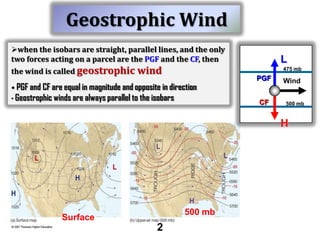
Geostrophic Wind
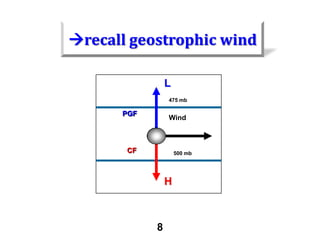
when the isobars are straight, parallel lines, and the only
two forces acting on a parcel are the PGF and the CF, then
the wind is called geostrophic

wind

L
475 mb

• PGF and CF are equal in magnitude and opposite in direction
• Geostrophic winds are always parallel to the isobars

PGF
CF

Wind
500 mb

H

500 mb

Surface

2
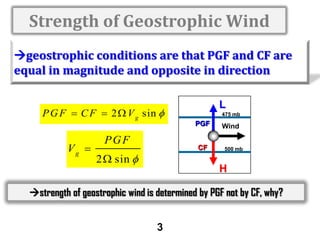
Strength of Geostrophic Wind
geostrophic conditions are that PGF and CF are
equal in magnitude and opposite in direction
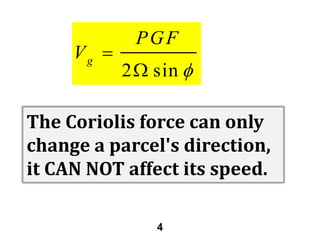
P G F  C F  2  V g sin 

Vg 

PGF

L
475 mb

PGF
CF

2  sin 

Wind
500 mb

H

strength of geostrophic wind is determined by PGF not by CF, why?
3
Vg 

PGF
2  sin 

The Coriolis force can only
change a parcel's direction,
it CAN NOT affect its speed.
4
Centripetal force
and
gradient wind
5
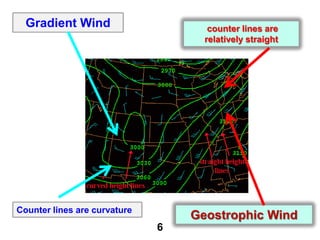
Gradient Wind

counter lines are
relatively straight

Counter lines are curvature

Geostrophic Wind
6
Gradient Wind
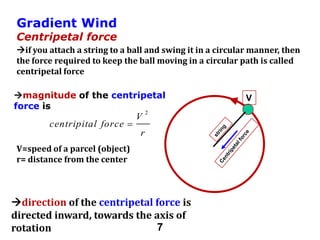
Centripetal force

if you attach a string to a ball and swing it in a circular manner, then
the force required to keep the ball moving in a circular path is called
centripetal force
magnitude of the centripetal
force is

centripital force 

V

2

r
V=speed of a parcel (object)
r= distance from the center

direction of the centripetal force is
directed inward, towards the axis of
7
rotation

V
recall geostrophic wind
L
475 mb

PGF

Wind

CF

500 mb

H

8
Gradient Wind Centripetal force
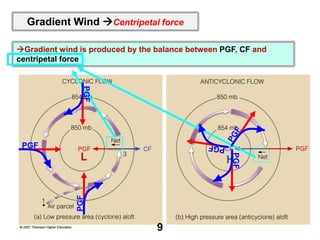
Gradient wind is produced by the balance between PGF, CF and
centripetal force

PGF

PGF

PGF

PGF

9
Free troposphere
and
Boundary layer
10
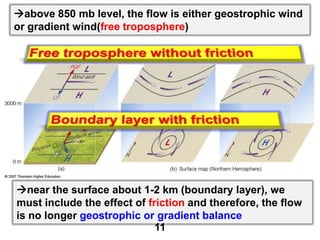
above 850 mb level, the flow is either geostrophic wind
or gradient wind(free troposphere)

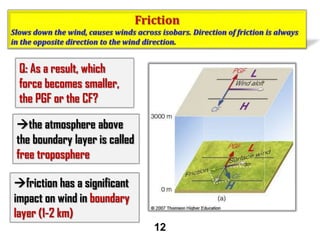
near the surface about 1-2 km (boundary layer), we
must include the effect of friction and therefore, the flow
is no longer geostrophic or gradient balance
11
Q: As a result, which
force becomes smaller,
the PGF or the CF?
the atmosphere above
the boundary layer is called
free troposphere
friction has a significant
impact on wind in boundary
layer (1-2 km)
12
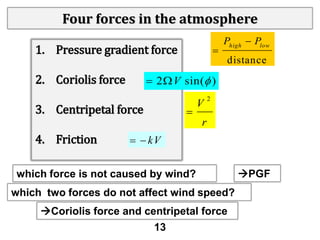
Four forces in the atmosphere
1. Pressure gradient force

2. Coriolis force



Phigh  Plow
distance

 2  V sin( )

3. Centripetal force



V

2

r

4. Friction

  kV

which force is not caused by wind?

which two forces do not affect wind speed?
Coriolis force and centripetal force
13

PGF
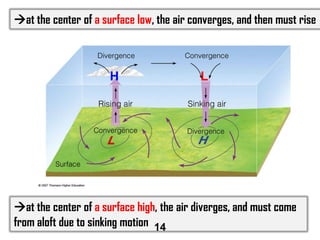
at the center of a surface low, the air converges, and then must rise

H

L

at the center of a surface high, the air diverges, and must come
from aloft due to sinking motion 14
Why temperature is the
most important to
understand weather?
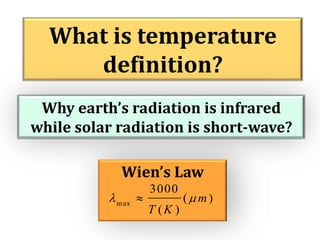
What is temperature
definition?
Why earth’s radiation is infrared
while solar radiation is short-wave?
Wien’s Law
 m ax 

3000
T (K )

( m)
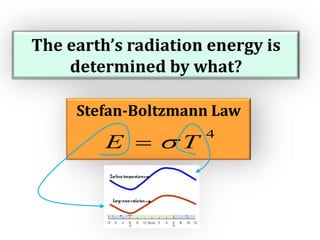
The earth’s radiation energy is
determined by what?
Stefan-Boltzmann Law

E  T

4
The capacity of air for
holding water vapor is
determined by what?
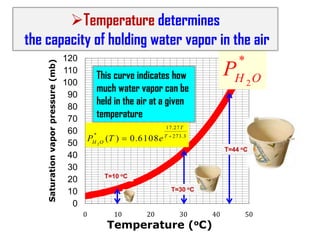
Saturation vapor pressure (mb)

Temperature determines
the capacity of holding water vapor in the air
120
110
100
90
80
70
60
50
40
30
20
10
0

*
H 2O

P

This curve indicates how
much water vapor can be
held in the air at a given
temperature
17.27 T

PH 2 O (T )  0.6108 e T  273.3
*

T=44 oC

T=10 oC
T=30 oC

0

10

20

30

40

Temperature (oC)

50
Thermal circulation is
generated by pressure gradient
Pressure gradient is produced
by different heating
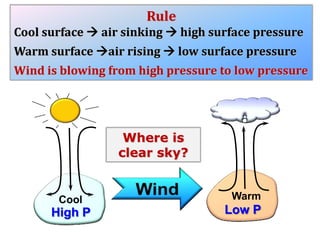
Rule
Cool surface  air sinking  high surface pressure
Warm surface air rising  low surface pressure
Wind is blowing from high pressure to low pressure

Where is
clear sky?

Cool

High P

Warm

Low P
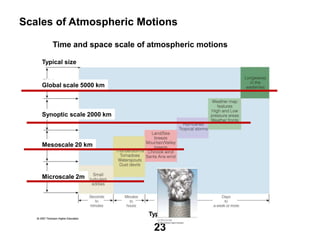
Scales of Atmospheric Motions
Time and space scale of atmospheric motions
Typical size

Global scale 5000 km

Synoptic scale 2000 km

Mesoscale 20 km

Microscale 2m

Typical life span

23
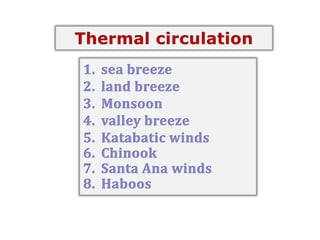
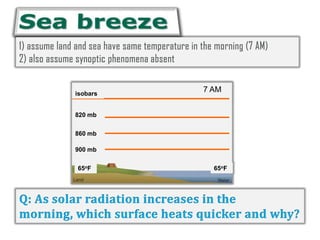
Sea breeze
isobars

7 AM

820 mb
860 mb
900 mb
65oF

65oF
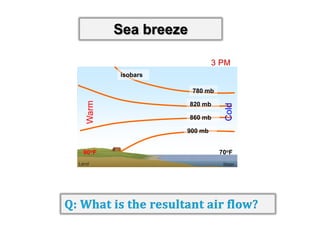
Sea breeze
isobars

820 mb
860 mb

Cold

Warm

780 mb

900 mb
90oF

70oF
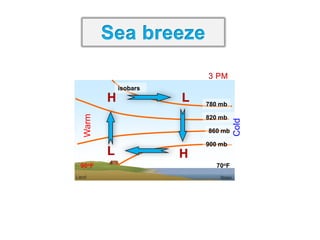
isobars

820 mb
860 mb
900 mb

90oF

70oF

Cold

Warm

780 mb

Lecture11 oct16-bb

  • 1.
  • 2.
    Geostrophic Wind when theisobars are straight, parallel lines, and the only two forces acting on a parcel are the PGF and the CF, then the wind is called geostrophic wind L 475 mb • PGF and CF are equal in magnitude and opposite in direction • Geostrophic winds are always parallel to the isobars PGF CF Wind 500 mb H 500 mb Surface 2
  • 3.
    Strength of GeostrophicWind geostrophic conditions are that PGF and CF are equal in magnitude and opposite in direction P G F  C F  2  V g sin  Vg  PGF L 475 mb PGF CF 2  sin  Wind 500 mb H strength of geostrophic wind is determined by PGF not by CF, why? 3
  • 4.
    Vg  PGF 2 sin  The Coriolis force can only change a parcel's direction, it CAN NOT affect its speed. 4
  • 5.
  • 6.
    Gradient Wind counter linesare relatively straight Counter lines are curvature Geostrophic Wind 6
  • 7.
    Gradient Wind Centripetal force ifyou attach a string to a ball and swing it in a circular manner, then the force required to keep the ball moving in a circular path is called centripetal force magnitude of the centripetal force is centripital force  V 2 r V=speed of a parcel (object) r= distance from the center direction of the centripetal force is directed inward, towards the axis of 7 rotation V
  • 8.
    recall geostrophic wind L 475mb PGF Wind CF 500 mb H 8
  • 9.
    Gradient Wind Centripetalforce Gradient wind is produced by the balance between PGF, CF and centripetal force PGF PGF PGF PGF 9
  • 10.
  • 11.
    above 850 mblevel, the flow is either geostrophic wind or gradient wind(free troposphere) near the surface about 1-2 km (boundary layer), we must include the effect of friction and therefore, the flow is no longer geostrophic or gradient balance 11
  • 12.
    Q: As aresult, which force becomes smaller, the PGF or the CF? the atmosphere above the boundary layer is called free troposphere friction has a significant impact on wind in boundary layer (1-2 km) 12
  • 13.
    Four forces inthe atmosphere 1. Pressure gradient force 2. Coriolis force  Phigh  Plow distance  2  V sin( ) 3. Centripetal force  V 2 r 4. Friction   kV which force is not caused by wind? which two forces do not affect wind speed? Coriolis force and centripetal force 13 PGF
  • 14.
    at the centerof a surface low, the air converges, and then must rise H L at the center of a surface high, the air diverges, and must come from aloft due to sinking motion 14
  • 15.
    Why temperature isthe most important to understand weather?
  • 16.
    What is temperature definition? Whyearth’s radiation is infrared while solar radiation is short-wave? Wien’s Law  m ax  3000 T (K ) ( m)
  • 17.
    The earth’s radiationenergy is determined by what? Stefan-Boltzmann Law E  T 4
  • 18.
    The capacity ofair for holding water vapor is determined by what?
  • 19.
    Saturation vapor pressure(mb) Temperature determines the capacity of holding water vapor in the air 120 110 100 90 80 70 60 50 40 30 20 10 0 * H 2O P This curve indicates how much water vapor can be held in the air at a given temperature 17.27 T PH 2 O (T )  0.6108 e T  273.3 * T=44 oC T=10 oC T=30 oC 0 10 20 30 40 Temperature (oC) 50
  • 20.
    Thermal circulation is generatedby pressure gradient Pressure gradient is produced by different heating
  • 21.
    Rule Cool surface air sinking  high surface pressure Warm surface air rising  low surface pressure Wind is blowing from high pressure to low pressure Where is clear sky? Cool High P Warm Low P
  • 23.
    Scales of AtmosphericMotions Time and space scale of atmospheric motions Typical size Global scale 5000 km Synoptic scale 2000 km Mesoscale 20 km Microscale 2m Typical life span 23
  • 24.
  • 25.
    isobars 7 AM 820 mb 860mb 900 mb 65oF 65oF
  • 26.
    Sea breeze isobars 820 mb 860mb Cold Warm 780 mb 900 mb 90oF 70oF
  • 27.
    isobars 820 mb 860 mb 900mb 90oF 70oF Cold Warm 780 mb